

Table of Contents
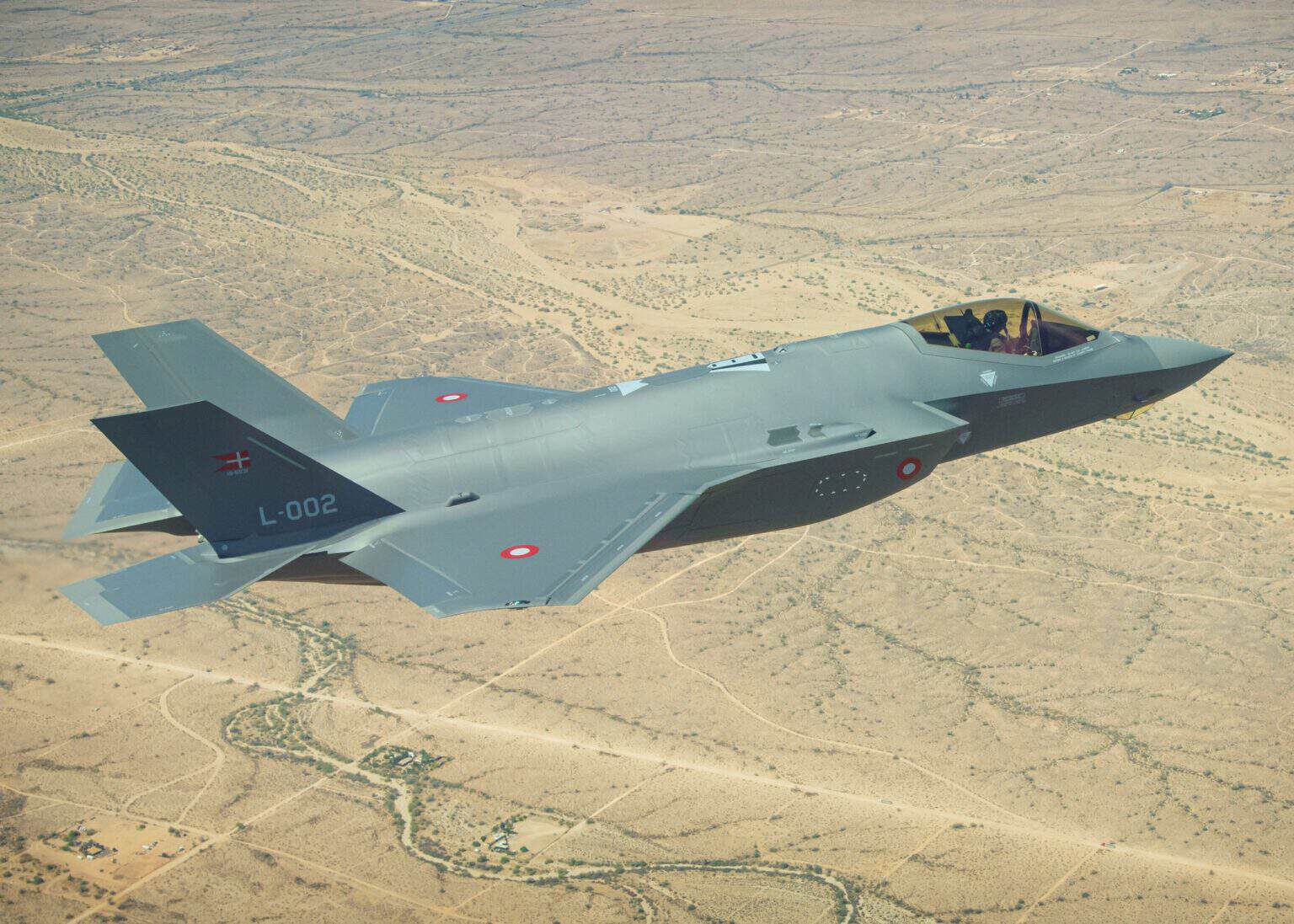
The Danish Air Force now flies the F-35A as its only fighter. The last Danish F-16s landed for the final time at Skrydstrup on January 18, 2026, ending 46 years of service.
Denmark ordered 27 F-35As in 2016 and added 16 more in October 2025, for 43 in all. At least 23 of the first 27 had been delivered by June 2026.
The Royal Danish Air Force, or Flyvevåbnet, is small, but it is changing fast because of Greenland and the Arctic. This guide ranks every type it flies by its weight in Danish air power as of November 2026, then covers what is on order, its bases and its history.
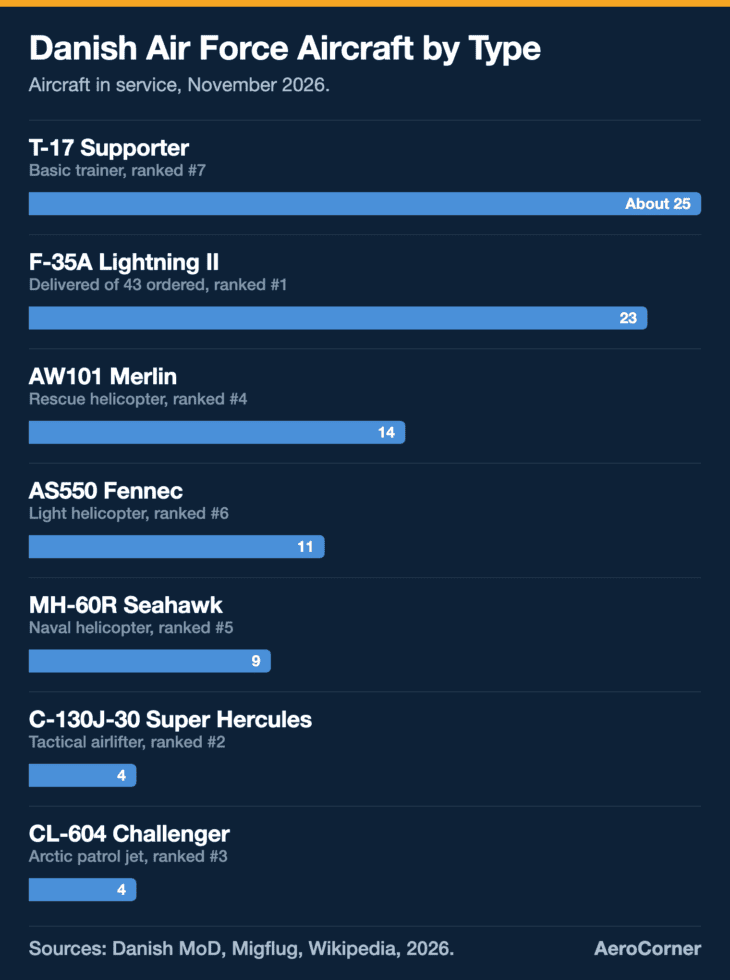
| Rank | Aircraft | Role | Fleet | Status |
|---|---|---|---|---|
| 1 | F-35A Lightning II | Stealth multirole fighter | 23 delivered, 43 ordered | Only Danish fighter since January 2026 |
| 2 | C-130J-30 Super Hercules | Tactical airlift | 4 | In service at Aalborg |
| 3 | CL-604 Challenger | Maritime surveillance, Arctic patrol | 4 | One kept in Greenland |
| 4 | AW101 Merlin | Search and rescue, transport | 14 | In service at Karup |
| 5 | MH-60R Seahawk | Naval helicopter | 9 | Flown for the navy |
| 6 | AS550 Fennec | Light utility helicopter | 11 | Being upgraded |
| 7 | T-17 Supporter | Basic trainer | About 25 | In service at Karup |
| 8 | P-8A Poseidon | Maritime patrol, anti-submarine | 2 planned | Decision announced July 7, 2026 |
| 9 | MQ-9B SkyGuardian | Long-range surveillance drone | 4 on order | Due 2028 to 2029 |
| 10 | Airbus A330 MRTT | Tanker, transport | Share of a NATO fleet | Joined June 2025 |
How this ranking works
Aircraft are ranked by their weight in Danish air power in November 2026: the fighter fleet first, then the airlift and surveillance aircraft that reach Greenland, then the helicopters and the trainer, then the types on order. F-35 numbers come from the Danish Ministry of Defence and Migflug. Other counts come from the fleet tables kept by Migflug and Wikipedia. Ground-based air defense and the NATO-owned aircraft Denmark helps fund are left out of the numbered list, except the A330 tanker pool it joined in 2025.
1. F-35A Lightning II: The Whole Fighter Force
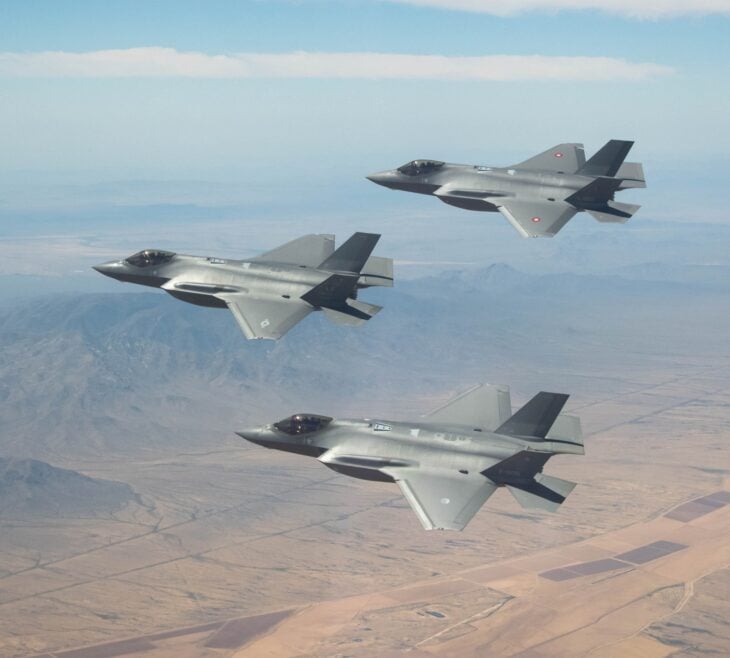

Every Danish fighter is now an F-35A. Parliament picked the jet on June 9, 2016, for 27 aircraft to replace the F-16.
The first four landed at Skrydstrup in September 2023. Six more Danish jets were based at Luke Air Force Base in Arizona for pilot training, with 15 in Denmark, as of October 2025.
On October 10, 2025, the government added 16 more F-35As, for 43 in all. Migflug puts the price at 29.0 billion kroner and the full fleet of 43 at about 2030.
The F-35 took over NATO quick reaction alert on April 1, 2025. Two jets sit on alert at Skrydstrup, and they scrambled 89 times in 2025 up to November 30, almost all over the Baltic Sea.
From 27 jets to 43
Denmark’s original plan was 27 F-35As, far fewer than the 77 F-16s it had bought over the years. The October 10, 2025 decision raised that to 43, and the same package included unmanned Collaborative Combat Aircraft to fly alongside them.
2. C-130J-30 Super Hercules: The Airlifters
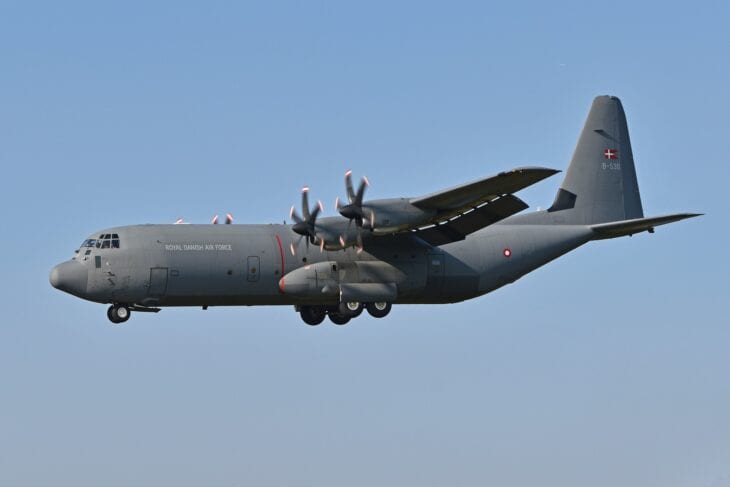
Four stretched C-130J-30s fly with Eskadrille 721 at Aalborg. They replaced Denmark’s older C-130H Hercules.
They are Denmark’s bridge to Greenland. Danish Hercules deploy there about ten days a month, because the kingdom has no permanent air base on the island.
Four is a thin fleet for that job, and no successor has been chosen yet.
3. CL-604 Challenger: Denmark’s Eye Over the Arctic
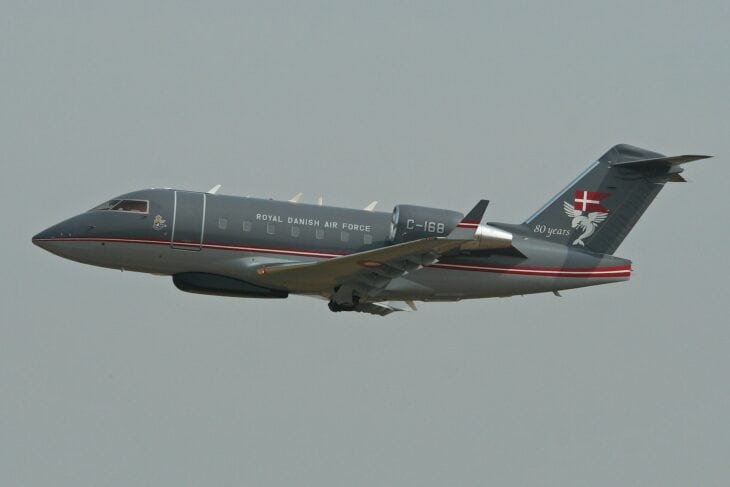
Four Bombardier CL-604 Challenger business jets also fly with Eskadrille 721 at Aalborg. They fly patrol, surveillance and liaison missions.
One is kept permanently at Kangerlussuaq in Greenland. Until the P-8s arrive, these converted business jets are Denmark’s own long-range patrol aircraft over the North Atlantic.
4. AW101 Merlin: The Rescue Helicopters
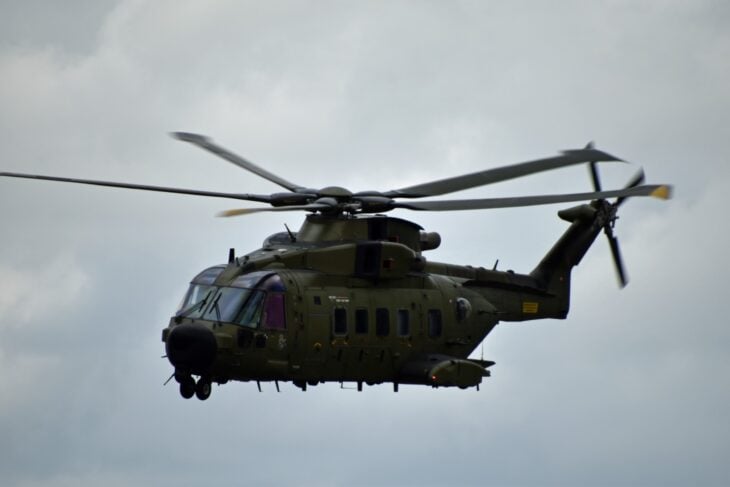

Denmark bought 14 AW101 Merlins in 2001, flew them from 2007 and had all of them by 2010. They replaced the Sea King and fly with Eskadrille 722 under the Helicopter Wing at Karup.
Their main job is search and rescue. Merlin crews stand 24-hour readiness at Skrydstrup, Aalborg and Roskilde.
5. MH-60R Seahawk: The Navy’s Helicopters
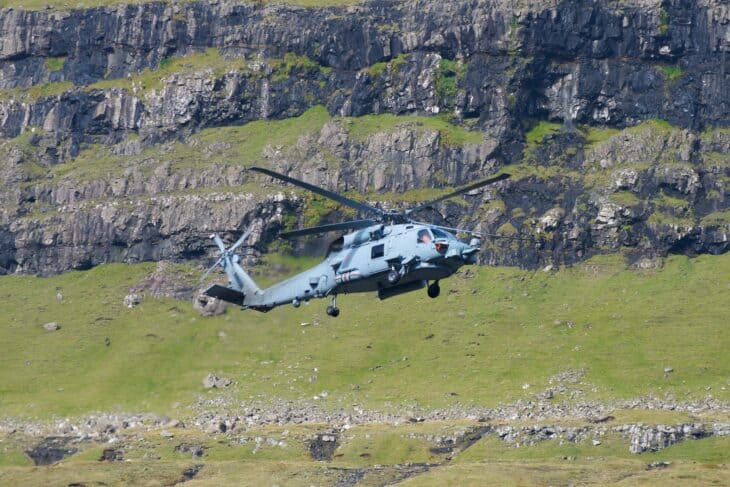
Nine MH-60R Seahawks entered service in 2017, replacing the Lynx. They fly with Eskadrille 723 at Karup.
The air force flies them, but they work for the navy. Their roles are anti-submarine warfare and search and rescue.
6. AS550 Fennec: The Light Helicopters
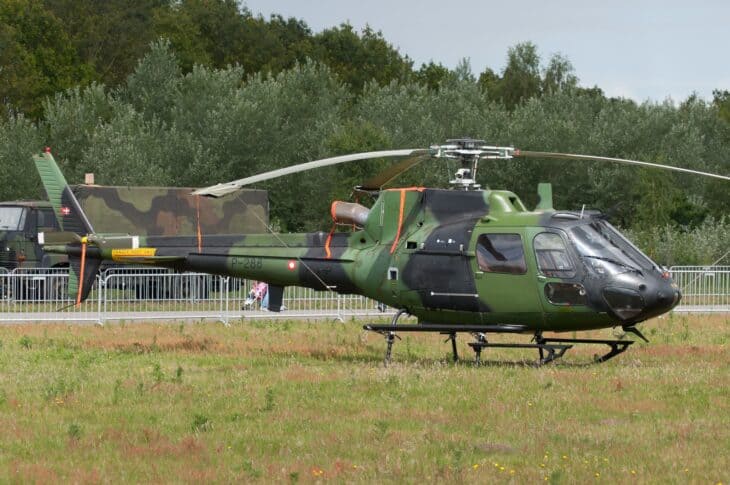
Eleven AS550 Fennecs are in service out of 12 bought. They fly with Eskadrille 724 at Karup, as the air force’s light utility helicopter.
No replacement has been announced. Instead, the fleet is getting new radios and live video downlinks, and Safran has a contract to support its 11 Arriel engines into the mid-2030s.
7. T-17 Supporter: Where Danish Pilots Start
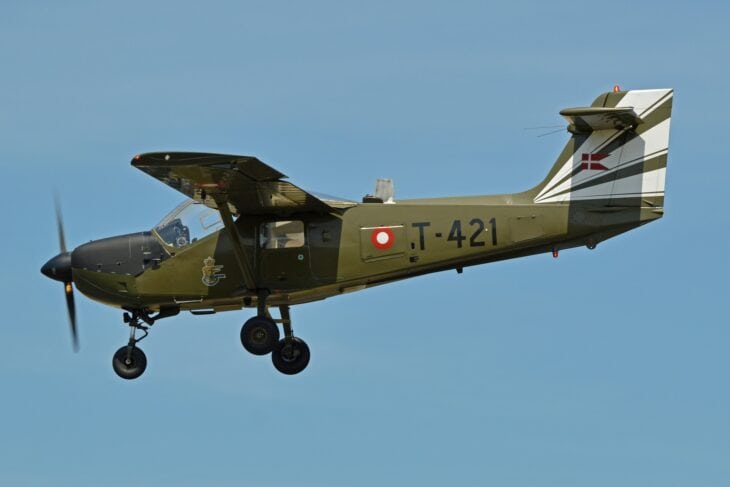

About 25 Saab T-17 Supporters remain in service, out of 32 bought, at the Flying School at Karup. The little high-wing piston trainer, also called the MFI-17, is where every Danish military pilot begins.
That makes it the air force’s most numerous type, with roughly as many airframes as the F-35 fleet had in November 2026.
8. P-8A Poseidon: The Sub-Hunters for Greenland
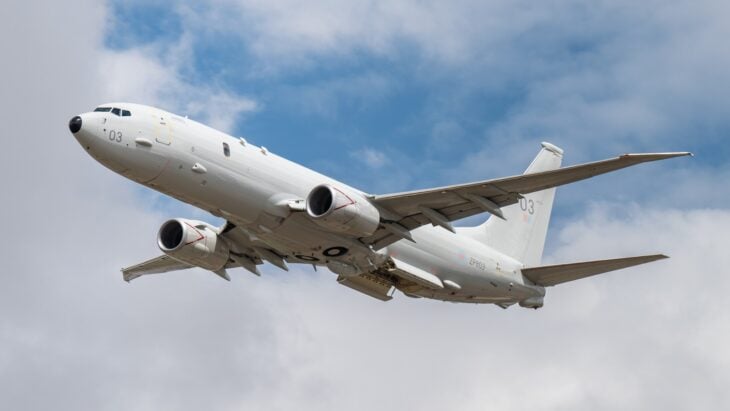

On July 7, 2026, the Ministry of Defence announced it would buy two P-8A Poseidons. The Chief of Defence, Gen. Michael Wiggers Hyldgaard, said they are for interception and surveillance at very long distances, including the Arctic and North Atlantic.
Treat it as a decision, not a delivery. No contract value or delivery date has been published, and the Danish Defence Command is still studying a joint unit with NATO allies at a single air base.
Denmark would join Canada, Germany, Norway and the UK among the P-8’s export customers. Norway already flies the type, as our guide to the Norwegian Air Force explains.
9. MQ-9B SkyGuardian: The Arctic Drones
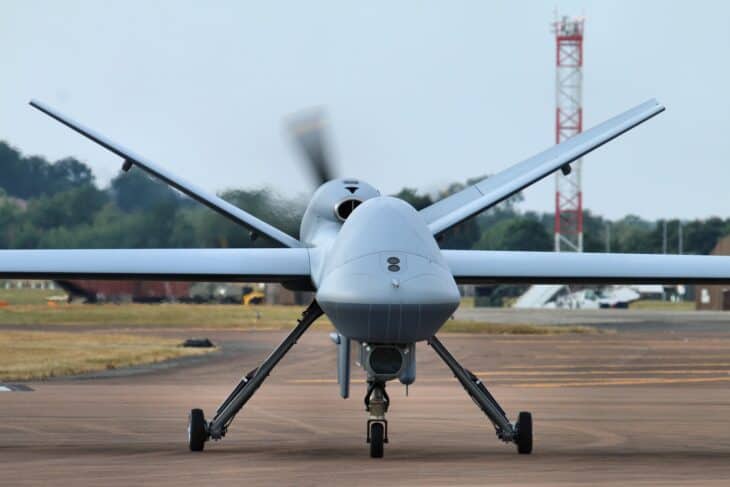
Denmark signed for four MQ-9B SkyGuardian drones from General Atomics on July 22, 2025. They are for surveillance over the Arctic, the North Atlantic and the Baltic Sea, with deliveries expected in 2028 and 2029.
A new unit, Eskadrille 729, is being formed at Aalborg to fly them. The squadron number once belonged to a Draken unit at Karup.
10. Airbus A330 MRTT: The Shared Tankers
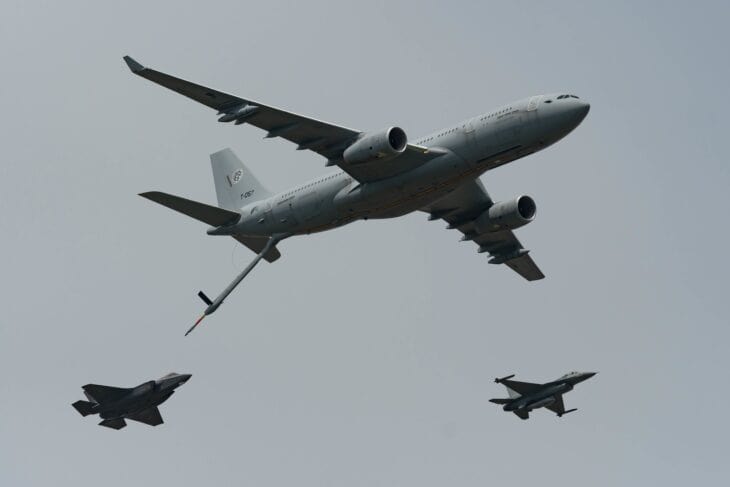
Denmark owns no tanker. It joined NATO’s Multinational MRTT Fleet with Sweden on June 25, 2025, and that pool is growing to 12 A330 MRTTs flown from Eindhoven in the Netherlands.
Wikipedia and Migflug both count Denmark’s share as two aircraft. For F-35s that have to reach Greenland or patrol far out over the Baltic, that tanker access matters more than the small number suggests.
Doesn't Denmark still fly F-16s?
No. The first Danish F-16 landed at Skrydstrup in January 1980, and the last four flew a farewell formation on January 18, 2026. Denmark pledged 19 of its jets to Ukraine in August 2023, with the first delivered in August 2024, and is selling 24 to Argentina, which took its first six in December 2025 with deliveries running to 2028.
Danish Air Force Bases
The air force works from four main bases in Jutland and Zealand. All Danish combat jets have been concentrated at Skrydstrup since 2006.
| Base | Units | Aircraft |
|---|---|---|
| Skrydstrup | Fighter Wing Skrydstrup, Eskadrille 727 | F-35A |
| Aalborg | Air Transport Wing, Eskadrille 721 and 729 | C-130J-30, CL-604 Challenger, MQ-9B from 2028 |
| Karup | Air Command, Helicopter Wing (Eskadrille 722, 723, 724), Flying School | AW101, MH-60R, AS550 Fennec, T-17 Supporter |
| Skalstrup | Air Defence Wing, formed March 26, 2025 | Ground-based air defense (NASAMS) |
Merlins also hold a search and rescue detachment at Roskilde. Værløse, near Copenhagen, closed on March 28, 2004.
How Big Is the Danish Air Force?
Sources disagree on headcount. Danish Defence gives about 2,500 personnel, according to Migflug, while Wikipedia lists 3,476 plus 100 conscripts.
In aircraft it is one of NATO’s smaller air forces, well outside the top of our largest air forces in the world list. Money is not the constraint it was: Denmark’s defense budget rose from 37.4 billion kroner in 2024 to 68.5 billion in 2025.
It also fits a Nordic pattern. Like the Dutch Air Force and Norway, Denmark has gone all-F-35 in the fighter role, while the Swedish Air Force still builds its own Gripens.
The air force is led by Maj. Gen. Jan Dam, head of Air Command at Karup since May 17, 2021.
Greenland and the Arctic
Greenland is why Denmark is buying patrol aircraft and drones. The government approved Arctic packages worth about 14.6 billion kroner in January 2025 and 27.4 billion kroner in October 2025.
Danish F-35s were the first contribution to NATO’s Arctic Sentry mission in February 2026. Day to day, though, Denmark’s presence over the island is still one Challenger at Kangerlussuaq and visiting Hercules.
A Short History of the Danish Air Force
Danish military flying began in 1912, when the navy and the army each received a donated aircraft. The two services flew separately until the German invasion of April 9, 1940, which grounded them for the rest of the war.
The Royal Danish Air Force was formed on October 1, 1950, by merging the army and navy air services. Its first jets, three Gloster Meteors, had arrived from Britain on January 20 that year.
Saab Drakens flew with Eskadrille 725 and 729 at Karup from 1970 to 1993. The F-16 arrived in January 1980, and Denmark eventually bought 77 of them, according to The Aviationist.
Danish F-16s dropped their first bombs in combat over Kosovo on May 30, 1999. Over Libya in 2011, six of them flew about 600 missions and dropped 923 precision-guided munitions, and they fought the Islamic State over Iraq from 2014 to 2016.
FAQ
Sources and references used for research and fact-checking.
- Migflug, Royal Danish Air Force
- Wikipedia, Royal Danish Air Force
- Danish Ministry of Defence, Denmark to acquire 16 additional F-35 fighter jets
- Migflug, Denmark Quietly Finalises Its Jump to 43 F-35s
- The Aviationist, Denmark Retires its F-16 Fleet After 46 Years of Service
- Breaking Defense, Denmark greenlights two-aircraft P-8 procurement for Arctic surveillance
- Defense News, Denmark buys four Sky Guardian drones for Arctic surveillance
- Breaking Defense, NATO orders additional A330 MRTT aircraft, onboards Denmark, Sweden
Get the Newsletter
The latest aviation news and stories sent to your inbox.
About the Author

Tim is the owner and lead editor of AeroCorner since 2019, overseeing aviation content covering aircraft, airlines, airports, and the broader aviation industry. Through years of researching, writing, editing, and publishing aviation-focused content, he has developed extensive practical knowledge of commercial aviation and air travel. Based in Asia and a frequent traveler himself, Tim also brings firsthand passenger experience to AeroCorner’s coverage. Outside of publishing, he has also explored aviation firsthand through hands-on flight training in New Zealand.