

Table of Contents
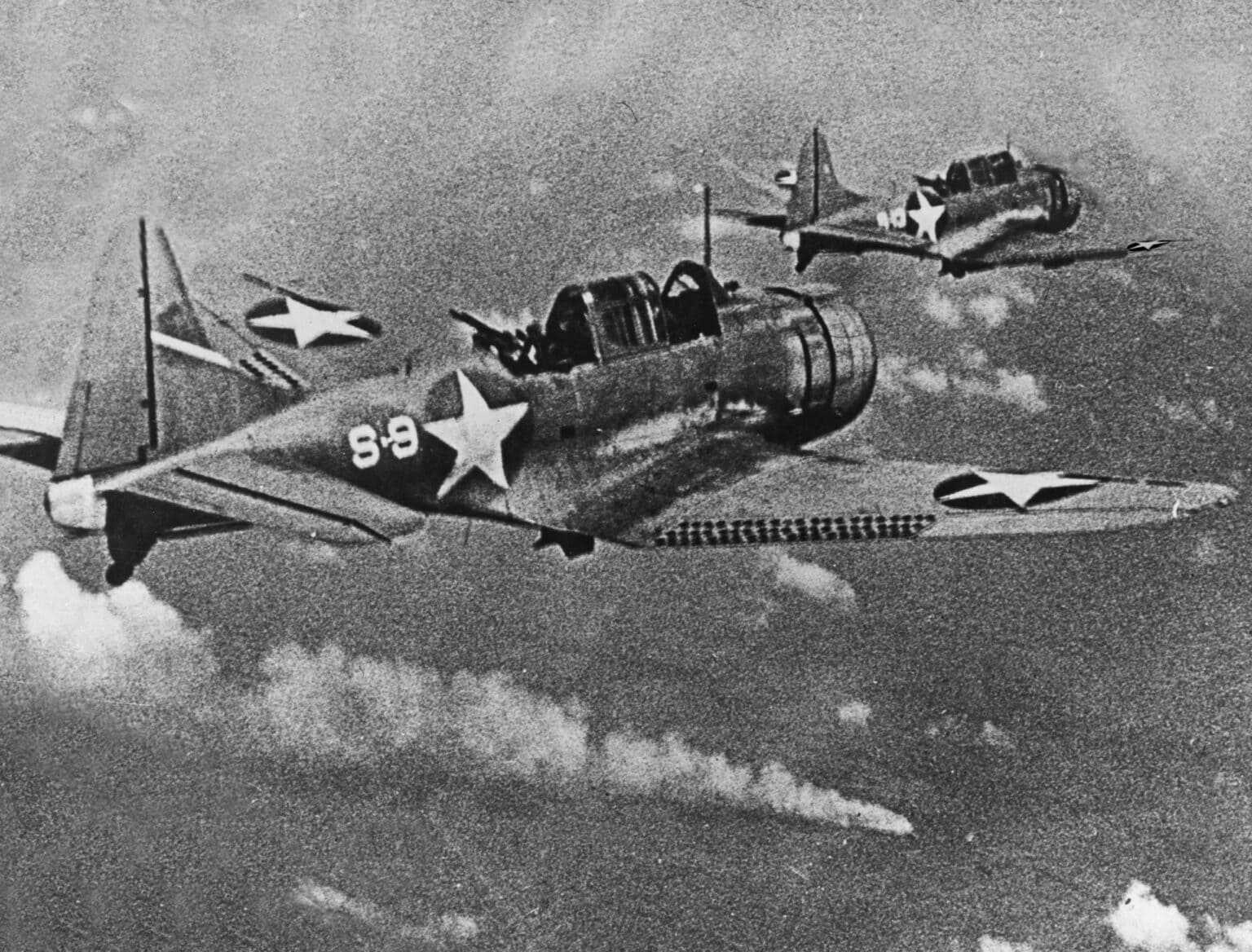
At about 10:20 a.m. on June 4, 1942, three squadrons of American dive bombers arrived over the Japanese carrier fleet at almost the same moment. Within about five minutes, three of Japan’s best aircraft carriers were burning wrecks.
That scene is usually told as the “miracle at Midway”: a hopeless underdog saved at the last second. The director of the Navy’s own history command disagrees. “It was not, however, a ‘miracle,'” he wrote for the battle’s 80th anniversary.
The real story is stranger and more interesting. Here is what happened at Midway, why Japan lost, and which famous parts of the legend turn out not to be true.
What Happened at the Battle of Midway?
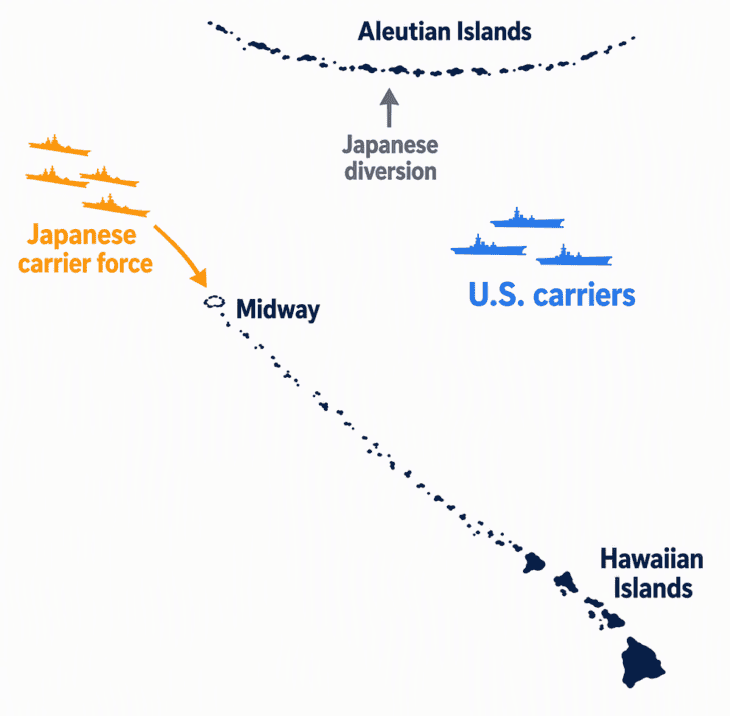
The Battle of Midway was fought from June 4 to 7, 1942, around Midway, a small atoll at the northwestern end of the Hawaiian island chain. Japan sent four of its big fleet carriers, Akagi, Kaga, Soryu and Hiryu, to capture the island and draw out what was left of the U.S. Pacific Fleet six months after Pearl Harbor.
The Americans were waiting. Aircraft from the carriers Enterprise, Hornet and Yorktown, plus planes flying from Midway itself, sank all four Japanese carriers and the heavy cruiser Mikuma. The U.S. lost the carrier Yorktown and the destroyer Hammann.
Midway at a glance
Japan lost four carriers, every one of which had attacked Pearl Harbor, and all 248 of its carrier aircraft. The U.S. lost one carrier and about 145 aircraft. Japan called off the invasion and shelved its plans to push on toward New Caledonia, Fiji and Samoa.
| Japan | United States | |
|---|---|---|
| Carriers sunk | 4 (Akagi, Kaga, Soryu, Hiryu) | 1 (Yorktown) |
| Other ships sunk | Heavy cruiser Mikuma | Destroyer Hammann |
| Aircraft lost | All 248 carrier aircraft | About 145 |
| Killed | More than 3,000 | 307 |
The U.S. Read Japan’s Plan Before It Sailed
The most important American weapon at Midway was a team of codebreakers. Navy radio intelligence units at Pearl Harbor (codenamed Hypo) and in Melbourne were reading parts of the Japanese navy’s main operational code by the spring of 1942.
From March, a target called “AF” kept appearing in decoded messages. Cmdr. Joseph Rochefort at Hypo and Lt. Cmdr. Edwin Layton, the Pacific Fleet’s intelligence officer, believed AF was Midway, but at first not everyone agreed.
So they set a trap. Midway sent a plain-language radio message saying its fresh-water distillation plant had broken down. Japanese radio intelligence picked it up, and a Tokyo intelligence report soon noted that “AF is short of water.”
By May 25, the codebreakers had confirmed June 4 as the date of the attack. Admiral Chester Nimitz placed his three carriers northeast of Midway, in position to ambush the Japanese carriers while their planes were busy attacking the island.
Japan, meanwhile, was overconfident after six months of victories. It thought it had sunk both American carriers at the Battle of the Coral Sea a month earlier, where the U.S. had in fact lost only USS Lexington.
Three months of damage, three days in port
Navy experts estimated Yorktown’s Coral Sea damage needed at least three months in a shipyard. The carrier reached Pearl Harbor on May 27, yard workers labored around the clock, and Yorktown sailed for Midway on May 30.
Coral Sea also cost Japan two carriers it could have brought. Shokaku was out with heavy damage, and Zuikaku stayed home because Japan could not rebuild its air group in time.
America Had More Aircraft at Midway Than Japan
Japan’s overall Midway force was enormous, with battleships including the giant Yamato, an invasion fleet and a second strike group sent toward Alaska’s Aleutian Islands. But the Navy’s history office points out that none of it except the four carriers was in a position to affect the battle.
Where the fighting actually happened, the numbers favored the Americans. By the Navy history office’s count, four Japanese carriers with 248 aircraft faced three U.S. carriers and an island airfield with 360 aircraft between them.
That does not mean the Americans fought well at first. The planes based on Midway attacked first and were cut to pieces, and Army B-17 Flying Fortresses bombing from high altitude hit nothing at all.
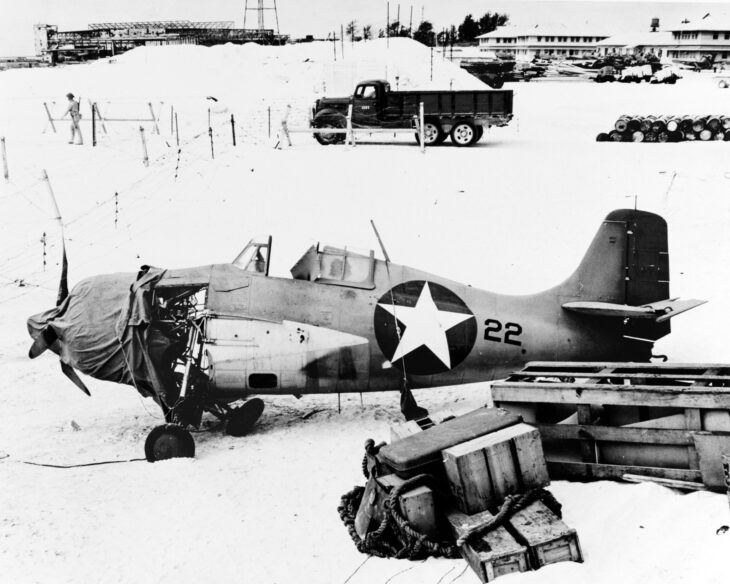
Marine fighter pilots defending the island flew 21 obsolete Brewster Buffalos and seven F4F Wildcats. Japanese Zeros shot down 13 of the Buffalos and three of the Wildcats, and only two of the fighters that made it back were still flyable.
.jpg)
Those losing attacks still changed the battle. One crippled B-26 Marauder missed the bridge of the flagship Akagi by a matter of feet, nearly killing the Japanese commander, Vice Adm. Chuichi Nagumo, and his staff.
Convinced Midway’s defenses had to be finished off, Nagumo ordered at 7:15 a.m. that his 107-plane reserve be re-armed with bombs for land targets instead of torpedoes for ships. Only at 8:20 a.m. did he learn an American carrier was nearby.
Torpedo Squadron 8 and the Morning That Went Wrong
By 9 a.m., 152 American carrier aircraft were on their way to Nagumo, and 77 of them were flying in directions that would miss his carriers entirely. Hornet’s air group flew a course later nicknamed the “flight to nowhere,” and all ten of its escorting fighters ran out of fuel and ditched.
Lt. Cmdr. John Waldron of Torpedo Squadron 8 (VT-8) broke away from that formation, radioing that he knew where the Japanese were. At 9:18 a.m., his 15 Douglas TBD Devastator torpedo bombers appeared low over the water.
Zeros shot down every one. Ensign George Gay, the last pilot still flying, dropped his torpedo at Soryu, missed, and was shot down; he was the only survivor among VT-8’s Devastator crews.
Two more torpedo squadrons, from Enterprise and Yorktown, followed and were cut down the same way. Of 41 Devastators that attacked, not one turned away. The Navy’s history office counts only three that made it back to their carriers.
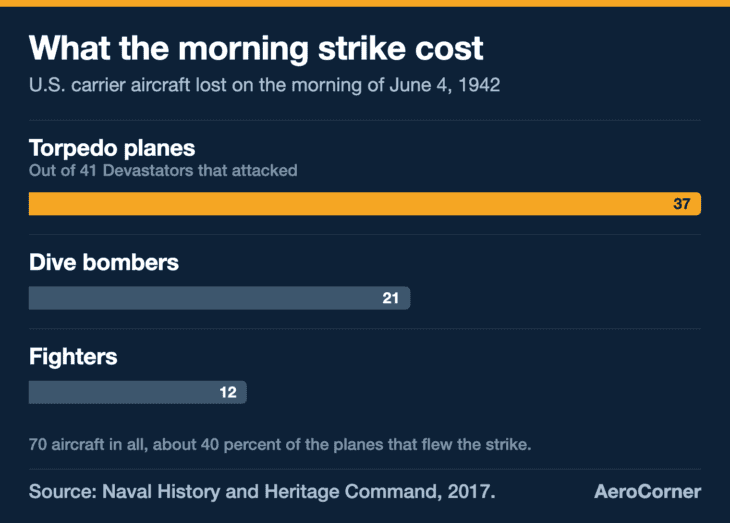
Across the whole morning, the U.S. lost 70 carrier aircraft: 37 torpedo planes, 21 dive bombers and 12 fighters. That was about 40 percent of the planes involved.
Their sacrifice bought something. The torpedo attacks pulled the Japanese fighters down low and kept the carriers turning hard, so Nagumo’s crews could not bring their counterstrike up and spot it on the flight decks.
The breakthrough came by accident. Lt. Cmdr. Wade McClusky, leading 33 Enterprise SBD Dauntless dive bombers and nearly out of fuel, spotted the destroyer Arashi at 9:55 a.m. racing to rejoin the fleet after hunting the submarine USS Nautilus, and followed its wake.
7:15 a.m.
The re-arming order. After the attacks from Midway, Nagumo orders his 107-plane reserve switched from anti-ship weapons to bombs for the island.
8:20 a.m.
A carrier is sighted. Nagumo learns for the first time that an American carrier is in the area, and his crews start switching weapons back.
9:18 a.m.
Torpedo Squadron 8 attacks. Fifteen Devastators come in low and unescorted. All are shot down.
9:55 a.m.
McClusky finds the wake. The Enterprise dive bomber leader spots the destroyer Arashi and follows it toward the carriers.
10:20 a.m.
The dive bombers arrive. Enterprise and Yorktown squadrons reach the carriers together. Kaga, Akagi and Soryu are wrecked within minutes.
Around noon
Hiryu strikes back. Dive bombers from the last Japanese carrier hit Yorktown. Torpedo planes return about three and a half hours later.
Around 5 p.m.
Hiryu is hit. Enterprise dive bombers leave the fourth Japanese carrier a burning wreck.
The Five Minutes That Happened, and the Story That Didn’t
The famous version of the next moment comes largely from Mitsuo Fuchida, Akagi’s air group commander, who had led the attack on Pearl Harbor but was too ill to fly at Midway. His book, Midway: The Battle That Doomed Japan, was one of three main sources that two generations of American historians built their accounts on.
Myth: the decks were packed with planes about to launch
In the classic telling, the dive bombers caught the Japanese carriers with flight decks full of armed, fueled aircraft, just moments from launching a strike that would have won the battle. Naval historians Jonathan Parshall and Anthony Tully, in their book Shattered Sword, called Fuchida’s account irretrievably flawed, and the Navy’s history office now agrees the decks were not packed.
According to the Naval History and Heritage Command, the strike aircraft were still below in the hangars while fighters cycled on and off the flight decks to deal with the torpedo attacks. Those hangar planes were fully fueled, and some carried torpedoes and some still had bombs.
That made the reality worse, not better, for the Japanese. Bombs that punched through the flight decks set off fueled, armed aircraft inside enclosed hangars, and the explosions that followed were devastating.
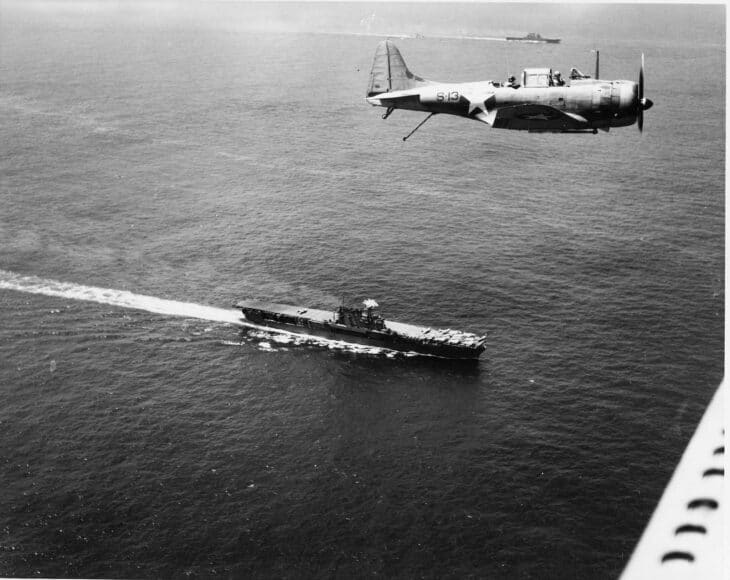
The attack was not textbook either. Through a mix-up over which squadron should take which target, about 28 Enterprise dive bombers went for Kaga and only three for Akagi, while Yorktown’s 17 dive bombers took Soryu.
_and_USS_Saratoga_(CV-3)_on_19_December_1942.jpg)
One of those three, led by Lt. Richard Best, put a bomb into Akagi’s upper hangar. (Some accounts credit the hit to his wingman instead.) That hit, plus a near miss that jammed its rudder, put the Japanese flagship out of the fight.
Three ships, one pilot
Lt. (j.g.) N. Jack “Dusty” Kleiss of Enterprise hit Kaga that morning, Hiryu that afternoon and the heavy cruiser Mikuma two days later. He was the only American pilot to hit three different ships at Midway, and when he died in 2016 at 100, he was the last surviving Midway dive bomber pilot.
A second myth is that Midway wiped out Japan’s elite carrier pilots. More than 75 percent of the Japanese naval aviators survived the battle, although the Navy’s history office still counts over 100 trained pilots lost. What Japan could not replace quickly were the four carriers and their skilled maintenance crews.
How Yorktown and Hiryu Ended the Battle
Hiryu was the one carrier the morning dive bombers missed. Rear Adm. Tamon Yamaguchi had armed its dive bombers in the hangar, so it had a counterstrike airborne by about 11 a.m., and those bombers disabled Yorktown around noon.
Hiryu’s torpedo planes came next, led by Lt. Joichi Tomonaga, whose aircraft was still leaking fuel from damage taken over Midway that morning. He knew before takeoff that he could not make it back, and refused to trade planes. His strike forced Yorktown’s crew to abandon ship.
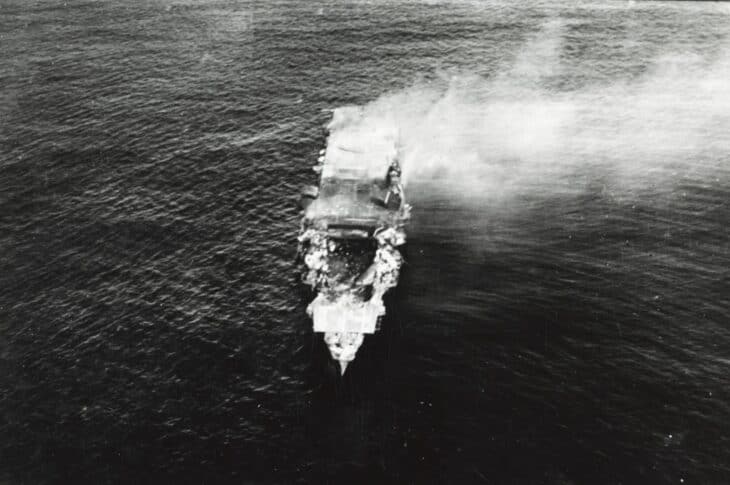
Around 5 p.m., Enterprise dive bombers found Hiryu and set it ablaze too. Early on June 5, Japanese destroyers scuttled the burning Akagi and Hiryu, and Admiral Isoroku Yamamoto called off the invasion of Midway.
.jpg)
On June 6, U.S. dive bombers sank the heavy cruiser Mikuma. The same day, the Japanese submarine I-168 interrupted the salvage effort and torpedoed Yorktown and the destroyer Hammann, which sank almost at once. Yorktown rolled over and sank at dawn on June 7.
Japan’s leaders then lied about the result and announced a great victory. According to the Navy’s history office, only Emperor Hirohito was told the truth, while Prime Minister Hideki Tojo and the army were kept in the dark.
Where the Midway Carriers Are Now
The battle was fought over water more than 18,000 feet (5,700 m) deep, which kept its wrecks hidden for decades. A National Geographic expedition led by Robert Ballard found Yorktown in 1998, sitting upright more than three miles down.
In 2019, a Vulcan Inc. and U.S. Navy expedition aboard the research vessel Petrel located Kaga and Akagi. In September 2023, the Ocean Exploration Trust’s ship Nautilus sent remotely operated vehicles more than 16,700 feet (5,100 m) down and filmed Akagi for the first time since it sank.
“Many anti-aircraft guns were still pointing up, providing clues about the final moments on these iconic ships,” the expedition’s chief scientist, Daniel Wagner, told CBS News. Soryu and Hiryu have still never been found, as of the latest surveys we could find.
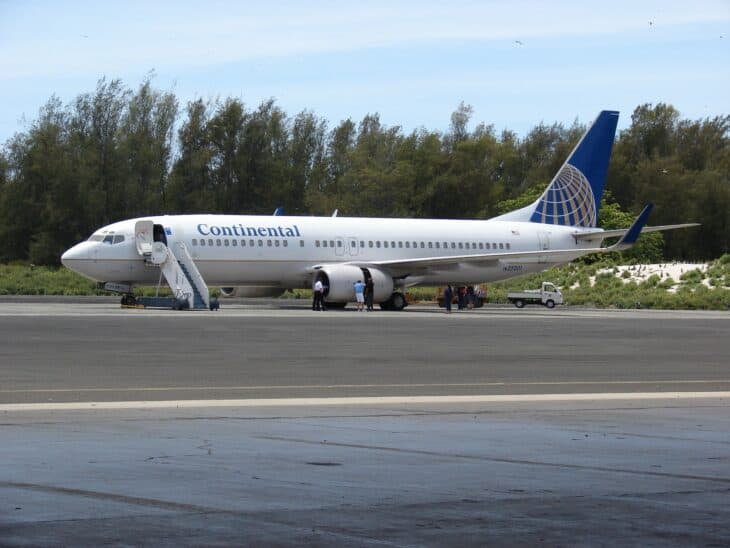
Midway itself still matters to aviation. United and Qantas have told the FAA that Pacific flights still need the atoll’s aging runway as a place to divert.
_at_Henderson_Field,_Midway_Atoll.jpg)
So the miracle at Midway was not really a miracle. It came from codebreakers who knew the date, a carrier patched up in three days, more aircraft than the enemy had, a destroyer’s wake, and 41 torpedo plane crews who never turned away.
What still looks like luck is the timing: three squadrons that took different routes arriving over the Japanese carriers in the same few minutes. Those five minutes were real. The decks full of planes were not.
Sources and references used for research and fact-checking.
- Naval History and Heritage Command, Battle of Midway
- Naval History and Heritage Command, H-Gram 006: 75th Anniversary of the Battle of Midway
- Naval History and Heritage Command, H-Gram 072: The 80th Anniversary of the Battle of Midway
- Naval History and Heritage Command, H-006-3: The Midway-Based and Carrier Torpedo Bomber Attacks
- Naval History and Heritage Command, H-006-4: The Dive Bomber Attacks and the Loss of Yorktown
- Naval History and Heritage Command, H-072-1: VT-8 at Midway
- Naval History and Heritage Command, The Role of COMINT in the Battle of Midway
- Naval History and Heritage Command, Dictionary of American Naval Fighting Ships, Yorktown III (CV-5)
- HistoryNet (Richard B. Frank), 'Shattered Sword' Book Review: The Untold Story of the Battle of Midway
- Ocean Exploration Trust (Nautilus Live), The Battle of Midway: A Pivotal WWII Engagement within Papahanaumokuakea
- CBS News, Unprecedented images of WWII shipwrecks from Battle of Midway
Get the Newsletter
The latest aviation news and stories sent to your inbox.
About the Author

Tim is the owner and lead editor of AeroCorner since 2019, overseeing aviation content covering aircraft, airlines, airports, and the broader aviation industry. Through years of researching, writing, editing, and publishing aviation-focused content, he has developed extensive practical knowledge of commercial aviation and air travel. Based in Asia and a frequent traveler himself, Tim also brings firsthand passenger experience to AeroCorner’s coverage. Outside of publishing, he has also explored aviation firsthand through hands-on flight training in New Zealand.