

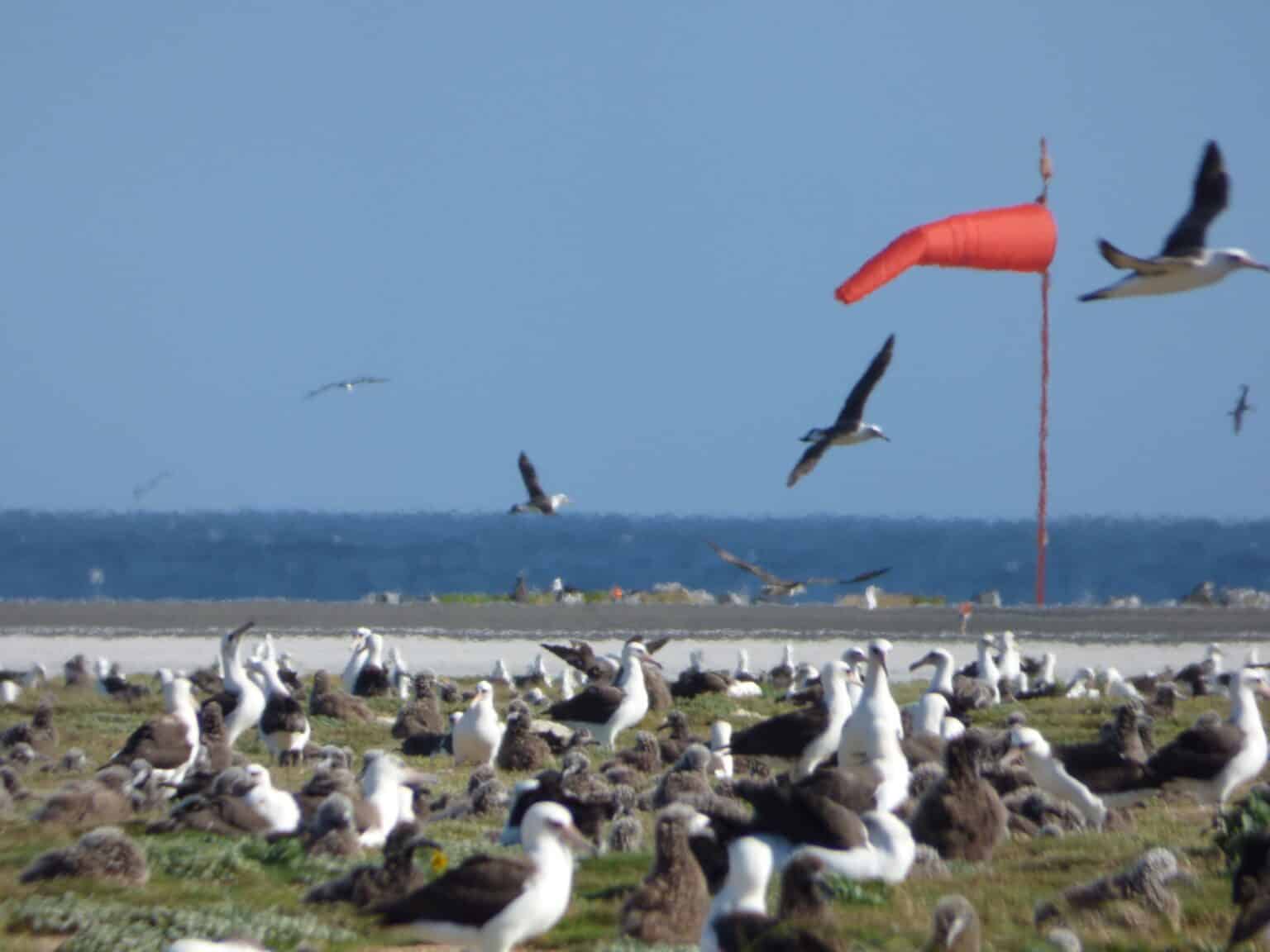
United and Qantas have told the FAA that trans-Pacific flights still depend on the airport at Midway Atoll, which needs more than $100 million in repairs. Their filings, posted on September 22, 2026, are among 46 comments in an FAA docket on whether the remote airfield should stay available.
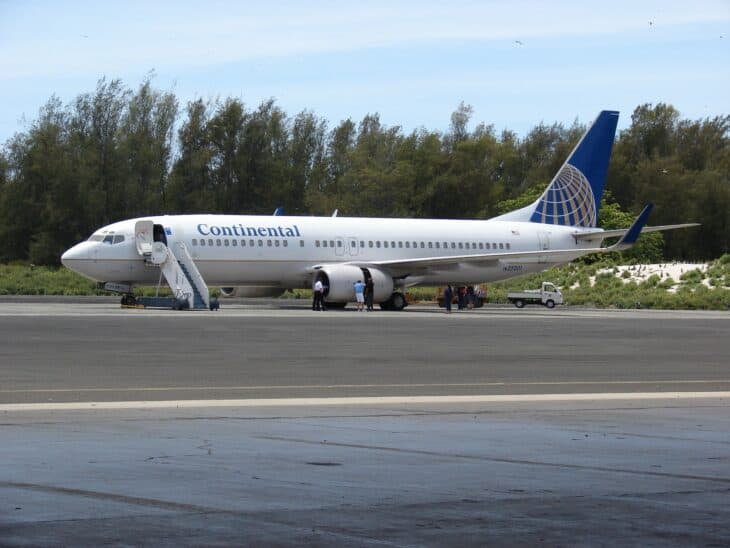
The airfield, Henderson Field (MDY), sits about 1,300 miles (2,100 km) northwest of Honolulu. It has had no scheduled commercial service since 2002, but it is written into the emergency plans of tens of thousands of trans-Pacific flights a year.
A $100 Million Repair Bill
The FAA opened the question in a July 24 notice. It said the runway is expected to reach a severe level of deterioration within five years, and that major rehabilitation would cost more than $100 million for milling, repaving and seawall repairs.
Current funding is a fraction of that. The U.S. Fish and Wildlife Service, which has run the atoll as a wildlife refuge since the Defense Department handed it over in 1996, gets $2.5 million a year in FAA airport grants and adds $2.6 million of its own.
The notice asked which routes would suffer, how much extra fuel they would burn and what passengers would pay if Midway were no longer available. Comments were due September 8, but filings kept arriving until September 23, and the docket now holds 46.
Why an Empty Airfield Matters: ETOPS
Twin-engine jets crossing an ocean fly under ETOPS rules, which cap how far, in flying time with one engine out, they may stray from a suitable diversion airport. United’s filing mentions approvals of 180, 207, 240 and 330 minutes.
Those alternates are chosen when the flight is planned, and the FAA says Midway can only be used that way while it keeps its Part 139 airport certificate. Without it, airlines would have to plan other routes.
The North-Central Pacific has few options. The FAA lists Wake Island, Eareckson Air Station in the Aleutians and the Marshall Islands airport as the others, a constraint layered on top of the curve Pacific flights already trace on a flat map.
Real diversions to Midway are rare. The FAA counts at least eleven commercial and military landings there between 2003 and 2021, but the airlines argue its value is in the planning: an available alternate lets a flight take a shorter, cheaper track every day.
_at_Henderson_Field,_Midway_Atoll.jpg)
What the Airlines Told the FAA
United’s filing puts numbers on it. The airline says it uses Midway as an ETOPS alternate for more than 8,000 flights a year, 20-plus a day, and estimates that all Pacific carriers together plan around 44,000 flights a year with it.
United says losing Midway would add about 30 minutes to the minimum diversion time on routes where it is the closest alternate. If weather or volcanic ash rules out the Aleutian and northern Japan alternates and Wake Island is also unsuitable, it estimates 45 to 60 minutes of extra flying and about 1,500 gallons more fuel per flight.
Its 737 and 777-200 fleets, which are not approved beyond 180 minutes, depend on Midway to stay inside that limit. Across both of its scenarios, United estimates the loss would cost it about 2.6 million gallons of extra fuel and more than $21.75 million a year.
Qantas tied its answer to Project Sunrise, the nonstop Sydney to London service it plans to start in October 2027 with the A350-1000ULR. Without Midway, Qantas says, Wake Island becomes a single point of failure on the northern routing.
If both airfields are unavailable, Qantas says the 21-hour flight would be pushed northwest, adding about 20 minutes and roughly 4,850 pounds (2,200 kg) of fuel per sector. That could mean leaving up to 22 passengers behind on a given day.
Japanese low-cost carrier Zipair said nearly all of its outbound Hawaii flights and about 90% of its outbound West Coast flights select Midway. The Defense Department asked the FAA to keep the airport certificated.
Airlines for America, which represents Alaska, American, Delta, United, FedEx and UPS among others, argued that emergency infrastructure exists for rare, high-consequence events. The loss of Midway would cut the options open to a crew facing an engine failure, a fire or a medical emergency, the group wrote.
What Happens Next
The FAA’s notice gives no decision date and names no source for the money. United urged dedicated federal capital funding and put the repair at about $0.63 per flight for its own planning uses over a 20-year runway life.
The airline filings reviewed for this story all point the same way, and they come from the operators that would gain most from federal money keeping the runway open. Whether Congress or the FAA finds the $100 million is now the open question.
Midway at a glance
Henderson Field (MDY), Midway Atoll. About 1,300 miles northwest of Honolulu. Run by the U.S. Fish and Wildlife Service since 1996. No scheduled commercial service since 2002. Repair need: more than $100 million. Annual funding: about $5.1 million.
Sources and references used for research and fact-checking.
- FAA (Federal Register), Request for Comments on Midway Atoll Airport/Henderson Airfield (MDY), Docket FAA-2026-8185, 91 FR 46823
- United Airlines (docket comment), Comment of United Airlines, Inc., FAA-2026-8185-0042
- Qantas (docket comment), Qantas Group Submission, FAA-2026-8185-0039
- Zipair (docket comment), Comment from ZIPAIR Tokyo Inc., FAA-2026-8185-0016
- Department of Defense (docket comment), Comment from DOD, FAA-2026-8185-0019
- Airlines for America (docket comment), A4A Comments on Midway Atoll Airport/Henderson Airfield, FAA-2026-8185-0041
Get the Newsletter
The latest aviation news and stories sent to your inbox.
About the Author

Tim is the owner and lead editor of AeroCorner since 2019, overseeing aviation content covering aircraft, airlines, airports, and the broader aviation industry. Through years of researching, writing, editing, and publishing aviation-focused content, he has developed extensive practical knowledge of commercial aviation and air travel. Based in Asia and a frequent traveler himself, Tim also brings firsthand passenger experience to AeroCorner’s coverage. Outside of publishing, he has also explored aviation firsthand through hands-on flight training in New Zealand.