

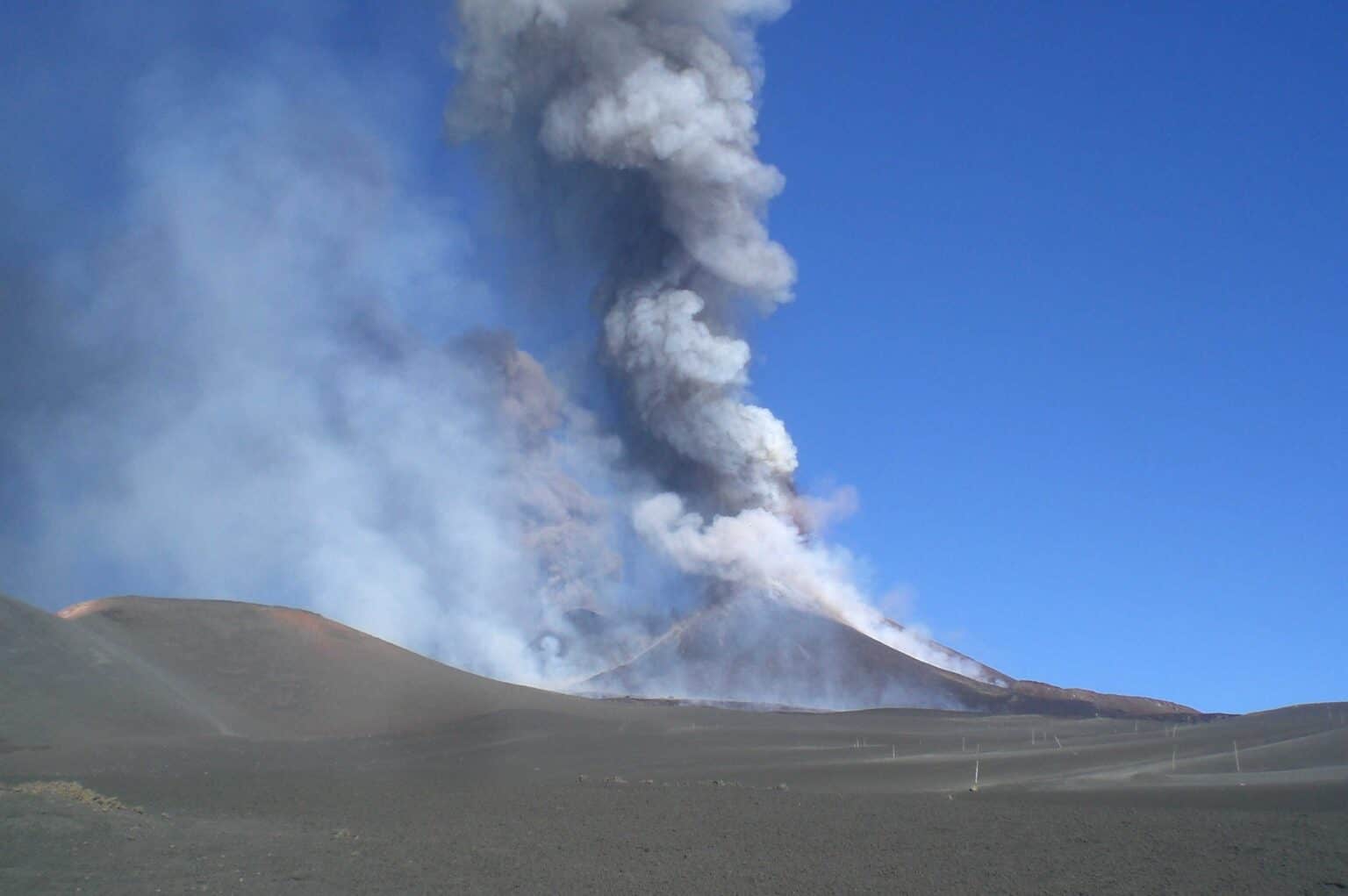
Catania Airport stopped all arrivals and departures on Saturday, September 26, 2026, after ash from Mount Etna’s North-East Crater drifted over eastern Sicily. Airport operator SAC said the suspension runs until 12:00 local time on Sunday, September 27.
SAC blamed both “volcanic activity and weather conditions” for the shutdown at Catania-Fontanarossa Airport, which Reuters describes as Italy’s fifth-busiest by passenger traffic. It is at least the third time since early August that Etna has closed the airport.
How the Closure Unfolded
Italy’s National Institute of Geophysics and Volcanology (INGV) had already raised Etna’s aviation alert to red, the highest of four levels, on September 24. Its notice at 06:33 UTC on Saturday reported ash emission under way, with the cloud reaching about 13,000 feet (4 km) above sea level and drifting south.
Landings were first rationed and then halted altogether, ANSA reported. A violent thunderstorm flooded Catania’s streets the same morning, and around midday SAC extended the stop to departures as well.
Ten Catania-bound flights were diverted on Saturday: five to Palermo, three to Trapani and two to Comiso, Quotidiano di Ragusa reported. SAC also runs Comiso, and Aeroitalia moved its Rome flights there, the same outlet reported.
Brussels Airlines diverted its Saturday afternoon arrival to Palermo Airport and bused passengers on to Catania. It canceled the evening return to Brussels, and a spokesperson told The Brussels Times that around 140 passengers were not expected home until Sunday or Monday.
At the time of writing, early on Sunday morning local time, SAC had not announced a change to the noon deadline. The airport has asked passengers to check their flight status with their airline before traveling to the terminal.
Why a Small Plume Can Still Close an Airport
This is not a big eruption. INGV’s notice puts Etna’s summit crater at 3,300 m (about 10,800 feet), so Saturday’s cloud rose only around 2,300 feet (700 m) above it.
INGV volcanologist Marco Neri wrote on September 25 that the reddish-brown plume is not fresh magma. He described it as old material being shaken loose from the crater’s conduit, where lava from the summer’s eruptions had coated the walls and was then corroded into clay by acidic volcanic gases.
For aircraft, that distinction matters less than where the dust goes. The airport sits about 18 miles (30 km) south of the volcano, and a southward wind carries even a low cloud into the altitudes that arriving and departing jets pass through.
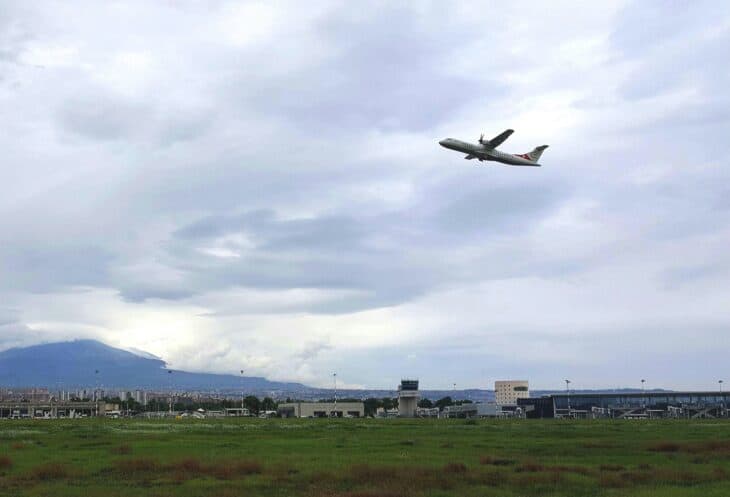

Ash is fine rock and glass, and the US Geological Survey notes that its melting point is lower than the combustion temperature inside modern jet engines. It can fuse onto turbine parts and abrade windshields, and the USGS counts nine cases between 1953 and 2009 in which an ash encounter caused an in-flight engine failure.
Neri also cautioned that INGV cannot rule out this “cleaning” phase becoming a transition to renewed activity if pressure from below builds again. That leaves the airport exposed to more stop-start days while the red alert stands.
A Summer of Stop-Start Operations
Reuters notes that Etna’s ash emissions have been particularly intense this summer. In August, eruptions at the Voragine crater shut Catania on and off for more than a week at the height of the holiday season.
In mid-September, SAC closed the airport again when airspace sectors C1 and B3 were shut, then reopened it hours ahead of schedule, Sky TG24 reported. A closure can leave aircraft and crews out of position elsewhere, so flight delays can outlast the ash itself.
What Stranded Passengers Are Owed
Under the EU’s air passenger rules, Regulation 261/2004, a volcanic ash closure counts as an “extraordinary circumstance.” That generally frees airlines from paying the fixed cash compensation owed for a cancellation.
It does not free them from the duty of care. In McDonagh v Ryanair, ruled in January 2013 after the Eyjafjallajökull ash crisis, the EU Court of Justice held that airlines must still provide meals, hotel rooms and transport to stranded passengers, and that the regulation sets no time or cost limit on that duty.
Passengers who pay for those essentials themselves can claim back what the court called “necessary, appropriate and reasonable” expenses. Keeping receipts is the practical takeaway for anyone waiting out the ash in Sicily this weekend.
Sources and references used for research and fact-checking.
- INGV Osservatorio Etneo, Comunicati VONA
- INGVvulcani (Marco Neri, INGV), Il pennacchio bruno-rossiccio emesso dal Cratere di Nord-Est dell'Etna: interpretazione dei processi in atto
- SAC Aeroporto di Catania, Catania Airport official site
- Court of Justice of the European Union, Judgment in Case C-12/11, Denise McDonagh v Ryanair Ltd (31 January 2013)
- US Geological Survey, Volcanic ash: effects on aircraft
- US Geological Survey, Alert level icons (aviation color codes)
Get the Newsletter
The latest aviation news and stories sent to your inbox.
About the Author

Tim is the owner and lead editor of AeroCorner since 2019, overseeing aviation content covering aircraft, airlines, airports, and the broader aviation industry. Through years of researching, writing, editing, and publishing aviation-focused content, he has developed extensive practical knowledge of commercial aviation and air travel. Based in Asia and a frequent traveler himself, Tim also brings firsthand passenger experience to AeroCorner’s coverage. Outside of publishing, he has also explored aviation firsthand through hands-on flight training in New Zealand.