

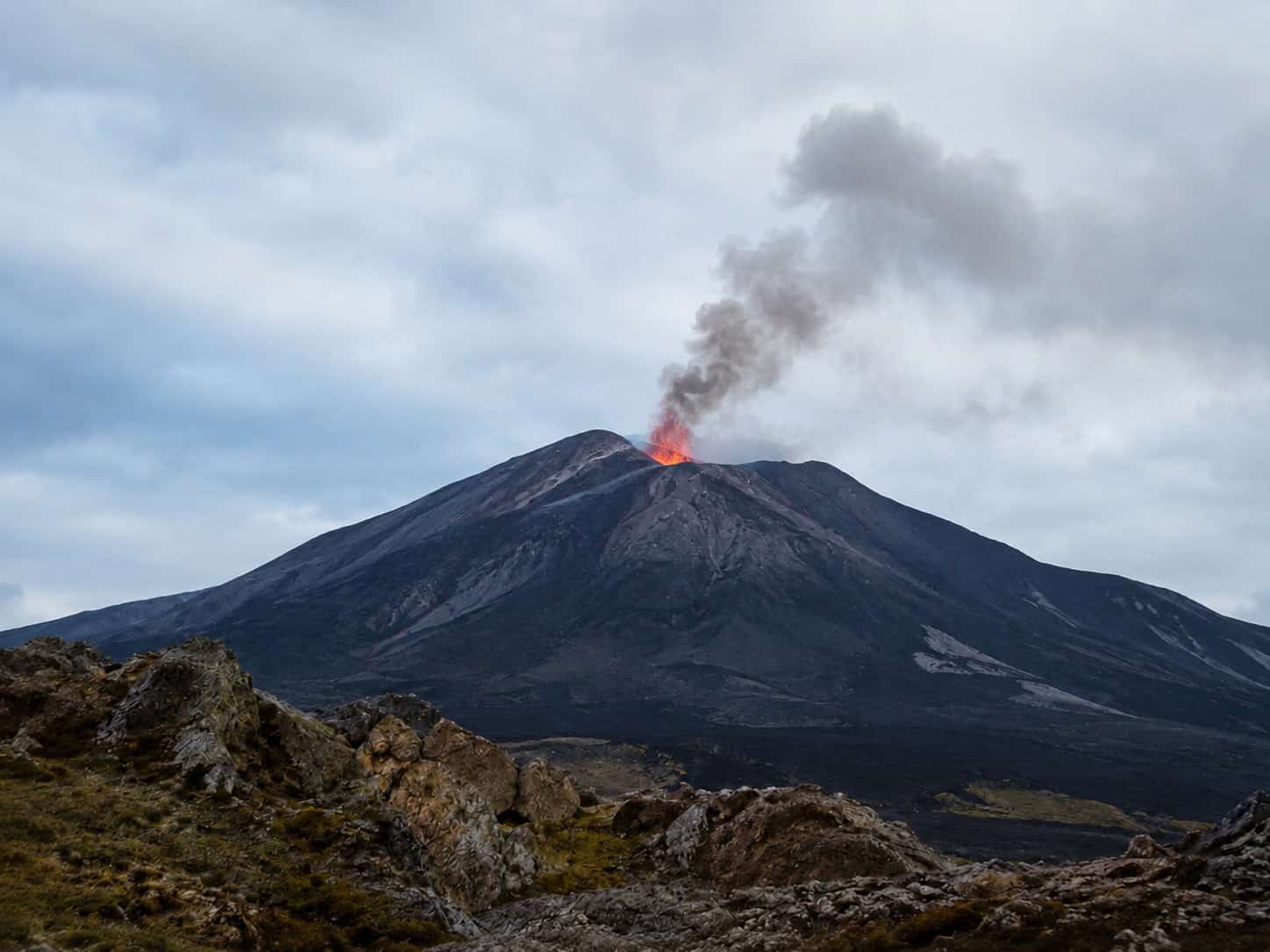
Mount Etna’s eruption has kept Sicily’s Catania airport closed on and off since early August 2026. As of August 13, the latest closure is set to run through 2 a.m. local time on August 14, and airport operator SAC has said it cannot guarantee that deadline will hold.
What’s happening on the ground
The eruption began August 7 at Etna’s Voragine crater. A paroxysm the next day sent an ash plume to roughly 17,000 feet (5,200 m), and Italy’s INGV volcano institute has kept its aviation alert at red, the highest of four color levels, ever since.
Catania Fontanarossa Airport has suspended arrivals and departures repeatedly since August 8, as shifting winds keep pushing ash back over the approach paths. SAC extended the latest closure on August 12 through 2 a.m. on August 14, after regulators kept the airspace sector southwest of the volcano shut.
SAC says roughly 700 flights have been canceled and about 100,000 passengers affected since the eruption intensified. More than 100 flights have been rerouted to Trapani, carrying upward of 15,000 passengers, on top of earlier diversions to Comiso and Palermo.
Ash has also reached Malta International Airport, where flights have been canceled and delayed, and volcanic gas has drifted as far as Libya and Tunisia.
Nello Musumeci, Italy’s minister for civil protection and maritime policies, said the repeated cancellations are hitting Sicily at the height of summer travel, with the region’s tourism sector facing an estimated €12 million to €24 million in losses.
How the alert scale works
Green means a volcano is quiet, yellow and orange signal rising unrest, and red means ash is actively erupting and hazardous to aircraft, the level Etna has held since August 8.
Why ash, not smoke, grounds airliners
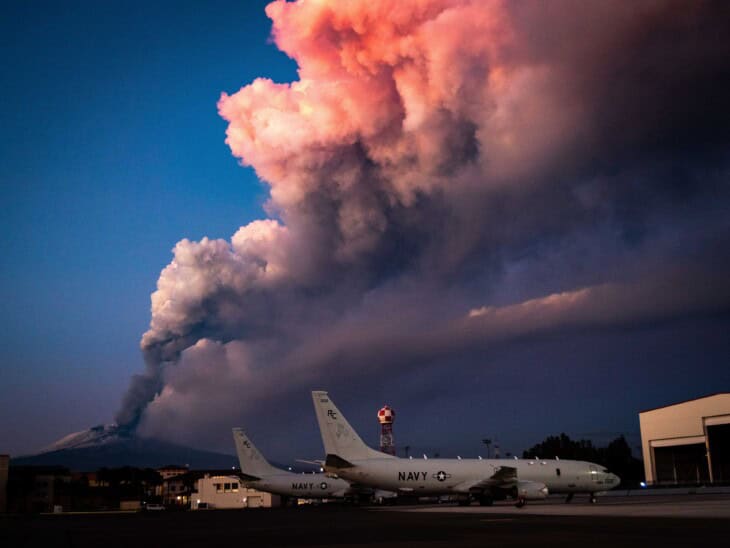
Volcanic ash is pulverized rock and glass, not the smoke it resembles from a distance. Pulled into a jet engine, it melts at operating temperature and resolidifies on cooler turbine blades, and it can sandblast cockpit windows and clog sensors.
Airlines treat a red ash alert as an absolute no-fly zone rather than a hazard to route around, which is why entire sectors of airspace close instead of individual crews choosing their own path, a pattern AeroCorner has covered in its guide to how flights get diverted.
The largest precedent remains Iceland’s 2010 Eyjafjallajökull eruption, which shut down most of European airspace for about a week and grounded roughly 100,000 flights continent-wide. Etna’s eruption is far more localized, but the same physics is why Catania stays closed rather than flying around the cloud.
Stefano Branca, who heads INGV’s volcanoes department, told the Italian news agency Dire that monitoring systems can flag when an eruption starts but not when it will end.
Still developing
SAC has pushed back its reopening target more than once since August 8. Treat the August 14 deadline as provisional until the airport confirms flights have actually resumed.
Sources and references used for research and fact-checking.
Get the Newsletter
The latest aviation news and stories sent to your inbox.
About the Author

Tim is the owner and lead editor of AeroCorner since 2019, overseeing aviation content covering aircraft, airlines, airports, and the broader aviation industry. Through years of researching, writing, editing, and publishing aviation-focused content, he has developed extensive practical knowledge of commercial aviation and air travel. Based in Asia and a frequent traveler himself, Tim also brings firsthand passenger experience to AeroCorner’s coverage. Outside of publishing, he has also explored aviation firsthand through hands-on flight training in New Zealand.