

Military Propellor Planes
Grumman F7F Tigercat
ICAO: F7F
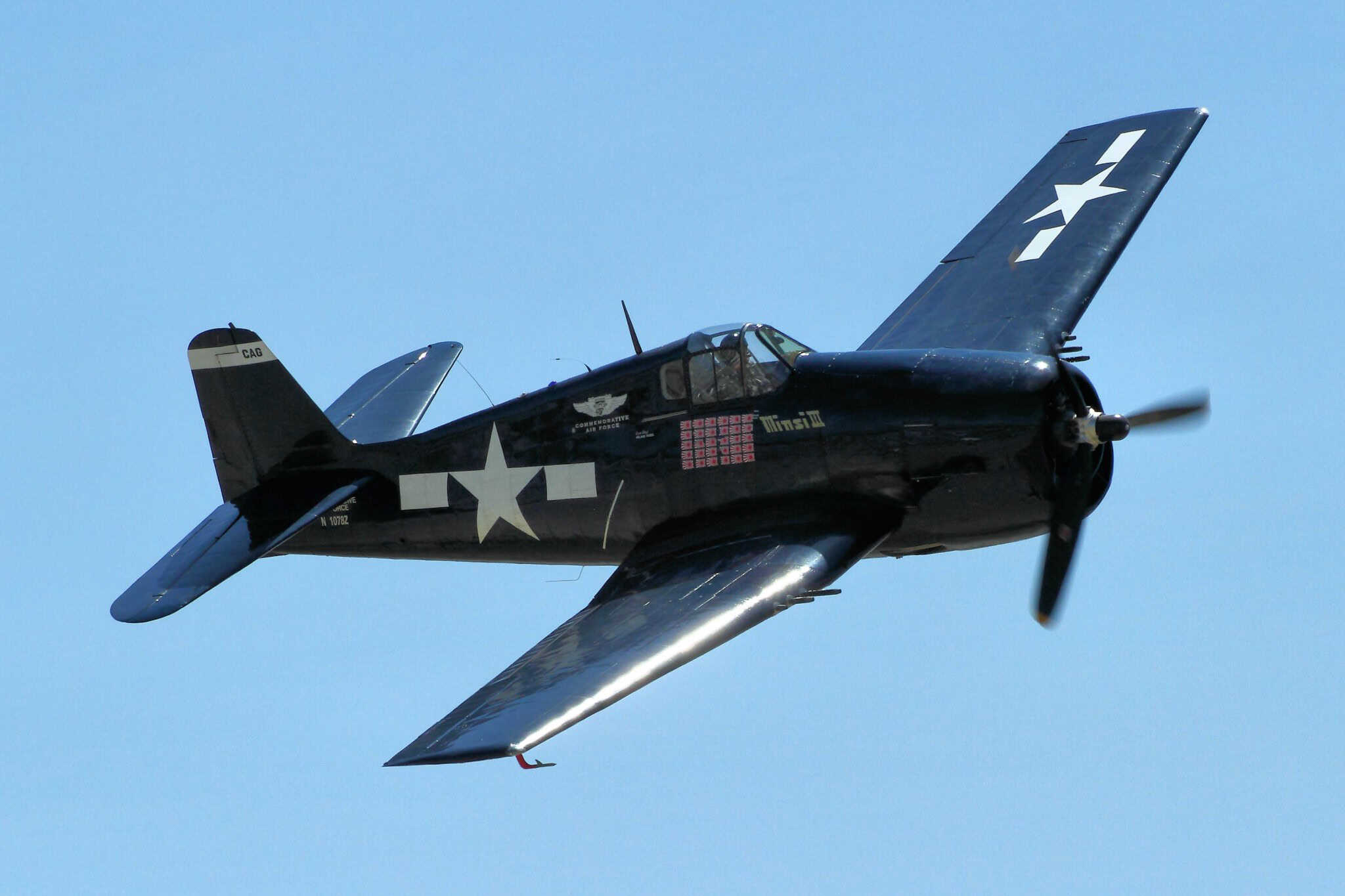
The Grumman F6F Hellcat was the U.S. Navy's main carrier fighter of the Pacific War, built to beat the Japanese Zero and credited with more aerial victories than any other Allied naval aircraft.
Updated: by Tim de Vries
The latest aviation news and stories sent to your inbox.
The Grumman F6F Hellcat was a single-seat carrier fighter that first flew in 1942 and reached the fleet in 1943. It was an all-new design built around the Pratt & Whitney R-2800 Double Wasp, not a stretched Wildcat. Grumman built 12,275 in just over two years, and Navy, Marine and Royal Navy Hellcats were credited with 5,223 enemy aircraft.
Live Fleet Activity (F6F)
Fetching live data…
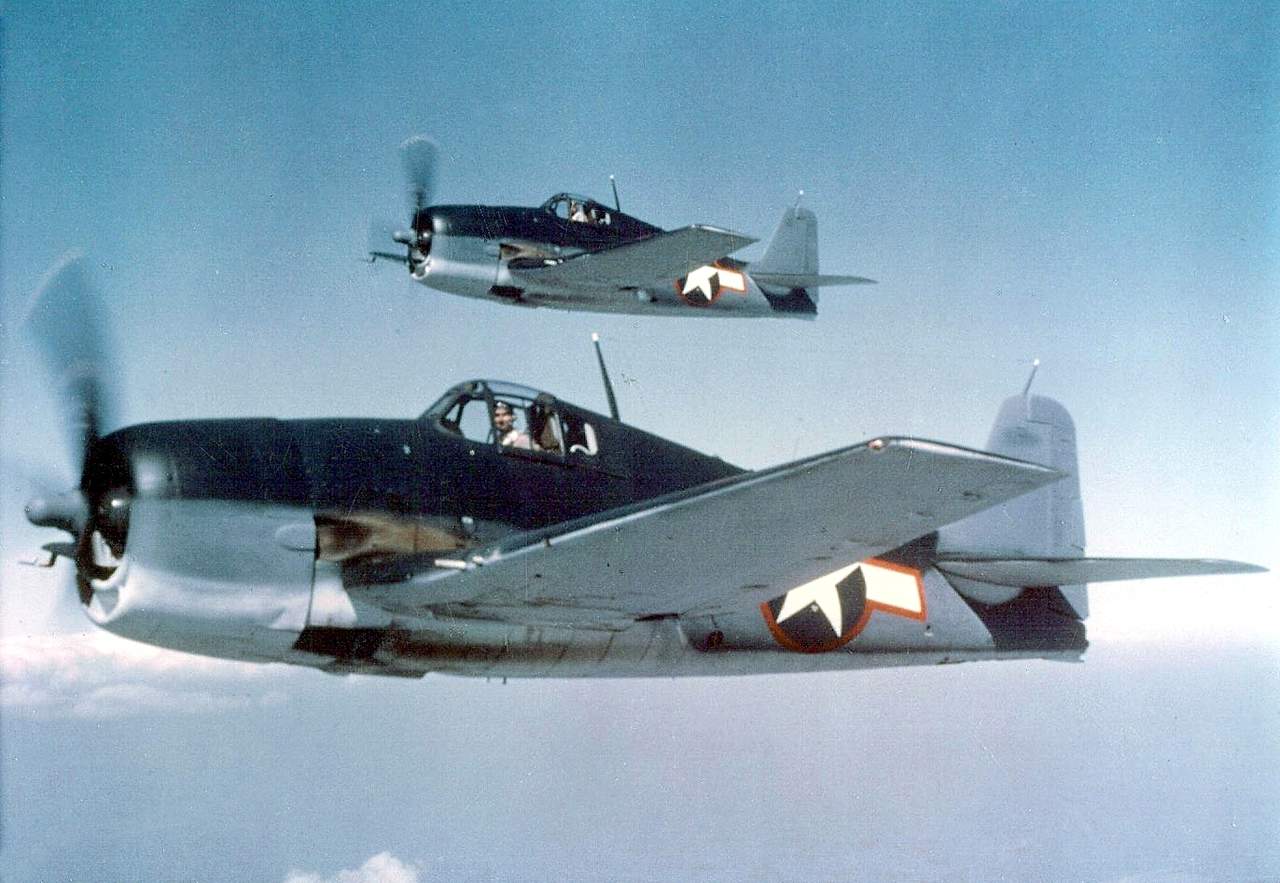




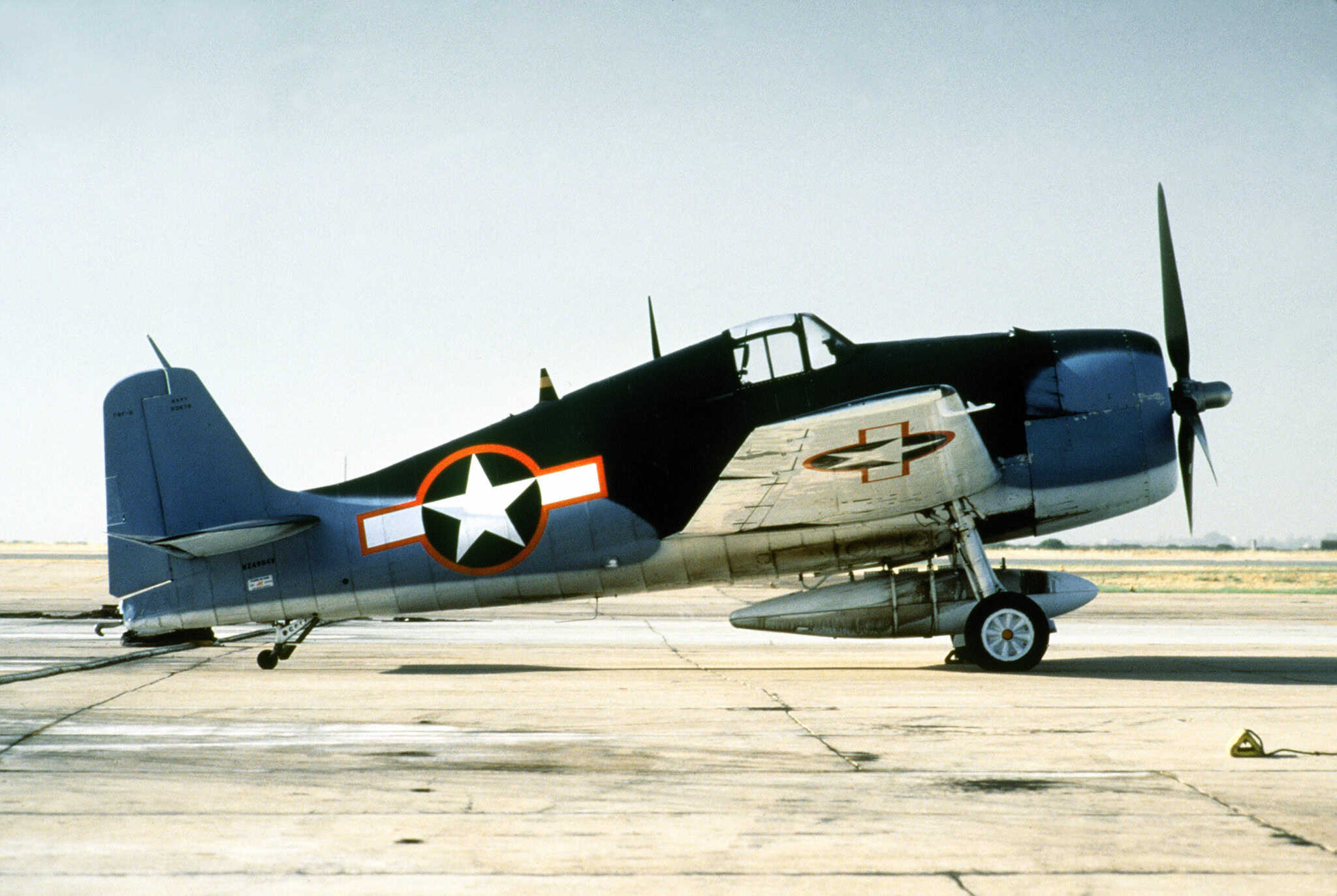

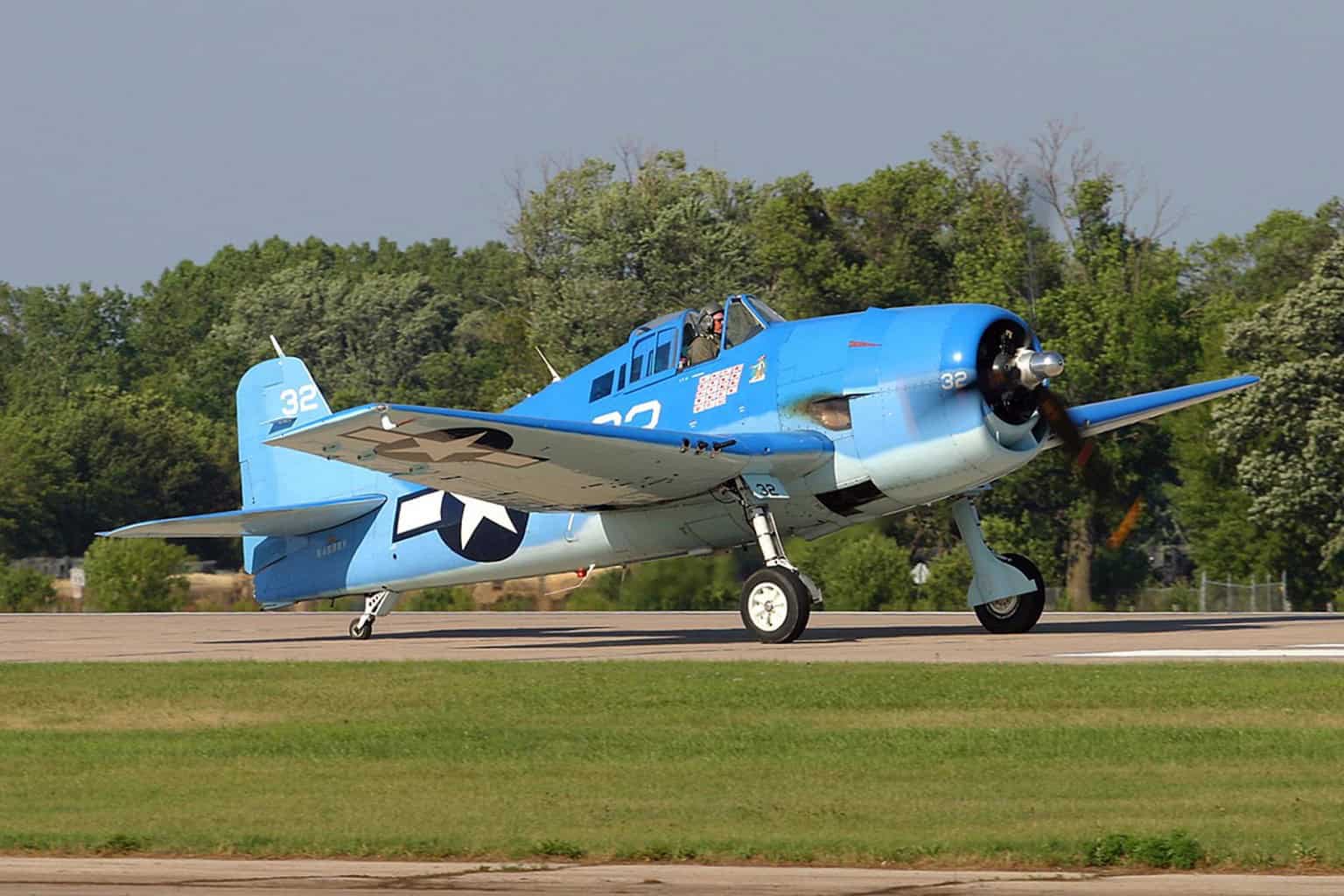

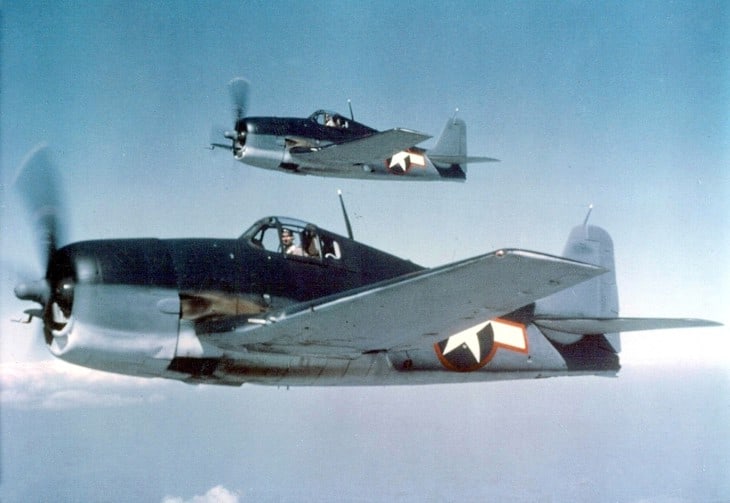
The Grumman F6F Hellcat was the U.S. Navy’s main carrier fighter for the second half of the Pacific War. It was designed to replace the F4F Wildcat and to beat the Japanese Mitsubishi A6M Zero.
It did that job. Hellcats flown by the Navy, Marines and Royal Navy were credited with 5,223 enemy aircraft, more than any other Allied naval aircraft. Grumman built 12,275 of them in just over two years.
The full specification table for the aircraft is on this page. This article covers the story behind the numbers.
Grumman had been working on a Wildcat successor since 1938, and the Navy signed for the XF6F-1 prototype on June 30, 1941. It was first meant to use a Wright R-2600 Twin Cyclone engine.
In April 1942, Lt. Cdr. Butch O’Hare toured the Grumman plant and described how the Wildcat fared against the Zero. Days later the Navy told Grumman to fit the bigger Pratt & Whitney R-2800 Double Wasp, the engine already used in the Vought Corsair.
The airframe was redesigned and strengthened around that engine. The prototype with the R-2800 flew in 1942, and the Hellcat reached the fleet in 1943.
Pilots sat higher in the fuselage, which improved their view over the nose. The wide-set landing gear retracted hydraulically, replacing the Wildcat’s narrow hand-cranked gear.
The Hellcat was built to survive. It had a bullet-resistant windshield, 212 lb (96 kg) of cockpit armor, armor around the oil tank and cooler, and a self-sealing fuel tank.
The Hellcat made its combat debut on August 31, 1943, in raids on Marcus Island. Over Tarawa on November 23 and 24, Hellcats claimed 30 Zeros for the loss of one F6F.
Navy pilots later flew trials against a captured Zero 52. The Hellcat was faster at every altitude and rolled faster at higher speeds, while the Zero out-turned it at low speed.
The Navy’s advice to its pilots was blunt: do not dogfight a Zero, use the Hellcat’s power and speed, and dive away if one gets on your tail.
The Hellcat was the main Navy fighter at the Battle of the Philippine Sea in June 1944, nicknamed the “Great Marianas Turkey Shoot” for the number of Japanese aircraft shot down. Hellcats scored 75% of all Navy aerial victories in the Pacific.
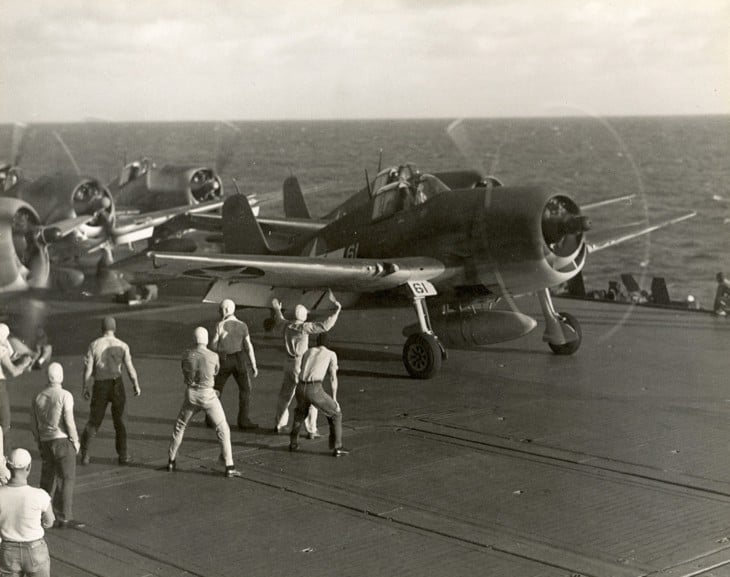
U.S. Navy and Marine pilots flew 66,530 combat sorties in the Hellcat and claimed 5,163 kills, at a recorded cost of 270 Hellcats in air combat. The type produced 305 aces, including Capt. David McCampbell, the Navy’s top ace, who scored all 34 of his victories in it.
Those kill claims came with an advantage the airframe could not supply. From 1942 onward the Navy faced increasingly inexperienced Japanese pilots and had growing numerical superiority.
The F6F-3 was the first production version, with a 2,000 hp R-2800-10. It was built in a night-fighter form, the F6F-3N, with radar in a pod on the right wing.
The F6F-5 became the most-built variant. It added the R-2800-10W with water injection, a more streamlined cowling, spring-loaded aileron tabs, a flat armored-glass windscreen and a strengthened rear fuselage and tail.
Standard armament was six .50 caliber Browning machine guns with 400 rounds each. Some F6F-5Ns carried two 20 mm cannon and four machine guns instead.
For ground attack, the Hellcat could carry six 5 in rockets or two 11.75 in Tiny Tim rockets. The centerline rack took a 2,000 lb bomb or a Mark 13 torpedo, and the Hellcats dropped 6,503 tons of bombs over the war.
Three figures on the panel need context. Range is the published combat range of 821 nm · 940 mi · 1,520 km. The ferry range, flown with drop tanks and no combat load, is about 1,330 nautical miles.
The top speed of 340 kt · 391 mph · 630 km/h is the F6F-5 figure from period performance data. It is slower than the Corsair, which is why the Navy accepted the Corsair’s speed advantage but still preferred the Hellcat on a carrier deck.
The climb rate and takeoff run are published F6F-5 figures.
The Corsair was faster, but it had forward visibility, landing bounce and stall problems on carriers. The Navy preferred the Hellcat’s docile handling, and passed early Corsairs to the Marine Corps, which flew from land.
The Corsair was cleared for U.S. carrier operations in late 1944. By then the Royal Navy had already helped solve its landing problems.
The F8F Bearcat replaced the Hellcat after 1945. Radar-equipped F6F-5Ns stayed in service as night fighters as late as 1954.
The F6F-5 was the first aircraft flown by the Navy’s Blue Angels when the team formed in 1946. In 1952, Guided Missile Unit 90 used radio-controlled F6F-5K drones, each carrying a 2,000 lb bomb, to attack bridges in Korea.
The French Navy flew F6F-5s in Indochina, and the French Air Force used them there from 1950 to 1952. The Uruguayan Navy kept its F6F-5s until the early 1960s.
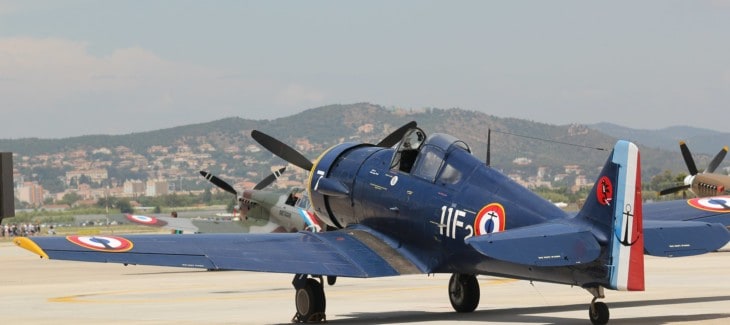
One Hellcat even went to the Bikini Atoll atomic tests. NASM’s F6F-3K 41834 was converted to a radio-controlled drone and flew through the cloud of the 1946 Operation Crossroads tests. It is now on display at the Udvar-Hazy Center in Virginia.
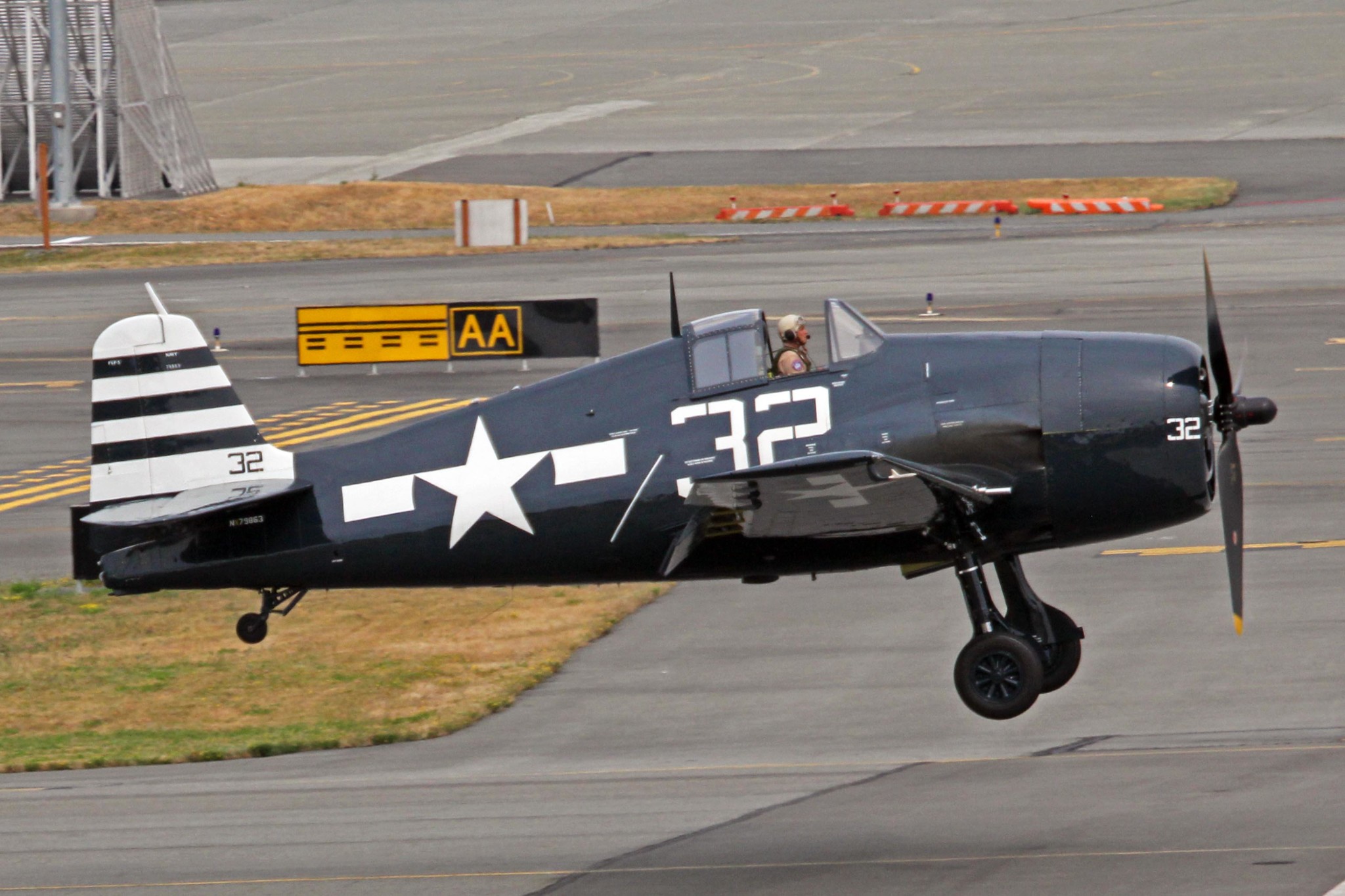
A large number of Hellcats survive. Wikipedia’s survivor list names nine airworthy aircraft at the time of writing, including F6F-5 79863 at the Flying Heritage and Combat Armor Museum in Everett, Washington.
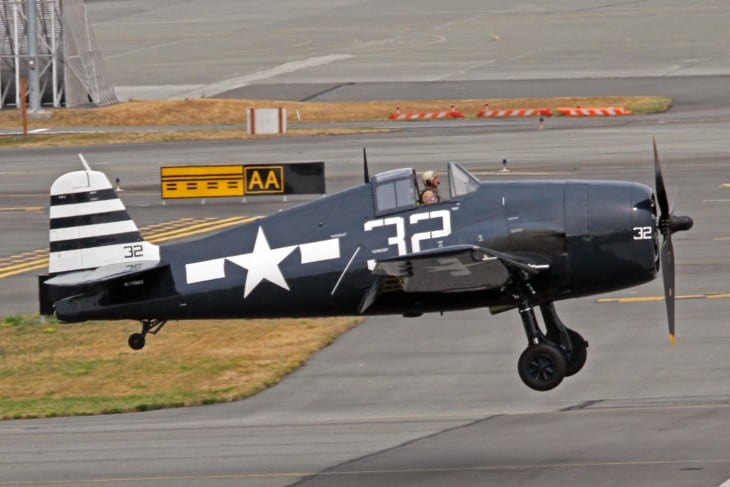
Others fly with the Commemorative Air Force in Camarillo, California, Fagen Fighters in Minnesota and the Palm Springs Air Museum. Static examples sit at the National Naval Aviation Museum in Pensacola, the Fleet Air Arm Museum and the Smithsonian.
For other carrier fighters, see our guide to the best fighter jets in the world.
It paired a 2,000 hp Double Wasp engine with a tough, forgiving airframe. It was faster than the Zero at all altitudes, easy to land on a carrier and could absorb heavy damage.
It depends on the job. The Corsair was faster, but early Corsairs had carrier-landing problems, so the Navy flew Hellcats at sea until late 1944.
Wikipedia’s survivor list names nine airworthy Hellcats: three F6F-3s, five F6F-5s and one F6F-5N. Several more are under restoration.
The panel on this page gives the F6F-5 top speed as 340 kt · 391 mph · 630 km/h.
Grumman built 12,275 in just over two years.
In Navy trials against a captured Zero 52, the Hellcat was faster at all altitudes. The Zero could out-turn it at low speed, so pilots were told not to dogfight it.
Sources and references used for research and fact-checking.

.jpg)