

Table of Contents
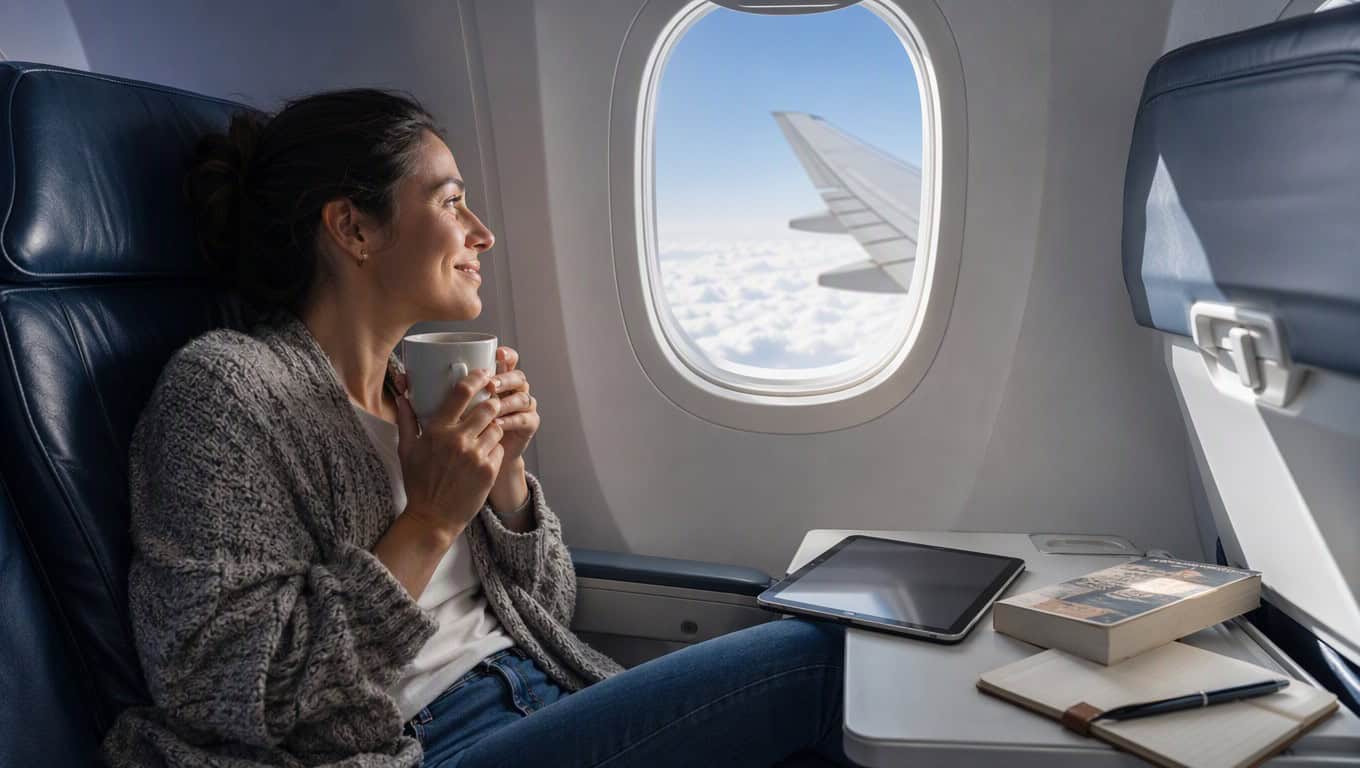
A long flight is mostly waiting. Once the seatbelt sign goes off and the cabin settles, you have hours with nowhere to go and not much to do.
The best plane activities share a few traits. They work without Wi-Fi, fit on a tray table and stay quiet enough for the row around you.
The 30 ideas below cover screens, audio, paper, hands-on crafts, window games and ways to rest. Pick three or four that suit the flight, and pack them before you leave. If you are traveling with children, our list of airplane activities for kids covers that case.
01. Download a Season of a Show Before You Leave
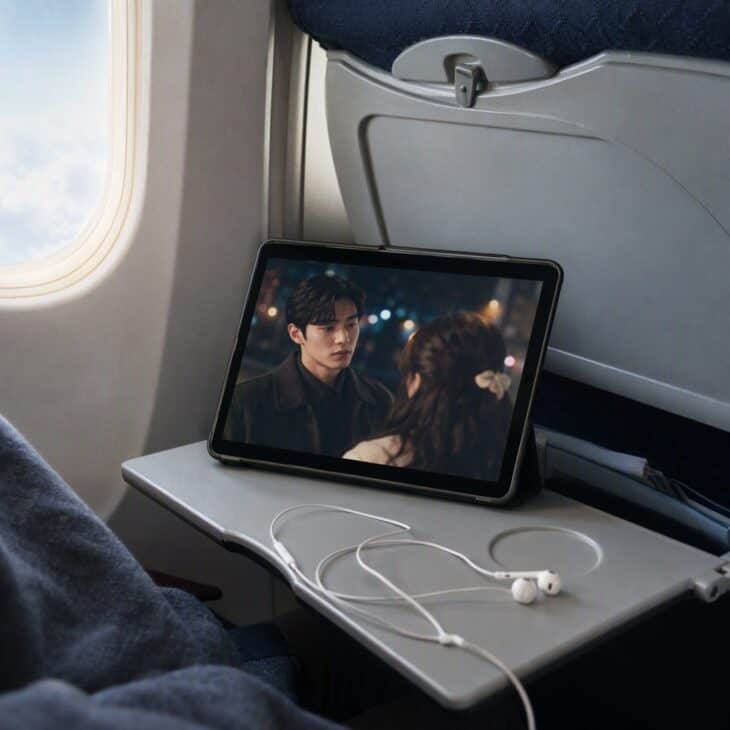
What it is A streaming app’s offline download feature, which saves episodes to your phone or tablet so they play without Wi-Fi. Most major apps let you queue a whole season at once and choose a lower quality to save storage.
Why it works In-flight Wi-Fi is slow, patchy or paid, while a saved episode plays the same at 35,000 feet as it does on your couch. A series also gives you a reason to look forward to the next hour.
How to get it Download on home Wi-Fi the night before, since airport networks are slow and crowded. Pick a show you have not started so there is no spoiler risk and no rewatching. Download two more episodes than you think you need, because flights run late and batteries drain.
02. Build a Playlist Around the Flight Itself
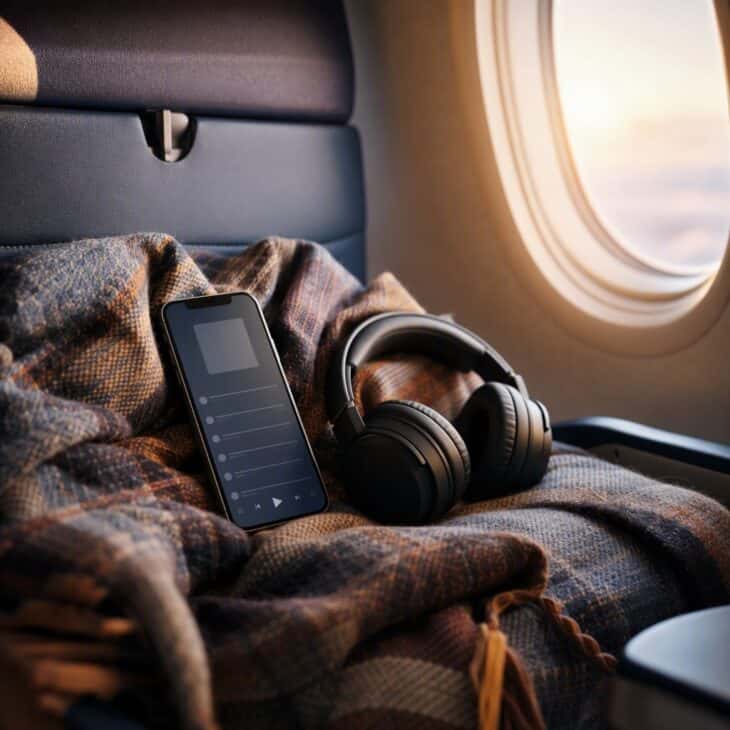
What it is A playlist timed to the flight, with a calm opening for boarding, an upbeat middle for the cruise and slow tracks for the descent. You build it in any music app and download it for offline play.
Why it works Music changes how time feels, and a playlist with a clear shape gives a long flight a beginning, middle and end. It also drowns out engine drone better than silence does.
How to get it Match the total runtime to the flight time so you can see how far along you are. Keep a separate sleep list of slow, lyric free tracks. Check that every song is downloaded, because streaming only playlists go silent the moment you switch on airplane mode.
03. Listen to a Narrative Podcast Series
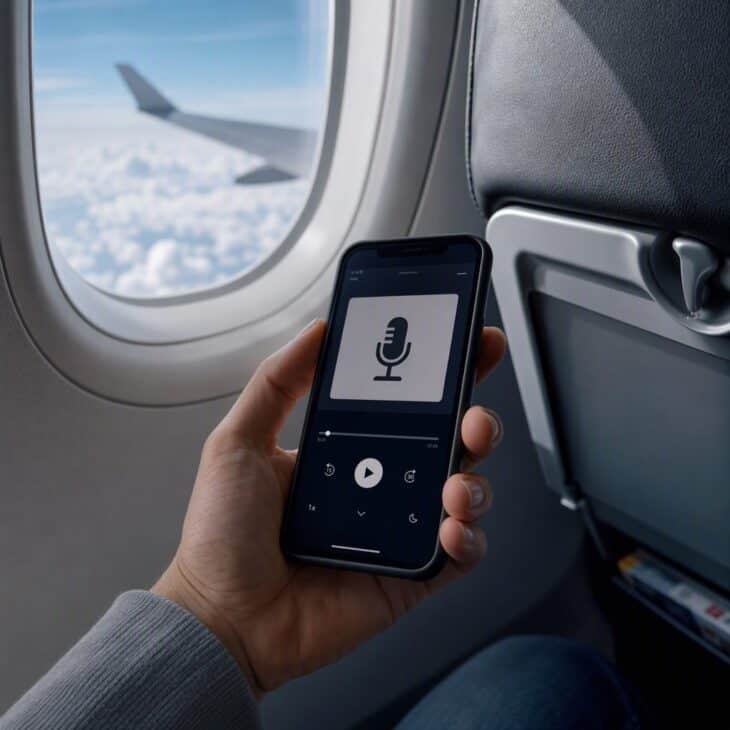
What it is A serialized podcast, meaning a story told over several episodes with a single plot or investigation. True crime, history and fiction series all fit, and most podcast apps download episodes for offline use.
Why it works Audio lets you rest your eyes and shut out the cabin, and a cliffhanger makes the next episode easy to start. It works in a window seat, a middle seat or a dim cabin at night.
How to get it Choose a series with episodes of 30 to 45 minutes so a natural break comes with every landing or snack service. Download the whole run before boarding. Use wired or wireless noise canceling headphones if you have them, since cabin noise hides quiet speech.
04. Read a Page Turner on an E-Reader
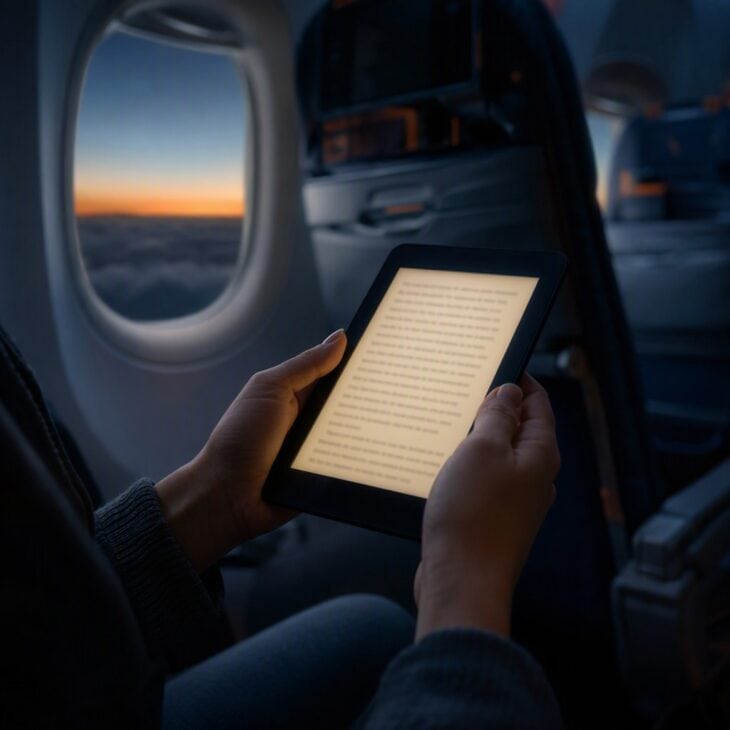
What it is A dedicated e-reader with a matte screen, or a reading app on a phone or tablet. A single device can hold hundreds of books and often runs for weeks on a charge.
Why it works A paperback is heavy and a tray table is small. An e-reader gives you a backlit or front lit page that works in a dark cabin without lighting up your neighbor.
How to get it Load two or three books in different moods, such as a thriller, a memoir and something light. Library apps let you borrow ebooks for free and send them to the device. Turn the brightness down and the warm light up for night flights.
05. Pack a Real Paperback for Takeoff and Landing
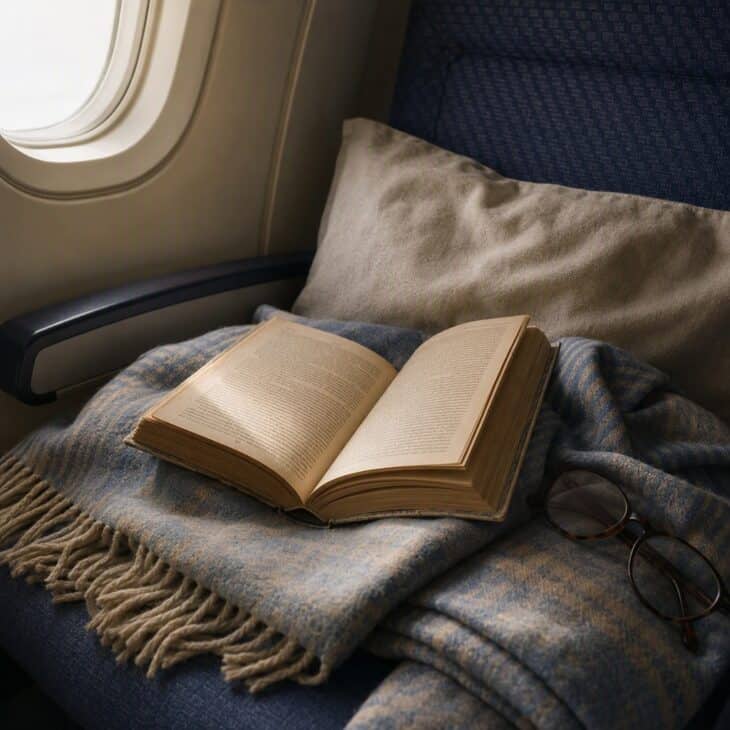
What it is A physical book, ideally a paperback that you do not mind bending or losing. It needs no battery and no signal.
Why it works Electronic devices are often fine during taxi, takeoff and landing, but a book never needs to go away. It is also the one thing that still works if your tablet dies mid trip.
How to get it Choose a slim paperback you have been meaning to read, and tuck it into the seat pocket in front of you before takeoff. Pick something you would happily leave behind in a hotel or airport when you finish it. Bring a bookmark so you do not dog ear a borrowed copy.
06. Read an Aviation Book About the Plane You Are On
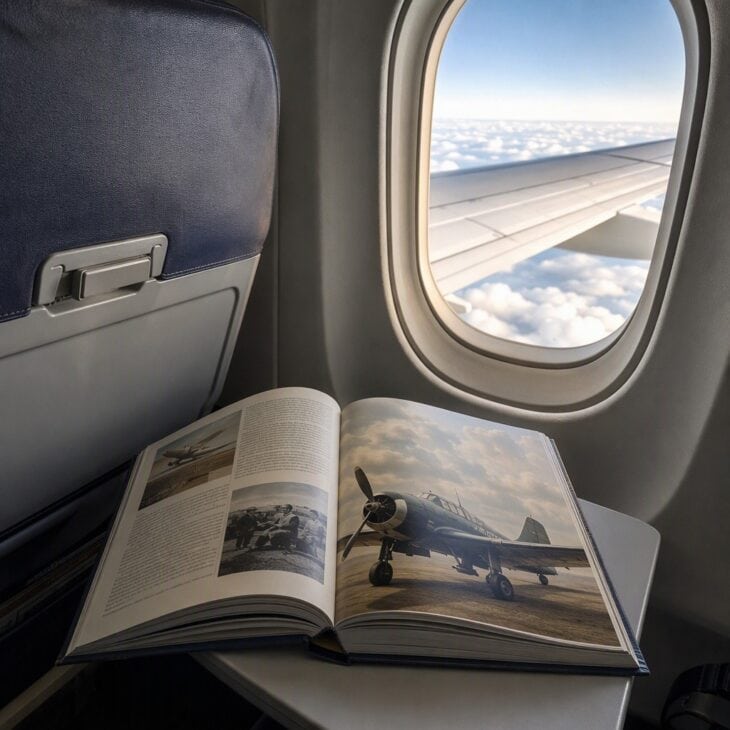
What it is A book about flight itself, such as a pilot memoir, an accident investigation history or a history of an airline. The genre has a long shelf of well reviewed titles.
Why it works Reading about aviation at cruising altitude makes every bump and engine sound more interesting. It also turns the flight from something to endure into something to watch closely.
How to get it Start with our list of aviation books to read and pick one that fits your comfort level, since some accident histories are better saved for the ground. Download a sample first on an e-reader to check the style. Keep your window shade up for the relevant chapters.
07. Do a Crossword or Sudoku Book
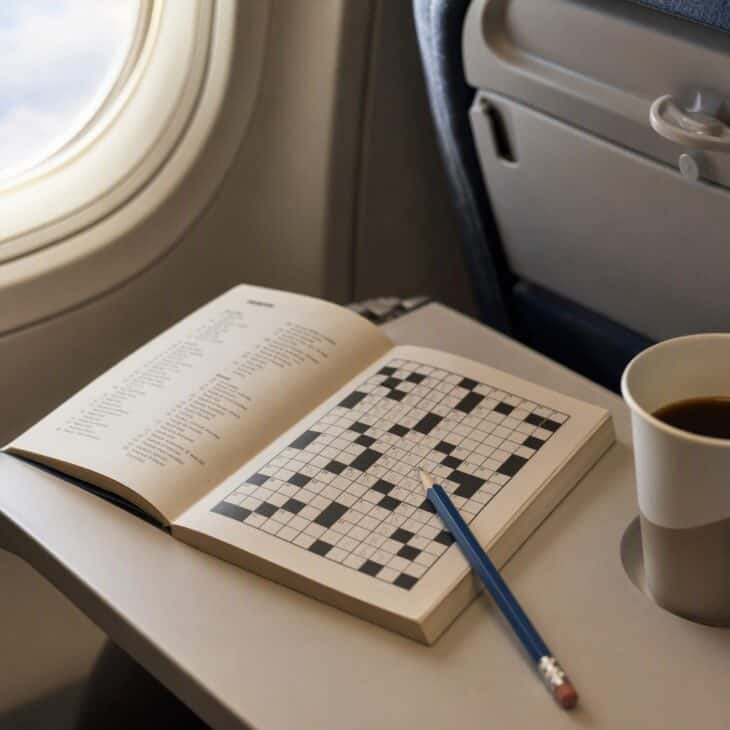
What it is A printed puzzle book of crosswords, sudoku or word searches, plus a pencil with an eraser. A pocket size book fits in a seat pocket.
Why it works Puzzles hold your attention in short bursts and stop and start easily when the seatbelt sign comes on. They need no power and no signal.
How to get it Buy a book with a mix of easy and hard puzzles so you can match your energy. Bring a mechanical pencil and a small eraser, since a tray table is a poor place for pen mistakes. Tear out finished pages to cut weight.
08. Play a Pocket Card Game
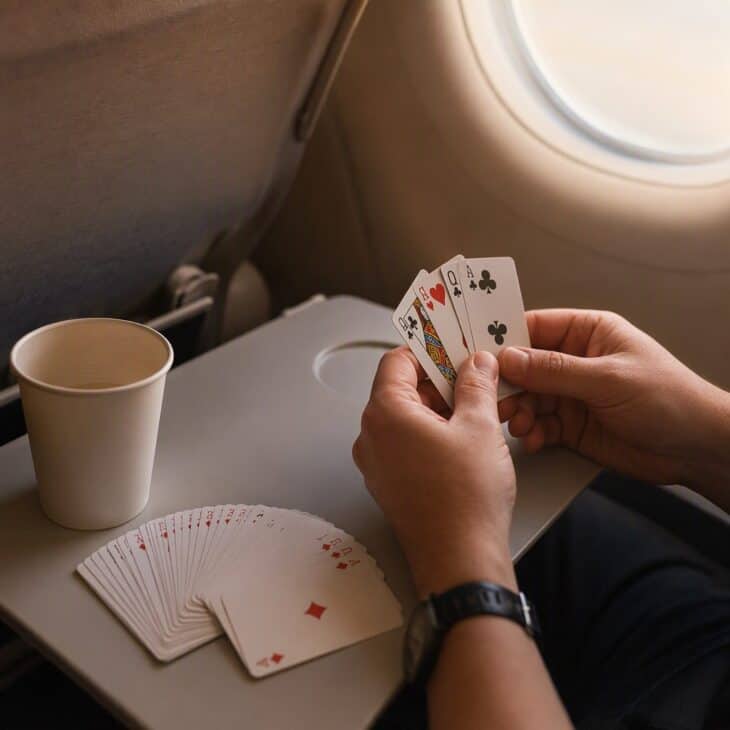
What it is A single deck of cards with a few solo and two player games ready to go, such as solitaire, rummy or gin. A deck weighs next to nothing and fits in a pocket.
Why it works Cards turn a seat mate or a travel companion into entertainment. They also work as a one handed game when the tray table is in use for your meal.
How to get it Pack a plastic coated deck, which survives spills and handling better than paper. Learn a game or two ahead of time so nobody spends the first hour reading rules. Play on a tray table or on a hardcover book in your lap.
09. Try a Travel Board Game
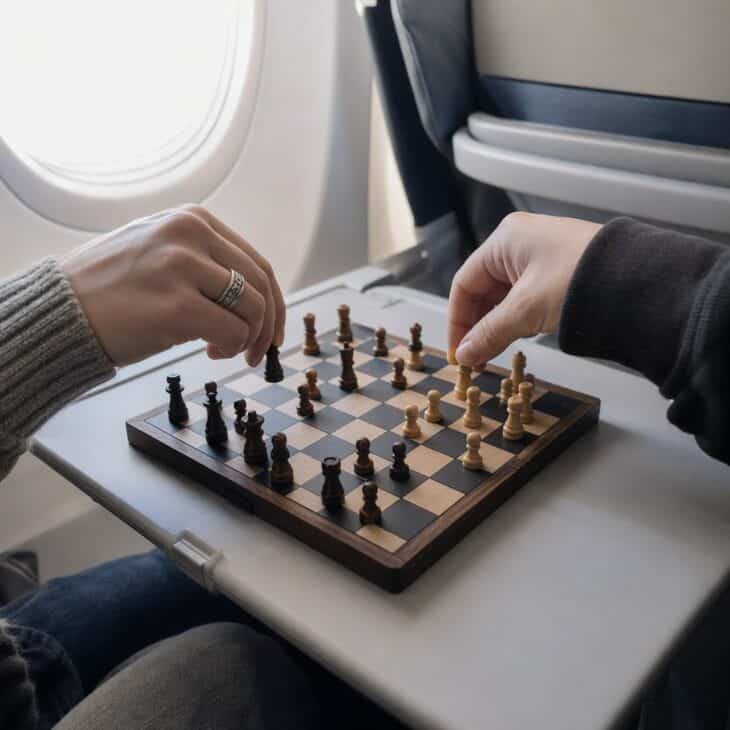
What it is A small board game with magnetic or pegged pieces, such as travel chess, checkers or a compact strategy game. Many come in a flat case that doubles as the board.
Why it works Magnetic pieces stay put in turbulence and the whole thing fits on a tray table. It gives a pair of travelers a shared activity without a screen.
How to get it Look for a set under 10 inches wide so it does not overhang the tray. Test the magnets before the trip, and count the pieces. A game that takes under 20 minutes is ideal, because you will be interrupted by drinks and announcements.
10. Learn a Language With an Offline App
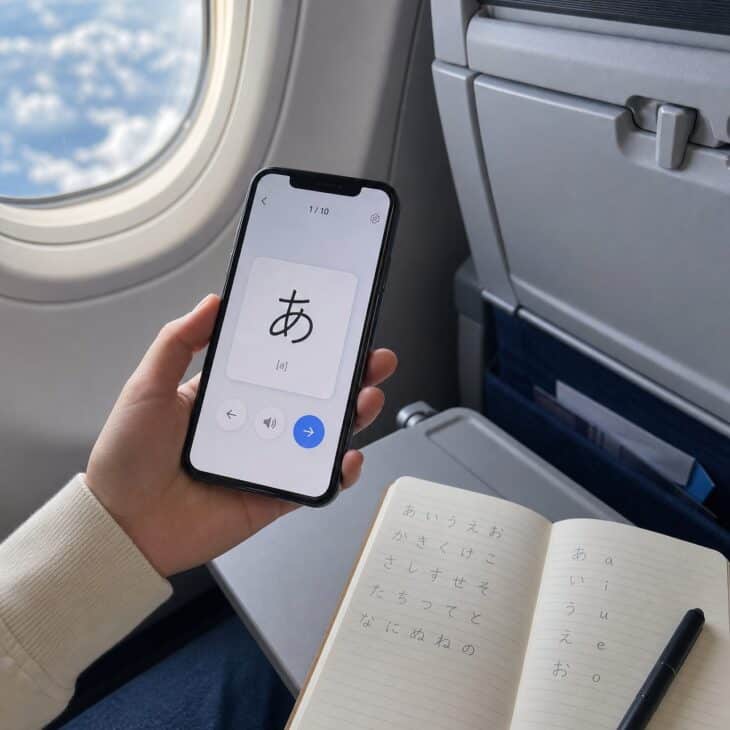
What it is A language learning app with downloadable lessons, or a phrasebook app that works without a connection. Most apps offer a free tier with short daily lessons.
Why it works A flight is an uninterrupted block of study time, and the cabin has no notifications to pull you away. It makes the next trip more fun if you are headed somewhere new.
How to get it Download the next several lessons at home and use headphones for pronunciation. Pick a language tied to your destination so what you learn gets used within hours. Keep sessions to 20 or 30 minutes, then switch to something else.
Download first
Fetch every show, playlist, book and map on home Wi-Fi before you leave. Airport networks are slow, and in-flight Wi-Fi is not guaranteed.
11. Write in a Travel Journal
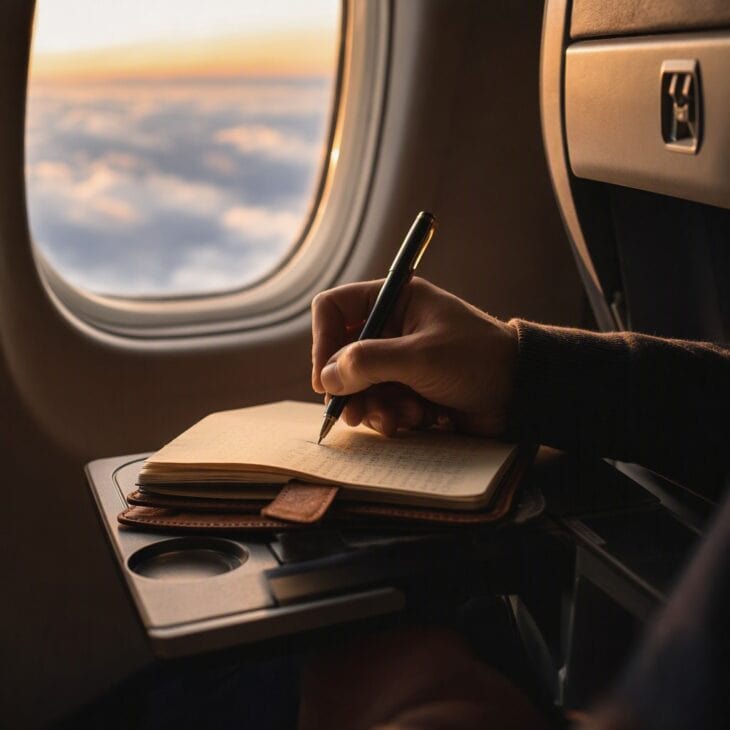
What it is A small notebook and a pen used for notes about the trip, with pages for the day, observations and sketches. A pocket size book with a cover that closes flat works best.
Why it works Journaling slows the mind and gives the flight a purpose. Writing during the trip captures details that fade quickly.
How to get it Start with a simple prompt, such as what you notice out of the window or what you expect at your destination. Bring a pen that does not leak at altitude, such as a gel or ballpoint, and keep it in a pocket. Add a ticket stub or boarding pass to the page as a keepsake.
12. Sketch What You See From the Window
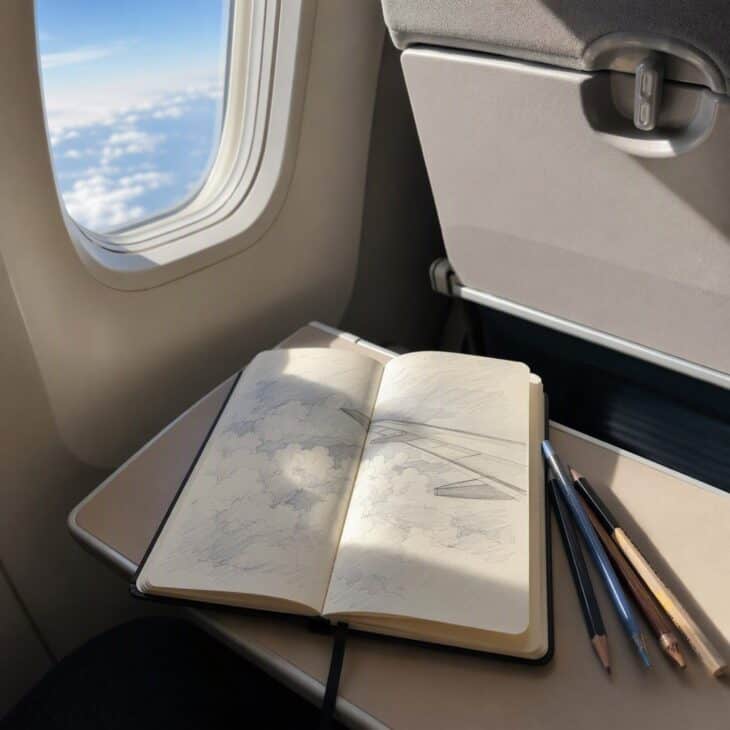
What it is A small sketchbook and a few pencils or fine liners for drawing clouds, wings and landscapes through the window. Even rough sketches capture a place in a way photos do not.
Why it works Drawing makes you look properly at the view, and the view changes constantly. It also keeps your hands busy and your mind quiet.
How to get it Pack a pocket sketchbook and two or three pencils in a zip pouch. Try quick five minute studies of cloud shapes and the wing’s edge. Choose a window seat when you check in, as the sketch depends on the view.
13. Start a Cross-Stitch or Knitting Project
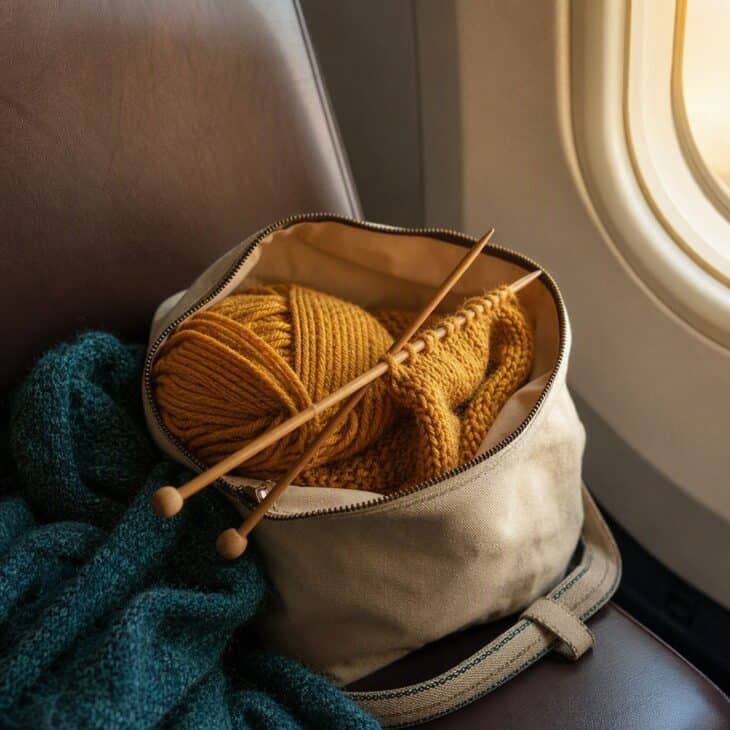
What it is A small handicraft such as knitting, crochet, embroidery or cross-stitch, packed in a project bag. Most beginner kits are designed to be portable.
Why it works Handwork gives your hands a rhythm and makes the hours pass without a screen. It is also a project you can finish and display at the end.
How to get it Choose a small project and keep the supplies compact. TSA allows knitting needles and crochet hooks in carry-on bags, though the officer at the checkpoint has the final say. Bring a small pair of blunt tip scissors or thread snips under the allowed length, or use a thread cutter pendant.
14. Make Origami Planes and Other Folds
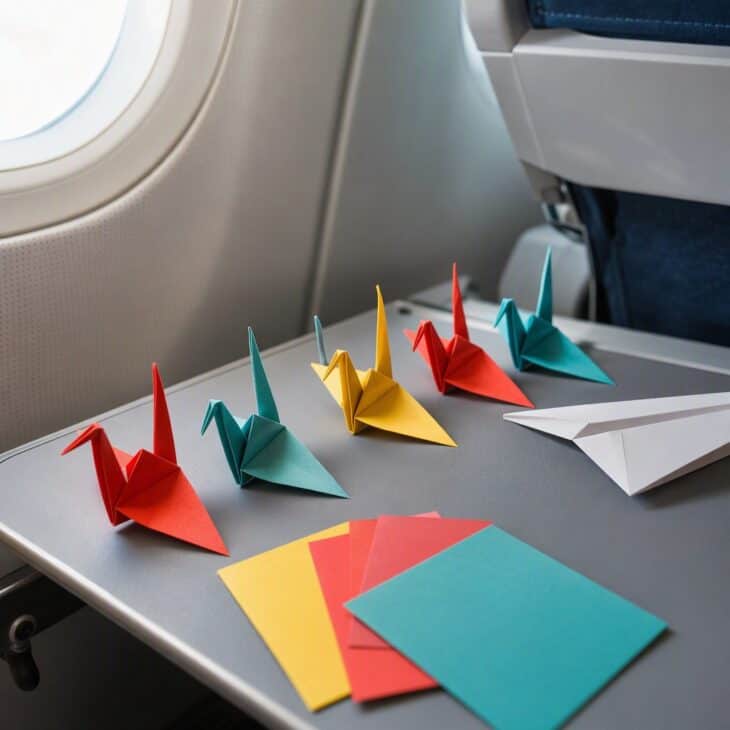
What it is Paper folded into shapes, usually from a pack of square origami sheets or the pages of an in-flight magazine. Cranes, boxes and planes are all common first projects.
Why it works It costs almost nothing and takes up no room. A finished crane is a small souvenir, and folding gets easier the more you repeat it.
How to get it Pack a pad of small origami sheets and print or screenshot a few diagrams ahead of time. Start with a paper plane, then try a crane. For flight designs, our guide to paper airplane designs has folds worth trying on the ground.
15. Do a Mini Jigsaw Puzzle
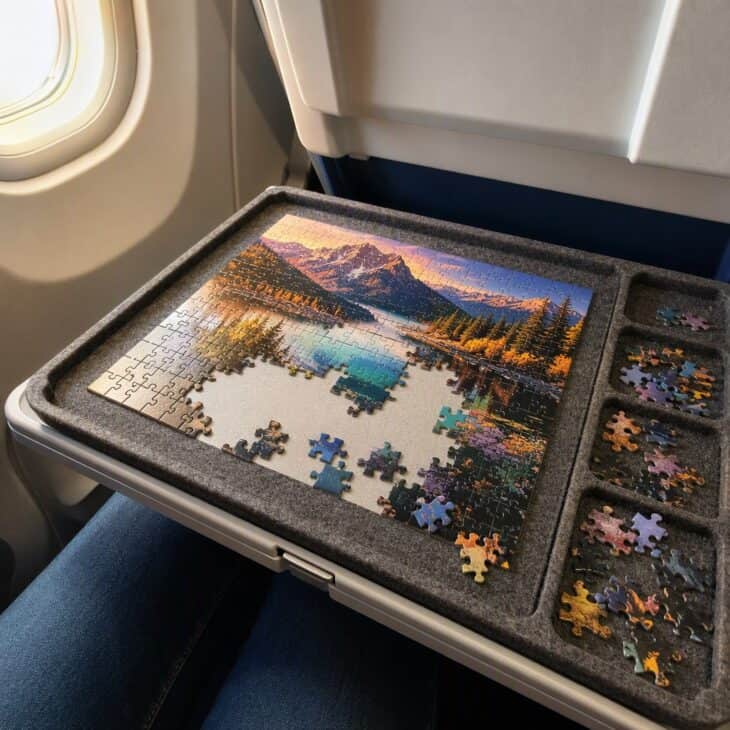
What it is A small jigsaw puzzle of 100 to 300 pieces, ideally with a felt mat or a tray that holds the pieces. Magnetic travel puzzles in a case are another version.
Why it works Puzzles reward patience and give you something to do with your hands. A tray keeps the pieces from tumbling off the table.
How to get it Look for a puzzle with a lid or magnetic frame so a bump does not scatter everything. Sort edge pieces first and leave the rest in the box. Choose a picture with strong colors, since dim cabin light washes out subtle ones.
16. Track the Flight on a Live Map
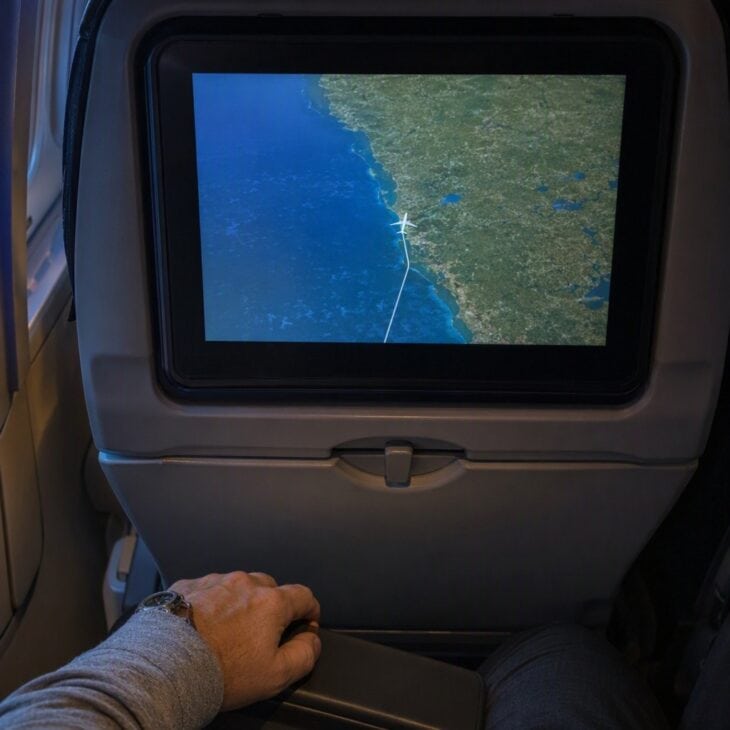
What it is A flight tracking app or the airline’s own moving map, which shows altitude, ground speed and the route. Seatback screens usually offer a map view.
Why it works Watching the plane’s progress turns the trip into a story. You can see what you are flying over and how much is left.
How to get it Check the airline’s map for altitude, speed and time to go. Note the landmarks you pass, and look out of the window to spot them. A tracking app also shows your aircraft type and how long the trip has been airborne.
17. Play Window Seat Spotting Games
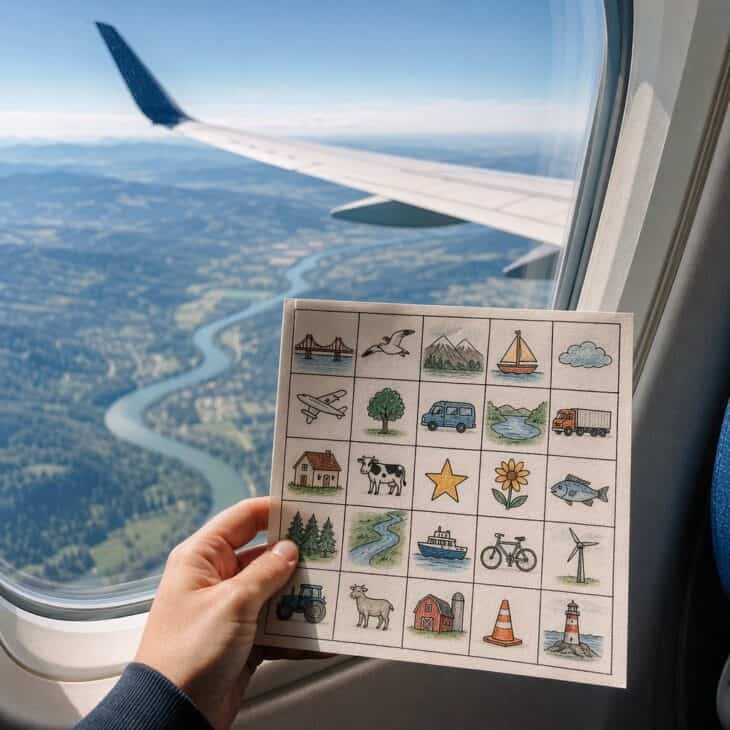
What it is A list of things to find from above, such as rivers, highways, wind farms, contrails, lakes and cloud types. Print or write a bingo grid before the flight.
Why it works The view changes constantly, and a checklist turns passive looking into a game. It also teaches you to read the landscape.
How to get it Make a 5 by 5 bingo card with ground and sky features. Use a window seat if you can, and keep the shade at least partly open. For picture ideas, see our guide to airplane window seat photo ideas.
18. Take Window Photos Without the Glare
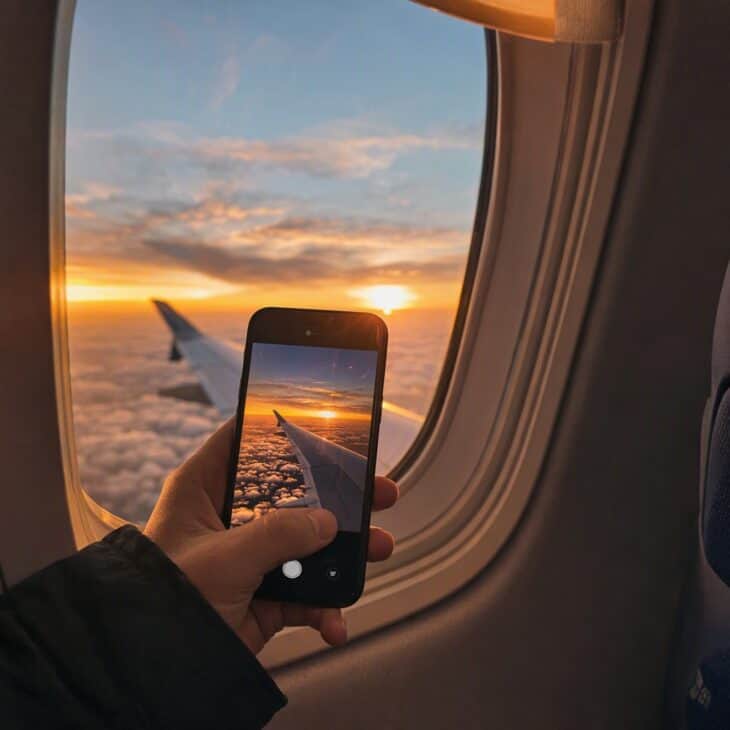
What it is A phone photo session through the airplane window, using a dark jacket or hand to block cabin reflections. Pressing the lens close to the plastic cuts glare.
Why it works The best aerial shots come from a few minutes of care at the right moment, such as near sunrise, sunset and landing. It creates a record of the flight.
How to get it Wear dark clothing to cut reflections, and clean the lens first. Shoot at sunrise or sunset when the light is low and warm. Avoid using flash and keep a steady hand against the wall of the cabin.
19. Plan Your Destination Itinerary
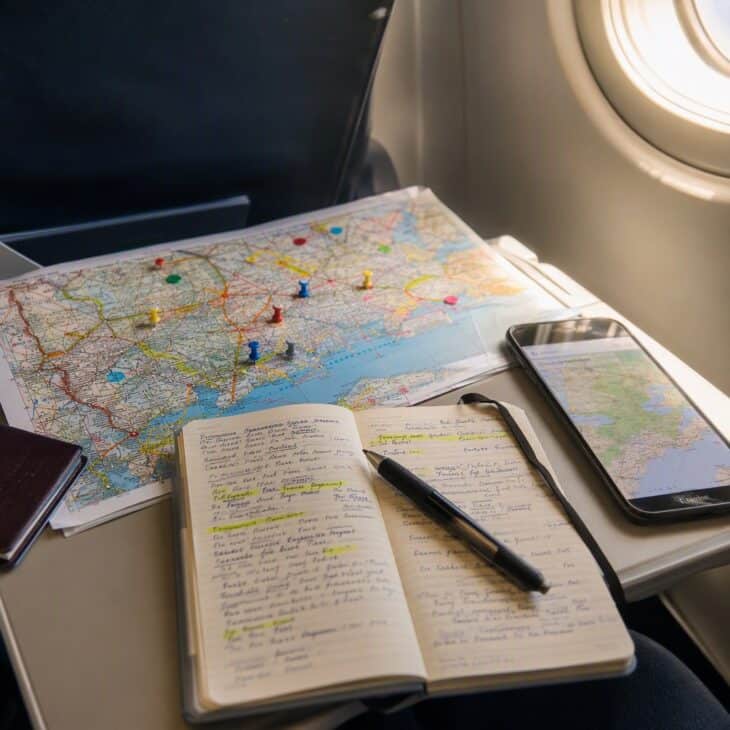
What it is A trip plan with a short list of sights, a rough day by day schedule and saved map pins. Save maps offline so they work without data.
Why it works A flight is the one time when nothing else competes for your attention. An itinerary reviewed in the air makes the first day on the ground easier.
How to get it Save the map area for offline use and screenshot any reservations. Make a short list of one must see, one backup and one food stop per day. Leave empty time in the plan, since delays are common.
20. Organize Your Photos and Files
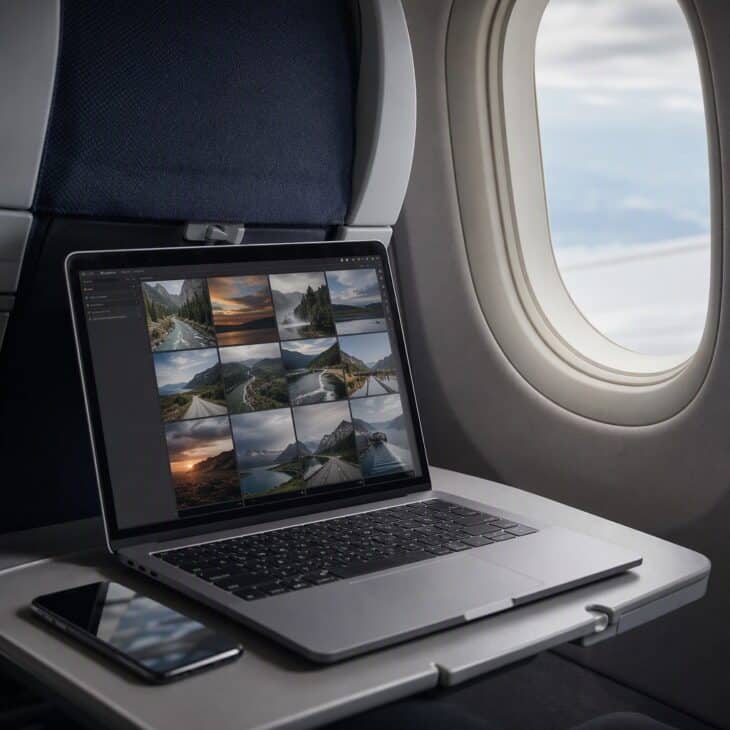
What it is A cleanup of your phone and laptop, covering duplicate photos, old screenshots, unread emails and downloads. It uses time you would otherwise lose.
Why it works These are tasks that never feel urgent but always pile up. Offline, they are easier to finish because no message interrupts.
How to get it Start with the photo library, then screenshots and the downloads folder. Back up anything important once you are on Wi-Fi again. Set a timer for 30 minutes so the job does not eat the whole flight.
21. Do Some Work Offline Without Guilt
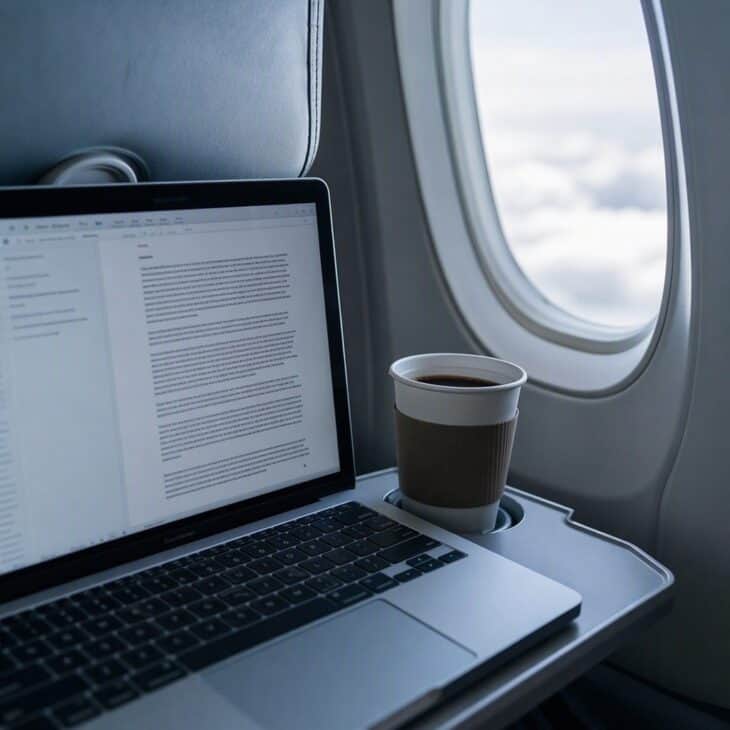
What it is A focused work block with no email or chat, using documents saved to the laptop in advance. Offline mode is available in most document apps.
Why it works A cabin with no interruptions can be the most productive stretch of a week. Finishing a task early makes the rest of the trip feel free.
How to get it Pick one project and save everything needed for it offline before boarding. Use noise canceling headphones and a laptop stand if the tray table allows it. Stop when the cabin lights dim for a meal, and then decide whether to go on.
22. Use Stretches and Chair Exercises
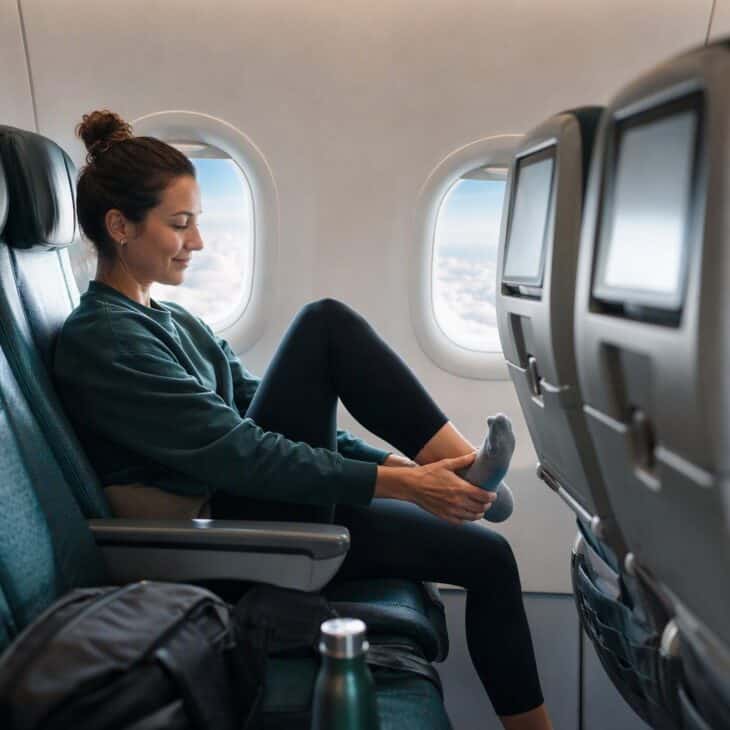
What it is A short sequence of seated stretches, ankle circles and walks along the aisle, based on guidance from health authorities. Most take under a minute.
Why it works Sitting for hours is uncomfortable, and moving a little keeps you feeling better on arrival. It also helps with stiffness in the back and legs.
How to get it Do ankle circles and calf raises every hour while seated. Stand and walk to the back of the cabin when the seatbelt sign is off. Roll your shoulders and neck gently, and ask your doctor about further steps if you have a clotting risk.
23. Guided Meditation or Breathing Practice
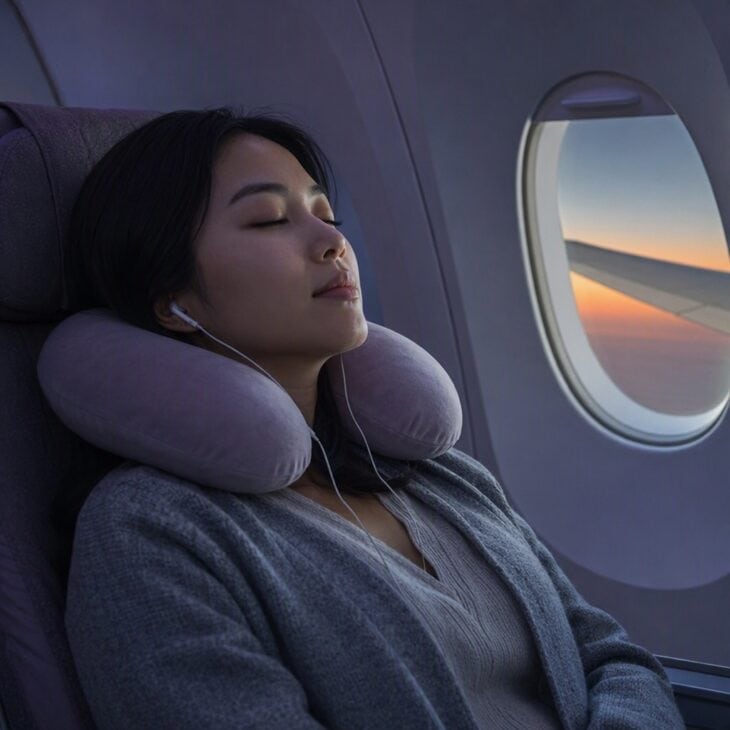
What it is A downloaded meditation or breathing track, usually 5 to 20 minutes long. Many meditation apps let you save sessions for offline use.
Why it works Meditation helps with nervous flyers and with sleep, and it makes noisy cabins easier to ignore. A structured session gives you something to follow.
How to get it Download a few tracks of different lengths before boarding. Use closed eye breathing during turbulence, with a slow exhale. Pair with headphones and an eye mask.
24. Set Up a Sleep Kit and Actually Nap

What it is A compact sleep kit with an eye mask, earplugs or noise canceling headphones, a neck pillow and a light blanket or scarf.
Why it works Sleep is the best way to cut a long flight, and a kit makes it more likely. Even a short nap helps.
How to get it Choose a contoured eye mask that blocks light without pressing on the eyes. A neck pillow with a clasp stays in place better than a plain U. Dress in layers, since cabin temperature varies, and skip caffeine for several hours before the nap.
25. Watch Aviation Documentaries and Movies
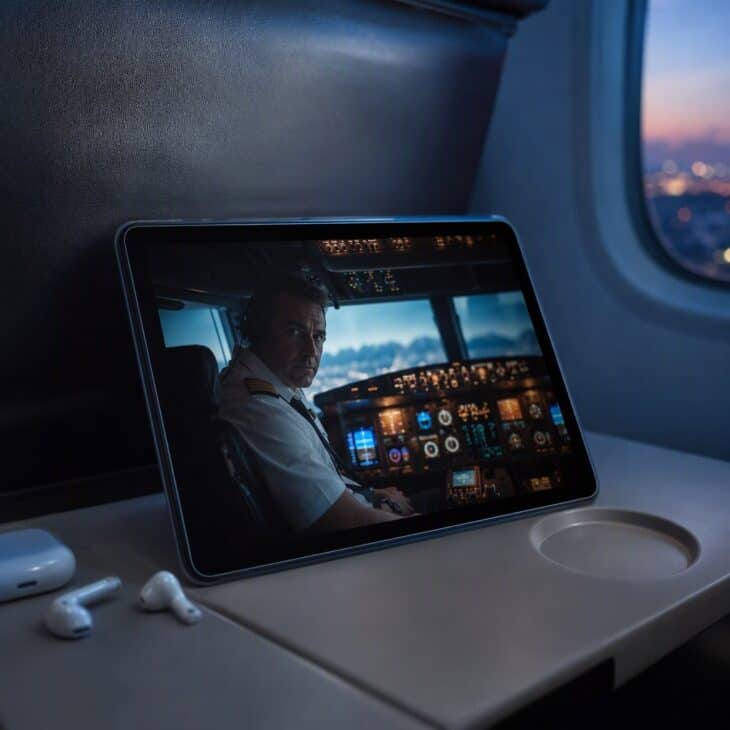
What it is A downloaded aviation documentary or film, such as a flight disaster investigation, a pilot biography or a wartime flying drama.
Why it works There is a particular pleasure in watching flight stories at altitude. A documentary also gives you facts to chew on when you land.
How to get it Browse our guide to aviation movies to watch and download two or three titles. Save lighter, uplifting choices for nervous flyers, and heavier choices for confident ones. Use subtitles to follow dialogue over engine noise.
26. Study the Flight Safety Card and Cabin
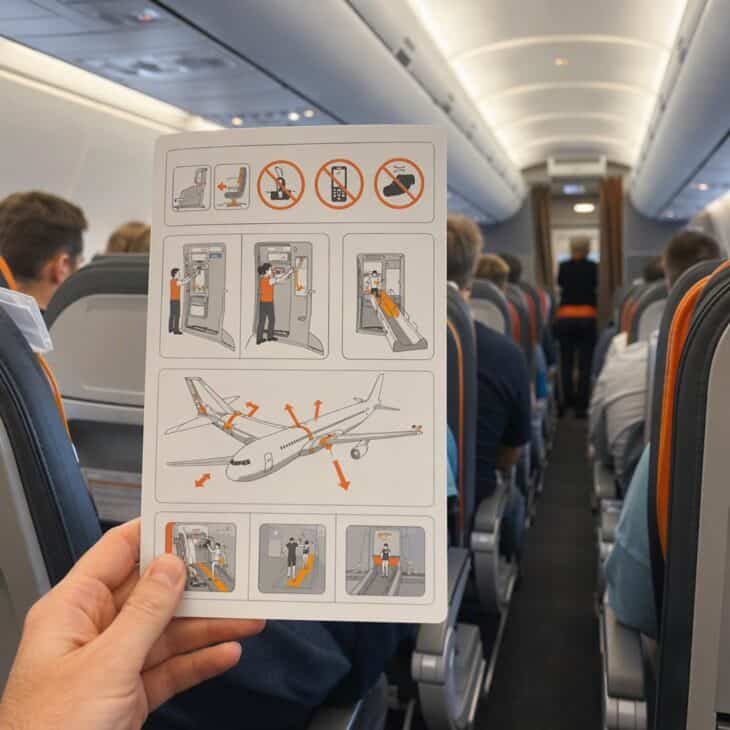
What it is The laminated safety card in the seat pocket, which shows exit routes, brace positions and equipment. Each aircraft type has its own.
Why it works The card tells you the type of aircraft you are on and how its exits work. It is the one piece of reading in the cabin that is genuinely useful.
How to get it Look for the nearest exit and count the rows to it. Compare the card against the aircraft type shown on the moving map. Read it before takeoff when the crew gives the demonstration.
27. Spot the Engine and Wing Details
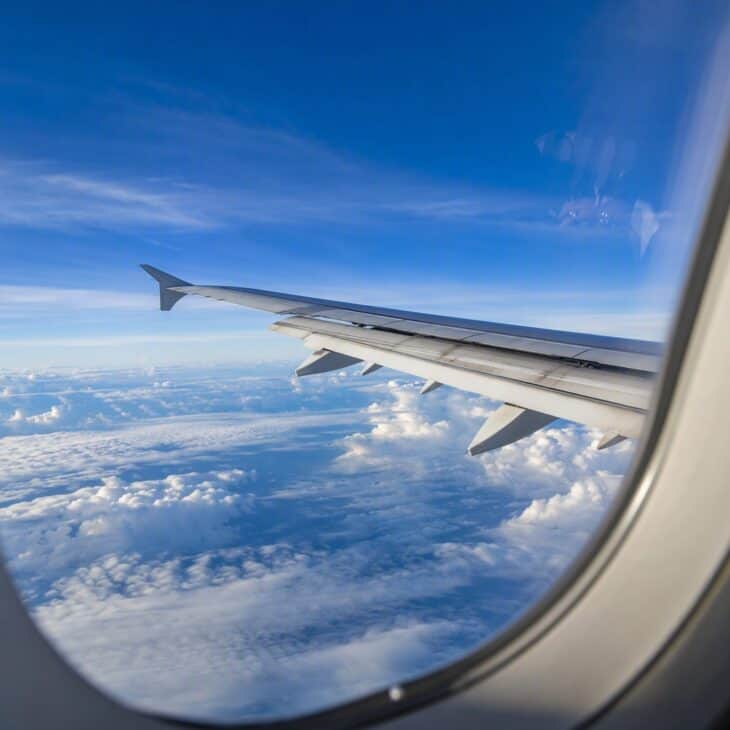
What it is A closer look at the wing outside your window, including flaps, spoilers, slats, winglets and the engine. Each moves in a specific way during takeoff and landing.
Why it works The wing is the most active part of the aircraft in view. Knowing what you are watching makes takeoff and landing more interesting.
How to get it Choose a window seat just ahead of the wing, and watch the flaps extend before landing. Look for the spoilers rising on touchdown. Note the winglets, which are the upturned tips on many airliners.
28. Enjoy a Snack and Drink Tasting Session
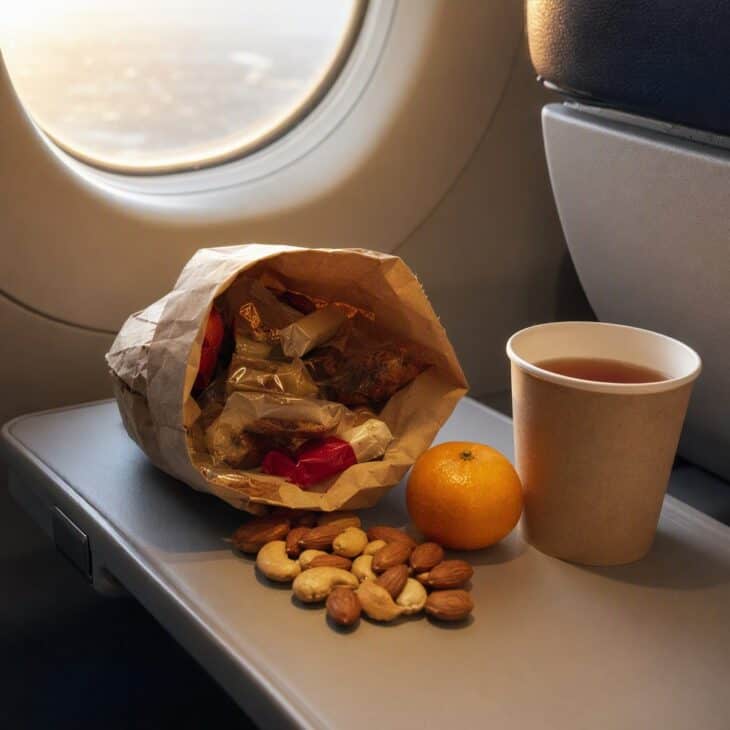
What it is A box of small travel snacks and a hot drink or tea bag, saved for the hours when you most need a pick-me-up. Think individually wrapped nuts, fruit, chocolate and crackers.
Why it works Food is a break in the middle of the flight and gives you something to look forward to. Homemade snacks cost less and taste better than cabin options.
How to get it Look through our ideas for airplane snack ideas and airplane food ideas before you pack. Remember that liquids over 3.4 ounces (100 ml) cannot go through security. Buy a bottle of water after the checkpoint.
29. Pack a Kids Activity Kit to Share
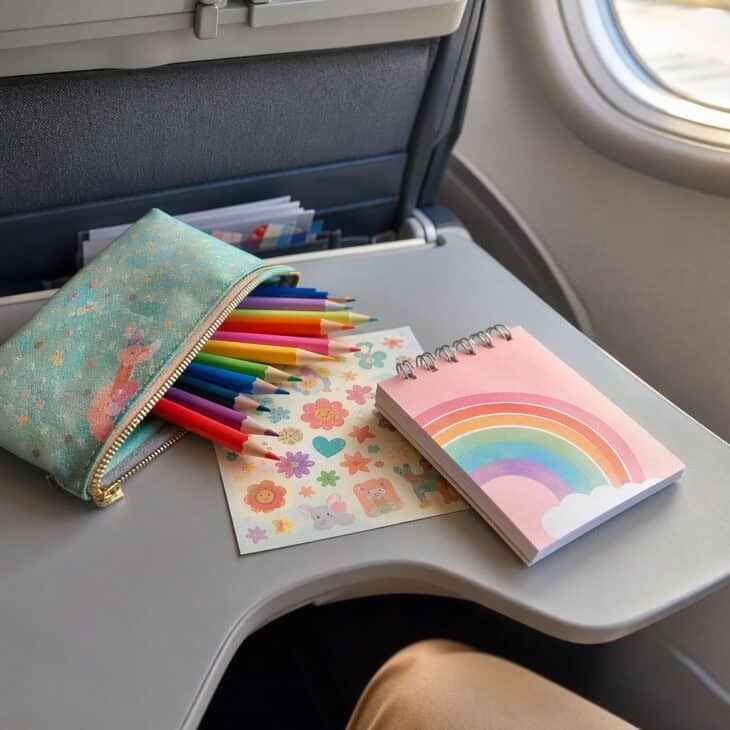
What it is A pouch of sticker books, a small notepad and crayons for the child you are traveling with, or for a child seated nearby.
Why it works If you travel with children, a few activities keep everyone calm. Adults can also join in on a coloring page.
How to get it For a full set of options, see our list of airplane activities for kids. Pack crayons in a pouch rather than loose. Let everyone in the row see the finished pages.
30. Write Postcards or Letters to Send From Your Destination
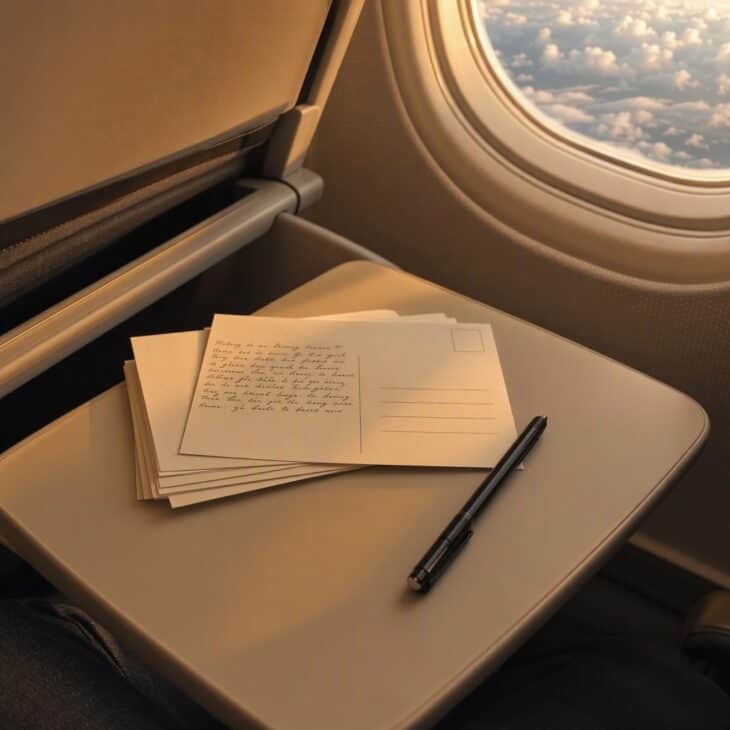
What it is A set of blank postcards or notecards, with a pen and a list of addresses. You write on board and mail from the destination.
Why it works It is a calm, personal activity that few people do any more. A handwritten card feels like a gift on arrival.
How to get it Save the addresses in a note on your phone before takeoff. Write the message on the flight and add the local detail on arrival. Buy stamps at a post office or hotel desk.
FAQ
Sources and references used for research and fact-checking.
Get the Newsletter
The latest aviation news and stories sent to your inbox.
About the Author

Hanna writes AeroCorner's aviation-lifestyle and decor guides, turning a love of flight into ideas for your home, celebrations, and gift lists.