

Table of Contents
A flight with a small child is really a series of short stretches, not one long block of time. The tray table is about the size of a placemat, the floor is off limits, and anything that rolls is gone forever the moment it hits the aisle.
That means the activities that work in the air are rarely the ones that work at home. They have to be self contained, quiet enough for the row behind you, and small enough to live in a bag under the seat in front.
The 25 ideas below run roughly from infant to about age ten, and they are grouped by what they do: the packing system first, then mess free classics, toddler specific tricks, screens and audio, games for older kids, and the kits for descent and sleep. Pick five or six that match your child and your flight length.
01. The One Toy Per Hour Surprise Bag
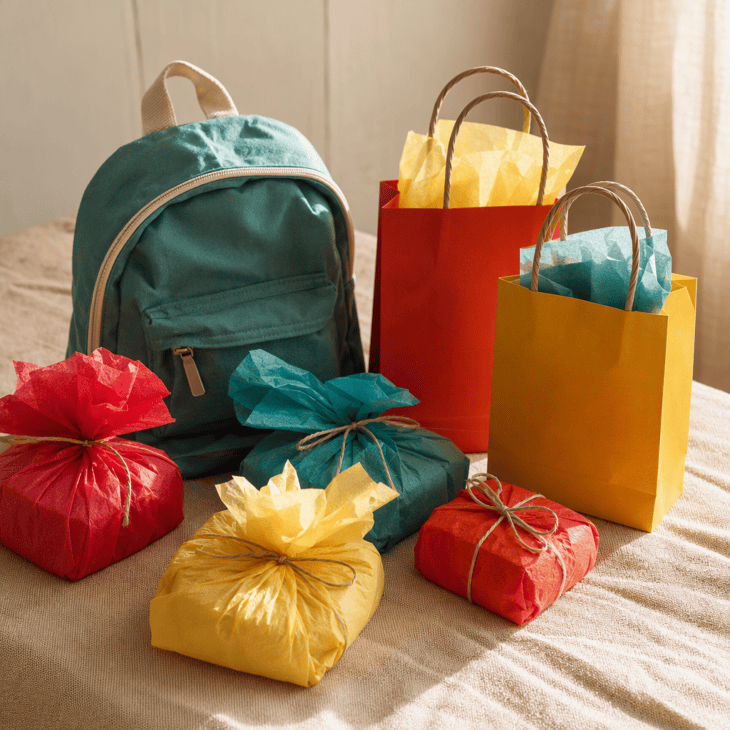
What it is A drawstring or zip bag holding one small wrapped item for roughly every hour of the flight, plus one spare. Each parcel is a cheap new toy, a sticker sheet, a mini notepad or a small puzzle, wrapped in tissue paper or a paper bag rather than plastic film.
Why it works Novelty is the whole mechanism. A toy your child has never seen holds attention far longer than a favorite from the toy box, and the unwrapping buys you two or three extra minutes before the toy itself even starts working.
How to get it Shop the dollar aisle or a discount store two weeks before the trip and hide everything until the gate. Budget one parcel per hour and add a spare for a delay, which is the moment you will actually need it. Wrap in tissue rather than tape heavy paper so small hands can open a parcel without help. Hold back the most interesting item for the final hour, when everyone is out of patience.
02. A Backpack the Child Packs Themselves
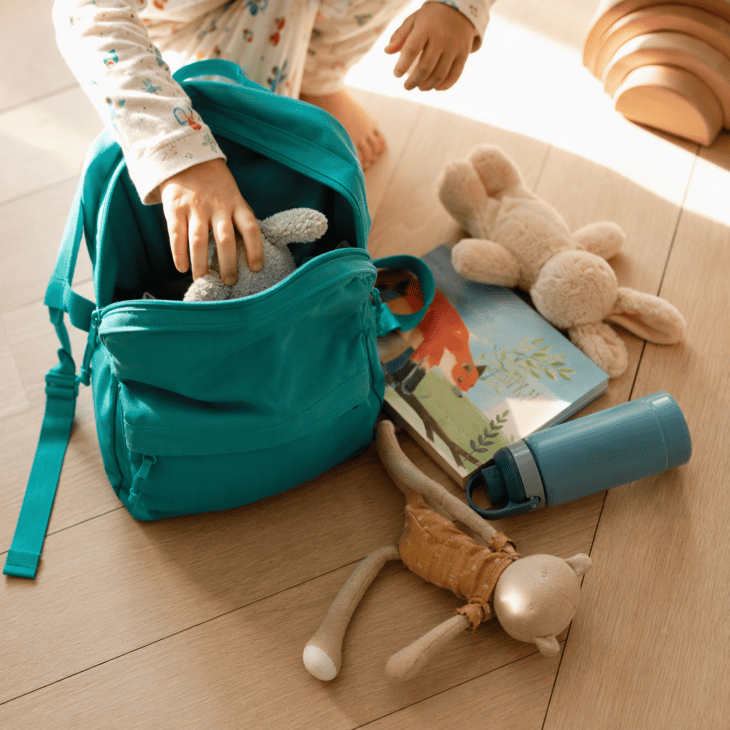
What it is A lightweight backpack, roughly 10 to 12 liters, that your child fills themselves from a short list you set: two soft toys, one book, one comfort item and a water bottle. You keep the real supplies in your own bag.
Why it works Ownership does a lot of quiet work. A child who chose the contents will carry the bag through the terminal, defend it at security and dig through it on board instead of asking you what is next.
How to get it Choose a pack with a chest strap so it stays on a running toddler, and check that it fits under an airline seat. Weigh it at home, because anything over about 3 pounds (1.4 kg) ends up on your shoulder by gate B12. Tuck a luggage tag with your phone number into the front pocket. Our airport outfit ideas cover what to wear alongside it.
03. Reusable Sticker Books and Window Clings
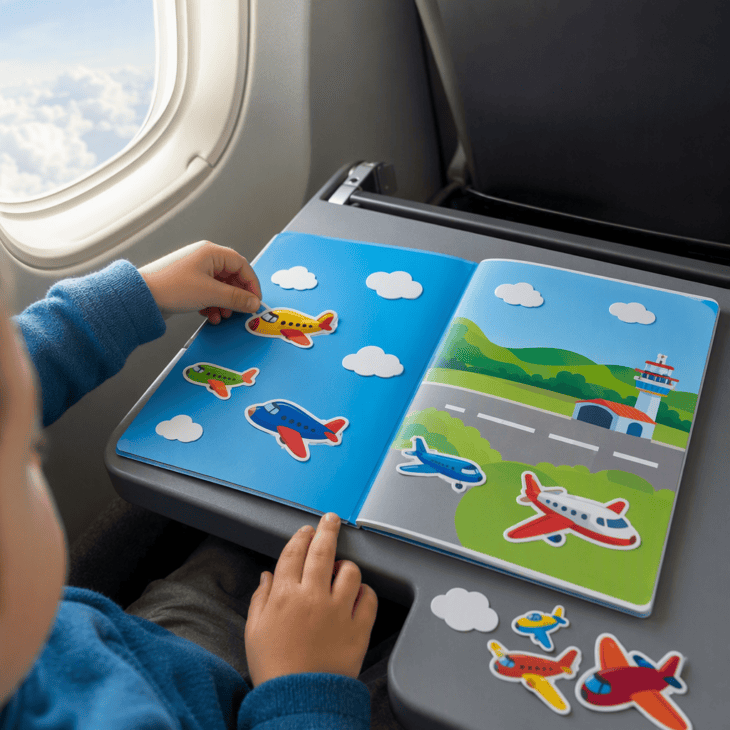
What it is A book of static cling or low tack vinyl stickers that lift off and restick hundreds of times, paired with printed background scenes. Window cling packs are the same idea applied to the cabin window itself, usually sold as sheets of shapes, letters or animals.
Why it works Nothing is consumed, so the activity resets endlessly instead of ending when the last sticker is used. The window version also solves the toddler who wants to touch the window anyway, and it peels off cleanly at the end.
How to get it Look for the words reusable, repositionable or static cling on the pack, because standard paper stickers are single use and end up on the seat back. Buy two different scene books rather than one large one, so you have a fresh start mid flight. Test the window clings on a home window first, since cheap sheets lose their grip after a few uses. Peel everything off before landing rather than leaving it for the cleaning crew.
04. Water Reveal Coloring Pads
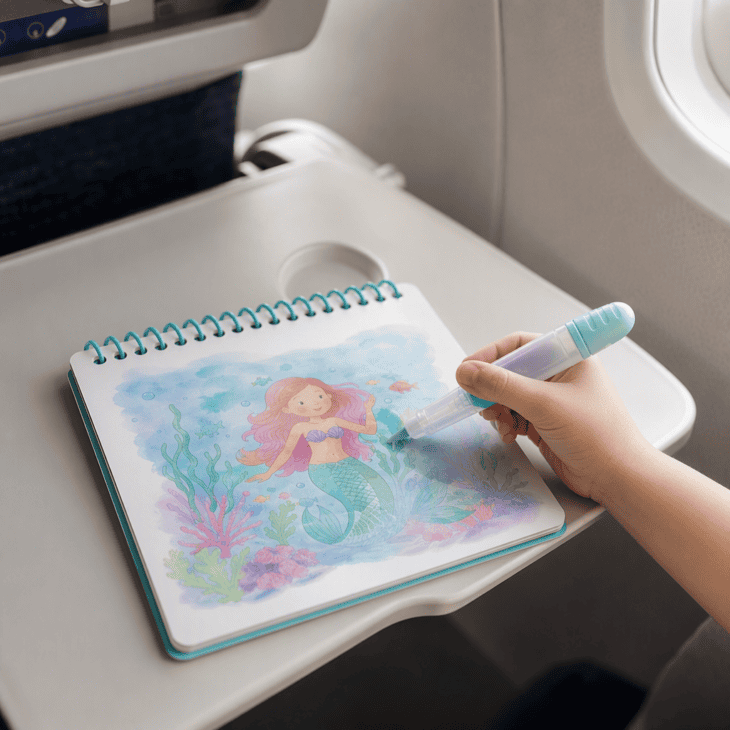
What it is A small board book or pad with coated pages and a chunky refillable pen you fill with plain tap water. Drawing with the pen reveals hidden color, and the page fades back to white in a few minutes so it can be used again.
Why it works It is the only coloring activity with genuinely zero mess: no ink, no crayon wax, no lost caps and nothing that marks a seat cover. That makes it the safest thing to hand a two year old in a middle seat.
How to get it Fill the pen at home and empty it again before security, then refill it from a bottle after the checkpoint, which avoids any conversation about liquids. Pack a spare pen, because the pen is the part that gets dropped and rolls under seat 14C. Choose the smaller travel size pads rather than the large format ones, which overhang the tray table. Two or three themed pads rotate well on a long haul.
05. A Roll of Painter’s Tape
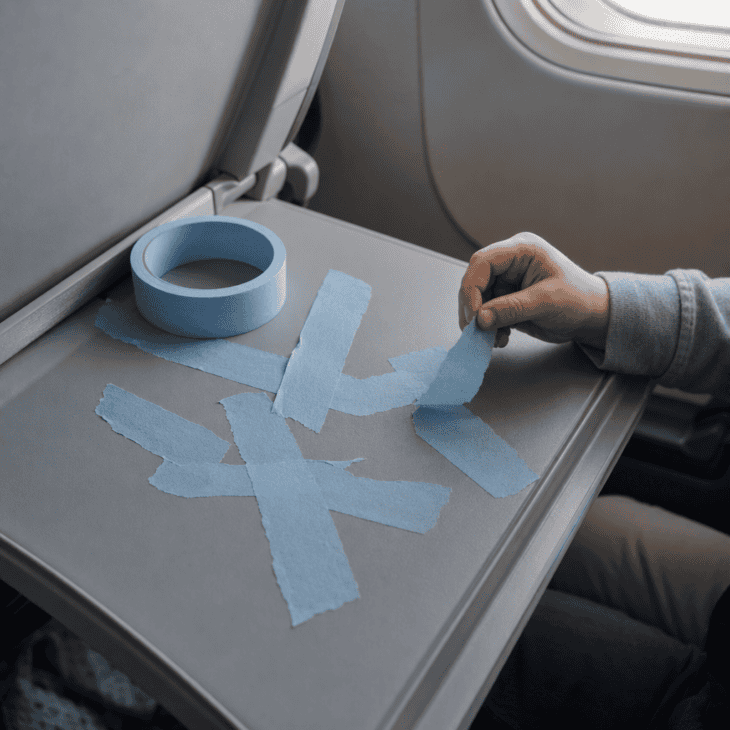
What it is A single roll of low tack painter’s tape, the pale blue or green decorating kind, torn into short strips. Children stick the strips to the tray table, the window frame, the seat back or each other, then peel them off and start again.
Why it works Peeling and sticking is genuinely absorbing for children between about one and four, and the tape is forgiving in a way regular tape is not. It leaves no residue on cabin surfaces and costs a fraction of any purpose made toy.
How to get it Buy the narrow 1 inch roll rather than a wide one, since narrow strips are easier for small fingers to lift. Pre tear a few dozen strips at home and stick them along the edge of a plastic folder so you are not tearing tape one handed at 35,000 feet. Stick to genuine low tack painter’s tape, not masking tape, which pulls at seat fabric. Collect every strip before you leave the row.
Budget tip
Three of the most reliable activities on this list cost under five dollars: painter’s tape, pipe cleaners and a homemade scavenger hunt card. Try them at home before the trip so you know which ones your child actually engages with.
06. Pipe Cleaners and a Small Strainer
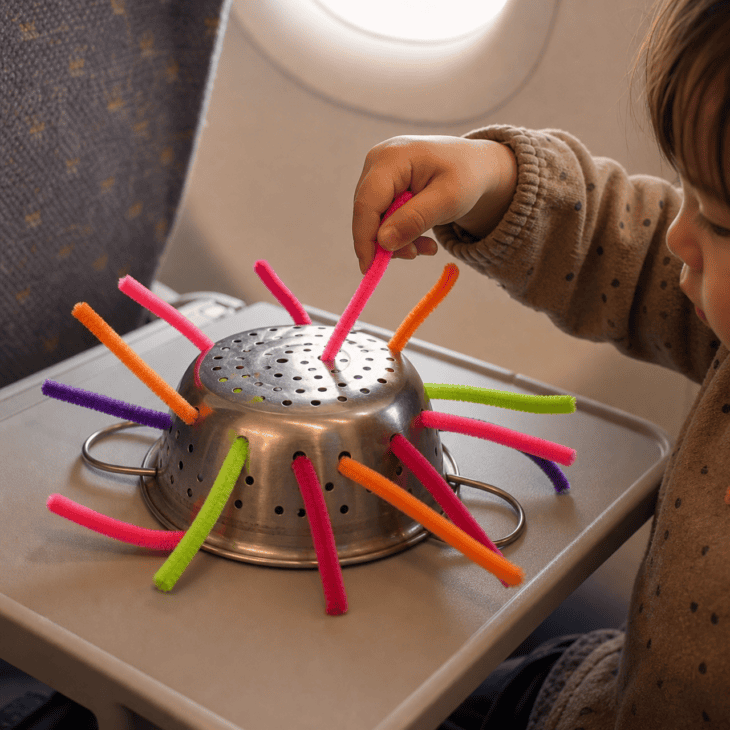
What it is A handful of fuzzy craft pipe cleaners and a small plastic or metal strainer turned upside down. The child threads the pipe cleaners through the holes, then pulls them out, and older toddlers start bending them into shapes and letters.
Why it works It hits the same threading instinct as an expensive fine motor toy for about a dollar, and both parts are soft, light and silent. Nothing rolls, nothing rattles and a dropped pipe cleaner is easy to spot on a dark cabin floor.
How to get it Use a small plastic strainer rather than metal so it does not clatter on the tray table. Cut the pipe cleaners down to about 6 inches (15 cm) and fold the sharp wire ends over on themselves before you pack them. A dozen is plenty, and they flatten into a zip bag with no weight penalty. Keep them for the cruise rather than the climb, since they need a flat surface.
07. Lacing Cards and Chunky Threading Beads
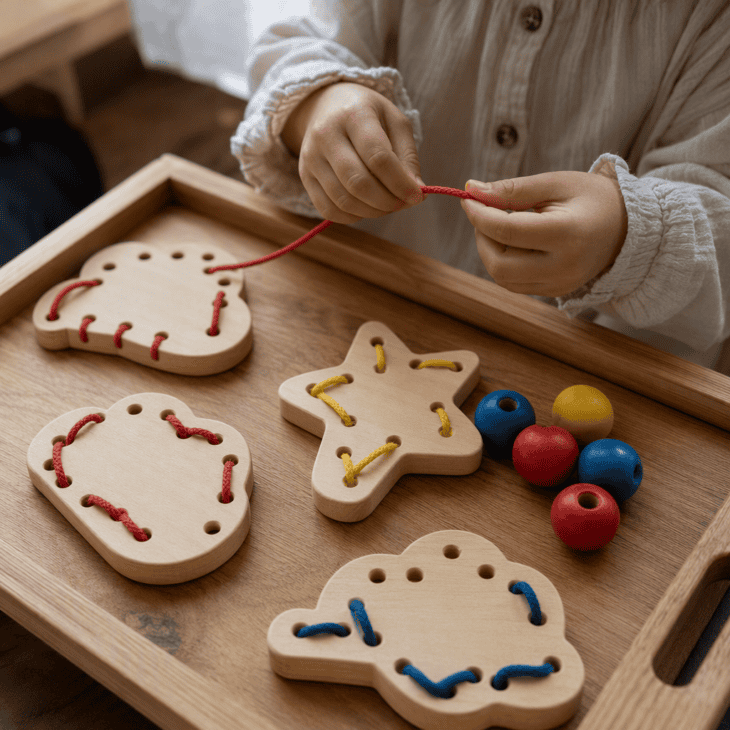
What it is Thick card or wooden shapes punched with holes, plus a stiff tipped cord the child threads in and out. Bead sets are the same principle with large wooden or plastic beads on a knotted lace, sized so they cannot be swallowed.
Why it works Threading demands both hands and full attention, which is exactly what you want during boarding and the climb. It is also completely silent, unlike almost every other toy that occupies a three year old for twenty minutes.
How to get it Knot the loose end of the cord to the card or to a large bead so the whole set cannot come apart and scatter. Choose beads at least 1.5 inches (4 cm) across for children under three, and check the choking hazard age rating on the box. Four or five cards is the right number, since a large set just spills. Put the whole thing in a hard sided pencil case so a dropped bag does not empty it into the aisle.
08. A Quiet Book or Buckle Board
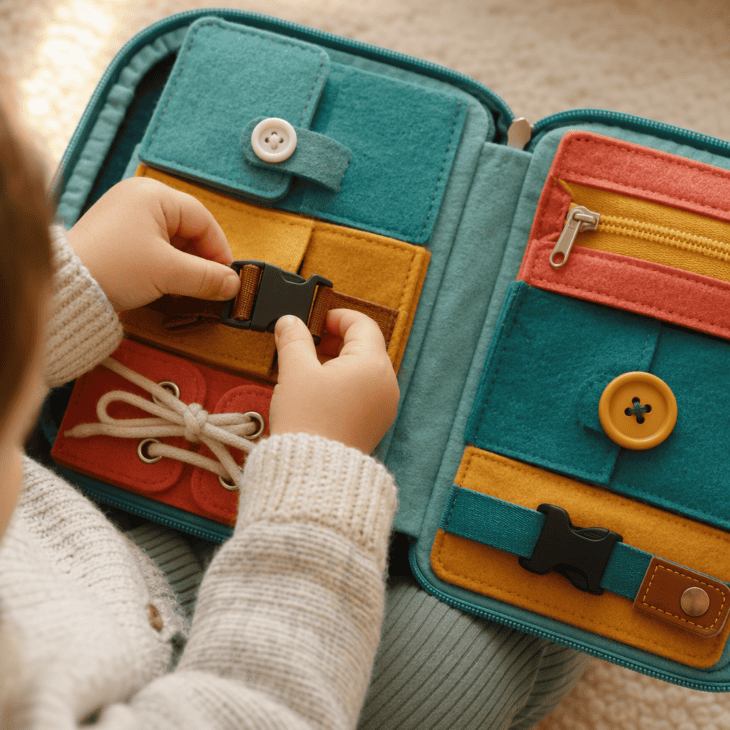
What it is A soft fabric book whose pages are working fastenings: zippers, snaps, buttons, shoelaces, hook and loop tabs and seatbelt style buckles. Buckle boards and buckle toys are the rigid version, usually a padded cube or board with six to twelve clips.
Why it works Buckles are the single most reliable toddler obsession on an airplane, because the child has just watched everyone around them click a seatbelt. Fabric pages also absorb sound rather than making it, which matters at row 22 on a red eye.
How to get it Handmade felt quiet books on craft marketplaces cost more than mass produced ones but usually have better stitching where the fastenings anchor. Check that every small part is sewn down rather than glued, and tug each one before the trip. Pick a book with six to eight pages, since thicker books do not fold flat on a tray table. A buckle cube is the better choice if your child is under two and still mouthing things.
09. A Magnetic Drawing Board
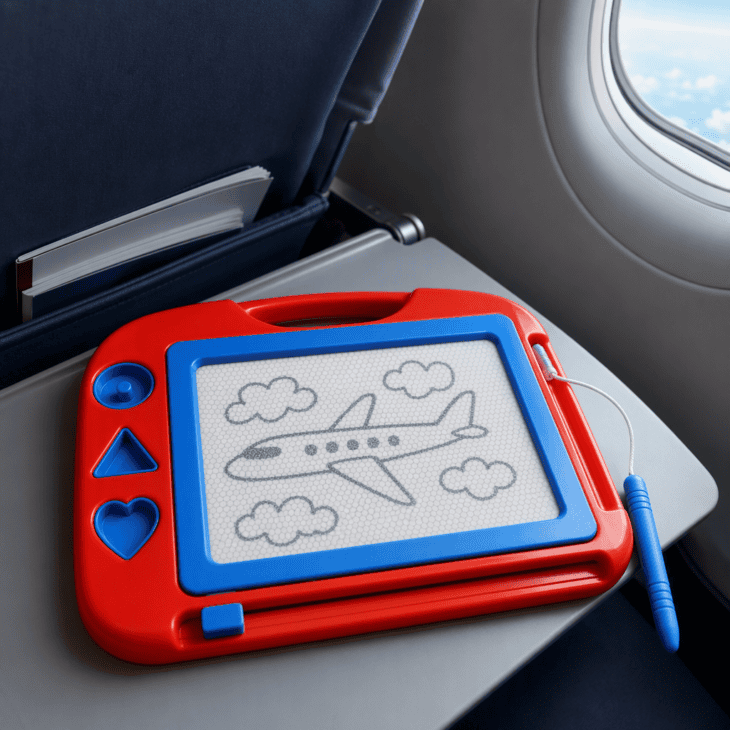
What it is A sealed plastic board with a magnetic stylus tethered on a cord and a slide bar that wipes the whole surface clean. Travel versions run about 6 by 8 inches (15 by 20 cm) and weigh well under a pound.
Why it works The tether is the real feature. Every other drawing setup eventually loses its pen under a seat, and this one physically cannot, which is worth more at altitude than any other design detail.
How to get it Check that the stylus is attached by a cord and not just stored in a clip, because clipped styluses are gone by the second flight. Look for a model with magnetic shape stamps built into the frame, which adds a second game for older toddlers. Avoid the very cheapest boards, where the erase bar jams and leaves ghost lines. Wipe it before descent so it is clean and interesting again for the next leg.
10. Magnetic Travel Board Games
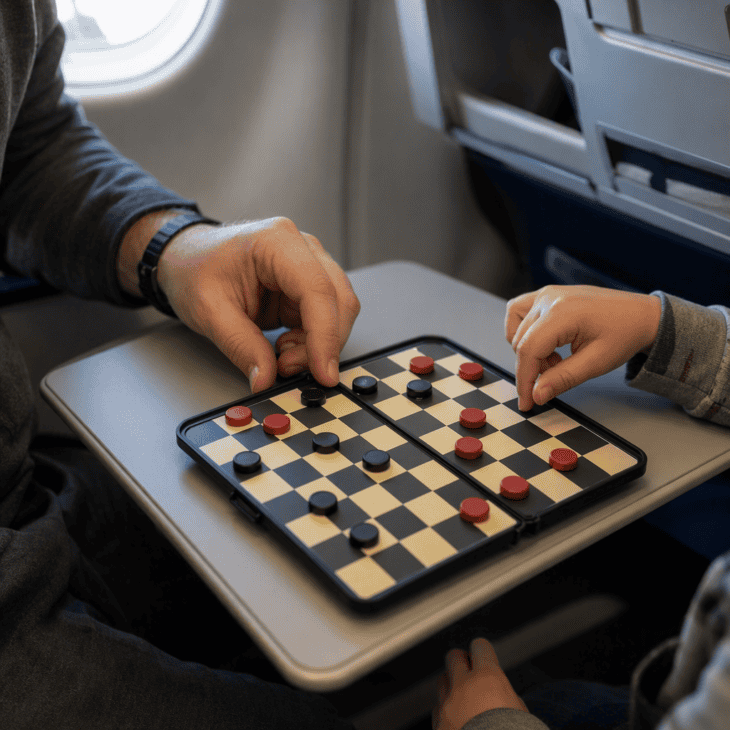
What it is Pocket sized folding boards with magnetic pieces, covering checkers, chess, snakes and ladders, tic tac toe, backgammon and solitaire style puzzles. Most fold shut with the pieces sealed inside and measure around 5 inches (13 cm) square.
Why it works This is the first activity on the list that needs a second player, which turns it into time with a parent or sibling rather than time spent alone. The magnets are what make it viable in a moving cabin, since a bumped tray table does not reset the game.
How to get it Pick games your child already knows the rules for, because a flight is the wrong place to teach chess. Check that the board latches shut rather than relying on a sleeve, which is how pieces end up loose in a bag. Two small games beat one multi game set, since the multi sets carry pieces for games you will never play. Save these for the cruise, after the first hour of novelty items has worn off.
11. A Wipe Clean Activity Mat
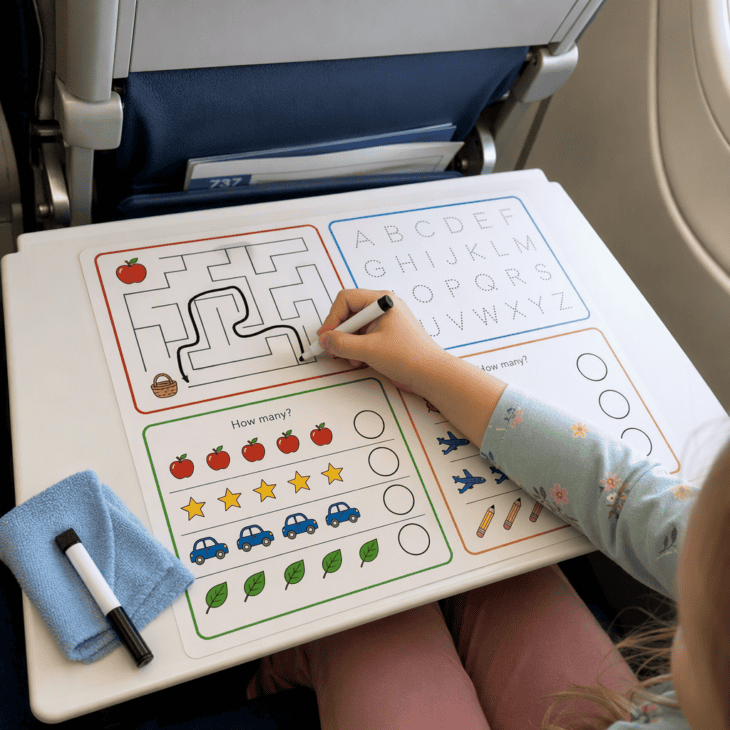
What it is A laminated placemat or spiral book printed with mazes, dot to dots, letter tracing and counting puzzles, used with a fine tip dry erase marker and a scrap of cloth. Mat versions are sized to sit flat on a tray table.
Why it works It covers the four to seven year old gap, where sticker books are too young and board games need a partner. Because it wipes clean, a child who finishes every puzzle in the first hour can simply start over rather than needing a new activity.
How to get it Pack fine tip dry erase markers rather than chunky ones, which smear on laminate and take longer to dry. Test the marker on the mat at home and leave it overnight, because some marker and laminate combinations stain permanently. Bring a microfiber cloth instead of relying on a napkin. Two mats with different content give you a clean reset partway through a long flight.
12. Play Dough in a Travel Tin
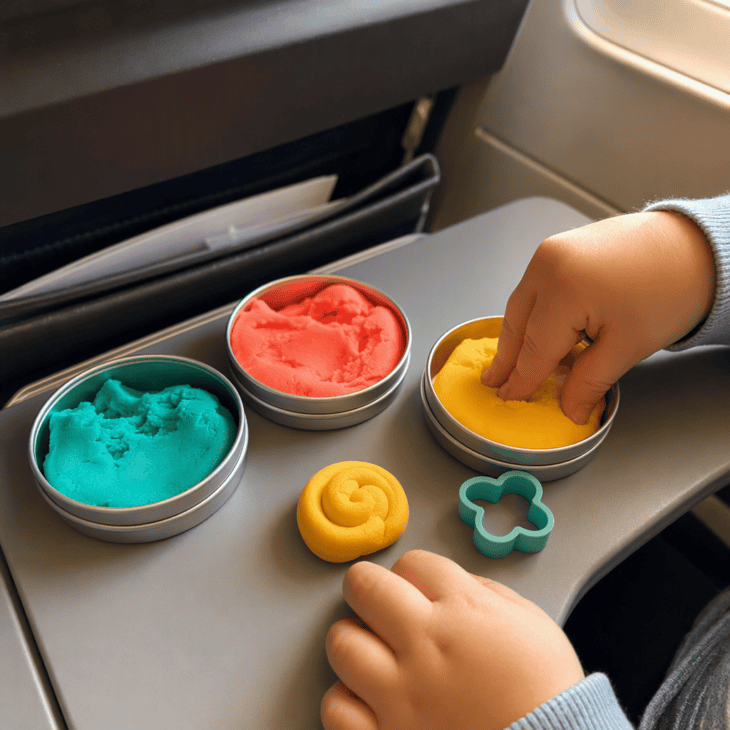
What it is Two or three small tins or pots of soft modeling dough, plus a couple of tiny cutters or a blunt plastic knife. Travel sets usually hold about 1 ounce (28 g) per color in a screw top tin rather than the larger tub sold for home use.
Why it works Dough is one of very few open ended materials that survives a tray table, and it holds a preschooler far longer than anything with a fixed outcome. It also gives restless hands something to squeeze during a hold or a long taxi.
How to get it TSA lists Play-Doh as allowed in both carry on and checked bags, so it does not need to go in your liquids bag, though the officer at the checkpoint always has the final say. Put a paper napkin or the wipe clean mat underneath, since dough presses into seat fabric and will not brush out. Keep the colors separate if your child minds them mixing, because they will mix. Close the tins before descent rather than after landing.
What TSA lets through
Formula, breast milk, toddler drinks and baby food are exempt from the 3.4 ounce liquids rule and can exceed it in carry on bags. They do not need to go in a quart sized bag, but tell the officer at the start of screening if you are carrying more than 3.4 ounces. Children 12 and under can also leave shoes, light jackets and headwear on.
13. Finger Puppets for a Tray Table Show
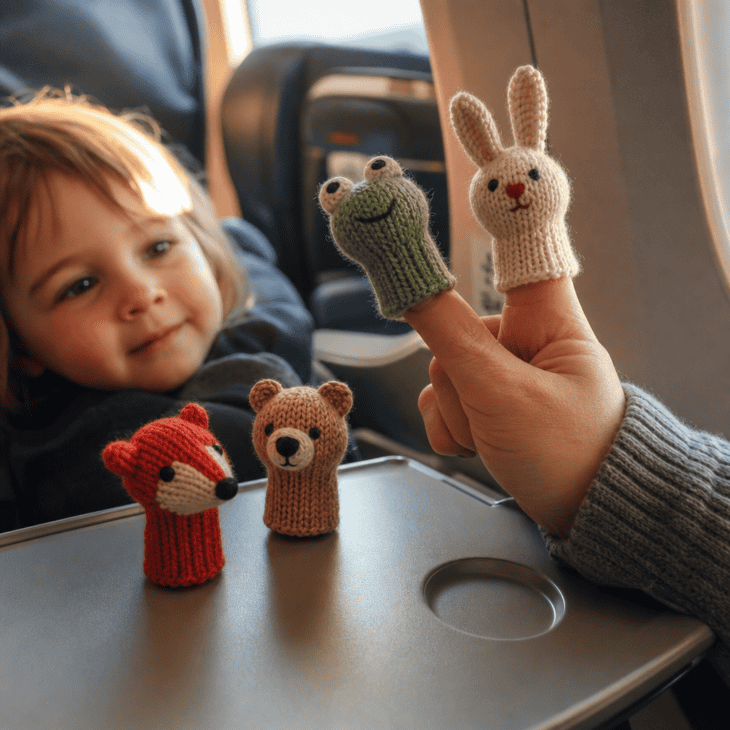
What it is A set of four to six knitted or felt finger puppets, usually animals or simple characters, each about 2 inches (5 cm) tall. The seat back tray or the window shade becomes the stage.
Why it works It is the rare activity that scales with the adult’s energy rather than the child’s, so it works when your toddler is too tired to do anything themselves. A whispered puppet conversation also stays genuinely quiet, unlike most pretend play.
How to get it Six puppets is the practical ceiling, since more than that just fills the tray table. Choose knitted ones over molded plastic, which crack and do not pack flat. Give each puppet a fixed name and voice at home before the trip so the story picks up instantly on board. Keep them in the seat pocket rather than your bag, so you can reach one without standing up.
14. Suction Cup Toys for Babies
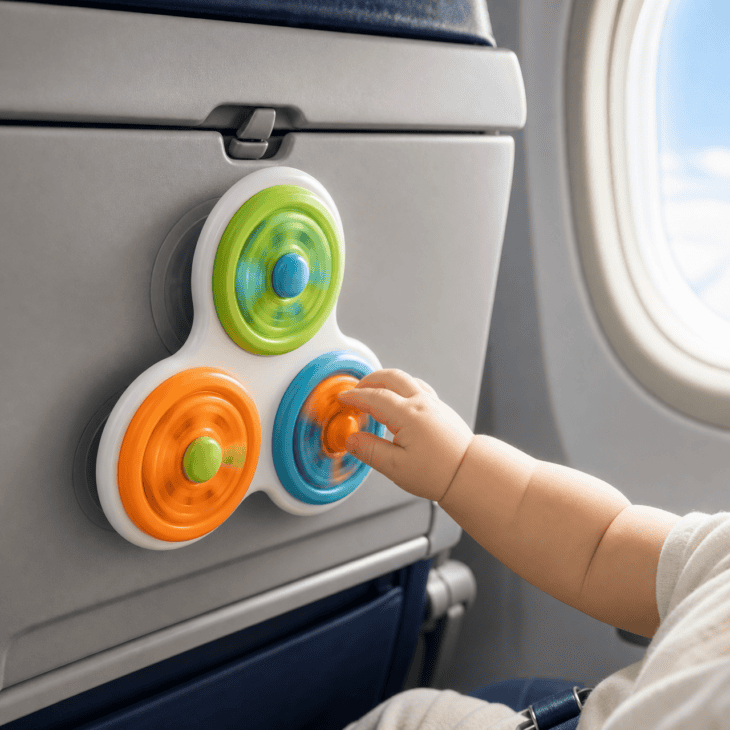
What it is Small toys mounted on suction cups that grip a tray table, a window or a smooth seat back: spinner wheels, rattles, rings and soft rubber figures. Most are designed for high chairs, which makes them almost purpose built for an airline seat.
Why it works An infant’s main flight activity is dropping things, and a suction base ends that loop. It also keeps the toy off the cabin floor, which is the single biggest hygiene worry most parents have on board.
How to get it Test the suction on a smooth home surface first, since weaker cups pop off the moment a baby pulls sideways. Bring two or three small ones rather than a single large arch, which will not fit the tray. Wipe the tray table before sticking anything to it, because the cups need a clean surface to seal. If you are still putting the room together at home, our airplane nursery ideas cover the aviation themed version of the same toy shelf.
15. Window Seat Bingo and Cloud Spotting
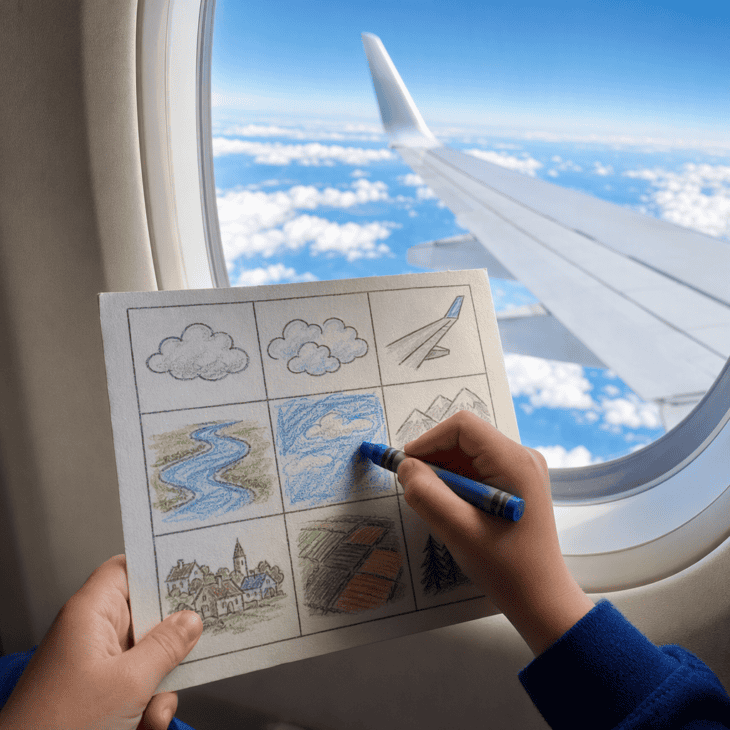
What it is A grid of things to find out the window, marked off as they appear: a river, a road, a lake, a town at night, another aircraft, a wing flap moving, a mountain, farmland in squares. Non readers get a version drawn as pictures instead of words.
Why it works It makes the window the point of the flight rather than a thing to complain about, and it costs nothing but five minutes with a marker. It also stretches: a full card can take an hour on a clear daytime leg.
How to get it Draw the card on stiff card stock so it survives being pressed against the window, and laminate it if you fly often. Keep it to a 3 by 3 grid for under fives and 4 by 4 for older children. Include two or three easy squares early so the game starts with a win. If your child likes the window seat, our window seat photo ideas are the natural follow up once they are old enough to hold a phone.
16. An Airport and Airplane Scavenger Hunt
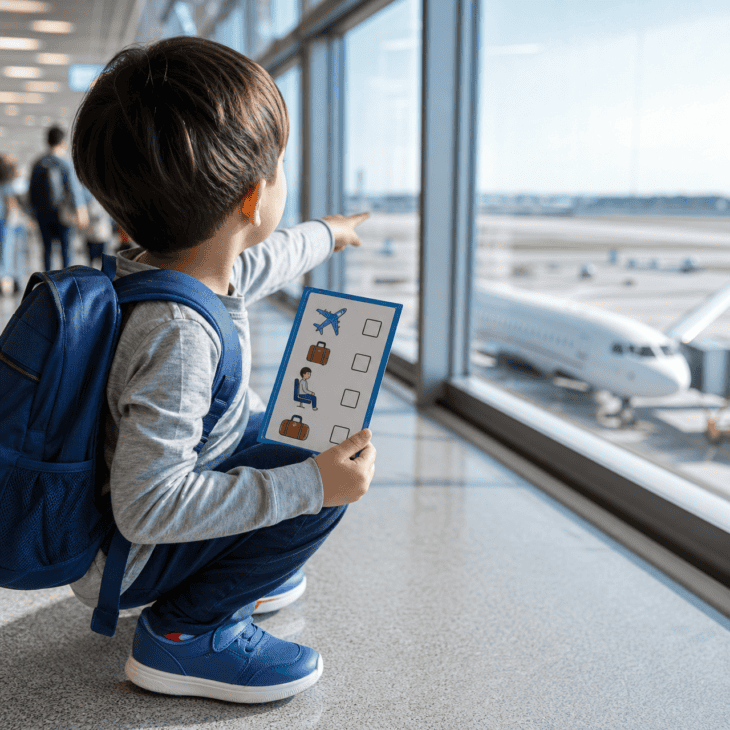
What it is A checklist of things to find between the curb and the seat: a baggage cart, a fuel truck, a jet bridge, a moving walkway, a working dog, a person in a high visibility vest, an aircraft with winglets. The hunt runs through the terminal and continues out the window.
Why it works It targets the hardest part of the day, which is usually the wait before boarding rather than the flight itself. Walking a hunt also burns energy at the gate, which pays you back once everyone is strapped in.
How to get it Split the list into a terminal half and an onboard half so it does not finish before you board. Use pictures for pre readers and add a difficulty tier for older siblings, who otherwise lose interest in three minutes. Agree a small prize for a completed card and actually carry it. Our list of things to do on a long layover has more ideas for the connection legs.
17. Story Dice and Drawing Prompt Cards
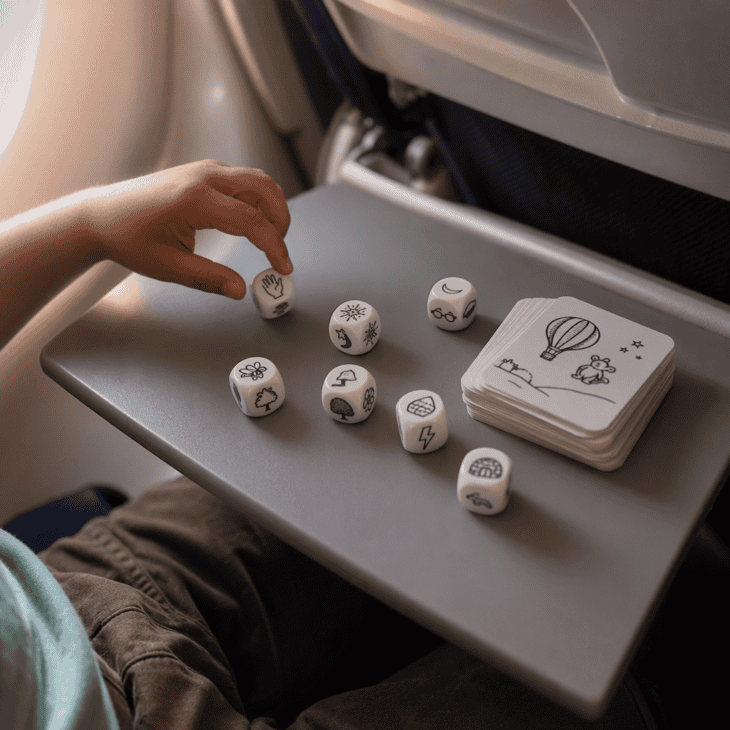
What it is A set of nine dice printed with simple picture icons instead of numbers, rolled to generate a story the child tells out loud. Prompt card decks do the same job on paper, with one drawing or storytelling instruction per card.
Why it works It is the lightest and smallest thing on this list that can genuinely fill half an hour, because the content is generated by your child rather than printed in advance. It also works with the lights down, when coloring does not.
How to get it Roll the dice inside a shallow tin lid rather than on the tray table, or you will spend the flight retrieving them from the aisle. Start with three dice for a five year old and build up to all nine. Pair the dice with a plain notebook so the story can be drawn as well as told. Keep this one in reserve for the last hour, when screens have stopped working.
18. A Kids Travel Journal and Sticker Map
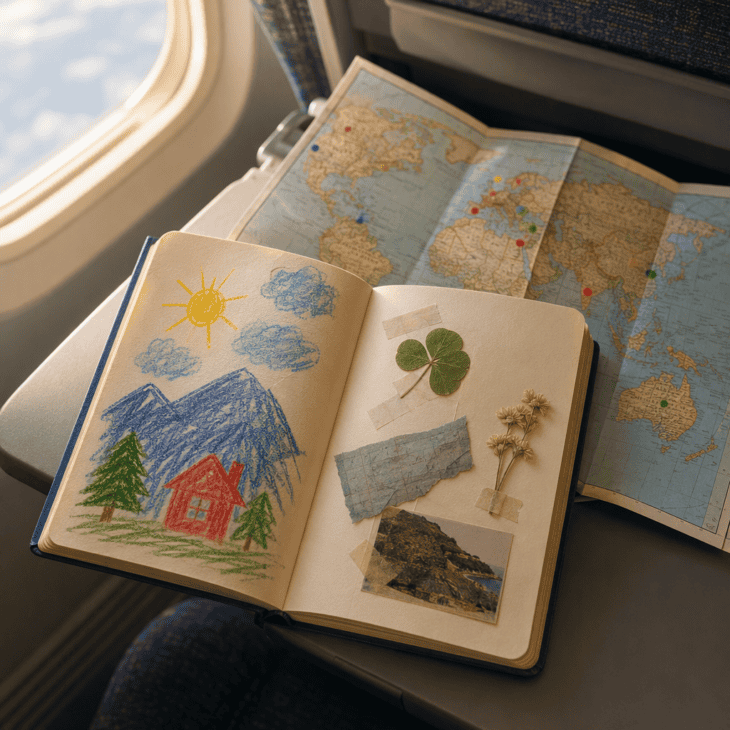
What it is A small blank hardback book the child fills in flight with drawings, ticket stubs, a note about where they are going and what they can see. A folding world or country map with dot stickers works as the simpler version for younger children.
Why it works Unlike everything else here, it produces something at the end, so it earns its place in the bag on the return leg as well. Children who resist writing at home will often write on a plane, because there is nothing else competing for the time.
How to get it Choose a hardback around 6 by 8 inches (15 by 20 cm) so it can be written on without a desk. Pack a glue stick rather than tape for stubs and wrappers, since tape dispensers are fiddly on a tray table. Write the first page yourself before you leave, which gets past the blank page problem. Pair it with airport photo ideas if your child wants the trip documented on a phone too.
19. Audiobooks with Volume Limited Headphones
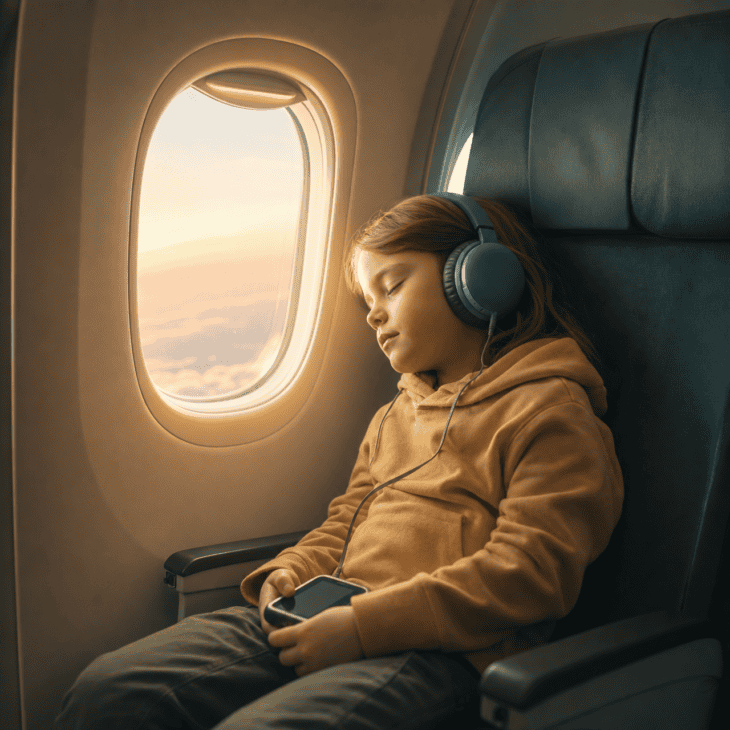
What it is Downloaded audiobooks, story podcasts or a dedicated children’s audio player, played through padded over ear headphones with a built in volume cap. Screen free audio players aimed at three to eight year olds are the purpose built version.
Why it works Audio holds attention for long stretches while leaving hands free to color or eat, and it is the only activity here that also works in the dark on an overnight leg. It is also the easiest one to restart when a child wakes up disoriented.
How to get it The volume cap matters more than the brand: the NIDCD notes that repeated exposure at or above 85 decibels can cause hearing loss, and that headphones at maximum volume run from 94 to 110 decibels. Look for a fixed limit rather than a switch a child can flip. Download everything before you leave home, since gate wifi rarely finishes a large file. Pack a wired pair as backup, because a flat battery ends the activity outright.
20. Downloaded Shows and a Tray Table Tablet Stand
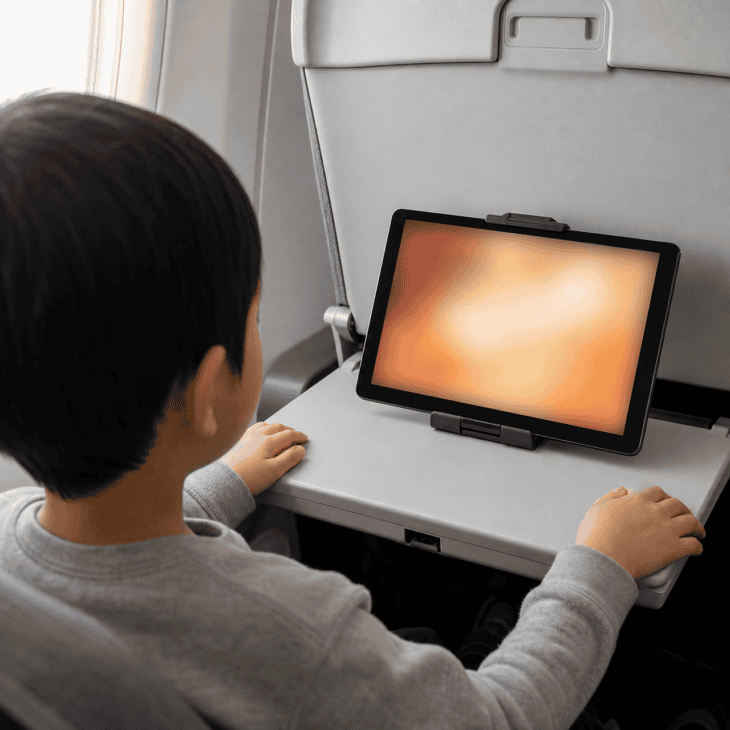
What it is Shows and movies downloaded to a tablet or phone before the trip, held up by a folding stand or a strap that hangs from the seat back tray latch. Stands cost a few dollars and fold flat into a seat pocket.
Why it works The American Academy of Pediatrics is direct about this: while it does not encourage screen time for children under two, a tablet with videos can be a lifesaver during air travel and will not do serious harm. Treating the screen as a tool for one specific situation, rather than a failure, is the useful frame.
How to get it Download the night before, not at the gate, and check that the files actually play in airplane mode before you leave the house. Charge everything to full and carry a power bank, since not every seat has working power. Load twice as much as you think you need, including two things your child has never seen. Save the screen for the back half of the flight, because once it comes out nothing else will compete with it.
21. A Bento Snack Box as an Activity
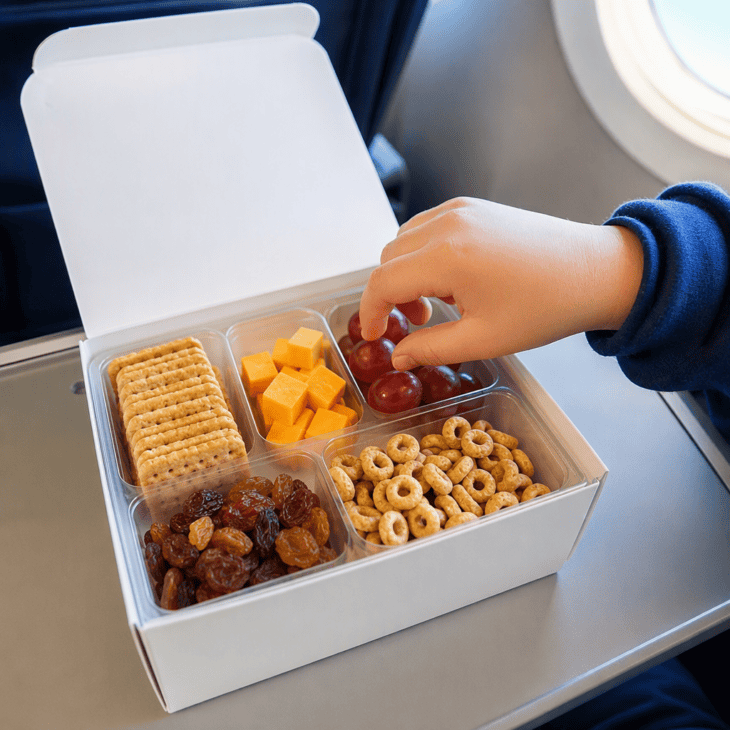
What it is A compartmented lunch box holding six or more tiny portions rather than one or two large ones: crackers, cheese cubes, grapes, dried fruit, cereal, a few sweets. The box is the activity as much as the food is.
Why it works Small compartments slow eating down, and slow eating is exactly what you want when you are trying to spend time rather than save it. Snacking also gives you a reason to hand a child something at the moment they start to unravel.
How to get it Pick a box with a latching lid and separate sealed compartments, so a bump does not merge the grapes into the crackers. Avoid anything crumbly or strongly smelling, out of fairness to the rows around you. Freeze nothing, since it thaws into a leak. Our lists of airplane snack ideas and airplane food ideas for long flights go deeper on what actually travels well.
22. Building Bricks on a Baseplate Lap Tray
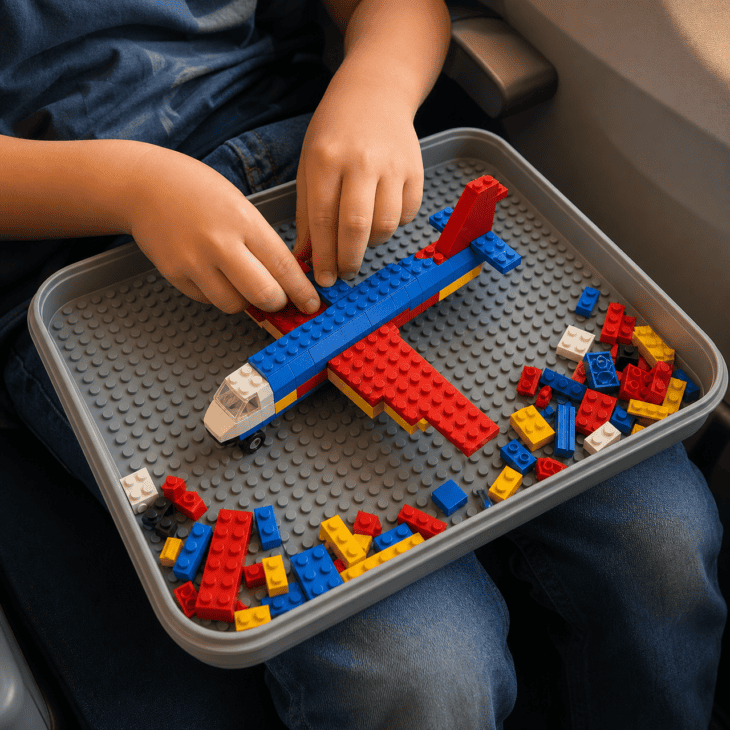
What it is A small building brick set, ideally 40 to 80 pieces, built on a baseplate glued or taped inside a shallow lidded tray. The raised sides of the tray contain the loose pieces, and the lid closes over a half finished model.
Why it works Building holds a six to ten year old longer than almost anything else that is not a screen, and the tray solves the one reason bricks are normally a terrible flight idea. A half built model also survives a connection, so the activity carries across legs.
How to get it Use a lidded craft or bead storage tray with sides at least an inch deep, and fix the baseplate down with double sided tape. Keep the set small, because an 80 piece kit is manageable on a tray table and a 300 piece one is not. Choose a set your child has not built before, and leave the instruction booklet in the bag rather than on the table. A brick airplane set pairs well if you are also planning airplane birthday party ideas around the trip.
23. Pretend Pilot Play with Paper Wings and a Checklist
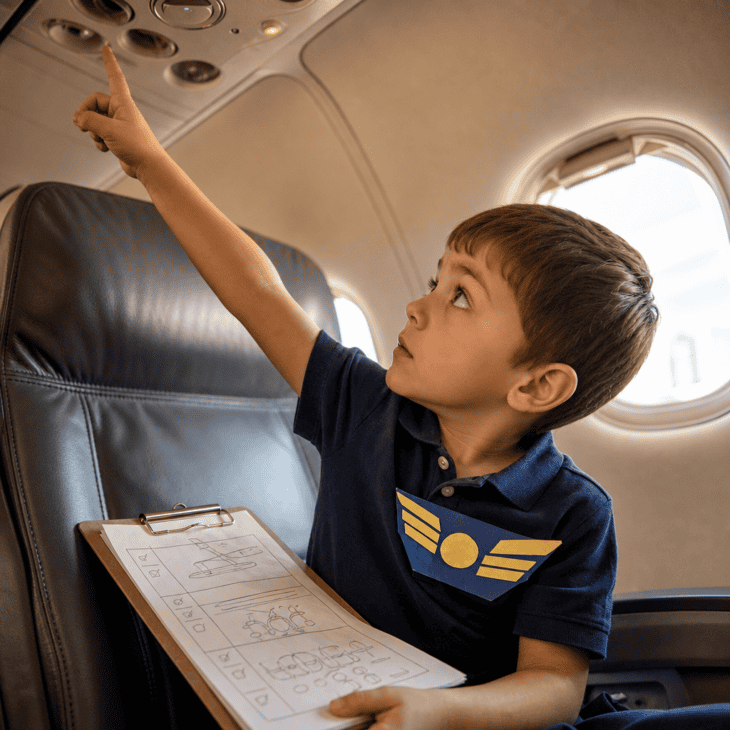
What it is A cardboard set of pilot wings, a paper badge on a ribbon and a hand drawn preflight checklist the child ticks off: seatbelt fastened, tray table stowed, window shade up, wings still attached. Some airlines also hand out paper wings on request.
Why it works It converts the rules a child has to follow anyway into a role they get to play, which removes most of the argument about seatbelts. It also runs during taxi and climb, when everything else has to be stowed.
How to get it Make the badge and checklist at home the evening before, as part of the build up rather than on the day. Write the checklist in pictures for pre readers and keep it to six items. Ask the crew politely during boarding whether a flight deck visit is possible at the gate, and accept a no gracefully. For a child already deep in this phase, our aviation bedroom ideas extend the theme at home.
24. The Descent Kit for Ear Pressure
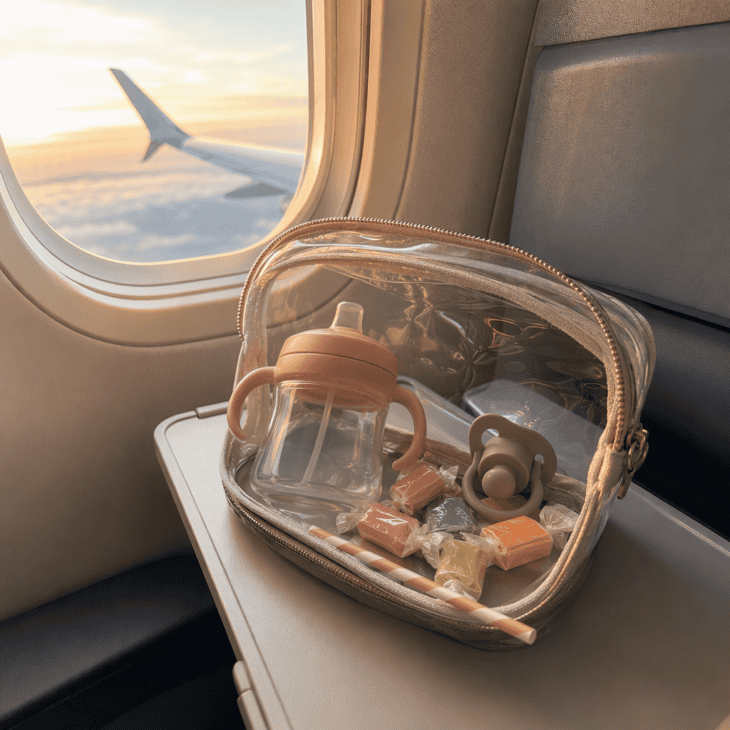
What it is A small pouch kept separate from everything else, holding a bottle or sippy cup, a pacifier, chewy sweets or a lollipop for older children, and one saved surprise toy. It comes out only when the descent starts.
Why it works The American Academy of Pediatrics advises that having babies drink from the breast or a bottle, or suck on a pacifier, during takeoff and landing eases the discomfort caused by changing air pressure. Everything in the pouch is chosen to trigger swallowing, and the saved toy covers the stretch when tray tables must be stowed.
How to get it Keep the pouch in the seat pocket rather than the overhead bin, since you will need it after the cabin has been secured. Start about twenty minutes before landing rather than waiting for the first complaint. If your child has had a recent ear infection or ear surgery, the AAP advises checking with your pediatrician before flying. Rebuild the pouch during the layover so it is full again for the next leg.
25. The Sleep Kit for an Overnight Flight
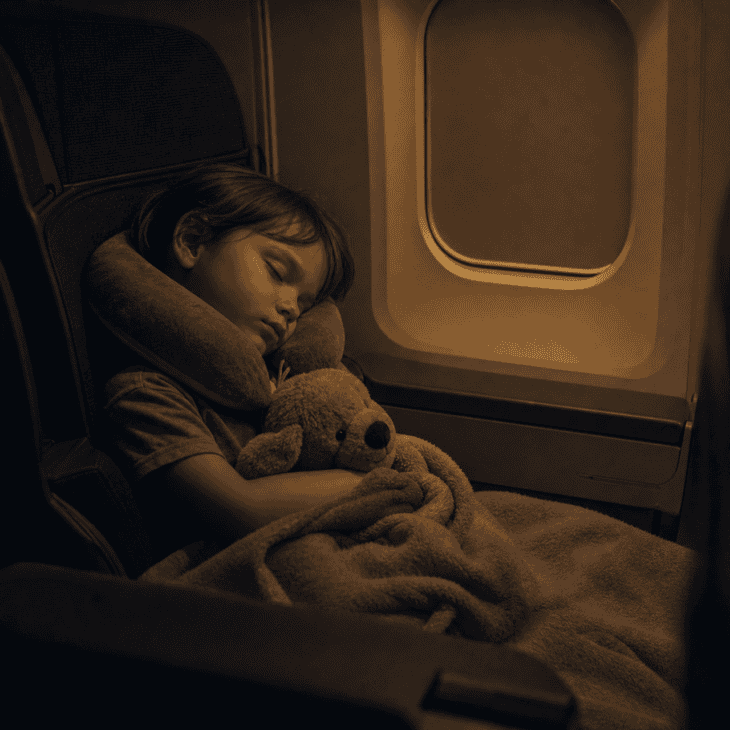
What it is A compressible bundle holding the blanket and comfort toy your child already sleeps with at home, a child sized neck pillow, soft ear protection and pajamas to change into after the meal service. It is a wind down routine, packed.
Why it works Sleep on a night flight depends on familiarity far more than comfort, so the value is in the specific blanket rather than a better one. The AAP also suggests dressing babies in layers and reducing noise exposure with soft earplugs or noise canceling headphones, both of which make sleep more likely.
How to get it Run the normal bedtime sequence on board in the normal order, because the order is what signals sleep. Pack the comfort toy in your own bag, not the child’s, since losing it mid trip is a disaster of its own. Note that the FAA does not allow baby carriers, booster seats or backless child restraints during ground movement, takeoff or landing, so plan sleep positions around that. Change into pajamas after the cabin lights dim.
FAQ
Sources and references used for research and fact-checking.
- Transportation Security Administration, Traveling with Children
- Transportation Security Administration, What Can I Bring: Play-Doh
- Federal Aviation Administration, Child Safety: Keep Your Little One Safe When You Fly
- American Academy of Pediatrics, HealthyChildren.org, Flying with Baby: Parent FAQs
- National Institute on Deafness and Other Communication Disorders, Noise-Induced Hearing Loss
Get the Newsletter
The latest aviation news and stories sent to your inbox.
About the Author

Hanna writes AeroCorner's aviation-lifestyle and decor guides, turning a love of flight into ideas for your home, celebrations, and gift lists.