

Table of Contents
A long layover is the kind of travel situation that sounds like a problem until you learn how to use it. Three hours minimum, more often six or eight, sometimes overnight: it is a block of time that belongs entirely to you, sitting inside one of the most interesting built environments on earth. The obstacle mindset is understandable, but it is also a waste.
Airports at their best are genuinely fascinating. They are cities within cities, with their own restaurants, art collections, wellness facilities, spa retreats, and hidden observation angles that most people walk past without a second glance. Most travelers ignore all of it and sit at the gate scrolling through their phones. This list is for the ones who want to do something better with the time they have.
These 25 ideas range from free and instant to involving a short taxi ride. Some work in a 90-minute window; others need four or five hours. Read through the list before your layover starts, pick three or four that fit your time and your mood, and treat the airport as the destination for a few hours rather than the obstacle between two of them.
01. Head to the Observation Deck
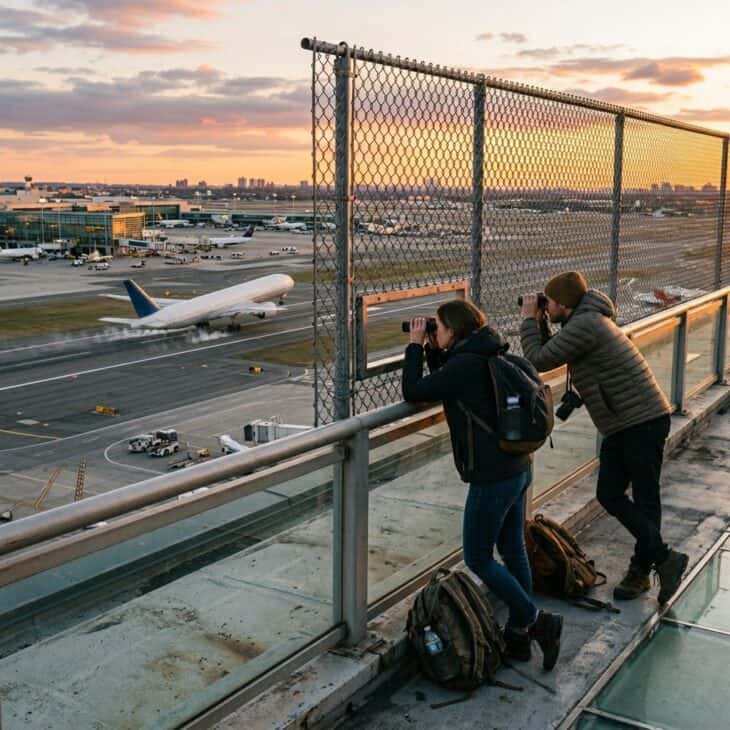
Why it works There is something fundamentally different about watching aircraft from ground level when you are usually the one inside them. The size of a wide-body jet becomes tangible in a way it never is through a porthole window. A long layover suddenly has a purpose, and the observation deck delivers it for free.
How to do it Check your airport’s website or a plane-spotting community before your layover to confirm whether an observation deck exists and what its opening hours are. Some decks require a separate ticket or an airside security exit, so factor in re-entry time before committing. Arrive during the golden hour for the best light and the fewest crowds. Airside decks are rarer but offer unobstructed views directly over the apron. Set a phone alarm so you do not miss your gate call while absorbed in the traffic below.
02. Book a Day-Use Hotel Room for a Real Reset

Why it works A full lie-down resets fatigue in a way that no airport chair can match. Day-use rooms are often available from just a few hours, they include proper bathrooms, real silence, and a bed that makes the second leg of a long journey feel genuinely manageable rather than something to survive.
How to do it Search “airport day room” or “transit hotel” for your hub before you travel and book ahead since rooms sell out on busy days. Platforms that list short-stay options at airport properties can show availability at terminal hotels and sometimes inside the terminal building itself. Confirm check-in and check-out times match your layover window before paying. Pack a small toiletry bag in your carry-on so your main luggage can go in the hotel storeroom while you rest.
If you have a red-eye flight at the back end of the layover, a proper afternoon sleep means you arrive rested and ready to sleep again on board rather than wired and exhausted.
03. Stake Out the Best Window Seat for Plane Spotting

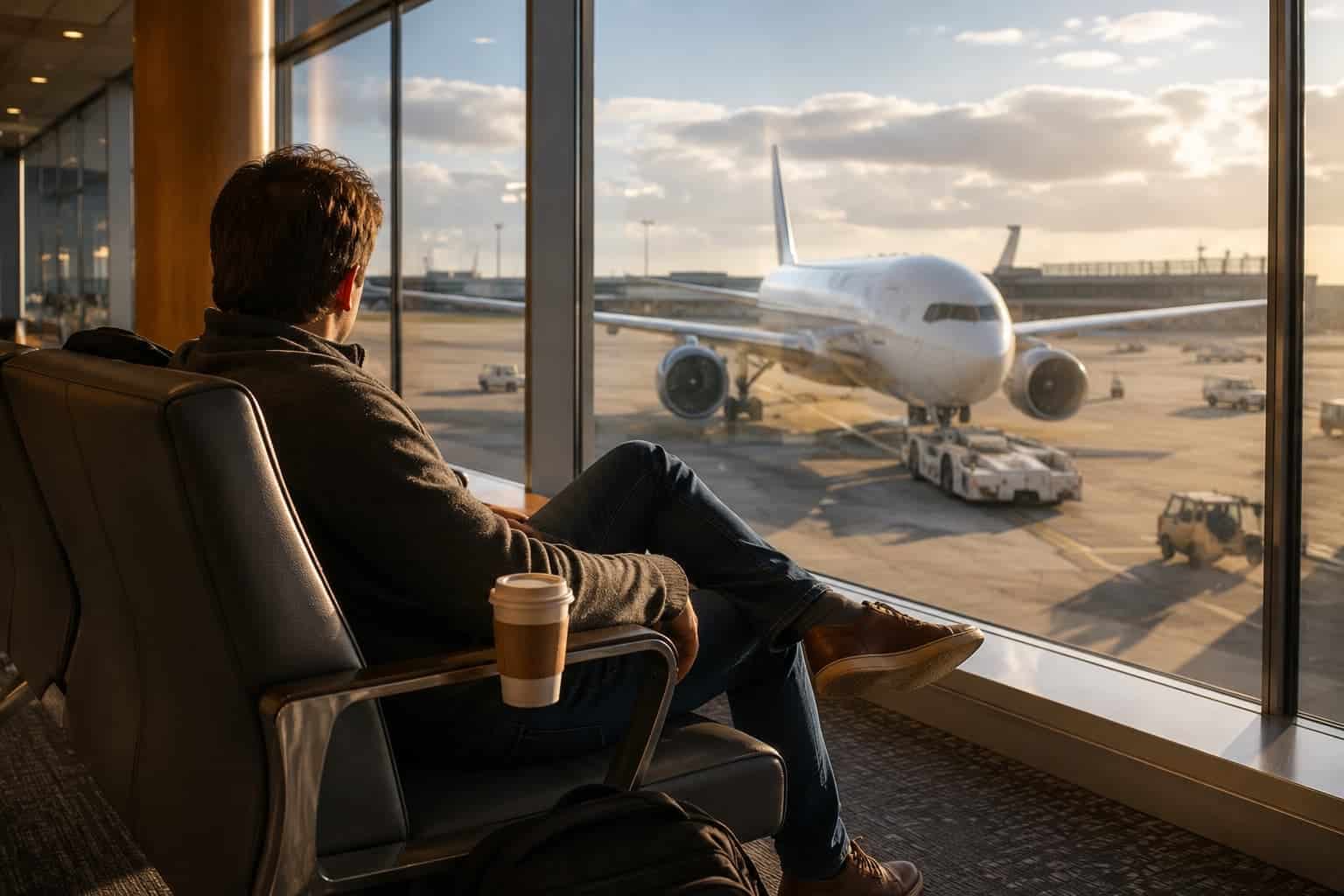
Why it works Not every airport has a formal observation deck, but almost every terminal has at least one gate pier where the views are extraordinary. Finding that window takes a little exploration and pays off in an hour of satisfying, zero-cost entertainment. The right seat with the right angle turns waiting into watching.
How to do it Walk a long pier away from the main concourse and look for gates with a clear runway sightline rather than a wall of jet bridges. International terminals and remote piers usually have better angles. Charge your phone before you settle in because you will want it for photos. Our guide to plane spotting tips for beginners covers what to look for: pushback sequences, ground service vehicles, queue patterns at the hold point. Grab a coffee and a snack and treat it as a proper leisure activity rather than something to apologize for.
04. Get a Massage or Spa Treatment

Why it works Flying dehydrates you, compresses your spine, and shortens your hip flexors and shoulder muscles in ways that add up across a long journey. A proper massage undoes several hours of cabin stress in under an hour, and you board the next flight feeling genuinely refreshed rather than tolerated by your own body.
How to do it Look for airport spas using the terminal’s directory when you arrive, and ask at the information desk if you cannot find one listed. Book your slot immediately since popular afternoon times fill quickly after large inbound arrivals. A 30-minute express massage or a neck and shoulder treatment is enough to feel the difference and fits most layover windows comfortably. Bring noise-cancelling headphones for the treatment if the spa does not provide ambient music. Drink a large glass of water immediately afterward and hold off on wine for at least an hour to let the circulation benefits take hold.
05. Escape Into the City for a Mini Day Trip

Why it works A layover of six hours or more is enough to leave the terminal, reach the city center, and return with a real experience of a place you might otherwise only see from altitude. Cities with fast rail connections to their airports make this even easier, turning what felt like dead time into an actual destination.
How to do it Research transit options before you travel. Fast rail connections mean 20 to 40 minutes to the city center at many major international hubs. Allow a minimum of 90 minutes to return, clear security, and reach your gate comfortably. Keep documents and valuables in a small carry-on rather than checking your main bag if you plan to go landside. Choose one specific thing to do rather than trying to see everything: a famous market, a single museum room, or a particular neighborhood. Confirm visa or transit rules for your nationality well in advance since landside access requirements vary significantly by country.
Visa reminder
Always check whether your passport requires a transit visa for landside access in your layover country. Some nationalities need documentation even for a brief exit from the terminal, and assumptions here can cause serious problems at the airport.
06. Explore the Terminal’s Hidden Art Installations
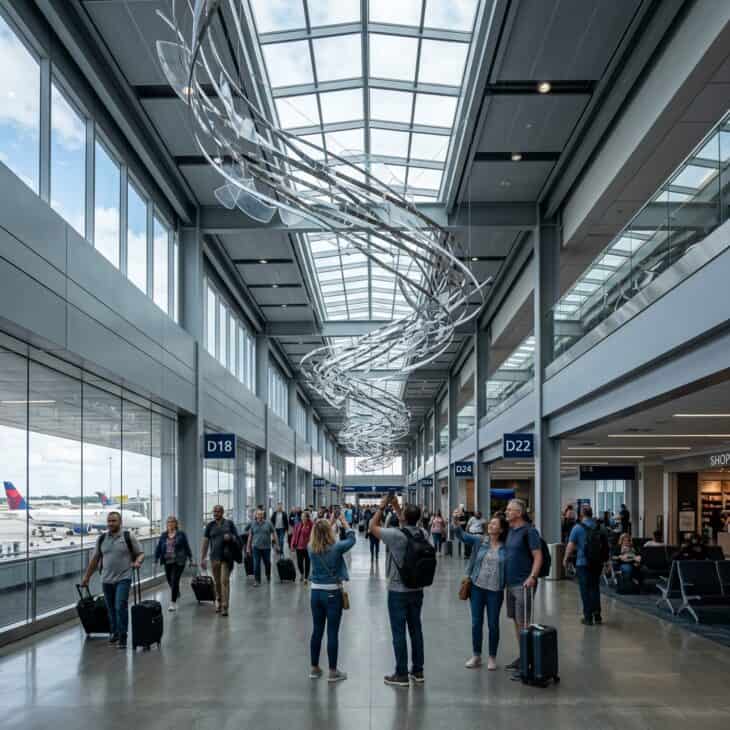
Why it works Major international airports commission serious art, and most travelers walk past it without a second glance. Treating the terminal as a gallery slows you down in the best possible way, gives you something to photograph that is not a gate board or a coffee cup, and turns transit time into a cultural experience with no admission fee.
How to do it Download the airport’s official app or look for a terminal map with an art guide, which several large hubs publish as a dedicated section. Ask at the information desk if you cannot find one; staff almost always know where the major pieces are. Walk slowly through the main corridors and look up as well as around: ceiling installations, floor mosaics, and wall-scale photography are all common formats. Photograph details rather than wide shots for more interesting images. Some installations have plaques with the artist’s full story, which is worth reading before moving on. Give yourself a proper 45-minute stroll so you do not rush past the best pieces.
07. Find the Sleep Pods and Actually Rest
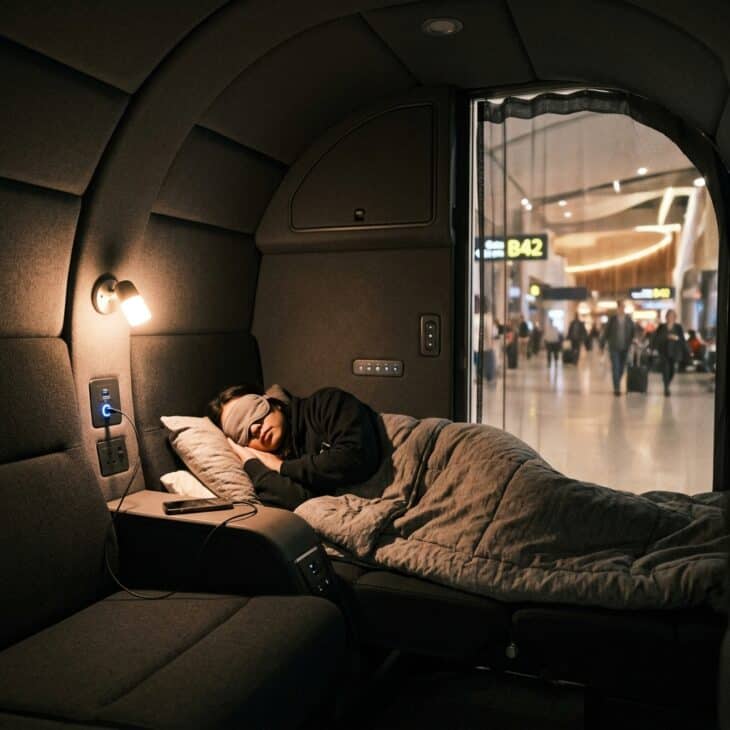
Why it works Sleep deprivation compounds across long journeys, and a 90-minute rest in a quiet pod resets alertness more effectively than another espresso. Sleep pods charge by the hour, require no hotel check-in queue, and are available airside so you never leave the secure zone. The cost is almost always less than what you would spend sitting at a bar for the same duration.
How to do it Search for sleep pod facilities at your specific hub before you travel, as availability varies greatly. Major international hubs increasingly offer branded pod lounges in airside corridors. Book online if the provider allows it; some operate as walk-up only. Set two alarms on your phone before you recline: one as a wake-up call and one as a gate-departure reminder with enough buffer to get there. Carry an eye mask and foam earplugs in your carry-on for a noticeably better quality rest. Calculate your window and add 30 minutes of buffer before the pod time ends.
08. Settle Into an Airport Lounge
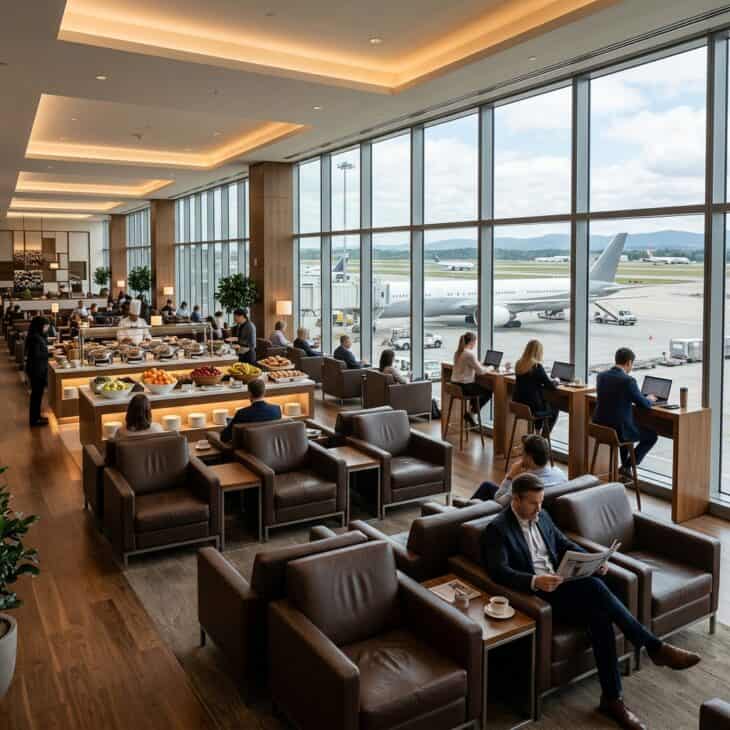
Why it works Lounges transform the entire experience of waiting. Reliable Wi-Fi, real food, a proper shower, and comfortable seating in a single space mean a six-hour stop feels more like a hotel stay than a corridor wait. The mental shift from “stuck in the airport” to “in the lounge” is bigger than the physical difference.
How to do it You do not need a business class ticket. Day passes for lounge networks can be purchased at the door or in advance online, often for less than the cost of two airport meals and a bottle of water. Some premium travel credit cards include complimentary lounge access you may already have and have never used. Arrive within the first hour after a lounge opens to secure the best window seat. Use the shower facilities first, then work through the food, then find your power station. Book ahead at the most popular lounges since capacity limits apply at peak times.
Budget tip
Many travel credit cards include complimentary lounge access through networks like Priority Pass. Check your card’s benefits page before paying for a day pass at the door. You may already have access and not know it.
09. Walk Every Terminal: The Full Airport Lap
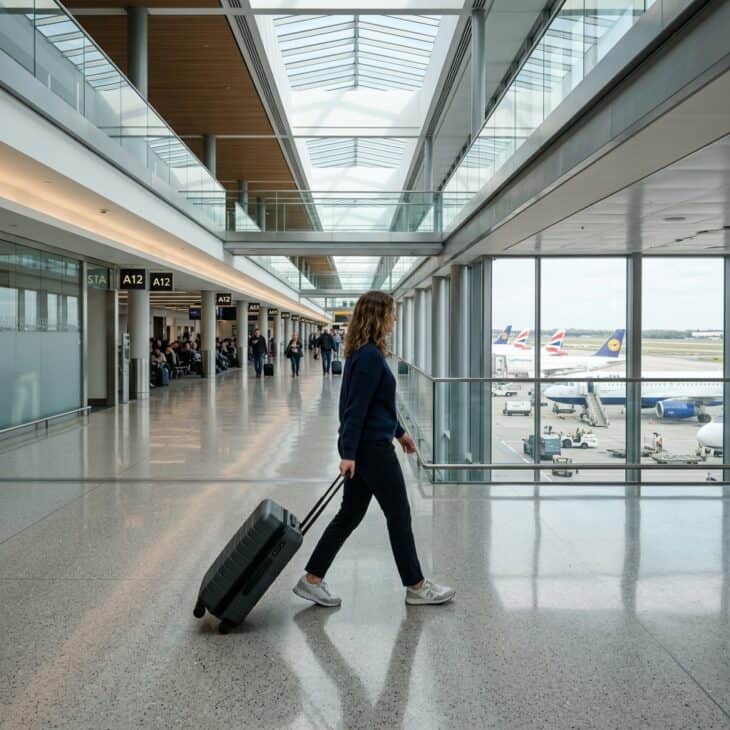
Why it works Sitting in a narrow seat for hours tightens your hip flexors and slows your circulation in ways that compound across a multi-leg journey. A purposeful walk through the full terminal is free exercise with actual destinations: you learn the layout, discover restaurants and shops you would have missed, and arrive at the gate genuinely loose rather than stiff and frustrated.
How to do it Get a terminal map from the information desk or the airport app and plan a route that takes in all the concourses. Large hubs often have internal rail connections between terminals, which turns the full circuit into more of an adventure than a chore. Wear your most comfortable shoes for the walk rather than your tightest pair. Set a step goal on your phone: 6,000 steps is achievable in a 45-minute walk through a large terminal. Note coffee spots and seating areas as you go so you have a plan for a second loop. Understanding why different types of airports are built the way they are makes the architecture more interesting as you move through it.
10. Do a Stretch or Yoga Session in a Quiet Corner
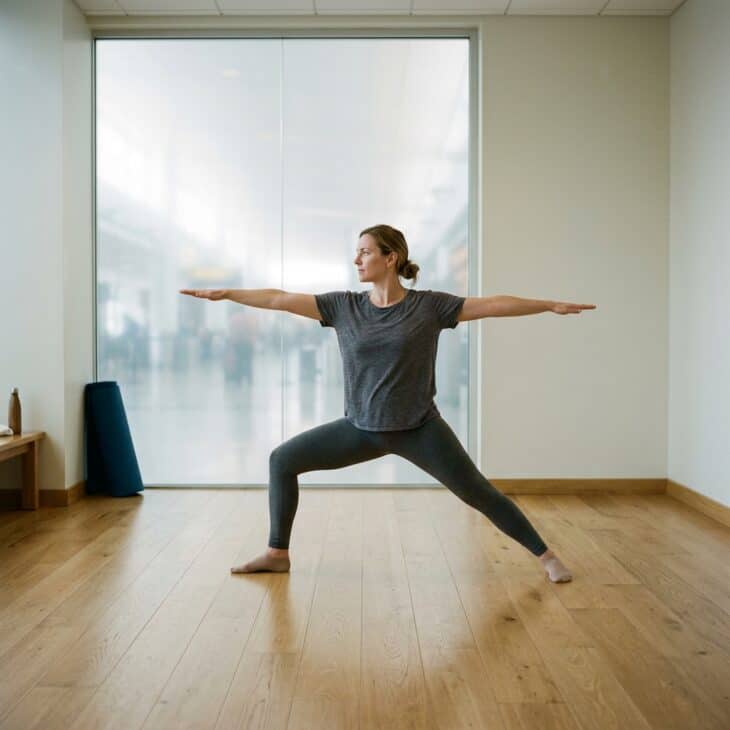
Why it works Hours in an airline seat leaves your thoracic spine stiff and your hip flexors noticeably shortened. Even 20 minutes of targeted stretching reverses most of the damage, improves circulation, and changes how you feel for the next leg more than almost anything else you can do for free in an airport.
How to do it Many modern airports designate a wellness or meditation room that is often underused and easy to find if you ask at the information desk. If no dedicated room exists, a quiet end-of-pier gate with no current boarding is an acceptable alternative. Download a travel-specific stretch routine from a yoga or stretching app before you fly so you do not need to invent the sequence on the spot. Focus on hip openers, thoracic rotation, and shoulder rolls, which address the specific stresses of narrow airline seating. Carry a lightweight travel mat or use a clean towel on the floor. Wear layers you can remove if the room is warm from earlier occupants.
11. Splurge on the Airport’s Best Sit-Down Restaurant
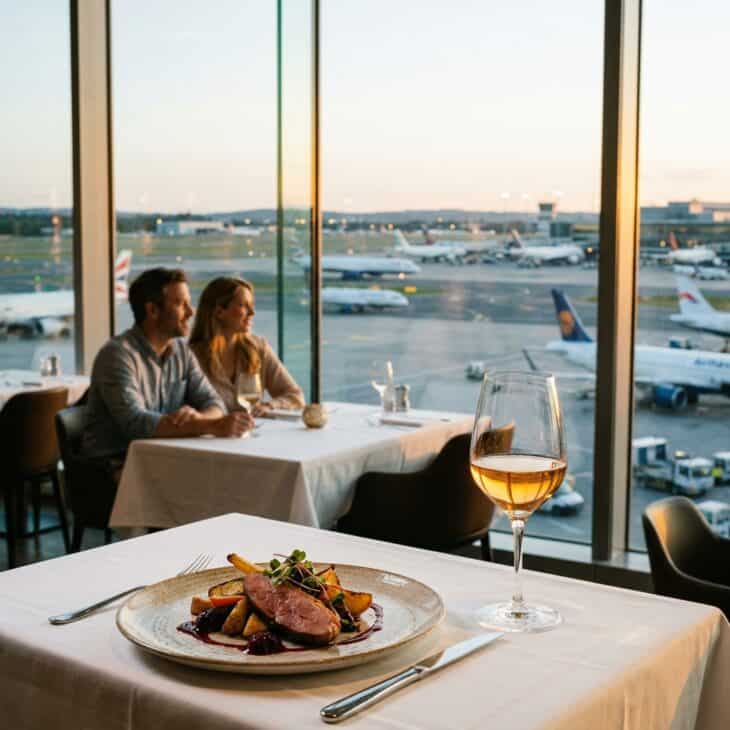
Why it works The best airport restaurants are genuinely good, and they are almost always underused because travelers assume they cannot be worth the premium. A sit-down meal where someone brings your food and refills your water costs only marginally more than a rushed fast-food run and occupies an hour calmly and pleasurably. The contrast with why airplane food gets such a bad reputation makes a fresh, plated meal taste even better by comparison.
How to do it Ask airport workers or airline staff at the information desk which restaurant they eat at themselves, since they know the quality better than any review app. Look for menus that feature regional or local dishes rather than generic international comfort food, which tells you the kitchen is actually trying. Reserve a window table if the restaurant takes bookings, and aim for shoulder hours such as early lunch or late afternoon to avoid peak crowds. Order something you would not normally eat at home. Take your time: an unhurried restaurant meal at an airport is a small luxury that costs nothing extra beyond the bill itself.
12. Try a Flight Simulator Experience
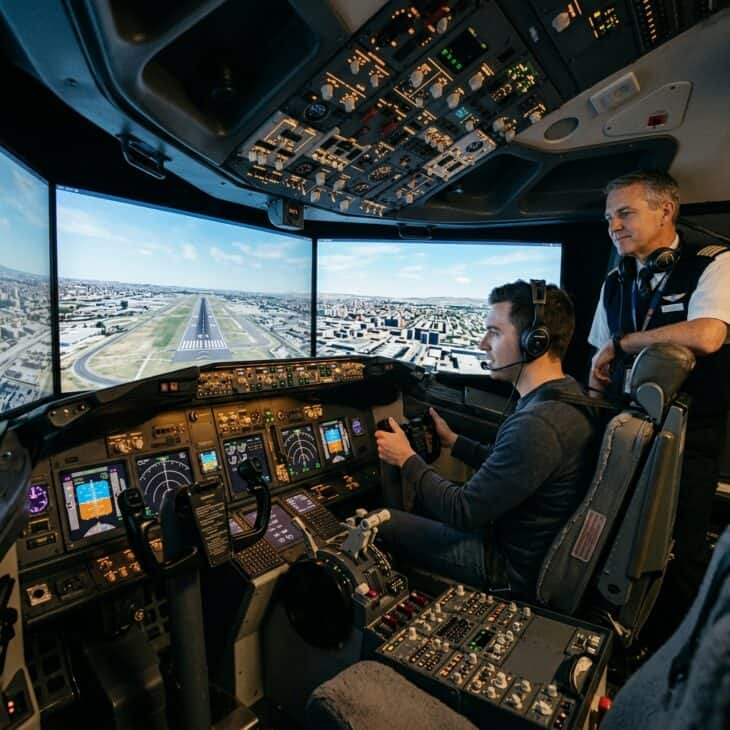
Why it works Sitting on the other side of that cockpit door for even 30 minutes changes how you understand everything that happens on a flight. Most people who try a simulator come away with a much deeper appreciation for the precision and workload behind commercial aviation, and a few get genuinely hooked on the idea of learning to fly properly.
How to do it Search for flight simulator facilities near your layover airport before you travel, since many major cities host independent simulator centers close to the hub. Some airports have compact interactive simulators airside in their terminals or departure lounges, which require no transit. Book ahead because popular time slots, particularly on weekends, sell out quickly.
Choose a beginner scenario such as a visual approach to a coastal city rather than a complex instrument procedure for your first session. Budget 60 to 90 minutes including the pre-flight briefing. The cockpit runs warm when the screens are active, so dress in comfortable, light layers.
13. Write in Your Travel Journal

Why it works The in-between state of a layover is one of the best conditions for writing. You are not yet where you are going and no longer where you came from, which produces a useful mental clarity that hotel rooms and home desks rarely replicate. Observations noted here have a specificity and an honesty that catch-up entries written later almost never match.
How to do it Carry a small notebook and a pen in your personal item, even if you do not normally journal, specifically for long layovers. Find a cafe corner where interruptions are unlikely and where you are not facing a gate board. Write without editing: observations about the terminal, the people visible from your seat, what you are thinking about the destination ahead.
If you keep a dedicated travel journal, this is the right moment to catch up on entries you meant to write on the flight. Give yourself 30 to 45 minutes of uninterrupted time. Writing rather than scrolling also rests your eyes from screens, which matters before another long flight.
14. Listen to an Aviation Podcast or Audiobook

Why it works A long layover is ideal for content that requires sustained attention: long-form podcast episodes, full audiobook chapters, or documentary recordings. This is the listening you would not fit into a short commute and that gets interrupted on a loud, turbulent flight. A good pair of noise-cancelling headphones makes a busy terminal disappear in a way that is almost implausible until you experience it.
How to do it Download three or four long episodes before you travel so you are not dependent on terminal Wi-Fi quality. Aviation documentaries, accident investigation series, and airline history podcasts are particularly well matched to the airport setting and to the mindset that airports put you in.
Browse our list of aviation books every enthusiast should read for audiobook candidates worth downloading before your trip. Set your phone to do-not-disturb so notifications do not interrupt the best moments. Charge your headphones overnight before travel so you have a full battery going into the layover. If you finish one episode, line up the next before you sit down: back-to-back listening is the whole point.
15. Hunt for Local Souvenirs That Are Not Generic

Why it works Every airport sells the same global duty-free brands, but most also have at least one shop that stocks genuine local products. Finding it takes a little effort. The reward is something that actually reflects the country you passed through rather than a universally available chocolate box with a local sticker on it.
How to do it Skip the large chain stores near the main concourse and walk to the far ends of the pier concourses, where specialty and regional shops tend to cluster. Look for food products with short ingredient lists and regional producer names, which indicate genuine local origin.
Carry a short mental list of the people you want to bring back a gift for so you do not over-buy or under-buy. Check liquid and weight allowance rules before purchasing bottles if you have another security checkpoint between here and home. Ask the shop staff what is made locally versus what is imported and branded locally, since they will always tell you honestly. Budget a full 30 minutes for a proper circuit rather than a rushed grab on the way to the gate.
16. Visit a Nearby Aviation Museum
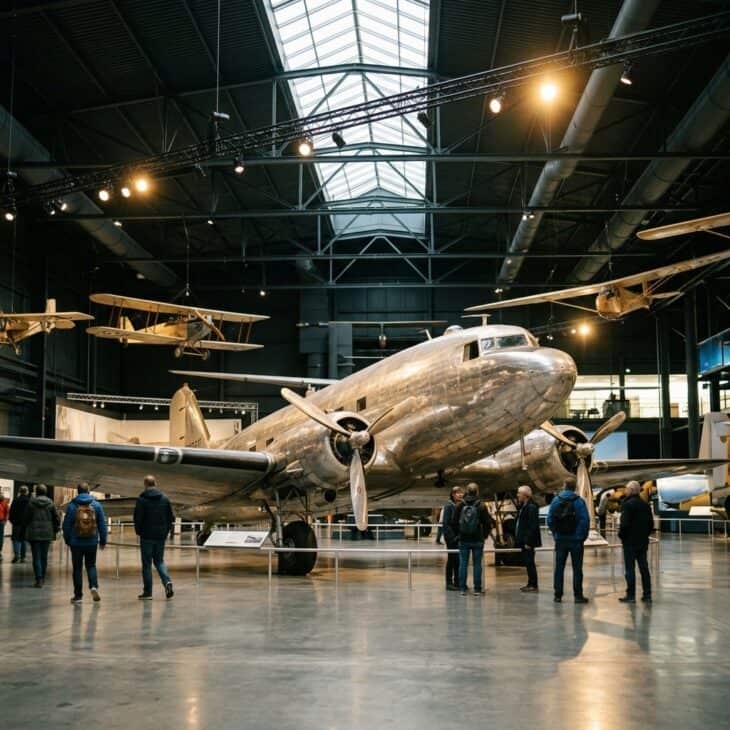
Why it works If your layover is long enough to leave the terminal, an aviation museum near the airport turns a frustrating wait into the genuine highlight of the entire trip. Seeing real aircraft up close, from warbirds to early commercial types, gives aviation enthusiasm a tangible reference point that photographs and documentaries simply cannot replicate.
How to do it Research aviation museums and collections within 30 to 45 minutes of your airport before you travel, since major aviation hubs tend to be located near significant collections. Allow a minimum of two and a half hours total: transit there and back plus at least an hour inside. Check opening times and buy tickets online in advance to avoid queues that eat into your window. Focus on one section of the collection rather than rushing the entire museum in too little time. Photograph the detail work on older aircraft rather than just the full-aircraft view: rivets, cockpit instrument panels, and engine nacelle interiors are extraordinary up close and make compelling photos.
17. Go on a Local Street Food Mission

Why it works Airside food is reliable but rarely interesting. Going landside for 30 to 45 minutes to find a market, a hawker stall, or a local food court gives you a real flavor of the country that no terminal restaurant can replicate and often costs a fraction of the price. The brief effort of leaving the airport pays for itself in the first bite.
How to do it Ask a local taxi driver or an airport worker rather than relying on travel apps, which can be months out of date for specific market locations. Go landside from the arrivals hall, which typically requires no additional security procedures beyond re-entry on the way back. Order one or two dishes you have never tried rather than attempting a full sit-down meal, since time is limited.
Pay attention to what locals are ordering at the counter rather than what is displayed on the English-language tourist board. Allow 20 minutes to eat and a full 45 minutes for the return through security, and add buffer if the airport uses a manual screening lane. Check transit visa rules before exiting if you are unsure whether your nationality requires one for landside access in this country.
18. Do a Coffee Bar Crawl Through the Terminal

Why it works Airport coffee quality has improved dramatically at major international hubs over the past decade, and many now host genuine specialty roasters alongside the familiar chains. A coffee crawl gives structure to the walk through the terminal, a low-cost reason to explore each concourse, and a small, specific reward at each stop rather than just walking aimlessly.
How to do it Limit yourself to one drink per stop to keep the crawl comfortable rather than wired. At a large hub with four or five concourses, three stops is usually the right number. Rate each coffee briefly in your notes app: espresso clarity, milk texture, cup temperature.
Look for the independent kiosks rather than the global chains, since those are where you find single-origin roasts and interesting brewing methods. Pair each cup with a small local pastry if the cafe offers one. Switch to herbal tea or sparkling water toward the end of the layover if your flight departs in the evening and you want to sleep on board.
19. Organize and Edit Your Travel Photos
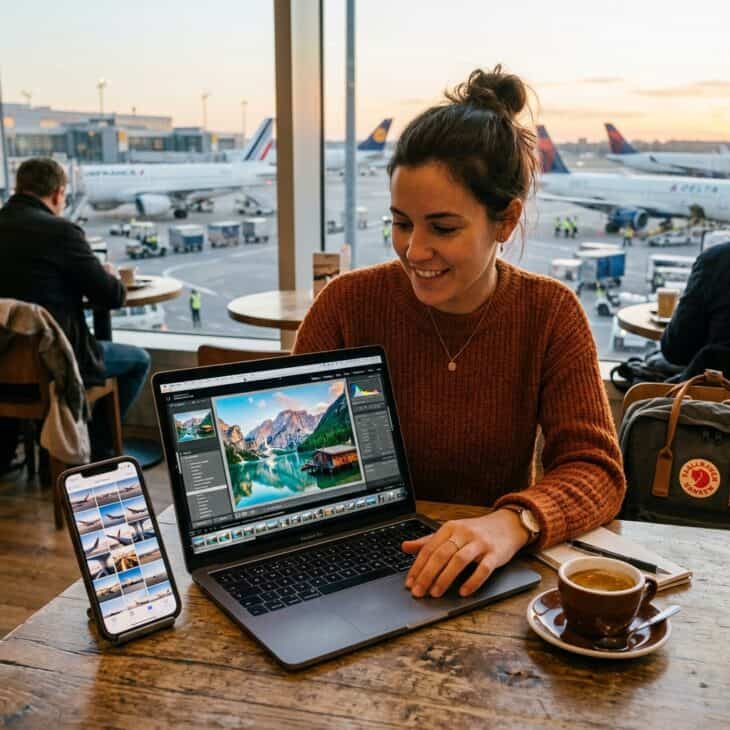
Why it works Most travelers arrive home with a phone full of unedited images they never get around to properly sorting. The forced downtime of a layover is the ideal moment to edit, caption, and back up photos from the trip just completed while the locations and moments are still precise in memory. Photos captioned now will still make sense three years from now; photos left in a camera roll rarely will.
How to do it Download a mobile photo editing app before you travel if you process on a phone; Lightroom Mobile is free and capable. Set up automatic backup to cloud storage so your edits are saved immediately regardless of what happens to the device. Work through photos chronologically rather than jumping around, which makes the workflow faster and more satisfying.
Delete the obvious failures first to reduce the total file count quickly before starting edits. Caption each keeper with location and context so the information is permanently attached before you forget the details. If you want inspiration for better angles on your next flight, browse our collection of window seat photo ideas for techniques worth trying.
20. Read a Book Cover to Cover
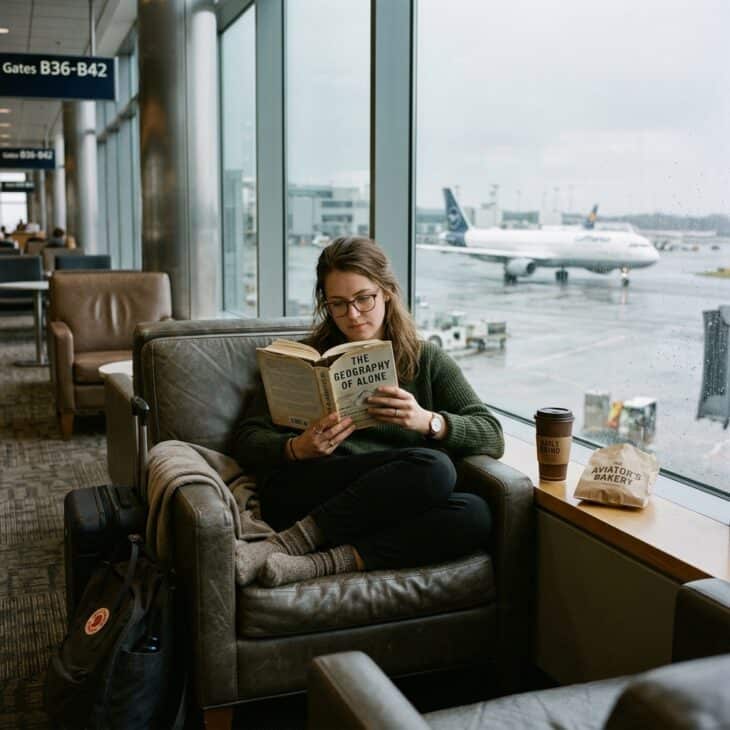
Why it works A long layover is one of the few occasions in a normal year when you have several consecutive hours of uninterrupted reading time with no domestic responsibilities competing for attention. A book started at the gate and finished at boarding is a complete, quietly satisfying experience that a flight alone rarely provides because of turbulence, meal services, and announcements.
How to do it Choose your book before the trip rather than depending on the airport bookshop, which stocks bestsellers but rarely what you specifically want. An e-reader holds a full library in the weight of a paperback and is the right tool for a traveling reader. Find a seat away from the main gate cluster, where PA announcements are less frequent and the ambient noise is lower. Turn off social media notifications but leave your flight tracking app active so you catch gate changes automatically. If you genuinely finish the book, the airport bookshop becomes a guilt-free excuse to buy something you would not normally pick up from a display table.
21. Send Real Handwritten Postcards

Why it works Receiving a physical postcard is still an event, even in an era of instant messaging. Sending one from an airport in transit adds an unusual postmark and tells the story of a journey in a way that a group text photograph cannot. The person who receives it will keep it. The message you wrote while waiting for a flight will outlast the flight itself by years.
How to do it Buy postcards from the airport newsagent or gift shop, which almost always stocks them even if they are not displayed prominently. Find the correct international postage from a postal counter, information desk, or by asking an airport staff member who will usually know. Write short, specific messages: one or two real observations rather than “wish you were here” repeated three times.
The airport’s main post box is typically near the information desk or at the main terminal entrance on the landside. If you cannot locate stamps, photograph the written card and send it digitally, then post the physical card when you arrive home. Three postcards is an achievable target for a 20-minute sitting with a good pen.
22. People-Watch at a Busy International Gate
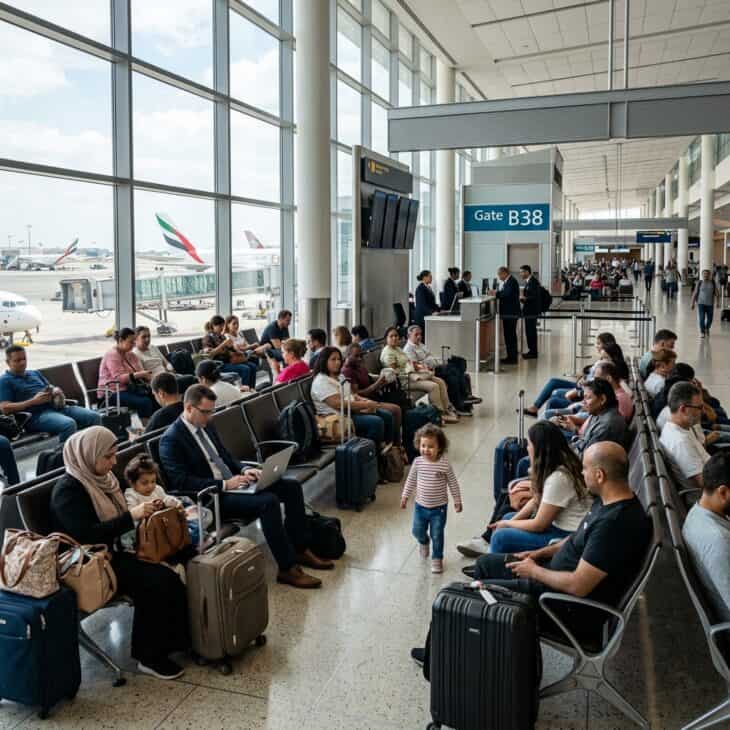
Why it works An international departure gate is one of the most genuinely diverse spaces on earth. The mix of nationalities, the range of travel experiences being managed simultaneously, and the quiet human drama of the boarding sequence make it absorbing in a way that is hard to fully explain and completely free to participate in.
How to do it Choose a gate with an international long-haul departure for the best variety. Sit at the edge of the seating block where you have a clear sightline to the main flow of movement through the corridor. Bring a notebook and make brief character sketches rather than staring at your phone, which changes the experience entirely.
Watch the boarding process when it begins: who gets up immediately, how the gate agent manages queue behavior, how passengers carry themselves when they finally step toward the jet bridge. If you want to understand the mechanics behind what you are observing, AeroCorner’s explainer on why boarding takes so long adds a whole new layer to everything you are watching. Give it 45 minutes and you will not want to leave.
23. Scout the Terminal for the Best Runway Views
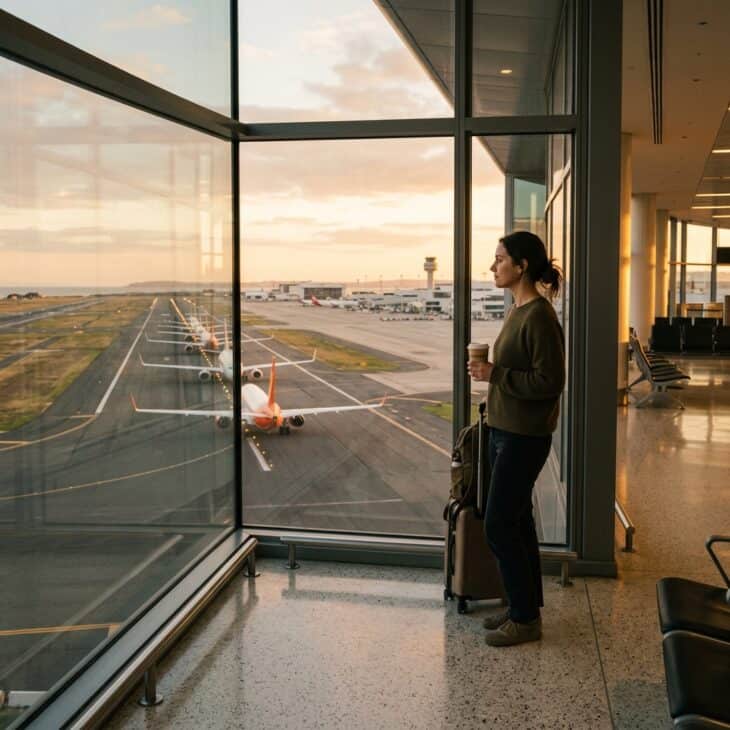
Why it works Not every seat at every terminal window is equal. The best runway views require a little reconnaissance, and finding them feels genuinely satisfying in a way that sitting at the assigned gate does not. Once you know the technique for finding them, it becomes something you look for automatically at every new airport you pass through.
How to do it Walk to the farthest gates in each concourse rather than clustering near the main hub area. Corner units and end-of-pier positions typically have views in two or more directions. Look for gates with a clear crosswind runway sightline as well as the main departure runway, since these offer the most dynamic movement.
Sit on the floor if the seating faces the wrong direction: airports generally tolerate it, and the low angle gives a dramatically different perspective that photographers specifically seek out. If your airport has an airside transit rail, ride it with the purpose of scouting windows from the moving carriage before you commit to a spot for the final hour.
24. Plan Your Next Adventure in Meticulous Detail
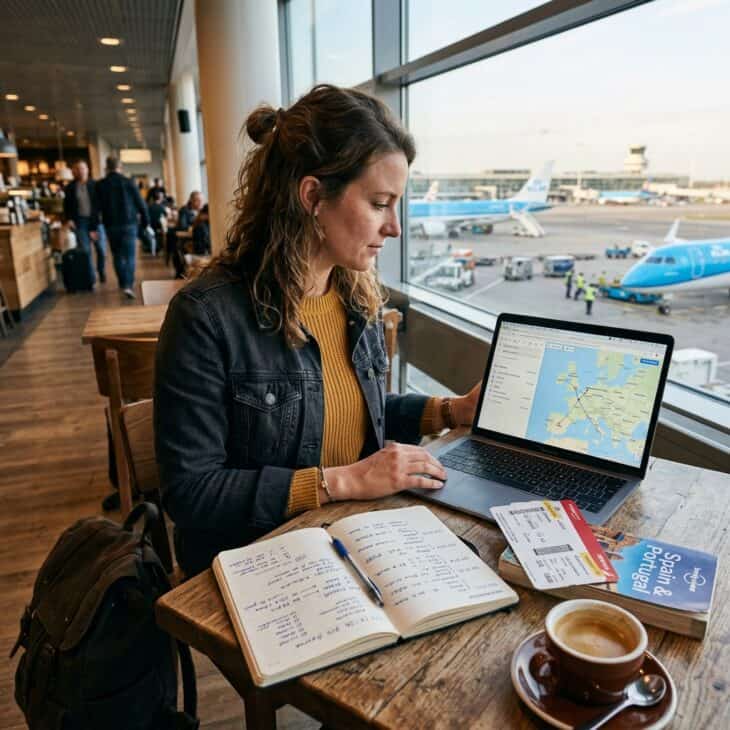
Why it works Airports put you in a uniquely forward-looking state of mind. You are already in motion, already navigating logistics, already thinking about what comes next. There is no better mental condition for planning the next trip in real detail: routes, costs, visa requirements, accommodation neighborhoods. The research tasks that feel overwhelming on a Tuesday evening at home take half the time here.
How to do it Use the layover to do the research tasks you keep deferring. Pull up flight price calendars for a destination you have been considering and identify a realistic travel window. Check visa requirements and processing timelines for your nationality. Compare accommodation neighborhoods rather than individual properties, which gives you a framework to make faster decisions later.
Build a rough day-by-day skeleton for a 10 to 14-day trip so you have a structure to refine rather than a blank page. If you have ever considered booking one of the world’s longest flights, this is a good session for working out the logistics. Save everything to a shared cloud document rather than browser bookmarks, which you will lose the moment you close the tab.
25. Grab a Cocktail and Watch the Runway at Dusk
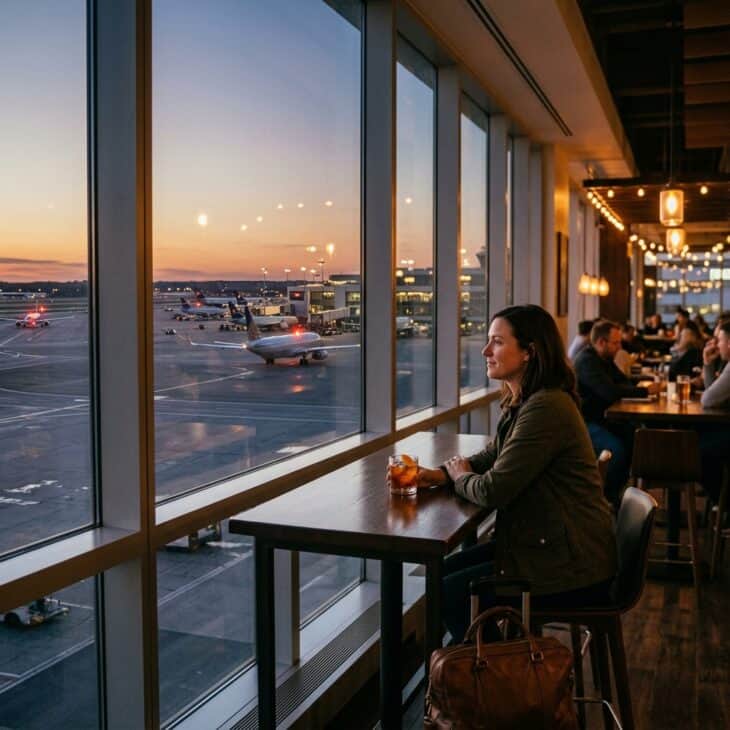
Why it works There is something genuinely cinematic about watching an airport at dusk from a bar stool with a proper drink in hand. The scale and movement of the operation outside the window, combined with the knowledge that you are heading somewhere, makes this one of the most evocative ways to end a long layover. It is the kind of moment that sticks in memory long after the flight itself has faded.
How to do it Identify the bar or restaurant with the best runway view during your first terminal walk so you know exactly where to go for the final hour. Order something made properly rather than the first thing on the happy hour menu. Look for a bar that uses local spirits or regional ingredients if the airport has one, which adds a sense of place to the experience.
Sit at the window and watch the runway sequence: you will start reading the pattern of departures and arrivals without even trying, and it becomes surprisingly compelling. Put your phone face-down for the duration of one drink and stay present with what is outside the glass. This is one layover ritual that, once started, becomes non-negotiable on every future transit through a large hub.
Get the Newsletter
The latest aviation news and stories sent to your inbox.
About the Author

Hanna writes AeroCorner's aviation-lifestyle and decor guides, turning a love of flight into ideas for your home, celebrations, and gift lists.