


Table of Contents
Not every aviation obsession ends in a pilot’s license. Some of the most dedicated aviation lovers never touch a yoke, yet they spend more hours a week thinking about airplanes than most working pilots do.
That is because aviation is a hobby with dozens of entry points, not just one. You can chase it with a camera at the airport fence, a radio scanner on your desk, a model kit on a Saturday afternoon, or a logbook that tracks every registration you have ever spotted.
This list runs from free and solo to expensive and social, so pick whatever matches your budget, your patience, and how much of your weekend you are willing to hand over to the sky.
01. Plane Spotting at Your Local Airport
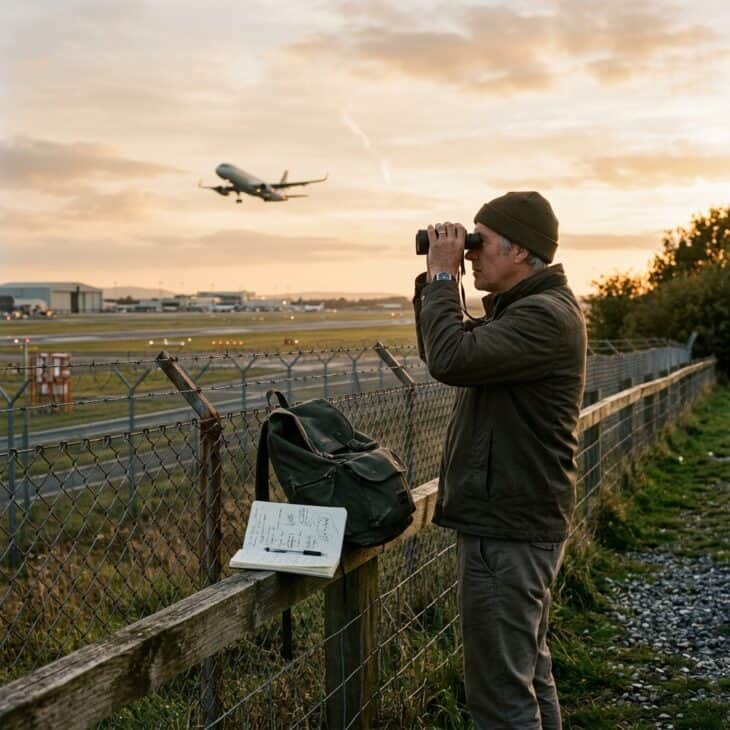
What you see A spotter leans on a public fence line at golden hour, binoculars trained on an airliner lifting off in the distance, a dog-eared notebook open on the rail beside them.
Why it works Plane spotting costs nothing beyond a pair of binoculars and turns a place most people ignore, the airport perimeter, into a front-row seat for departures and arrivals. Our plane spotting tips for beginners covers exactly where to stand and what to bring.
How to get it Find your nearest airport’s designated spotting area, many list one on their website, or check spotting forums for known good fence lines. Bring compact binoculars, a notebook or a flight-tracking app to identify what you see, and sun protection since good light means good exposure. Start with a home airport you can visit often so you learn the regular schedule. Evenings and early mornings usually bring the most varied traffic.
02. Building Scale Model Aircraft
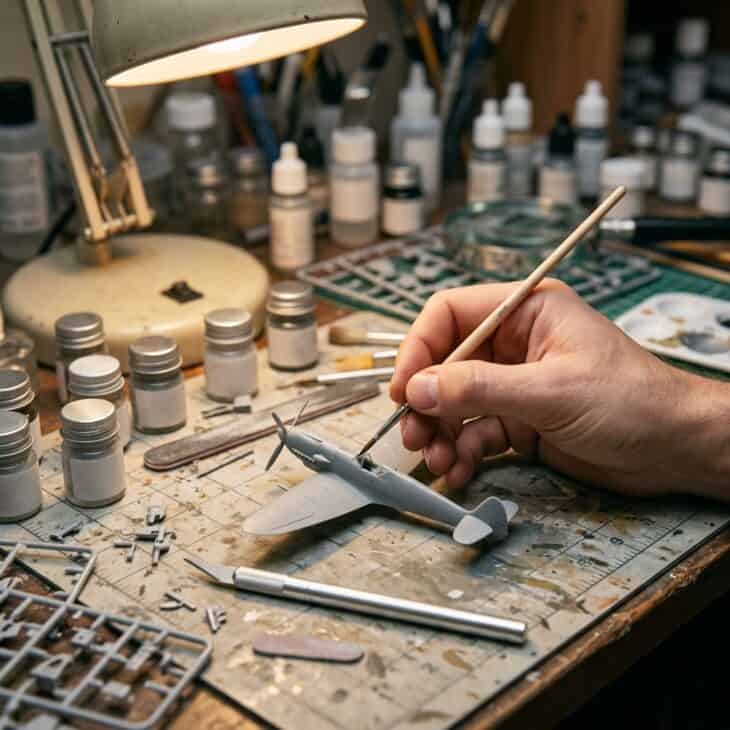
What you see Under a warm desk lamp, a pair of hands guides a small plastic wing section into place on an unmarked model kit, loose sprues and a hobby knife scattered across the desk.
Why it works Scale modeling rewards patience with something tangible: a finished aircraft you can display and a genuinely meditative way to spend a rainy weekend. It pairs naturally with our model airplane display ideas once the kit is finished.
How to get it Start with a 1:72 or 1:48 scale kit from a beginner-friendly line, most hobby shops stock a few, and pick up basic tools: a hobby knife, sanding sticks, and plastic cement. Work in a ventilated space and dry-fit every part before gluing it. Build-along videos for popular kits are easy to find online if you get stuck. Budget a few evenings per model rather than rushing one sitting.
03. Flying Radio-Controlled Airplanes
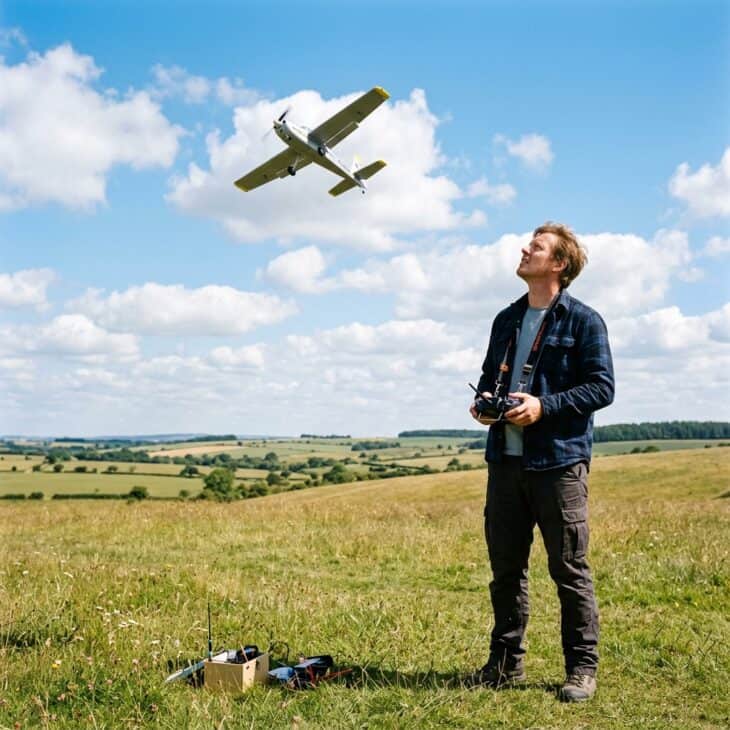
What you see A pilot stands in an open field, transmitter in hand, tracking a small propeller model as it banks against a bright afternoon sky, the field otherwise empty.
Why it works Flying RC airplanes gives you the sensation of piloting without the cost of a license, and the local flying club culture around it is one of the friendliest corners of aviation. It scales from a foam trainer that survives crashes to a scale replica as your skill grows.
How to get it Join a local model aeronautics club; most new flyers learn faster with an experienced buddy on a trainer cord than solo. Start with a foam ready-to-fly trainer rather than an expensive first model. Practice on a flight simulator app before your first real flight to build muscle memory cheaply. Expect your first several landings to be rough, that is normal.
04. Setting Up a Home Flight Simulator
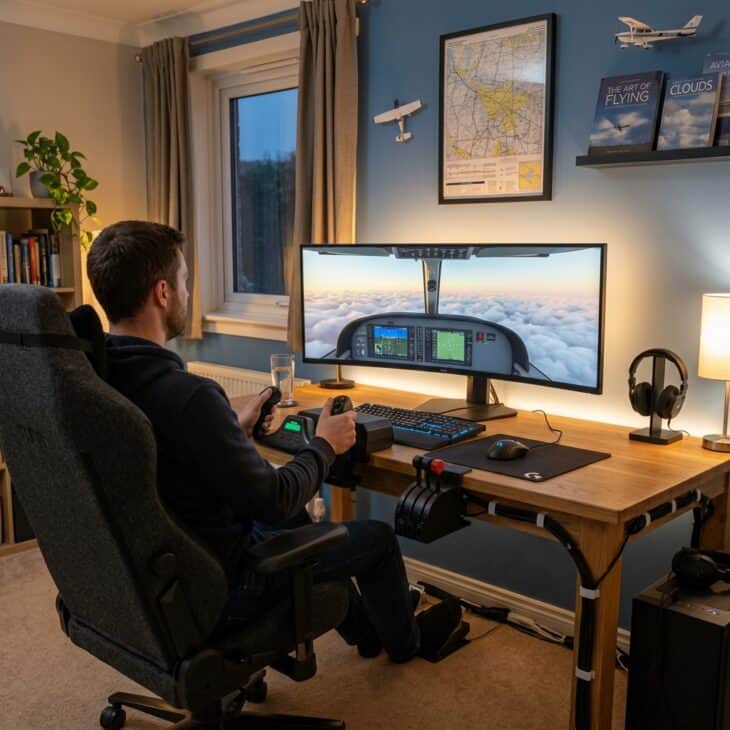
What you see A curved monitor glows with a generic cockpit view of clouds and horizon, a yoke and throttle quadrant mounted on a wooden desk in front of a comfortable chair.
Why it works Home flight simulation has gotten dramatically more realistic and affordable, and it lets you fly real routes and practice real procedures without leaving the house. Our guide to the types of flight simulators breaks down which setup fits your budget and space.
How to get it Start with a basic USB yoke or joystick and a subscription flight sim on a computer you already own, that alone gets you flying convincingly. Add a throttle quadrant and rudder pedals once you know you will stick with it. If desk space is tight, our pilot desk setup ideas cover layouts that keep the hardware from taking over the room. Community add-on scenery and aircraft, much of it free, is where the realism really comes from.
05. Listening to Live Air Traffic Control
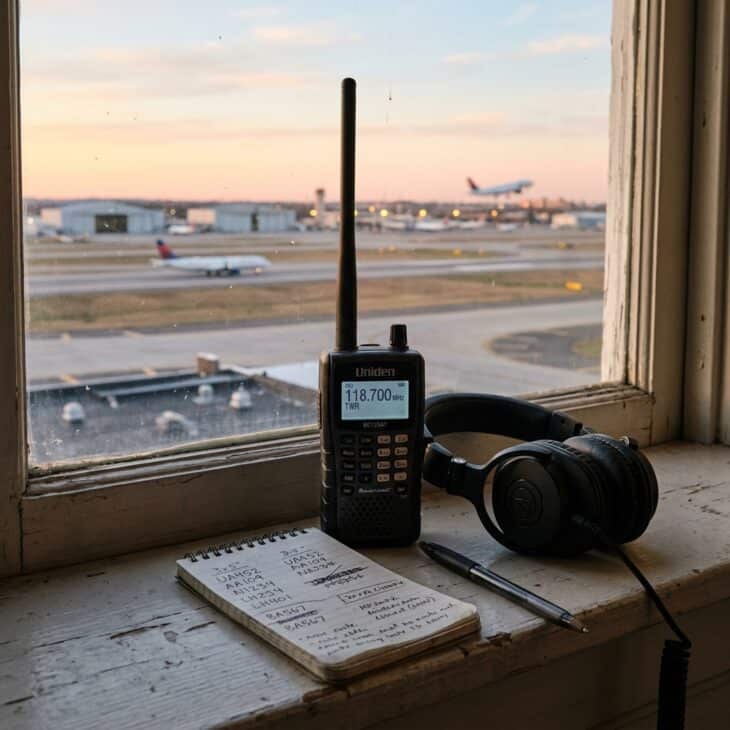
What you see A compact scanner and a pair of headphones sit on a windowsill at dusk, a runway visible in the distance, a notebook of scribbled call signs open beside them.
Why it works Listening to live air traffic control turns an ordinary flight path over your house into a running commentary of clearances and headings, and it teaches you the rhythm of how airspace works far faster than reading about it.
How to get it Buy an inexpensive handheld scanner and look up the tower and approach frequencies for your nearest airport, most are published online by aviation frequency databases. No scanner on hand yet? Stream any major airport’s tower live for free through an online ATC feed instead. Keep a note of unfamiliar phrases and look them up afterward, the vocabulary clicks faster than expected.
06. Tracking Flights as a Daily Habit
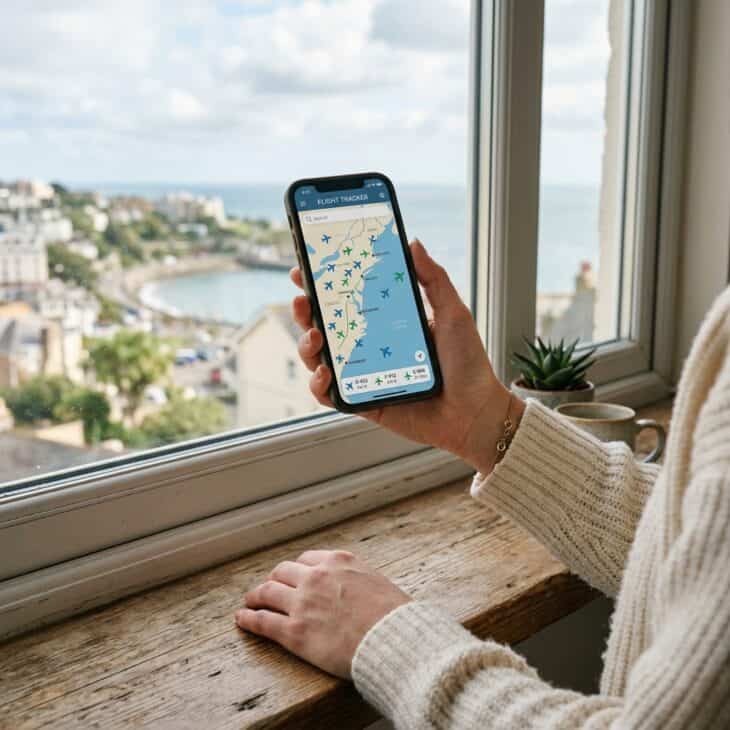
What you see A hand holds a phone near a window, its screen showing a map dotted with aircraft icons tracing routes across a coastline, a contrail visible through the glass above.
Why it works Flight-tracking apps turn the vague “there’s a plane overhead” moment into an identifiable aircraft type, airline, origin, and destination in seconds, and following a few interesting routes daily builds a genuine feel for global air traffic patterns.
How to get it Download a free flight-tracking app and turn on notifications for your local airport or a specific route you are curious about. Try identifying an aircraft by ear first, engine sound and altitude, before checking the app to test yourself. Follow a long-haul route for a week to see how consistent or erratic its schedule really is. Some apps let you filter by aircraft type, useful if you are chasing a specific model you have never spotted.
07. Aviation Photography

What you see A photographer crouches at a grassy viewing area, telephoto lens braced, framing an airliner on final approach against a sky streaked orange and purple at sunset.
Why it works Aviation photography rewards showing up repeatedly more than owning expensive gear, since light, weather, and traffic change every visit. Pairing this hobby with our window seat photo ideas gives you angles from both sides of the fence.
How to get it A camera with a 300mm-equivalent zoom is enough to start, you do not need professional gear on day one. Shoot during the last two hours before sunset when the light rakes across the fuselage rather than flattening it. Check approach and departure directions in advance, most airports favor one runway direction based on prevailing wind. Share your best frames in spotting communities for feedback on composition and settings.
Check the rules first
Drones above a certain weight require registration with your national aviation authority before their first flight outdoors.
08. Flying Drones and FPV Racing
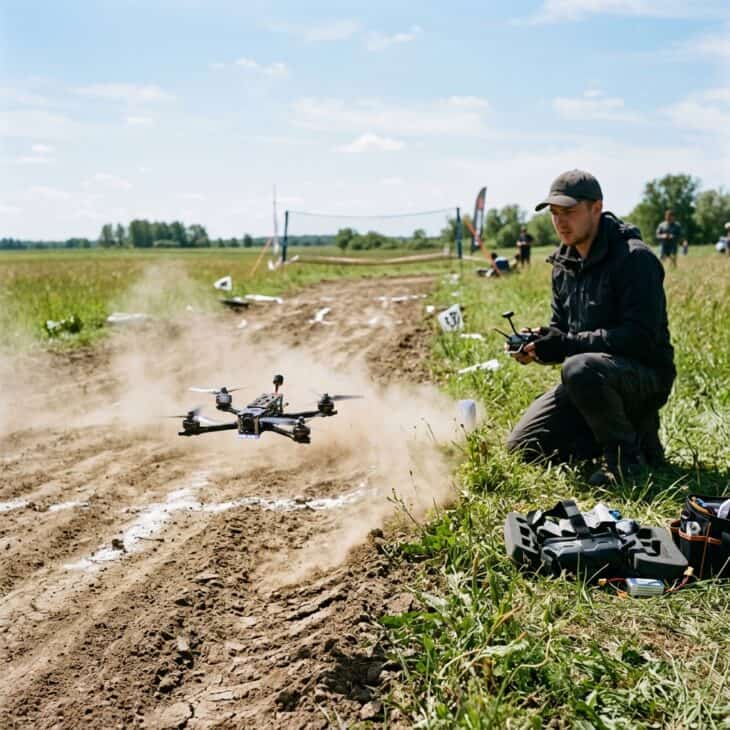
What you see A compact racing drone hovers low over a dirt track, dust still settling, FPV goggles and a controller resting on the grass beside a kneeling pilot.
Why it works FPV drone flying gives you the closest thing to fighter-pilot reflexes available to a hobbyist, weaving through gates at speed with a first-person view feed, and the entry hardware is far cheaper than any full-scale aircraft. Our roundup of gifts for drone lovers is a good source of starter kit ideas if you are shopping rather than building.
How to get it Start with a small, crash-tolerant drone to learn the basics before moving to a racing build. Check your local drone registration rules before your first flight, most jurisdictions require it once the drone crosses a certain weight. Practice on a free FPV simulator first, the reflexes transfer directly and crashes cost nothing. Local FPV clubs often run informal race nights that welcome beginners.
09. Volunteering at an Aviation Museum
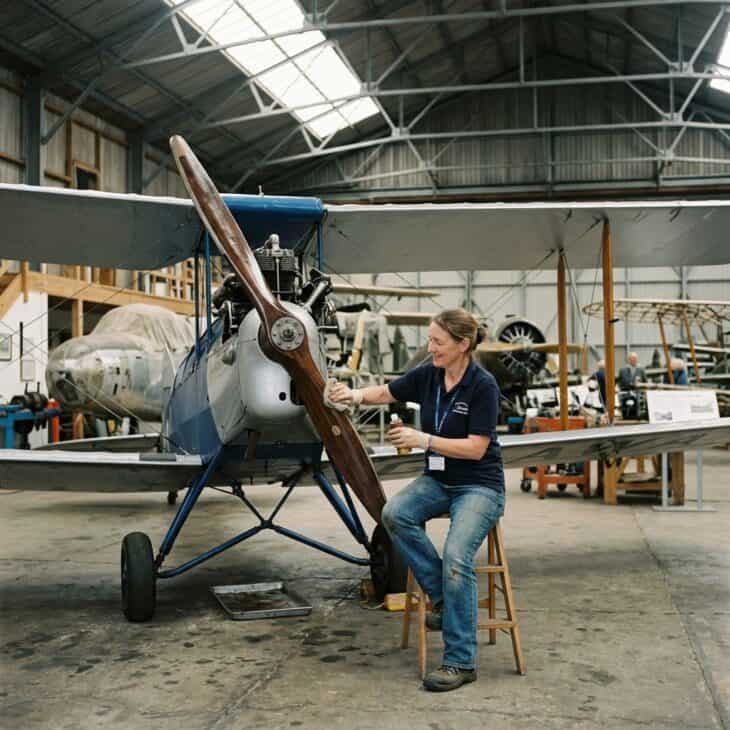
What you see A volunteer in work clothes polishes a propeller blade on a restored vintage aircraft inside a hangar exhibit, other historic airframes standing quietly in the soft skylight beyond.
Why it works Aviation museums run largely on volunteer labor, restoration, research, and tour guiding, and it is one of the few hobbies where showing up regularly gets you hands-on time with genuinely historic aircraft. A visit to somewhere like the aviation museums in Washington DC is a good way to scout which collection speaks to you before committing.
How to get it Contact the volunteer coordinator at your nearest aviation museum directly, most have an application and a short orientation. Be honest about your skills and interests, restoration crews, archive research, and docent tours all need different people. Expect a regular weekly or monthly shift once you are trained. Many museums offer free admission and event access as a volunteer perk.
10. Collecting Vintage Aviation Memorabilia
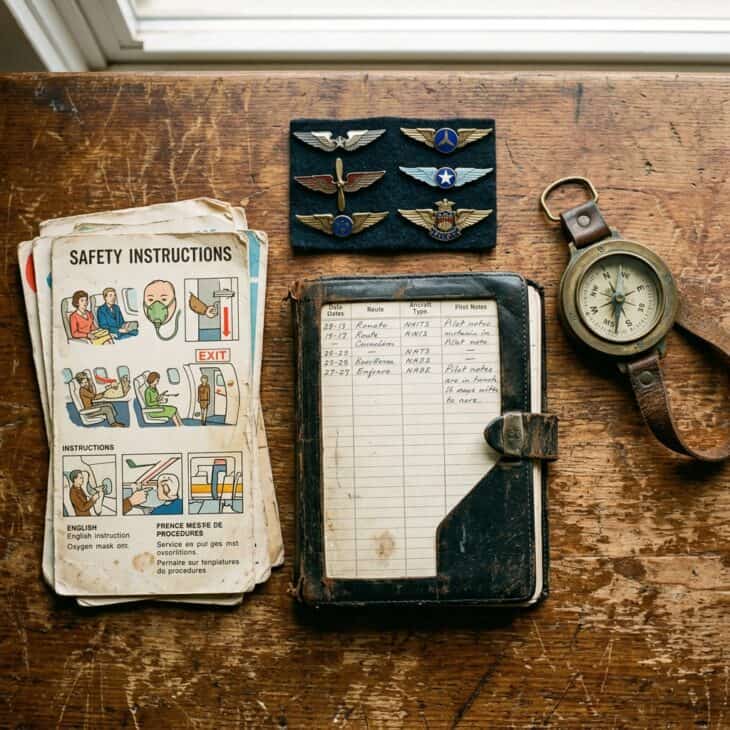
What you see A worn wooden table holds a leather flight logbook, a scatter of enamel wing pins, a stack of unmarked safety cards, and a brass compass, all lit in warm afternoon light.
Why it works Collecting vintage memorabilia turns aviation history into something you can hold, and unlike full-size warbird restoration it fits in a shoebox and a modest budget. Our vintage aviation decor ideas cover how to display a growing collection once it outgrows the shoebox.
How to get it Start narrow, pick one category like safety cards, wing pins, or route maps, rather than collecting everything at once. Estate sales, flea markets, and dedicated aviation collectible forums are better sources than general marketplaces for fair pricing. Learn to date and authenticate pieces before spending seriously, airline livery and logo styles changed on a fairly documented timeline. Store paper items flat, out of direct sunlight, to keep them from yellowing.
11. Joining an EAA-Style Chapter and Building Your Own Aircraft
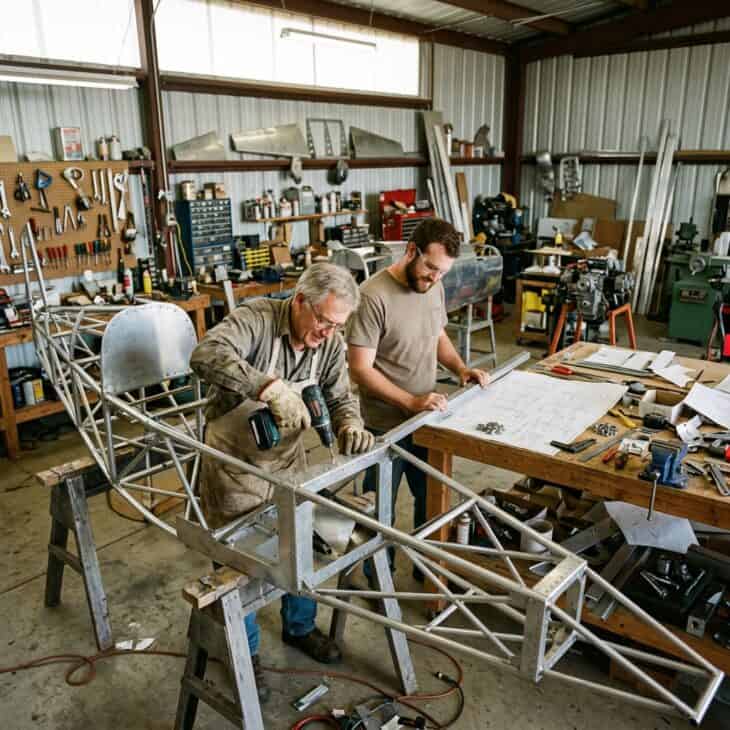
What you see Two builders lean over the metal frame of a small aircraft in a home workshop, blueprints and tools spread across the bench, bright shop lighting overhead.
Why it works Building your own certified aircraft from a kit is the deepest possible aviation hobby, and the wider world of general aviation provides the mentorship, inspection support, and community that make a years-long project actually finishable.
How to get it Find your nearest homebuilders’ chapter and attend a few meetings before committing to anything, most welcome curious non-builders. Ask to see an in-progress build in person, kit manufacturers’ marketing photos rarely show the real timeline. Budget both money and years, most projects take three to seven years of weekend work. Even if you never finish a build yourself, chapter fly-ins are a great low-commitment way to stay involved.
12. Learning to Fly Gliders
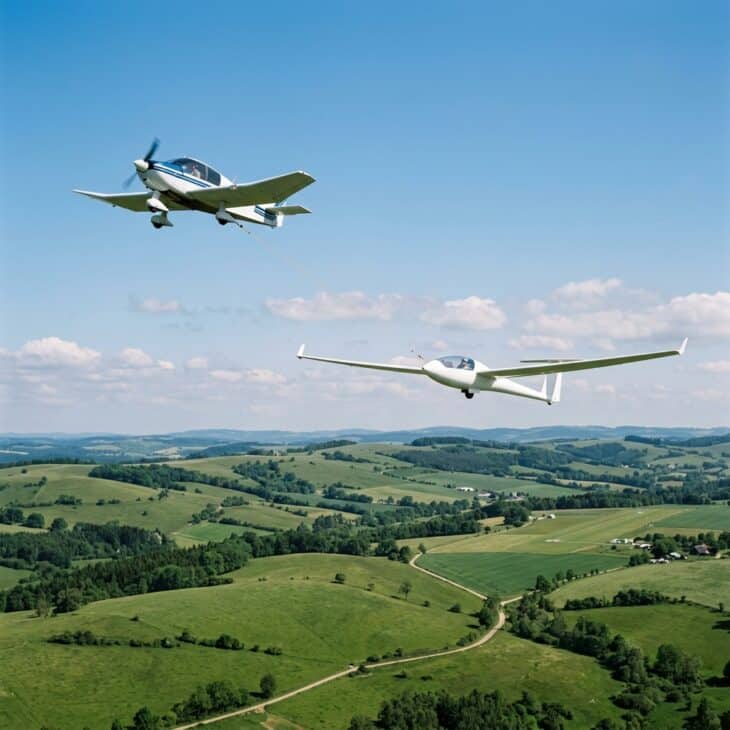
What you see A slender white glider trails behind a small tow plane on a taut rope, both climbing together over rolling green hills under a clear sky.
Why it works Gliding is one of the most affordable paths into real stick-and-rudder flying, since there is no engine to maintain, and riding rising air currents to stay aloft teaches weather-reading skills that make you a sharper aviation enthusiast either way. Picking the right flight school matters here as much as for powered training.
How to get it Search for a local gliding or soaring club rather than a general flight school, gliding operates through dedicated clubs almost everywhere. Book an introductory tow flight, usually inexpensive, before committing to a full training course. Good soaring weather is seasonal and regional, so ask your club about their typical flying season. Membership often includes access to a whole fleet, so you rarely need to own anything.
13. Designing and Flying Competition Paper Airplanes
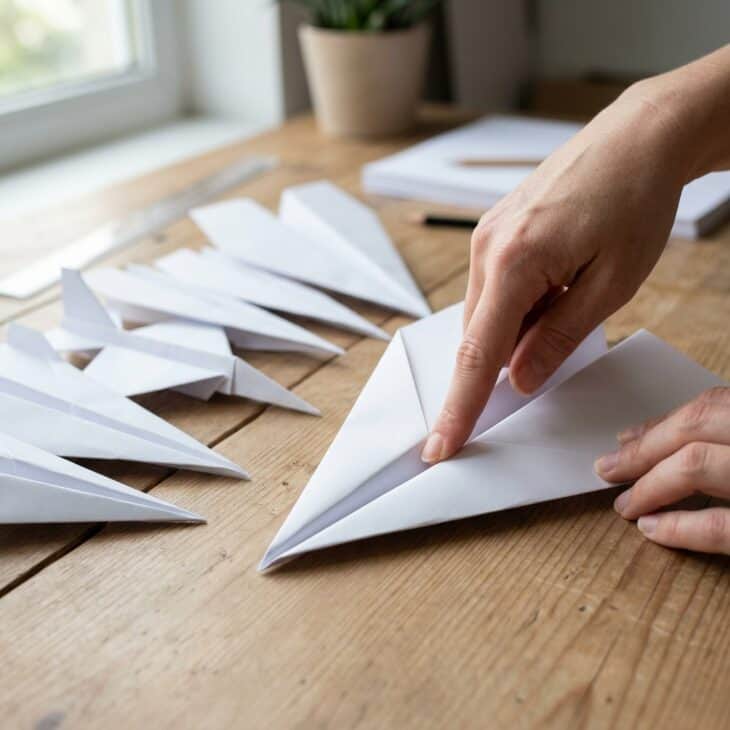
What you see A pair of hands creases a fresh sheet of paper into an aerodynamic shape on a clean desk, a small lineup of earlier folded designs standing ready beside it.
Why it works Competitive paper airplane folding is the cheapest possible entry into aerodynamics, and chasing distance or hang-time records teaches real lift, drag, and stability concepts through trial and error rather than a textbook.
How to get it Start with a proven distance or glider design from a folding guide rather than improvising, small fold errors matter more than they look. Test indoors in a long hallway to control for wind before trying outdoors. Keep notes on which folds and paper weights perform best, treat it like genuine flight testing. Some regions run organized paper airplane distance competitions if you want to take it further.
14. Hot Air Ballooning

What you see A balloon envelope glows from the inside as its burner fires, ground crew silhouettes steadying the ropes while mist still clings to the grass at dawn.
Why it works Ballooning is one of the quietest, slowest forms of flight there is, drifting rather than steering, and joining a crew as ground support is a genuinely accessible way into the hobby long before you consider a ride or a pilot rating.
How to get it Look for a local balloon club or a commercial operator and ask about volunteering as ground crew, most are glad for extra hands and it is usually free. Expect very early mornings, launches happen at dawn when winds are calmest. If riding rather than crewing, book with an operator well in advance during peak balloon festival season in your region. Dress in layers regardless of the season, mornings aloft run cooler than expected.
15. Indoor Skydiving
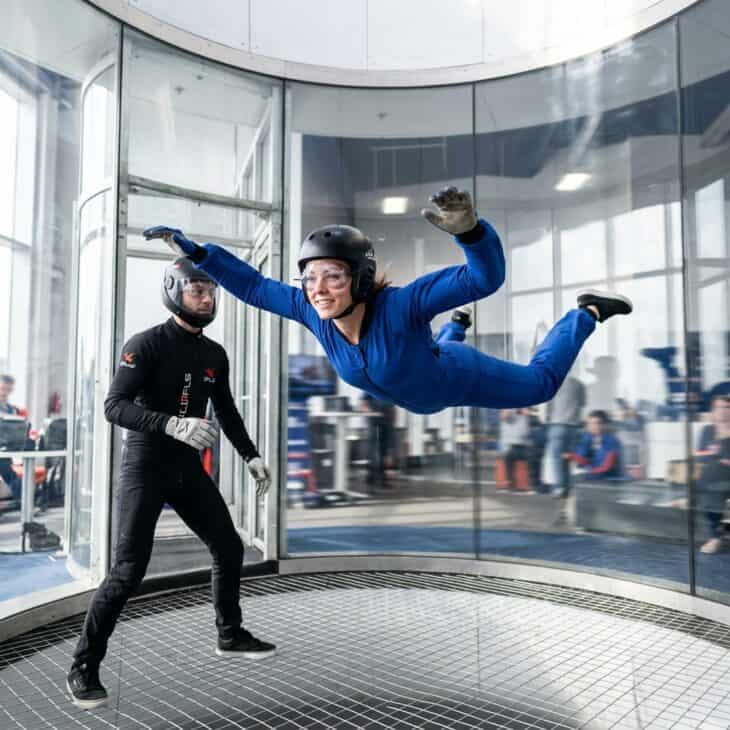
What you see A jumpsuited flyer hovers mid-air inside a clear-walled wind tunnel, arms braced in a stable freefall position, an instructor close by ready to assist.
Why it works Indoor skydiving delivers the actual sensation of freefall, on demand, in any weather, without a plane, a parachute, or a jump license, making it the lowest-barrier way to feel what skydivers describe.
How to get it Book a first-timer session at your nearest indoor tunnel facility, most run short beginner packages with instruction included. Wear athletic clothing that fits snugly, loose fabric flaps distractingly in the airflow. Relax your body rather than fighting the wind, tension is the most common beginner mistake. Regular flyers often move on to actual skydiving once they have built confidence in the tunnel.
16. Paragliding and Hang Gliding

What you see A pilot hangs in a harness beneath a colorful wing, soaring along a green mountain ridge with a hazy valley and scattered clouds stretched out below.
Why it works Paragliding and hang gliding strip flight down to its simplest form, a wing, a harness, and rising air, and launching from a hillside on your own power creates a connection to flight that powered aircraft rarely match.
How to get it Enroll with a certified paragliding or hang gliding school rather than attempting to teach yourself, launch and landing technique is where nearly all injuries happen to self-taught beginners. Expect a structured course of several days before your first solo flight from height. Weather windows matter enormously, so be prepared for a course to stretch over more days than planned if conditions are poor. Tandem introductory flights with an instructor are a lower-commitment way to try it first.
17. Making Airshows Your Summer Circuit
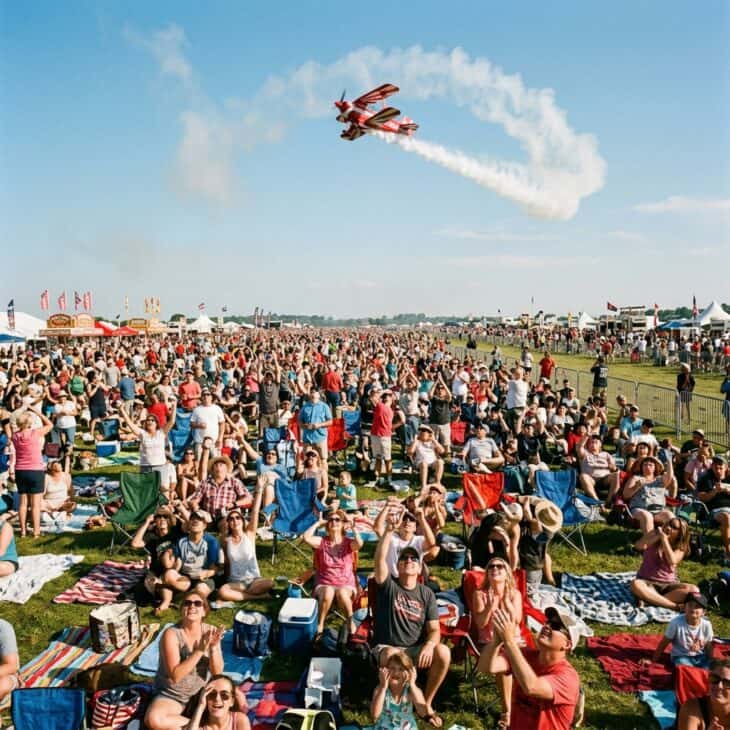
What you see A packed crowd sits on lawn chairs and blankets, faces turned skyward as a smoke-trailing aerobatic aircraft banks overhead against a clear blue sky.
Why it works Following the airshow circuit turns a single annual visit into a season-long hobby, since performer lineups and host locations change year to year. Our roundup of the best air shows in the US is a solid starting point for planning a summer around it.
How to get it Check performer schedules and regional show calendars early in the year, popular shows sell out parking and premium seating months ahead. Bring hearing protection, sunscreen, and a folding chair, most shows run a full day outdoors with limited shade. Arrive early for static aircraft displays before the flying portion draws the crowds toward the flight line. Budget for at least two or three shows a season if you want real variety in performers and aircraft.
Clubs beat solo starts
Nearly every hobby on this list has a local club. Joining one is almost always cheaper and faster than buying gear and figuring it out alone.
18. Flying Virtually with Online Flight Networks
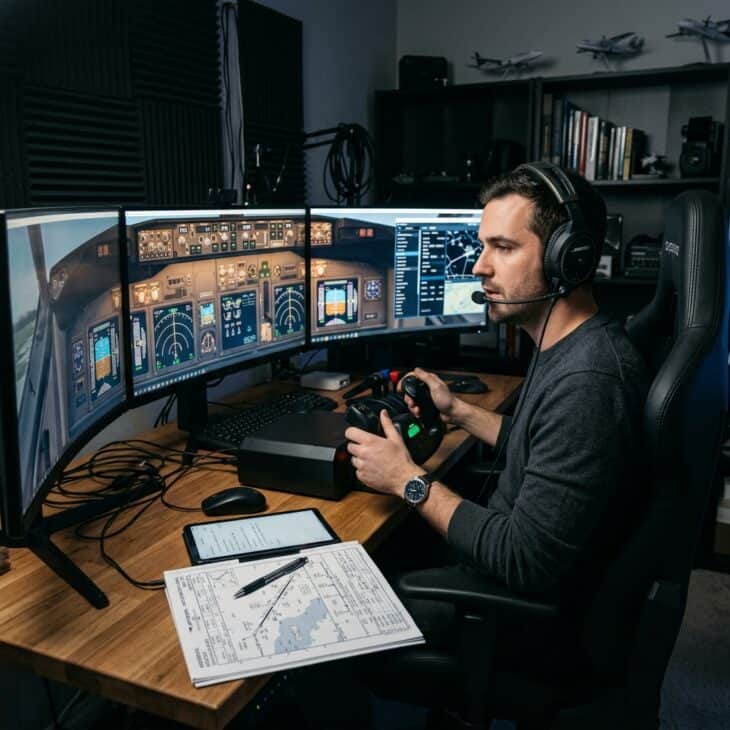
What you see A headset-wearing pilot leans toward a microphone, multiple screens showing a cockpit panel and a chart, focused on the radio call about to go out.
Why it works Online flight simulation networks connect home pilots with volunteer air traffic controllers in real time, so you fly proper procedures and real radio phraseology instead of an empty simulated world, the closest a hobbyist gets to the full operational picture.
How to get it Create a free account with a major online flying network and complete their beginner tutorial before your first flight, the radio procedures take real practice. Start on a quiet regional route with light traffic rather than a busy hub airport. Join the network’s community forums or voice channels, experienced members are usually glad to mentor newcomers. Expect to make radio mistakes early on, controllers on these networks are typically patient with clearly new pilots.
19. Hosting Aviation Trivia Nights

What you see A small group leans over a printed trivia sheet dotted with simple aircraft silhouettes, drinks in hand, laughter mid-round under warm bar lighting.
Why it works Aviation trivia turns niche knowledge, aircraft silhouettes, record-setting flights, famous incidents, into a genuinely fun social hobby, and it is one of the few entries here that pulls non-enthusiast friends in rather than requiring them to already care.
How to get it Write rounds around categories like aircraft silhouettes, first flights, and famous aviators, mixing easy and hard questions keeps casual friends engaged. Our aviation books to read is a good source of obscure facts and stories for harder rounds. Keep games to 20 to 30 minutes so it stays a fun addition to a hangout rather than the whole evening. Print or project images rather than reading long questions aloud, visual rounds keep energy higher.
20. Kite Flying and Aerobatics
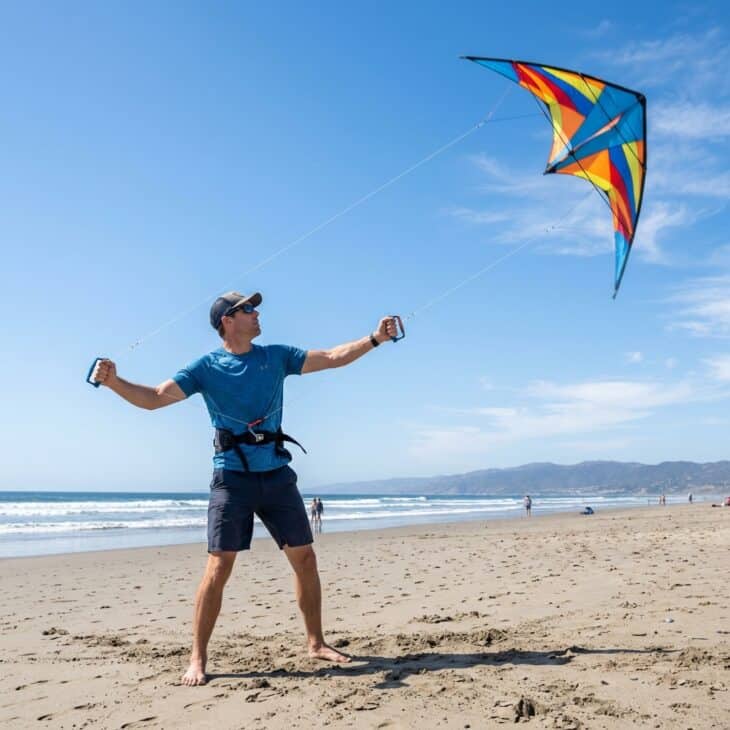
What you see A flyer stands with two control lines taut, guiding a colorful sport kite through a sharp banking turn against an open sky, sand or grass stretching out underfoot.
Why it works Stunt kite flying teaches genuine aerodynamic feel, lift, drag, and control input, without any of the cost or risk of a real aircraft, and open beaches or fields make it one of the more social, outdoor-friendly entries on this list.
How to get it Buy a dual-line sport kite rather than a single-line design if you want actual aerobatic control, the difference in what you can do is significant. Pick a wide open space with steady wind and no overhead obstructions or power lines nearby. Local kite flying clubs often meet on weekends and are happy to lend gear to newcomers. Start with basic loops and figure-eights before attempting precision team routines.
21. Keeping an Aviation Spotting Logbook

What you see An open logbook shows neat handwritten columns of aircraft type, registration, and date, a pen resting across the page, binoculars close by under warm lamp light.
Why it works A spotting logbook turns a scattered hobby into a personal record you can look back on for years, and there is a specific satisfaction in flipping back to see how many aircraft types you have actually logged over time.
How to get it Buy or make a simple ruled notebook with columns for date, location, aircraft type, and registration, paper logs still beat apps for many long-time spotters. Log consistently rather than only on exciting days, the mundane entries make rare sightings stand out later. Cross-reference uncertain identifications with a flight-tracking app before writing them down as confirmed. Revisit old entries occasionally, a logbook a few years deep becomes genuinely enjoyable to read back through.
22. Following Aviation Weather Like a Forecaster
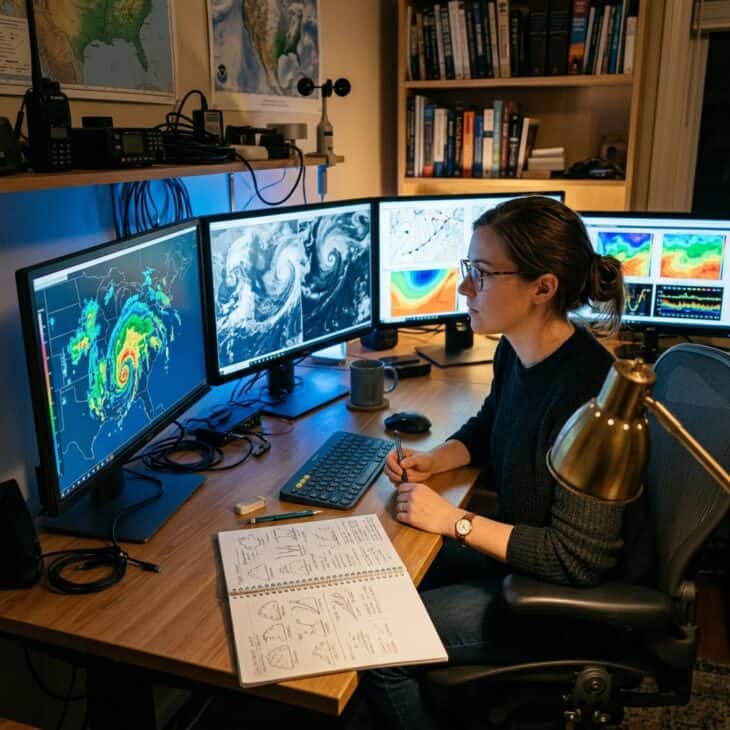
What you see A desk glows with radar and satellite imagery across two screens, a notebook of sketched cloud types open beside the keyboard, the room otherwise dim and focused.
Why it works Learning to read aviation weather reports, radar, and cloud types gives you real insight into why flights delay, divert, or get bumpy, turning weather from background noise into a skill you can actually apply and explain to others.
How to get it Learn to decode a standard aviation weather report first, free online guides and decoder tools make this a weekend project rather than a course. Pick a home airport and check its forecast daily against what actually happens, this builds real intuition faster than passive reading. Follow a few aviation meteorologists or forecasters online for accessible explanations of interesting weather events. Pair this with flight tracking so you can watch how airlines actually route around weather in real time.
23. Starting an Aviation Podcast or Channel

What you see A boom-mounted microphone and headphones sit in front of a laptop showing audio waveforms, a small shelf of books and a model airplane visible in the soft lamplight behind.
Why it works Creating aviation content forces you to research topics properly instead of half-remembering them, and even a small, consistent audience gives you a genuine outlet for the deep dives that would otherwise just live in your head. Our list of aviation books to read is a solid source of episode ideas and background research.
How to get it Start with a narrow focus, one specific era, aircraft type, or angle, rather than trying to cover all of aviation at once. A basic USB microphone is genuinely good enough to start, upgrade only once you know you will keep going. Publish on a realistic schedule you can sustain, biweekly beats a weekly show that burns you out in a month. Engage with other aviation creators’ communities, most niches are small and welcoming to newcomers.
24. Painting Nose Art and Aviation Illustration
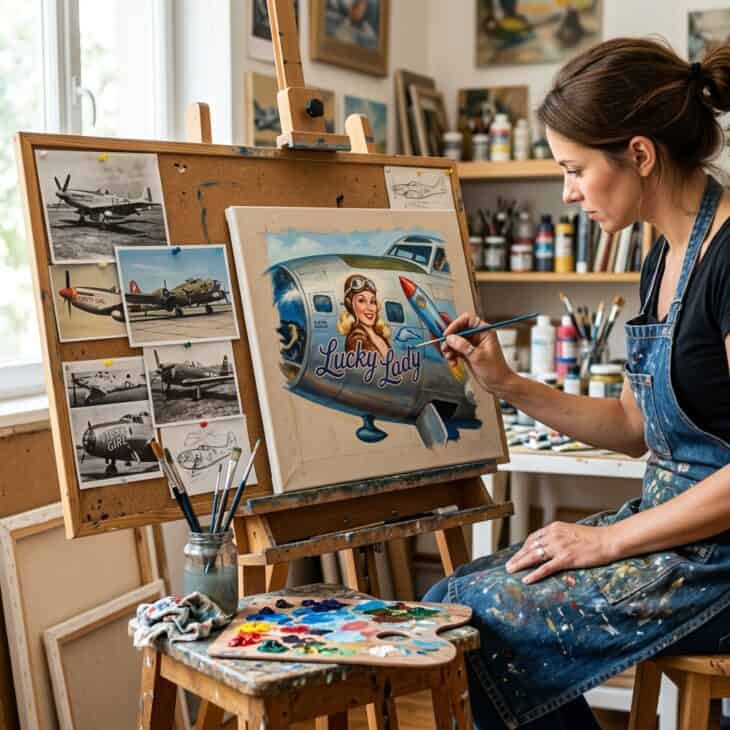
What you see An artist’s hand steadies a brush against a canvas on an easel, a colorful nose art design taking shape, reference photos of vintage aircraft pinned to the wall beside a paint-loaded palette.
Why it works Painting aviation art, nose art in particular, blends illustration skill with genuine research into wartime history, insignia design, and period color palettes, and finished pieces make some of the most striking aviation decor around.
How to get it Study historical reference photos before designing your own piece, authentic nose art has real stylistic conventions worth understanding first. Start on canvas or heavy paper before attempting a painted piece on metal or leather, which behaves very differently. Local art supply stores or online tutorials cover the paint techniques most nose art reproductions use. Share finished work in aviation art communities, feedback from people who know the genre well sharpens your next piece fast.
25. Earning a Sport Pilot Certificate for Fun
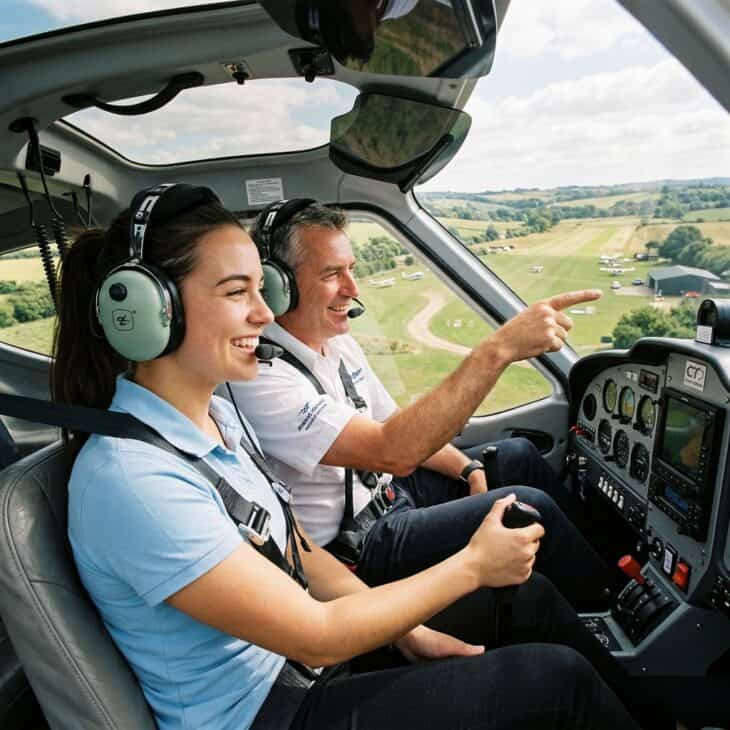
What you see A student grins at the controls of a light sport aircraft, an instructor in the next seat gesturing out the windshield toward a sunlit rural airstrip ahead.
Why it works A sport pilot certificate is built specifically for people who want to fly for fun rather than a career, with lower cost and a shorter path to solo than a full private pilot license, making it the natural finish line for anyone who works through this whole list and decides they actually want to fly. The different types of pilot ratings are worth a read too if you are weighing this against other license options.
How to get it Find a flight school offering light sport aircraft training, not every school does, and book an introductory lesson before committing to the full course. Expect roughly 20 hours of flight time minimum, though most students take somewhat longer. A basic driver’s license substitutes for a medical certificate for most sport pilot applicants, which is one of the biggest appeals. Budget for both lesson costs and the eventual written and practical exams.
Sources and references used for research and fact-checking.
Get the Newsletter
The latest aviation news and stories sent to your inbox.
About the Author

Hanna writes AeroCorner's aviation-lifestyle and decor guides, turning a love of flight into ideas for your home, celebrations, and gift lists.