

Table of Contents
A good pilot desk should feel ready for a briefing, even when the day’s mission is email, study, or route planning. The best setups borrow aviation’s clarity and purpose without turning the workspace into a themed gift shop.
That balance can take many forms: a sectional chart under glass, a compact simulator that folds away, a warm airmail-inspired writing desk, or a dark workstation shaped by modern cockpit displays. Function comes first, and the aviation details give the desk its identity.
These 25 pilot desk setup ideas cover small apartments, dedicated offices, student budgets, collectors, gamers, and working pilots. Start with the layout that solves your daily needs, then add one or two flight-inspired details that make you want to sit down and begin.
01. Sectional Chart Desk Mat
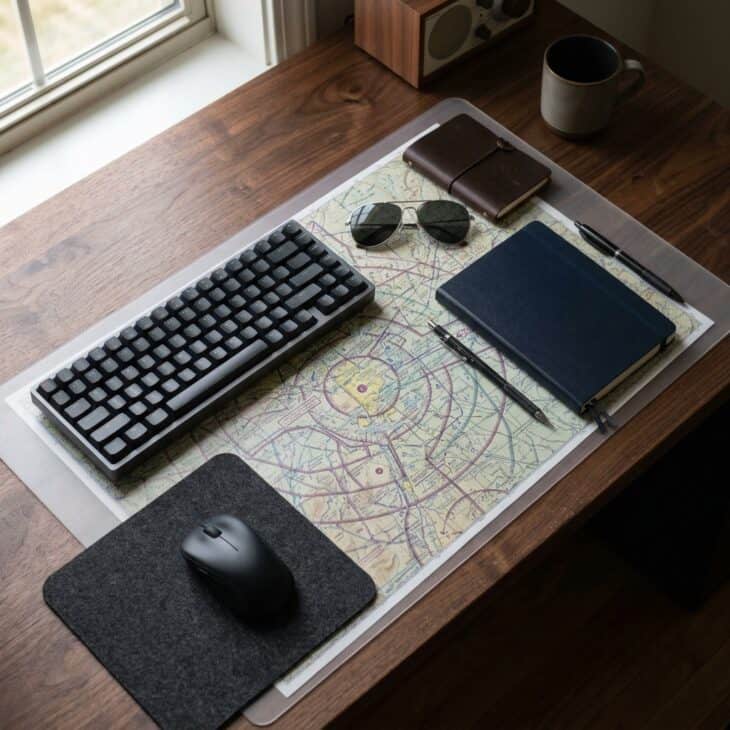
What you see A muted sectional chart spreads beneath a clear desk mat, with its airspace rings and terrain colors framing a compact keyboard and notebook. Warm walnut keeps the technical pattern from feeling cold.
Why it works The chart provides detail and color without using any valuable wall space. It also gives a focused desk more personality than a plain black mat, an easy first step toward broader aviation office decor.
How to get it Use an expired chart for decoration and keep current editions separate for real planning. Flatten it under books, trim only if you are comfortable losing the margins, then cover it with a clear matte desk pad. Choose a pad with rounded edges so your forearms rest comfortably.
02. Instrument-Inspired Monitor Shelf
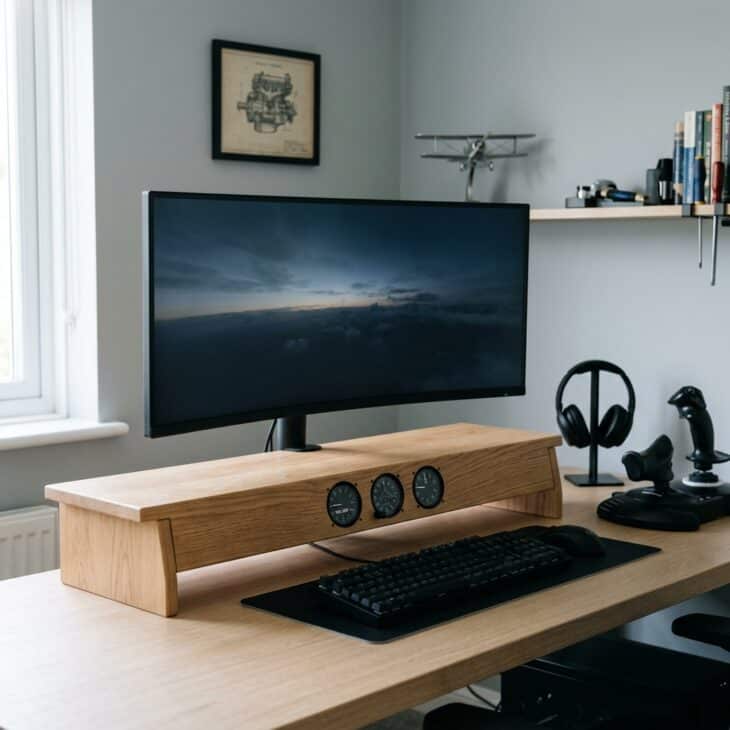
What you see A slim oak riser lifts the monitor while three black instrument-style dials punctuate its front edge. The keyboard slides beneath, leaving a clear strip of desk for paper notes.
Why it works The setup references a panel without copying one literally. Raising the screen can improve sight lines, while the small dial faces reward a closer look and connect naturally with the visual language of cockpit instruments.
How to get it Buy a plain wood monitor shelf or build one from a finished board and two short legs. Add three inexpensive decorative gauge faces to the front, keeping them unpowered and free of sharp edges. Set the screen so its top sits at or slightly below eye level.
03. Fold-Away Flight Simulator Desk
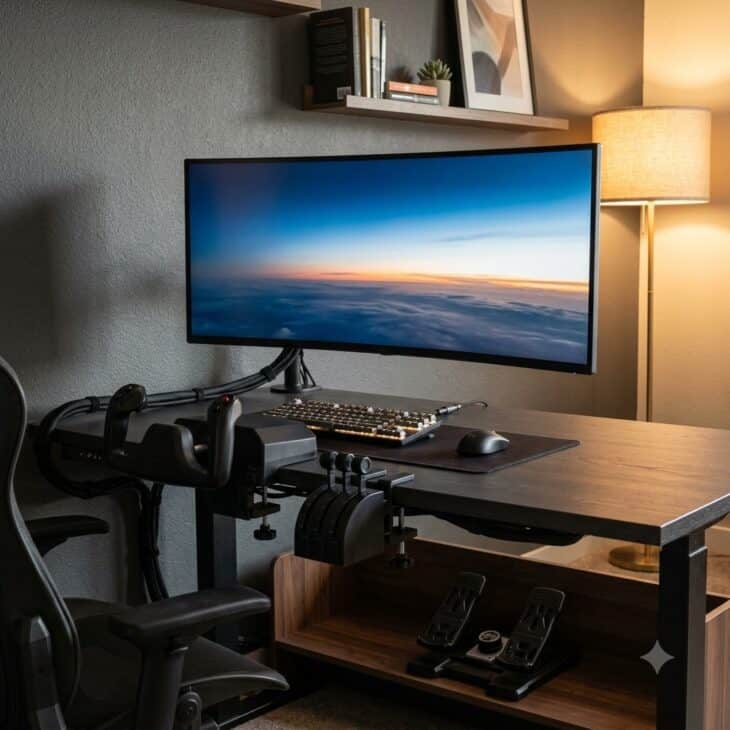
What you see A yoke and throttle clamp to the desk edge, with pedals centered below and one wide screen holding a calm horizon. Every control can be removed, so the same surface returns to normal work in minutes.
Why it works A fold-away layout offers immersion without surrendering an entire room. It is also a sensible way to explore different types of flight simulators before committing to a fixed cockpit.
How to get it Choose controls with quick-release clamps and mark their ideal positions under the desktop. Mount a powered hub beneath the desk so only one cable reaches the computer, then store pedals and controls on a nearby shelf. Treat home simulation as practice unless your device and activity meet applicable training-credit requirements.
04. Logbook and Flight-Planning Station
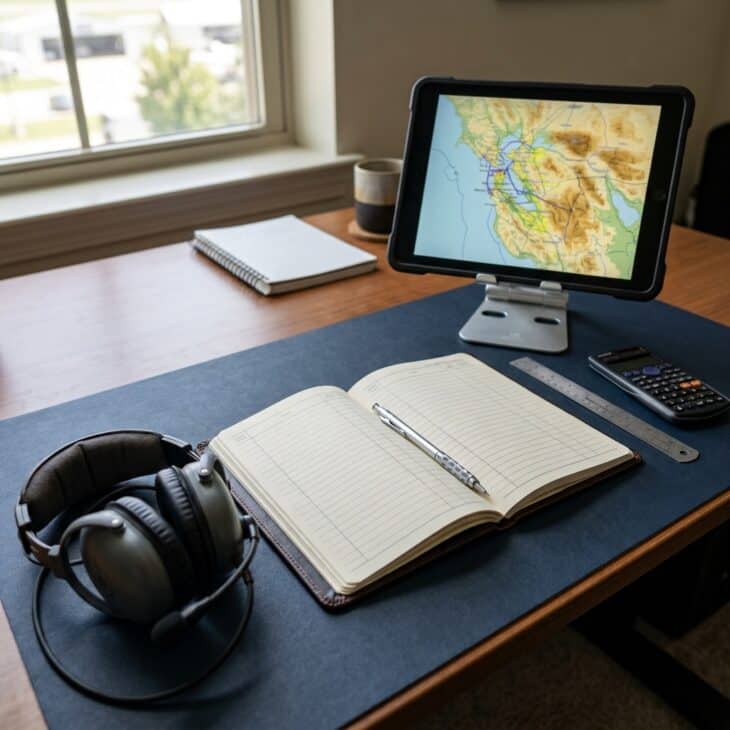
What you see An open logbook sits in the center, a tablet stands to the right, and pencils, calculator, and headset occupy their own clear zones. A dark blue mat visually gathers everything into one planning surface.
Why it works Flight preparation involves both paper and screens, so a divided layout prevents one from burying the other. Keeping the logbook visible also makes post-flight entries harder to postpone.
How to get it Reserve the center for writing, place the tablet beside your dominant hand, and keep charging cables behind the stand. Add one shallow tray for pencils, plotters, and spare batteries. Store completed records in a closed drawer or document box rather than leaving them in sunlight.
05. Runway Edge Desk Lamp
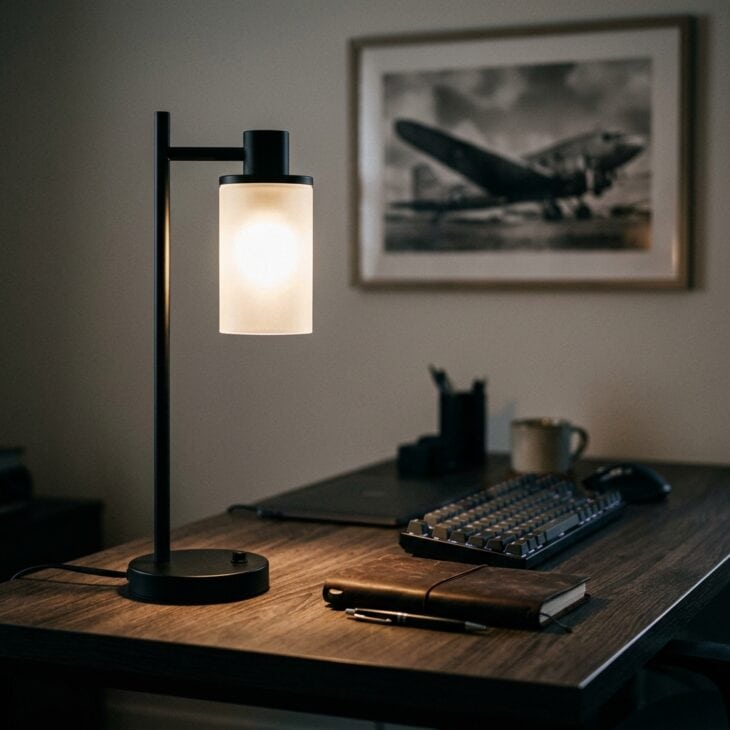
What you see A slim black lamp with a frosted cylindrical shade rises beside the monitor like a refined runway edge light. Its warm beam lands on the notebook rather than reflecting across the screen.
Why it works Lighting is one of the most useful ways to introduce an aviation reference. The industrial shape complements both modern and vintage aviation decor, while focused illumination keeps the desktop practical after sunset.
How to get it Look for a narrow lamp with a frosted upright shade and a heavy base. Use a warm, dimmable bulb, then position the lamp opposite your writing hand to reduce shadows. Angle it away from the monitor and test for glare from your normal seated position.
06. Propeller Headphone Stand
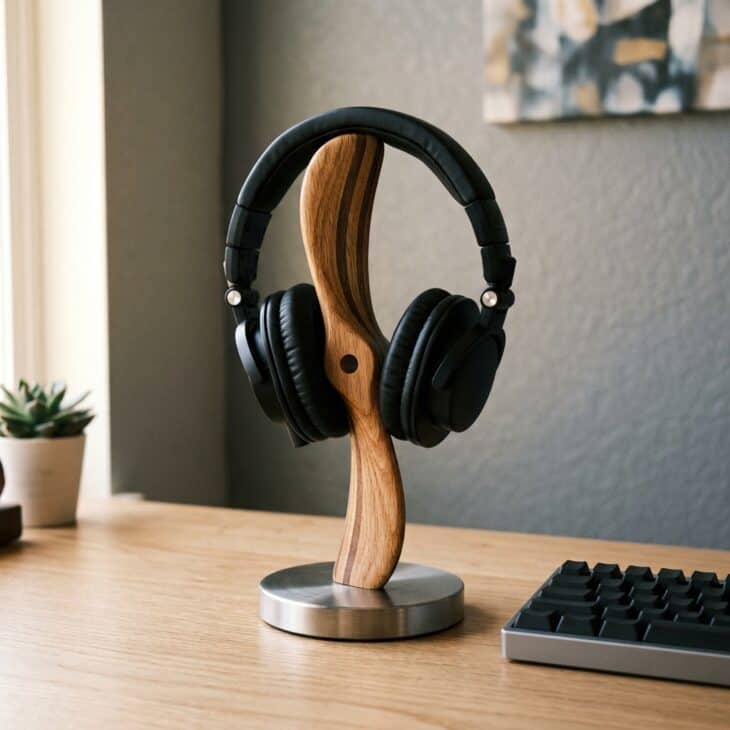
What you see A small laminated wood propeller stands vertically on a brushed metal base, its curved blades supporting black headphones. The piece looks handcrafted even on an otherwise minimal desk.
Why it works Headphones are bulky enough to become clutter when they lack a home. Turning their stand into the desk’s main decorative object solves that problem with one small footprint.
How to get it Choose a purpose-made propeller stand or adapt a small decorative propeller with a stable weighted base. Add felt where the headband touches and beneath the base. Keep the blade tips rounded, then place the stand outside your primary mouse and writing zone.
07. Kneeboard Docking Tray
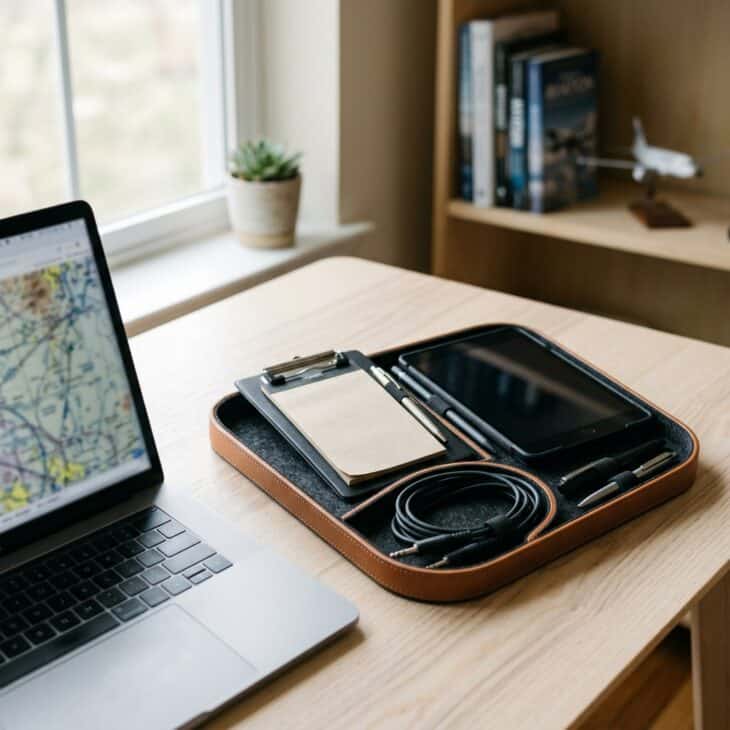
What you see A felt-lined tray holds a kneeboard, tablet, stylus, pens, and neatly coiled headset cable beside the laptop. Everything needed for the next lesson can move from desk to flight bag in one lift.
Why it works A landing zone prevents small essentials from spreading across the whole desk. It also makes it easy to compare your setup with purpose-built pilot kneeboards and keep the chosen gear together.
How to get it Measure the kneeboard first, then choose a tray with about an inch of clearance on each side. Line a plain wood tray with adhesive felt and add two removable dividers for cables and pens. Place it near the desk edge so packing does not disturb the computer setup.
08. Checklist Command Board
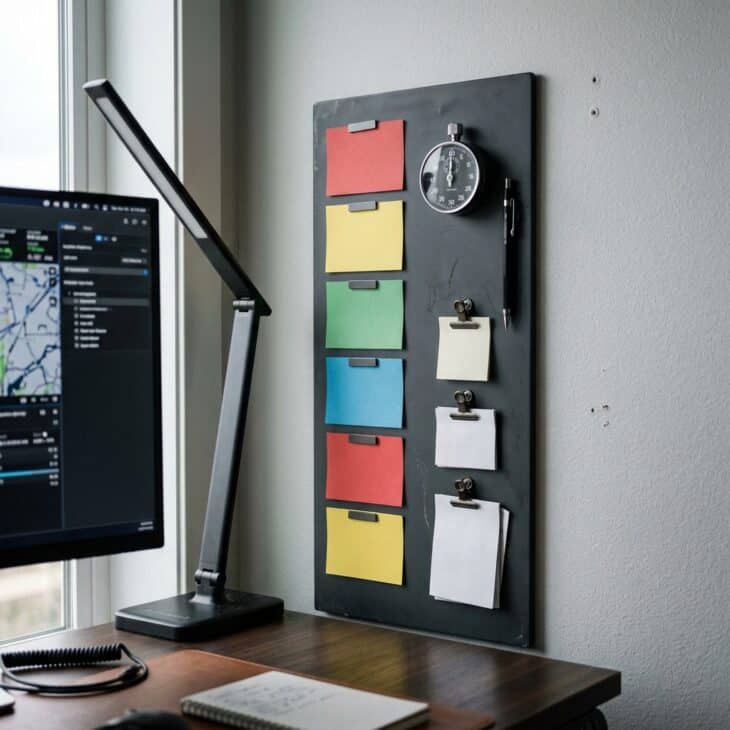
What you see A narrow charcoal board holds color-coded cards, a timer, magnetic clips, and one pencil beside the monitor. The arrangement borrows cockpit discipline without reproducing an actual aircraft checklist.
Why it works Recurring tasks become easier when their sequence stays visible. The board also moves reminders off the desktop and creates a satisfying briefing area before work begins.
How to get it Mount a slim magnetic board on the side nearest your non-dominant hand. Create separate cards for start-up, shutdown, study, and packing routines, using plain language rather than copying operational checklists. Review them monthly and remove any step that no longer earns its space.
Keep decoration separate from flight documents
Expired charts and invented checklist cards are excellent decor. Current charts, official checklists, and records used for real flying should stay clearly identified, current, and separate from decorative pieces.
09. Vintage Airmail Writing Desk
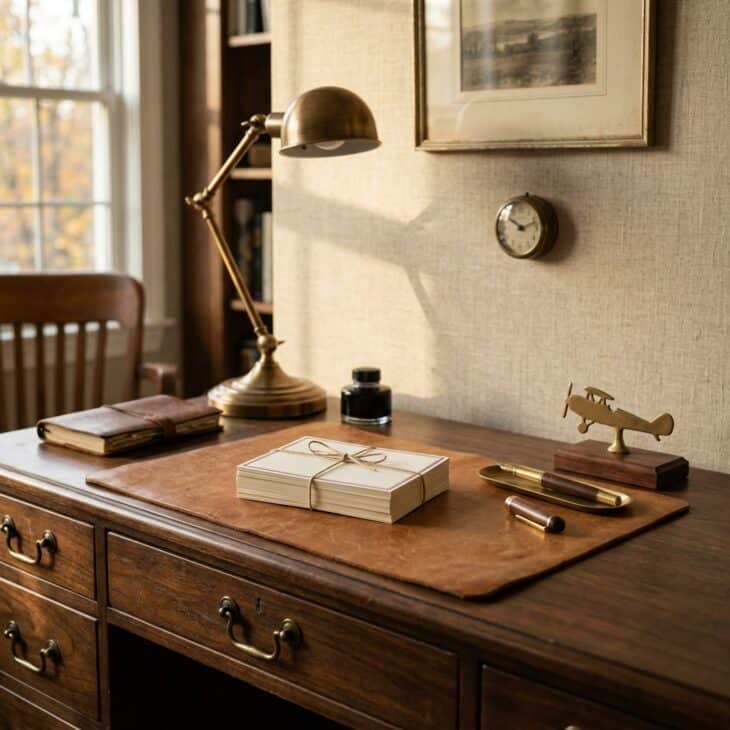
What you see Walnut, tan leather, and aged brass surround a stack of cream cards edged in restrained red and blue. A small mail-plane silhouette supplies the only literal aviation object.
Why it works The airmail palette introduces aviation through materials and color instead of equipment. It suits journaling, correspondence, or reading from a stack of favorite aviation books.
How to get it Start with a leather desk pad and one brass or bronze lamp. Add cream stationery with a subtle striped border, then choose one small generic aircraft object for the corner. Keep modern chargers inside a wood cable box so they do not break the period mood.
10. Glass Cockpit Dark Desk
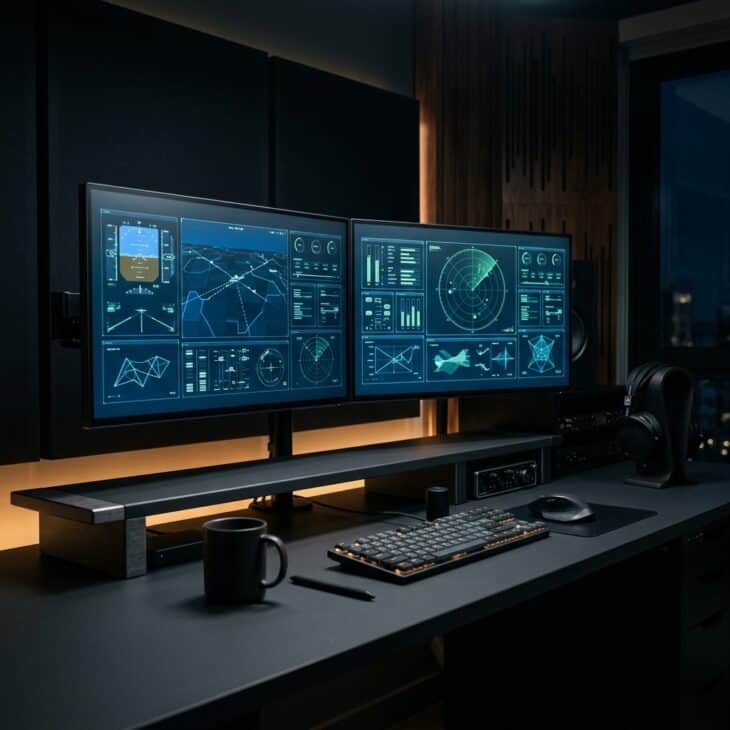
What you see Two slim screens sit symmetrically above a matte charcoal surface, framed by brushed metal and a low amber glow. The desk feels technical and calm, with no loose accessory breaking the horizontal lines.
Why it works Modern flight decks rely on hierarchy, alignment, and controlled illumination, all useful principles for a screen-heavy office. The result feels aviation-inspired even without a model plane or poster.
How to get it Use matching monitor arms and align both screen tops before adding anything decorative. Choose one dimmable backlight in warm white or amber, then hide its source behind the screens. Keep the wall matte and position the desk perpendicular to windows to reduce glare.
11. Bush Pilot Field Desk
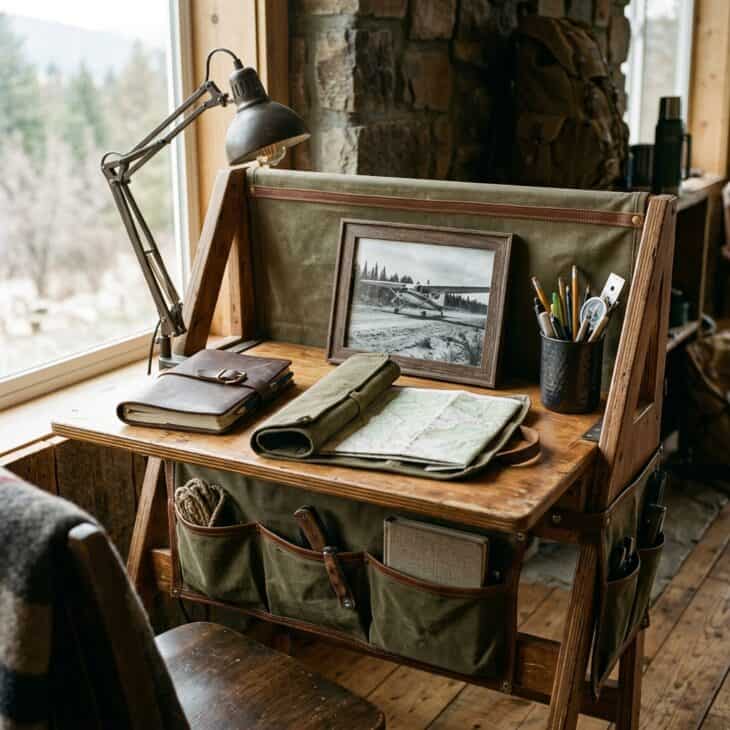
What you see Plywood, olive canvas, and dark metal give a small desk the character of portable field equipment. A map case and canvas side pockets hold supplies without hiding their rugged textures.
Why it works This setup favors durability over polish, making scuffs and wear part of the appeal. Vertical pockets also help a narrow desk carry more tools without sacrificing the writing surface.
How to get it Pair a simple plywood desk with clamp-on canvas pockets or a hanging tool organizer. Use olive, tan, and black in small doses, then add one weathered metal accessory. Seal raw wood with a matte finish so coffee rings and pencil marks wipe away.
12. Airline Operations Desk
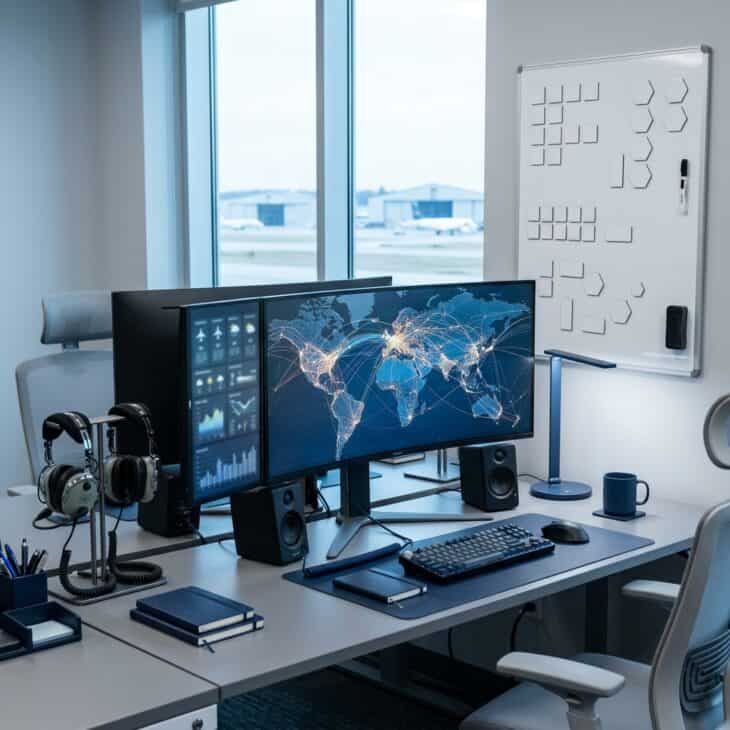
What you see A wide route display anchors the center, with a smaller screen, headset, and magnetic board arranged in separate zones. Navy accessories add color to an otherwise neutral professional workstation.
Why it works An operations room feels purposeful because every display has a job. Borrowing that clarity is ideal for anyone who tracks projects, schedules, markets, or multiple communication channels during the day.
How to get it Assign the central screen to your main task and the side screen to reference material or communications. Put the headset on the side you reach most naturally, then give paperwork one vertical holder. Avoid decorative dashboards that compete with useful information.
13. Sky Blue Scandinavian Setup
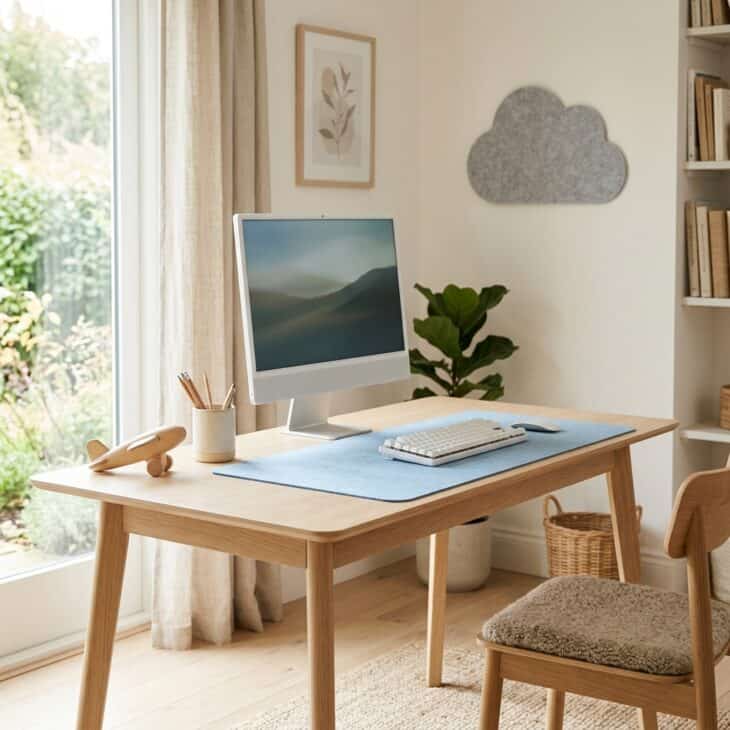
What you see Pale oak, warm white, and a sky-blue desk mat create an airy setting around one small wood airplane sculpture. Daylight and negative space do most of the decorating.
Why it works Aviation decor does not need dark metal or vintage leather. A lighter palette suggests open sky and cloud layers while making a small office feel larger.
How to get it Choose a pale wood desk and repeat sky blue only twice, such as in the mat and one storage box. Keep accessories cream, white, or natural wood, then hide cables in a matching tray. Leave at least one-third of the desktop empty to preserve the calm effect.
14. Aviation Book Ledge Desk
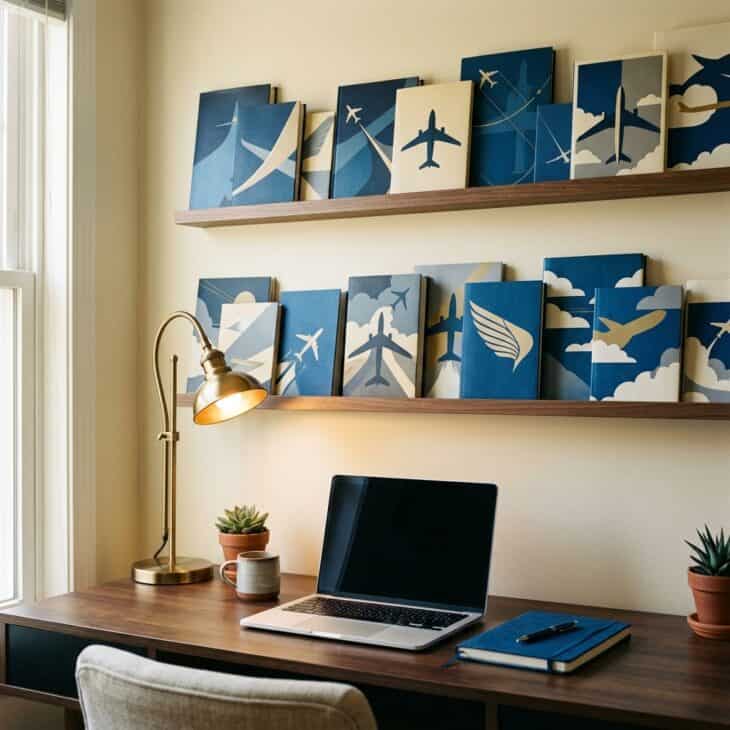
What you see Two narrow ledges display aviation books face-forward above a compact laptop desk. Deep blue and cream covers create a changing band of color without a large framed print.
Why it works The books stay accessible while their covers become part of the room. Rotating three or four titles keeps the wall fresh and avoids the visual weight of a full bookcase.
How to get it Mount picture ledges into studs or suitable anchors, leaving enough height for the largest book. Display only a few volumes and store the rest vertically nearby. Keep heavy books on the lower ledge and confirm the shelf’s load rating before filling it.
15. Floating Model Airplane Shelf
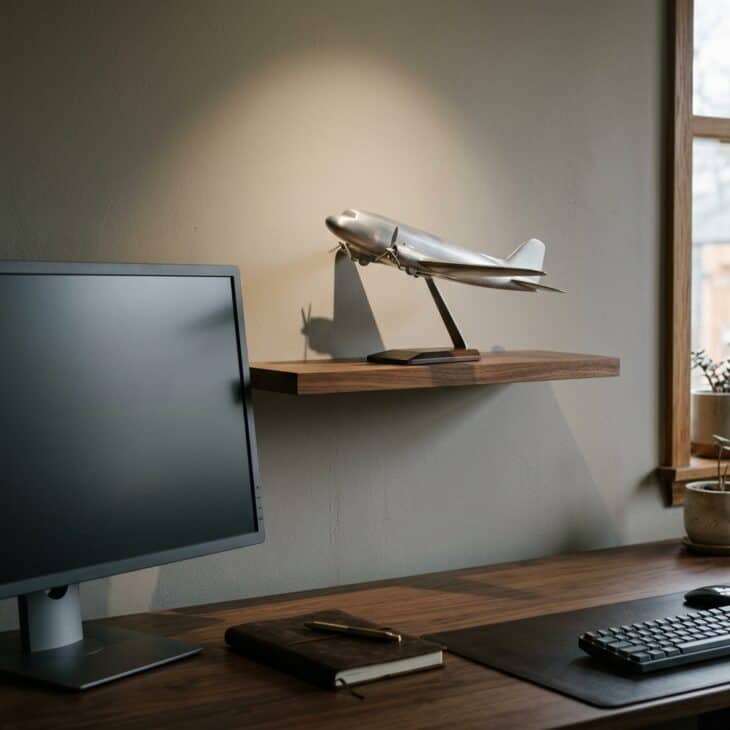
What you see One silver propeller model climbs gently across a slim walnut shelf above the monitor. A small spotlight throws its silhouette onto the wall, giving the display depth after dark.
Why it works Moving the model off the work surface protects it and preserves desk space. A single strong display also feels more intentional than several aircraft competing for attention, a useful principle for any model airplane display.
How to get it Choose a shelf slightly longer and deeper than the model’s footprint. Anchor it securely, add museum putty beneath the wheels or stand, and keep it clear of direct sun. Position the model above eye level but low enough to dust without climbing.
16. Aircraft Blueprint Pegboard
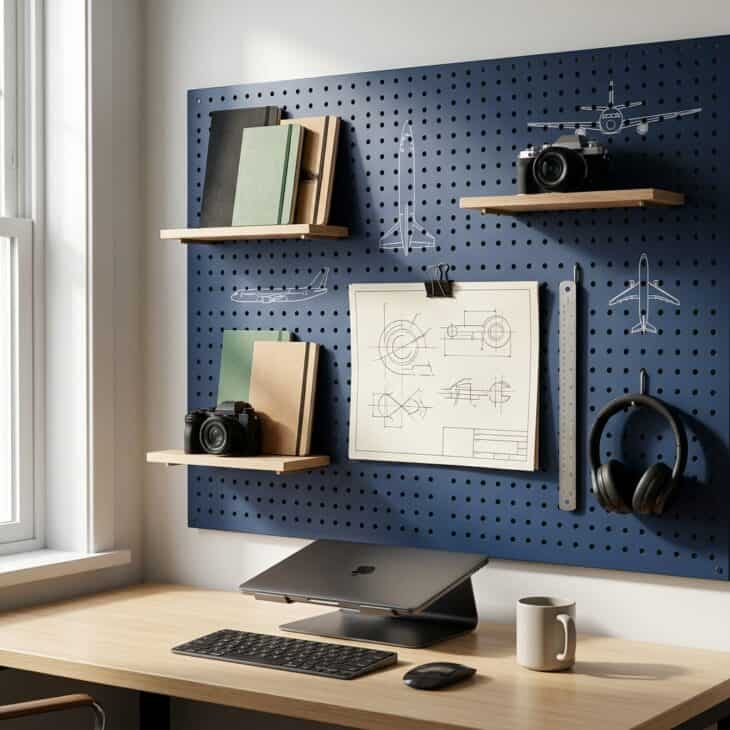
What you see A navy pegboard carries small shelves, headphones, a ruler, camera gear, and one clipped aircraft drawing. White outline graphics connect the practical storage into a coherent aviation composition.
Why it works Pegboard is ideal when the tools on a desk change from week to week. It also blends storage with the technical look of aviation wall art without sacrificing flexibility.
How to get it Paint a metal or wood pegboard matte navy, then map the arrangement on the floor first. Keep frequently used tools within seated reach and decorative pieces higher up. Use removable vinyl outlines or a stencil, avoiding real registrations and copyrighted liveries.
Build around reach, not symmetry
The objects you touch every hour belong close to the keyboard and mouse. Decorative models, books, and framed pieces can sit farther away, where they add character without forcing repeated reaching or twisting.
17. Runway Centerline Cable Channel
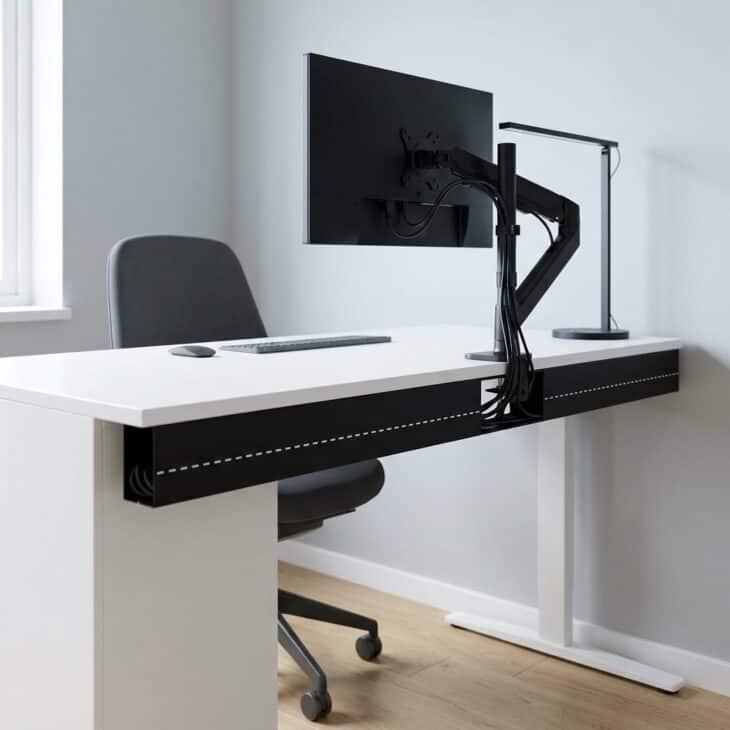
What you see A black cable channel runs beneath a white desk, marked with a simple dashed centerline. Monitor, lamp, and charging leads disappear into it before reaching the floor.
Why it works Cable management is usually invisible, but a subtle runway motif makes the hidden detail enjoyable. More importantly, it keeps controls, notebooks, and drinks clear of loose wires.
How to get it Install a screw-mounted tray beneath the rear edge of the desk and route one power strip inside it. Add short white vinyl dashes to the tray only, not the desktop. Label both ends of each cable, leave small service loops, and secure the final drop to a desk leg.
18. Aircraft Aluminum Accessory Set
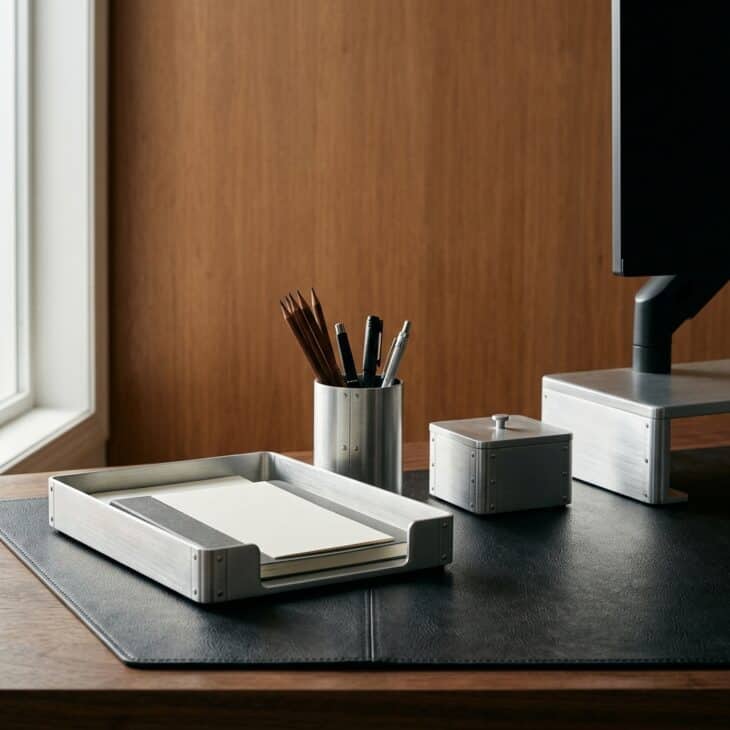
What you see A pencil cup, tray, storage box, and monitor base share the same brushed aluminum finish and discreet rivet detail. Warm wood and black leather prevent the metal from making the desk feel sterile.
Why it works Repeating one material across useful objects creates cohesion without adding clutter. The metal suggests an airframe skin, but the simple shapes remain appropriate for an adult office.
How to get it Gather accessories in one aluminum finish rather than mixing chrome, silver paint, and raw steel. Add rubber or felt feet to protect the desk and soften noise. If you DIY the rivet look, use shallow decorative fasteners and file every edge smooth.
19. Pilot Watch Valet Corner
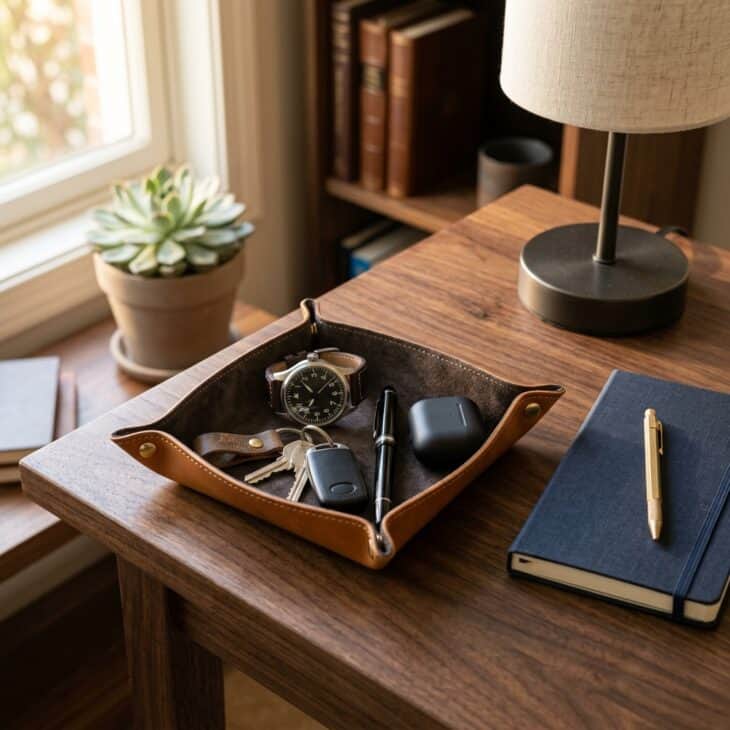
What you see A tan leather tray gathers a pilot-style watch, keys, pen, and earbuds at one corner of a walnut desk. The small arrangement feels like a personal preflight station.
Why it works Everyday carry creates visual noise when each object lands separately. One tray contains the clutter and turns a daily routine into part of the desk’s aviation character.
How to get it Choose a tray just large enough for the items you remove every day. Place it on the side nearest the room entrance, away from drinks and charging cables. Empty receipts and loose coins weekly so the tray remains a system rather than a catchall.
20. Personal Route Pinboard
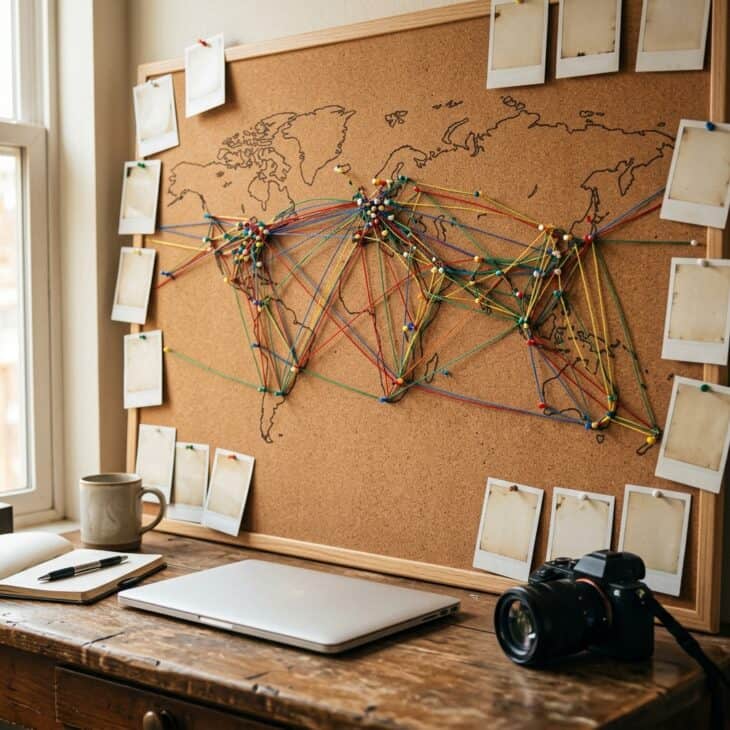
What you see Colored threads connect pins across an unlabeled cork map, with a few photo cards tucked along the edge. The board records past trips and leaves visible space for future routes.
Why it works A personal map is both memory display and motivation board. It can also turn ideas from an aviation bucket list into destinations you see every workday.
How to get it Use one pin color for completed flights and another for planned trips. Connect only meaningful routes, since too much thread quickly becomes noise, then add small photos at the margins. Mount the board where pins cannot fall onto the keyboard or floor.
21. Student Pilot Study Nook
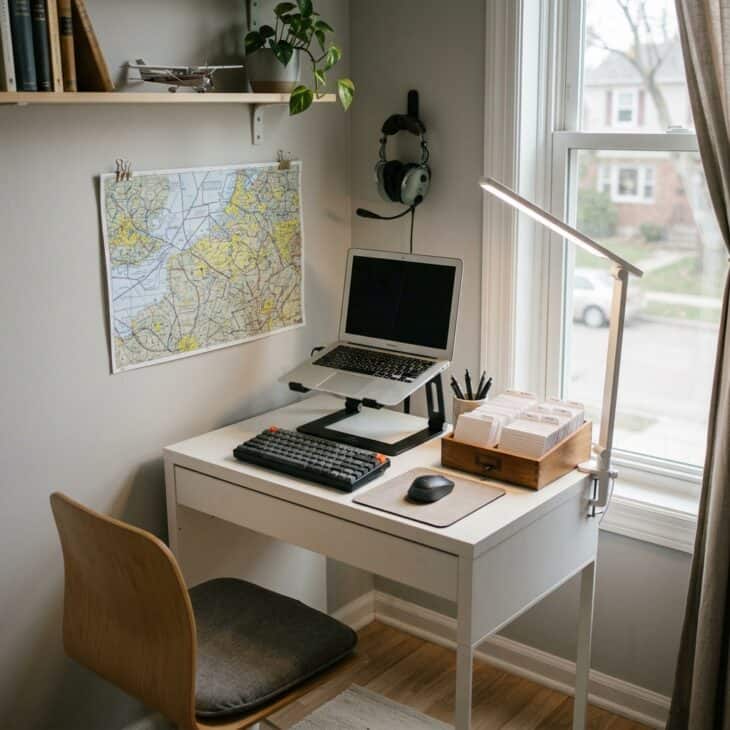
What you see A narrow white desk fits into a small corner with a raised laptop, external keyboard, flashcard box, and headset hook. One clipped chart supplies color without taking over the wall.
Why it works Students need a consistent place for short, frequent study sessions more than they need expensive furniture. The compact layout keeps essential materials visible and makes beginning easier.
How to get it Raise the laptop and add an external keyboard so the screen and hands can sit at comfortable heights. Use one divided box for flashcards, notes, and charging leads, then hang the headset beneath the desk. Keep the current study chart accessible and use an expired one for display.
22. Flight Instructor Debrief Desk
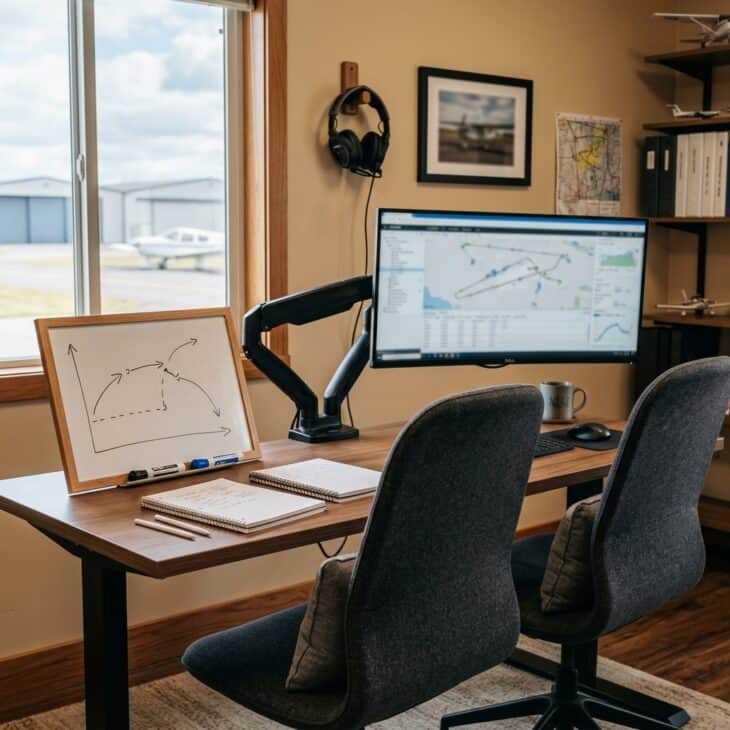
What you see Two chairs face an articulated monitor that can turn toward either person, with a small whiteboard and matching notebooks between them. The arrangement feels conversational rather than evaluative.
Why it works A debrief is easier when both people can see the same track, notes, or diagram without leaning across the desk. Side-by-side seating also keeps the screen from becoming a barrier.
How to get it Put the monitor on an arm with enough rotation for a second viewer. Keep a clear chair space beside the main seat, then add one erasable board for quick diagrams. Store private student records out of sight and clear shared surfaces between sessions.
23. Hangar-Style Standing Desk
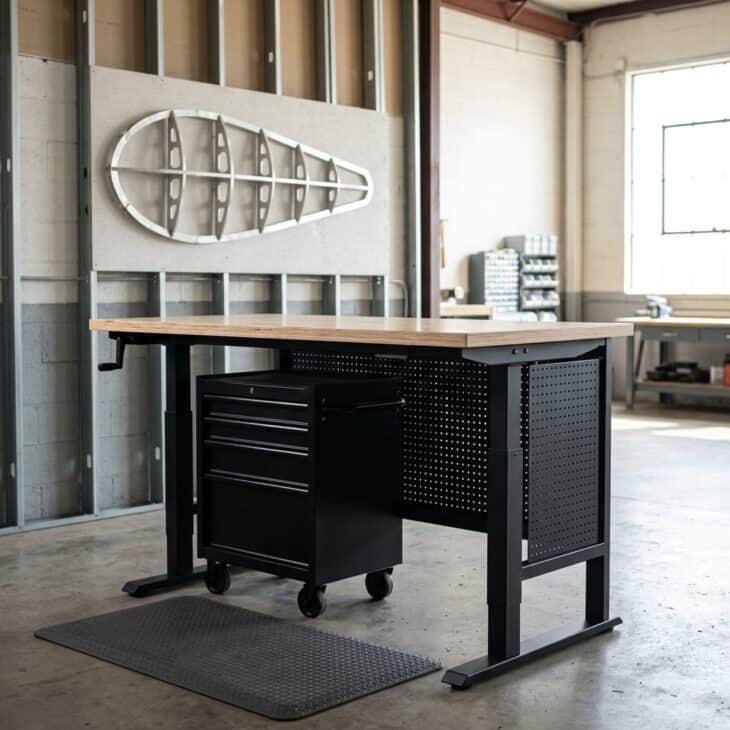
What you see A pale plywood top rides on a black steel lift frame beside perforated metal storage and a rolling tool cabinet. An anti-fatigue mat completes the practical hangar-workshop feel.
Why it works The industrial materials suit aviation naturally, while height adjustment allows posture changes through a long day. Rolling storage also keeps the setup adaptable when equipment changes.
How to get it Pair a stable lift frame with a sealed plywood or butcher-block top. Add an anti-fatigue mat, route cables with enough slack for full travel, and test the desk at both height limits. Use the perforated panel for light accessories only unless it is securely anchored.
24. Night Flight Ambient Setup
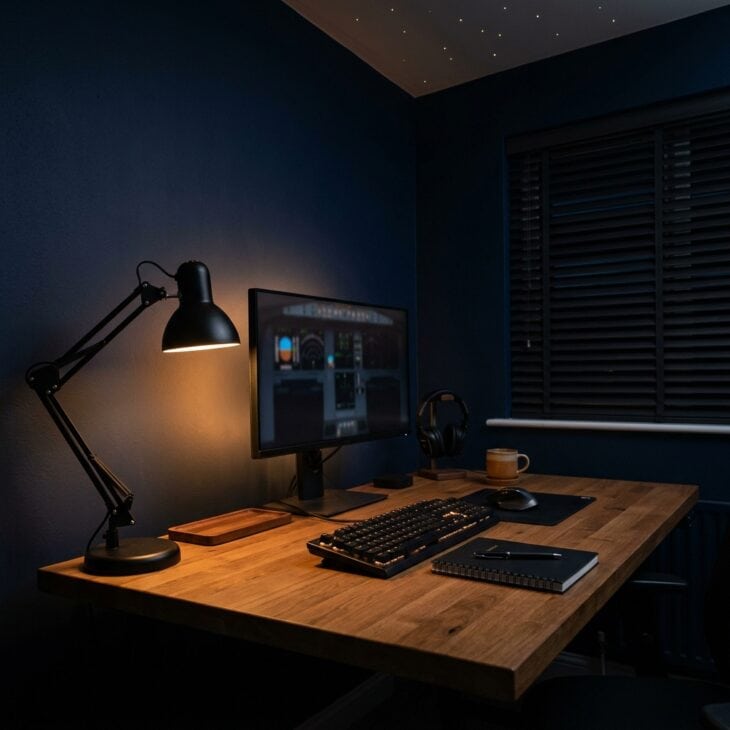
What you see A navy wall surrounds one monitor with a low amber glow, while a dim task lamp keeps the notebook readable. Tiny pin lights sit high above the screen like distant stars, well outside the main viewing area.
Why it works The palette evokes a night flight without filling the room with harsh blue light. Separate bias and task lighting also lets you adjust atmosphere and visibility independently.
How to get it Install a dimmable warm-white strip behind the monitor and a shaded lamp beside the writing zone. Keep decorative lights above or beside your sight line, then check the screen for reflections. Use presets or smart plugs so the entire scene turns on with one action.
25. Minimal Captain’s Desk
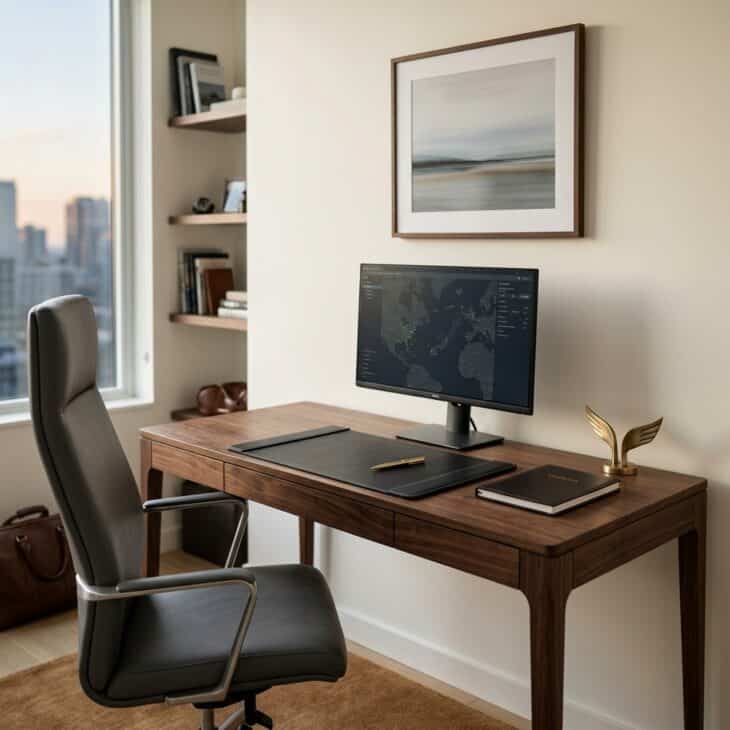
What you see Dark walnut, black leather, and a brass pen surround one monitor and one small wing-shaped sculpture. A simple horizon print leaves the wall quiet and gives the desk an assured, settled character.
Why it works Restraint makes the aviation references feel personal rather than performative. It is a setup that can serve a pilot, executive, or enthusiast for years without depending on a passing trend.
How to get it Invest first in the desk, chair, and monitor position, then choose one aviation object with real meaning. Match metals across the pen, lamp, and sculpture, and keep paperwork in a closed drawer. Finish with one quiet print or a compact aviation gallery wall if the room needs more depth.
Sources and references used for research and fact-checking.
- Occupational Safety and Health Administration, Computer Workstations: Monitors
- Occupational Safety and Health Administration, Computer Workstations: Desks
- Federal Aviation Administration, Aeronautical Chart Users' Guide
- Federal Aviation Administration, AC 61-136B: FAA Approval of Aviation Training Devices and Their Use for Training and Experience
Get the Newsletter
The latest aviation news and stories sent to your inbox.
About the Author

Hanna writes AeroCorner's aviation-lifestyle and decor guides, turning a love of flight into ideas for your home, celebrations, and gift lists.