

Table of Contents
There is something different about aviation experiences. They do not fade the way a weekend trip fades. The smell of aviation fuel on a warm tarmac, the particular rattle of a radial engine climbing to altitude, the moment a glider releases its tow rope and the world goes quiet: these stay with you. Most people who love aviation have a handful of experiences they have always meant to get around to. This list is for them.
What makes aviation bucket list ideas work across such a wide range of people is that they span every budget, skill level, and relationship to flight. Some of these you can do this weekend with no experience at all. Others take months of training and planning. A few sit at the edge of what most people ever get to experience. All of them are genuinely worth chasing.
These ideas cover the full spectrum, from passive awe to hands-on flying, from quiet contemplation to full-throttle adrenaline. Work through them in any order. Add your own. The point is not to finish the list but to keep flying toward the next one.
01. Take Your First Introductory Flying Lesson
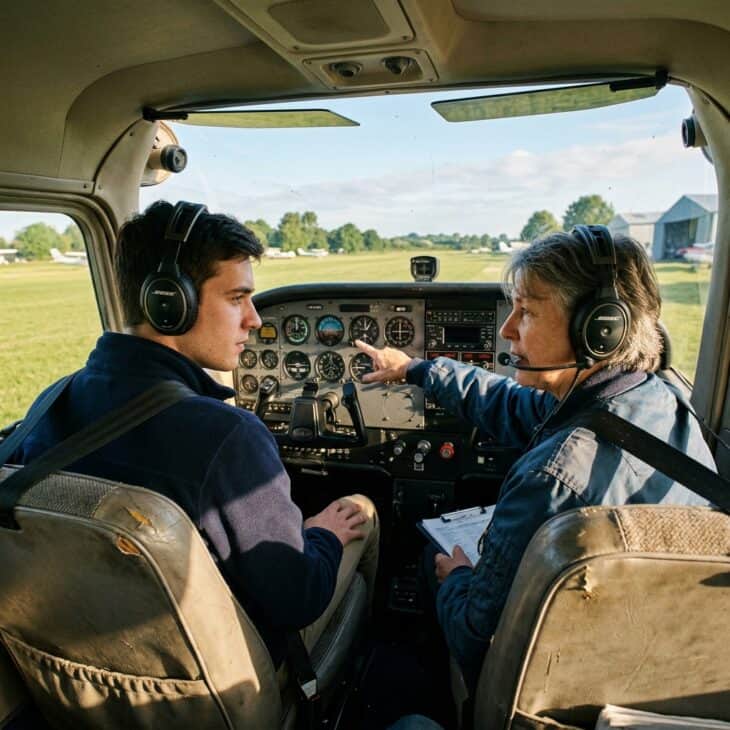
The Experience A small two-seat training aircraft sits at the edge of a sunlit grass strip, its cockpit open to the morning air. A student and instructor lean over the instrument panel together, the instructor pointing at the altimeter while the student’s hand rests on the yoke. Outside the curved windshield, the runway stretches ahead, empty and full of promise.
Why it’s worth it An introductory flight, often called a discovery flight, is the single most effective first step on any aviation bucket list. You are not just a passenger; the instructor lets you take the controls during cruise, feel how the aircraft responds to your inputs, and experience firsthand what general aviation actually feels like from the left seat. Most people who do one come away wanting to go back.
How to do it Search for flight schools in your area through your country’s civil aviation authority or the AOPA flight school finder. Call ahead and book a discovery flight specifically, which is a structured introductory lesson rather than a sightseeing flight. Expect to spend 30 to 60 minutes in the air with about 20 minutes of briefing before you go. If you want to continue, ask the instructor about what picking the right flight school looks like for your goals and schedule. Dress comfortably, avoid heavy perfume, and bring sunglasses. Costs vary but discovery flights are typically the most affordable entry point into aviation.
02. Watch the Blue Angels or Thunderbirds Perform Live
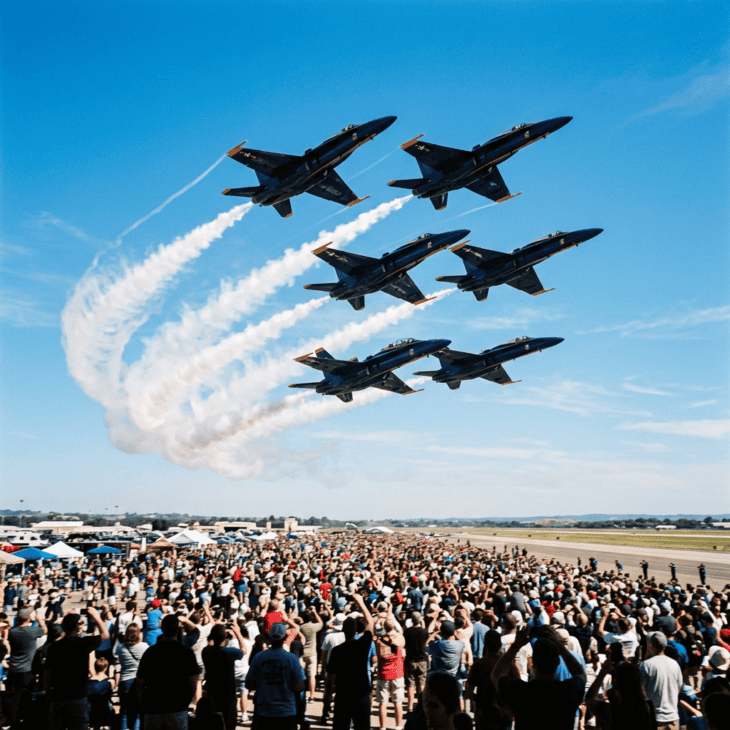
The Experience Six jets in a diamond formation bank into a sharp turn overhead, so close together that wingtips seem nearly to touch. Smoke trails cut across the sky. The sound hits a half-second after the image, a deep crackle and roar that you feel in your chest. Below, a crowd of thousands tilts their faces skyward, necks craned, phones raised. It is one of those moments where the scale of what humans can build and pilot becomes genuinely hard to believe.
Why it’s worth it Watching a precision aerobatic demonstration team perform live is a completely different experience from seeing footage online. The noise, the scale, the speed: none of it translates through a screen. The Blue Angels and the Thunderbirds fly maneuvers that push the edge of what aircraft can do with a human inside them, and they do it within a few hundred feet of the crowd. It converts skeptics into lifelong aviation fans at a rate that few other experiences can match.
How to do it Both teams publish their annual performance schedules on their official websites in the early months of each year. Look at the best air shows in the US to find events near you that feature these teams. Arrive early: the demonstration team typically flies in the afternoon, and you will want a good standing position well before they take off. Bring hearing protection if you plan to be close to the flight line, especially with children. A pair of binoculars helps for the high-altitude maneuvers. Many shows are free to attend; some charge a parking or gate fee.
03. Ride in a WWII Warbird
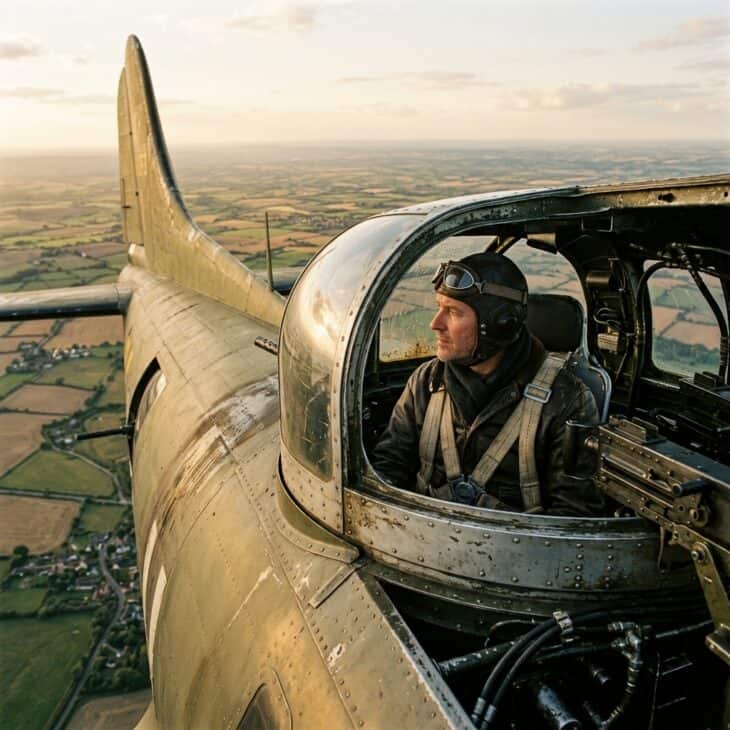
The Experience A restored wartime bomber with olive-drab paintwork and worn aluminum skin rumbles down the runway on four radial engines, the sound like nothing else in aviation: deep, uneven, mechanical in a way modern turbofans are not. You are in the rear section. Through a curved Plexiglas panel you watch the world drop away beneath you. The smell of oil and metal and age fills every breath. You are riding in something that was built to be flown in anger and survived long enough for you to sit inside it.
Why it’s worth it The wartime era produced aircraft that shaped modern aviation in ways that are still felt today, and flying in one of the surviving examples connects you to that history in a way that a museum display cannot. These aircraft are maintained by passionate volunteer organizations whose mission is specifically to keep them airworthy. The experience bridges the gap between history and the sky in a way that is genuinely hard to describe to anyone who has not done it.
How to do it Look for commemorative air force organizations and warbird flight experience operators in your country. In the United States, the Commemorative Air Force operates several of these aircraft and sells passenger rides at air shows and events throughout the year. Warbird flights typically last 20 to 45 minutes and are priced to reflect the enormous cost of keeping these aircraft airworthy. Book early: spots fill quickly at popular air show venues. Weight and mobility restrictions may apply depending on the aircraft, so check before booking. Dress in closed-toe shoes and layers; warbird cabins are often drafty and loud.
04. Fly in a Hot Air Balloon at Sunrise
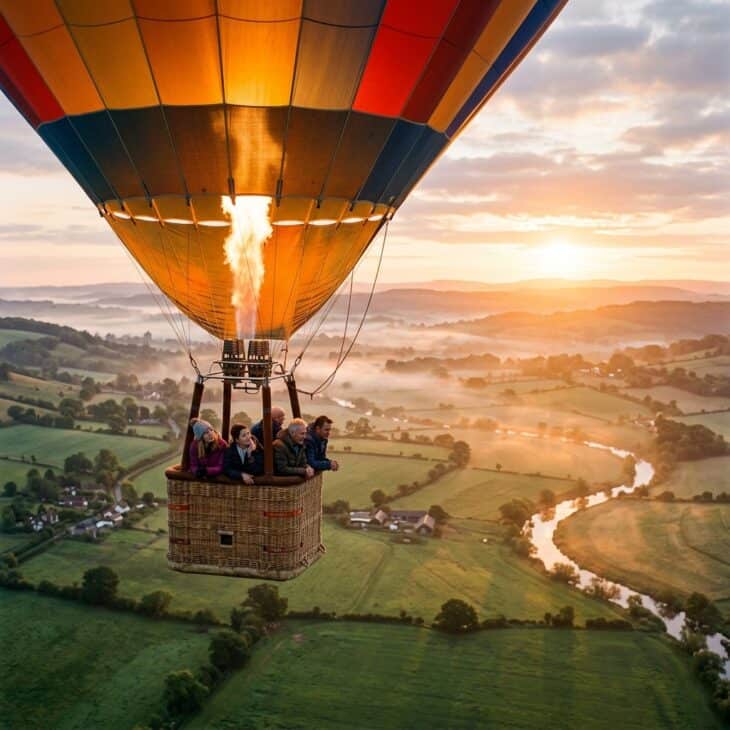
The Experience The burner fires with a low roar and the balloon lifts off the dewy morning grass. Within minutes the farmhouse beside the launch field looks like a toy, the river a silver thread, the other balloons in the flight rising around you as the mist in the valleys glows apricot and gold. There is almost no wind sensation because you are moving with the wind. The silence between burner firings is complete. It is the closest most people ever get to exactly the feeling of flight that first drew them to aviation.
Why it’s worth it Hot air ballooning is accessible to almost anyone regardless of age, fitness, or fear of speed, and it delivers a perspective that is genuinely impossible to get any other way. The slow pace and low altitude let you read the landscape in a way that a small plane at cruise altitude cannot. Sunrise flights specifically reward early rising with the best light, the calmest air, and the richest colors.
How to do it Balloon flight operators are found in most rural and tourist regions and typically fly in the early morning to take advantage of stable air. Search for licensed commercial balloon operators in your area and ask specifically for sunrise flights. Most flights last 45 minutes to an hour in the air, with a total experience of two to three hours including inflation and the traditional post-flight toast. Flights are weather-dependent and may be cancelled on short notice; good operators will rebook you promptly. Avoid heavy meals beforehand, wear closed-toe shoes and layers, and check the operator’s safety record and certification before booking.
Timing is everything
Hot air balloon flights are cancelled in wind above about 10 to 12 knots. Book the earliest available slot in the morning, when air is calmest. Spring and autumn tend to offer the clearest skies and most reliable conditions.
05. Try an Aerobatic Flight with a Licensed Instructor
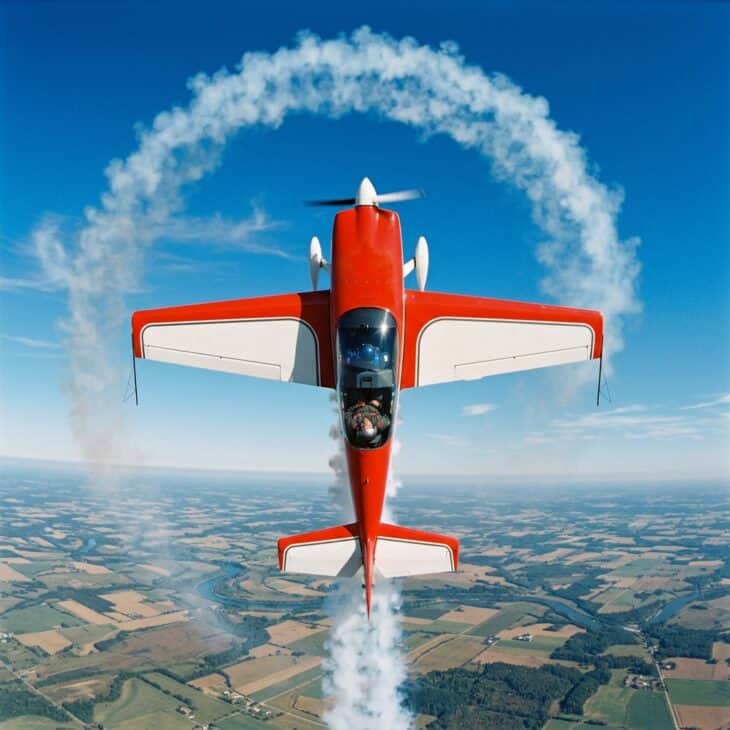
The Experience The aircraft rolls inverted and the earth and sky swap places. For a moment the horizon is above you, the ground below becomes the sky, and the blood rushes to your head in a way your body has never experienced before. Then the nose comes through, the G-force builds as you pull out, and the world rights itself with a rush that presses you deep into the seat. Your instructor’s voice is calm and steady in the headset. You are laughing before you realize you are doing it.
Why it’s worth it An aerobatic introductory flight is one of the most immediate ways to understand what aviation can actually do beyond simply getting from one place to another. The control inputs, the G-loads, the disorientation and recovery: it rewires your understanding of how aircraft move through three dimensions. Even confirmed non-thrill-seekers often find it more joy than fear once they are actually in the air with a competent instructor.
How to do it Search for aerobatic flight experience operators or flight schools with aerobatic ratings in your area. A typical intro aerobatic flight lasts 20 to 30 minutes in the air and includes a ground briefing covering what maneuvers you will experience and how to handle any discomfort. Tell your instructor honestly about any anxiety before you board. Avoid eating heavily in the two hours before the flight. Wear comfortable clothing with no loose items, and leave jewelry and sunglasses in the car. Most operators provide airsickness bags, and there is absolutely no shame in using one: the experience is still worth it.
06. Earn Your Private Pilot Certificate
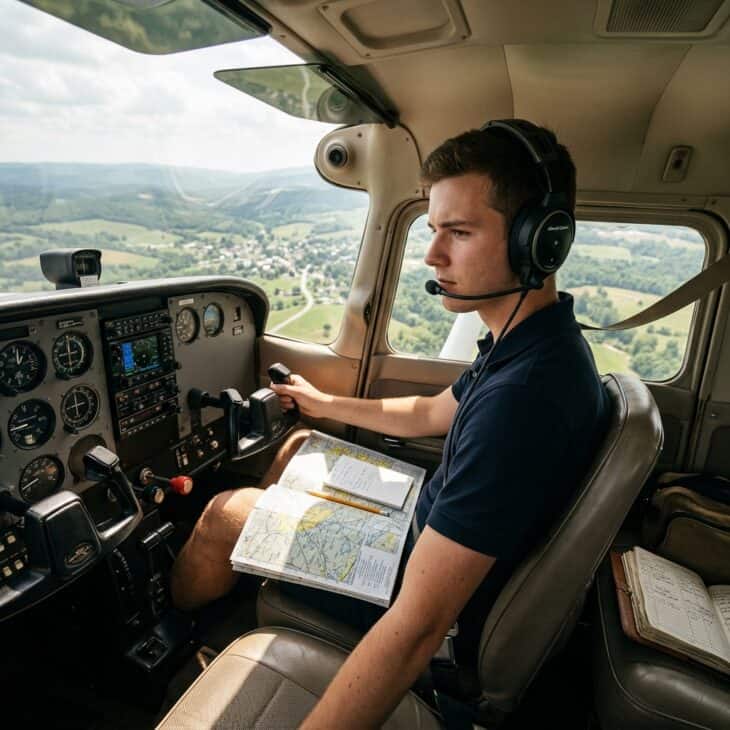
The Experience A pilot sits alone in a light aircraft 5,000 feet above a town they have known their whole life, looking down at streets they have driven a thousand times. The logbook in the passenger seat is open to a page with a fresh endorsement. They flew here themselves, navigated themselves, and they will land themselves. No instructor. No co-pilot. This is what a private pilot certificate makes possible: genuine, unchaperoned freedom in three dimensions.
Why it’s worth it Earning a private pilot certificate is the most transformative thing on this entire list. The first solo flight alone is a milestone that stays with you forever, but the certificate that follows gives you the ability to fly yourself wherever you want to go within the limits of your rating and the weather. For aviation fans, it is the difference between watching something and being part of it.
How to do it In the United States, a private pilot certificate requires a minimum of 40 hours of flight time, though most students take 60 to 70 hours. You will need a third-class medical certificate from an FAA-designated aviation medical examiner before you solo. Choose a flight school with a good instructor-student ratio and clear syllabus structure: read more about how to pick the right flight school before committing. Training typically spans six months to a year when studied part-time. Costs vary widely by region and aircraft type; budget for both flight hours and ground school. The checkride with a designated pilot examiner is the final step, covering both an oral exam and a practical flight test.
07. Charter a Float Plane to a Remote Lake
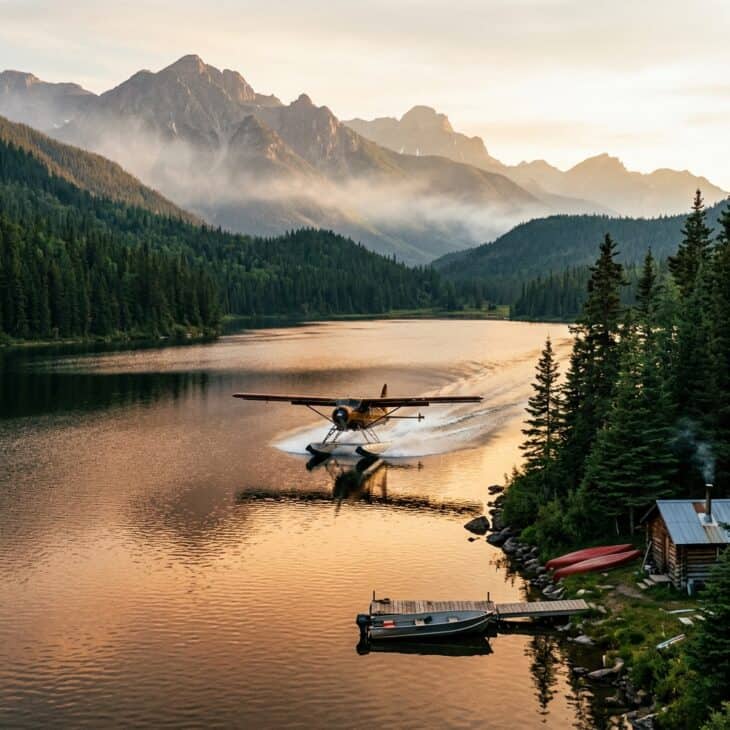
The Experience The floatplane drops below the treeline and levels just above a mountain lake that has no road access and no visible human presence except a small dock at one end. The floats touch the water with a hiss and a spray of mist, the aircraft slowing from flying to floating in the space of a few seconds. A dog runs down to the dock. Someone waves from a cabin. You have just arrived somewhere that most people will never see, and you got here in forty minutes from a small terminal at a regional airport.
Why it’s worth it Float plane charters combine the adventure of flying with access to places that would otherwise require days of hiking or paddling to reach. The experience is both practical and spectacular, and seaplanes and floatplanes operate in some of the most beautiful landscapes on earth: coastal Alaska, the Canadian wilderness, the fjords of Norway, the islands of the Pacific Northwest. The landing itself, on water rather than a runway, is a sensory experience unlike any other in civil aviation.
How to do it Search for float plane operators in wilderness regions you want to visit: British Columbia, Alaska, Maine, Scandinavia, and New Zealand all have well-established commercial operators. Some charters are point-to-point transportation to lodges or fishing camps; others offer scenic flights specifically. Book directly with operators rather than through general travel sites to get accurate pricing and availability. Weight limits are strict on small floatplanes, so be honest about your weight when booking. Bring only soft luggage, as storage space is limited. The best float plane experiences often combine a one-way charter in with a return by the same route a few days later after some time in the wilderness.
08. Attend EAA AirVenture Oshkosh
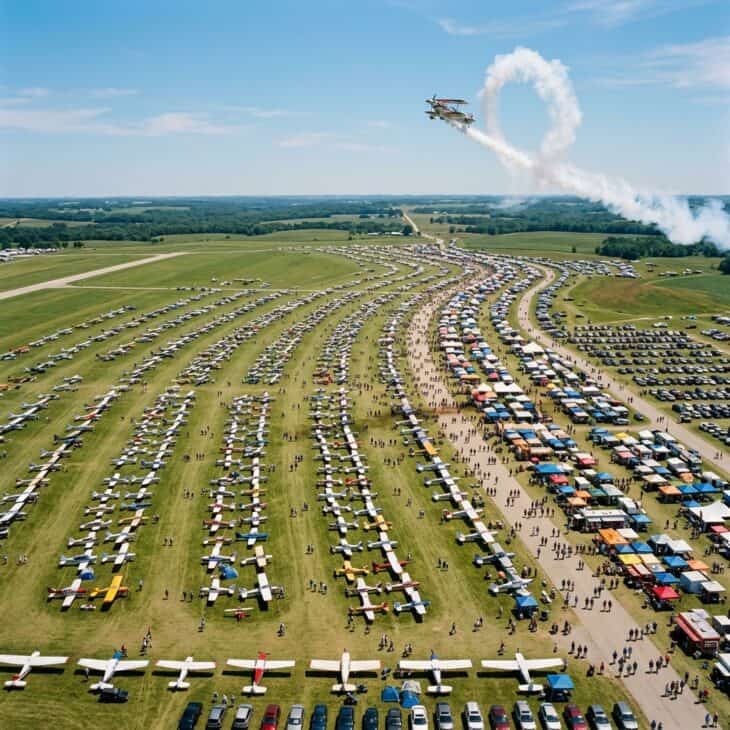
The Experience Ten thousand aircraft parked wing to wing across a Wisconsin airfield in July. Warbirds next to homebuilts next to ultralights next to experimental jets. The flight line never goes quiet during the day. Vendors, seminars, workshops, static displays, and nightly airshows run all week. Everywhere you look there are people who care about aircraft the way most people care about very little, and that shared obsession creates a specific kind of atmosphere that aviation fans describe as a pilgrimage.
Why it’s worth it EAA AirVenture Oshkosh is widely considered the world’s largest aviation event, and it delivers something that no museum or air show can replicate: the feeling of being surrounded entirely by people who see aviation the same way you do. For the duration of the week, the entire town of Oshkosh operates in aviation time. The event covers every corner of the aviation world, from vintage aircraft restoration to the latest experimental designs to military demonstrations.
How to do it EAA AirVenture runs for a week at the end of July each year at Wittman Regional Airport in Oshkosh, Wisconsin. Tickets are available through the EAA website and are cheaper when purchased in advance. Accommodation fills up months ahead: book a camping spot on the grounds if you want the full immersive experience, or book a hotel in a nearby town very early. If you are a pilot, you can fly in and park on the grass for a genuinely unique arrival experience. Plan your days around the specific exhibits and speakers you most want to see; the event is too large to take in randomly. Comfortable shoes, sunscreen, and cash for vendors are essential.
Plan ahead for Oshkosh
The NOTAM for flying into Oshkosh during AirVenture week is famously detailed, covering unique arrival procedures designed to handle hundreds of aircraft per hour. If you are flying in yourself, study it carefully and practice the specific procedures in advance.
09. Visit an Aviation Museum with Walk-Through Aircraft Access
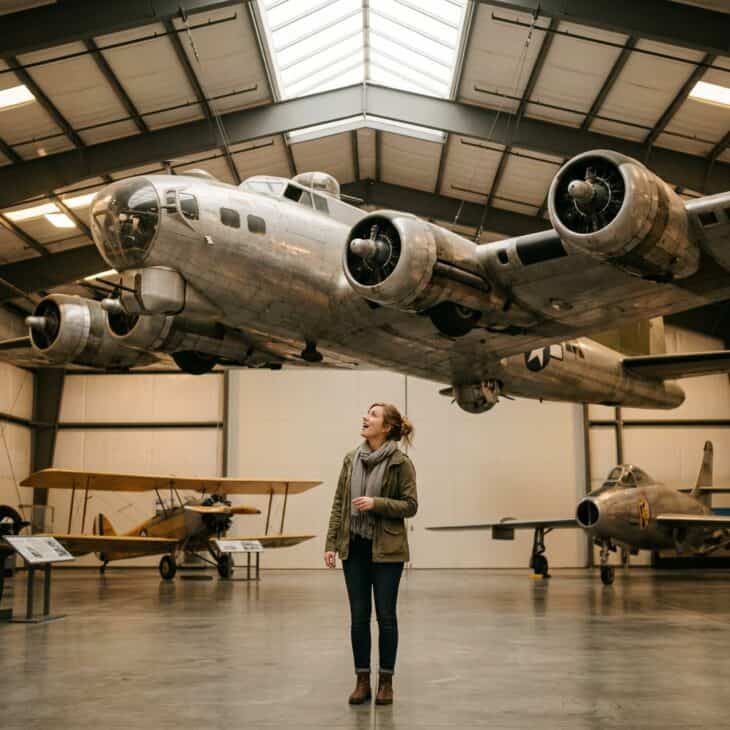
The Experience A four-engine heavy bomber hangs from the museum ceiling, its riveted aluminum belly at eye level. You can walk under the bomb bay, touch the tire treads on the landing gear, look up into the turret position. Every rivet, every inspection panel, every worn handhold has a history. Elsewhere in the same building there is a jet fighter and a biplane and a supersonic research aircraft, all within walking distance of each other. The museum is quiet except for the occasional gasp from a child who just found something extraordinary.
Why it’s worth it The best aviation museums are not just collections of old machines: they are living arguments for why flight matters and what it cost to develop. Walk-through access to restored aircraft gives you a physical sense of scale and ingenuity that photographs cannot provide. Standing inside a restored airliner from 1940 or looking through the gunsight of a fighter tells you something about the people who flew them that no caption can convey.
How to do it Major aviation museums worth a dedicated trip include the Smithsonian National Air and Space Museum in Washington DC and its Udvar-Hazy Center near Dulles, the National Museum of the United States Air Force in Dayton, Ohio, the Imperial War Museum Duxford in England, and the National Naval Aviation Museum in Pensacola, Florida. Regional aviation museums often hold hidden gems: restored local aircraft, personal artifacts from pioneer pilots, and access levels that larger museums cannot offer. Many run special events where cockpit access is permitted. Before you go, check which aircraft have walk-through or sit-in options: these are the highlights worth planning your visit around.
10. Ride in an Open-Cockpit Biplane
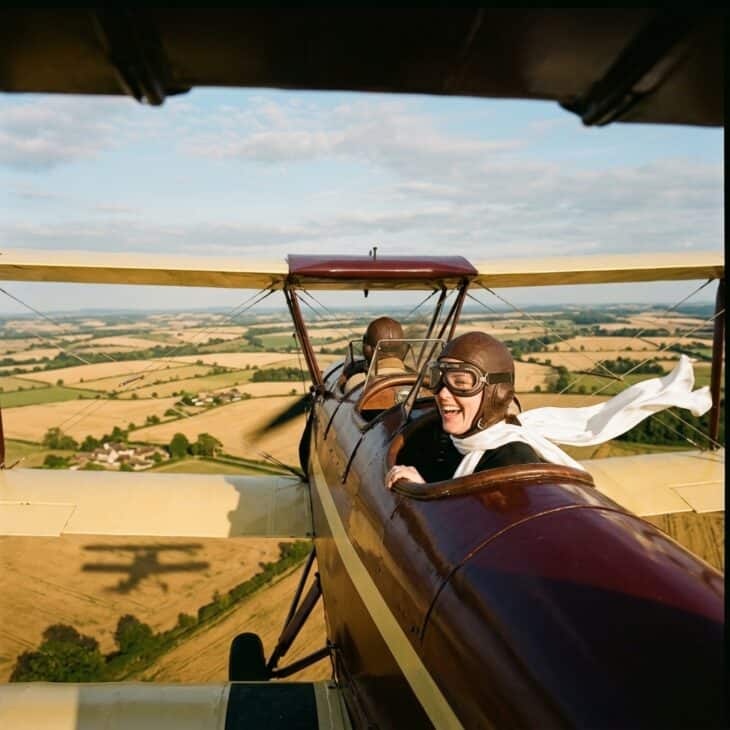
The Experience The wind hits you the moment the biplane lifts off: not the ventilated cabin air of a modern aircraft but actual raw moving air, pushing against your goggles and filling your lungs with something that smells faintly of fabric and dope and warm engine oil. You are in the rear cockpit with the upper wing above your head and a maze of struts and flying wires framing the sky. The pilot ahead of you is separated by a few feet of open air. Below, a patchwork of summer fields unrolls in every direction.
Why it’s worth it Biplane rides are a direct connection to the barnstorming era, when aviation was young, when pilots were daredevils, and when flying in an open aircraft was both terrifying and completely ordinary for those who did it regularly. The sensory experience: the wind, the sound, the smell, the vibration through the seat: is categorically different from anything enclosed. It is the kind of flight that reminds you what made people fall in love with aviation in the first place.
How to do it Biplane rides are offered at many regional air shows and airports with vintage aircraft clubs. Search for biplane experience flights or scenic biplane rides in your region. Operators typically provide leather helmets and goggles for passengers; some will loan you a scarf if you want the full effect. Dress warmly even on summer days, as the open cockpit is significantly colder than the air temperature on the ground suggests. Flights usually last 15 to 20 minutes and follow a scenic route over local landmarks. Hair that cannot be secured should be tied back, and anything in your pockets needs to be secured or left behind: the wind at altitude is unforgiving with loose items.
11. Do a Helicopter Doors-Off Flight Over a City Skyline
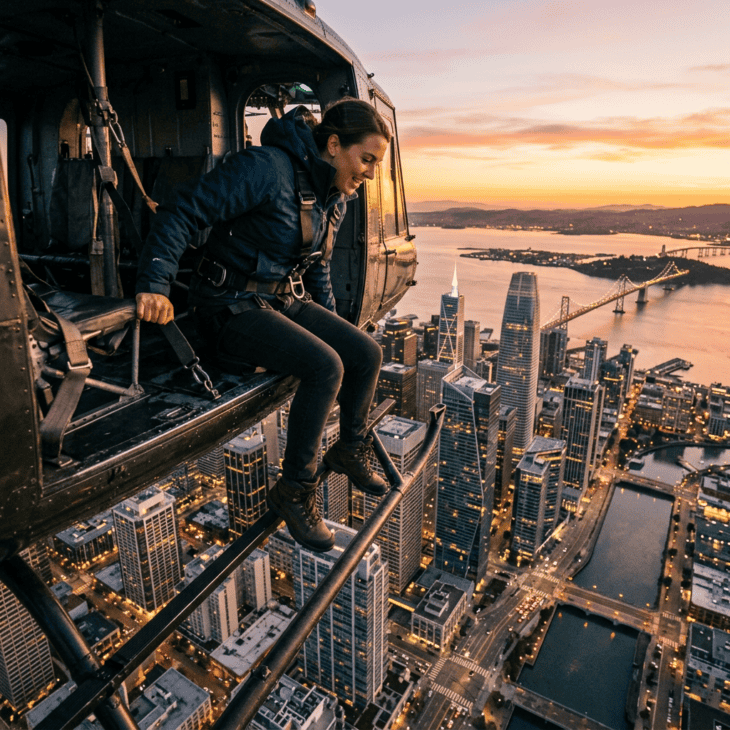
The Experience You are strapped into a four-point harness in the back of a helicopter with no door between you and the sky. The city stretches below: bridges, stadiums, rivers, and towers catching the orange last light of the day. The pilot banks into a turn and the ground tilts directly beneath you, nothing between your feet and the street hundreds of feet below except cold air. It is one of those experiences that makes your nervous system briefly short-circuit before the awe sets in.
Why it’s worth it Doors-off helicopter tours offer unobstructed 360-degree views and the immediate physical sensation of exposure that passengers almost universally describe as more vivid and memorable than any enclosed flight. Major cities look entirely different from 1,000 feet with nothing between you and the view. The experience also delivers genuinely excellent photography opportunities, as there is no glass to reflect flash or distort colors.
How to do it Doors-off helicopter tours are offered in several major cities including New York, Las Vegas, and Honolulu. Search specifically for “doors-off helicopter tour” in the city you plan to visit. All operators require proper harness use and brief passengers on safety procedures before departure. Dress in fitted clothing with no loose scarves or jackets, and leave large bags behind. Cameras and phones should be secured with a strap or lanyard: an unstrapped phone falling into a city from altitude is a genuine hazard. Golden hour and blue hour flights sell out quickly and are worth paying a small premium for the light quality.
12. Take a Scenic Flight Over a Mountain Range
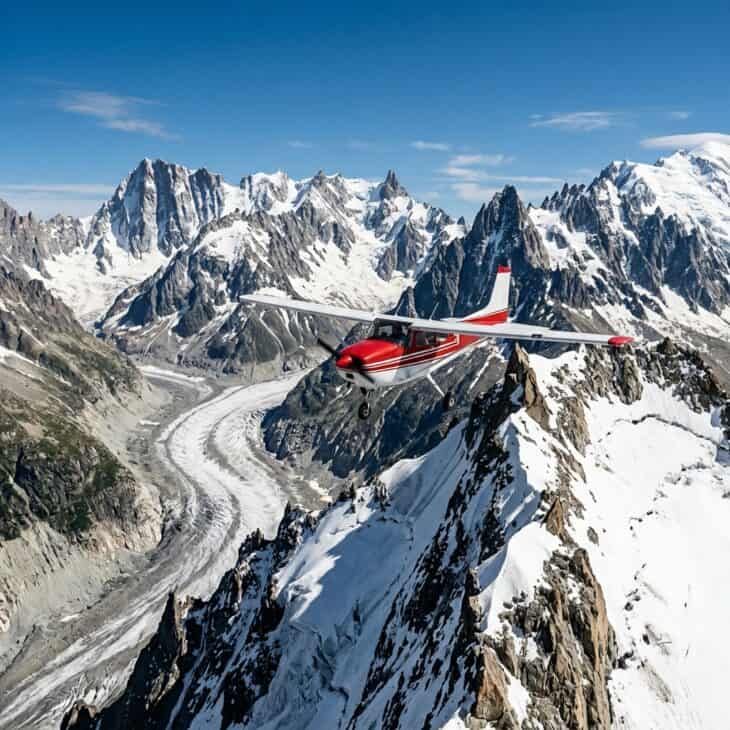
The Experience The aircraft rises above the treeline and the peaks appear: not as distant shapes but as immediate, enormous walls of rock and ice that fill the windshield. A glacier sits in a valley below, its surface blue-white and fractured. The pilot angles toward a pass and threads the aircraft through a gap in the ridge. On the other side, a new valley opens up. Mountains that took hikers days to reach drop away below the wing within minutes of each other. The scale of it is vertiginous in the best possible way.
Why it’s worth it Mountain scenic flights reveal terrain at a pace and from an angle that makes previously abstract places suddenly intimate. Ranges that seem remote and inaccessible by land become approachable and three-dimensional from the air. The Rockies, the Alps, the New Zealand Southern Alps, the Alaska Range: all of them offer commercial scenic operators, and each one delivers a version of the experience that is tailored to its specific geography. Capturing the experience is straightforward for photographers: there is plenty of light, clear air, and dramatic subjects at every heading. If you want to bring your photography to the next level in the air, check out our window seat photo ideas for tips on shooting through aircraft glass.
How to do it Mountain scenic flight operators are found near any major mountain range with regional aviation infrastructure. In the US, Denali flightseeing tours departing from Talkeetna in Alaska are particularly celebrated. Grand Canyon air tours from Las Vegas and Sedona are well-established. The New Zealand Alps offer glacier landing flights that combine scenic flying with an on-ice experience. Book directly with operators for the best pricing and aircraft selection. Morning flights typically have the clearest air and smoothest conditions. Ask about glacier or peak landings: some operators offer this as an add-on and it is absolutely worth the premium.
13. Go Plane Spotting at a World-Class Aviation Hub
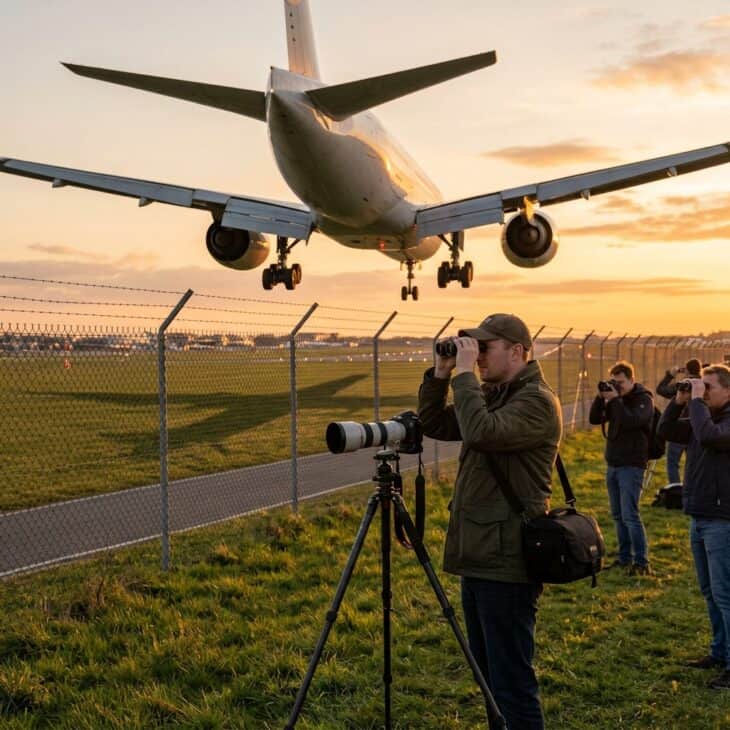
The Experience A widebody airliner appears over the perimeter fence at sunset, enormous and impossibly low, its landing gear down and flaps deployed, the roar building from a low rumble to something that fills your whole chest. It passes overhead close enough to see the tread on the main gear tyres. The moment it crosses the fence, it is on the ground a few seconds later. Then another one appears on the horizon. This will happen every two to three minutes for the next several hours.
Why it’s worth it Plane spotting at a busy hub is one of the most accessible aviation experiences on this list, requiring nothing but transport to the airport perimeter and a few hours of time. The proximity to large aircraft on approach is genuinely startling for anyone who has not experienced it, and the density of traffic at major hubs means there is rarely a dull moment. If you are new to spotting, our plane spotting tips for beginners will help you make the most of your first visit.
How to do it Research your target airport before visiting: aviation enthusiast forums and spotting community websites publish detailed guides to the best viewing locations at most major airports worldwide. London Heathrow, Amsterdam Schiphol, Singapore Changi, Chicago O’Hare, and Los Angeles International are among the most popular destinations for serious spotters. Check the active runway configuration before you go, as the best spotting location depends entirely on wind direction and which runway is in use. Bring a folding chair, water, sun protection, and a charged phone or camera. Check local regulations about what is permitted at the perimeter: rules vary significantly by country and airport. Many airports also offer paid viewing decks or aviation-themed restaurants with direct views of the apron.
14. Watch a Night Air Show with Pyrotechnic Displays
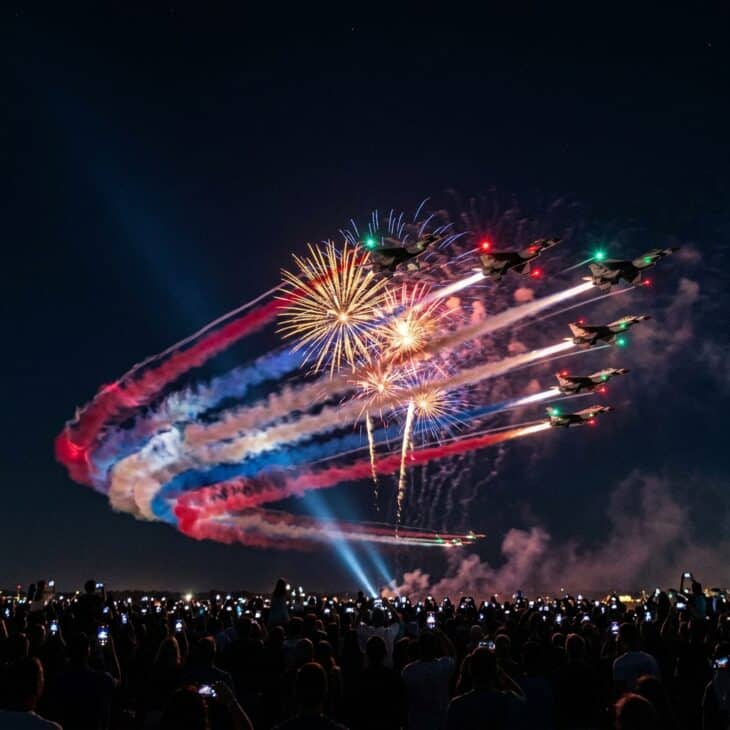
The Experience After dark, the same sky you watched aircraft cross all afternoon becomes something different. Colored smoke trails glow under spotlights. Afterburner flames trace orange and white arcs against pure black. Pyrotechnics burst at ground level as an aircraft climbs directly overhead. The roar is the same as the day show, but surrounded by darkness it reads differently: more raw, more primal, harder to reduce to spectacle. Night air shows have a texture that daytime flying cannot replicate.
Why it’s worth it Night air shows are offered at a relatively small number of events and reward audiences who stay past sunset. The visual contrast of fire and light against a dark sky changes the entire register of the performance. Some events feature aircraft with afterburners; others use flares and pyrotechnic ground effects timed to the performance. Either way, it is an experience that photographs cannot fully capture and that most people who attend describe as the best thing they saw all day even after a full afternoon of flying.
How to do it Not every air show includes a night demonstration: check the event program carefully before planning your trip around it. Events that regularly include night flying include the Royal International Air Tattoo at RAF Fairford in England and certain US military air shows at bases with afterburner-capable aircraft. Find events with night components by searching specific air show program listings rather than general event calendars. Arrive early in the day to get a good vantage point and then hold it through the evening. Bring something warm regardless of the daytime temperature: airport grounds get cold quickly after dark. Camera users should set a long exposure to capture light trails: a tripod or bag rest is essential.
15. Experience a Glider Soaring Flight at Sunset
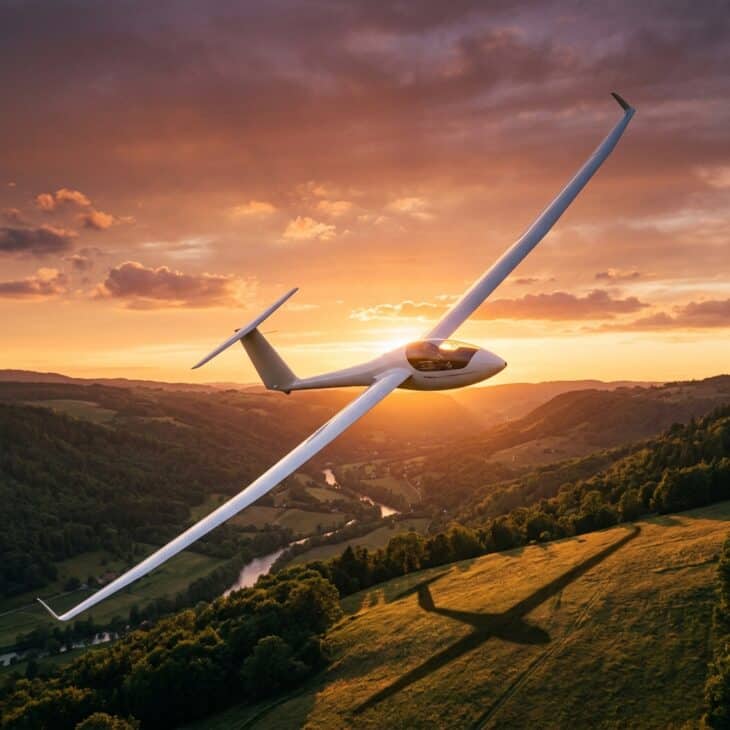
The Experience The towplane drops the tow rope and the glider goes quiet. Not quieter: quiet. The absence of engine sound is so complete that you can hear your own breathing and the faint whistle of air over the canopy. The glider banks into a thermal and begins to climb, circling slowly, rising without power because the air under the wing is moving upward faster than gravity is pulling you down. The sky at sunset turns amber and rose. You have been up for forty minutes and you have not needed an engine to stay there.
Why it’s worth it Glider flying is the closest approximation to what birds actually experience in flight. Without an engine to lean on, the pilot works with the air rather than against it, finding lift in thermals and ridge wave, managing energy over a landscape rather than consuming fuel. For passengers, the silence and the smoothness of thermal soaring create a calm and focus that powered aviation cannot replicate. It is the most meditative item on this list and deserves a spot for that reason alone.
How to do it Glider clubs and soaring centers offer introductory flights in two-seat training gliders at many airports and grass strips worldwide. Call ahead and ask specifically for an introductory flight or air experience flight rather than a brief sightseeing tow. Evening flights at sites with reliable thermal activity often produce the longest and most spectacular experiences. Dress in layers, as the cockpit canopy creates a greenhouse effect at altitude but cools quickly when you bank into shade. Longer introductory flights may cost slightly more but are far superior to brief tow-and-release experiences, so ask about flight duration before booking.
Thermals explained in brief
Thermals are columns of warm air rising from sun-heated ground. Glider pilots circle inside them to gain altitude without power. On a sunny afternoon over farmland, thermals can be strong enough to hold a glider aloft for hours. The trick is finding them, which is as much feel as science.
16. Fly a Long-Haul Route in Business or First Class
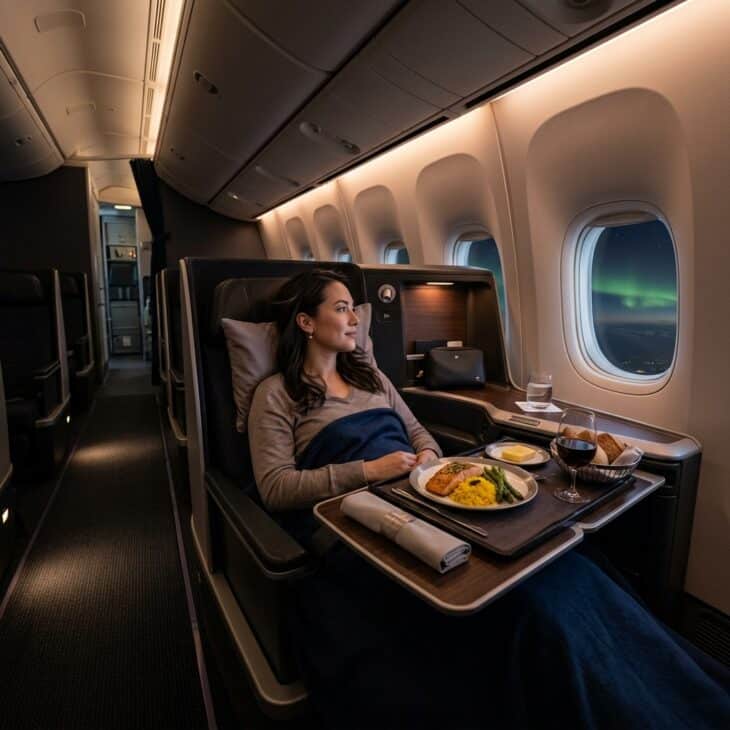
The Experience The cabin goes quiet shortly after departure. You convert your seat into a flat bed, pull a duvet up, and look out the window at 37,000 feet over the dark North Atlantic. Other passengers are already asleep. The cabin lighting is low amber. Outside, the wing nav light pulses green every few seconds against a star field. At some point you sleep and wake to breakfast and a different continent outside the window. This is what it feels like when the journey becomes the destination.
Why it’s worth it Flying long-haul in a premium cabin is worth experiencing at least once not for the bragging rights but for the genuine insight it gives you into what aviation can actually provide when cost is less of a constraint. The engineering that goes into modern business class: flat beds, noise-cancelling architecture, pressurized humidity, personalized service: is a product of decades of competitive pressure to make the longest flights bearable. Anyone who loves aviation should see that product in its current best form. For a comparison of the experience versus other premium travel options, the private jet versus first class breakdown is worth reading before you decide which to try first.
How to do it Long-haul premium cabin tickets are most efficiently accessed through frequent flyer point redemptions rather than cash fares. Research the loyalty programs of the airline you want to fly and work out the redemption math before committing points: some cabins represent extraordinary value against the cash fare, others less so. Routes that offer the best premium cabin experiences include Singapore Airlines’ A380 first class, Japan Airlines business class on trans-Pacific routes, and Qatar Airways Qsuites on medium to long-haul sectors. Book the meal of your choice in advance, choose a window seat in an appropriate configuration, and plan to actually sleep rather than trying to watch every available film. The flight itself is as much the experience as the destination.
17. Visit an Aircraft Boneyard at Dawn
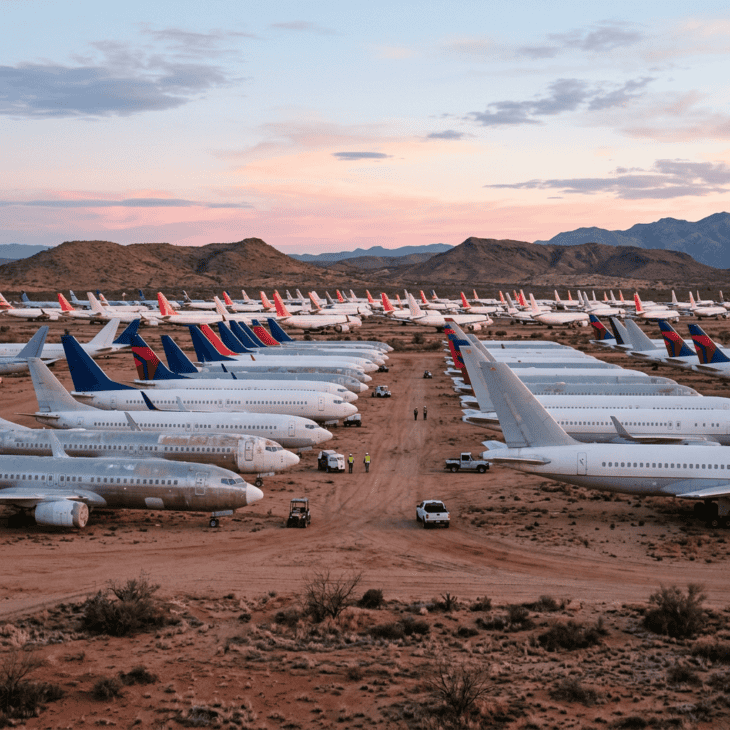
The Experience Hundreds of commercial aircraft in rows across the flat desert, some wrapped in white cocoons against the sun, others bare aluminum that has begun to show the patina of years in storage. A few have missing engines. Some have had sections removed for parts. The light at dawn is pink and clean and the aircraft throw long shadows east. The scale of it is staggering: this many aircraft in one place, grounded, silent, waiting. Some will fly again. Many will not.
Why it’s worth it Aircraft boneyards, or aircraft storage and maintenance facilities to use the more neutral term, are where the economics of aviation become visible in a way that normal operations conceal. The Sonoran Desert in Arizona is dry enough to preserve aluminium structures almost indefinitely, which is why the largest civilian storage facilities are concentrated there. Visiting one gives you a completely different relationship to commercial aviation: these machines that you have always seen in perpetual motion suddenly become very specific, very countable objects with individual histories. It is quietly one of the most affecting experiences in this list.
How to do it The largest publicly accessible boneyard facility in the United States offers tours on specific days: check the schedules of aircraft storage and recycling companies operating near Tucson, Arizona for current public tour availability. Some tours are bus-based with no walking on the ramp; others allow closer access under escort. Tours typically last two to three hours and cover the history of the facility as well as the current inventory. Arrive at the scheduled meeting point ahead of time; boneyard tours do not wait for late arrivals. Photography policies vary: some facilities allow personal photography freely, others restrict it to certain areas. Early morning visits during cooler months are most comfortable in the desert climate.
18. Try an Airliner Flight Simulator Session
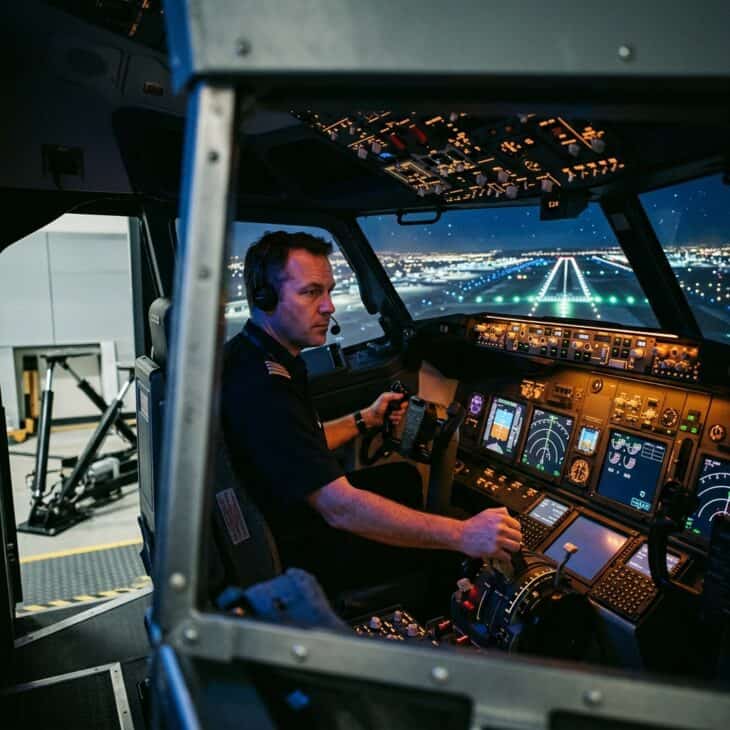
The Experience The wraparound visual display shows a night approach to a major airport, runway lights drawing a bright line in the dark. The motion platform tilts as you roll onto final and the seat pushes against you as you pull back on the yoke. The yoke has weight and feedback. The throttles move with resistance. The aircraft responds to your inputs with a fidelity that makes you immediately understand why these devices cost tens of millions of dollars to build. You are not flying but you are not not flying either.
Why it’s worth it Full-motion Level D flight simulators are the devices that airline pilots use for type rating training, emergency procedure practice, and recurrency checks. Getting access to one as a civilian is a surprisingly realistic and surprisingly accessible bucket list item. The motion systems, the visual fidelity, and the exact replica cockpit create an experience that is as close as most people will ever get to sitting in the left seat of a widebody airliner. There are several types of flight simulators at different fidelity levels; a Level D full motion device is the one worth seeking out for this experience.
How to do it Several companies around the world offer paid public access to Level D full-motion simulators, typically on a per-hour basis with an experienced instructor or operator present. Search for “airline simulator experience” or “Level D simulator experience” in major cities: operators are common in London, Dubai, Hong Kong, and several US cities. Sessions typically last one to two hours and include a briefing, a takeoff, cruise, and a landing or two. You do not need any prior flying experience; the instructor manages the complex systems while you focus on attitude and basic control inputs. Book well in advance as simulator time is limited and popular slots fill quickly. Prices reflect the extraordinary cost of the equipment, so treat it as the premium experience it is.
19. Complete Your First Night Cross-Country Flight as a Pilot
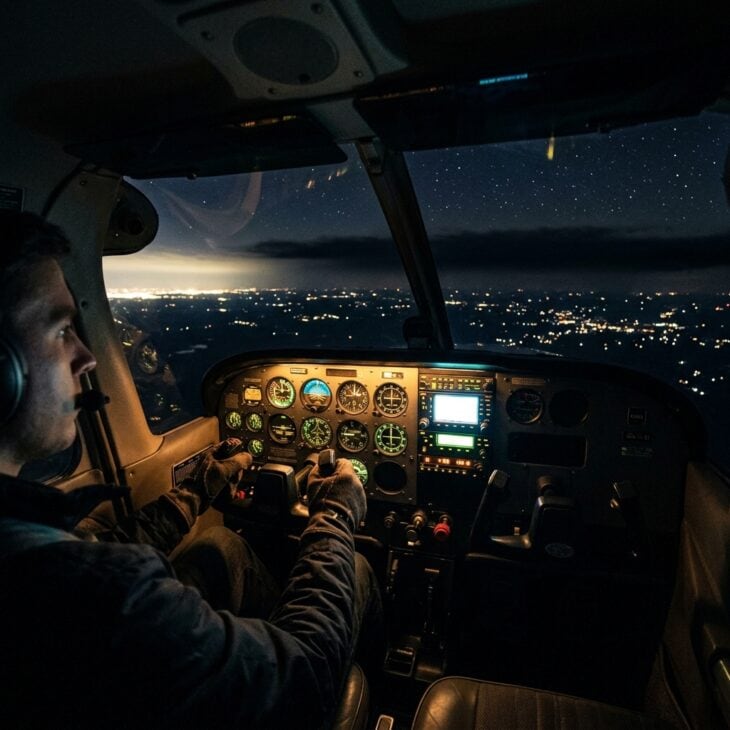
The Experience After dark, the landscape becomes a map of light. Towns and highways emerge as geometric grids and orange rivers. Cities glow on the horizon long before you reach them. The instrument panel is the only interior light, washing your hands and the yoke in amber and green. The sky above is deeper black than you have ever seen it from the ground. You navigate by light patterns below and stars above and the GPS confirming what you already know. Night cross-country flying is the most beautiful flight in the logbook.
Why it’s worth it Night flying requires a separate endorsement in most training systems because it uses different visual cues, different navigation habits, and different emergency thinking than daytime VFR. Completing a night cross-country flight as a qualified pilot means you have earned access to a version of aviation that most people never see. The world looks entirely different from 5,000 feet after dark, and the competence required to do it safely makes the experience richer for having been earned.
How to do it Night flight training is included in most private pilot curricula and requires a specific endorsement for solo night flight. Work with your instructor to plan a night cross-country of reasonable length, with a destination airport that has good lighting and a weather forecast that shows clear conditions through your planned return time. File a flight plan, even if not legally required: it adds a safety net and gives you practice with procedure. Bring a reliable flashlight or red-light headlamp for cockpit use during power-related emergencies, and ensure your aircraft’s lighting and instruments are fully functioning before departure. Your first solo may be the milestone you remember longest, but your first solo night cross-country is the one you will describe to other pilots for the rest of your flying life.
20. Fly Over Your Hometown in a Light Aircraft
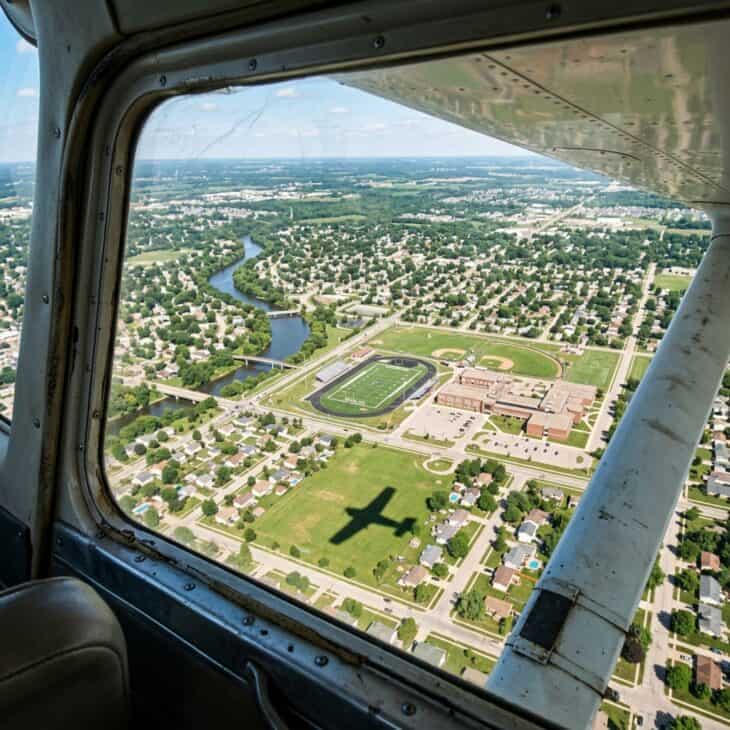
The Experience You have driven these streets every day of your life, but from 3,000 feet they are barely recognizable and immediately, completely familiar at the same time. The school you went to is a set of beige rectangles next to a green sports field. The main street is shorter than you thought. The river you used to fish in is a thin silver thread. The neighborhood you grew up in fits inside the window. You can see four of the places that matter most to you at once. Nothing makes home more legible than altitude.
Why it’s worth it Flying over a place you know intimately is a peculiar and specific kind of beauty. The familiar becomes strange; the strange becomes yours. For pilots who learned to fly away from home, making the trip back in a light aircraft to circle the town you grew up in is one of those experiences that does not need explanation to anyone else who has done it. For non-pilot passengers, chartering a local scenic flight with this specific request is a perfectly reasonable and often deeply satisfying thing to do.
How to do it If you are a pilot, plan the flight yourself with a simple local route that takes in the landmarks you most want to see from above. If you are a passenger, contact a local flight school or charter company and explain that you want a scenic flight specifically over your hometown: most operators are happy to accommodate specific requests. Bring a phone or camera with a good zoom: wide shots of the town are satisfying but close detail of familiar streets is what stays with you. Morning light is better for photography over towns; afternoon light can wash out the colors of suburban rooftops. Ask the pilot to orbit your specific address or childhood school if you want the full effect.
21. Do a Seaplane Discovery Flight
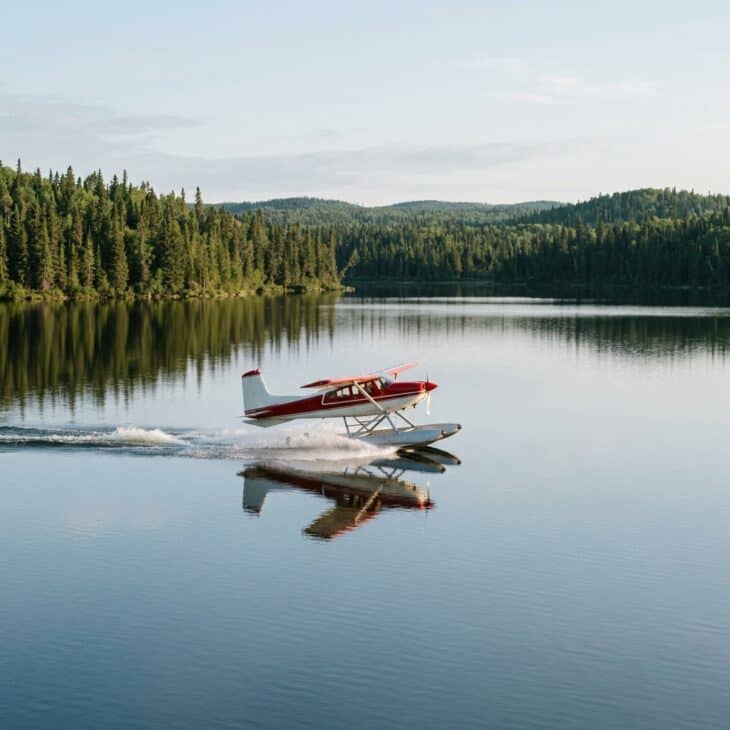
The Experience The seaplane taxis away from the dock onto the open water. The engine builds to full power and the aircraft accelerates, the floats cutting through the lake surface and throwing white spray to each side. Then the nose lifts, the spray stops, and you are flying. The transition from water to air is abrupt in the most satisfying way: one second you are a boat, the next you are an aircraft. The lake you just left shrinks to a mirror below you.
Why it’s worth it Seaplane flying introduces a set of considerations that land-based aviation simply does not prepare you for: water depth assessment, current and wind interaction on the surface, dock handling, and the unique demands of water takeoffs and landings. The difference between a seaplane and a float plane is primarily one of design, and exploring that world in a discovery flight gives you a sense of how broad general aviation actually is beyond the airport fence. The combination of water and air means every seaplane flight starts and ends at a waterfront rather than a runway, which immediately changes the aesthetic of the entire experience.
How to do it Seaplane discovery flights and add-on seaplane ratings are offered by operators in coastal and lake regions worldwide. The Florida Keys, the Pacific Northwest, the Upper Midwest lake country, the Maldives, and Finland all have established seaplane operators offering introductory flights. Call ahead to confirm the specific aircraft and route: some operators use fixed-float planes on a lake base; others use amphibians that can operate on both water and land. Wear shoes that can get wet. The pre-flight check includes walking the floats to inspect them, which typically means stepping out onto the aircraft above the water. A seaplane rating adds only a handful of hours to a land pilot’s certificate and is one of the most useful and enjoyable add-ons in general aviation.
22. Fly Into a Remote Backcountry Airstrip
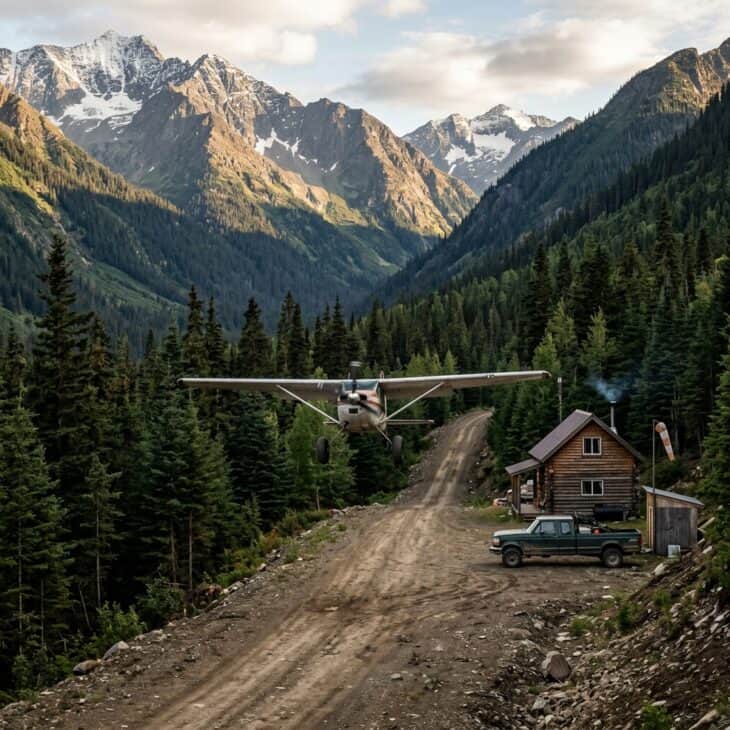
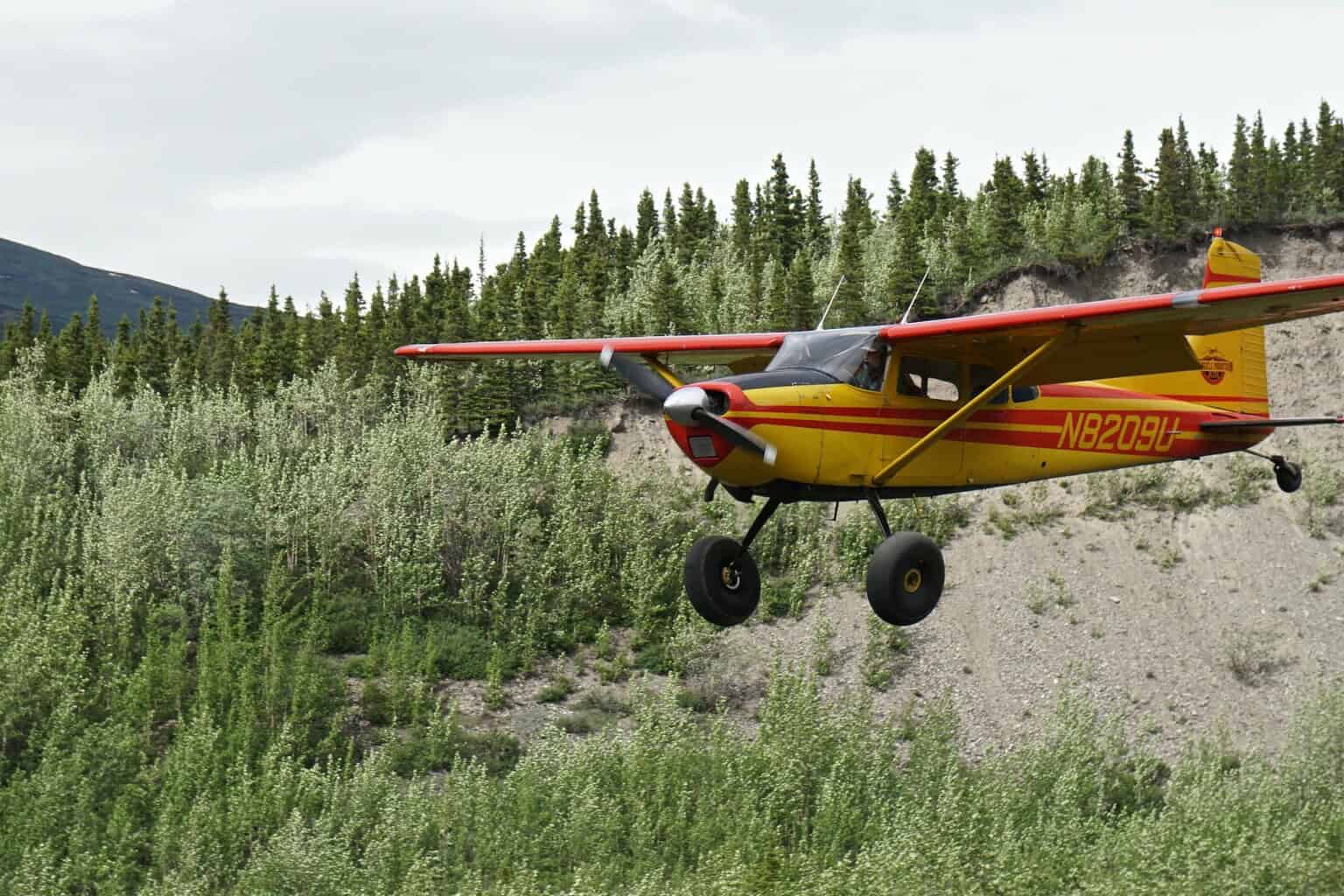
The Experience The strip appears in a mountain valley between trees: narrow, uphill, and short. The pilot adjusts power and attitude with the precision of long practice, threading the aircraft between the treeline on each side and touching down on dirt and grass, braking uphill to stop well short of the cabin at the far end. Outside the aircraft, silence. No pavement, no tower, no fuel truck. Just mountains and trees and the click of the cooling engine. You reached somewhere genuinely remote in a light aircraft, which is exactly what backcountry aviation was built for.
Why it’s worth it Backcountry flying is a discipline that demands specific training, high proficiency, and constant situational awareness, but the access it provides is unlike anything else in aviation. Remote forest camps, mountain hunting lodges, river fishing access, high-altitude meadows: the backcountry airstrip is where the practical utility of general aviation becomes most dramatically visible. Flying into one as a passenger with a qualified backcountry pilot is one of the most visceral aviation experiences available to someone without specialist training.
How to do it Backcountry charter operators are found primarily in Alaska, Idaho, Montana, and other western US states with significant wilderness. Similar operations exist in northern Canada and parts of New Zealand. Search for backcountry fly-in fishing or hunting charters, or look for wilderness lodge operators that use light aircraft for access: these will connect you with the appropriate pilots and aircraft. As a passenger, trust your pilot entirely on weather and landing decisions: they know these strips and their limits far better than any checklist can convey. Bring only what you can carry in a soft bag; a 30 to 40 pound limit per person is common on small backcountry aircraft. If you are a pilot yourself, backcountry specific training courses are offered at several Idaho and Montana airports and represent some of the most rewarding flying instruction available at any experience level.
23. Witness a Rocket or Space Launch in Person
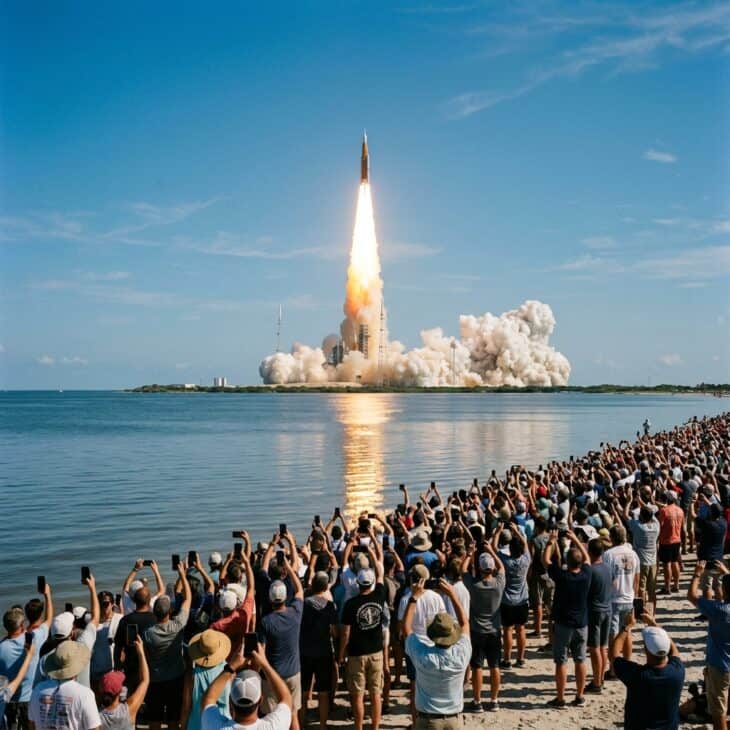
The Experience At first it is a column of fire on the horizon, silent, because the sound takes a few seconds to arrive. Then it comes: a low bass rumble that builds until you can feel it in your chest and your teeth and the ground under your feet. The rocket climbs on its own light, impossibly fast, already a bright point high above the cloud deck before the full roar has finished arriving at the viewing area. The crowd is completely silent during the ascent. Then, all at once, everyone speaks at the same time.
Why it’s worth it For anyone who traces their love of aviation back to the broader human relationship with flight, a rocket launch is the natural terminus of the bucket list. It represents the point where the atmosphere ceases to be a medium and becomes an obstacle, and where the engineering descended from everything in aviation history is most dramatically on display. Space tourism is evolving rapidly, but watching a launch from the ground remains the most immediate and accessible way to experience the scale of what getting off Earth actually requires.
How to do it Public viewing areas for rocket launches are located near major launch facilities in Florida’s Space Coast, Vandenberg Space Force Base in California, and international sites including Baikonur in Kazakhstan and Kourou in French Guiana. Launch schedules are posted publicly by space agencies and commercial operators, but delays are extremely common and launches can slip by days or weeks: plan for flexibility in your travel schedule if you want a high probability of witnessing a real launch. The Kennedy Space Center visitor complex offers structured launch viewing packages with transportation and commentary included. Check launch-specific forums and tracking sites for real-time status updates; informal viewing from beaches and parks along the Space Coast is free and often produces excellent sightlines for major orbital launches.
24. Spend a Night at a Fly-In Community or Airpark
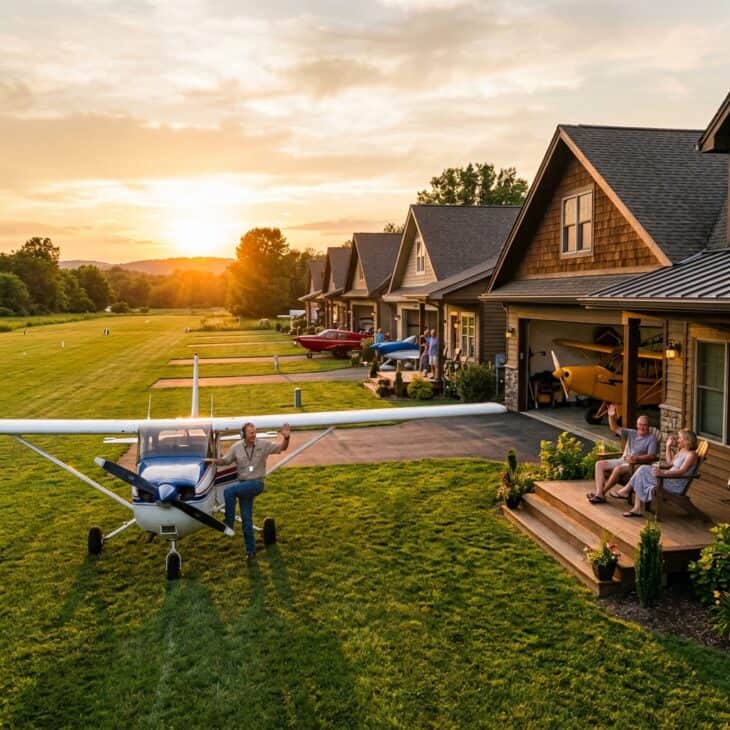
The Experience Houses with hangars instead of garages. Aircraft parked on lawns. A grass strip running down the center of the neighborhood instead of a main road. Children riding bikes past a Piper that someone is washing on their driveway. The evening air smells faintly of avgas. Neighbors call across the strip to each other about runway conditions and tomorrow’s weather. An airpark is a neighborhood organized around the assumption that everyone who lives there either flies or understands the ones who do. It is a very specific kind of paradise.
Why it’s worth it Spending time in a fly-in community is the aviation equivalent of a sailing village or a ski town: a place whose entire character is shaped by a shared relationship with a mode of travel. It normalizes aviation in a way that spending time at airports does not. Aircraft are woven into the domestic rhythm here, arriving and departing the same way cars come and go in ordinary neighborhoods. For anyone who has ever imagined what it would be like to live close to flying, an overnight stay at a fly-in community is an illuminating preview.
How to do it Airpark communities exist across the United States and in several other countries. Spruce Creek in Florida, Jumbolair in Florida, and numerous smaller communities throughout the Midwest and Mountain West offer various levels of public access and visitor accommodation. Some airparks have rental homes or lodge accommodation available; others are best accessed by attending a fly-in event hosted by the community. Pilot friends who live at airparks are your best route to an invitation for a real stay. If you want to experience the atmosphere without owning aircraft or knowing a resident, look for EAA chapter fly-in breakfasts at grass strip communities: these are typically open to the public, free or low-cost, and give you a few hours of the airpark atmosphere in a welcoming environment.
25. Fly a Polar Route and Look for the Northern Lights
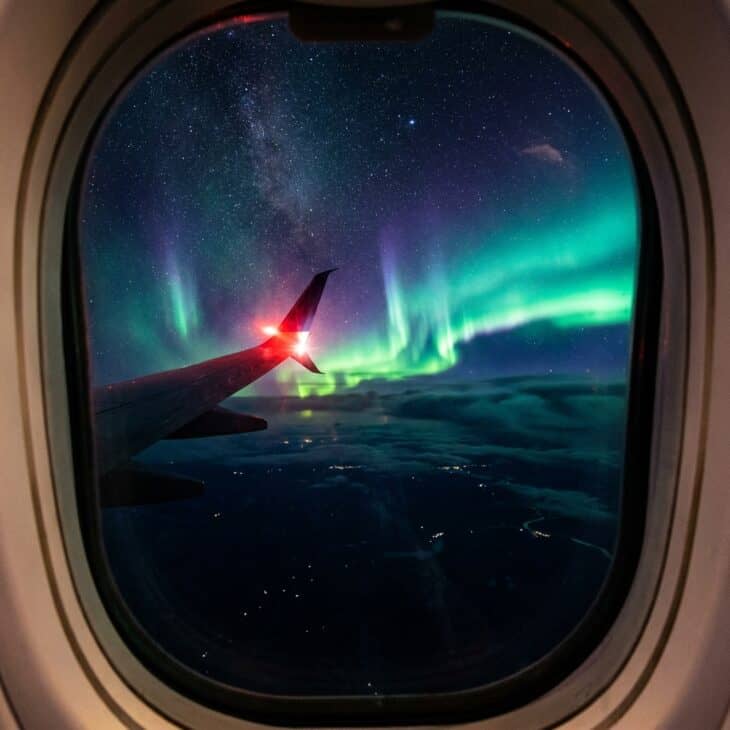
The Experience Somewhere over Greenland at 35,000 feet, the passenger beside you is asleep and you have the window shade up for no particular reason. Then you see it: green and violet ribbons moving slowly across the sky, brighter than you expected, cleaner, continuous. The nav light on the wing pulses green every few seconds against the aurora. Below there is nothing, no light, no land, no cloud: just darkness to the horizon. Above you, the lights shift and fold. You are seeing the aurora from inside the atmosphere at altitude, which is a category of experience that simply did not exist for any human being before commercial aviation made polar routes routine.
Why it’s worth it The best way to describe looking for the aurora on a polar route is this: commercial aviation at altitude reduces the atmosphere between you and the phenomenon. You are above most of the haze, above most of the light pollution, flying at high latitudes where the aurora oval is directly overhead. Whether you see it depends on solar activity, flight timing, cloud cover at altitude, and luck: but every one of those factors is knowable and plannable. It is one of those experiences that requires no special equipment, no pilot certificate, and no budget beyond an economy seat: just the right route and the right night.
How to do it Trans-polar and high-latitude routes from North America to Europe and Asia, and from Europe to Japan, regularly pass through or near the auroral oval. Routes flying between the northern US or Canada and Scandinavia, or between the UK and Japan via the polar path, offer the best probability. Book a window seat and check the solar activity forecast in the days before your flight using real-time aurora forecasting tools: a Kp index above 4 significantly increases your chances of a visible display from altitude. Request or select a seat on the side of the aircraft facing away from city lights on the flight tracker route. Reduce cabin brightness by covering your window briefly before looking out; give your eyes a few minutes to adjust to the dark. Travel to long-haul destinations by a connecting hub through northern cities in winter and keep the window shade up during overnight cruise: the odds improve considerably if you simply stay awake and look.
FAQ
Sources and references used for research and fact-checking.
- Discovery Flight Programs - Aircraft Owners and Pilots Association (AOPA)
- EAA AirVenture Oshkosh Official Site - Experimental Aircraft Association
- Private Pilot Certification Overview - Federal Aviation Administration
- Northern Lights Forecasting - NOAA Space Weather Prediction Center
- Seaplane Pilots Association - Seaplane Pilots Association
Get the Newsletter
The latest aviation news and stories sent to your inbox.
About the Author

Hanna writes AeroCorner's aviation-lifestyle and decor guides, turning a love of flight into ideas for your home, celebrations, and gift lists.