

Table of Contents
Aviation living room decor can be bold enough to stop a guest at the door or quiet enough to reveal itself one detail at a time. The strongest rooms capture the feeling of flight without filling every surface with airplane souvenirs.
That might mean a sectional chart beneath glass, a sculptural propeller above the sofa, or simply a palette of navy, aluminum, leather, and cloud white. Good materials and useful furniture make the theme feel collected rather than staged.
These 25 ideas cover modern apartments, vintage homes, family rooms, rental-friendly spaces, and serious collections. Choose one focal point first, then support it with smaller aviation details that share its colors, era, or finish.
01. Sectional Chart Coffee Table
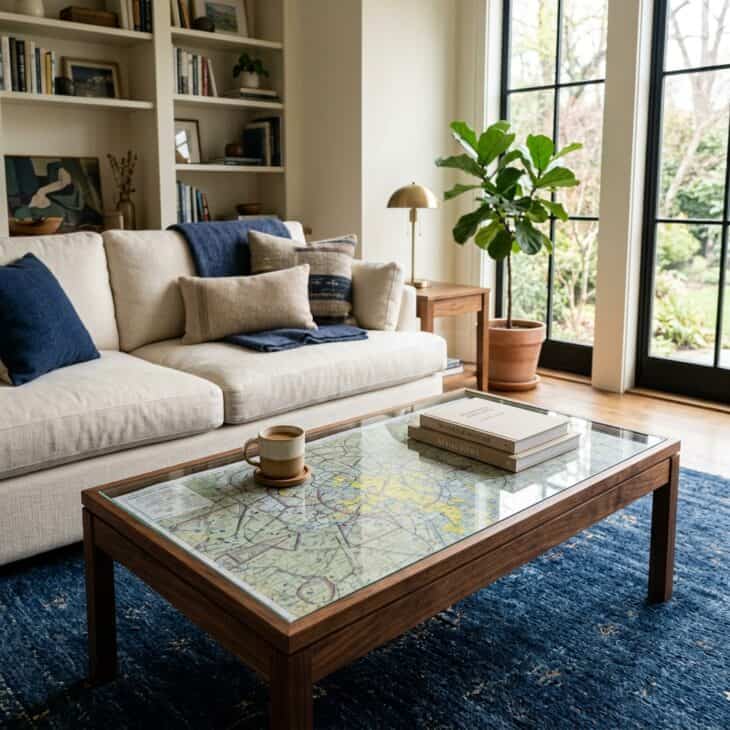
What you see A colorful sectional chart rests beneath the glass top of a warm walnut coffee table. Cream upholstery and a navy rug quiet the chart’s busy pattern while leaving it easy to study.
Why it works The chart supplies color, detail, and a personal sense of place without taking over a wall. It turns useful floor space into a conversation piece and fits naturally beside other vintage aviation decor.
How to get it Use an expired chart for decoration and reserve current editions for navigation. Flatten it carefully, place it on an acid-free backing board, and protect it with a removable glass or acrylic top. If the chart has personal or historic value, display a high-quality reproduction and store the original away from light.
02. Propeller Above the Sofa
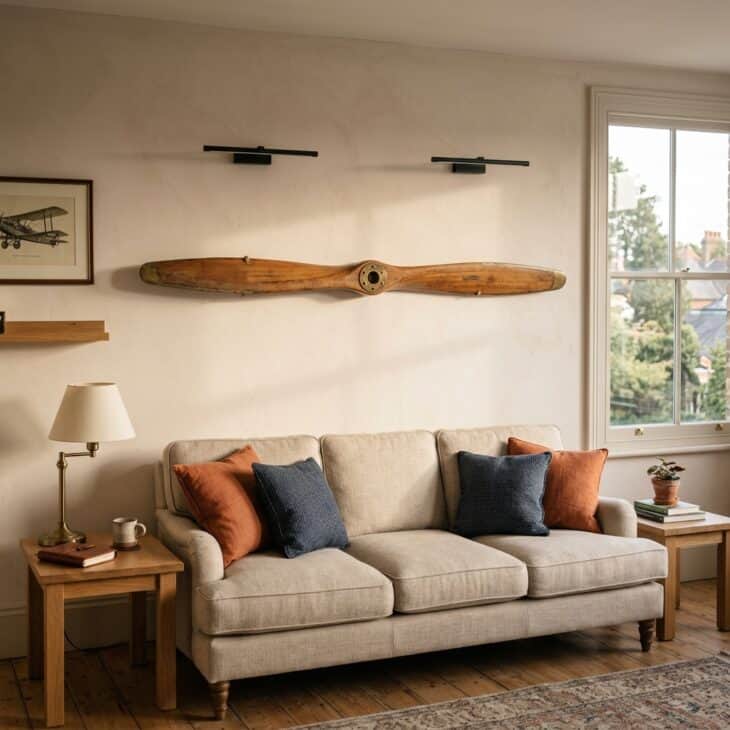
What you see A single laminated wood propeller spans the wall above a simple oatmeal sofa. Navy and rust cushions echo its dark hub and warm grain without adding more aircraft shapes.
Why it works The long horizontal form suits the proportions of a sofa and establishes the theme immediately. Because the rest of the wall stays clear, the propeller reads as sculpture rather than memorabilia.
How to get it Choose a lightweight reproduction unless a real decommissioned propeller has verified provenance and safe mounting points. Center it over the sofa, leaving comfortable visual space above the back cushions. Fasten the brackets into wall studs or appropriate anchors, and keep the piece beyond easy reach of children.
03. Airport Lounge Reading Corner
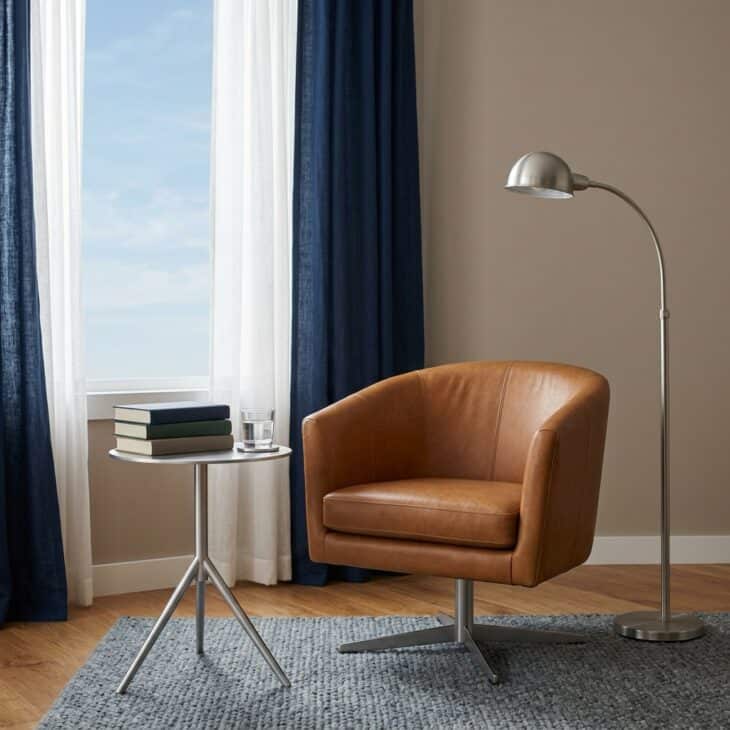
What you see A caramel leather swivel chair sits beside a brushed aluminum table and a slim floor lamp. Navy curtains, blank clothbound books, and a clear sky view give the corner the polished calm of a good airport lounge.
Why it works The reference comes through comfort, materials, and mood rather than novelty objects. It also creates a useful destination for reading, listening, or planning the next trip.
How to get it Start with one supportive swivel or club chair and a side table large enough for a book and drink. Add a shaded lamp that throws light across the page without glaring into the room. Finish with two or three favorite aviation books and one restrained flight photograph.
04. Vintage Travel Poster Trio
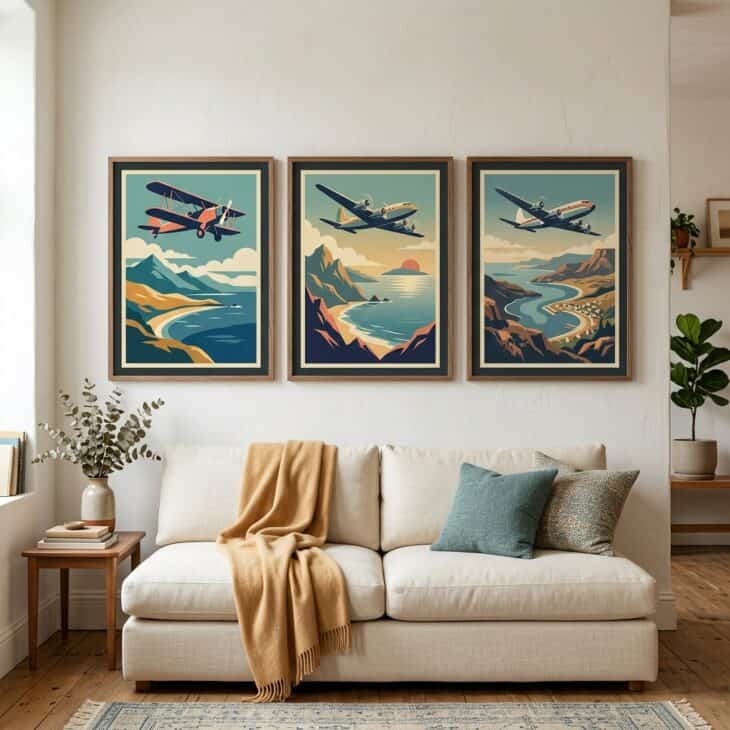
What you see Three coordinated posters show an abstract aircraft, mountains, and a bright coastline in softened teal, ochre, coral, and navy. Thin walnut frames keep the row warm and consistent.
Why it works Repetition gives a large wall structure while the changing scenery prevents the display from feeling mechanical. The format is an easy entry into broader aviation wall art because it works with standard frames.
How to get it Select prints from the same artist, era, or limited palette. Use matching mats and frames, then hang the centers at a consistent eye level with equal spacing. Protect valuable originals from strong daylight and use reproductions in a sunny room.
05. Floating Wing Shelf
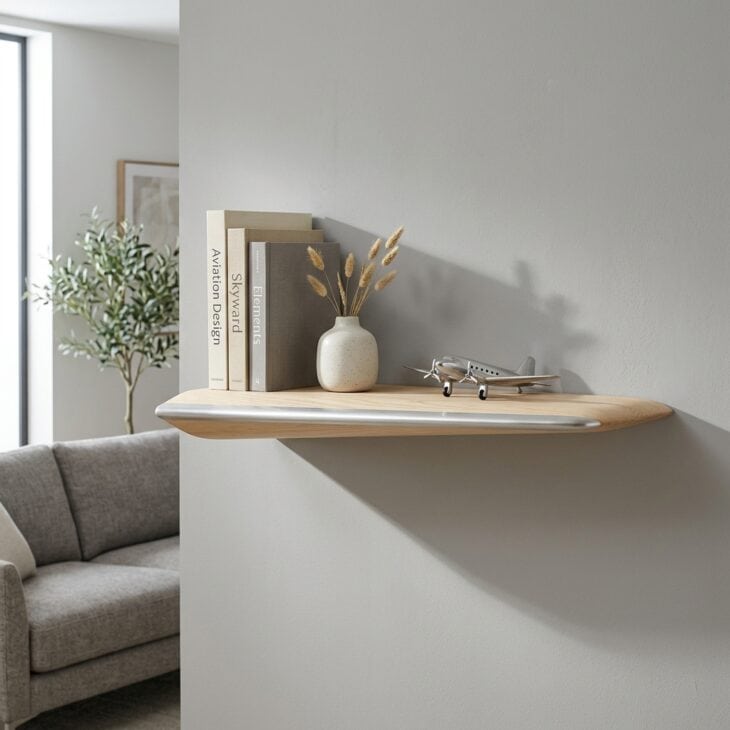
What you see A pale wood shelf tapers like a wing and ends in a thin brushed aluminum edge. Books, one ceramic vessel, and a small model leave enough empty space for the shape to remain visible.
Why it works The reference is built into a useful object, so the room feels designed rather than decorated with a theme. Its long clean line also balances the heavier forms of a sofa and media cabinet.
How to get it Buy a wing-inspired shelf or have a carpenter taper a thick board and add a metal edge. Mount the support directly into studs and respect the maker’s load rating. Style it with only a few light objects so the profile stays clear.
06. Model Aircraft Console Display
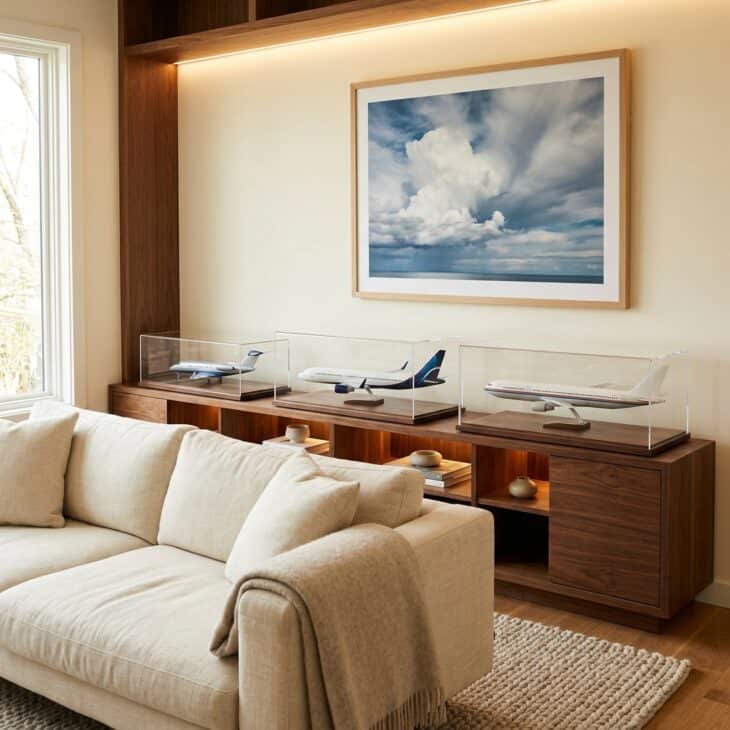
What you see Three generic model aircraft occupy separate zones on a long walnut console, each protected by a clear cover. Warm lighting and an abstract cloud photograph give the display a quiet museum quality.
Why it works Limiting the display to a few pieces gives every silhouette room to register. It follows the strongest model airplane display principle: edit the collection before styling the furniture.
How to get it Choose models with different wing shapes or aviation eras but a consistent finish. Use risers to vary their heights and acrylic covers where dust or curious hands are a concern. Anchor the console to the wall, especially in homes with children, and store heavier items on lower shelves.
07. Runway Stripe Area Rug
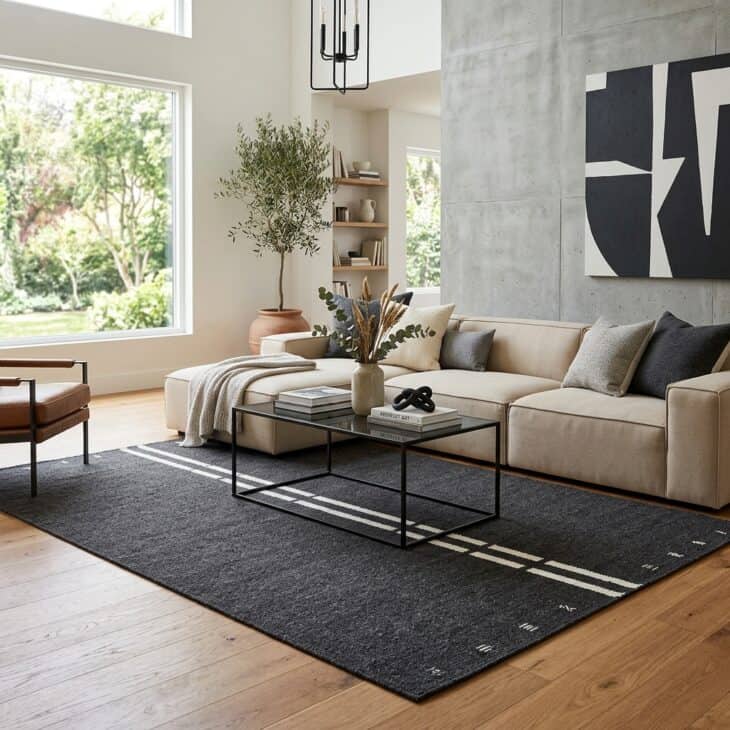
What you see A charcoal wool rug carries two broken white lines through the center of a modern seating group. The marking is abstract enough to feel graphic first and runway-inspired second.
Why it works The stripes lead the eye through the room and visually connect furniture on opposite sides. A mostly neutral palette keeps the floor from competing with art or models.
How to get it Look for a charcoal flatweave rug with simple broken lines or commission a custom bound carpet. Size it so at least the front legs of the seating rest on the rug. Add a non-slip pad and avoid copying actual runway numbers, airport codes, or complex markings.
08. Cockpit Instrument Shadow Box
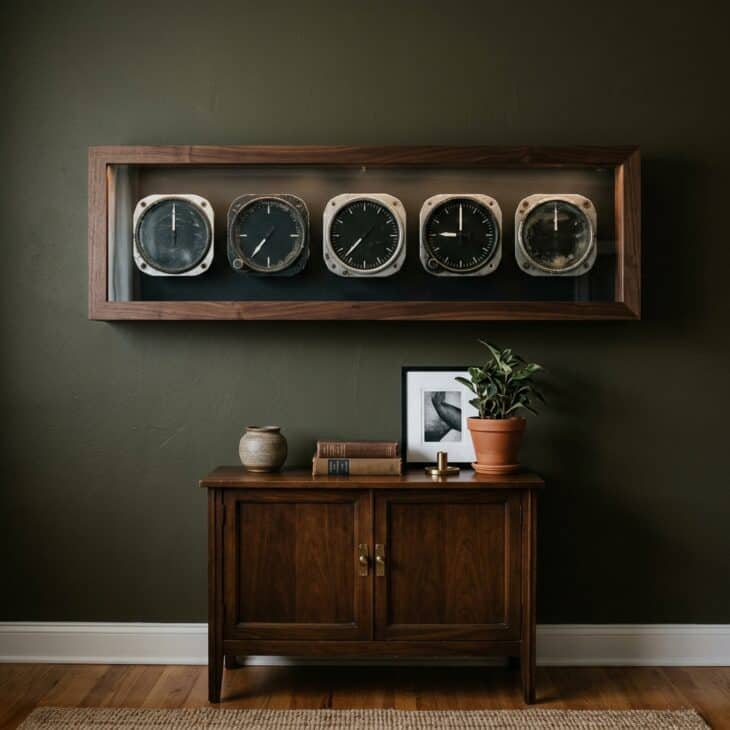
What you see Five round black instrument faces sit in a deep walnut box with their metal bezels catching a narrow wash of light. The olive wall behind it makes the dark panel feel integrated with the room.
Why it works Repetition gives the technical pieces rhythm, while the frame turns them into one calm object. The display rewards anyone familiar with cockpit instruments but still works as industrial art.
How to get it Use decorative replicas or properly decommissioned instruments from a reputable seller. Mount them to a removable backing board so no piece carries its own weight on the glazing. Have an electrician inspect any lighting or wiring, and display unknown vintage parts sealed rather than modifying them.
Build around one aviation focal point
Choose the chart table, propeller, model display, or instrument box first. Let every other aviation detail support its era and finish, then leave enough ordinary furniture and empty space for the room to breathe.
09. Cabin Window Mirror Pair
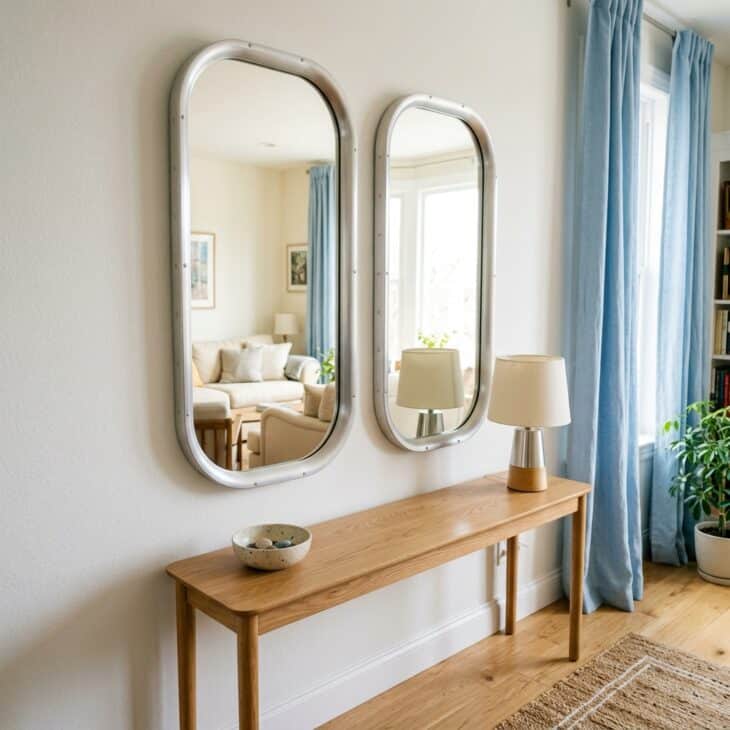
What you see Two softly rounded oval mirrors sit above an oak console like neighboring cabin windows. Their aluminum frames reflect sky-blue curtains and make the wall feel brighter.
Why it works Mirrors add depth to a small room and make a recognizable aviation shape functional. A pair feels architectural, while a longer row can create a playful cabin effect in a family room.
How to get it Choose oval mirrors with shallow metal frames and safety-backed glass. Hang them at the same height with generous spacing so each shape reads clearly. Keep the reflected view tidy, and avoid placing them where direct sun could create uncomfortable glare.
10. Aircraft Blueprint Media Wall
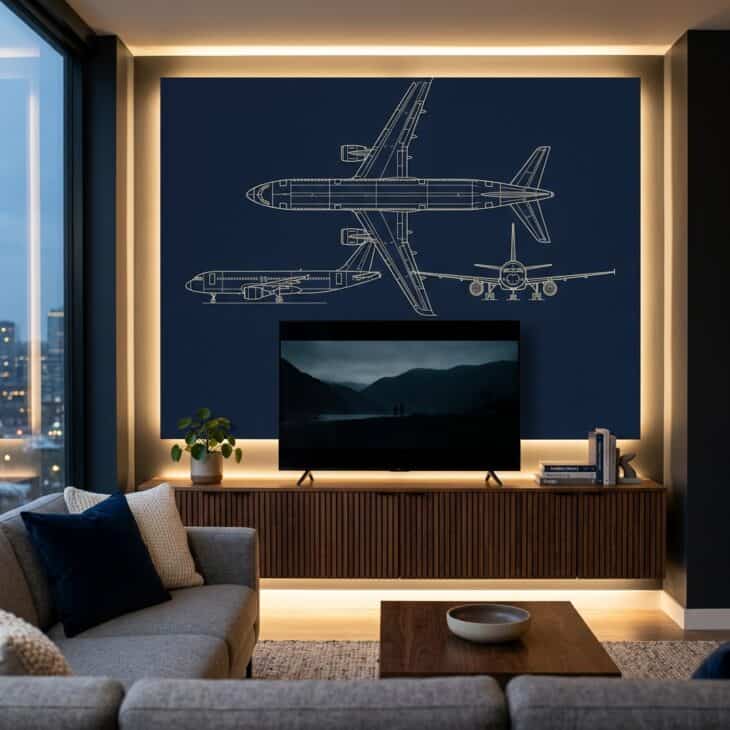
What you see Fine cream lines describe a generic aircraft from above, the side, and the front on a deep navy panel. Walnut cabinets and concealed lighting keep the television wall composed when the screen is off.
Why it works The technical drawing matches the rectangular logic of a media unit and fills the surrounding wall without many small frames. Navy also helps the black screen recede visually.
How to get it Print a licensed or public-domain three-view drawing at a scale wider than the television. Mount it on a rigid panel or use removable wallpaper if you rent. Keep speakers and vents clear, then hide power and media cables in a rated channel.
11. Aviator Leather and Navy Palette
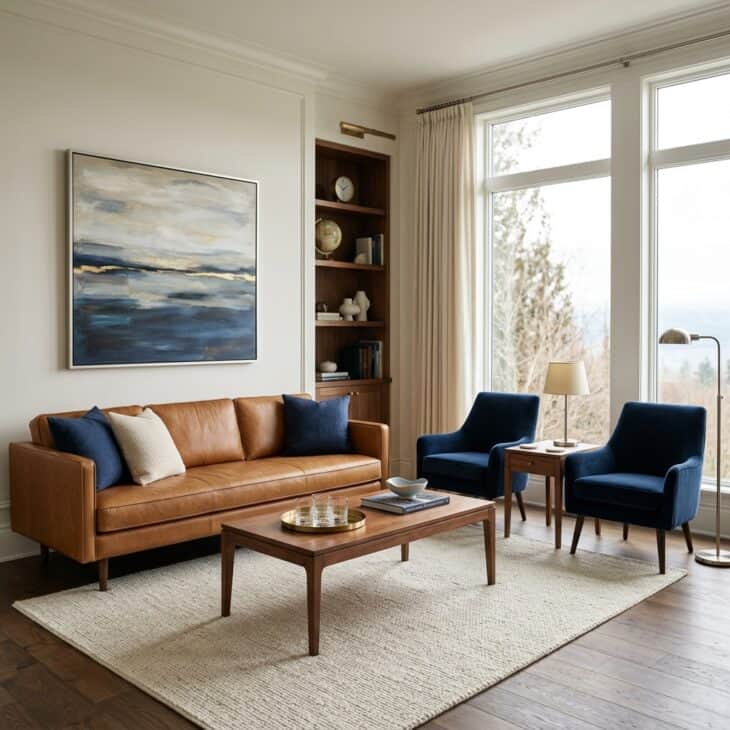
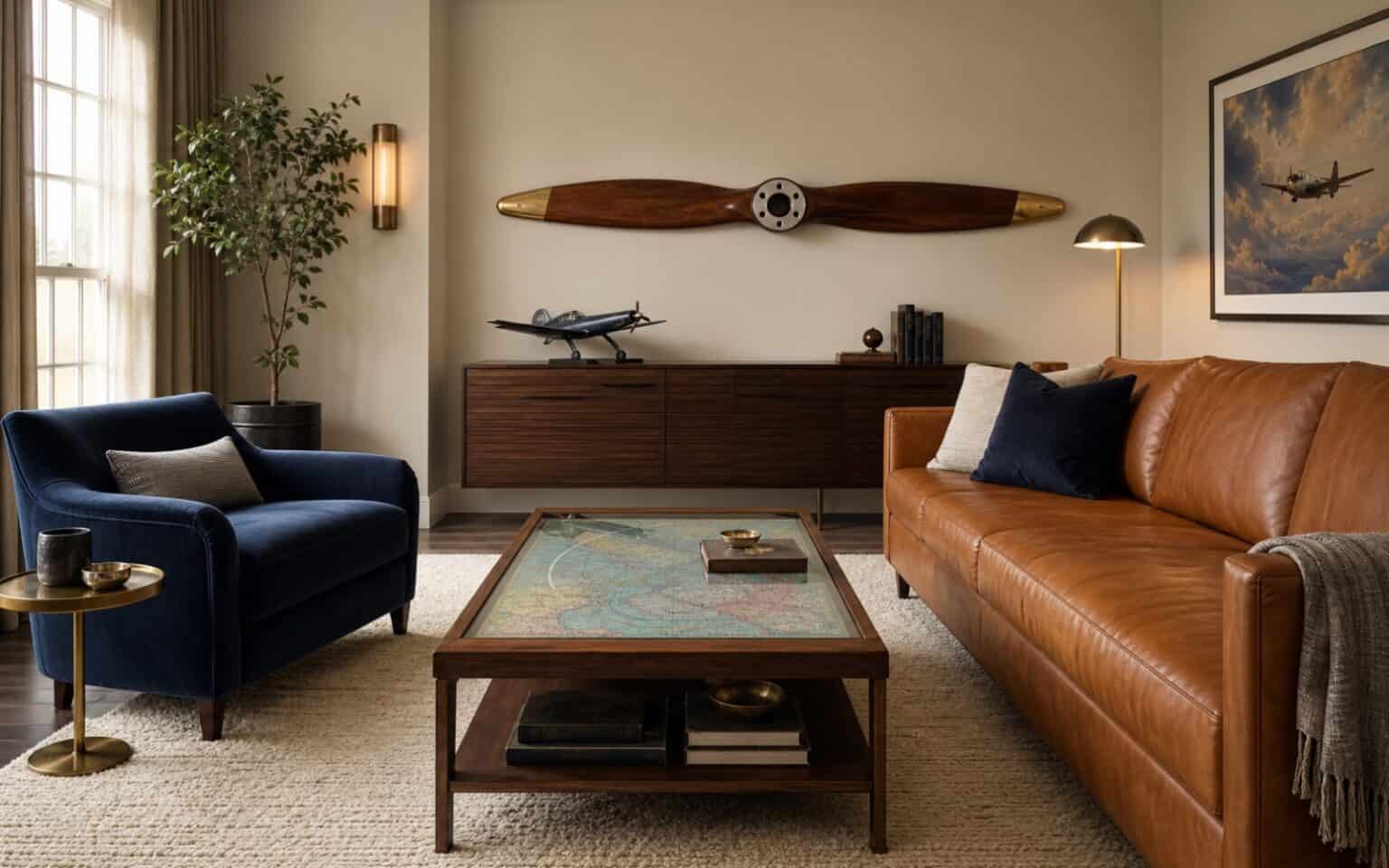
What you see A caramel leather sofa faces navy chairs across a cream rug, with walnut tables and one aluminum lamp. The only picture is a quiet horizon, so the aviation mood comes from color and materials.
Why it works This is the most subtle route to an adult aviation room. The palette recalls flight jackets, uniforms, aircraft skins, and vintage interiors while remaining timeless enough for everyday family life.
How to get it Use navy as the main dark color, caramel or cognac leather as the warm counterpoint, and cream to keep the room open. Repeat walnut and brushed metal at least twice so each finish looks intentional. Add only one literal aviation object after the foundation feels complete.
12. Jet Fan Coffee Table
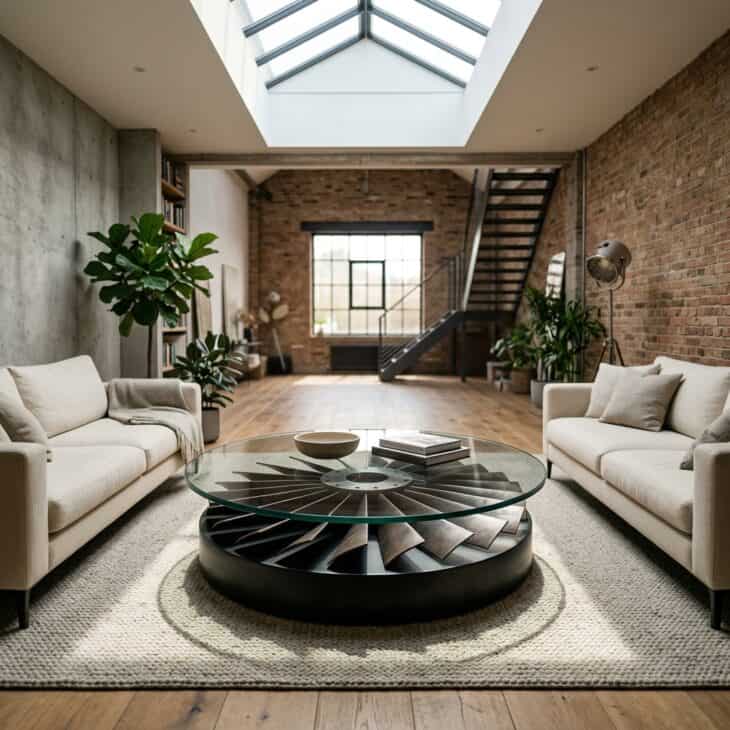
What you see Dark radial blades form the center of a round table beneath a thick glass top. Low cream sofas and a nearly empty loft give the sculptural geometry all the attention.
Why it works The fan shape is unmistakably aviation-related and visually strong enough to carry an otherwise neutral room. Circular geometry also softens a seating group dominated by straight sofa edges.
How to get it Buy from a specialist furniture maker who documents the material, weight, cleaning, and support structure. Choose an enclosed design with smooth edges, stable feet, and tempered glass made for furniture use. Measure doors and floor loading before delivery, and use a lighter replica if the genuine component would be impractical.
13. Globe and Route Map Corner
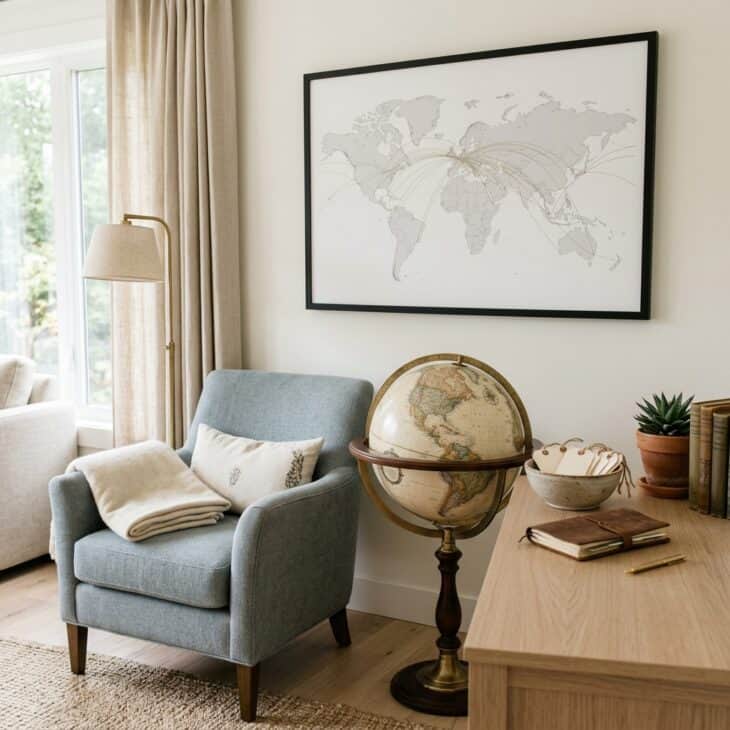
What you see A floor globe stands below a clean world map crossed by a few thin route arcs. A pale oak console and blue-grey chair make the corner feel personal without becoming a travel office.
Why it works The display connects aviation to the journeys it makes possible. Routes can record meaningful trips or turn an aviation bucket list into a visible plan.
How to get it Choose a globe large enough to read from the chair and a map with minimal labels. Mark only meaningful routes, using one color for completed journeys and another for future ones. Keep the display editable so the story can change over time.
14. Paper Airplane Family Gallery
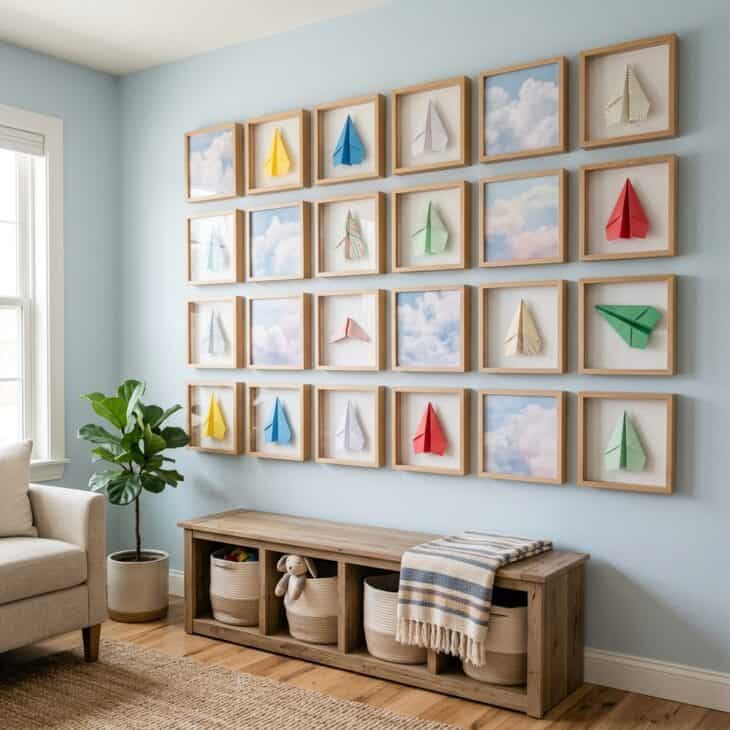
What you see Folded paper airplanes sit in deep frames beside soft cloud photographs. Matching oak frames make the mix of family-made and printed art feel unified.
Why it works The wall gives children a real role in the room while remaining polished enough for shared space. It is a more personal version of an aviation gallery wall, and individual frames can change easily.
How to get it Fold planes from archival or heavyweight paper in a limited palette. Float them in deep box frames with small removable supports, then mix in two-dimensional photos for contrast. Lay the arrangement on the floor first and keep the lower frames securely fastened.
15. Flight Case Bar Trolley
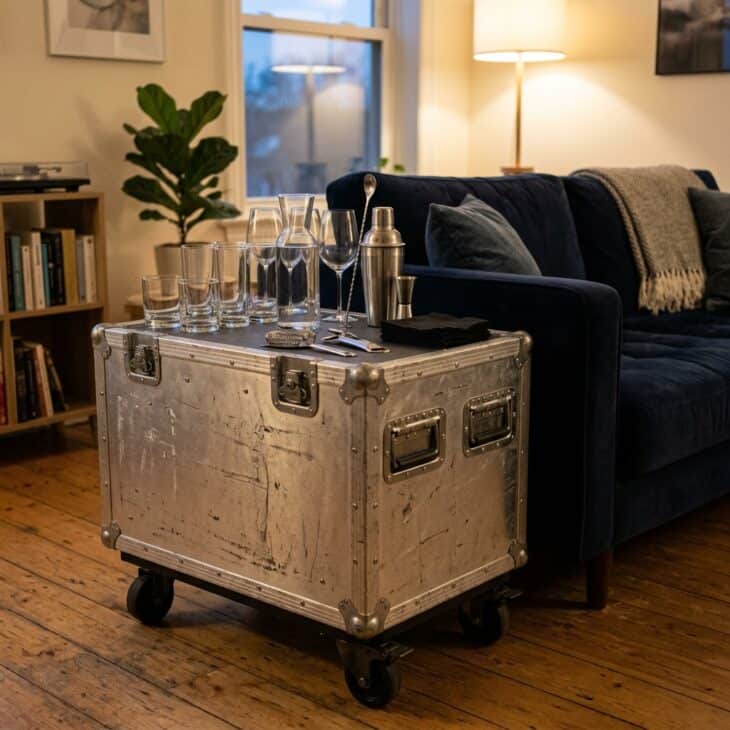
What you see An unbranded aluminum case rides on locking casters beside a navy sofa, its open top holding glassware and serving tools. Rounded corners and black handles give it the character of well-traveled equipment.
Why it works The trolley adds useful storage and moves wherever guests gather. It also borrows the tougher side of aviation home bar design without requiring a dedicated room.
How to get it Adapt a clean road case or choose a cabinet made for residential use. Fit lockable casters, line the shelves, and add racks that keep glassware secure while moving. Keep the top lightly styled so it remains useful for coffee, mocktails, or evening drinks.
16. Hangar-Style Pendant Light
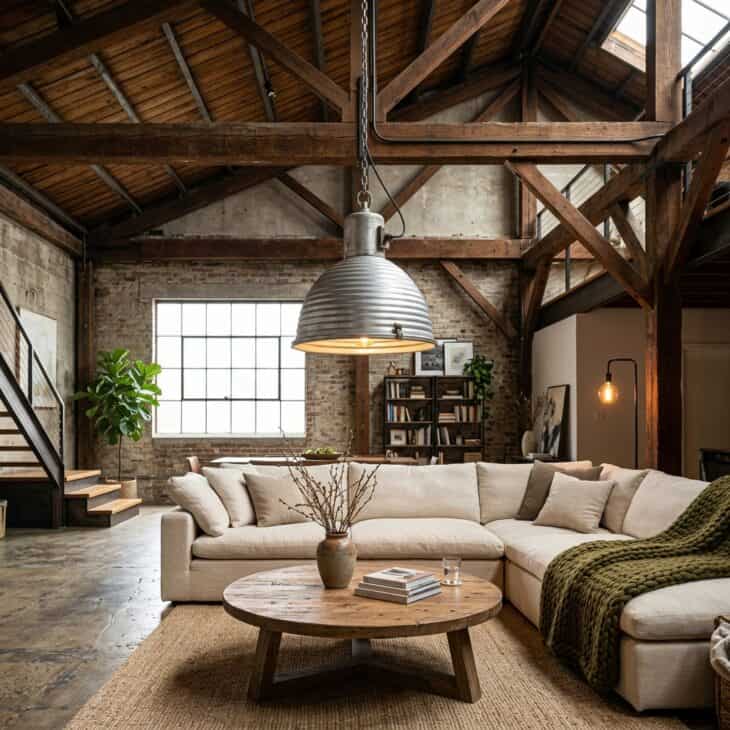
What you see A ribbed aluminum pendant hangs low enough to define the seating area beneath a high ceiling. Cream upholstery, wood, and an olive throw stop the industrial metal from feeling cold.
Why it works Lighting can suggest a hangar through scale and material without copying a literal aircraft part. The large shade also gathers an open-plan room around one visual center.
How to get it Look for a ribbed or spun-aluminum fixture with a diffused underside. Have a qualified installer confirm the ceiling support and set a height that preserves sight lines. Use a dimmable warm bulb so the metal feels atmospheric rather than clinical.
Keep the room comfortable first
Aviation details should never compromise stable furniture, safe lighting, clear walkways, or comfortable seating. If a genuine aircraft part is too heavy, sharp, or difficult to document, choose a well-made reproduction.
17. First-Class Library Wall
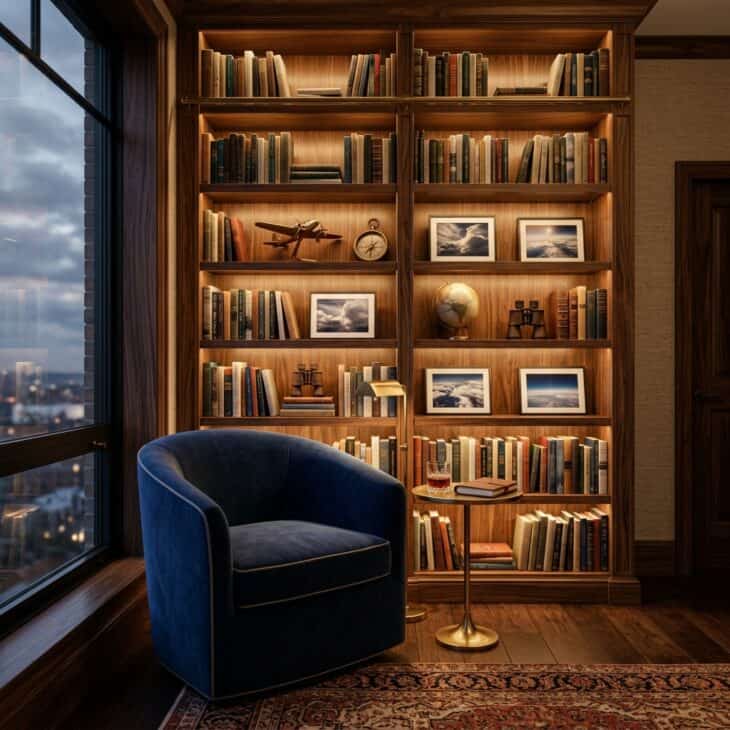
What you see Warm walnut shelves wrap a deep-blue reading chair and a small brass table. Books outnumber the aviation objects, while integrated lights give the wall the calm intimacy of a premium cabin.
Why it works The theme is strongest when it supports what the room is for: reading, resting, and conversation. Curved upholstery and concealed lighting add cabin associations without sacrificing the character of a home library.
How to get it Fill most shelves with books, then reserve a few eye-level bays for models, photographs, or instruments. Put heavier volumes and objects low, anchor tall shelving to the wall, and hide wiring in rated channels. Use warm integrated lights with diffusers to avoid bright points and glare.
18. Cloud-Layer Ceiling
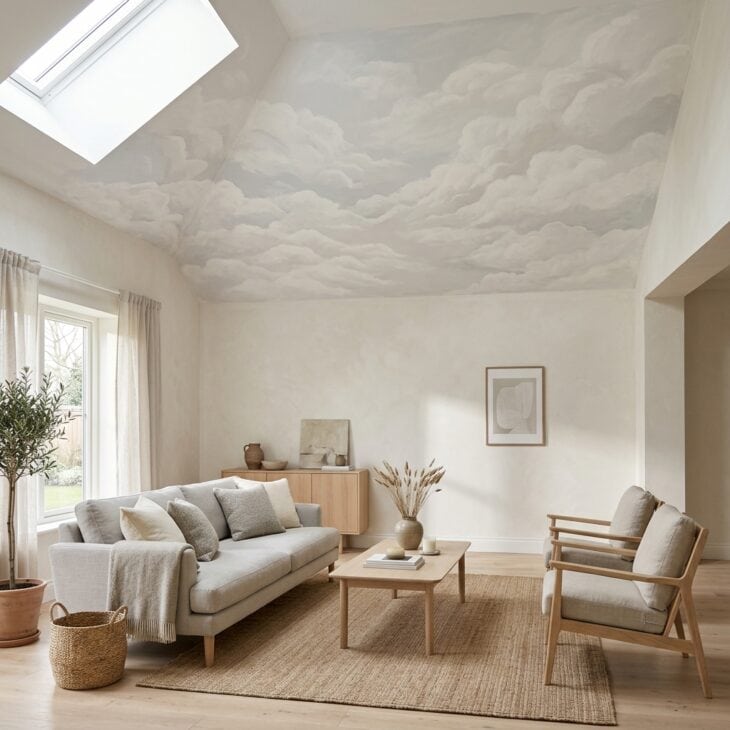
What you see Soft white and pale-grey clouds drift across the ceiling as if viewed from above. Warm off-white walls and low pale furniture let the painted sky remain calm rather than theatrical.
Why it works The ceiling becomes the room’s aviation moment while every wall remains available for ordinary art and storage. A light palette can also make a compact living room feel taller and more open.
How to get it Ask a mural artist for broad, low-contrast cloud forms with no hard outlines. Test a painted sample under both daylight and evening lamps before committing. Renters can use removable ceiling panels or a large tensioned fabric print instead.
19. Minimal Flight Path Art
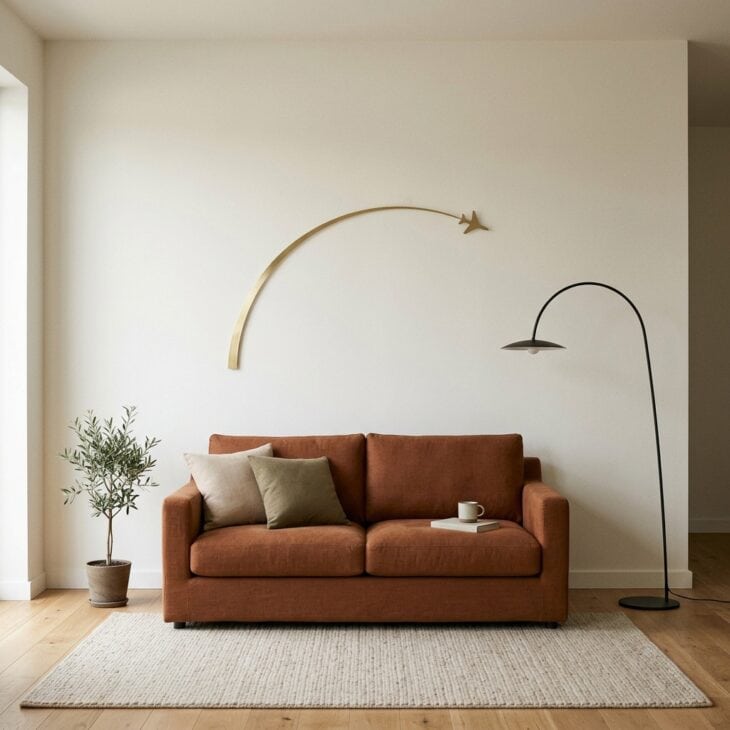
What you see A single brass arc crosses a warm-white panel and ends in a tiny abstract aircraft silhouette. The rust loveseat beneath it adds warmth while generous empty space keeps the composition quiet.
Why it works The design suits people who love aviation but prefer minimal interiors. One graceful line suggests distance, motion, and possibility without introducing another detailed map or model.
How to get it Commission a metal artist or use a thin painted line on a rigid panel. Base the curve on a meaningful journey without copying route labels or airport codes. Match the metal to one lamp or table detail elsewhere in the room.
20. Aluminum Accent Chair
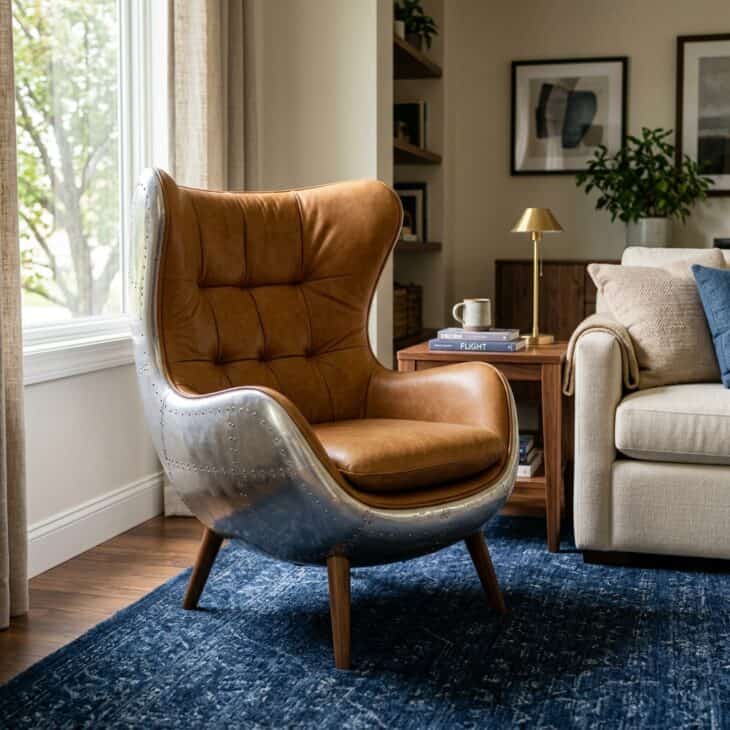
What you see A rounded aluminum shell wraps around generous tan leather cushions, with subtle rivet lines catching the window light. The chair sits beside softer cream upholstery so the metal feels special, not severe.
Why it works The chair brings aircraft material into the room at human scale and gives guests an immediate reason to ask about it. Upholstery keeps the piece comfortable enough for regular use rather than display only.
How to get it Choose furniture designed for residential seating, not an improvised section of airframe. Check every edge, rivet, joint, and foot for a smooth finish, then sit in the chair before buying if possible. Repeat the aluminum once in a lamp or frame and let the chair remain the only large metal piece.
21. Seaplane Lake-House Nook
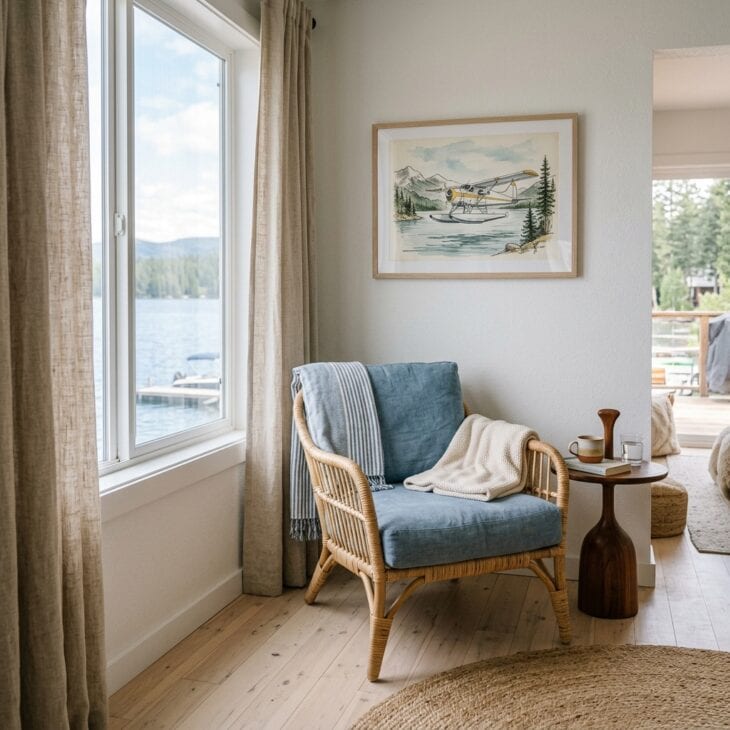
What you see A woven chair, faded blue cushions, and pale timber surround a framed seaplane drifting above calm water. Linen curtains make the scene feel breezy even far from a lake.
Why it works Seaplane imagery bridges aviation and coastal decor more naturally than polished metal or cockpit parts. The lighter palette suits casual homes where a dark industrial theme would feel out of place.
How to get it Use one large seaplane artwork and support it with washed blue, sand, linen, cane, and pale wood. Avoid adding anchors, propellers, and travel signs all at once. Keep the aircraft generic and let the water setting carry most of the story.
22. Control Tower Floor Lamp
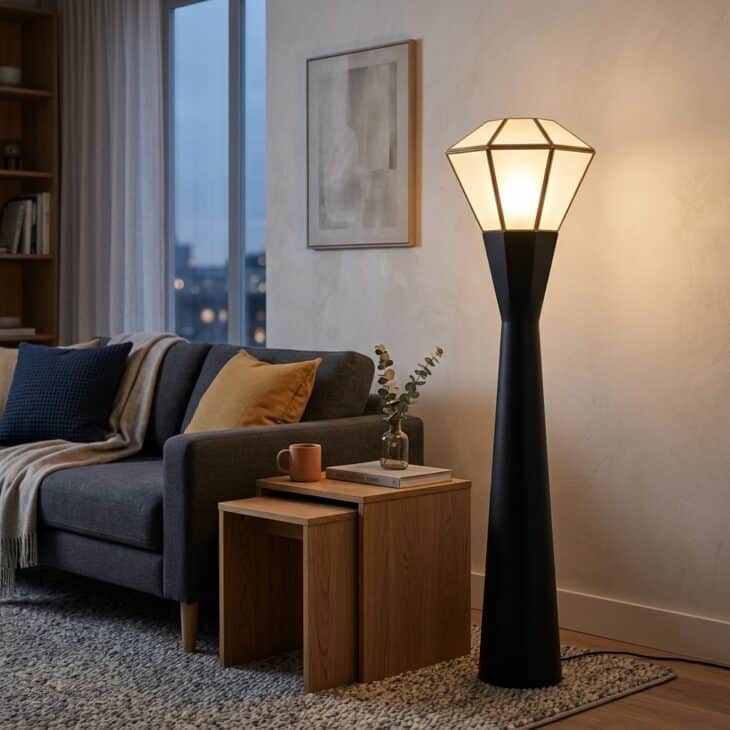
What you see A matte-black stem tapers upward into a softly glowing faceted shade, suggesting a control tower after dark. Oak tables and a charcoal sofa keep the architectural shape grounded.
Why it works The lamp makes the aviation reference useful every evening and occupies very little floor space. Its abstract form also avoids the novelty feel of a literal tower miniature.
How to get it Look for a stable tapered lamp with a wide base and frosted geometric shade. Put it beside a chair or sofa where the pool of light supports reading. Use a warm dimmable bulb, secure loose cords, and choose a child-resistant tip-resistant design for family rooms.
23. Small-Space Aviation Console
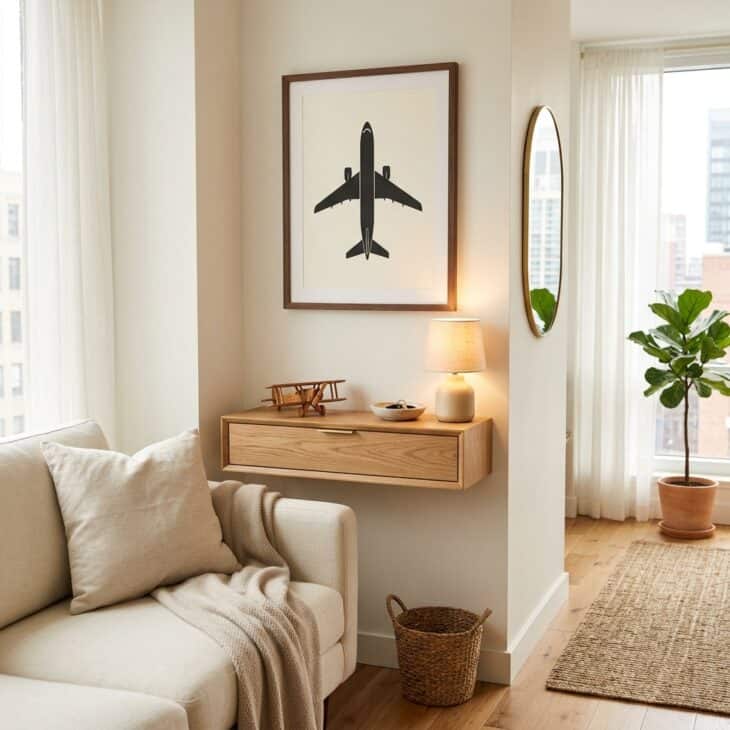
What you see A narrow oak console carries one small model, a lamp, and a bowl beneath a framed aircraft silhouette and oval mirror. Everything aviation-related stays in one compact vertical zone.
Why it works Concentrating the theme prevents a small living room from feeling visually crowded. Closed storage handles remotes and chargers, while the mirror reflects more light into the apartment.
How to get it Choose a console no deeper than the walkway comfortably allows and mount it according to the maker’s instructions. Limit the surface to three functional or meaningful objects. Renters can use a freestanding narrow cabinet and removable picture hooks rated for the actual frame weight.
24. Window-Seat Conversation Bench
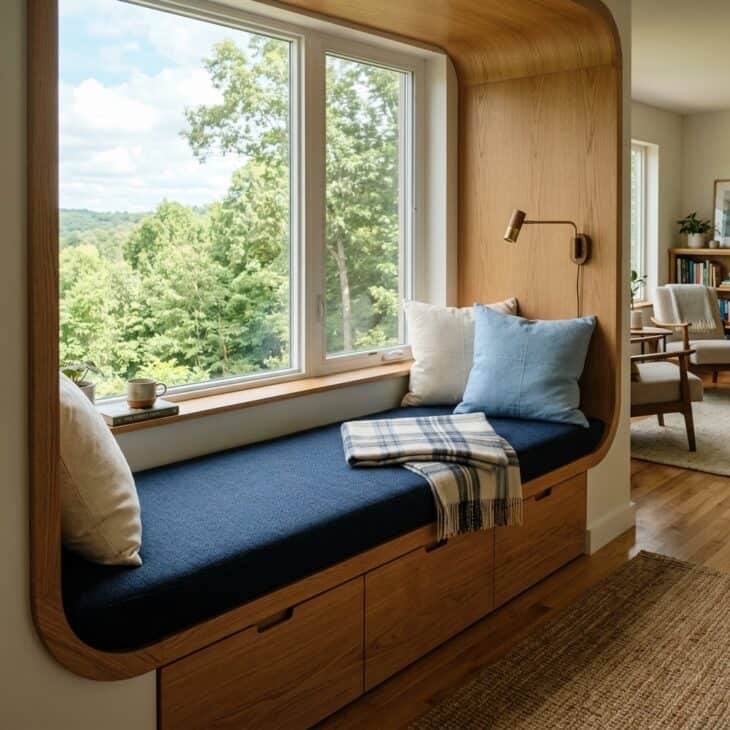
What you see A deep navy cushion fills a rounded window bench with storage drawers below and a small reading light beside it. Sky-blue pillows turn the home’s best view into a generous version of a favorite window seat.
Why it works The idea captures the experience of looking outward from an aircraft without copying a cabin. It adds seating, storage, and a natural conversation spot to an underused edge of the room.
How to get it Have a carpenter confirm the wall, window, ventilation, and required clearances before building. Use a firm removable cushion and drawers with soft-close hardware. Add one reading light and a small ledge, but keep curtains and fabrics away from heat sources.
25. Curated Aviation Salon
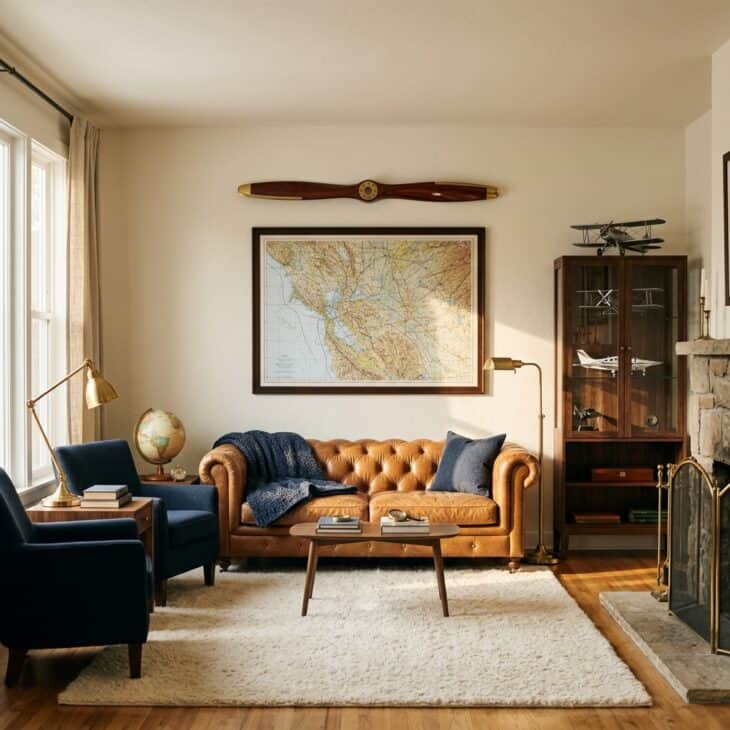
What you see A propeller, framed chart, and two models share the room with leather, navy wool, walnut, brass, and plenty of open wall. Each aviation piece has a separate zone and enough space to be noticed.
Why it works This approach lets a real collection grow without making the living room feel like storage. Repeated materials connect objects from different eras, while empty space establishes a visual hierarchy.
How to get it Choose a primary era or palette, photograph everything you might display, and edit the group before moving furniture. Give the largest object its own wall, place models behind glass, and rotate smaller pieces seasonally. Borrow the same restraint used in polished aviation office decor: one focal point per sight line is enough.
Sources and references used for research and fact-checking.
Get the Newsletter
The latest aviation news and stories sent to your inbox.
About the Author

Hanna writes AeroCorner's aviation-lifestyle and decor guides, turning a love of flight into ideas for your home, celebrations, and gift lists.