

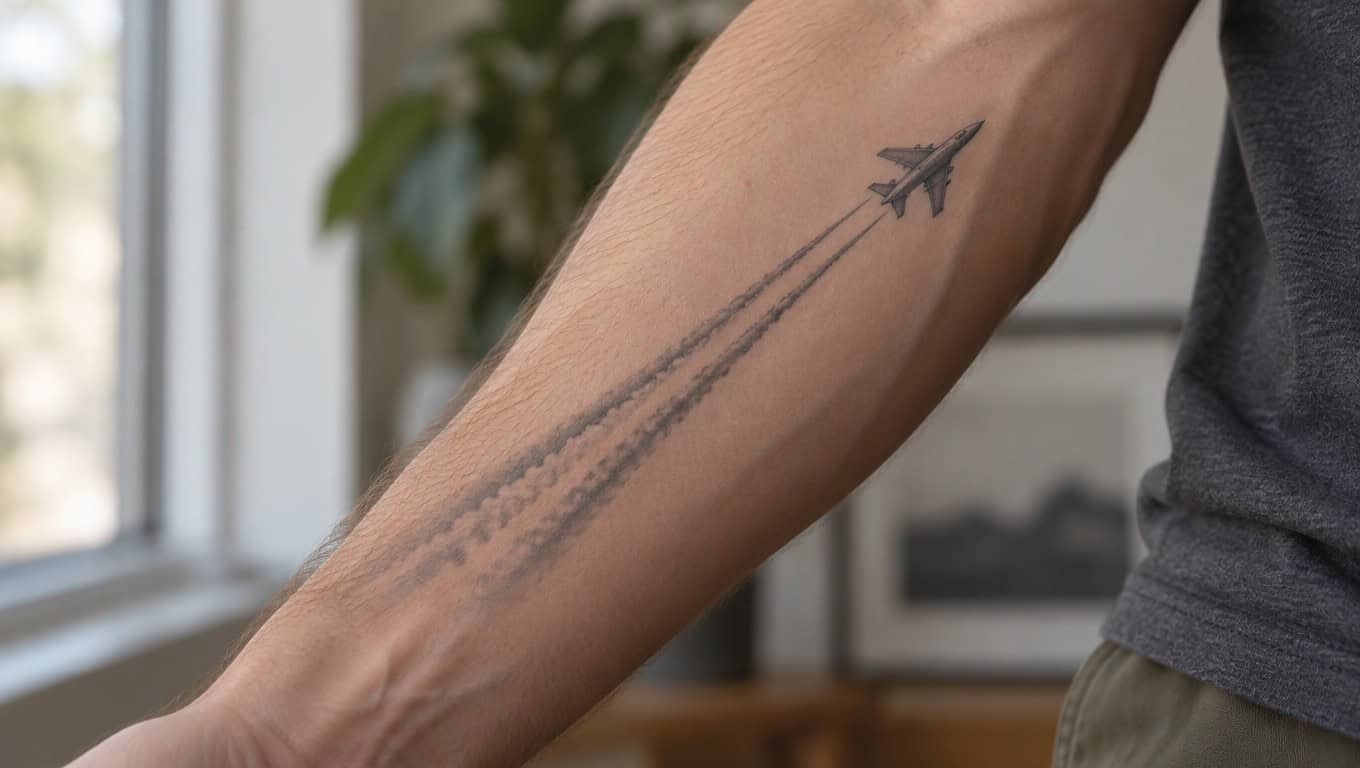
Table of Contents
An Air Force tattoo says something before you do. Wings, contrails, and jet silhouettes carry service, pride, and a little bit of sky. The best designs feel personal first and military second.
This list is for airmen, veterans, and the families who love them. It also works for anyone who just likes fast jets. Every idea uses generic aircraft and original symbols, so nothing here copies an official badge or a unit patch.
Use the ideas as starting points and take references to an artist you trust. If you want a wider range of flying motifs, browse our aviation tattoo ideas. Active duty members should also check current service tattoo rules and ask a supervisor before choosing a placement.
01. Classic Silver Wings
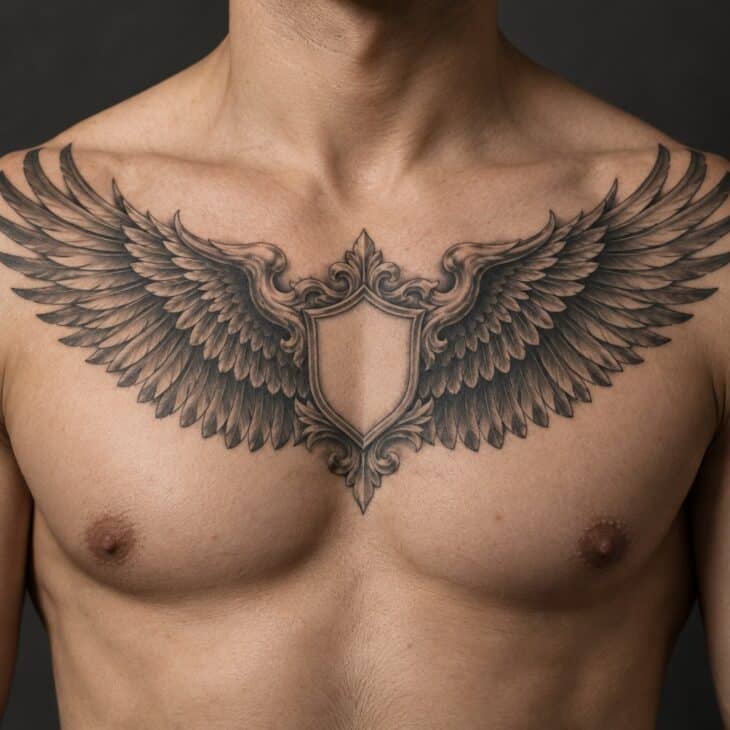
What it is Two feathered wings spread from a small central shield, shaded in black and grey. The shield is left blank or filled with a star, a date, or a single initial.
Why it works Wings are the oldest shorthand for flying in uniform. A blank center keeps the design yours, so it reads as service pride rather than a copied badge.
How to get it Pick a chest, upper back, or forearm placement with room for the span. Ask the artist for graduated shading so the feathers stay readable as the ink settles. Avoid copying any official badge outline, since close copies of service insignia can cause trouble on base and look dated beside original linework.
02. Jet With Vapor Trail
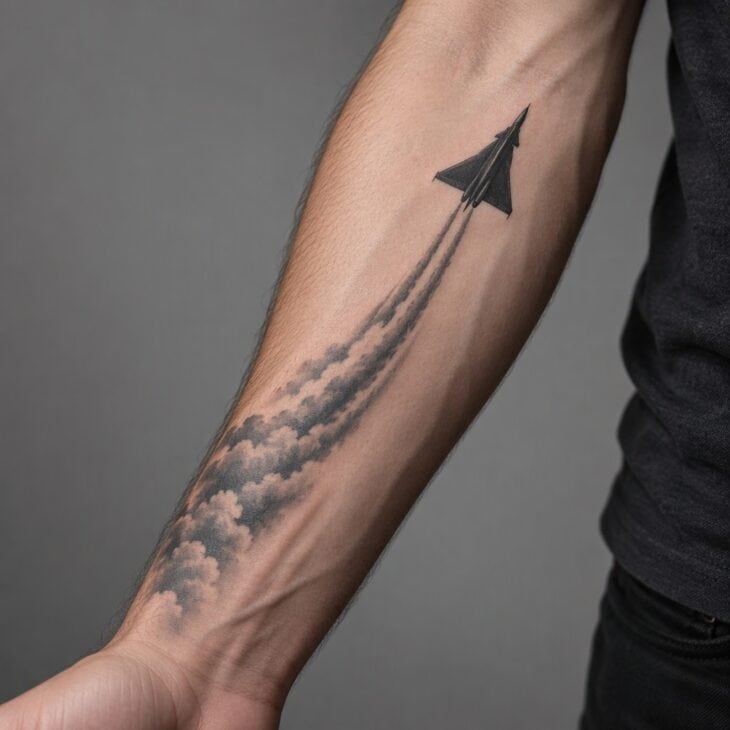
What it is A solid jet silhouette climbs diagonally up the forearm, trailing a contrail drawn as a few curved grey-wash lines.
Why it works The climb says momentum, and the trail turns a small aircraft into a long design that follows the limb. It is a safe first aircraft tattoo for anyone who loves fast jets.
How to get it Keep the airframe generic: a delta or swept-wing outline with no tail numbers or squadron marks. Forearm, calf, and outer upper arm all give the trail room to run. Let the contrail fade into bare skin instead of ending in a hard line.
03. Four-Ship Formation
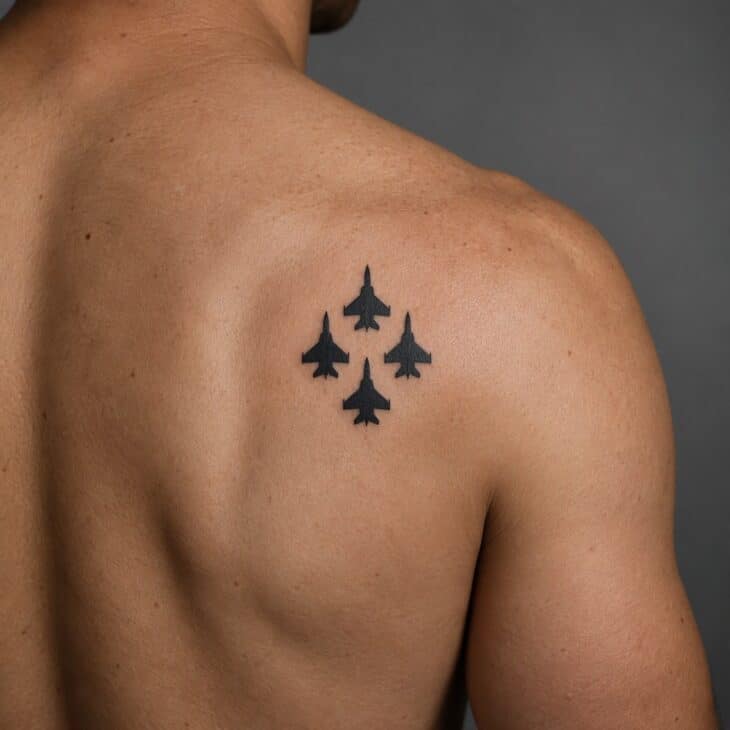
What it is Four small jet silhouettes fly in a tight diamond, drawn in solid blackwork with thin gaps between each aircraft.
Why it works A formation stands for teamwork and trust, which suits anyone who served beside a crew or flight line. It also fills a space neatly without a lot of detail.
How to get it Shoulder blade, upper chest, and outer calf all suit the diamond shape. Keep the spacing generous so the shapes do not merge as the lines soften. Add one tiny star near the lead jet if you want a hidden nod to someone in particular.
04. Airman Salute Silhouette
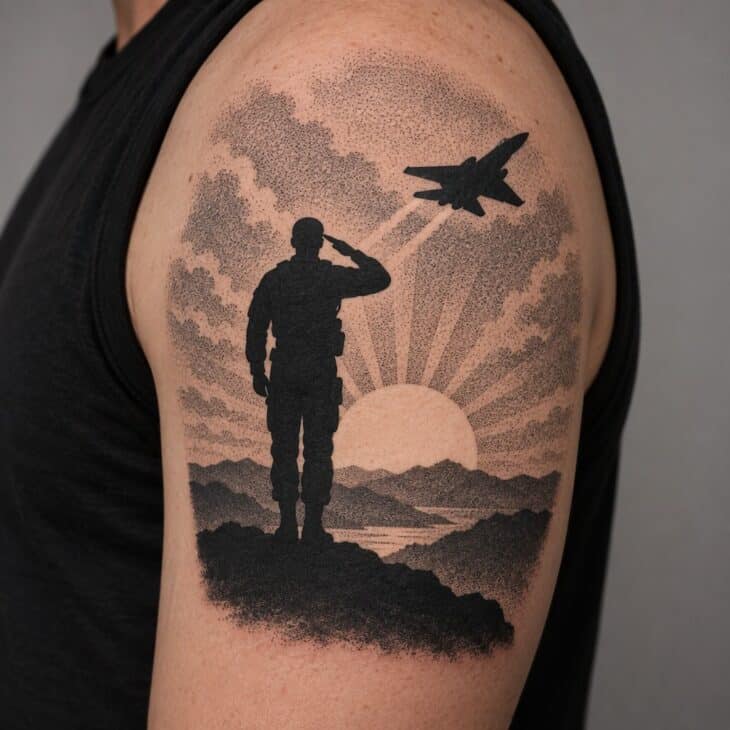
What it is A faceless saluting figure stands in solid black against a dotwork sunrise, with a small jet crossing the sky above.
Why it works A silhouette honors service without needing a face, a name, or a rank. The sunrise gives the design a hopeful tone that works for active duty, veterans, and families.
How to get it Upper arm or calf placements give a silhouette enough height to read well. Tell the artist to keep the uniform plain, with no patches or name tapes, so the figure feels universal. Dotwork shading in the sky ages better than heavy grey wash.
05. Flight Line at Sunset
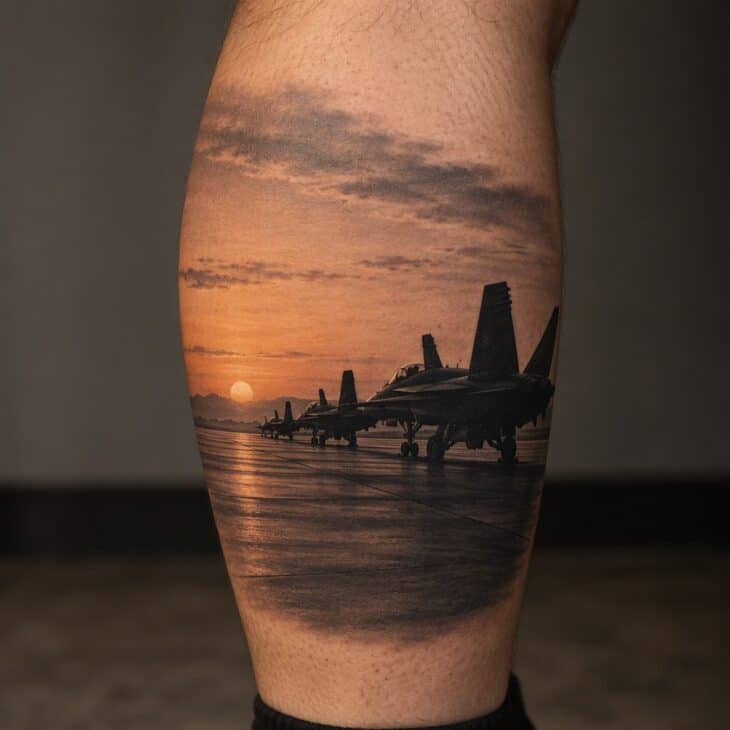
What it is A row of parked jets sits against a low sun, the sky suggested with soft shading and open skin.
Why it works The flight line is where most of the work happens, from sunrise launches to late recoveries. A sunset scene captures the quiet end of a long shift.
How to get it A calf or outer thigh gives you the width for a long row of aircraft. Keep each jet to a few clean shapes and rely on the shared horizon line for depth. Tell the artist to leave the sky mostly skin so the piece stays light.
06. Dog Tag and Wings
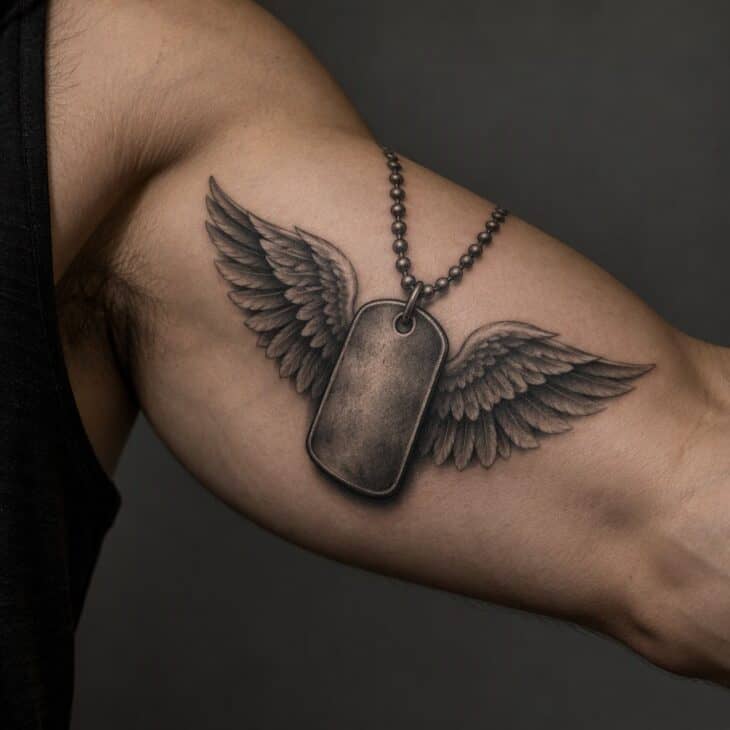
What it is A single dog tag hangs from a ball chain with a small pair of wings tucked behind it. The tag face stays blank or carries simple tick marks instead of real text.
Why it works Dog tags are among the most recognized symbols of service, and the wings add the air side of that story. Together they suit both veterans and relatives who want to honor one, and they pair well with an Air Force shadow box at home.
How to get it Inner bicep and ribs keep the piece personal. Leave the tag face blank unless you want an initial or a date, because tiny lettering blurs quickly. If you plan to add a name later, tell the artist now so the tag is sized for it.
07. Compass and Contrail
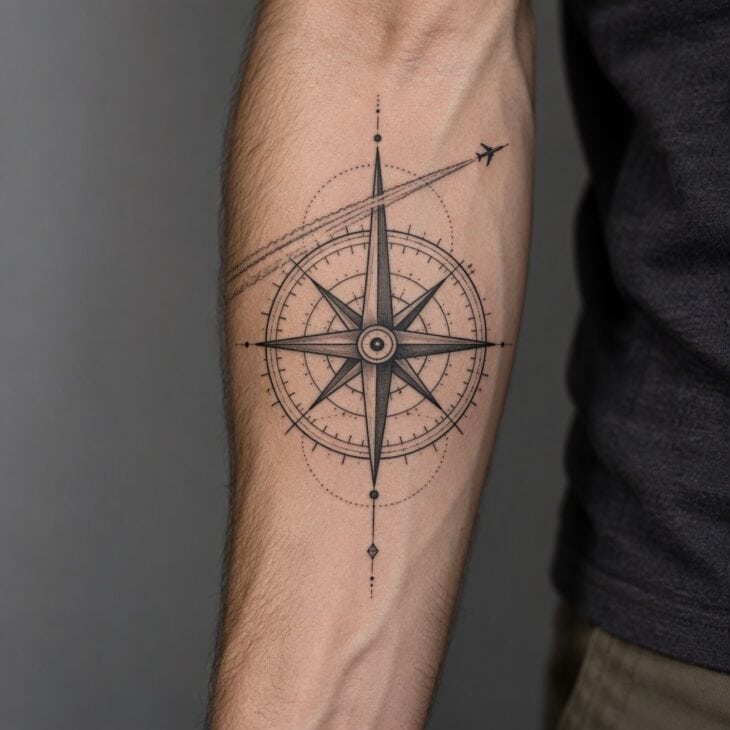
What it is A fine-line compass rose sits on the forearm with a single contrail slicing across the north point.
Why it works The compass says direction, and the contrail says you went there. It suits people who moved often, deployed, or simply never stayed on the ground.
How to get it Fine linework needs a size of at least a few inches to stay clear. Keep the rose simple, with four or eight points, and avoid tiny degree numbers. Forearm and calf are the easiest places to keep the symmetry.
08. Single Star With Wing
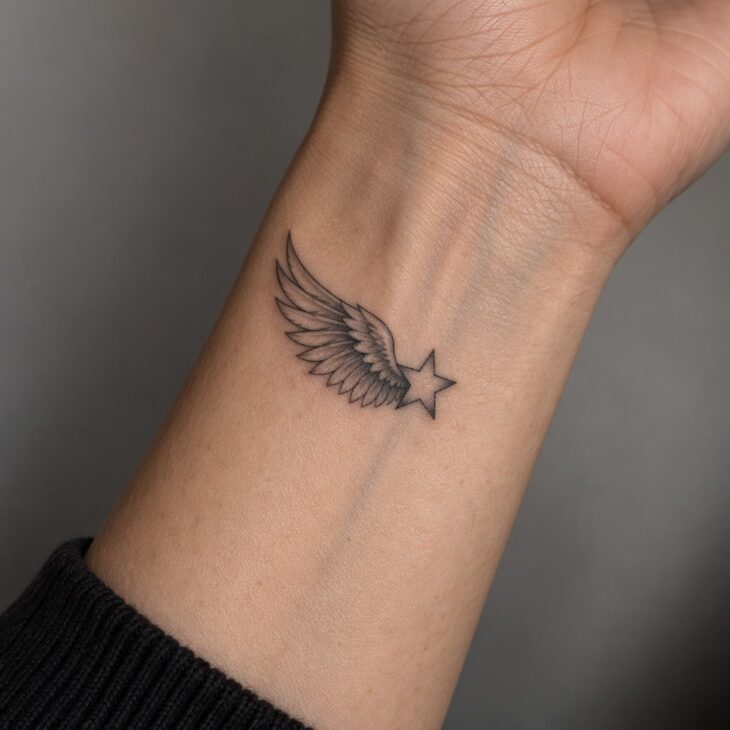
What it is One star sits above a single swept wing, drawn small and compact in fine black lines.
Why it works This is the quietest way to say Air Force. The star and wing are both familiar, but together they are subtle enough to cover with a watch band.
How to get it Wrist, ankle, and behind the ear all fit a design this small. Keep the feathers to five or six strokes so they stay separate over time. If you want it hidden under uniform sleeves, the inner upper arm works too.
09. Afterburner Glow
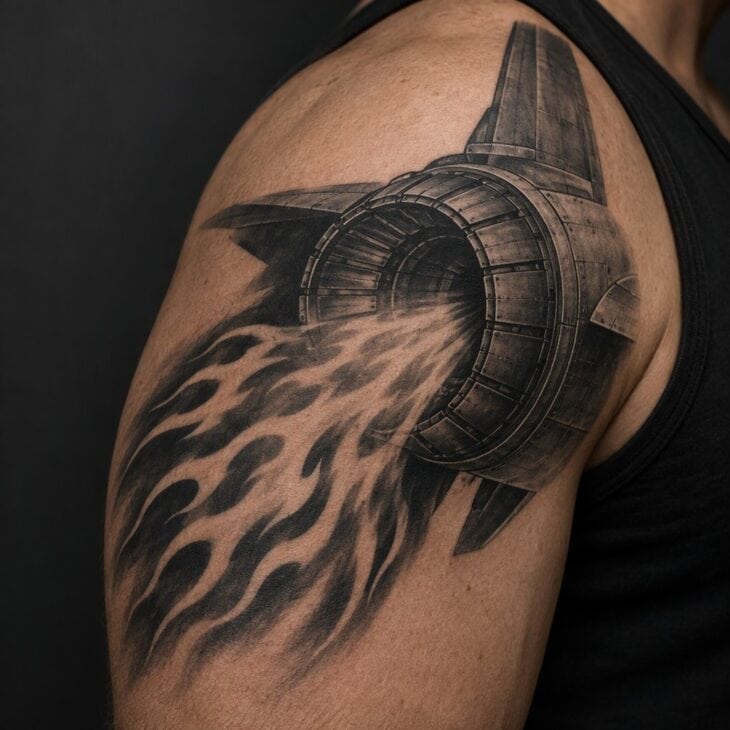
What it is A round engine nozzle with petal-like segments sits at the center, flame shapes fanning out behind it.
Why it works Afterburner imagery is raw power, the part of flying that gets felt as much as seen. It appeals to crew chiefs, engine mechanics, and anyone who loved the noise.
How to get it Shoulder, chest, and outer thigh have room for the radial symmetry. Ask the artist to draw the nozzle segments from a clear reference, since small errors are easy to spot. Bold flame lines hold up better than fine feathered ones.
10. Crossed Wrench and Wing
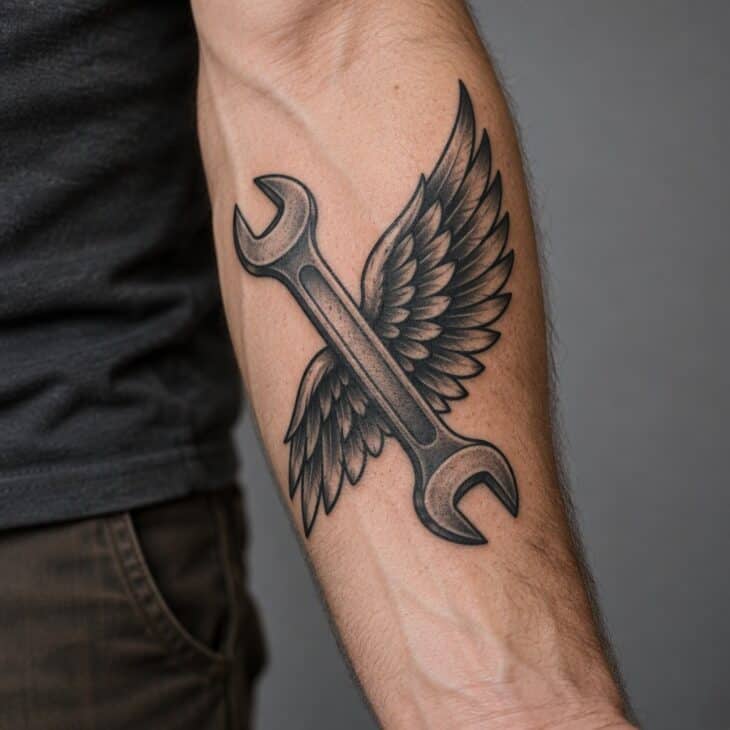
What it is A wrench crosses a single wing in bold traditional style, with heavy outlines and simple shading.
Why it works Maintainers keep the jets flying, and this design honors that without borrowing a shop patch. It tells a story about the ground crew that rarely makes the poster.
How to get it Bold traditional linework will stay legible for decades. Forearm, calf, and upper arm are all good canvases. Choose a wrench that looks like a real combination wrench, not a cartoon spanner.
11. Heartbeat Flight Path
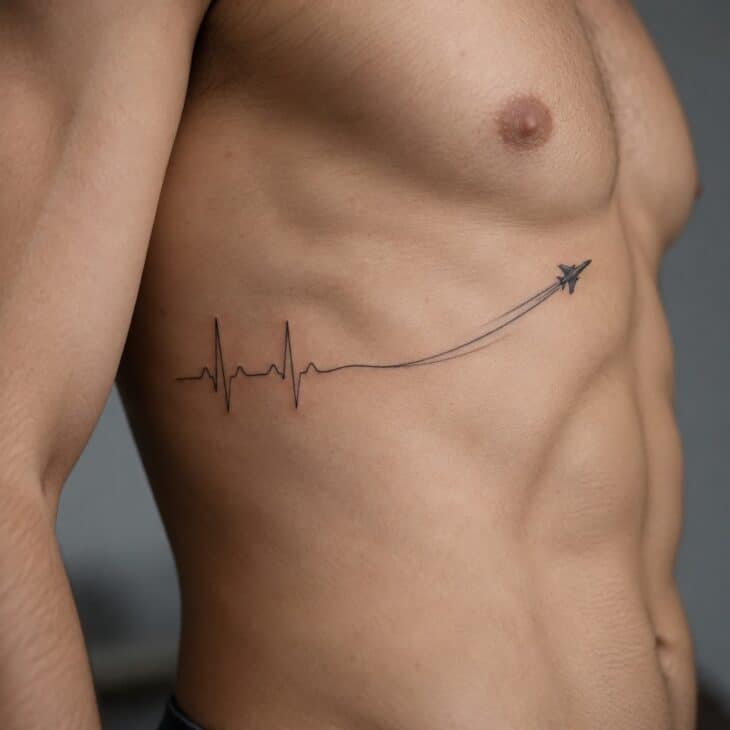
What it is A heartbeat line runs across the ribs and lifts into a rising jet path ending in a tiny jet silhouette.
Why it works It links the pulse of a person to the thrill of flight, which makes it a good fit for anyone whose service felt like a calling.
How to get it Ribs and sternum suit a long thin line. Keep the heartbeat spikes sharp and the transition into the flight path smooth. Fine line work should be done by an artist who shows healed examples.
12. Eagle Over Clouds
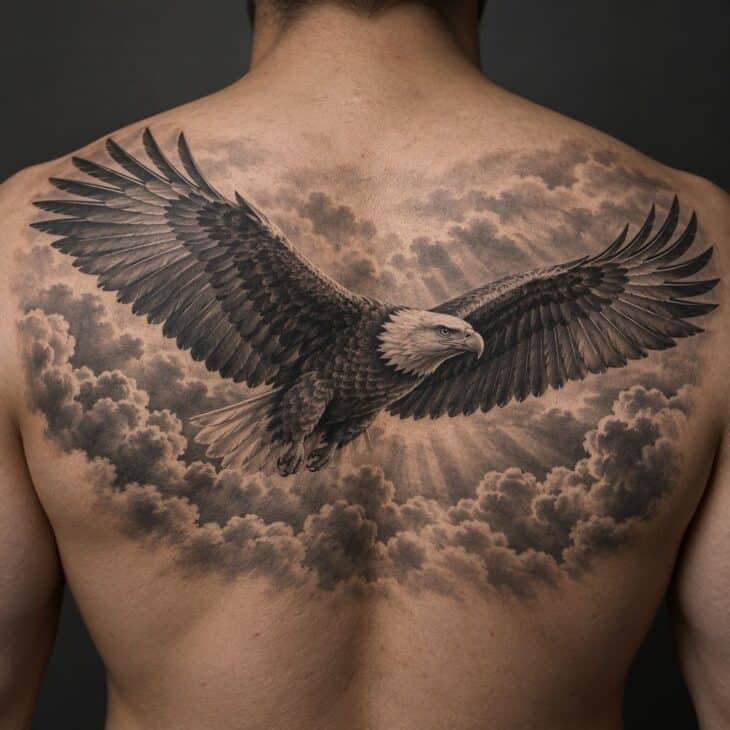
What it is An eagle glides with wings spread above layered, softly shaded clouds.
Why it works The eagle is a classic symbol of strength and watchfulness, and clouds tie it to the sky. This design has broad appeal beyond one branch.
How to get it Upper back, chest, and thigh handle the wingspan. Realistic feathers need a larger piece, so plan for at least a hand and a half of width. Keep the clouds loose and the eagle detailed.
13. Memorial Contrail
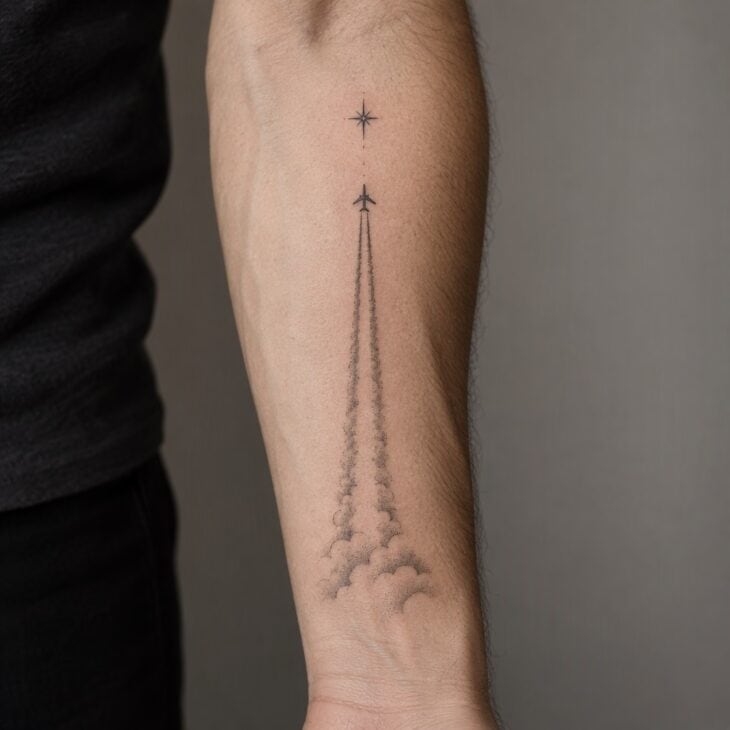
What it is One contrail curves upward and ends at a single small star, with a faint jet silhouette at its base.
Why it works A memorial tattoo should stay simple. The rising path suggests departure and continuation, without turning grief into a crowded design.
How to get it Decide whether you want a name, a date, or nothing at all before you book. Many people choose to leave text off and keep the meaning private. Forearm, chest, and inner arm are common places for a piece like this.
14. Stylized Base Map
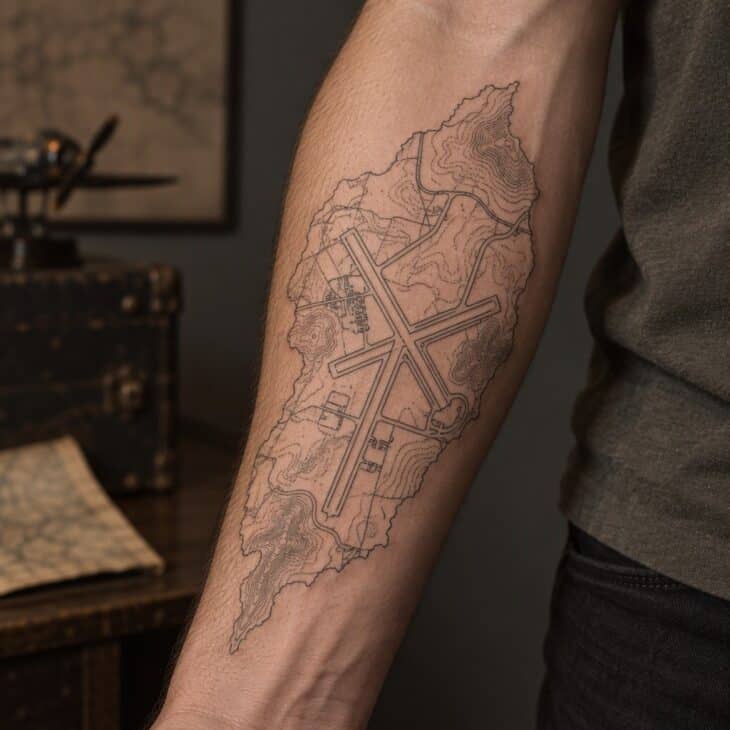
What it is Contour lines and two crossing runways form a small abstract map, without any place names or labels.
Why it works Anyone who has lived on a base remembers its layout. An abstract map keeps the memory without naming the place.
How to get it Choose a real location only if you can live with its outline being recognizable. Forearm, calf, and thigh suit a map. Give the runways enough thickness to stay distinct from the contour lines.
15. Chevrons and Wings
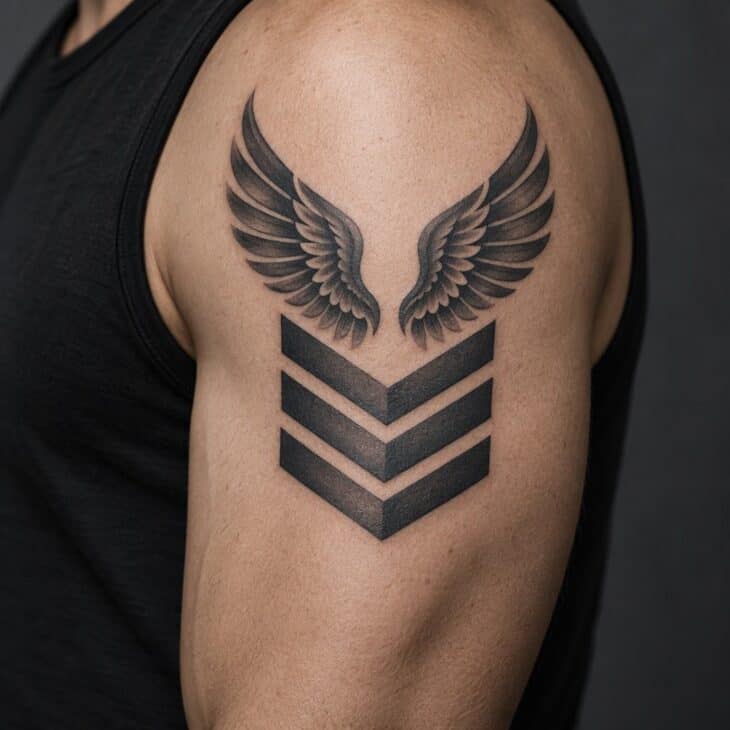
What it is Stacked chevrons sit beneath a pair of wings in a clean geometric style.
Why it works The chevron shape suggests progression and rank without matching any official insignia. It reads as pride in advancement.
How to get it Keep stripe count and spacing your own so it does not look like a real rank. Upper arm and chest provide a flat enough surface. Sharp geometry needs a steady hand, so ask to see straight-line work.
16. Parachute Descent
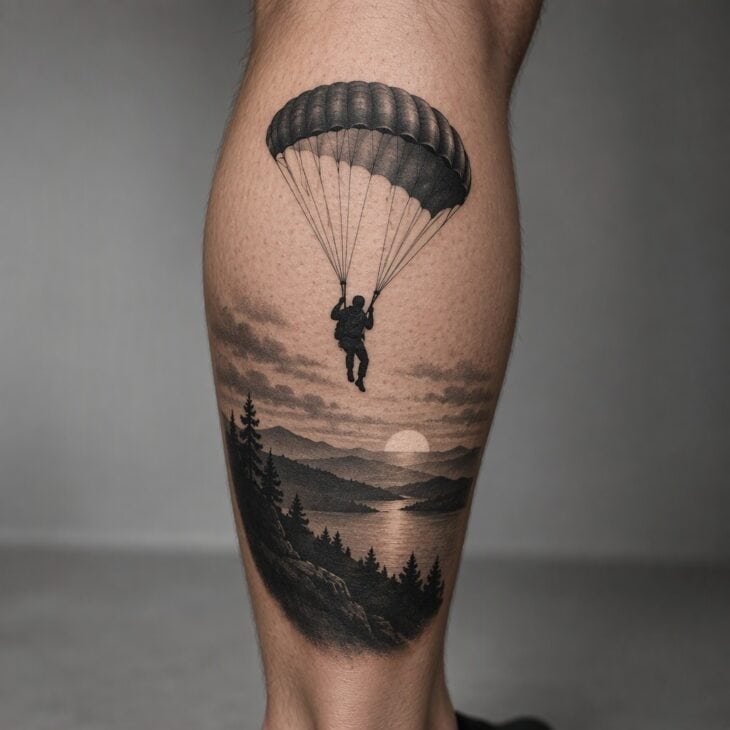
What it is A round parachute canopy opens above a tiny faceless figure, with a simple horizon line below.
Why it works Parachute imagery honors airborne roles and anyone who ever jumped, trained to jump, or packed a chute for someone else.
How to get it A calf, ankle, or forearm shows the vertical drop. Keep the shroud lines few and bold. Ask the artist to shade the canopy with a few stripes instead of a full pattern.
17. Refueling Boom
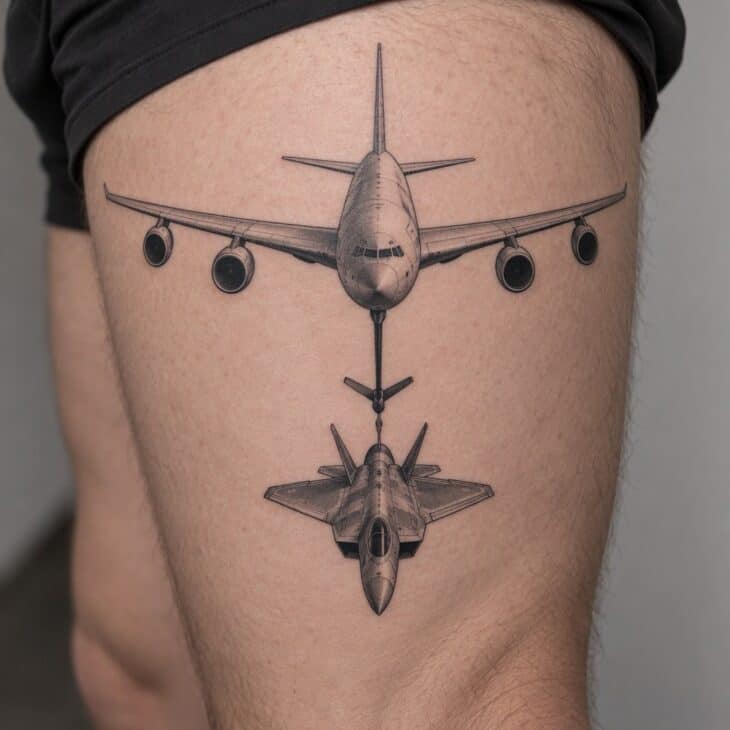
What it is A large tanker silhouette extends a long boom toward a smaller jet, caught in the moment before contact.
Why it works Aerial refueling is the unseen reason jets can fly so far. The design is a compact tribute to tanker crews and to teamwork in the air.
How to get it A thigh or upper back gives you the length. Keep both aircraft generic and avoid tail numbers. Fine boom lines need clear spacing so they do not merge.
18. Flight Coordinates Band
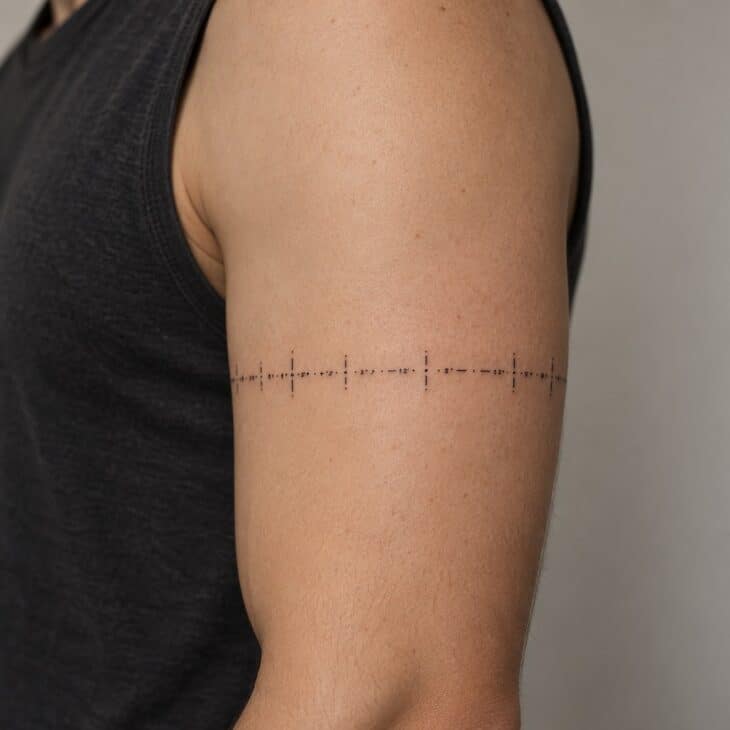
What it is A thin band of dots and dashes wraps the upper arm, with a tiny jet silhouette set in the middle.
Why it works A band is easy to hide and easy to read. The dots can encode a date, a call sign, or a route that only you understand.
How to get it Decide the code before the appointment so the artist has a final pattern. Keep dots large enough to stay distinct. A band on the upper arm hides under a short sleeve.
19. Night Sky Constellation Jet
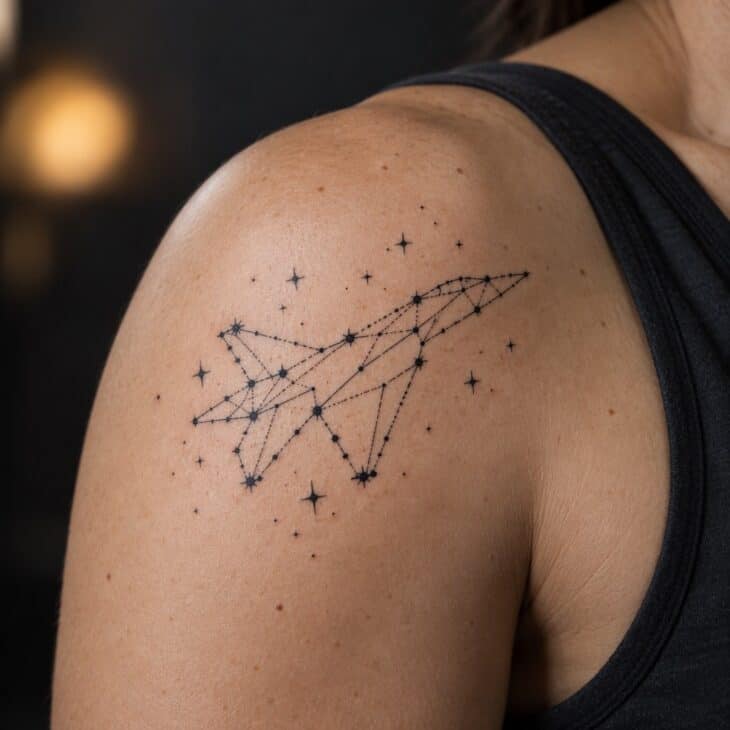
What it is Stars and fine lines trace the outline of a jet, as if it were a constellation hanging in the night sky.
Why it works A constellation jet is an elegant way to wear a military aircraft motif, with no hard edges and no heavy fill.
How to get it Keep the star count modest so the jet shape remains clear. Shoulder, collarbone, and upper back work well. Fine dots should be large enough to stay separate once healed.
20. Bold Blackout Wing
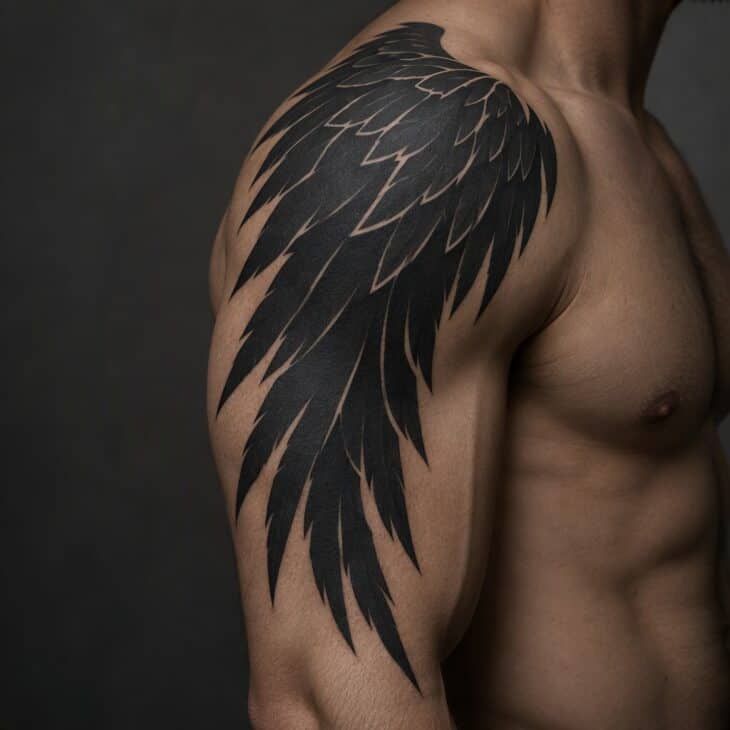
What it is A single oversized wing in solid black fills the shoulder, with sharp angular feather cuts.
Why it works Blackout work is bold and ages well. One wing instead of two feels unique and asymmetrical.
How to get it Shoulder, upper arm, and ribs hold a wing this size. Solid black needs an experienced hand to heal evenly. Plan for a touch-up session.
21. Child’s Drawing Jet
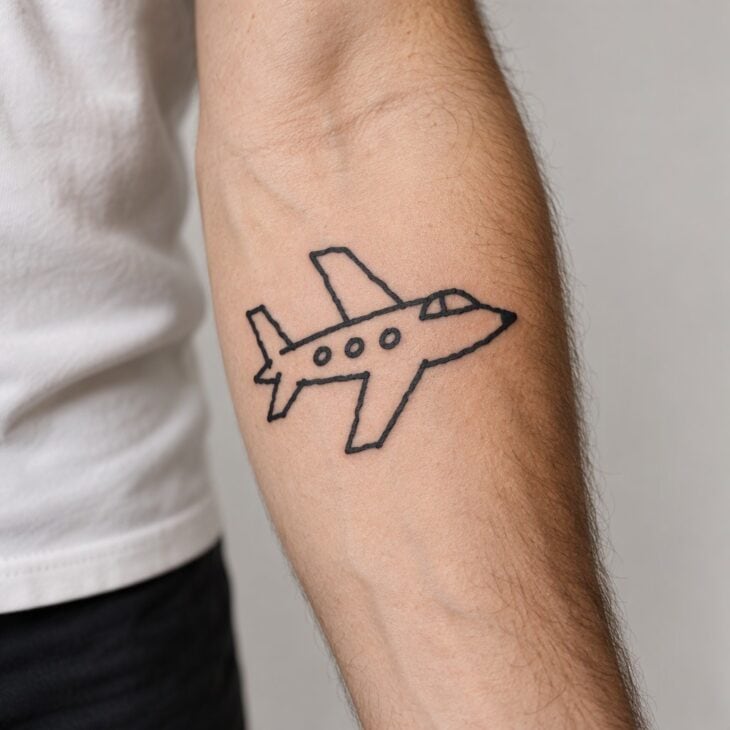
What it is A jet drawn the way a child would sketch it, with a rounded body, simple wings, and a happy sun.
Why it works It turns a child’s drawing into permanent art, and it is a fitting Air Force gift for a parent who serves or served.
How to get it Bring the original drawing so the artist can trace it exactly. Forearm and upper arm place it where it can be seen. Keep the wobble; smoothing it out loses the charm.
22. Homecoming Sky
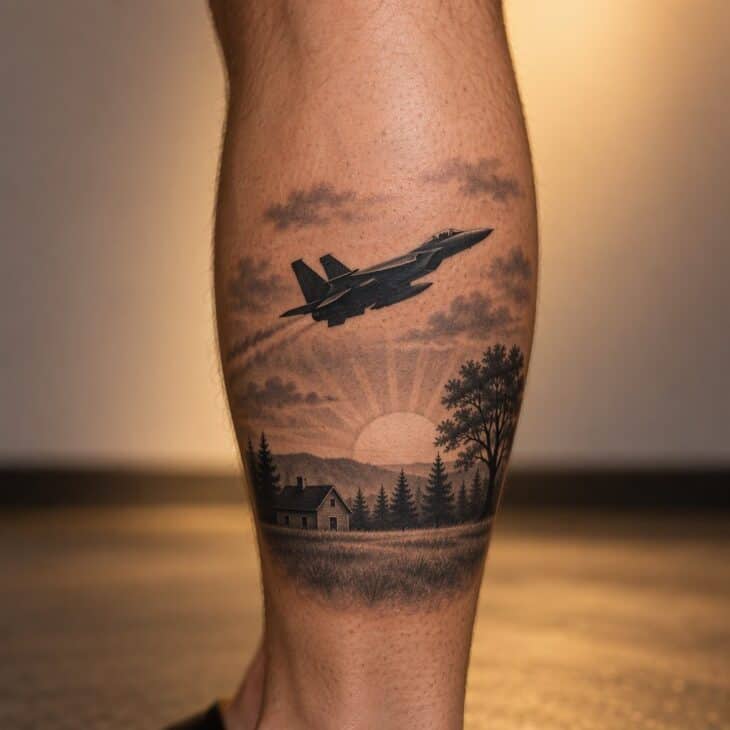
What it is A jet crosses a rising sun above a small house and a line of trees.
Why it works Homecoming is the moment families remember most. The design pairs flying with the place you return to, which also suits a retirement keepsake.
How to get it Calf, forearm, and thigh give you the vertical space. Keep the house simple and generic. A few cloud lines add depth without crowding.
23. Vintage Bomber Nose Art Style
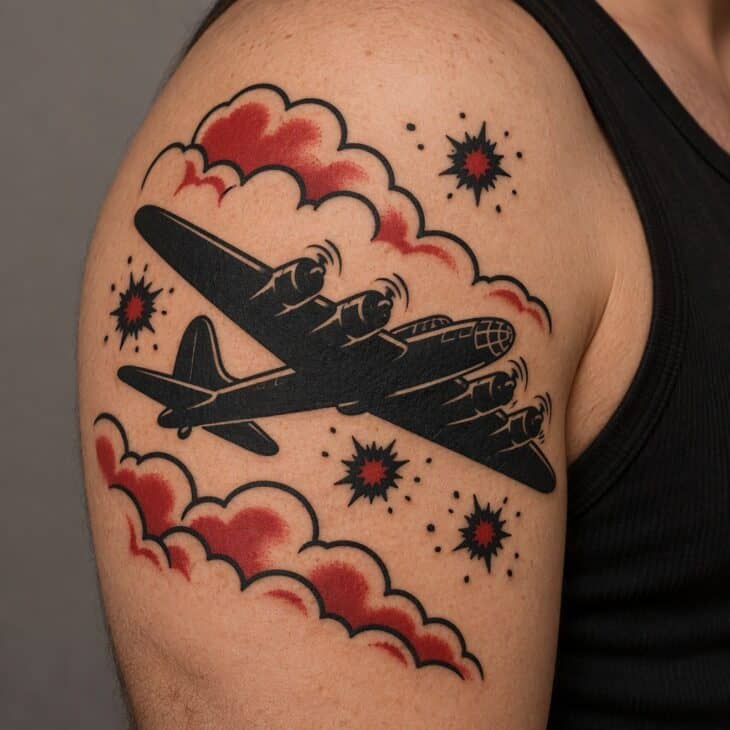
What it is A four-engine bomber from the propeller era flies through bold clouds, drawn in American traditional style with heavy outlines.
Why it works Many families have a grandparent whose story begins with an old bomber. Traditional style gives the aircraft a classic, almost sailor-flash look.
How to get it Upper arm, calf, and forearm suit traditional work. Keep the airframe generic or ask your artist to research the type you mean. Limit the palette to red and black for an authentic look.
24. Sky Story Half Sleeve
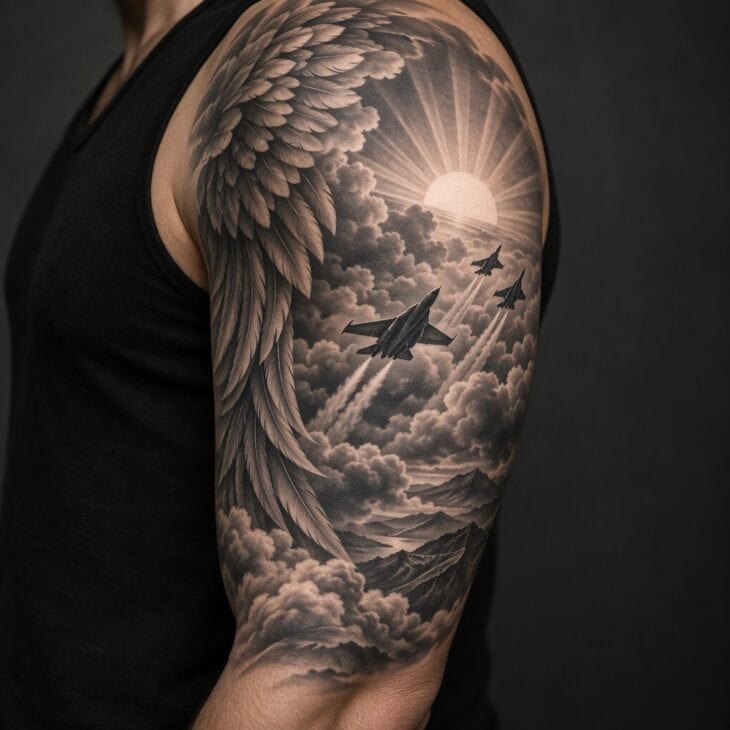
What it is A flowing half sleeve combines clouds, a few small jets, a pair of wings, and a rising sun into one connected scene.
Why it works A sleeve lets you tell the whole story instead of one symbol, and each element can stand for a chapter of your time in service.
How to get it Build the sleeve over several sessions and plan the layout with the artist. Start with the largest element and add the smaller ones as you go. Expect the full piece to take months and plan around your duty schedule.
25. Paper Plane for Military Kids
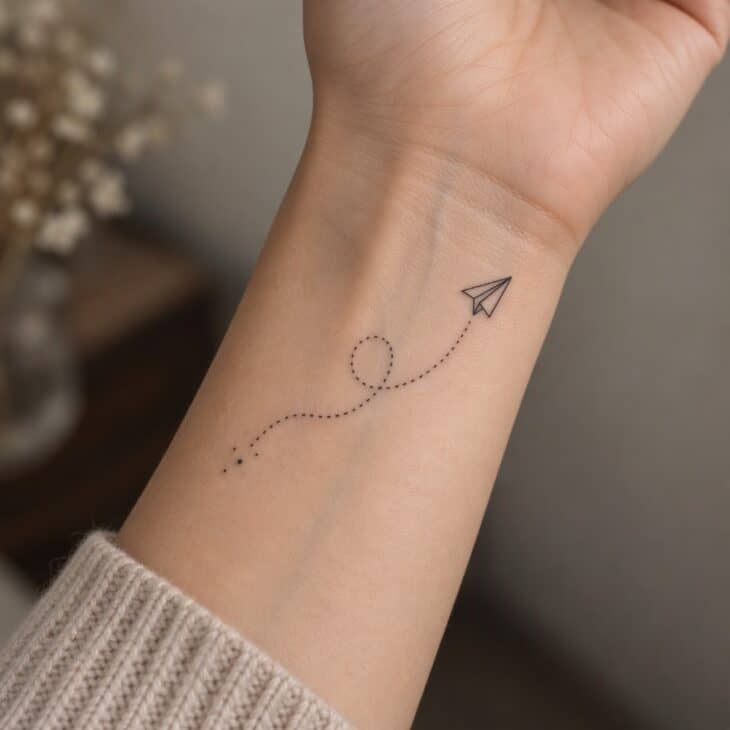
What it is A folded paper plane loops across the wrist, its dotted trail stopping at a handful of small dots.
Why it works Growing up on bases means many moves. Each dot can mark a place you called home, and the paper plane keeps the mood light.
How to get it Count the dots before the appointment so the artist can space them. Wrist, ankle, and inner arm are best for something this small. Keep the fold lines minimal so they stay open as the ink heals.
FAQ
Sources and references used for research and fact-checking.
Get the Newsletter
The latest aviation news and stories sent to your inbox.
About the Author

Hanna writes AeroCorner's aviation-lifestyle and decor guides, turning a love of flight into ideas for your home, celebrations, and gift lists.