

Table of Contents
Most paper airplane lists show a fold diagram and stop there. Whether the plane flies depends on balance, wing shape and a few small bends you make after the first throw.
That is why the same dart can cross a gym in one pair of hands and nosedive in another. The designs below run roughly from darts and distance gliders to floaters, stunt planes and a few oddballs that are not folded from a single sheet at all.
Each entry says what the plane is, why it flies the way it does and how to build it. Unless stated, every design starts with a standard sheet of printer paper, 8.5 by 11 inches (21.6 by 27.9 cm). Pick three, fly them side by side and trim the winner.
01. The Classic Dart
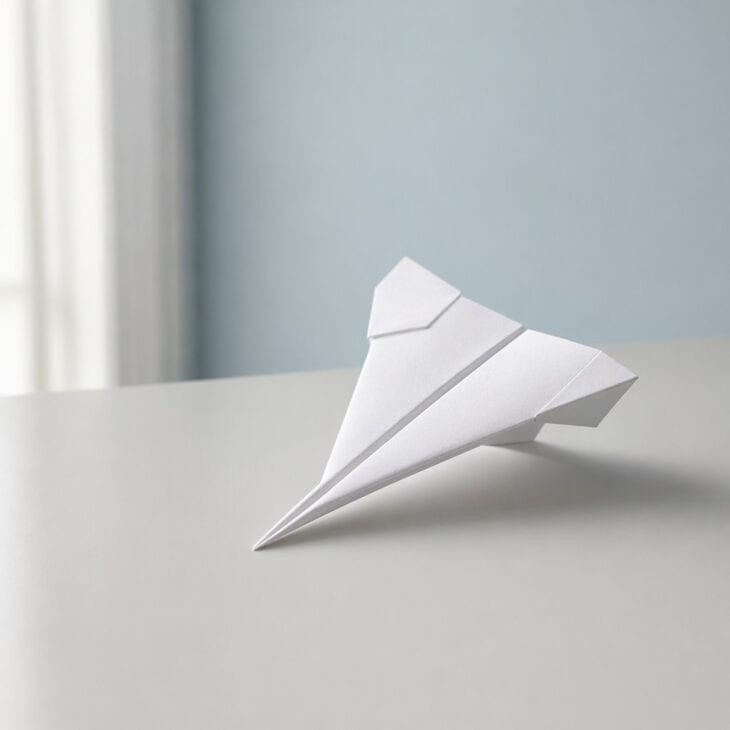
What it is A narrow, pointed plane folded from one sheet of printer paper, with two small wings and no tape. The folded edges stack up at the nose, which puts the weight at the front.
Why it works Weight forward and very little wing makes it fast and straight, and it forgives a sloppy throw. It is also the base fold for several designs further down this list.
How to get it Fold the sheet in half lengthwise, crease it hard and unfold. Fold both top corners to the center crease, then fold the two slanted edges in to the center crease again. Fold the whole plane in half along the first crease with the folds on the outside, then fold each wing down so its edge sits level with the bottom of the body. Test it with a gentle toss before you throw it hard.
02. The Long Needle Dart
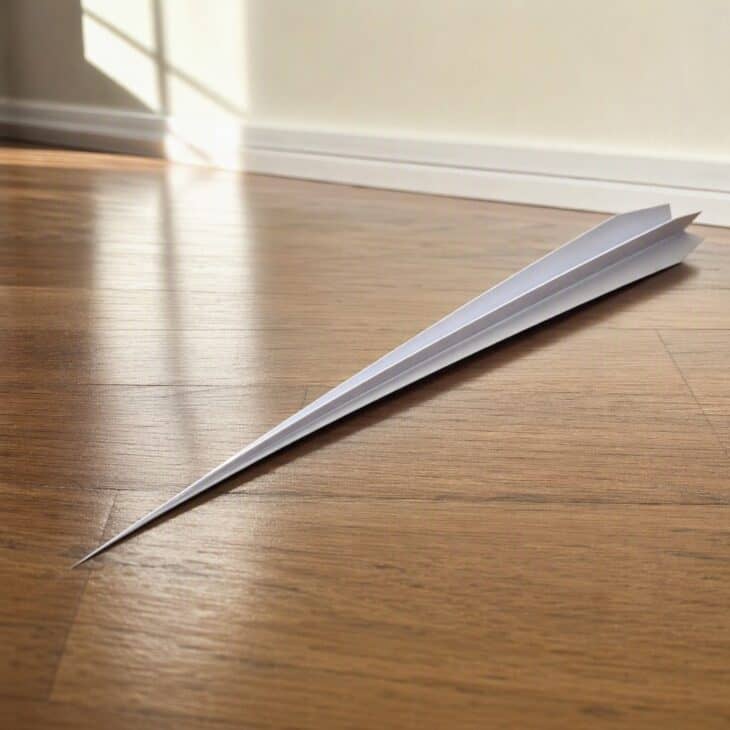
What it is A classic dart with a third set of folds, which narrows the body to a long, thin point. The wings are slim strips, about 1 inch (2.5 cm) deep on each side.
Why it works Less wing area means less drag in the air, so it holds its speed on a hard, flat throw down a hallway. The tradeoff is a steep glide, so it covers distance with speed rather than float.
How to get it Make the classic dart folds up to the second corner fold. Fold the slanted edges in to the center a third time, then fold the plane in half. Fold narrow wings down, about 1 inch (2.5 cm) deep, and put one strip of tape across the belly so the thin layers do not spring open. Throw it firm and level, aimed just above the horizon.
03. Suzanne, the Record Distance Glider
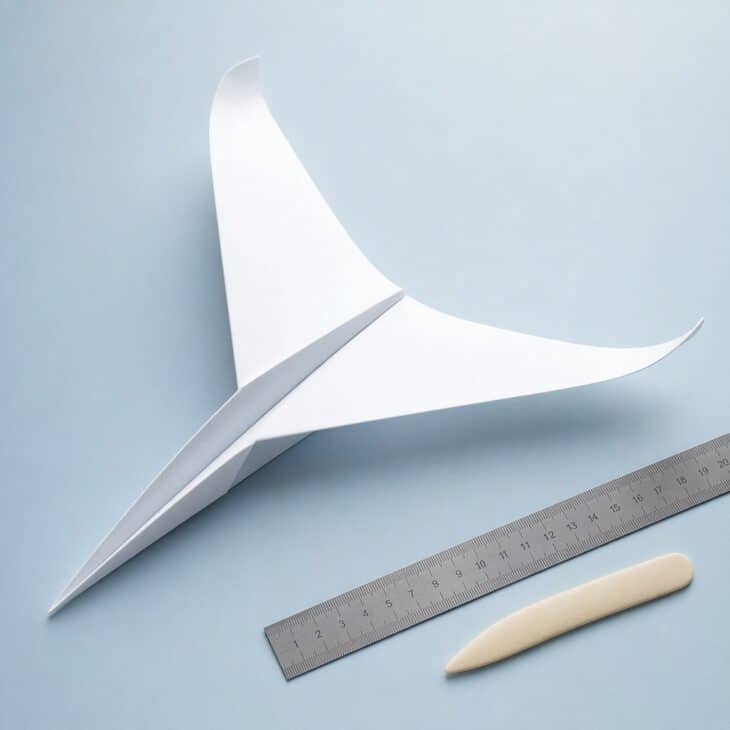
What it is A distance glider designed by John Collins, known as The Paper Airplane Guy, and named Suzanne. In February 2012 it flew 226 feet 10 inches (69 m) inside a hangar at McClellan Air Force Base in California, thrown by former college quarterback Joe Ayoob.
Why it works Collins calls it the first glider to hold the distance record, the first to use changing airspeed to improve performance, and the first to break the record after the run-up was cut from 30 feet to 10 feet. It marked a shift from brute-force darts toward true gliders.
How to get it The full folding sequence is in Collins’s book, The New World Champion Paper Airplane Book, and he has posted a video of the early folds. Sharpen every crease with a ruler edge or a folding tool, leave about 1 millimeter of breathing room when folding edges in, and keep both sides symmetrical. Throw it hard and level, as the record team used a trained thrower.
04. The Nakamura Lock Glider
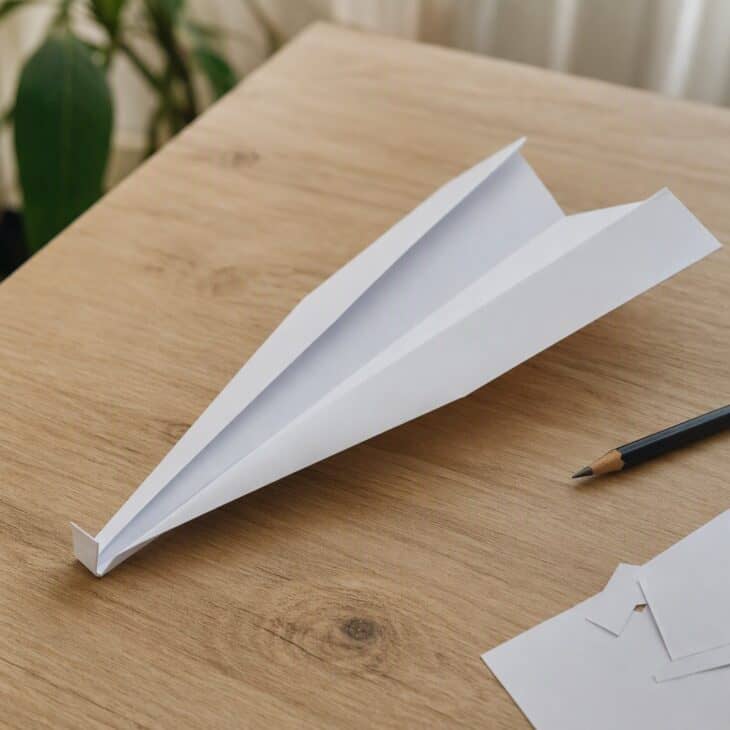
What it is A dart-style glider named for paper plane designer Eiji Nakamura. An upturned lock flap holds the final folds shut, so it needs no tape.
Why it works The lock keeps the wings from unraveling in the air, and the folded nose keeps the weight forward. It is also easy to experiment with, because the wing size and the nose weight can both be changed to see what flies best.
How to get it Fold the sheet in half, open it, and fold the top corners in to make a triangular nose. Crease about 1.2 inches (3 cm) up from the nose point and fold the lock flap upward to hold the last two folds. Fold the plane in half and set the wings about 3/4 inch (2 cm) from the center line. For the exact crease order, follow the CSIRO Double Helix diagram.
Trim it before you judge it
Give every plane a gentle test toss before a hard one. If the nose dives, bend the back edges of the wings up a little. If it stalls, bend them down. Make small changes, one at a time.
05. The Wide-Wing Floater
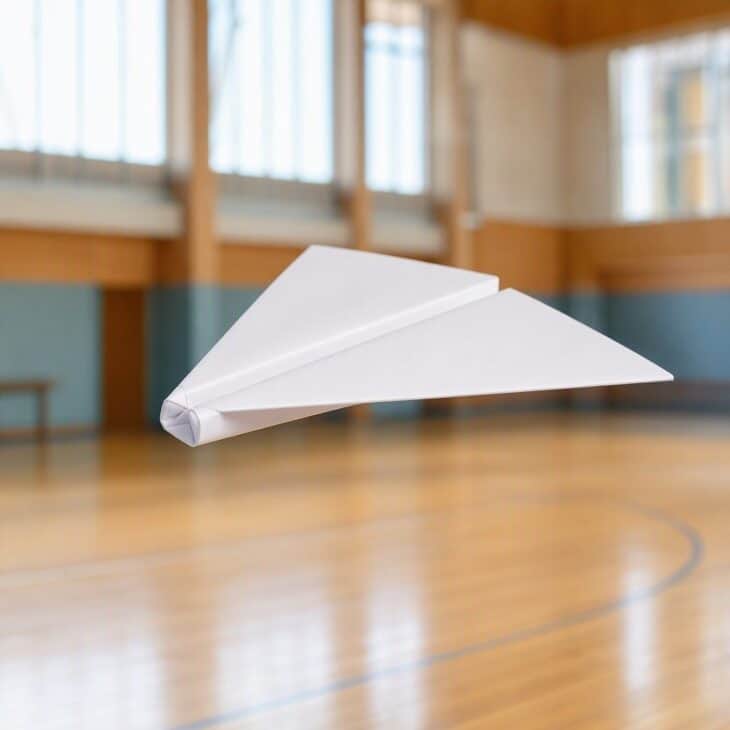
What it is A glider with a blunt, doubled nose and broad wings about 3 inches (7.5 cm) deep. It flies noticeably slower than a dart.
Why it works More wing area for the same weight lets it descend slowly, so it stays up longer on a gentle throw. It is the right plane for a gym or a room with a high ceiling, and the same idea behind how real gliders stay up.
How to get it Fold the sheet in half lengthwise and open it, then fold both top corners to the center crease. Fold the pointed tip back down to make a blunt, doubled nose. Fold the plane in half and make wings about 3 inches (7.5 cm) deep. Launch it level at about shoulder height with a soft push, not a throw.
06. The Delta-Wing Jet
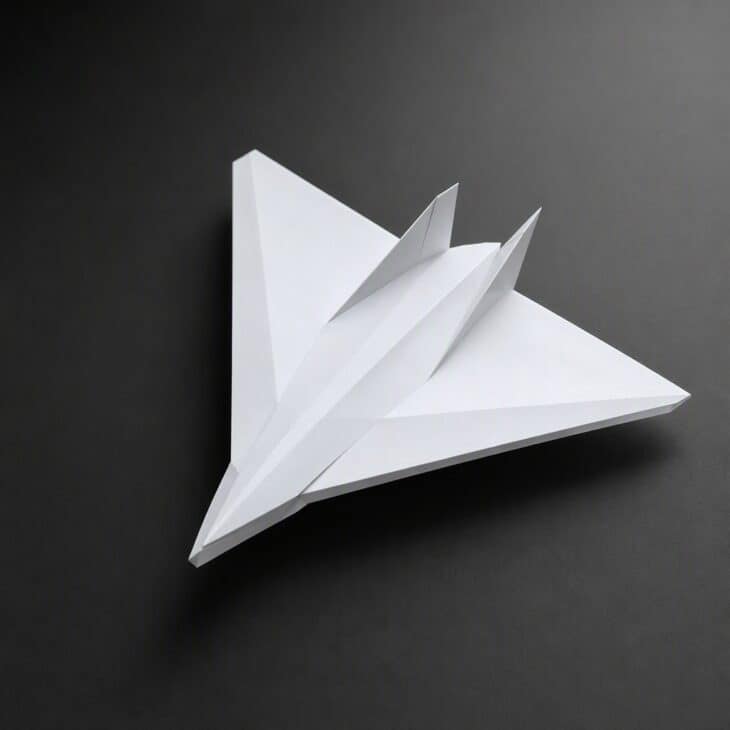
What it is A short, broad triangle that uses the full width of the sheet as wing, shaped like a delta-wing jet. The body is a shallow keel along the center.
Why it works A delta wing is stable and forgiving, so this plane survives rough throws and settles into a fast, straight glide. It is one of the wing shapes real aircraft use, shrunk to a sheet of paper.
How to get it Fold the sheet in half and open it, then fold both top corners to the center crease. Fold the pointed tip down to leave a short nose, then fold the new slanted edges to the center again. Fold the plane in half and fold the wings down flat, with the back edge running straight across. Hold it under the center keel and throw it at medium speed.
07. The Straw and Card Canard Glider
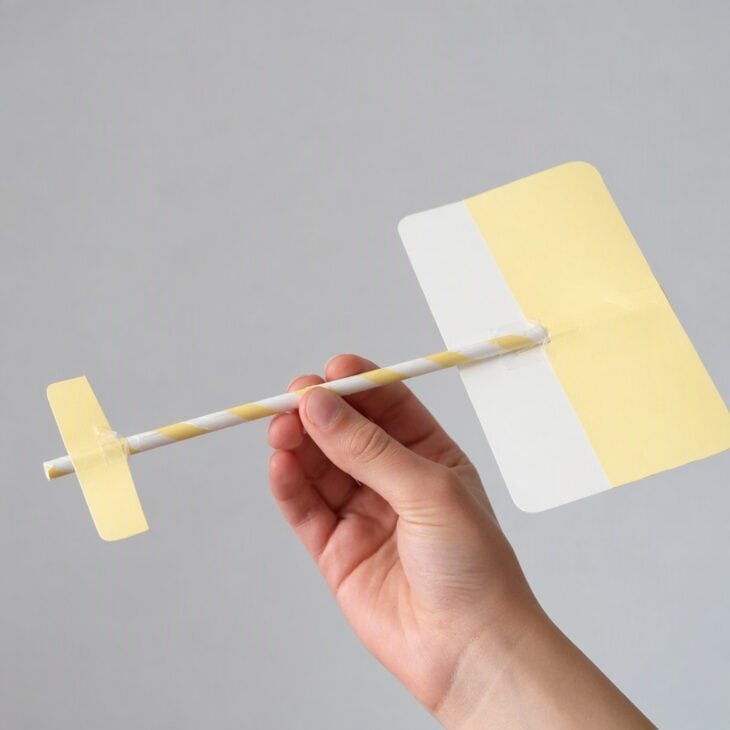
What it is A glider built from a drinking straw and two strips of index card, with a small front wing about 1 by 4 inches (2.5 by 10 cm) and a larger rear wing about 1.5 by 5 inches (4 by 12.5 cm). It needs only tape.
Why it works The small wing at the front is a canard, a layout some real aircraft use. The straw body is light and stiff, so the plane glides gently instead of flying like a dart.
How to get it Cut the two card strips and tape the small one across the front of the straw and the larger one across the back, both centered and flat. Slide a paper clip onto the nose and add or remove weight until the plane glides instead of diving. Bend nothing at first, then trim the back edge of the rear wing up or down in tiny steps. Launch it gently, level and with no flick.
08. The Hoop Glider
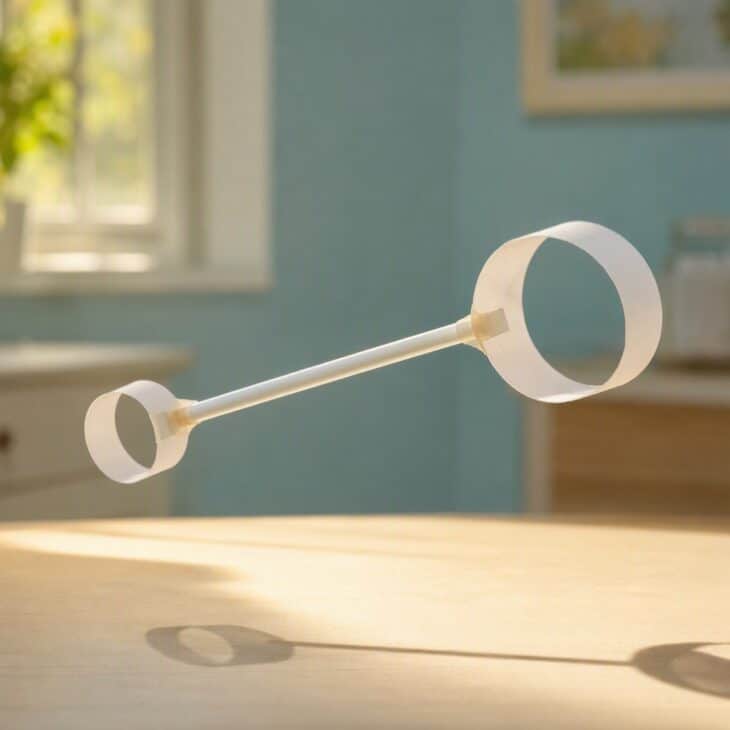
What it is A straw with a small paper ring at one end and a larger ring at the other, and no flat wings at all. Cut the strips about 1 inch (2.5 cm) wide, one about 5 inches (13 cm) long and one about 7 inches (18 cm) long.
Why it works It uses the same small-front, large-rear layout as the canard glider in idea 7, but with ring-shaped wings. It looks wrong and flies right, which is why it is a classroom favorite.
How to get it Tape each paper strip into a loop. Tape the small loop to one end of the straw and the big loop to the other, with both loops lined up along the straw. Hold the straw near the middle and launch it with the small ring leading. Give it a smooth, level push rather than a hard throw.
09. The Flying Wing
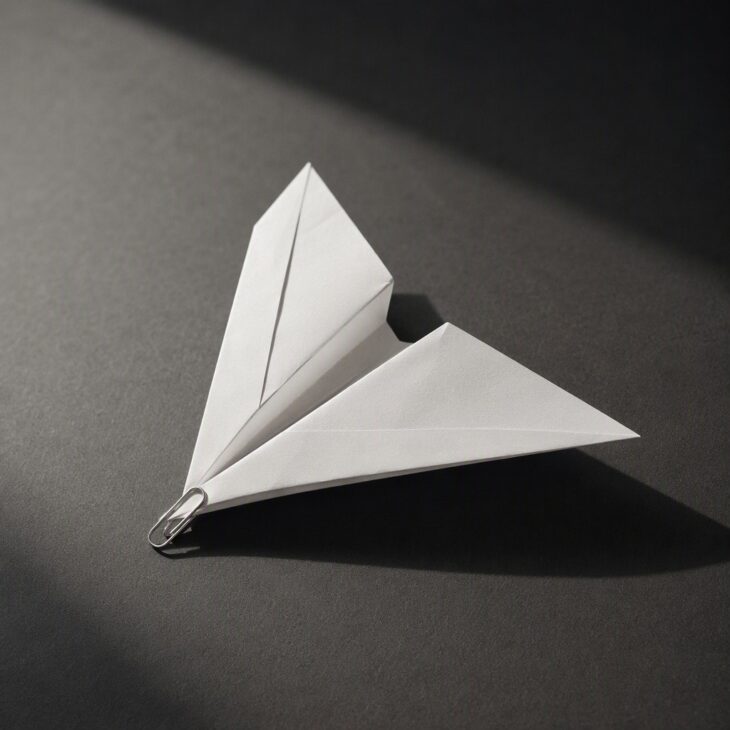
What it is A tailless plane that is almost all wing, with an arrowhead shape and a paper clip at the nose for balance. It borrows its layout from the B-2 Spirit.
Why it works With no tail to steady it, balance does the work: the clip keeps the center of gravity ahead of the wing’s lift. It takes more trimming than a dart, which makes it a good lesson in how flying wings behave.
How to get it Fold the delta-wing jet from idea 6, but crease the wings nearly flat. Slide a paper clip onto the nose. Bend the back edge of both wings up by a tiny amount. Throw it gently and add or remove clip weight until it glides without tumbling.
10. The Looping Stunt Plane
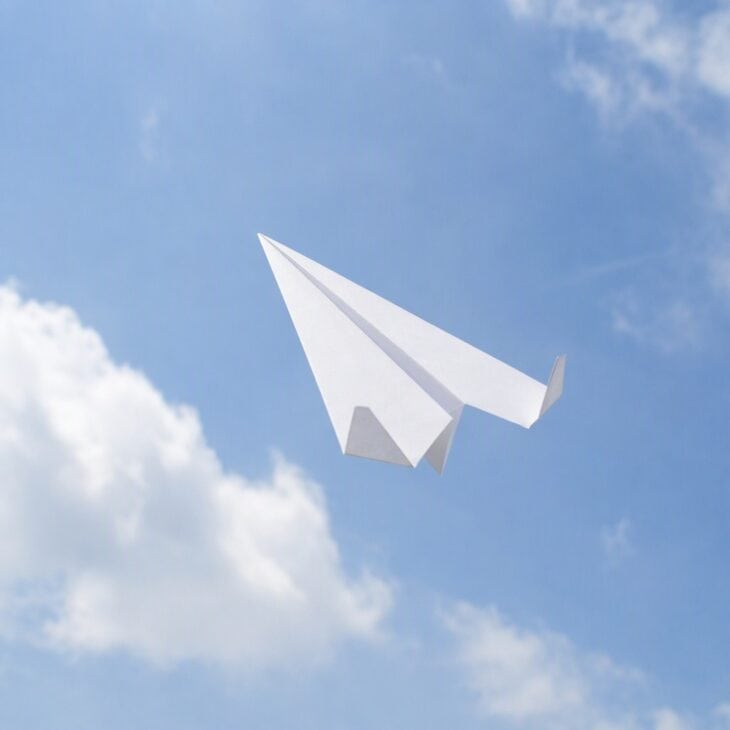
What it is A dart with the back edges of both wings bent sharply upward, so it climbs and loops. Those bent edges act like the elevators on a real tail.
Why it works Raising the back edges pushes the tail down and the nose up, so a firm throw climbs, rolls over and often finishes the loop. It is the easiest stunt for showing a child cause and effect.
How to get it Fold a classic dart. Bend the last 1/2 inch (1.3 cm) of both wings up at a sharp angle. Throw it hard and slightly upward. If it stalls without looping, reduce the bend; if it will not climb, increase it.
11. The Rolling Plane
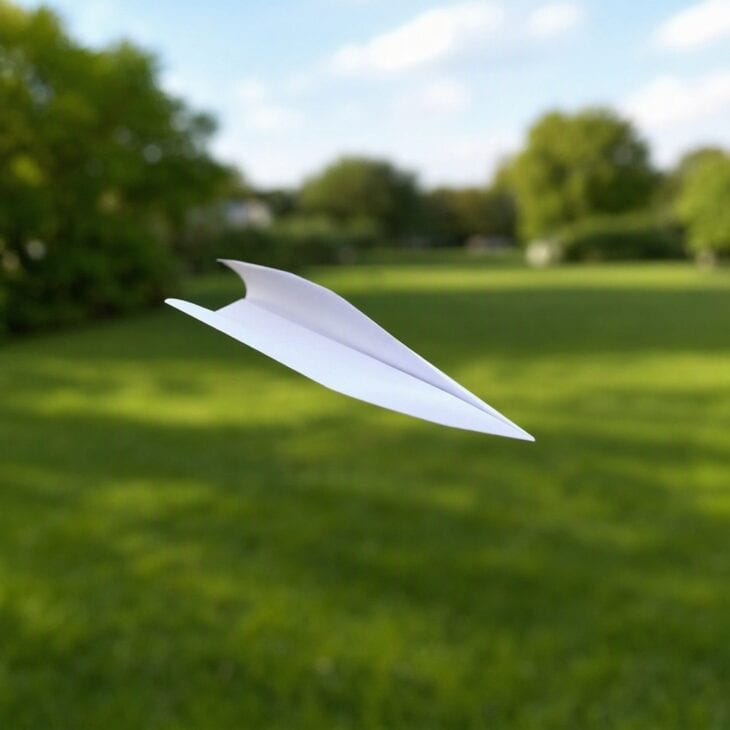
What it is A dart with the back edge of one wing bent up and the back edge of the other bent down, so the plane rolls as it flies. On a real aircraft, ailerons do the same job.
Why it works Opposite bends make one wing produce more lift than the other, which rolls the plane in flight. A little goes a long way, so the result is a corkscrew rather than a crash.
How to get it Fold a classic dart. Bend the back edge of the left wing up about 1/4 inch (6 mm) and the right wing down by the same amount. Throw it level and firm, and expect a corkscrew. Swap the bends to reverse the roll.
12. The Circling Glider
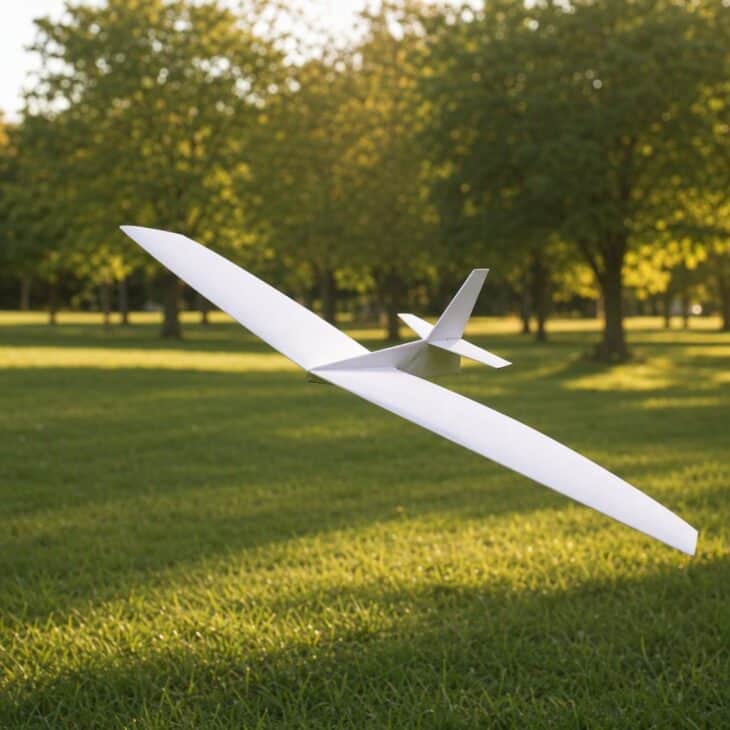
What it is A glider trimmed to fly a wide circle and land near you instead of across the room. The trim is one small bend on the back edge of one wing.
Why it works A bent trailing edge makes one wing produce less lift than the other, so the plane turns gently instead of going straight. Model glider pilots use the same trimming idea to keep a plane over a small field.
How to get it Start with the wide-wing floater from idea 5. Bend the back edge of the left wing up by about 1/8 inch (3 mm). Launch it level at a gentle speed and watch the turn. If the circle is too tight, flatten the bend a little.
13. The Paper-Clip Nose Dart
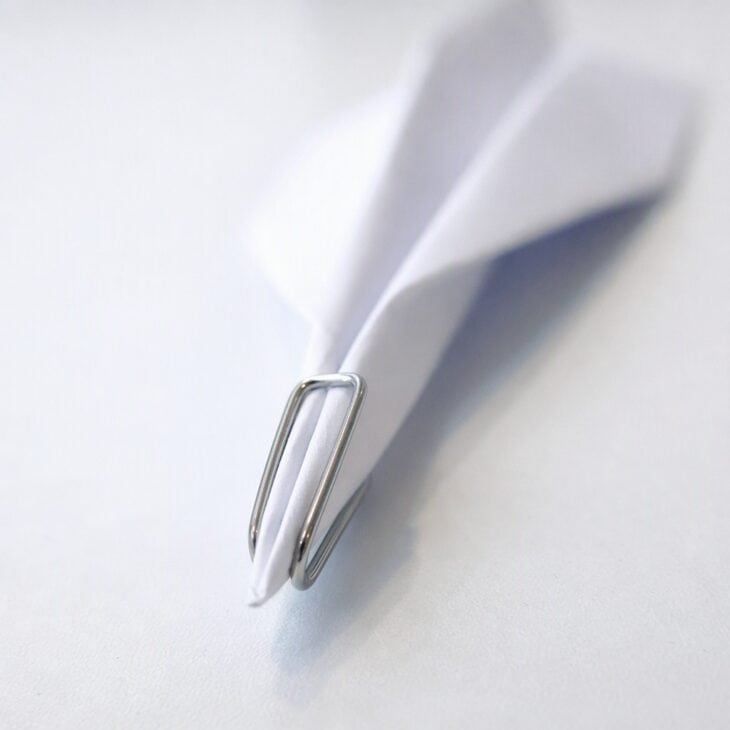
What it is A dart or glider with a standard paper clip slid onto the nose. The clip adds weight at the front, where a plane needs it most.
Why it works Moving weight forward steadies the plane, which matches what Smithsonian notes about strong fliers. Too much weight makes it dive and too little makes it stall, so the clip lets you tune the balance in seconds.
How to get it Slide one paper clip onto the nose of a plane that stalls or floats up and drops. Fly three test throws and note whether the nose dives or the plane stalls. Add a second clip if it still stalls, or remove one if it dives. Keep the setup that flies best, and run it against friends in a paper airplane contest like the one in our airplane birthday party ideas.
14. The Cardstock Breeze Cutter
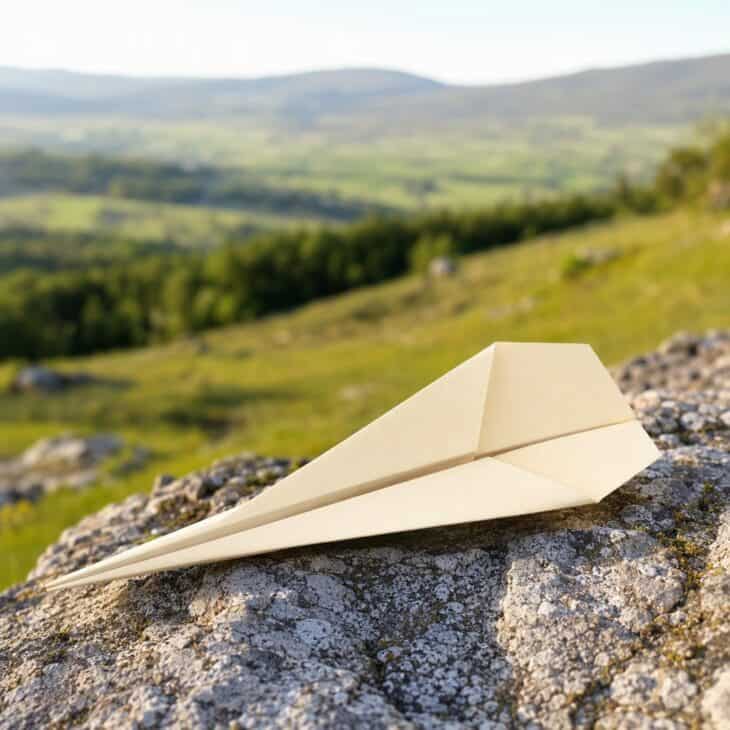
What it is A dart folded from lightweight cardstock instead of copy paper. It is a heavier plane with stiffer wings that hold their shape.
Why it works More weight gives it momentum, so a light breeze pushes it around less than a copy-paper plane. It is the one to take outdoors on a calm day.
How to get it Use a letter-size sheet of lightweight cardstock. Score each fold line with a ruler edge and a blunt tool such as the back of a butter knife, then fold. Cardstock springs back, so press each crease flat and hold it for a few seconds. Keep the wings narrow and throw it firm into a light wind.
15. The Winglet Glider
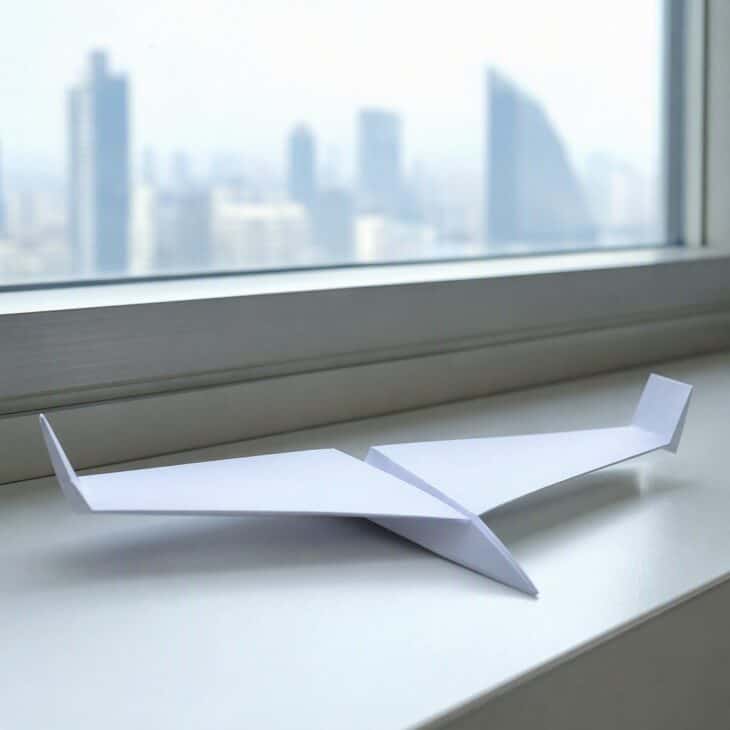
What it is A glider with the last 1/2 inch (1.3 cm) of each wing tip folded upward. The folded tips borrow the idea behind real winglets.
Why it works On airliners, winglets cut drag at the wing tips. On paper they also act as small vertical fins that help the plane hold a straight line.
How to get it Fold the wide-wing floater from idea 5. Crease the last 1/2 inch (1.3 cm) of each wing tip and fold it straight up, so the two winglets mirror each other. Check that both are the same height and angle. Throw it gently and compare it with a plain-wing version.
16. The V-Wing Self-Righter
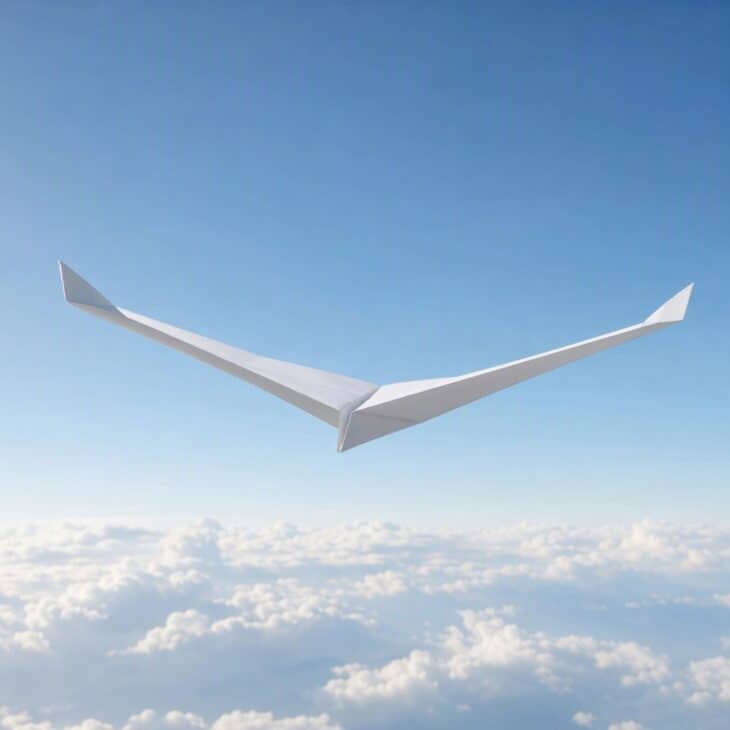
What it is A dart or glider with both wings angled up into a shallow V, a shape called dihedral.
Why it works Dihedral gives a plane a built-in tendency to level itself after a gust or a crooked throw. Many light aircraft use it for the same reason.
How to get it Fold a classic dart or the wide-wing floater. Crease each wing at the body and tilt both wings up so they form a shallow V, about 20 degrees from flat. Check from behind that both wings tilt the same amount. Throw it level and let it correct itself.
17. The Index-Card Mini Dart
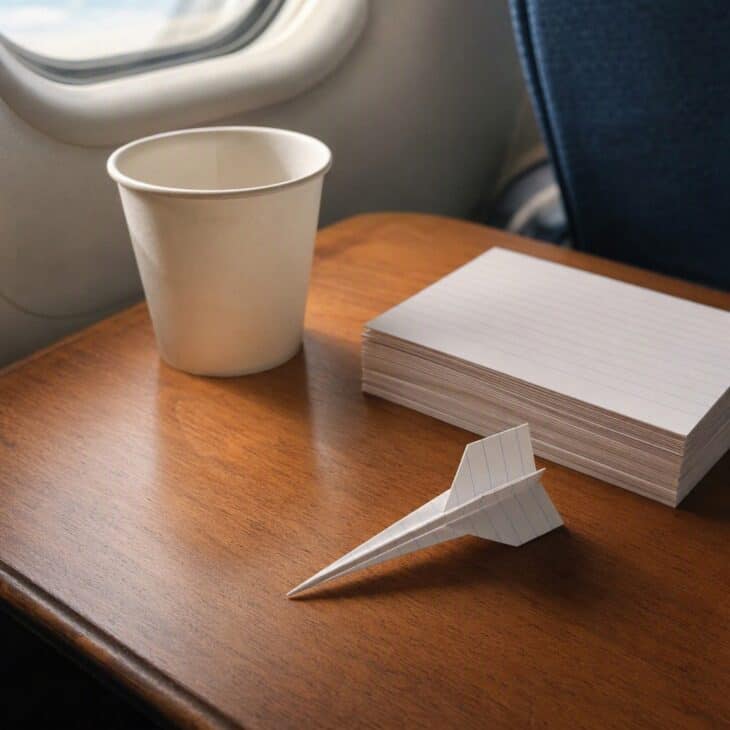
What it is A small dart folded from a 3 by 5 inch (7.6 by 12.7 cm) index card. The card is stiffer than paper, so the plane is small but stays rigid.
Why it works A small plane flies slower and covers less ground, which makes it a good tabletop toy. It fits in a pocket, which also suits our airplane activities for kids, as long as it stays on the tray table.
How to get it Use the 5 inch (12.7 cm) edge as the length. Fold the card in half lengthwise and unfold, then make the classic dart folds. Fold narrow wings, about 1/2 inch (1.3 cm) deep. Test it across a table with a soft, short push.
18. The Square-Sheet Origami Dart
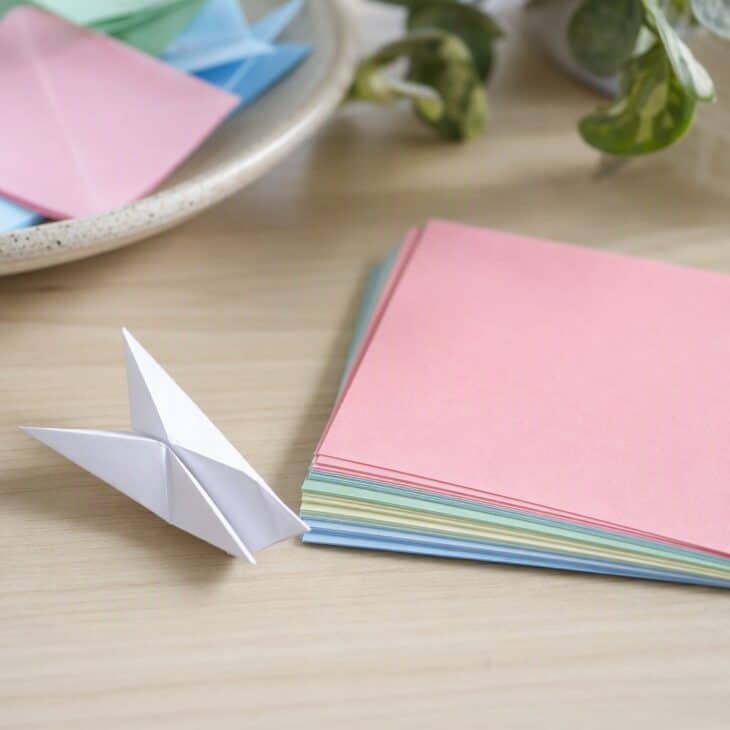
What it is A dart folded from a perfect square instead of a letter-size sheet. Origami paper works, or you can square up ordinary paper.
Why it works A square makes a shorter, stubbier plane with a different balance point, so it flies differently from the classic dart. It is a good way to learn how body length changes a glide.
How to get it To square a letter sheet, fold one top corner down to the opposite edge to form a triangle, then cut off the leftover strip. Unfold, then fold the square in half and make the classic dart folds. Fold the wings down level with the body. Throw it softly and see how far the shorter body flies compared with a full sheet.
19. The Tail-Fin Tracker
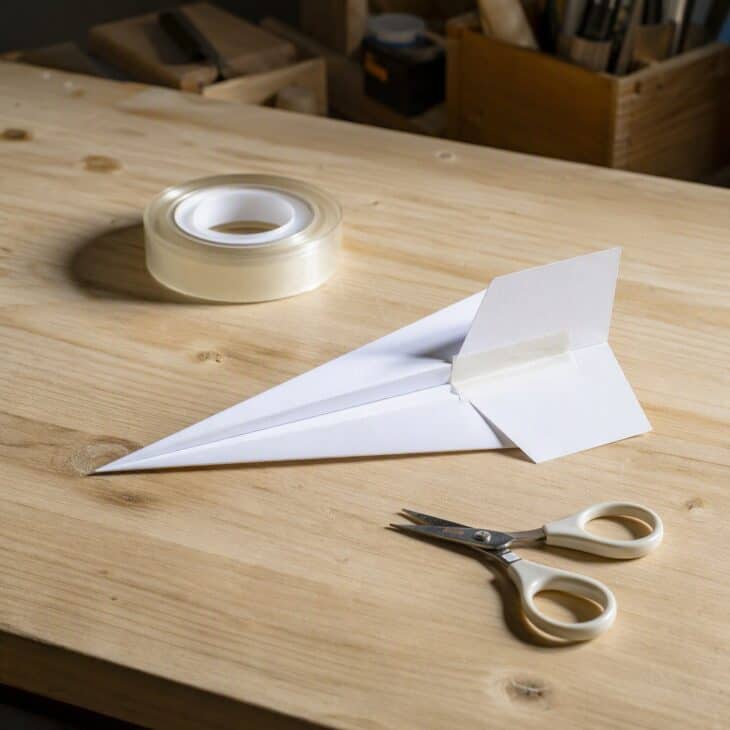
What it is A dart with a small vertical fin taped under the tail. Cut the fin from an index card, about 1 inch (2.5 cm) tall and 1.5 inches (3.8 cm) long.
Why it works A vertical fin works like the one on a real tail: it resists side-to-side wobble, so the plane tracks straight. It adds weight at the back, which is why you rebalance with a clip.
How to get it Fold a classic dart. Tape the card fin under the center crease at the tail, with the tall edge pointing down. Slide a paper clip onto the nose to restore the balance. Fly it and adjust the clip until it tracks straight without diving.
20. The Cut-Elevon Stunt Jet
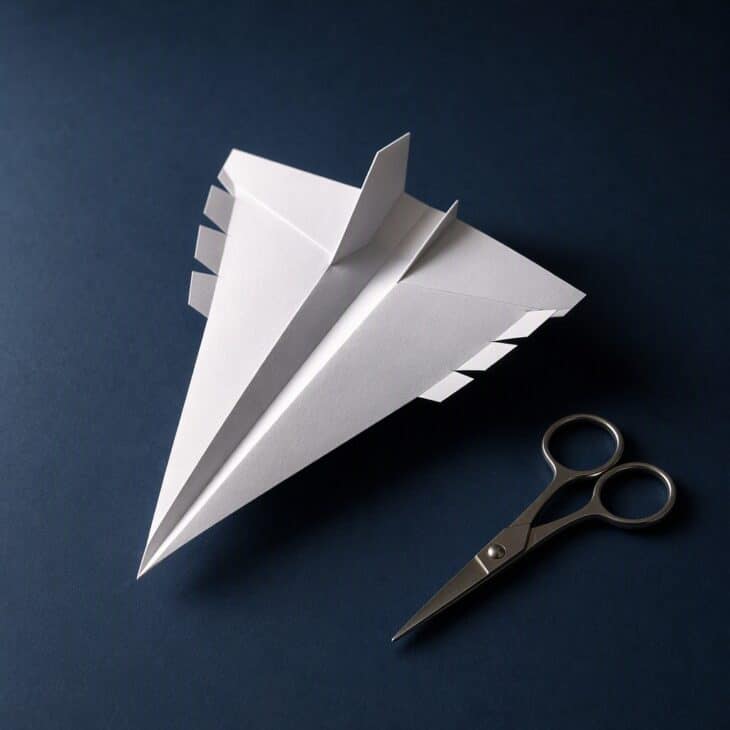
What it is A delta-wing jet with two short cuts in the back of each wing, creating small flaps that can be bent on their own. Delta-wing aircraft use combined flaps called elevons for the same job.
Why it works Bend both flaps up together to climb and loop, or in opposite directions to roll. You get stunt control without bending the whole wing.
How to get it Fold the delta-wing jet from idea 6. Use scissors to cut two short slits about 1 inch (2.5 cm) long into the back edge of each wing, creating a flap about 1 inch (2.5 cm) wide. Bend both flaps up for loops, or one up and one down for rolls. Ask an adult to help with the scissors for younger kids.
21. The Paper Helicopter Whirler
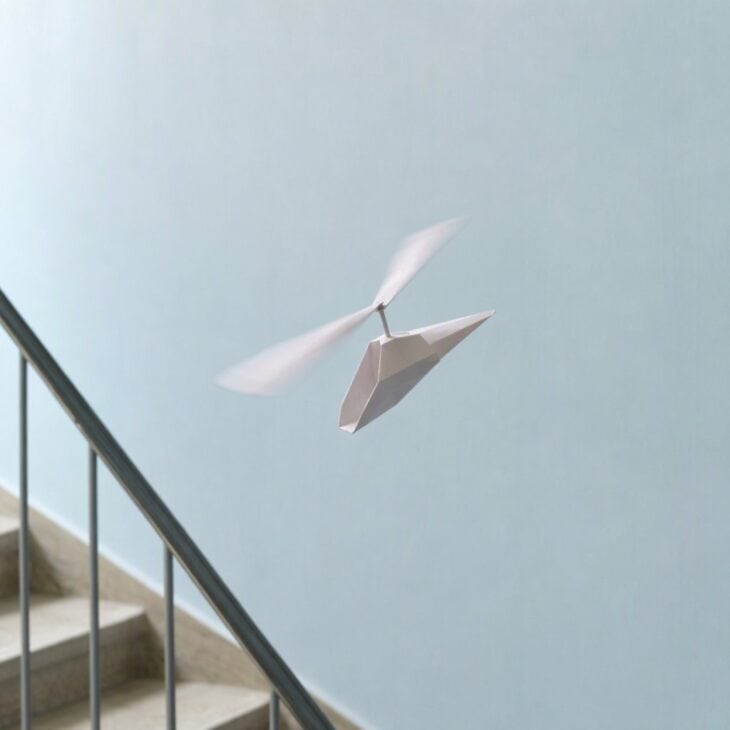
What it is Not a glider, but a paper aircraft that spins down: a strip with two blades folded in opposite directions and a paper clip for weight. You drop it from height instead of throwing it.
Why it works As it falls, air pushes up through the blades and makes it spin, which slows the fall. That is autorotation, the same effect a pilot uses to land a helicopter after an engine failure.
How to get it Cut a rectangle about 2 by 6 inches (5 by 15 cm), then cut a slit down the middle from the top to about halfway. Fold the two top halves outward in opposite directions to make the blades. Fold the bottom up twice and clip it to add weight. Drop it from a stairwell or a balcony railing, and keep it clear of anyone below.
22. The Rubber-Band Launched Glider
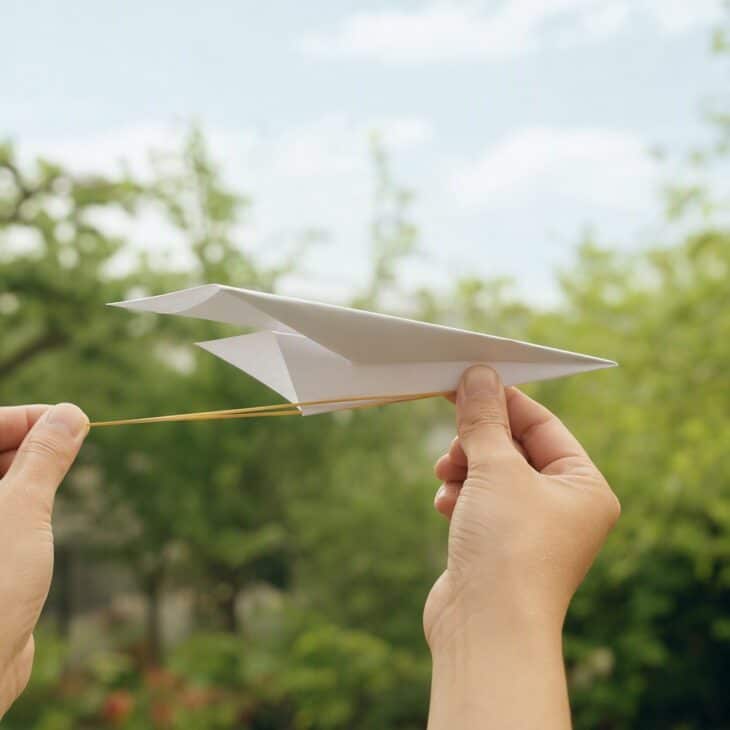
What it is A glider with a small hook under the nose, launched by stretching a rubber band instead of throwing. The hook is a bent paper clip held on with tape.
Why it works A launch from a stretched rubber band is the same every time, which makes it a fair test for comparing designs. Hand-launched and catapult gliders are a real model aviation hobby, and a fine entry in our aviation hobby ideas.
How to get it Fold a sturdy glider from the wide-wing floater or the Nakamura Lock. Bend a paper clip into a small hook and tape it under the nose, facing forward. Hold a rubber band between your thumb and finger, hook the plane on, pull it back and release it at a safe angle. Follow the eye safety note below, because a rubber band can snap.
Eye safety
Never launch a plane, a rubber band or a paper clip hook toward a face. Wear safety glasses for rubber-band launches and keep a clear lane in front of you.
23. The Swept-Wing Fighter
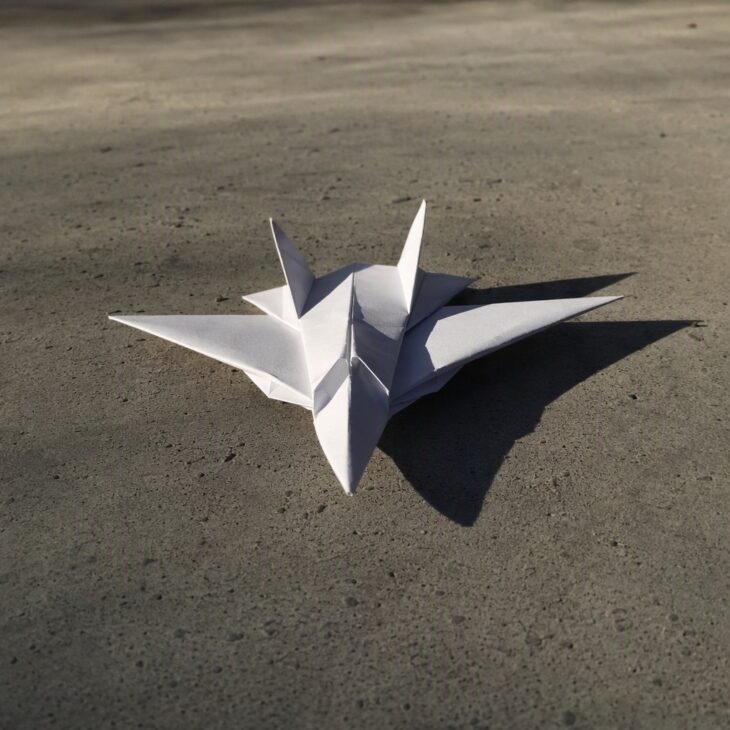
What it is A dart with its wings folded at an angle so they flare wider at the tail than at the nose. The result looks like a fighter jet.
Why it works Smithsonian notes that swept wings add an up-elevator effect that helps keep a plane stable. The shape also works for kids who want their favorite fighter jets in paper form.
How to get it Fold a classic dart through the slanted edge folds. Fold the plane in half, then fold the wings down so they flare wider at the tail than at the nose, forming a swept shape. Make both wings identical in angle and depth. Throw it firm and level.
24. The Straw Biplane
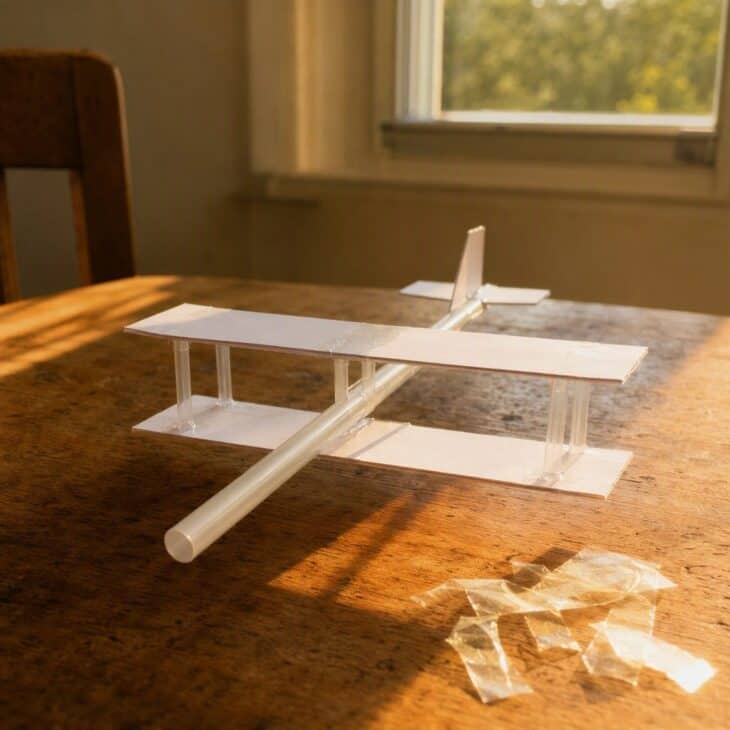
What it is A glider with two stacked card wings joined by short straw struts, in the style of early biplanes. Each wing is a card strip about 1.5 by 5 inches (3.8 by 12.7 cm).
Why it works Two stacked wings give extra wing area on a small frame, which suits slow, gentle flight. The layout is the one the Wright brothers used, as the story of the first flight shows.
How to get it Tape two card strips one above the other, separated by two straw pieces about 1 inch (2.5 cm) long, to form a box. Tape the box to a long straw fuselage. Slide a paper clip onto the nose and adjust until it glides. Launch it gently and level.
25. The Slim Concorde-Style Delta
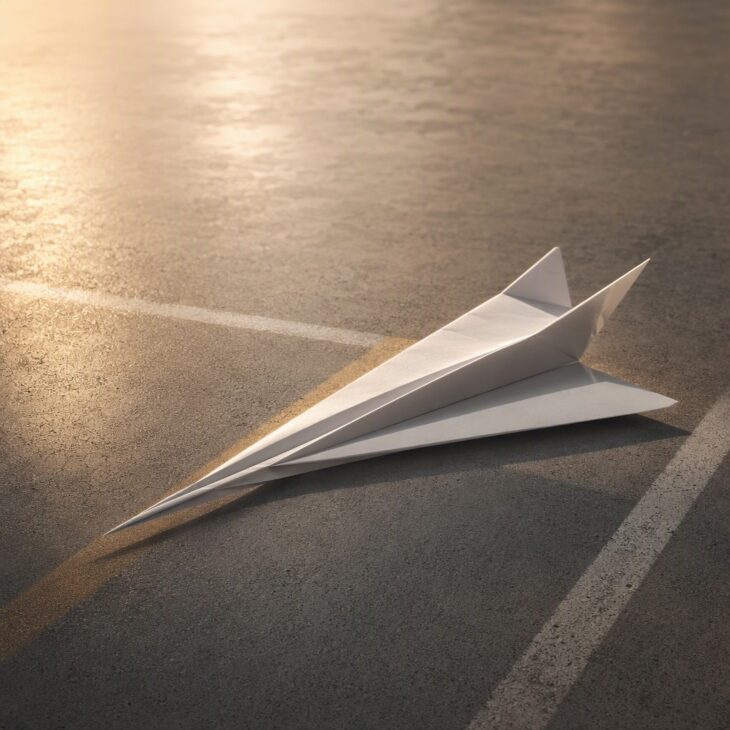
What it is A long, narrow delta with a sharp pointed nose, built to resemble Concorde. It is slimmer than the delta-wing jet in idea 6.
Why it works Concorde used a slender delta wing for supersonic flight, and the shape still looks fast on a sheet of paper. See how it earned its reputation in our Concorde explainer.
How to get it Fold the long needle dart from idea 2. Fold the wings down flat so they form one continuous slim triangle. Bend the back edge of each wing up slightly to keep the nose from diving. Throw it fast and level, like a jet on a long final approach.
FAQ
Sources and references used for research and fact-checking.
Get the Newsletter
The latest aviation news and stories sent to your inbox.
About the Author

Hanna writes AeroCorner's aviation-lifestyle and decor guides, turning a love of flight into ideas for your home, celebrations, and gift lists.