

Table of Contents
30 Hot Air Balloon Photoshoot Ideas
A balloon changes any photo it enters. It brings color, scale and a sense of occasion to a field that would otherwise be empty, and it gives even a simple portrait a story.
The best balloon pictures are rarely taken in the air. Most are made on the launch field, at the moment the envelope fills, or in the hour after landing, when light is soft and the crew is relaxed.
This list covers 30 ideas for couples, families, solo shooters and event photographers. For what to wear, see our outfit ideas, and for more aloft inspiration, try our hot air balloon decor ideas.
01. Sunrise Launch Field Silhouette
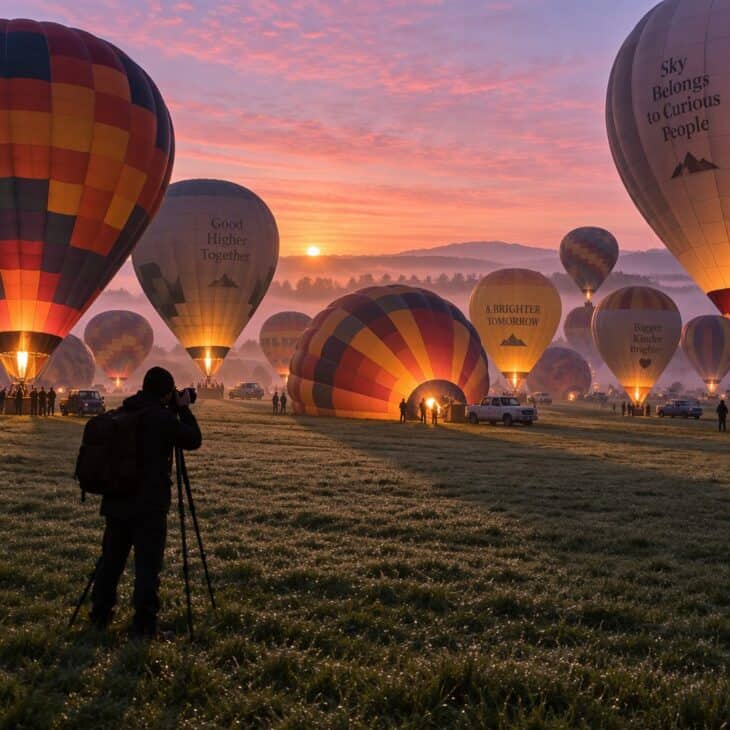
What it is A wide frame of balloons mid-inflation on the launch field, with the burners lighting the envelopes from inside like paper lanterns. The subject stands small in the foreground, usually in dark clothing, so the shape reads as a clean silhouette.
Why it works The glow only lasts for the few minutes the burners are firing. The contrast between dark ground and lit fabric does the work, so you need no props.
How to get it Arrive before first light, since crews start laying out envelopes about 45 minutes before sunrise. Shoot from low down with a wide lens, set exposure for the sky, and let the foreground go dark. Ask the crew chief where to stand, because the area around a fan and a burner is a working zone.
02. Basket Detail Close-Up
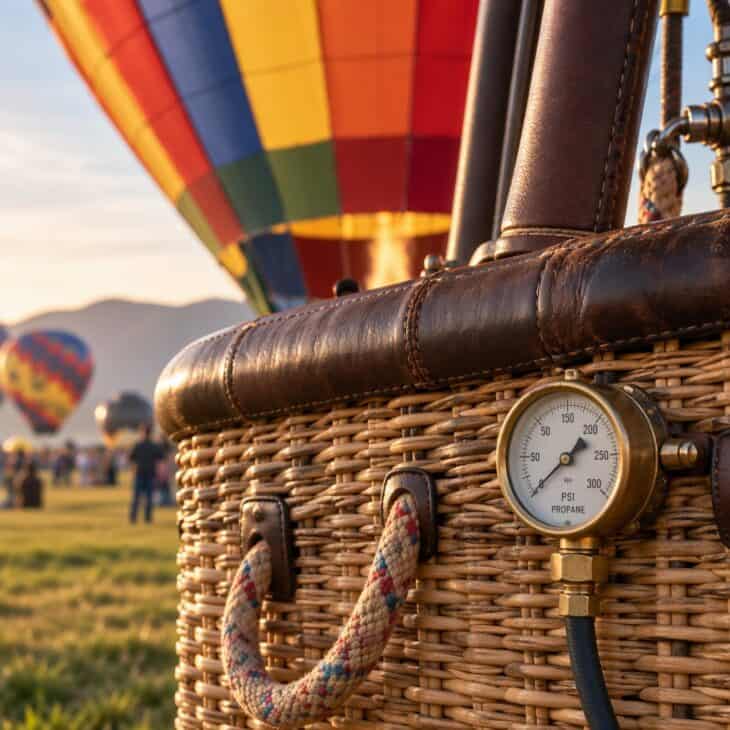
What it is A tight shot of the wicker basket: hand-woven cane, a suede or leather rim pad, stainless fuel lines and the corner posts that carry the cables. Passenger baskets are usually divided into compartments, with a pilot section holding the burner controls.
Why it works Texture sells a balloon photo set. Wicker against bright nylon gives you a natural contrast of warm brown and saturated color, and the shot works as an opener or a detail break between wide frames.
How to get it Ask the pilot before the flight if you can photograph the basket on the ground. Use a 50 mm or 85 mm lens at a wide aperture to blur the envelope behind. Keep hands and gear clear of the burner frame and the fuel hoses.
03. Couple Under the Inflating Envelope
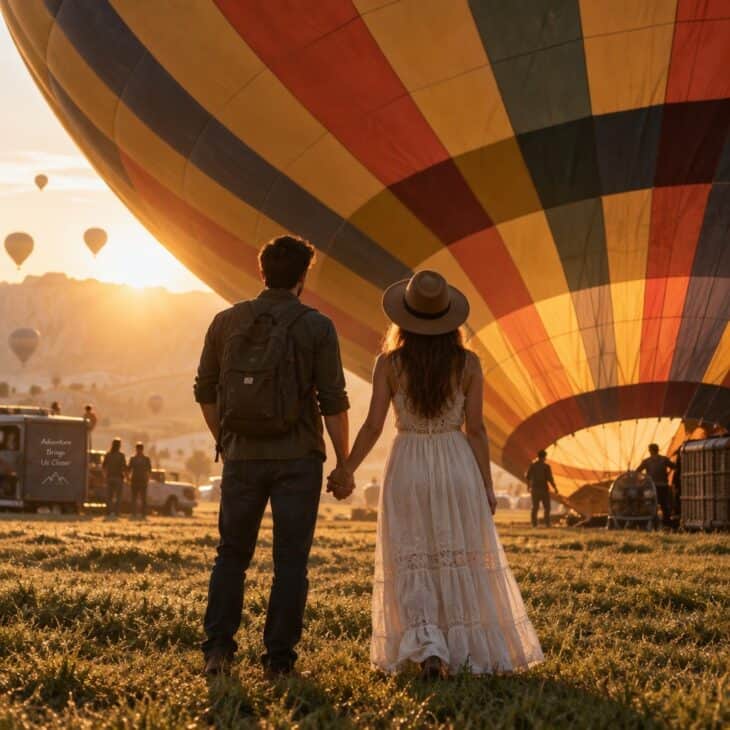
What it is Two people standing on the grass beneath the open mouth of an inflating envelope, seen from behind so the scale carries the picture. Stripes and panels of the fabric fill the upper half of the frame.
Why it works The envelope is roughly 70 feet (21 m) tall when inflated, which makes a tiny couple look cinematic. Faces are not required, so the shot also suits shy subjects.
How to get it Ask the crew when the envelope is about half full, because it looks best before it stands up. Place the couple close to the mouth, but outside the fan and burner area, and keep them there only for a few minutes. Shoot from behind with a medium zoom and let the fabric color set the palette.
04. Burner Flame Glow Portrait
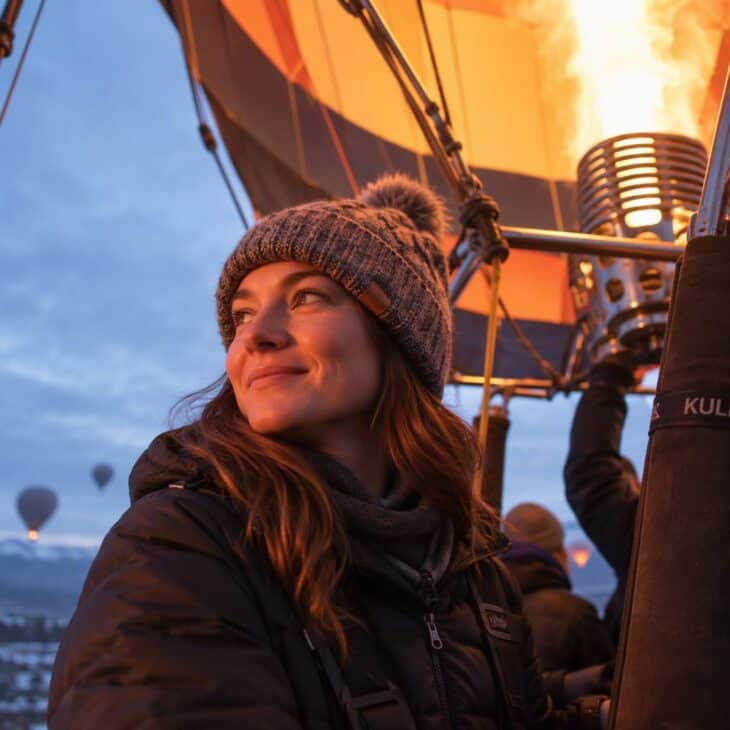
What it is A portrait lit by the burner, with the flame creating a warm orange side light on one cheek and the cold blue dawn on the other. The envelope glows behind the subject as a soft backdrop.
Why it works Burner light is the most flattering portrait light a balloon offers, because it is warm, directional and brief. It turns an ordinary selfie into something that looks lit by a studio.
How to get it Time it for the moments just after a burn, when the pilot pauses and the flame is still glowing. Raise the ISO, keep the shutter at 1/125 or faster, and expose for the skin rather than the fabric. Stay seated and let the pilot tell you when it is safe to hold a phone up.
05. Rainbow of Balloons Over Farmland
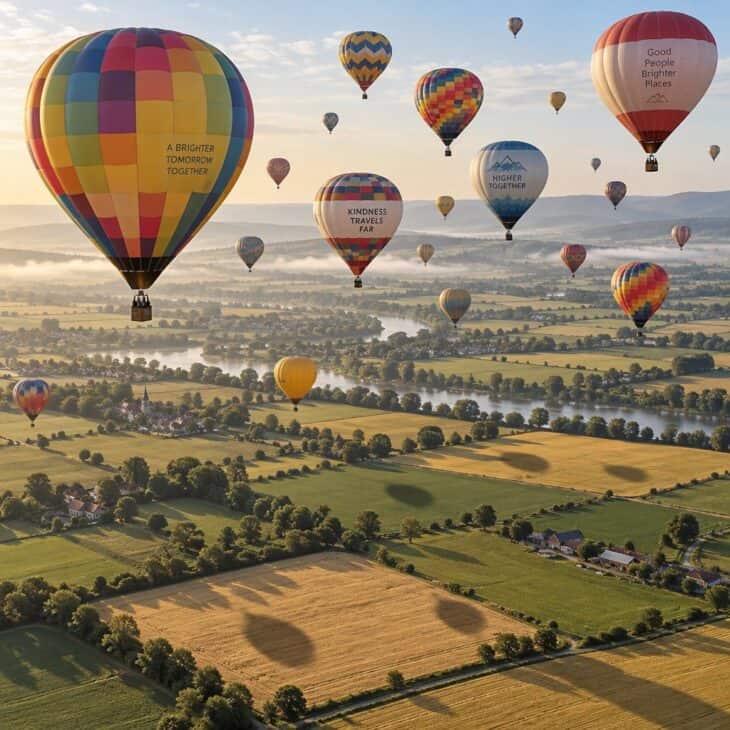
What it is A wide landscape of several balloons in different color schemes, floating above a checkerboard of crops. The fields give a geometric base, and each envelope adds a bright accent.
Why it works Color variety is the point. Because balloons launch together and drift at about the same speed, one frame can hold a whole rainbow without any editing.
How to get it Fly at a festival or a busy commercial launch area so other balloons share the sky. Sit on the side of the basket facing the other aircraft, and ask the pilot to turn the basket if needed. Shoot at 24 mm to 35 mm and keep the horizon level.
06. Cappadocia-Style Valley Sunrise
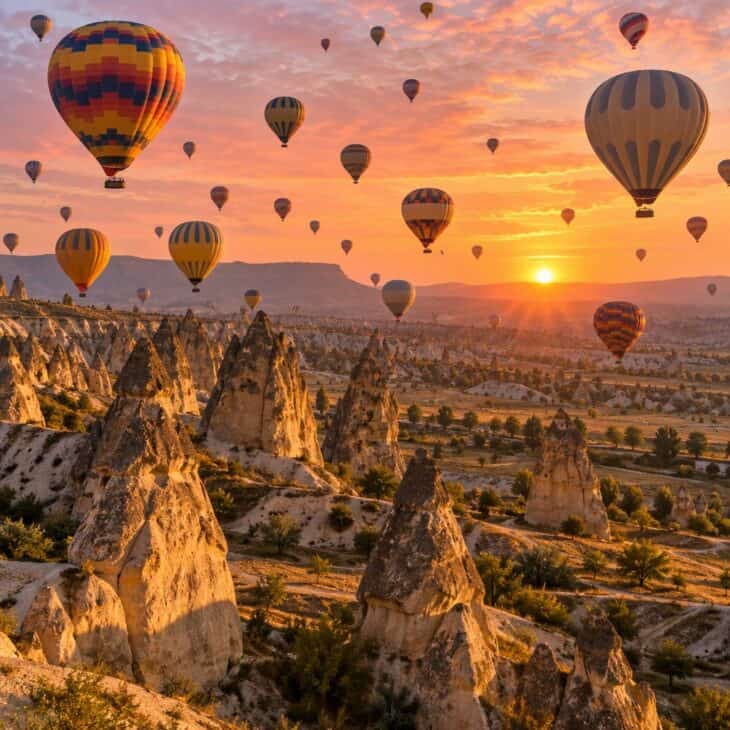
What it is A skyline of balloons rising over eroded rock towers and canyon walls. The best known place for this shot is Cappadocia in Turkey, where dozens launch from the same valleys at dawn.
Why it works Few locations give such a dramatic base layer. The rock formations add depth, while the balloons add scale and color against a warm sunrise sky.
How to get it Book a flight at dawn, since sunrise slots sell out weeks ahead in peak season. Many operators offer a photography flight with fewer passengers per basket. Bring a wide zoom, a spare battery, and a warm layer, because the early air is cold.
07. Reflection on Still Water
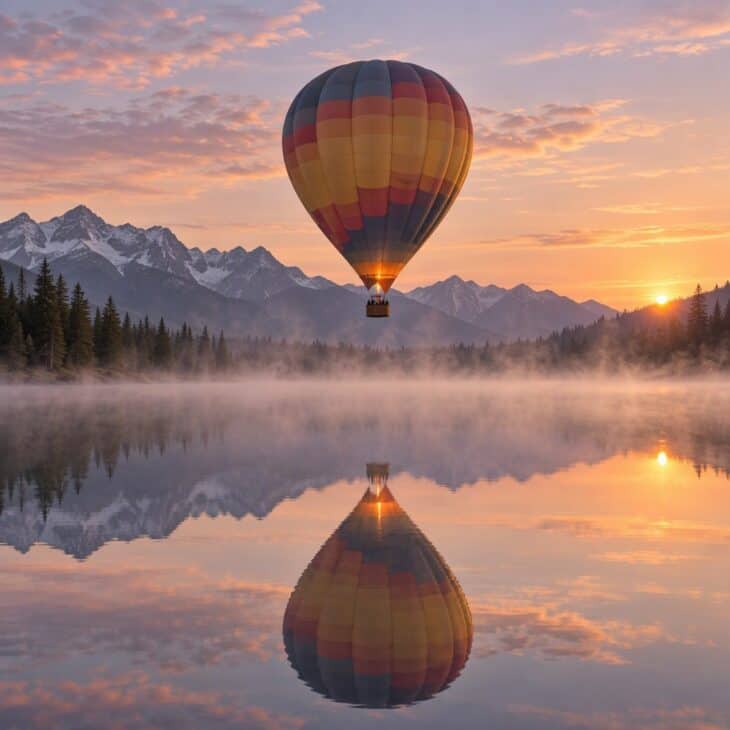
What it is A balloon low over a lake with its twin mirrored in the water below, the horizon line cutting the frame in half. Mist on the surface softens the lower half of the picture.
Why it works Symmetry reads as calm, and calm weather is also what balloons need to fly, so the two go together. The result looks like a painting and rarely needs editing.
How to get it Pick a launch site near a lake or reservoir, and check the wind, since a ripple destroys the mirror. Stand at water level with a 70 mm to 200 mm lens. Put the horizon in the middle for symmetry or lower it for a taller reflection.
08. Balloon Moon Rise Shot
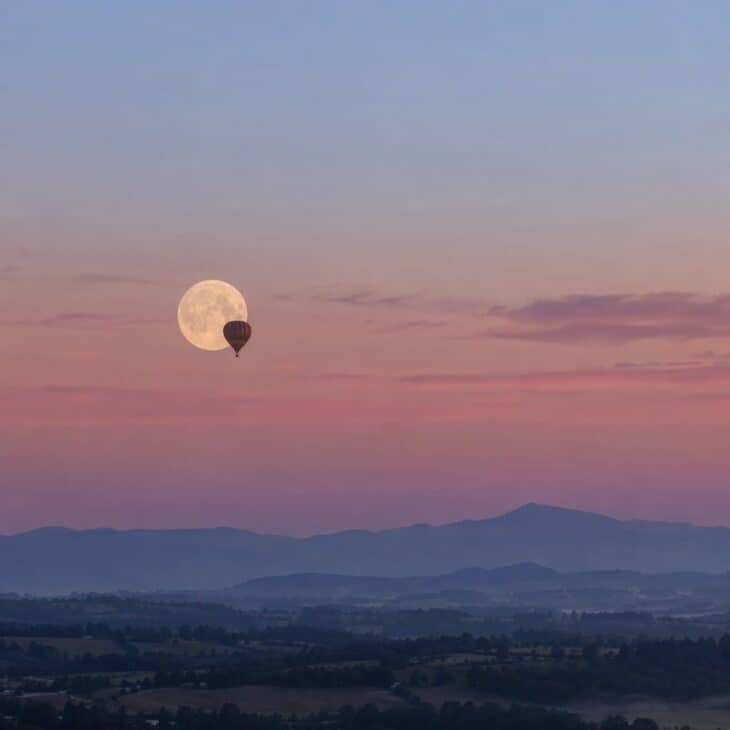
What it is A balloon drifting across or next to a low moon in a soft dawn sky. The balloon is small in the frame, and the moon is a pale disc above the horizon.
Why it works It is a rare coincidence of a moving subject and a fixed one, so the photo reads as luck, and people stop scrolling for it.
How to get it Check a moon calendar for a full or nearly full moon setting around sunrise. Use a 200 mm to 400 mm lens from the ground and a tripod. Expect to need several launches, because the balloon has to line up with the moon.
09. Night Glow Event Lineup
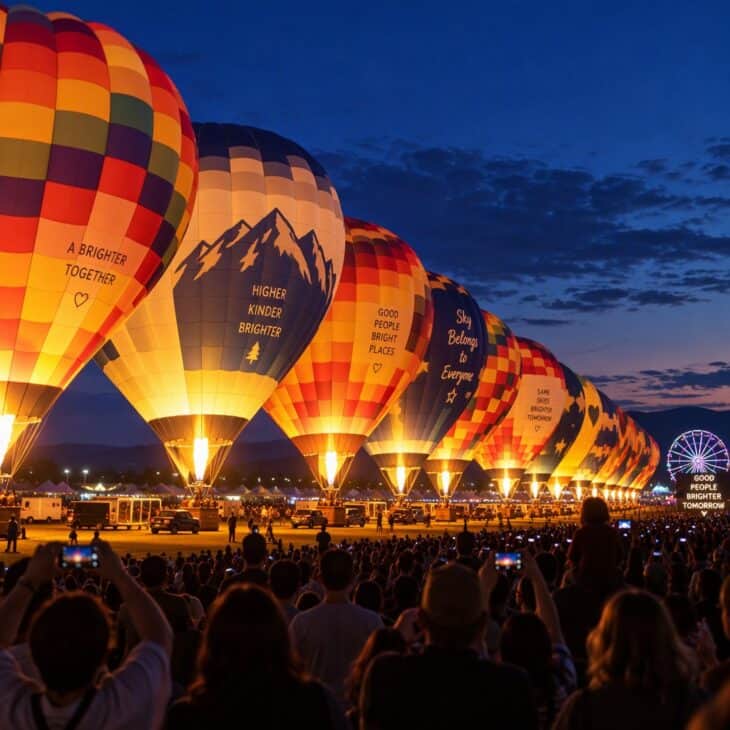
What it is A line of tethered balloons lit from inside at dusk, with the burners pulsing in sync. Most festivals call it a night glow, and the balloons stay on the ground.
Why it works The saturated color against deep blue twilight is hard to beat, and the balloons hold still, so a long exposure works in a way it cannot in flight.
How to get it Look up a regional balloon festival and find the night glow schedule, which usually follows an evening session. Use a tripod and 1/4 s to 1 s exposures at dusk. Put people in the foreground for scale and stay behind the rope lines.
10. Family Matching Outfits at the Launch Field
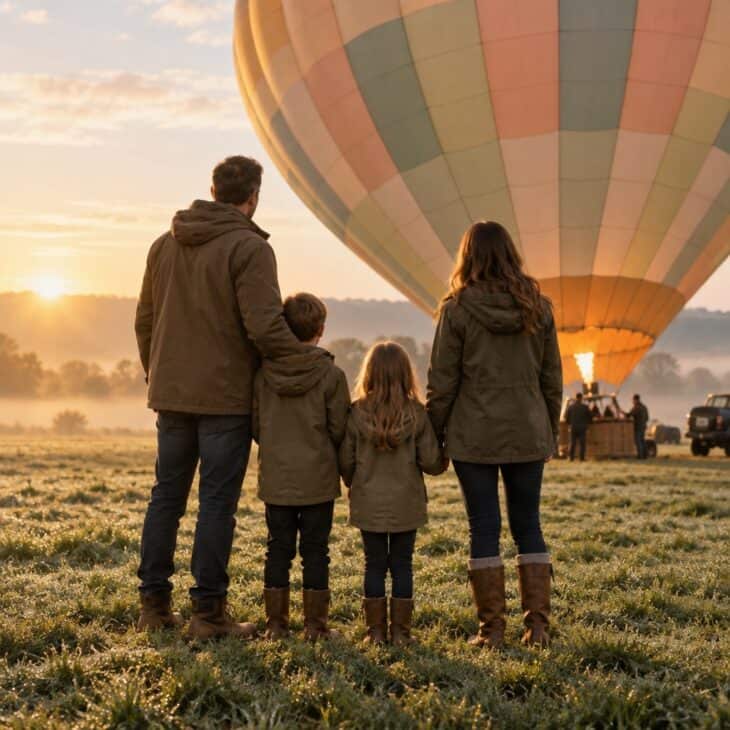
What it is A family in coordinated colors standing in front of a balloon on the launch field. Muted palettes such as cream, rust and olive let the envelope stay the brightest thing in the frame.
Why it works Coordinating, rather than matching, keeps the photos from looking staged. Neutral clothing also hides the cold-weather layers everyone needs at dawn.
How to get it Pick two or three colors that contrast with the balloon and check which balloon is flying. Avoid large logos and long loose scarves near burners. Wear closed shoes with grip for wet grass and bring a spare layer for the wait.
11. Kids Looking Up at the Envelope
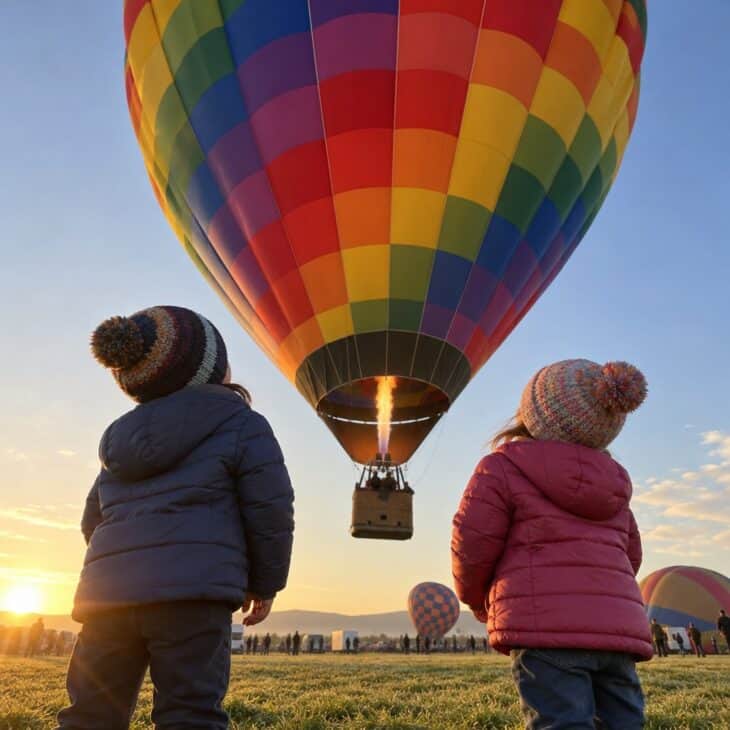
What it is Children shot from behind or the side as they crane up at the envelope, with the balloon taking up most of the frame. A low angle exaggerates its height.
Why it works The scale difference and reaction do the storytelling. Parents tend to keep these for years because they capture the first time a child sees something so large.
How to get it Let the kids watch the inflation, which is the most dramatic part for them. Kneel down to their level to shoot from a low angle. Keep them behind the safety line until a crew member says otherwise. Prints of the shot also work in a balloon-themed nursery.
12. Pregnancy and Maternity Balloon Shoot
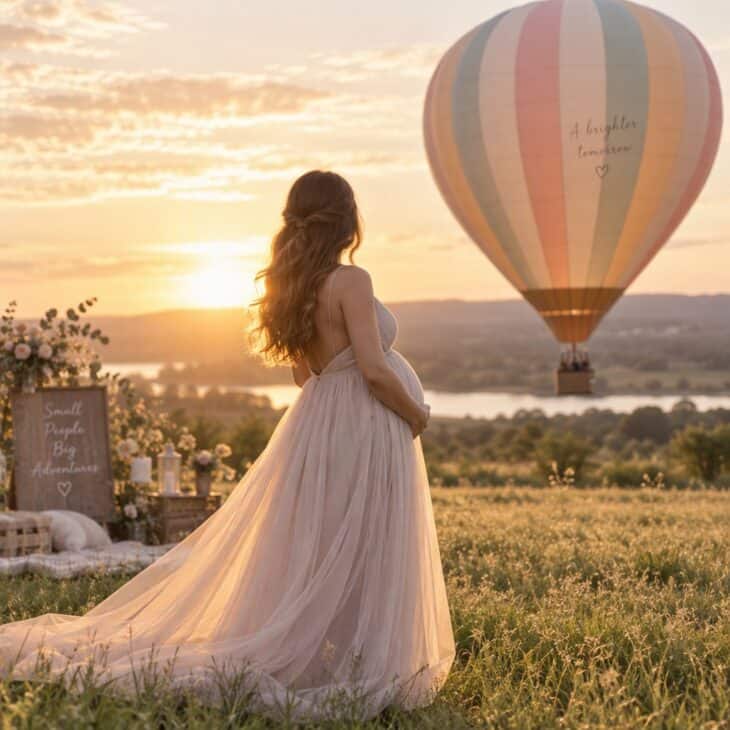
What it is A maternity portrait with a flowing gown, cape or knit set in a field, and a balloon as the backdrop. Soft sage, blush and cream are common palettes.
Why it works The balloon is a visual stand-in for lift and anticipation, so it suits the theme without props. Fabric in the breeze adds movement.
How to get it Hire a photographer who has worked at a launch field, as access can need a permit. Book the shoot for the first or last hour of light. Bring a gown or wrap that flows, and a chair for rest between sets.
13. Wedding Elopement Photos
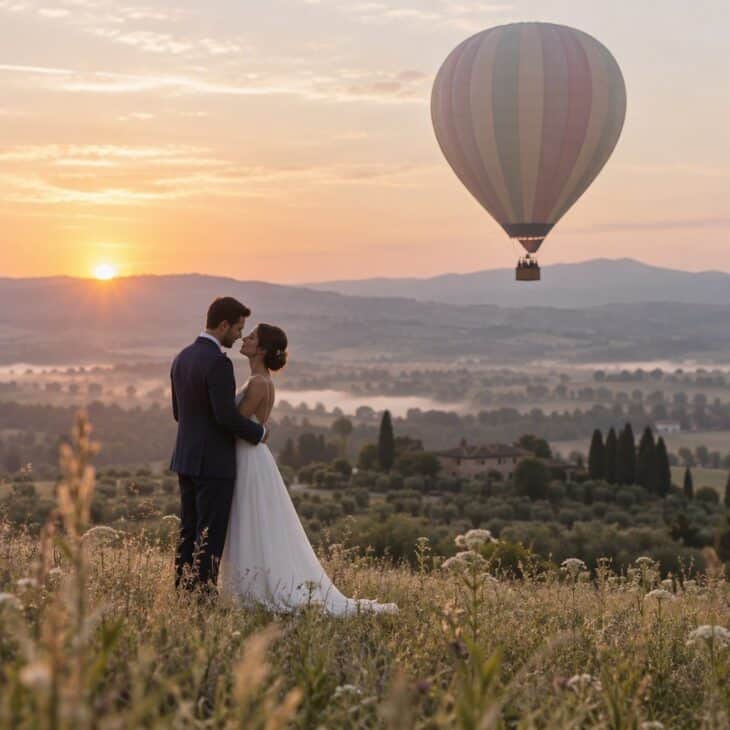
What it is A bride and groom posed at a launch site with the envelope rising behind them. Some operators include a ceremony flight in the basket for a small group.
Why it works A balloon gives an elopement a built-in scene and a reason to be up at dawn, with no need for a venue.
How to get it Contact a local operator and ask about private flights and ceremony policies. Check the wedding dress length, because a long train near a burner is a hazard. Book a backup date, as wind and weather cancel many flights.
14. Proposal in the Basket
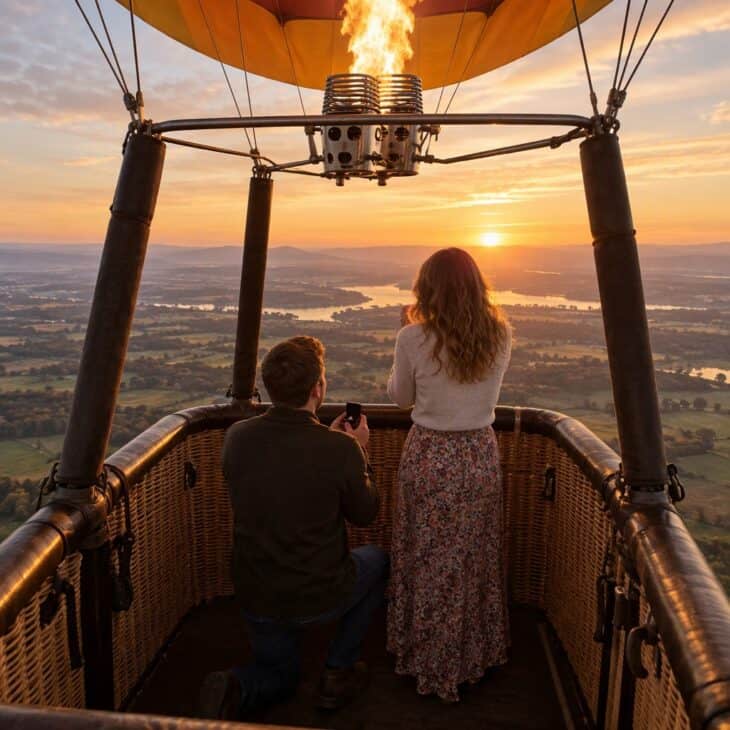
What it is A proposal at altitude, with the question asked in the basket. A private flight keeps the basket to the couple, the pilot and sometimes a photographer.
Why it works A quiet basket high above a landscape is a private place that most venues cannot match. The pilot can also hold the altitude steady for the moment.
How to get it Tell the pilot beforehand, as many will help plan the timing. Ask whether a photographer can ride along, or whether a second chase vehicle can shoot from the ground. Keep the ring in a zipped pocket until the moment.
15. Chase Crew Selfie
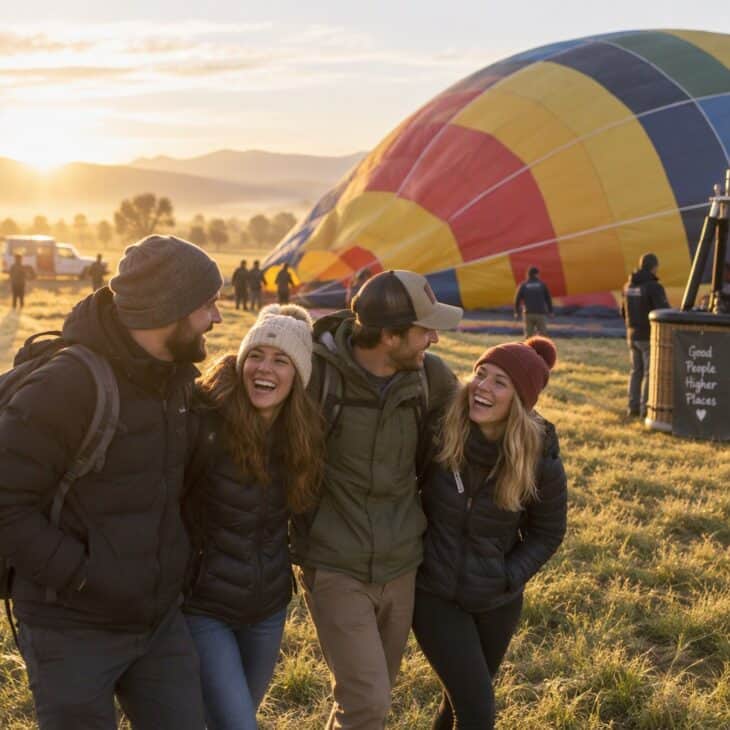
What it is A candid group shot with the crew after landing. The envelope lies on the ground behind them, often still folding in on itself.
Why it works The after-landing mood is relaxed, and the crew are the most photogenic part of a flight. It also gives you a record of who was there.
How to get it Ask the pilot for a photo after packing the envelope. Traditionally the crew shares a toast afterward, so it often becomes a natural moment. Use a phone with a wide lens and a timer, and see our airport photo ideas for more group shots.
16. Dog With a Balloon Backdrop
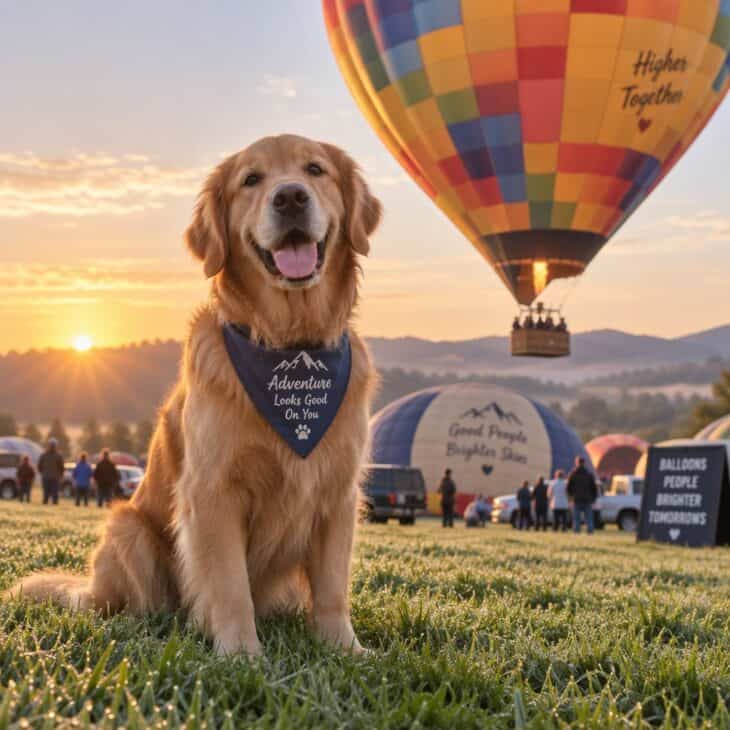
What it is A dog posed in a launch field with an envelope behind it. A bandana or small harness adds color without a costume.
Why it works Dogs get a lot of attention online, and the balloon adds a scene no ordinary park has. A calm dog also helps with the shot.
How to get it Check the launch field’s rules first, since many events do not allow dogs near burners. Use a long lead and keep the dog away from the fan and the lines. Bring treats, and shoot at the dog’s eye level.
17. Silhouette in the Basket at Altitude
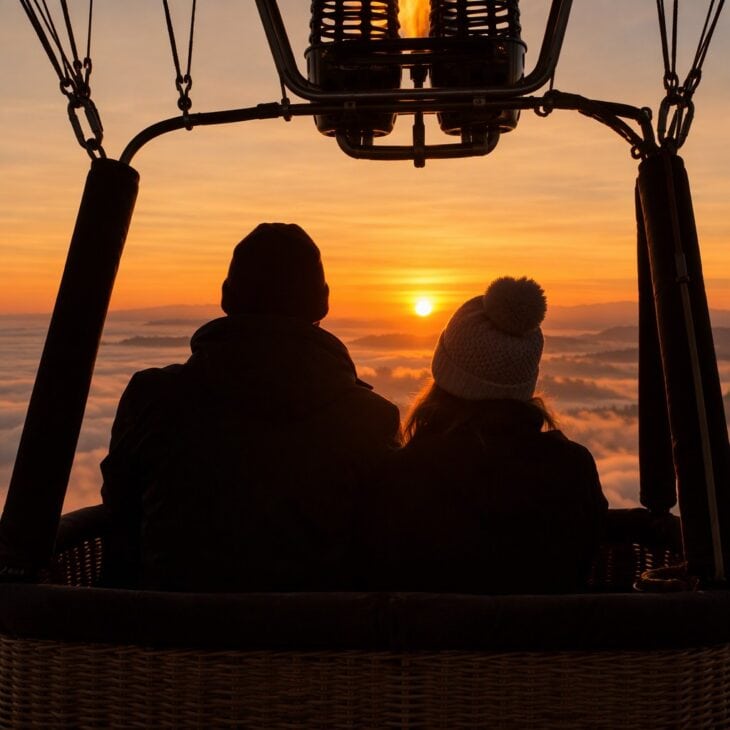
What it is Passengers as dark shapes in the basket, with the sky bright behind them. The burner frame and rim give you strong graphic lines.
Why it works Silhouettes need no makeup and hide the cold-weather clothing. The shot is also easy to get right on a phone.
How to get it Turn so that the sun is behind the subject, then tap to expose for the sky. Keep the subject near the basket’s center. Take a series, as the light changes within minutes.
18. Landing in a Field
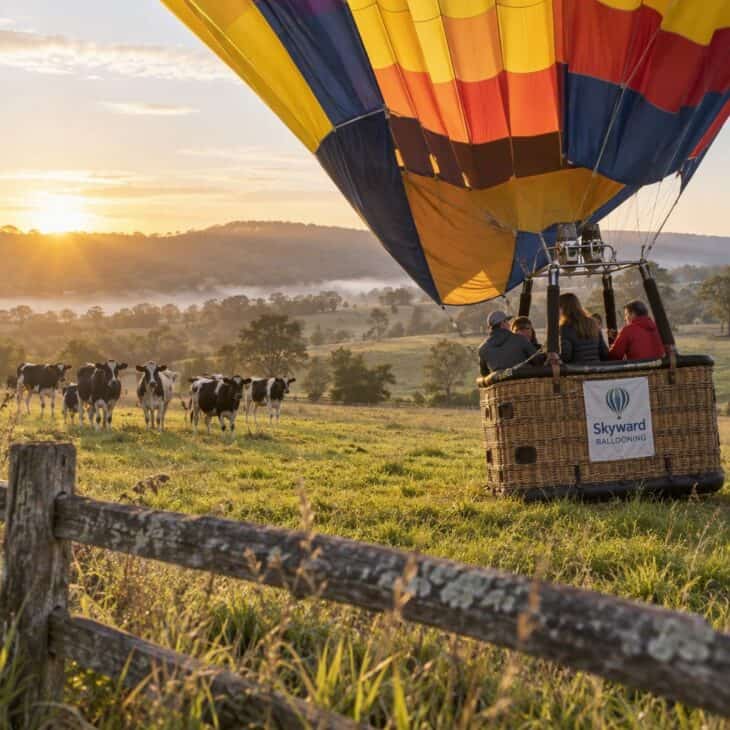
What it is A basket gently touching down, with the envelope still tall and the meadow around it. Landing sites are chosen by the pilot, so the setting is often a farm.
Why it works It is a rare moment of rustic charm, and the closeness between aircraft and ground makes for a good scene. Landings also give you the people-and-place shot a launch lacks.
How to get it Hold the basket handles and keep knees bent, as the pilot tells you. Take photos only after the basket is stable. Ask the chase crew to shoot from the ground.
19. Drone Reveal Above the Balloons
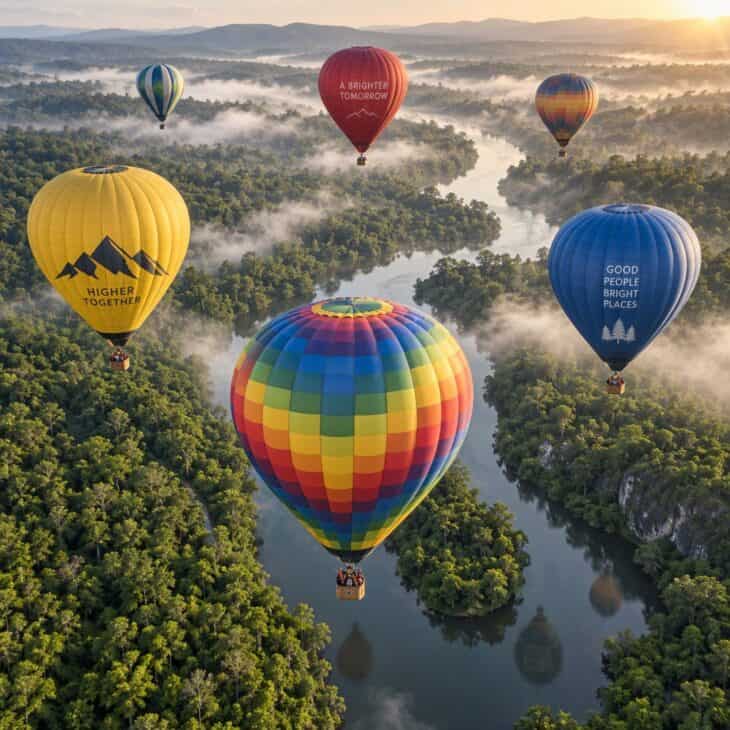
What it is A top-down view of balloons from a drone, with the envelopes as colored circles over a landscape. Drone flying at a balloon festival is often restricted, so it works best at a separate site.
Why it works Seen from directly above, the envelopes become abstract shapes, which sets the shot apart from the usual ground-level photo.
How to get it Check local drone rules and do not fly near operating balloons, as the envelopes and lines are hazards. Ask the festival organizers for permission. Use a high-resolution drone, and shoot at a safe altitude.
20. Patterned Envelope Detail Shot
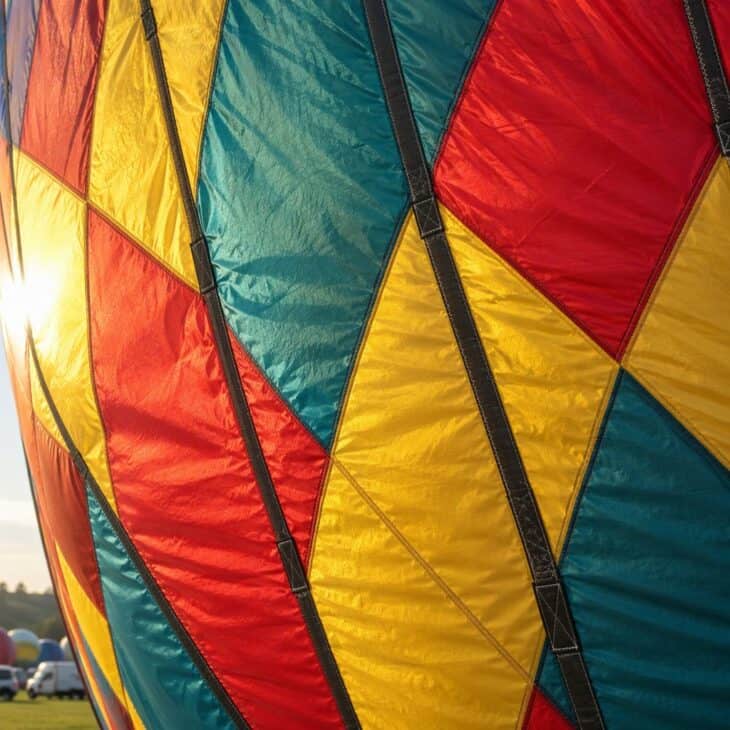
What it is A tight frame of the nylon panels, with the seams and load tapes forming a grid. Backlit by morning sun, the colors glow.
Why it works Patterns and textures make strong phone wallpapers and prints, and the fabric panels are the same ones that sketch well in our balloon drawing ideas. The shot also shows how balloons are built.
How to get it Shoot from the ground while the envelope is lit from inside or by the low sun. Use a telephoto lens to compress the pattern. Ask the crew for a closer look at the fabric.
21. Burner Flame Long Exposure
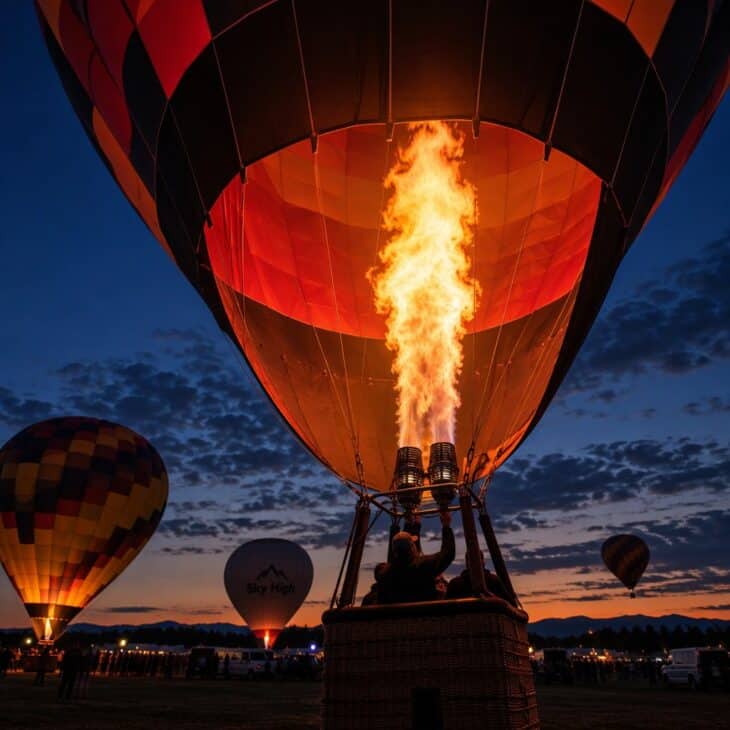
What it is A single balloon, tethered, with the flame bursting into the envelope. The fabric glows from the inside, and a slow shutter softens the flames.
Why it works The flame is the most dramatic piece of the aircraft, and a dusk sky gives it contrast. It is also repeatable, because a tethered crew can fire the burner on request.
How to get it Ask at a festival’s night glow or a tethered ride if the crew will fire on cue. Use a tripod and a 1/2 s to 2 s exposure at ISO 400. Keep your distance, as the flame is hot.
22. Vintage Film Look at the Festival
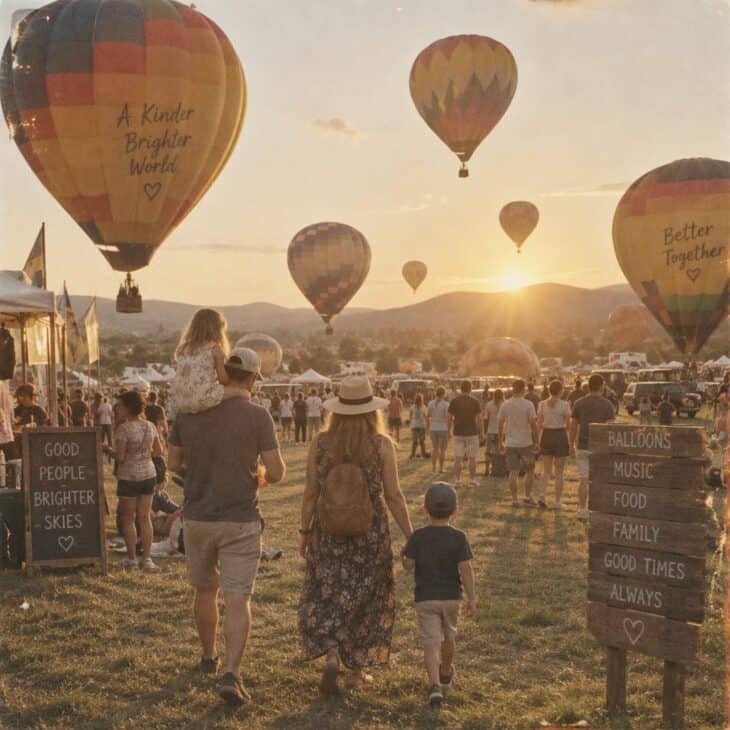
What it is A scene edited with faded blacks, warm highlights and fine grain. The subject is a festival field with strolling crowds and tall envelopes.
Why it works Nostalgia works well with balloons, because the aircraft have barely changed in decades. Film tones suit them better than a clean digital look.
How to get it Use a film preset in your editing app or shoot on real 35 mm. Stay with warm tones and avoid over-saturating the envelopes. Shoot during golden hour.
23. Mist and Fog Layers
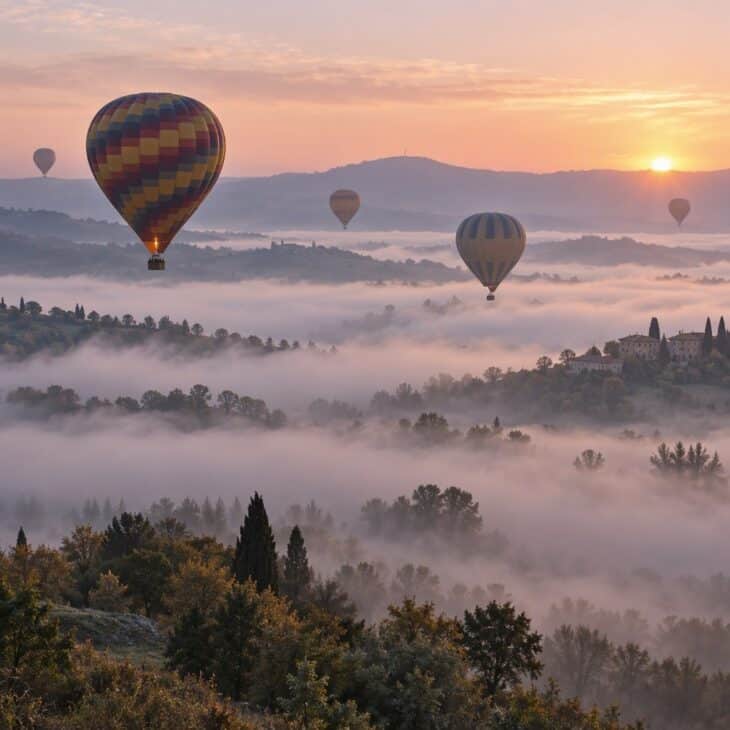
What it is Balloons rising above a sea of fog, with hills and treetops showing through. The color of the envelopes pops against the soft gray.
Why it works Fog separates the subject from the background, and balloons can often fly in it, since fog usually means low wind.
How to get it Look for river valleys in autumn, when fog is common at dawn. Dress warmly and bring a lens cloth for moisture. Expect delays, since the pilot may hold the launch until visibility improves.
24. Autumn Foliage Flight
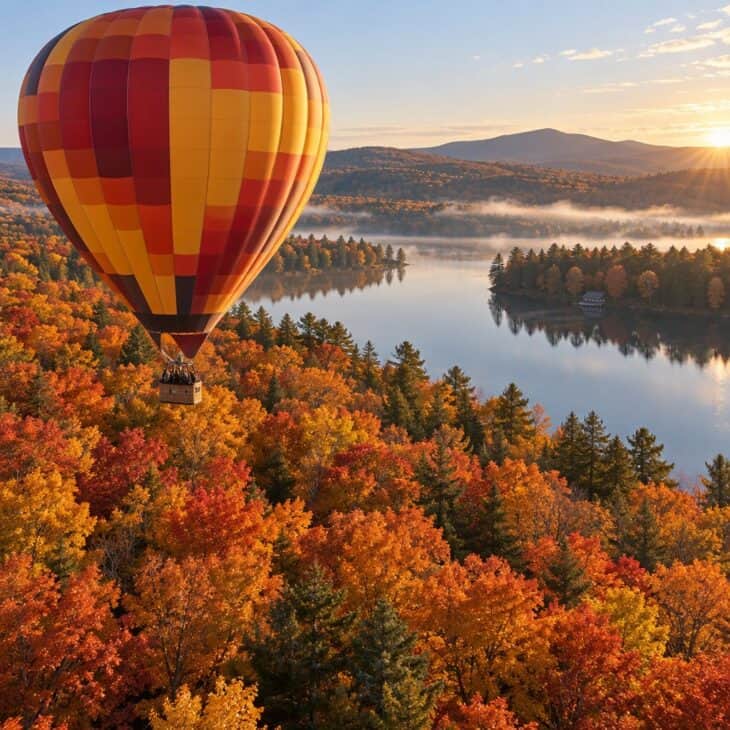
What it is A balloon floating low over orange and red trees, with the fall palette at its peak. The bright envelope stands out against the foliage.
Why it works Autumn light is soft and low all day, so you have a long window to shoot. The warm landscape is also a good partner for cool-toned envelopes.
How to get it Fly in the last week of peak color and check a foliage map. Book a flight in New England, the Upper Midwest or Europe’s wine regions. Dress in layers for the colder air aloft.
25. Winter Snow Flight
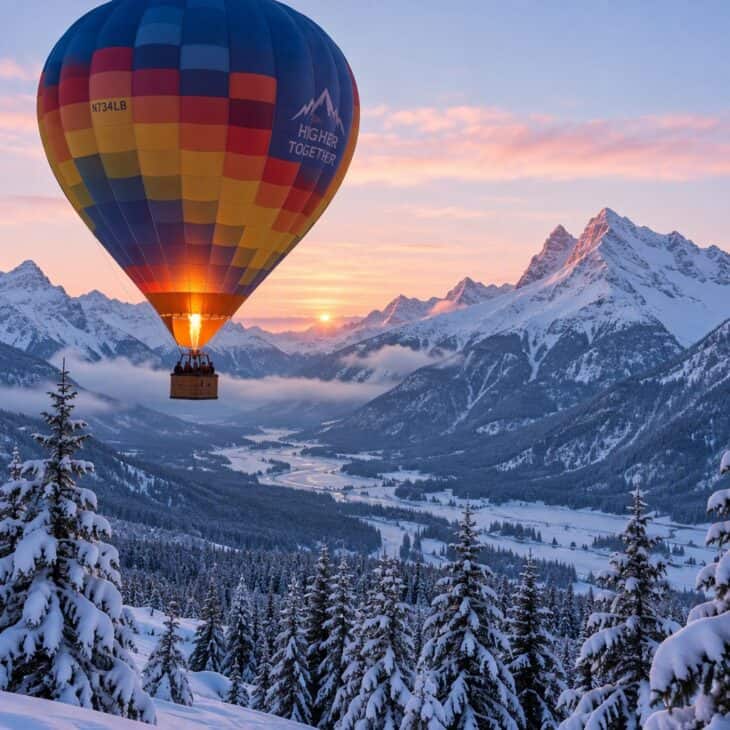
What it is A balloon above a snowfield, with the white landscape reflecting soft pink light. The envelope looks bright and saturated against it.
Why it works Snow acts as a giant reflector, so shots are bright and even. Cold air also makes balloons more efficient, so winter flights are popular.
How to get it Choose a clear, calm morning, as winter flights are often canceled for wind. Wear insulated gloves that still work with a touchscreen. Keep batteries in an inside pocket.
26. Reading the Sky Ahead of Launch
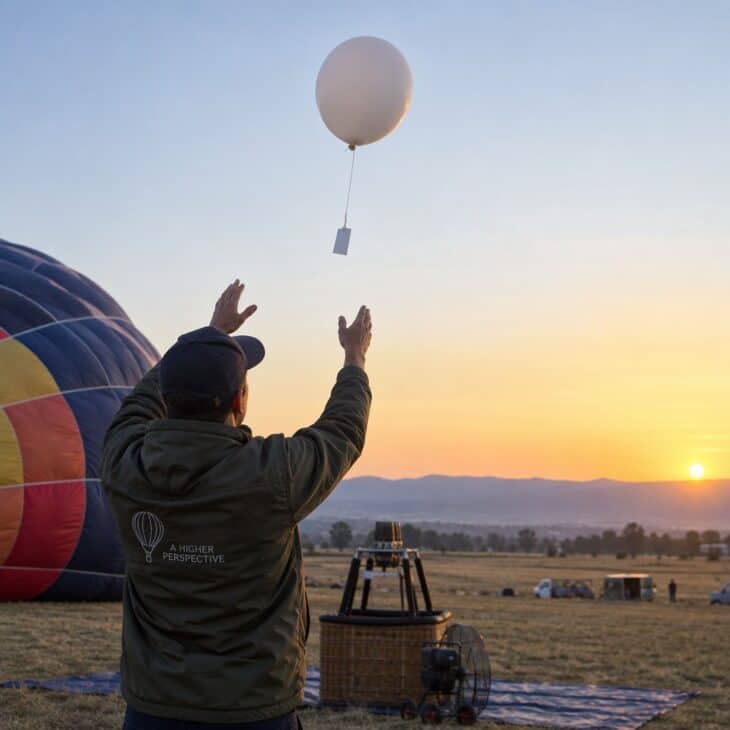
What it is The pilot releases a small helium balloon to read wind direction and speed before takeoff. It is a short, quiet moment that precedes the main show.
Why it works Photos of the process tell a story that the finished flight cannot. It also shows how weather-dependent ballooning is.
How to get it Ask the pilot if you can watch the pibal launch, which happens before inflation. Use a telephoto to follow the small balloon. Include the pilot’s hands for a human element.
27. Picnic Landing Spread
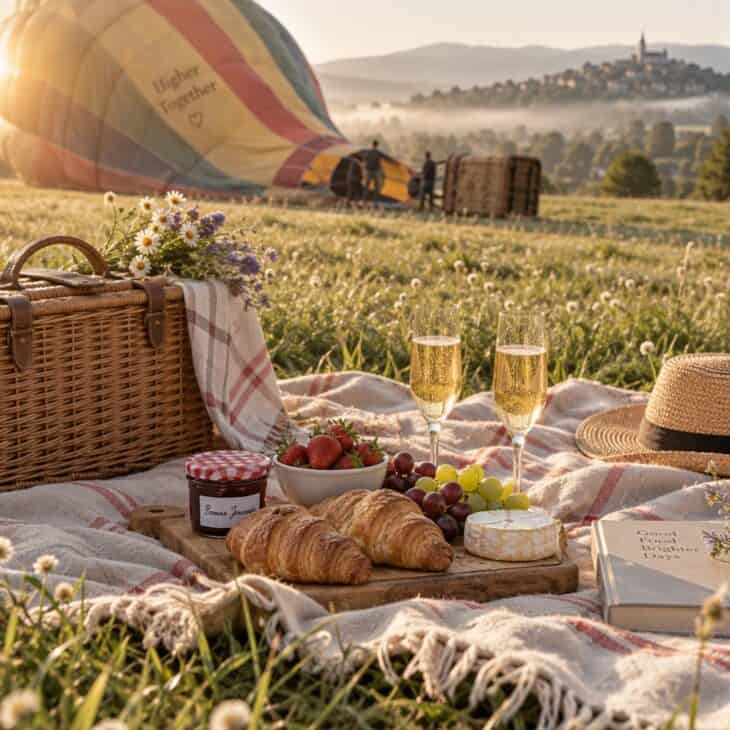
What it is A picnic set out on grass: a wicker hamper, pastries, fruit and a bottle. A landed envelope in the background completes the scene.
Why it works A breakfast after landing is a real tradition, and the styling is easy. It also gives the set a calm, lifestyle ending, and a framed print makes one of the better balloon gift ideas.
How to get it Pack lightweight items that survive a car ride, such as croissants, fruit and juice. Many operators include a champagne toast. Ask the chase crew if you can set up before the basket arrives.
28. Self-Portrait Shadow on the Ground
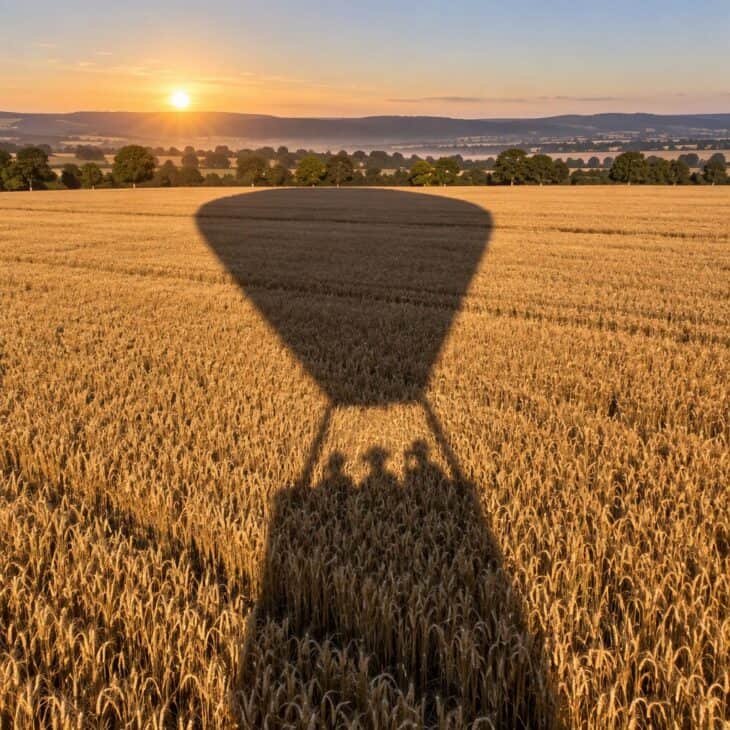
What it is The balloon’s own shadow cast across fields, stretched long by the low sun. From a nearby balloon, you can see the basket and its passengers in the shadow.
Why it works Shadows are a kind of selfie for the aircraft. Few people think to photograph them, so the shot looks original.
How to get it Fly in the first hour after sunrise, when the sun is low enough to stretch the shadow. Look straight down or off the side of the basket. Use a polarizer sparingly and keep the exposure on the ground.
29. Festival Mass Ascension Wide Shot
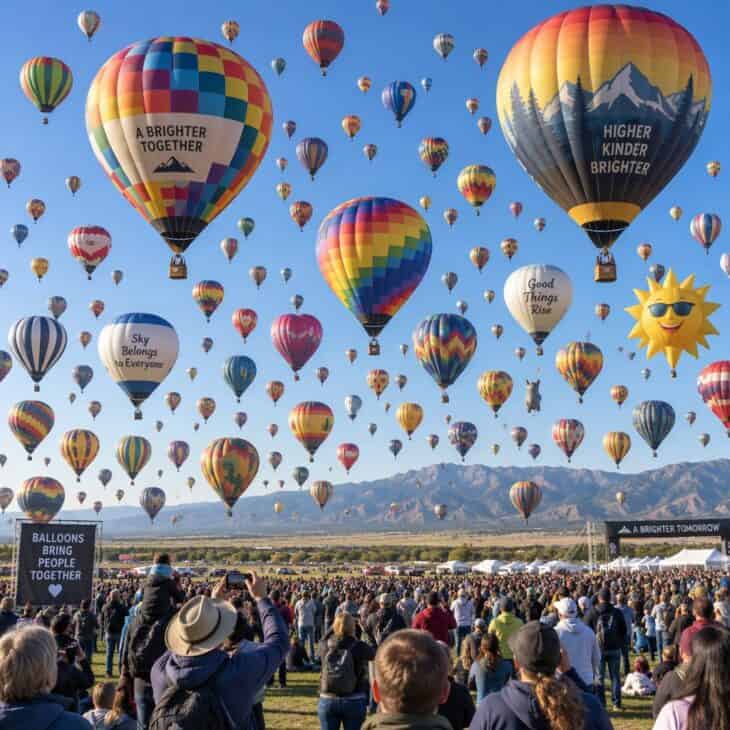
What it is A wide view of dozens of balloons lifting off at the same time. Large events such as the Albuquerque festival fly hundreds in two waves.
Why it works No other single frame shows the scale of the sport, and the crowd gives it a human anchor. It is a good cover image for any set.
How to get it Pick a major festival and check its schedule for the mass ascension. Arrive early for parking and a clear sightline. Use a wide lens, then switch to a zoom for the details.
30. Packing Up the Envelope
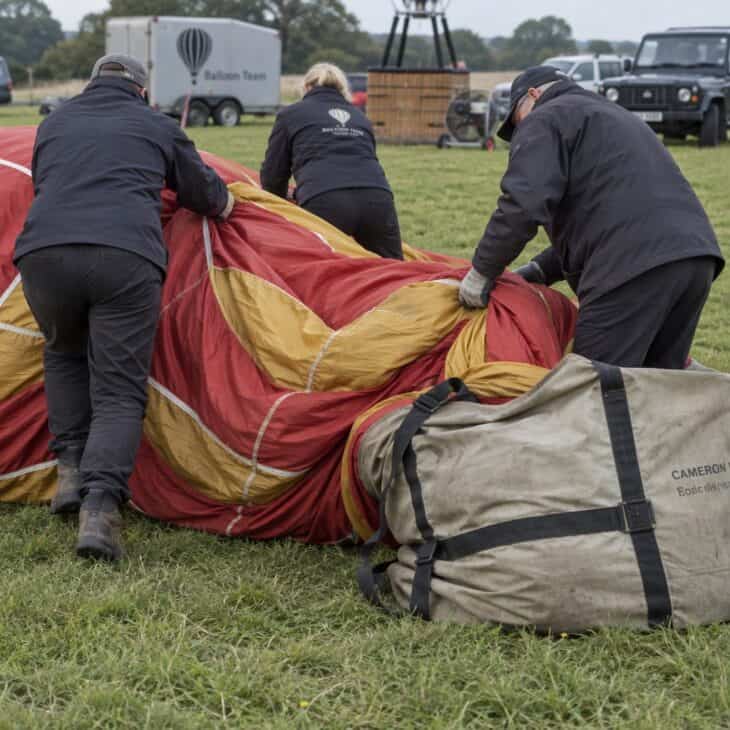
What it is The crew compressing a deflated envelope into its storage bag. It takes several people and a lot of fabric to do it.
Why it works It is the behind-the-scenes shot that most flyers skip. It also shows the effort that goes into every flight.
How to get it Offer to help, since most crews welcome an extra pair of hands. Stay near the envelope’s edge and move with the crew. Shoot from low to capture the bulk of the fabric.
Get the Newsletter
The latest aviation news and stories sent to your inbox.
About the Author

Hanna writes AeroCorner's aviation-lifestyle and decor guides, turning a love of flight into ideas for your home, celebrations, and gift lists.