


Table of Contents
Boeing’s best nine-month run of 737 MAX deliveries barely dented the order book. At this year’s pace, the jets already sold would keep the line busy for a decade.
From January through September 2026, Boeing delivered 363 737 MAX jets, the most the program has handed over in the first nine months of any year since deliveries began in May 2017. The previous record for the period was 325, set in 2025.
Boeing’s own orders and deliveries data, current through Sept. 30, 2026, still shows 4,902 unfilled orders for the 737. That is 737s customers have firmly ordered and not yet received, nearly all of them MAX jets.
Boeing delivered about 40 MAX jets a month this year. At that rate, clearing the list would take roughly 10 years, before a single new order is added.
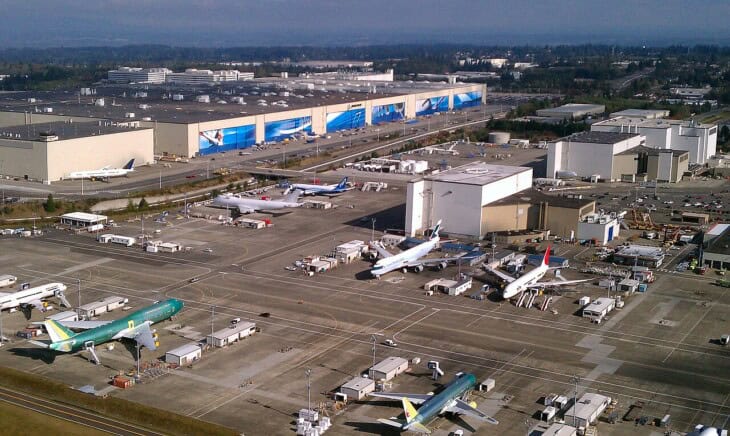
Why Renton Cannot Simply Build Faster
The order book is not the constraint. The factory is, and from 2024 to late 2025, so was the FAA.
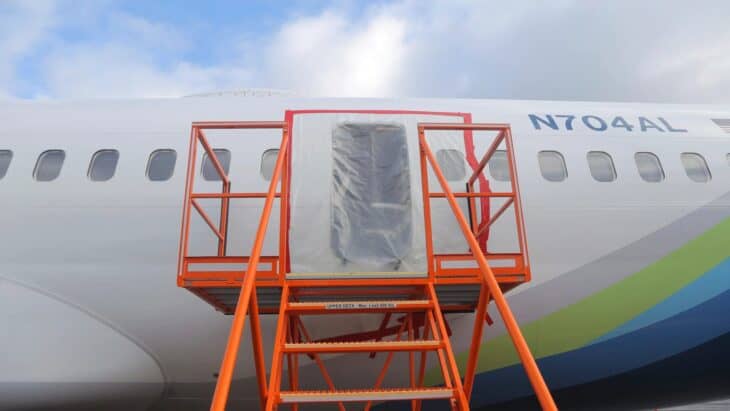
After a door plug blew out of a 737 MAX in flight in January 2024, the FAA capped 737 MAX production at 38 a month. It lifted that cap in October 2025, and Boeing raised output to 42, according to The Seattle Times.

The next step is 47 a month, which Boeing moved to after passing another FAA review. It has not settled there. “We are not stable yet at 47 a month,” CEO Kelly Ortberg told a Morgan Stanley industry conference on Sept. 16, 2026, as reported by The Herald in Everett.
Ortberg named wing production as the bottleneck. “We just have not seen the flow improvements that we expected in the time frame,” he said.
Boeing added a new 737 line in Everett in July, building the MAX 8, MAX 9 and MAX 10 with wings shipped from Renton. It is meant to help the program reach its longer-term goal of 52 jets a month.
The Math on 4,902 Jets
The measure matters here. Boeing publishes two different numbers for the same order book, and the headline totals usually quote the smaller one.
Unfilled orders, 4,902 for the 737 on Sept. 30, count every firm contract not yet delivered. Backlog, 4,537 for the 737, removes 365 orders that do not yet meet the extra tests of the ASC 606 accounting standard. Boeing’s widely reported 6,371 total backlog is that second measure, across all its jetliners.
| Measure (737, as of Sept. 30, 2026) | Figure |
|---|---|
| Unfilled orders | 4,902 |
| Backlog after ASC 606 adjustment | 4,537 |
| 737 MAX deliveries, Jan. to Sept. 2026 | 363 (about 40 a month) |
| Years to clear 4,902 at 2026’s delivery pace | About 10.1 |
| Years to clear at 42 a month | About 9.7 |
| Years to clear at 47 a month | About 8.7 |
| Years to clear at 52 a month | About 7.9 |
Those years-to-clear figures are a floor, not a forecast, because the list keeps growing. At the end of June, Boeing showed 4,882 unfilled 737 orders. It then delivered 124 737s in the third quarter, and the number still rose to 4,902.
September shows why. Boeing delivered 43 MAX jets that month and booked 132 new gross MAX orders, led by 100 from Turkish Airlines. Lufthansa ordered 20 more.
None of this closes the gap with Airbus. It delivered 547 jets in the first nine months of 2026 to Boeing’s 475, the same pattern as the first-half scorecard, when Airbus outsold and outdelivered Boeing again.
Who Is Still Waiting, and for How Long
A 737 ordered this fall will not arrive this decade. Turkish Airlines ordered 100 737-8s, with options on 50 more, on Sept. 23, 2026, and told the Istanbul stock exchange that deliveries will run from 2033 to 2037, ch-aviation reported.
Some of the biggest queues belong to US airlines. As of June 30, 2026, Southwest still had about 400 MAX jets to come and United about 230, according to Wikipedia’s tally of Boeing’s customer list. Lion Air, VietJet and India’s Akasa Air each had roughly 185 to 230 outstanding.
The single largest line on that list is not an airline at all. Nearly 700 undelivered MAX jets sat under “unidentified customers,” buyers Boeing has not named.
A large part of the wait has nothing to do with factory speed. Boeing’s latest data show 1,555 unfilled orders for the 737 MAX 10, the largest variant, according to AirDataNews. That is close to a third of the 737 order book, for a jet that still has no type certificate.
United, Alaska, Delta and Ryanair are among its major customers. Alaska has already designed lie-flat suites for a MAX 10 it does not yet have.
The smaller 737 MAX 7 only won FAA certification on Aug. 3, 2026, after a campaign that began in 2018. Southwest, its launch customer, holds most of its orders. In June, Boeing said it had about 40 MAX 7 and MAX 10 jets in inventory, waiting for approval.
What Happens Next for the 737 MAX
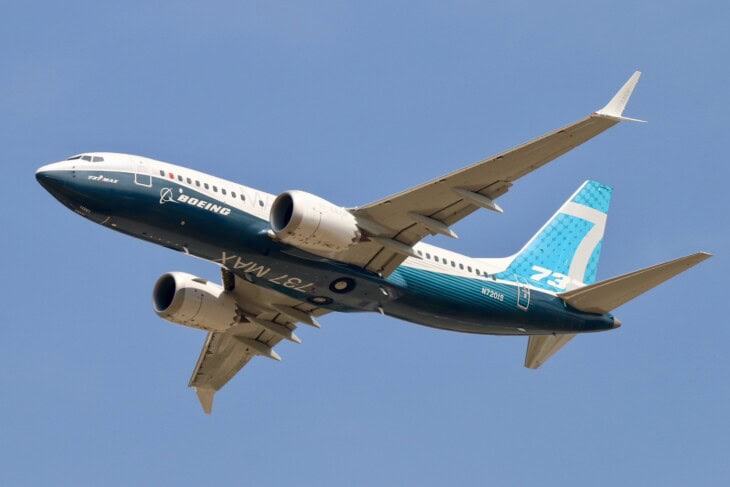
The MAX 10 is the near-term swing factor. On Sept. 28, FAA Administrator Bryan Bedford said the agency would delay certifying it over a software problem.
Boeing and the FAA then held a Type Certification Board meeting on Oct. 16, one of the last steps before a decision, The Air Current reported. Approval could come as soon as the following week. Boeing has said it expects first MAX 10 deliveries in 2027.
The rest of 2026 is a test of the 47-a-month rate. Boeing delivered 475 jets of all types through September, and it needs 126 more in the fourth quarter to beat its 2025 total of 600.
Boeing notes that its delivery figures are not final until quarterly financial results are issued. The order book, though, is not in doubt.
The record is real. It is also just the speed at which the waiting line moves, and airlines signing today are booking aircraft for the mid-2030s.
Sources and references used for research and fact-checking.
- Boeing, Commercial Orders and Deliveries (data through Sept. 30, 2026)
- Boeing, Boeing June 2026 Orders and Deliveries
- Boeing, Boeing Announces Third Quarter Deliveries
- Boeing, Boeing and Turkish Airlines Finalize Order for up to 150 737 MAX Jets
- The Spokesman-Review / The Seattle Times, Boeing MAX deliveries in first three quarters hit record high, again
- The Herald (Everett), Boeing's 737 MAX line taking longer to stabilize than expected, CEO says
- AirDataNews, Boeing delivers 57 aircraft in September as orders surge to 165 jets
- AirDataNews, Boeing 737 MAX 10 certification imminent after final FAA review
- ch-aviation, Turkish Airlines orders 100+50 B737 MAX
- TravelPulse, Boeing Delivered Highest Monthly Number of Planes This Year
- MiGFlug, Boeing Q3 2026 Deliveries: 161 Jets and a Record Run for the 737 MAX
- Wikipedia, List of Boeing 737 MAX orders and deliveries
Get the Newsletter
The latest aviation news and stories sent to your inbox.
About the Author

Tim is the owner and lead editor of AeroCorner since 2019, overseeing aviation content covering aircraft, airlines, airports, and the broader aviation industry. Through years of researching, writing, editing, and publishing aviation-focused content, he has developed extensive practical knowledge of commercial aviation and air travel. Based in Asia and a frequent traveler himself, Tim also brings firsthand passenger experience to AeroCorner’s coverage. Outside of publishing, he has also explored aviation firsthand through hands-on flight training in New Zealand.