

Table of Contents
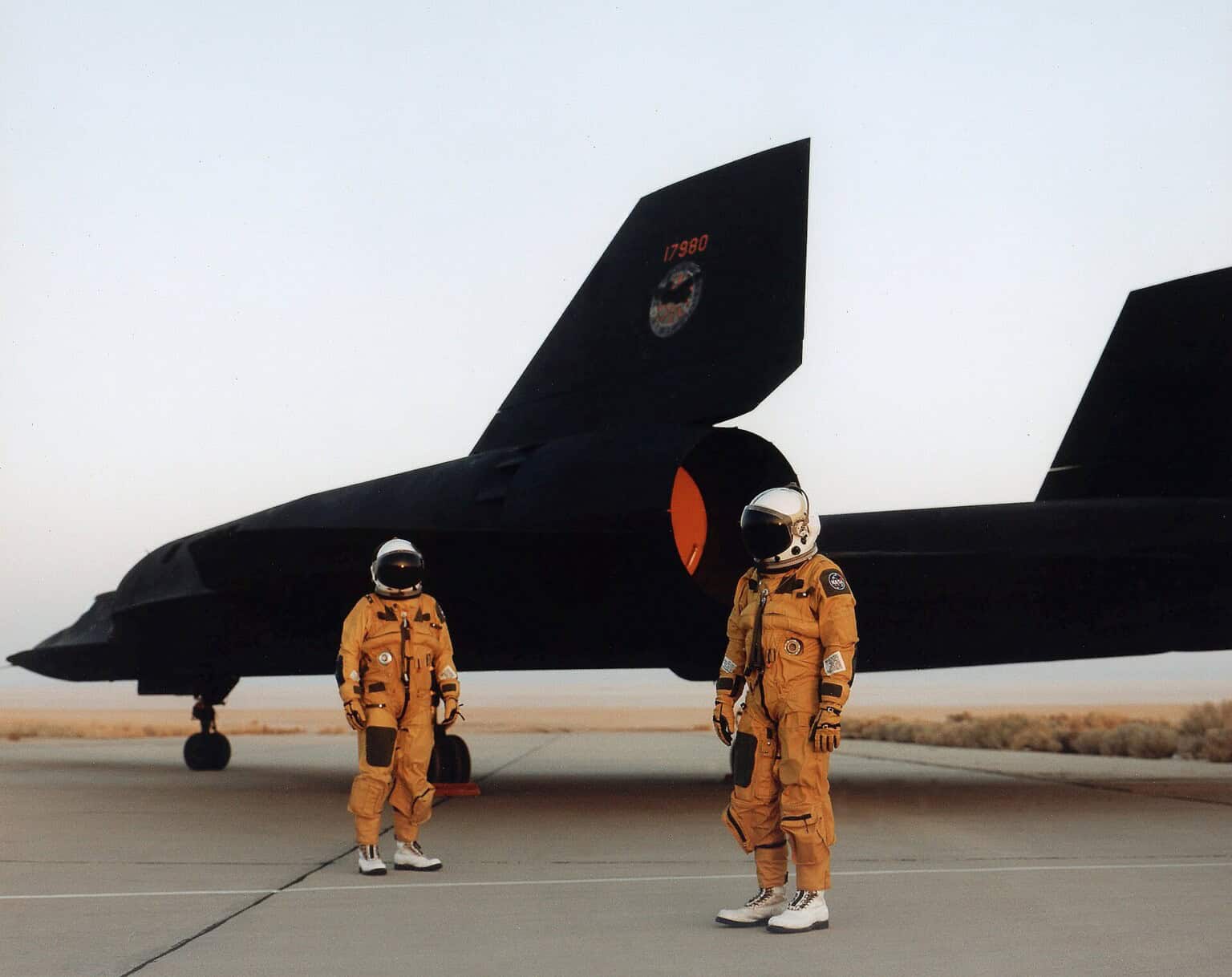
The coolest plane ever built is the Lockheed SR-71 Blackbird, and it is not especially close. It still holds the absolute speed record for a jet aircraft, set in 1976 and never beaten, and it was partly made of titanium the CIA secretly bought from the country it was designed to spy on.
Most “coolest planes” lists are beauty contests. This one is not. We rank by engineering audacity: what the aircraft was asked to do, how absurd that request was at the time, and whether the machine actually delivered.
Every figure below is checked against manufacturer data, official records, and museum sources, current as of September 2026. Where an aircraft is retired, destroyed, or down to a handful of flyable examples, we say so.
| Rank | Aircraft | What made it audacious | Status |
|---|---|---|---|
| 1 | Lockheed SR-71 Blackbird | Mach 3.2 cruise; still holds the 1976 absolute speed record | Retired 1998 (NASA 1999) |
| 2 | North American X-15 | Mach 6.7 and 354,200 feet; 8 pilots earned astronaut wings | Retired 1968 |
| 3 | Concorde | Mach 2 airline service for 27 years | Retired 2003 |
| 4 | Antonov An-225 Mriya | 640-tonne max takeoff weight on 32 wheels | Destroyed 2022 |
| 5 | North American XB-70 Valkyrie | Mach 3 bomber that rode its own shock wave | 1 survivor, museum |
| 6 | Northrop Grumman B-2 Spirit | Tailless flying wing with a 0.1 m² radar signature | In service |
| 7 | Hawker Siddeley Harrier | The only V/STOL fighter of its era that actually worked | Retired (successors fly) |
| 8 | Rutan Voyager | Around the world nonstop, unrefueled, on one tank | Retired 1986, museum |
| 9 | Stratolaunch Roc | 385-foot wingspan, the widest aircraft ever flown | In service |
| 10 | Bell Boeing V-22 Osprey | Rotors that tilt 90 degrees in about 12 seconds | In service |
| 11 | Grumman F-14 Tomcat | Wings that reshaped themselves in flight, automatically | Retired by US Navy 2006 |
| 12 | Aero Spacelines Super Guppy | Swallowed a Saturn V rocket stage whole | One still flying (NASA) |
| 13 | Supermarine Spitfire | The elliptical wing, built thin on purpose | About 60 airworthy |
| 14 | Boeing 747 | A hump caused by a cargo door that was never needed | In service, out of production |
How this ranking works
Cool is subjective, so we made it testable. Each aircraft is scored on three things: whether it did something no other aircraft could do, whether its shape is dictated by that one impossible requirement rather than by styling, and whether the story behind it holds up when you check the record. An aircraft that is merely fast, merely big, or merely pretty does not make the list. That is why the Airbus A380 is absent and a converted 1950s cargo plane is not.
1. Lockheed SR-71 Blackbird
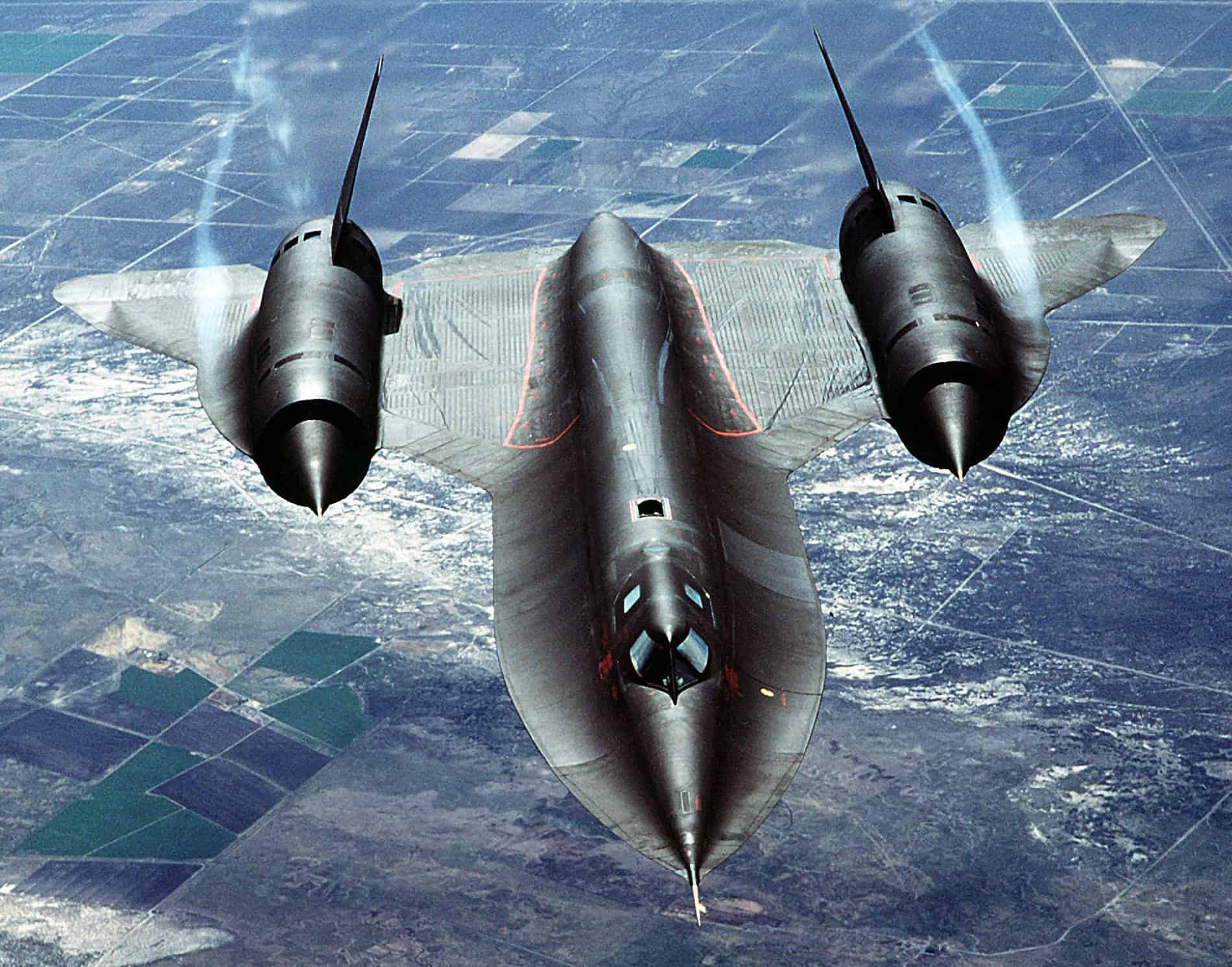
On 28 July 1976, Captain Eldon Joersz and Major George Morgan flew an SR-71A at 2,193.167 mph (3,530 km/h) over Beale Air Force Base. Fifty years later the FAI still lists it as the absolute speed record for a powered airplane.
The same day, a second Blackbird reached 85,069 feet in sustained horizontal flight, another record that has never fallen. Nothing air-breathing has gone faster or higher and come back to do it again, which is why the SR-71 still tops our list of the fastest aircraft in the world.
What earns it first place is not the speed alone but what the speed cost. The airframe was largely titanium, and the United States did not have enough of it, so the CIA bought the raw metal from the Soviet Union through shell companies in neutral countries.
The panels were built to fit loosely on the ground so they could expand in flight, which meant the aircraft leaked fuel while parked. Thirty-two were built and twelve were lost in accidents. None was ever lost to enemy action.
New York to London in 1 hour, 54 minutes
On 1 September 1974, Majors James Sullivan and Noel Widdifield flew an SR-71 from New York to London in 1 hour, 54 minutes and 56 seconds, averaging 1,807 mph (2,908 km/h). A Boeing 777 needs about seven hours for the same trip.
2. North American X-15
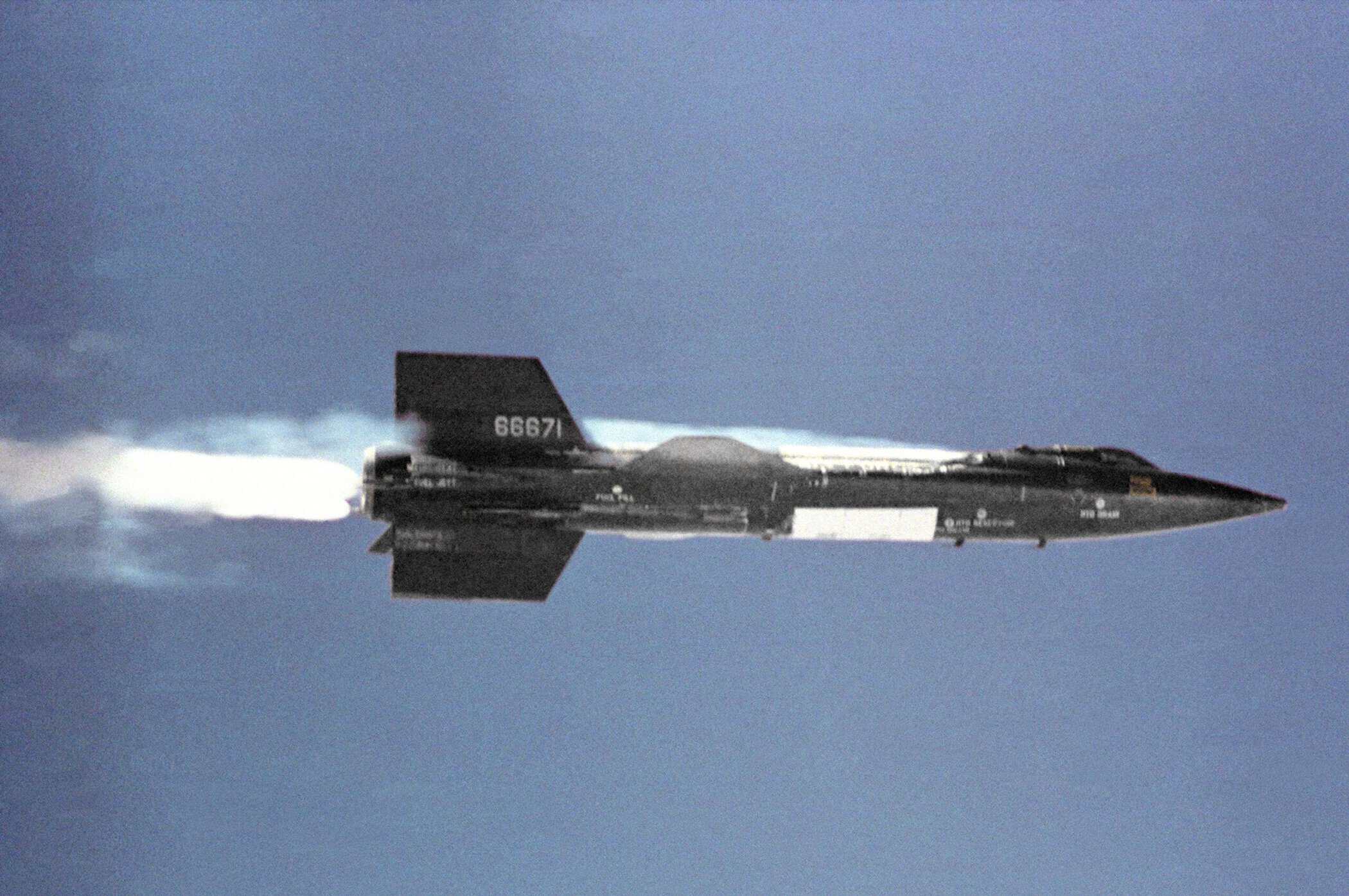
The X-15 was a rocket with a pilot in it. On 3 October 1967, Pete Knight took one to Mach 6.7, or 4,520 mph (7,274 km/h), a manned airplane record that still stands.
Four years earlier, Joseph Walker had flown one to 354,200 feet, roughly 67 miles up. At that height the air is too thin for control surfaces, so the X-15 steered with small rocket thrusters, the way a spacecraft does.
Thirteen X-15 flights passed 50 miles, the altitude the US military counts as spaceflight, and eight pilots earned astronaut wings for them. Two flights crossed the 100 km Karman line, both flown by Walker. Read more about the aircraft that followed it in our guide to the fastest hypersonic aircraft.
Three were built and they flew 199 times between 1959 and 1968. The program is why we know what hypersonic flight does to an airframe, and almost everything learned went into the Space Shuttle.
3. Concorde
Every other aircraft on this list was a record breaker, a prototype, or a military asset. Concorde sold tickets.
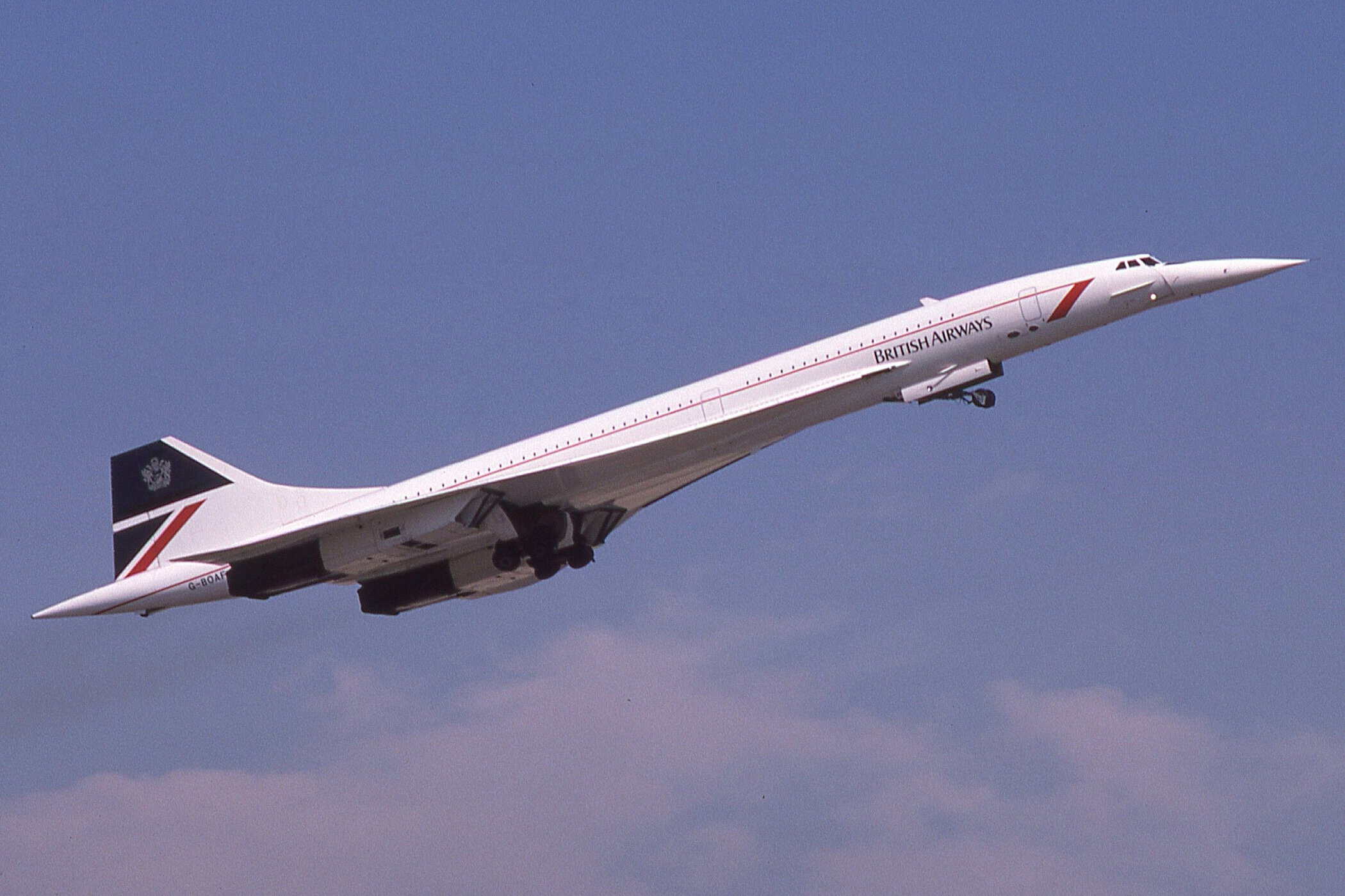
It cruised at about Mach 2.02, roughly 1,330 mph (2,140 km/h), at up to 60,000 feet, high enough that passengers could see the curve of the Earth. Transatlantic crossings took just under three and a half hours instead of eight.
The detail that gives it away is the nose. It drooped 12.5 degrees below horizontal so the crew could see the runway, then folded flush for supersonic cruise.
Twenty were built, two of them prototypes. Commercial service ran from 21 January 1976 to 2003, and no airline has flown a supersonic passenger route since.
Concorde grew in flight
Friction heating stretched the fuselage by as much as 12 inches (300 mm) at cruise. A gap opened on the flight deck during every supersonic run and closed again as the aircraft cooled. On the final flights, crews left their caps wedged in the gap so they would be trapped there forever.
4. Antonov An-225 Mriya
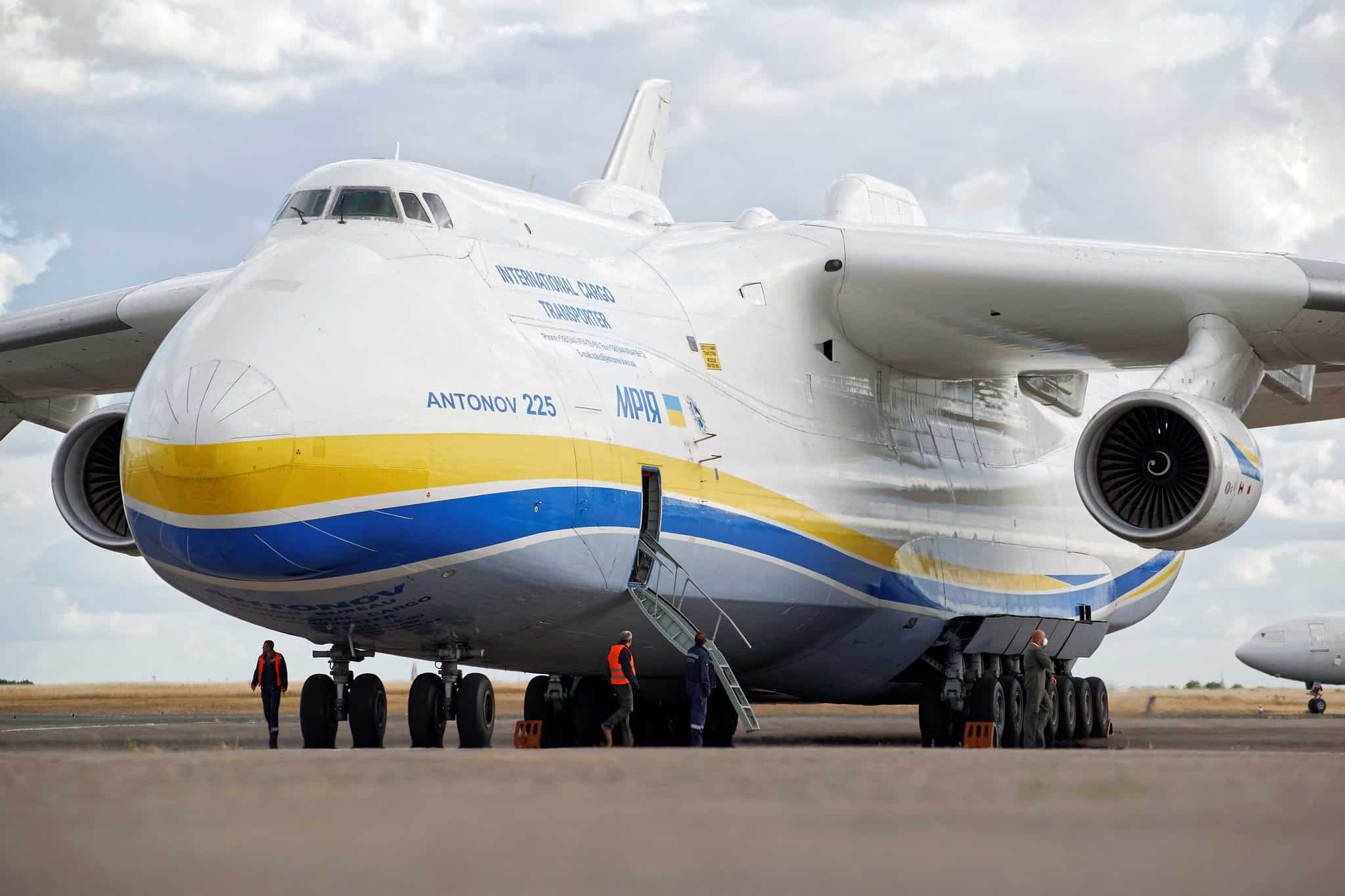
The An-225 was built to carry the Soviet Buran space shuttle on its back, and once that job disappeared it became the only aircraft on Earth that could move certain cargo at all.
It spanned 290 feet (88.4 m), ran on six engines, rolled on 32 wheels, and had a maximum takeoff weight of 1,410,958 pounds (640,000 kg). On 11 September 2001 it lifted a 253.8-tonne payload, still the record.
In 2009 it carried a single 418,830-pound (189,980 kg) generator, the heaviest one-piece item ever flown. Nothing in our roundup of the largest cargo planes comes close on either count.
Only one was ever completed. It was destroyed on 27 February 2022 in its hangar at Hostomel, outside Kyiv, during the battle for Antonov Airport. A second airframe was left roughly two thirds finished.
5. North American XB-70 Valkyrie
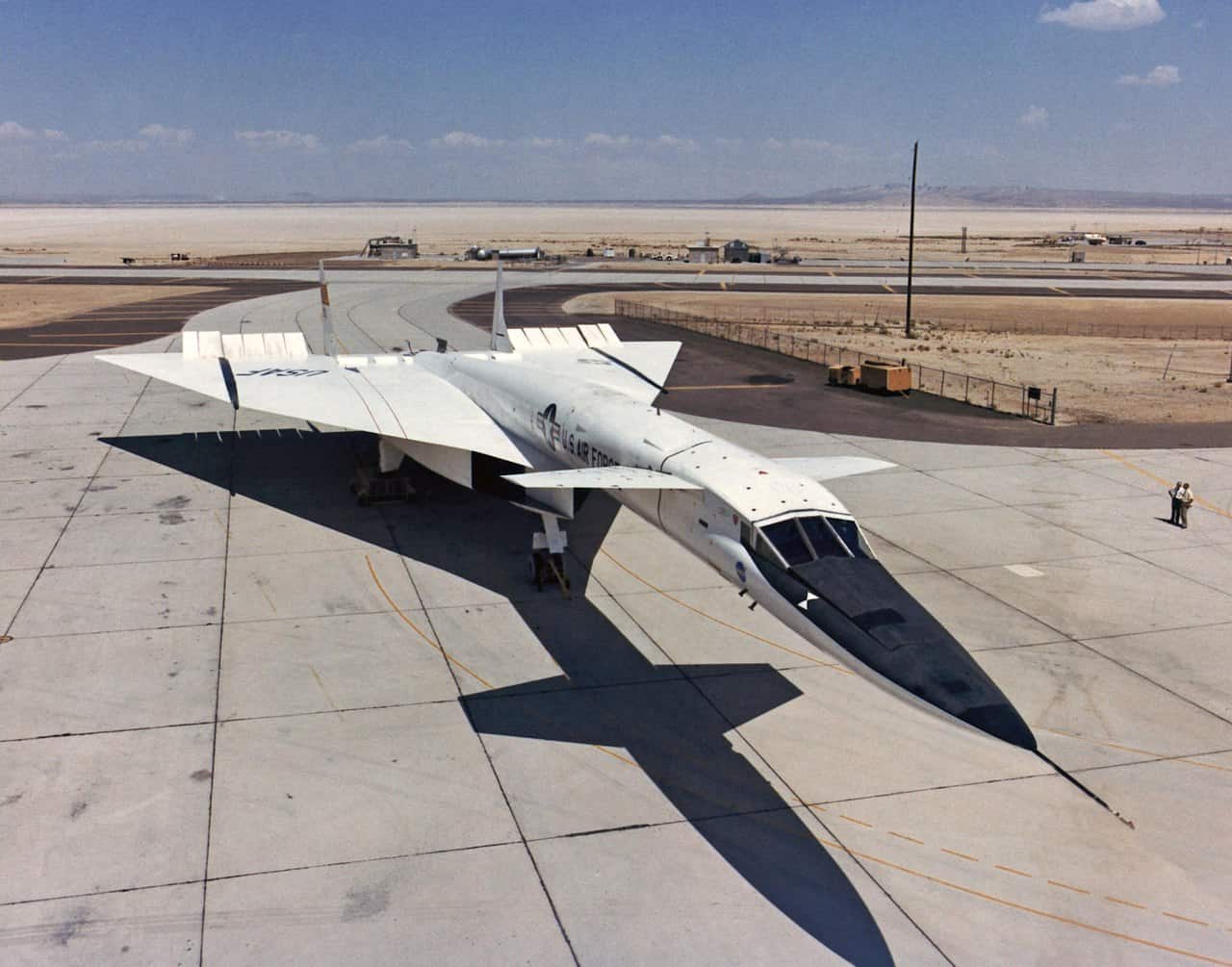

The XB-70 was a six-engine bomber designed to cruise at Mach 3, and it hit Mach 3.08 (2,020 mph) on 12 April 1966.
Its wingtips folded down 65 degrees at speed. This was not styling: it kept the aircraft stable supersonically and trapped its own shock wave underneath the wing.
That trick is called compression lift, and it supplied about five percent of the aircraft’s lift at Mach 3 cruise. The Valkyrie is effectively surfing the pressure wave it makes.
Only two were built, and the bomber program had already been cancelled in 1961 before either flew. One was lost in a midair collision on 8 June 1966. The survivor is at the National Museum of the US Air Force.
The same pilot set the X-15 altitude record and died in the XB-70
Joseph Walker flew the X-15 to 354,200 feet in August 1963. On 8 June 1966 he was flying an F-104 in a formation photo shoot when it drifted into the XB-70’s wingtip. Walker and XB-70 co-pilot Carl Cross were killed; pilot Al White survived.
6. Northrop Grumman B-2 Spirit
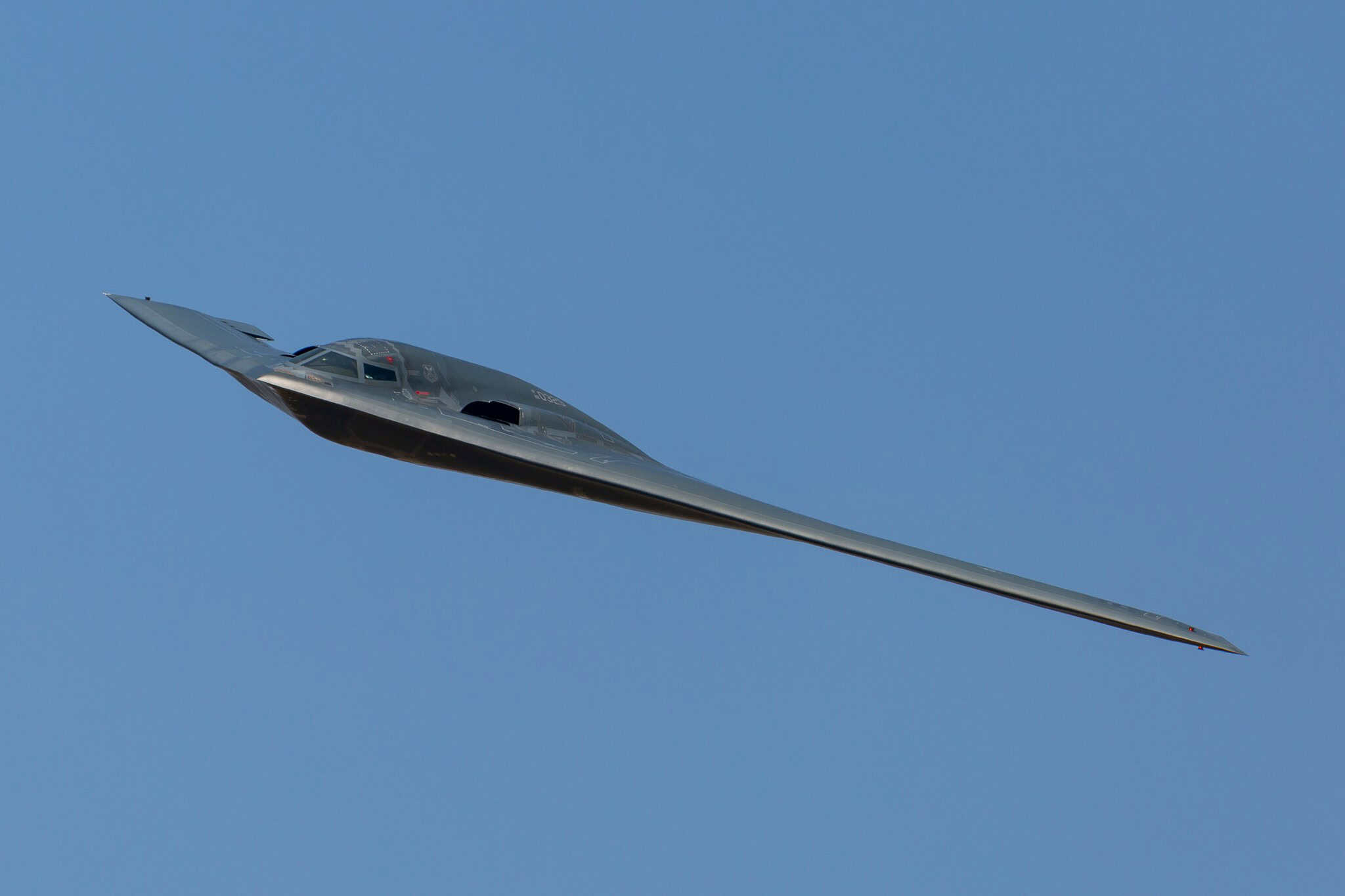

The B-2 has no tail, no fuselage, and no vertical surfaces at all. It is a 172-foot wing that happens to carry bombs, and it should not be controllable without computers holding it steady thousands of times a second.
Its reported radar cross section is around 0.1 m² (1.1 ft²), roughly a large bird, and it flies more than 6,900 miles (11,000 km) without refueling. It remains the benchmark in our ranking of the best stealth aircraft in the world.
What makes it audacious is the lineage. Northrop built flying wings in the 1940s, the YB-49 among them, and they were unflyable in practice. The B-2 has exactly the same wingspan as the YB-49, forty years later with the computers it needed.
Twenty-one were built at roughly $737 million each in 1997 dollars, or about $2.13 billion apiece once development is counted. The longest recorded combat mission ran 44.3 hours.
7. Hawker Siddeley Harrier


Plenty of aircraft have tried vertical takeoff. The Harrier is the one that worked, entering RAF service on 1 April 1969 after the P.1127 prototype first flew in October 1960.
Its Pegasus engine has four nozzles that rotate together, two for bypass air and two for hot exhaust. Point them down and the aircraft hovers; point them back and it flies normally.
US Marine Corps pilots then found a use nobody designed for. Vectoring the nozzles forward in flight, a maneuver called viffing, let a Harrier brake and turn in ways a pursuing fighter could not match.
8. Rutan Voyager
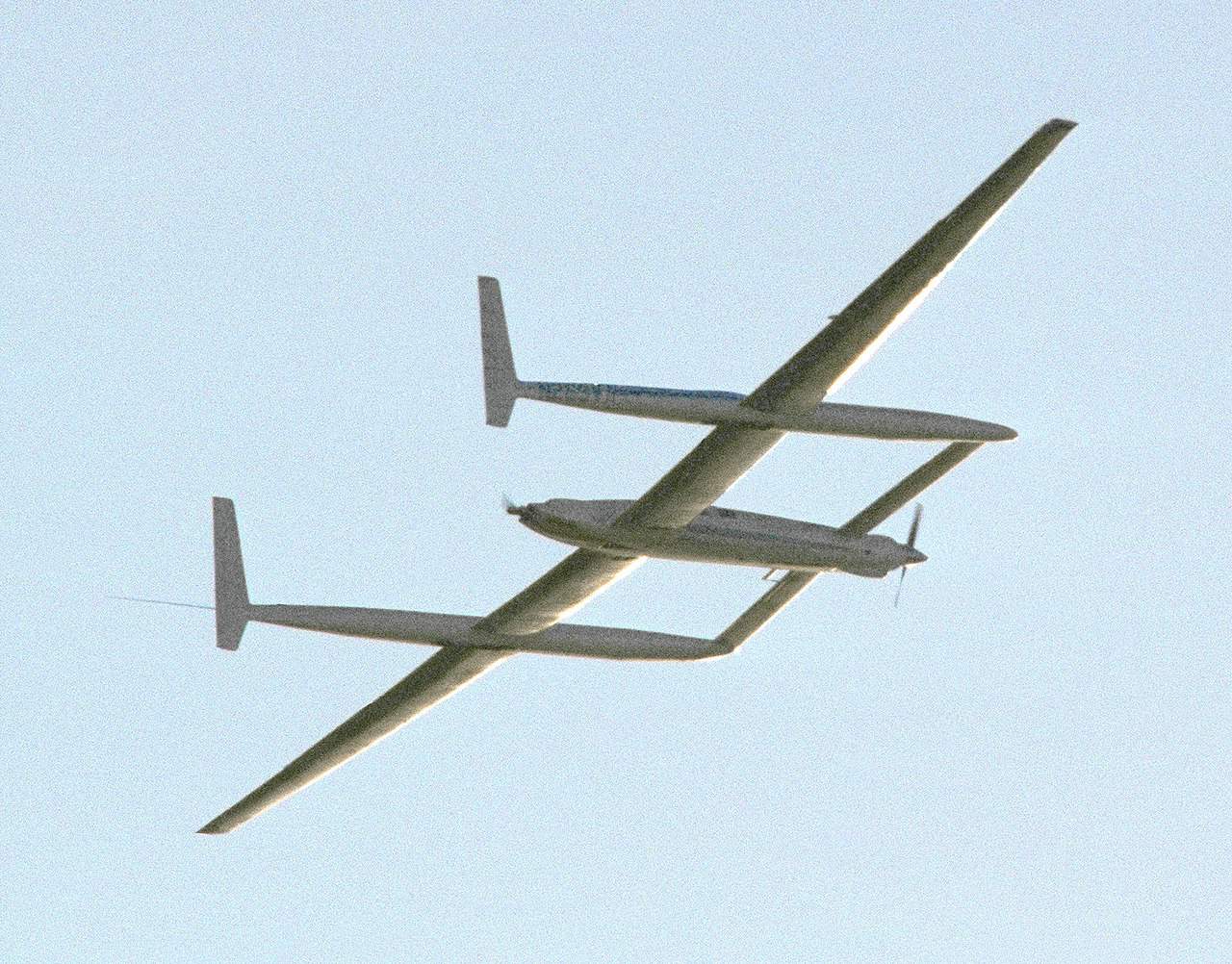
In December 1986, Dick Rutan and Jeana Yeager flew Voyager around the world nonstop and unrefueled in 9 days, 3 minutes and 44 seconds, covering 26,366 miles (42,432 km).
The airframe weighed 2,250 pounds empty and 9,694.5 pounds fueled. About 77 percent of the aircraft at takeoff was fuel, which is closer to a rocket than an airplane.
It was so heavy leaving Edwards Air Force Base that the wingtips scraped the runway and the winglets broke off. The crew used about 14,200 feet of a 15,000-foot runway to get airborne.
No aircraft on this list was built by fewer people for less money, and none of the others circled the planet on a single tank.
9. Stratolaunch Roc
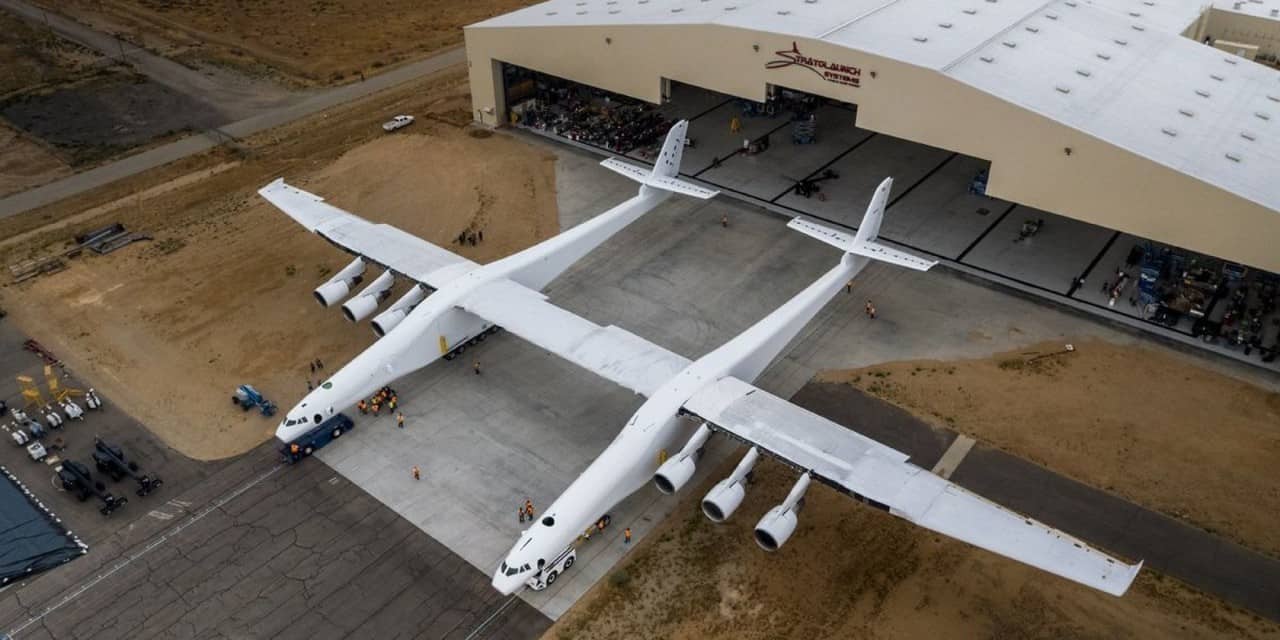
Roc has a 385-foot wingspan, the widest of any aircraft that has ever flown, beating Howard Hughes’ Spruce Goose by 65 feet.
It has two complete fuselages with a cockpit in each, although only one is flown. Its six engines and much of its systems came from two secondhand Boeing 747s, and it rolls on 28 wheels.
The first flight was on 13 April 2019, reaching 17,000 feet and 165 knots in 2 hours 29 minutes. It exists to carry hypersonic test vehicles to launch altitude and drop them.
10. Bell Boeing V-22 Osprey

The V-22 takes off like a helicopter, then rotates both engine nacelles forward through 90 degrees in about 12 seconds and flies like a turboprop.
That gives it a ferry range beyond 2,100 nautical miles, far past any helicopter, while still landing on a ship with no runway. Its rotors are 38 feet across.
The honest part of the story is the cost of that compromise. A V-22 is technically capable of autorotation if both engines quit in helicopter mode, but a safe landing is difficult, and the program’s development was long and troubled.
It first flew on 19 March 1989 and did not reach initial operating capability with the Marines until 13 June 2007. Eighteen years is a long time to argue with physics, and it won.
11. Grumman F-14 Tomcat
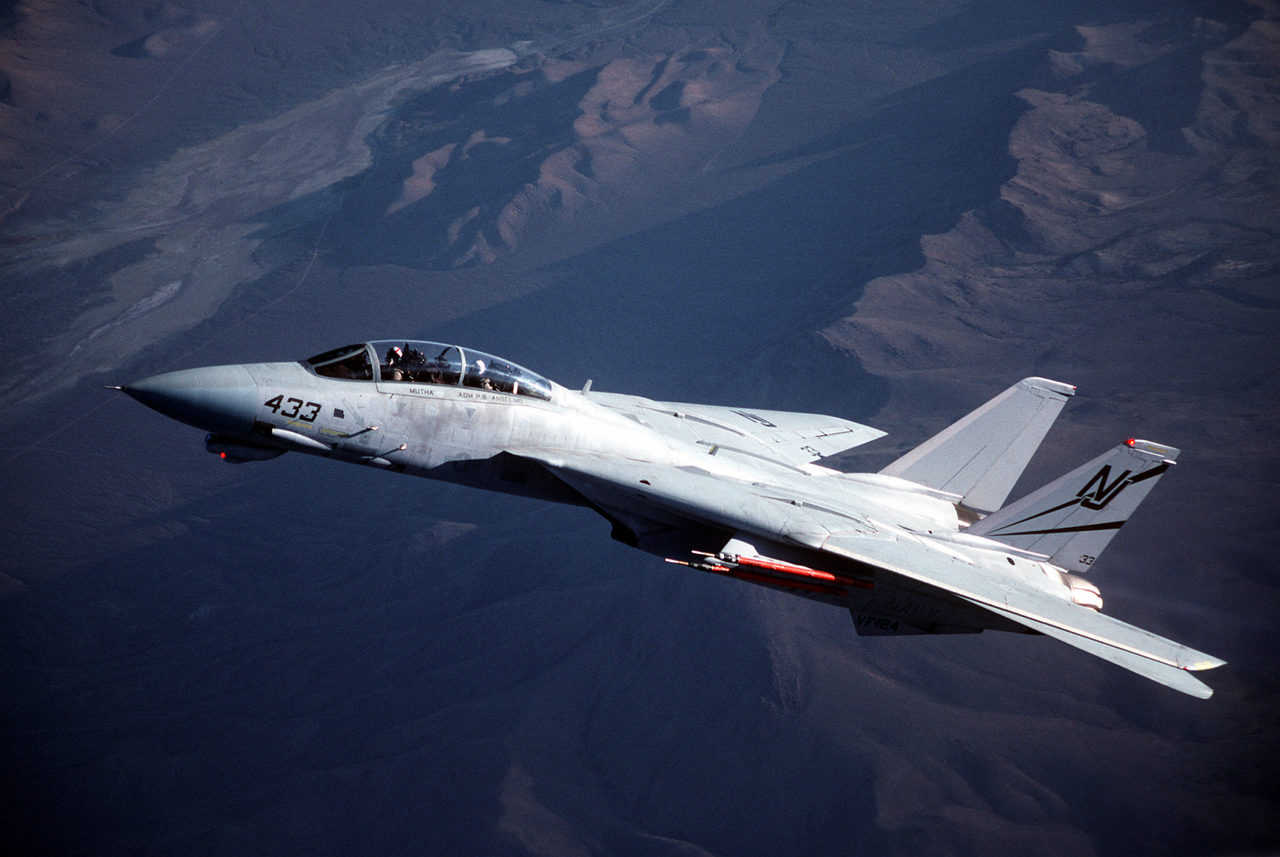

The F-14 changed the shape of its own wings in flight, sweeping them between 20 and 68 degrees: spread wide for slow carrier approaches, swept back for supersonic dash.
The detail most people miss is that the pilot did not do it. A central air data computer moved the wings automatically to hold the best lift-to-drag ratio as speed changed, with manual override available.
Parked on a carrier deck the wings could oversweep to 75 degrees to save space. The US Navy retired the type on 22 September 2006, and Iran is now the only operator.
12. Aero Spacelines Super Guppy
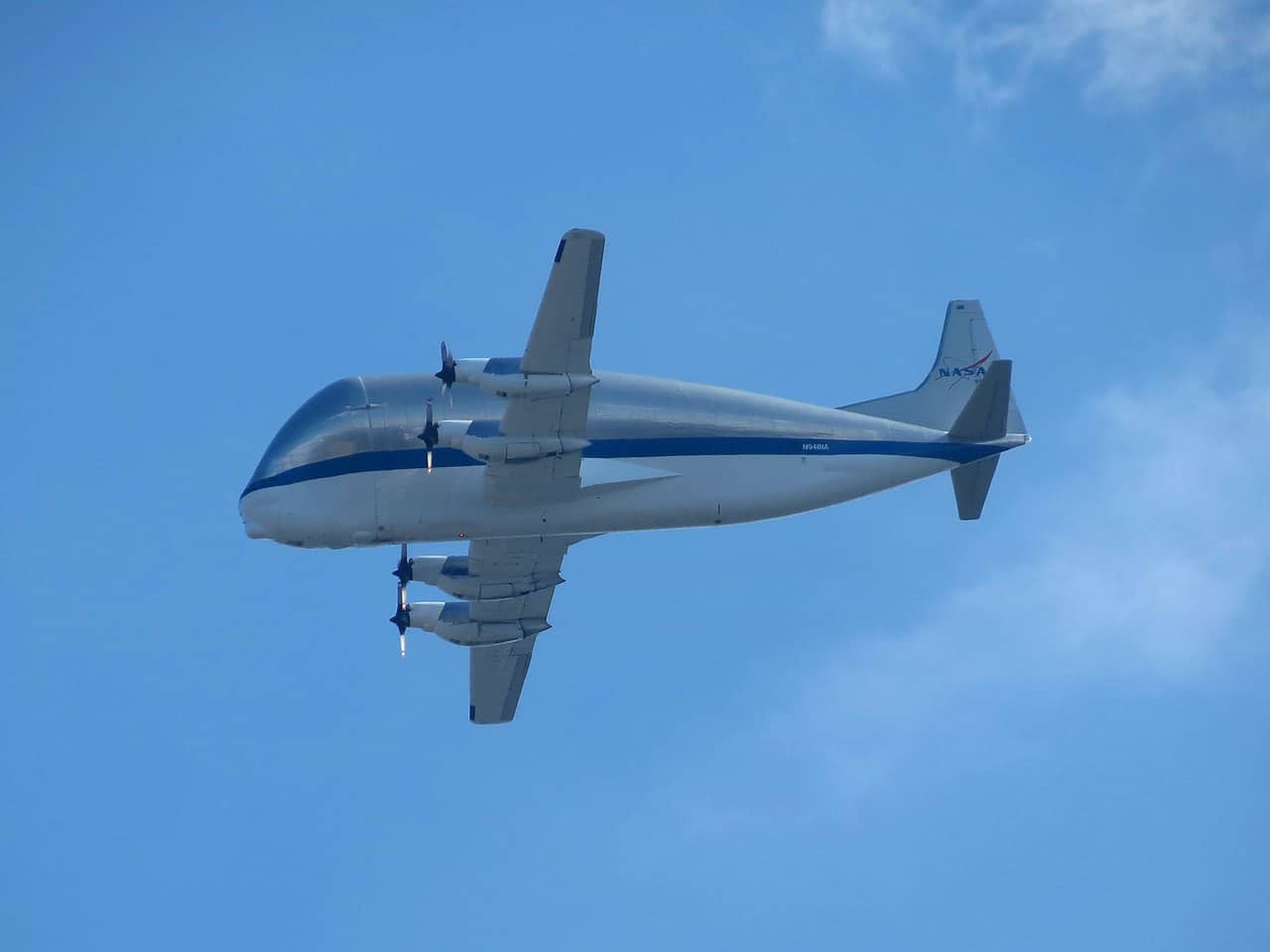
The Super Guppy looks like a 1950s airliner that swallowed something. That is very close to what happened: the first one was built from a retired Boeing YC-97J Stratofreighter with a vastly enlarged fuselage grafted on.
The cargo bay measures 111 by 25 by 25 feet, and the entire nose swings open so loads can be slid in from the front.
It is the only airplane that has carried a complete S-IVB stage, the third stage of the Saturn V moon rocket. Five were built, Airbus used two to ferry aircraft sections, and NASA still flies one, N941NA, out of El Paso.
13. Supermarine Spitfire
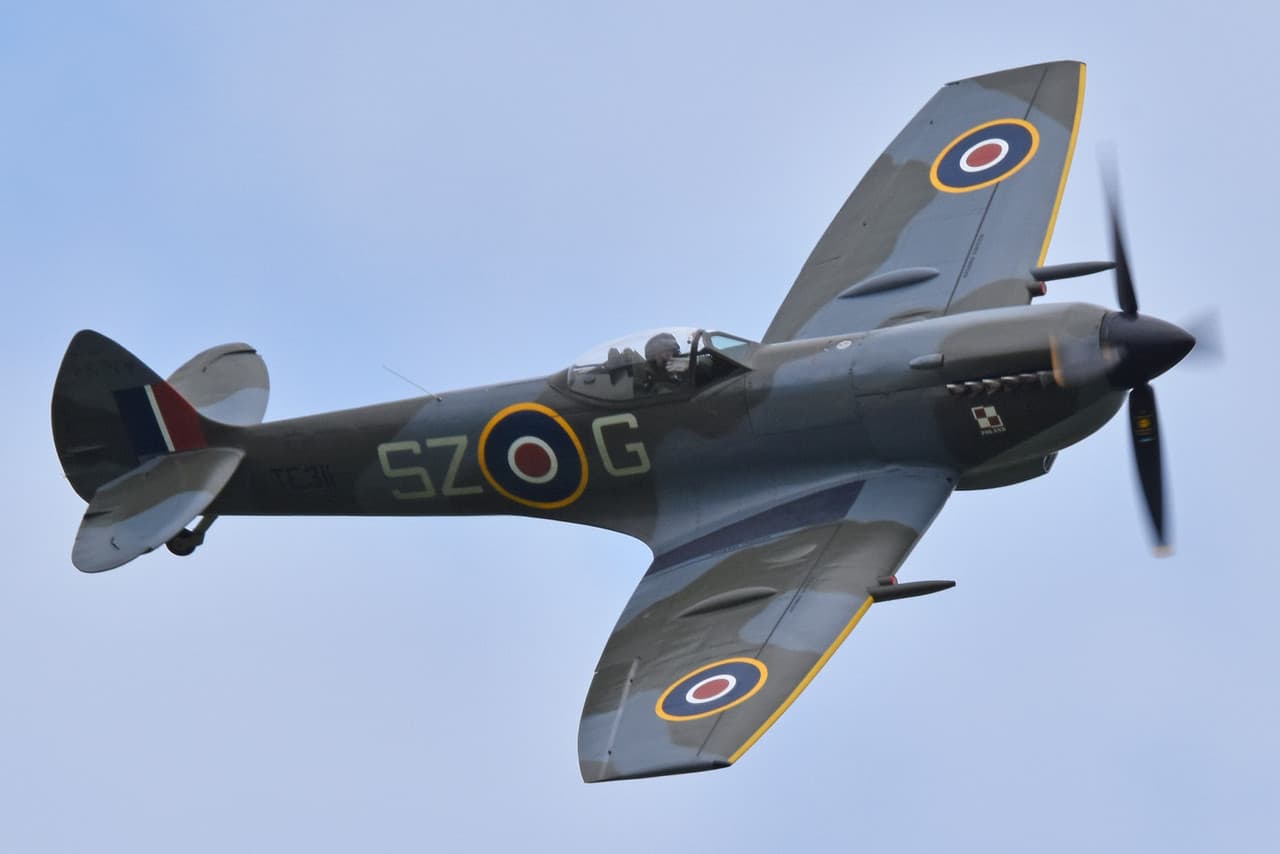
The Spitfire is on every list like this one for its looks, and almost every list gets the reason wrong. The elliptical wing was not drawn to be beautiful.
R. J. Mitchell’s team needed a wing thin enough to cut drag but deep enough to hold guns, ammunition, and retracting landing gear. As aerodynamicist Beverley Shenstone put it, the ellipse was simply the shape that allowed the thinnest possible wing with room inside for the structure.
It happens that an elliptical planform also produces the lowest induced drag of any untwisted wing, so the answer to a packaging problem was also the aerodynamic optimum.
More than 20,351 were built across dozens of marks between 1938 and 1948. Around 60 are still airworthy today, which is why this is one plane on the list you can still hear.
14. Boeing 747
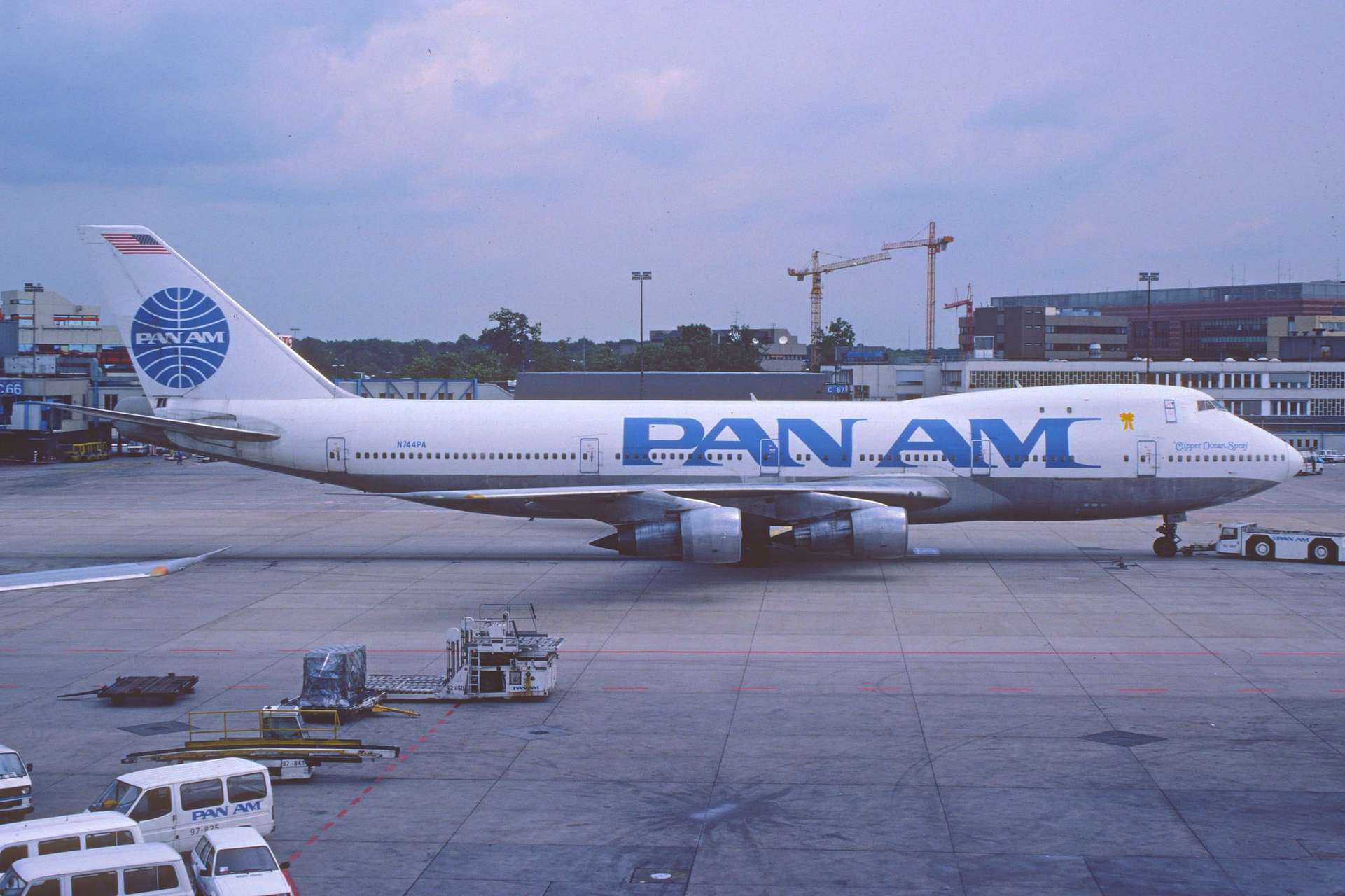
The 747 is the most recognizable airliner ever built, and the reason is an engineering hedge that never paid off.
Boeing expected supersonic jets to take over passenger travel, leaving the 747 to finish its life hauling freight. Freighters load through the nose, so the cockpit had to move out of the way and onto a shortened upper deck.
Supersonic travel never took over, but the hump stayed, and it became the most famous silhouette in aviation. First flight was 9 February 1969.
It was the largest passenger airliner in the world for about 37 years, until the A380 entered service in 2007. Production ended with 1,574 built and a final delivery to Atlas Air on 31 January 2023.
What about the F-22, the A380, and the Spruce Goose?
Three aircraft come up in every argument about this list, and each is a deliberate omission rather than an oversight.
The F-22 Raptor is the best air superiority fighter in the world and the top entry in our ranking of the best fighter jets in the world. But it is a superb execution of ideas the B-2 and the Harrier proved first, which is excellence rather than audacity.
The Airbus A380 is bigger than the 747 and carries more people. It asked no new question, though: it is a very large conventional airliner, and being large is not the same as being daring.
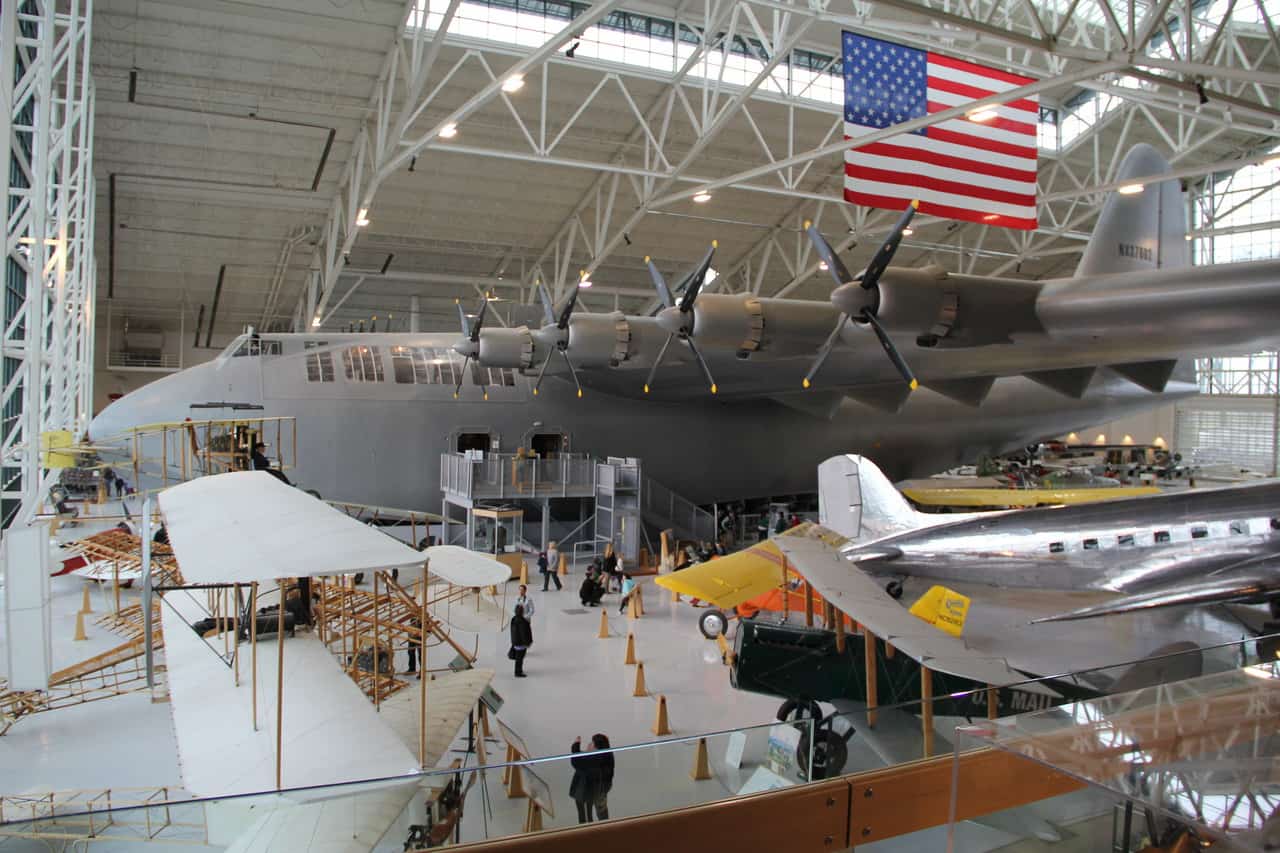
The Hughes H-4 Hercules, the Spruce Goose, is the hardest cut. It held the widest-wingspan title for decades, but it flew exactly once, for about a mile, and never entered service, and our third test asks whether the machine delivered.
Eight of the fourteen no longer fly
This is the uncomfortable part of any coolest-planes list. The SR-71, X-15, Concorde, XB-70, and Harrier are retired, the An-225 was destroyed in 2022, Voyager hangs in a museum, and the F-14 flies only in Iran. Peak aviation audacity was the Cold War, when a government would fund a Mach 3 airplane to find out whether it could be done. Most of what replaced these aircraft is cheaper, safer, and far less interesting to look at.
FAQ
Sources and references used for research and fact-checking.
- Smithsonian National Air and Space Museum, Lockheed SR-71 Blackbird
- Wikipedia, Lockheed SR-71 Blackbird
- General Aviation News, Absolute speed record still stands 40 years later
- Simple Flying, How the CIA Secretly Bought Soviet Titanium to Build the SR-71 Blackbird
- NASA Armstrong Flight Research Center, X-15 Hypersonic Research Program
- Wikipedia, North American X-15
- Wikipedia, Concorde
- Wikipedia, Antonov An-225 Mriya
- Wikipedia, North American XB-70 Valkyrie
- Wikipedia, Northrop Grumman B-2 Spirit
- Wikipedia, Hawker Siddeley Harrier
- Wikipedia, Rutan Voyager
- Wikipedia, Scaled Composites Stratolaunch
- Wikipedia, Bell Boeing V-22 Osprey
- Wikipedia, Grumman F-14 Tomcat
- Wikipedia, Aero Spacelines Super Guppy
- Wikipedia, Supermarine Spitfire
- Wikipedia, Boeing 747
Get the Newsletter
The latest aviation news and stories sent to your inbox.
About the Author

Tim is the owner and lead editor of AeroCorner since 2019, overseeing aviation content covering aircraft, airlines, airports, and the broader aviation industry. Through years of researching, writing, editing, and publishing aviation-focused content, he has developed extensive practical knowledge of commercial aviation and air travel. Based in Asia and a frequent traveler himself, Tim also brings firsthand passenger experience to AeroCorner’s coverage. Outside of publishing, he has also explored aviation firsthand through hands-on flight training in New Zealand.