

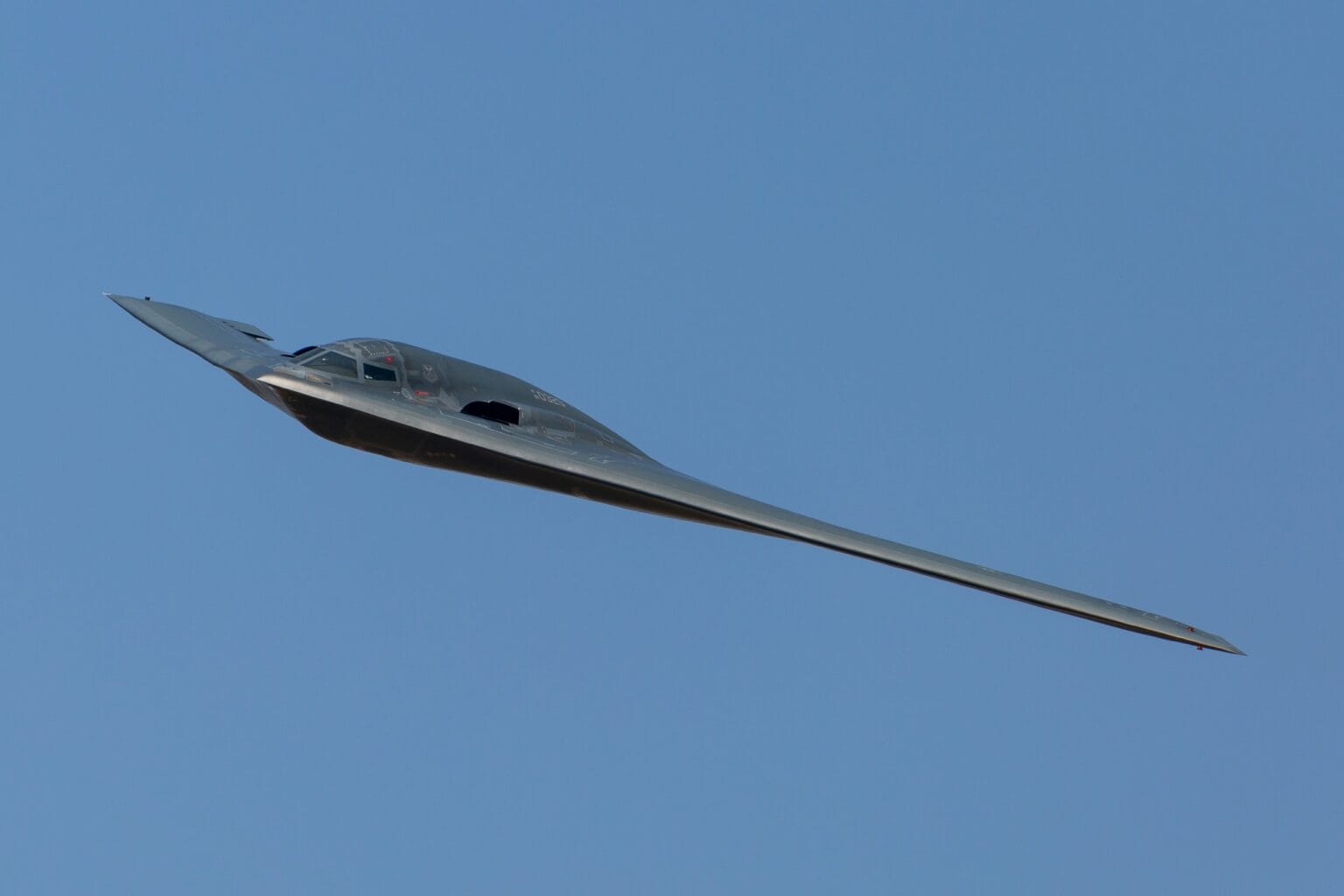
The Northrop Grumman B-2 Spirit is the most capable stealth bomber ever built, and as of September 2026 it is still the only one in combat service anywhere in the world. It has struck Iran twice in less than a year, both times on round trips from Missouri.
Only two aircraft designed from the start as stealth bombers are publicly confirmed to have flown: the B-2 and its successor, the B-21 Raider. Everything else here is a stealth attack jet, a wartime prototype, or a program that has never publicly produced a flying aircraft.
This list ranks all six by real-world strike capability as of September 2026. A final section covers the aircraft people often mistake for stealth bombers, including the B-1B Lancer.
| Rank | Aircraft | Country | First flight | Built | Status (Sept 2026) |
|---|---|---|---|---|---|
| 1 | Northrop Grumman B-2 Spirit | United States | 1989 | 21 | In service, 19 remain |
| 2 | Northrop Grumman B-21 Raider | United States | 2023 | 2 flying | Flight test, first base in 2027 |
| 3 | Lockheed F-117 Nighthawk | United States | 1981 | 64 | Retired from combat 2008, test and training use |
| 4 | Xian H-20 | China | Not confirmed | Unknown | In development |
| 5 | Tupolev PAK DA | Russia | Not confirmed | No confirmed prototype | In development |
| 6 | Horten Ho 229 | Germany | 1944 (glider), 1945 (jet) | 3 prototypes | One survivor in a museum |
How this ranking works
A stealth bomber here is an aircraft designed around low radar visibility whose main job is delivering bombs. Entries are ranked on what each has proven rather than what it promises: combat record first, then how many exist and are ready, then payload. Programs that have not publicly flown rank below aircraft that have, with one exception: the Horten Ho 229, which flew but was tested and found not to be meaningfully stealthy. Stealth fighters with a secondary strike role, such as the F-35 and J-20, are excluded, as are drones.
1. Northrop Grumman B-2 Spirit


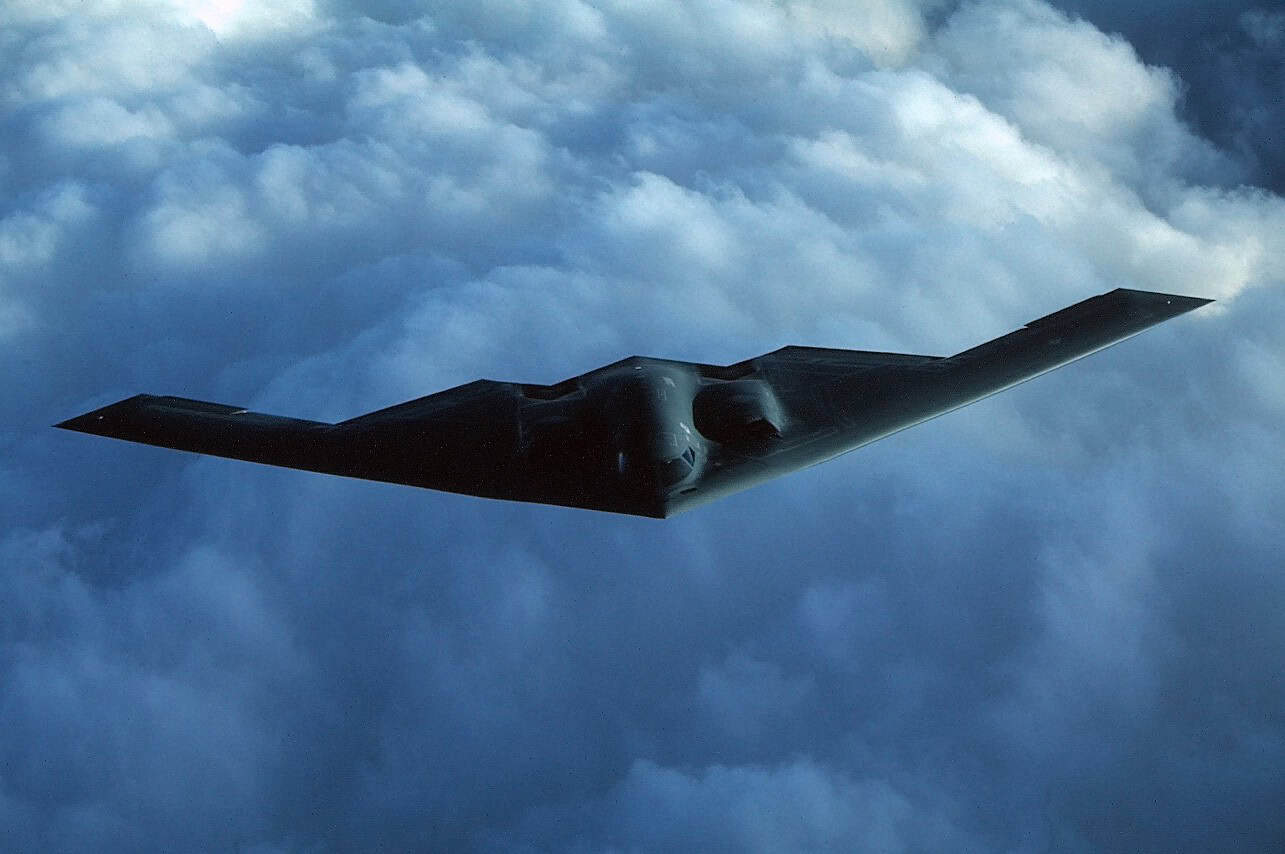

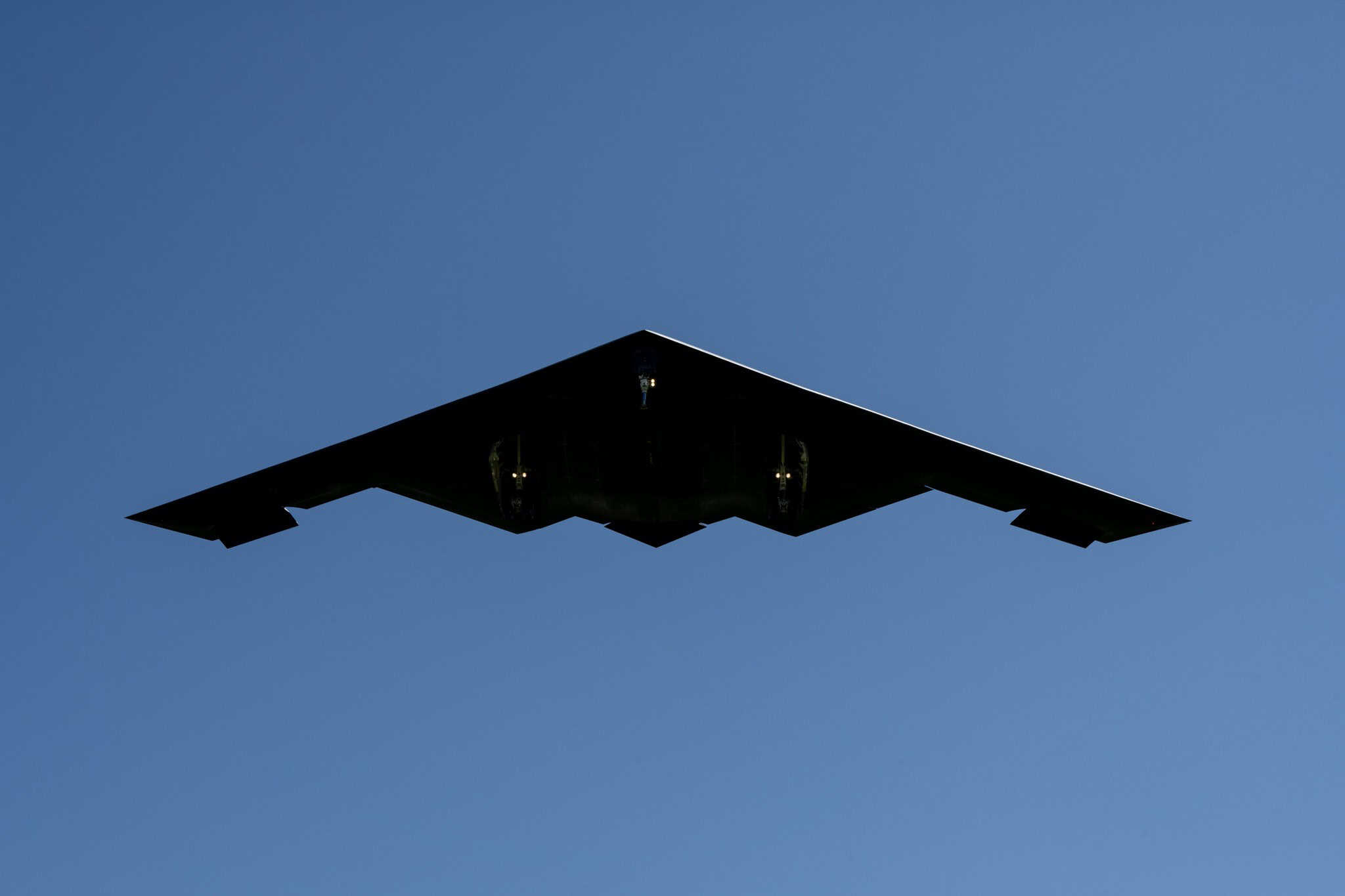
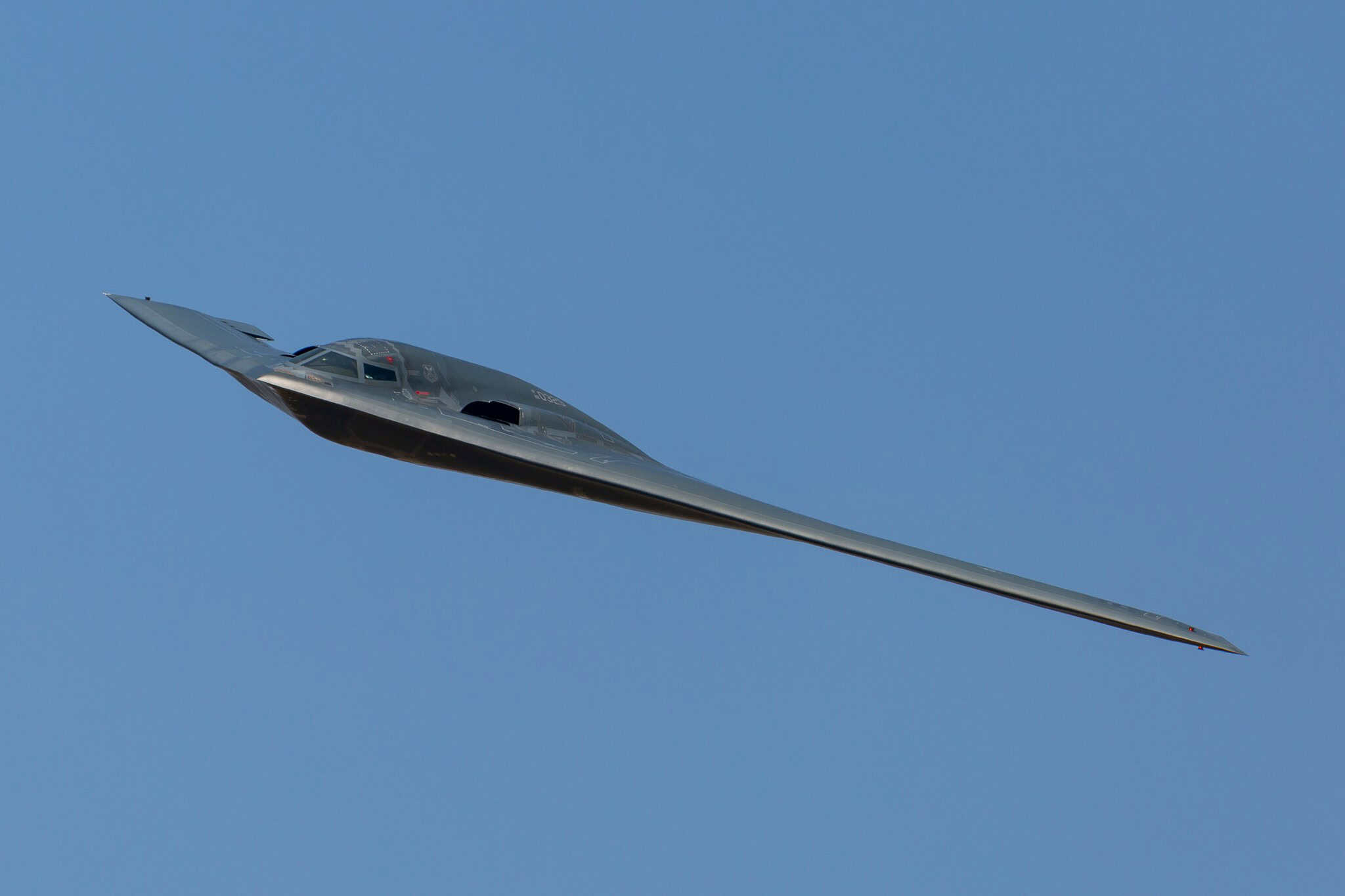


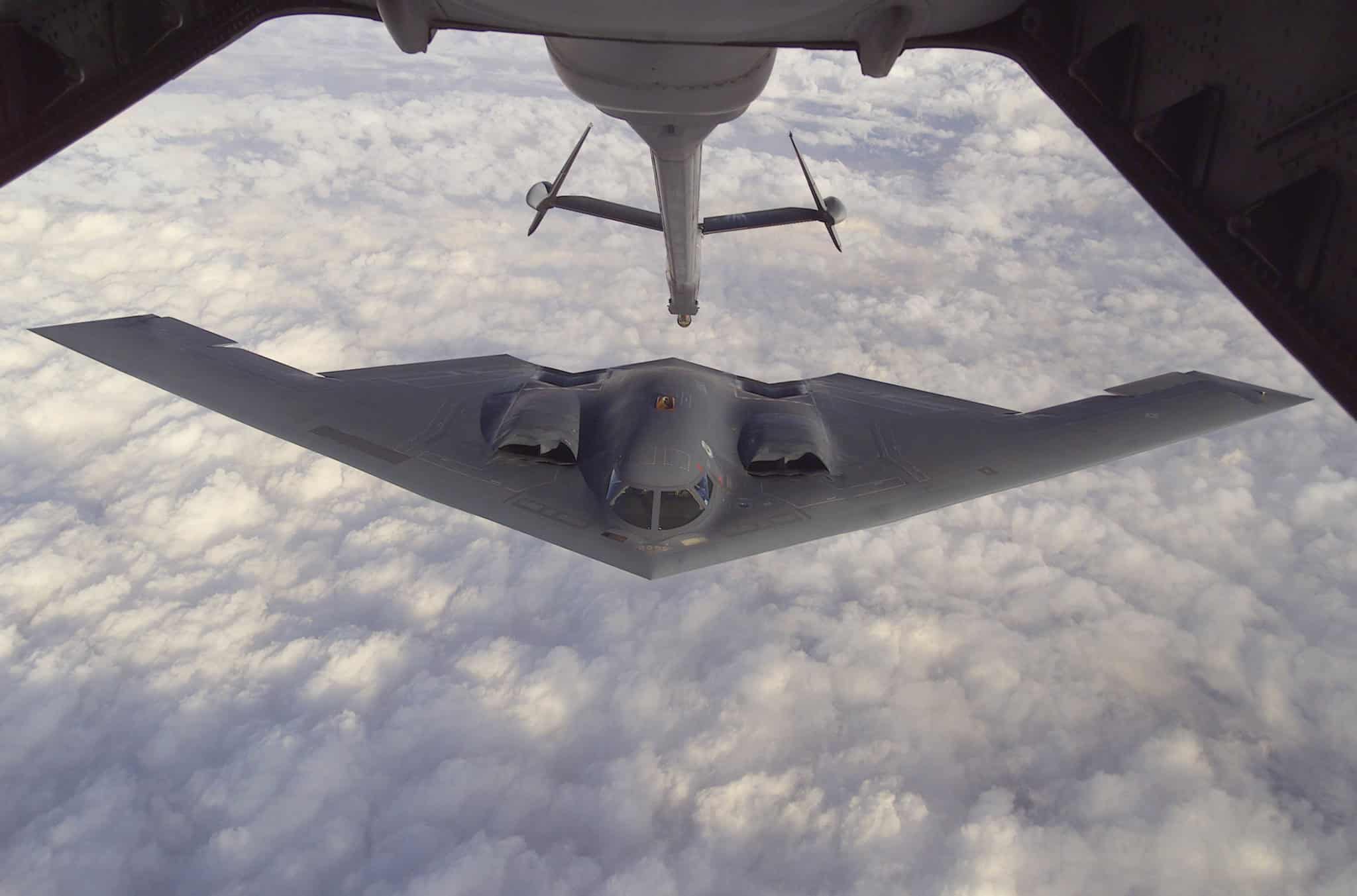

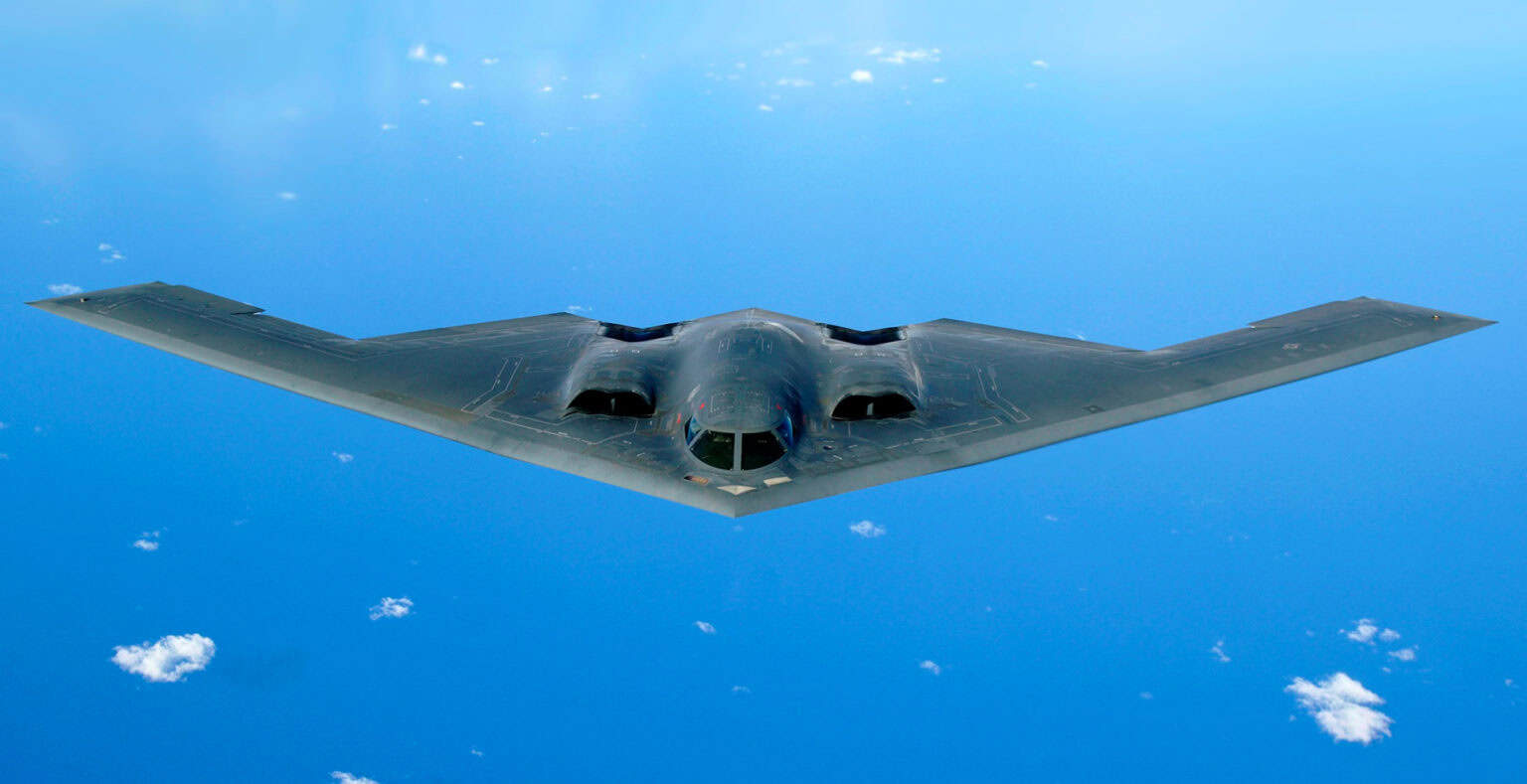
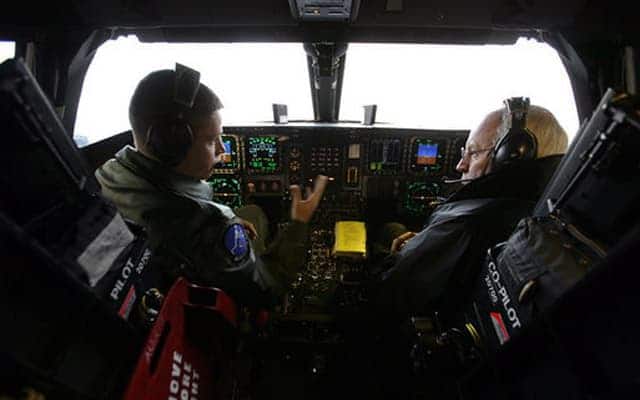
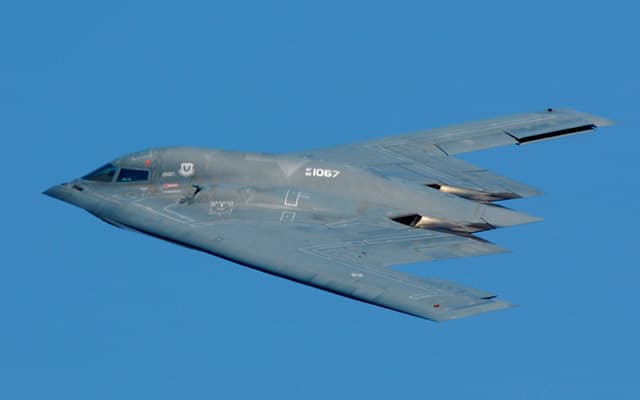


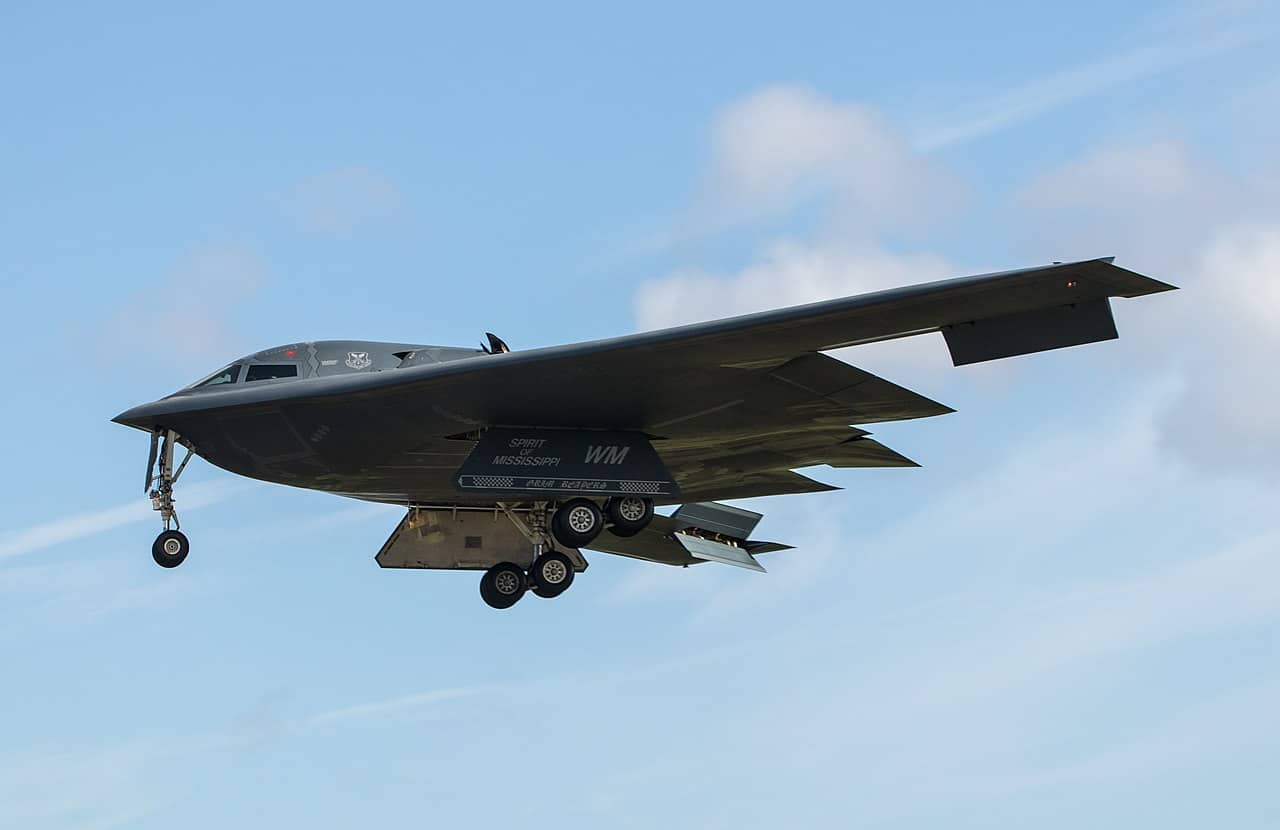

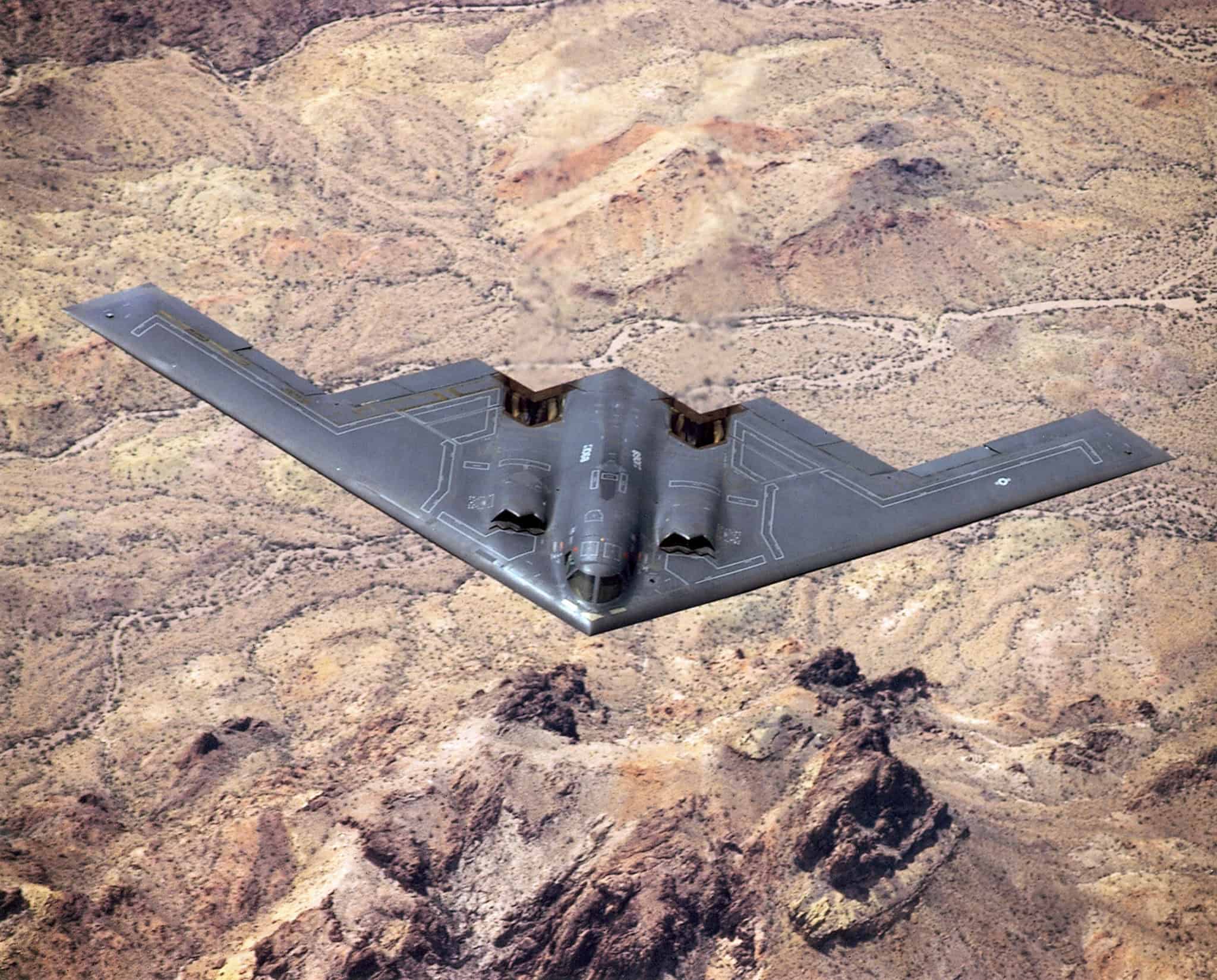


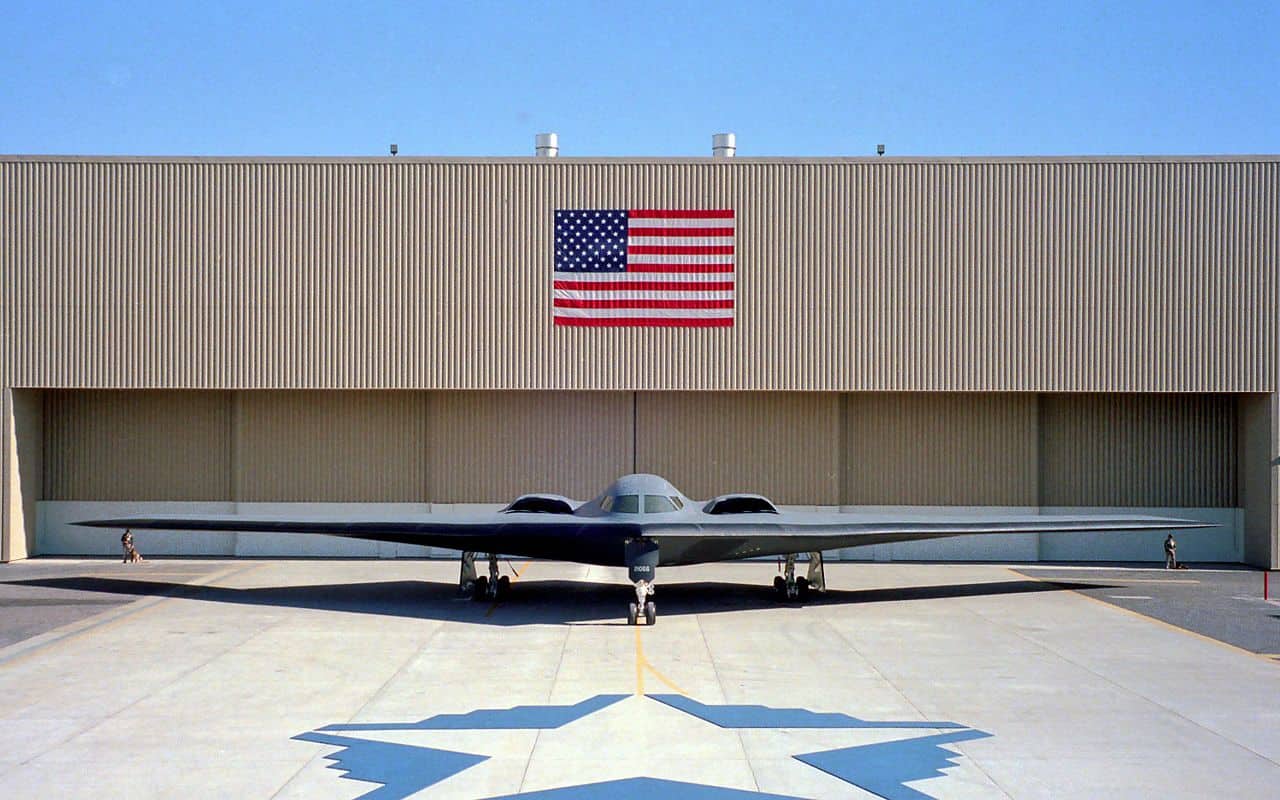
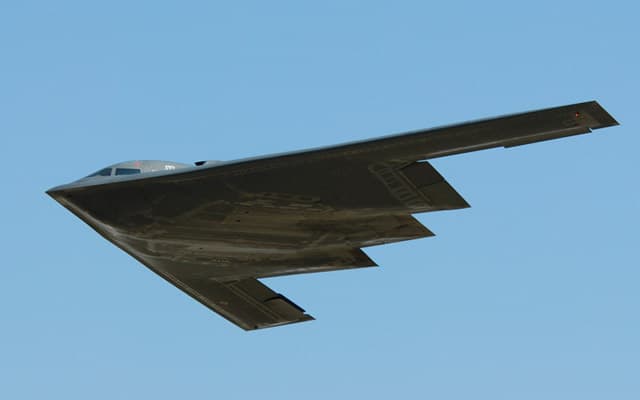
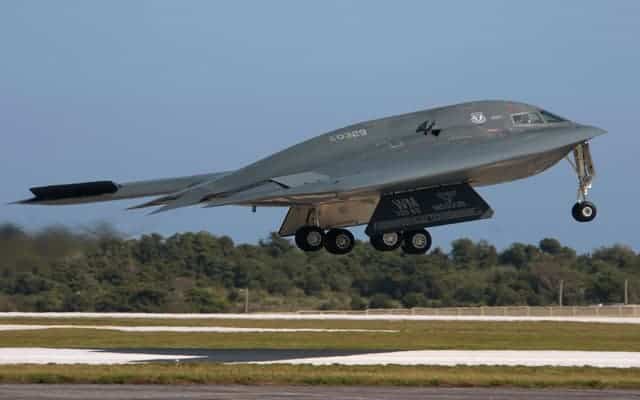
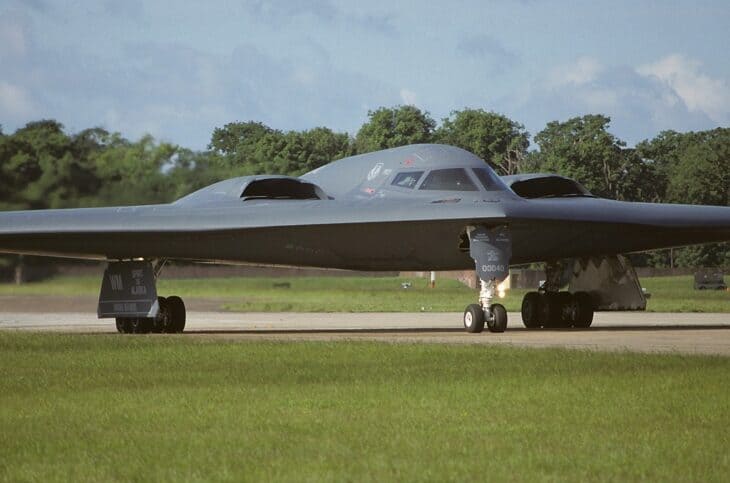
The B-2 Spirit takes first place because no other stealth bomber comes close to its record. It has flown combat over Kosovo, Afghanistan, Iraq, Libya, Yemen, and Iran.
It proved the concept early. In the first eight weeks of the 1999 Kosovo campaign, the B-2 was responsible for destroying 33 percent of all Serbian targets, flying nonstop from Missouri and back.
It first flew on July 17, 1989, and reached initial operating capability in April 1997. A crew of two flies a 172-foot (52.4 m) flying wing with a maximum takeoff weight of 336,500 pounds (152,634 kg), powered by four General Electric F118-GE-100 engines.
Its unrefueled range is about 6,000 nautical miles, and its ceiling is 50,000 feet. The Air Force gives no top speed, listing it only as high subsonic.
Payload depends on who you ask. The Air Force’s current fact sheet lists 60,000 pounds (27,216 kg), while the Congressional Research Service still uses the long-standing figure of 40,000 pounds (18,144 kg).
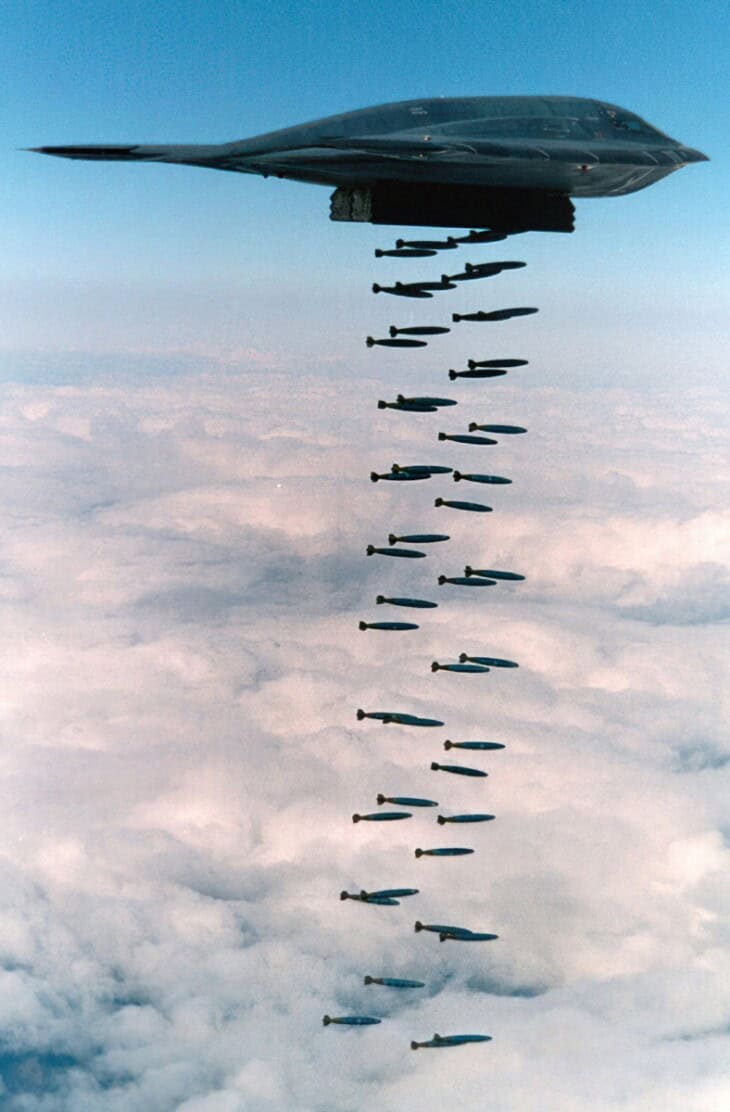
Its recent record is what separates it from everything else here. On June 21 and 22, 2025, seven B-2s dropped 14 GBU-57 Massive Ordnance Penetrators on Iran’s nuclear sites at Fordow and Natanz in Operation Midnight Hammer, the weapon’s first operational use, on a round trip of about 37 hours.
Eight months later, in the Operation Epic Fury strikes of February 28 to March 1, 2026, four B-2s from Whiteman Air Force Base hit hardened Iranian ballistic missile facilities with 2,000-pound bombs. On June 27, 2026, a B-2 struck the decommissioned USS Juneau north of the Mariana Islands with an anti-ship missile, the type’s first publicly reported live-fire maritime strike.
Only 21 were built, down from a planned 132. One was destroyed in a 2008 crash on Guam, and a second was retired after a December 10, 2022, accident at Whiteman that the Air Force judged uneconomical to repair, leaving 19.
The Air Force fact sheet still lists 20, but the damaged aircraft was divested in fiscal 2025. The service puts the unit cost at about $1.157 billion in 1998 dollars, and spreading the full development bill across just 21 airframes raises the average to about $2.13 billion each in 1997 dollars.
That record also puts it at the top of our ranking of the best bombers in the world, stealthy or not.
A 1947 bomber had the same wingspan
Northrop’s YB-49 flying wing first flew in October 1947, and testers noticed it had a small radar cross-section because of its shape. It and the B-2 share a wingspan of 172 feet (52.4 m), and flight test data from the YB-49 was used in developing the B-2 four decades later.
2. Northrop Grumman B-21 Raider


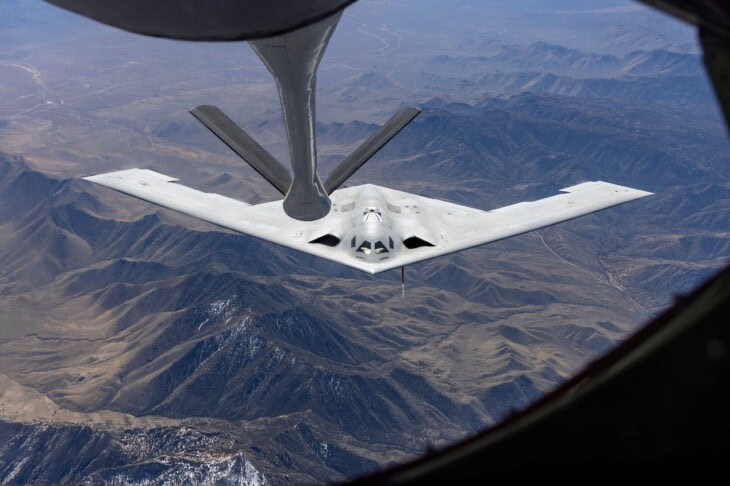
The B-21 Raider is the newer and more advanced aircraft, and within a few years it will almost certainly take first place. It ranks second today for one reason: as of September 2026 it has not flown a combat mission or joined an operational squadron.
The first aircraft was unveiled at Palmdale, California, on December 2, 2022, and first flew on November 10, 2023. A second test aircraft flew on September 11, 2025, and both are now flying at Edwards Air Force Base.
Testing is moving unusually fast. The Air Force confirmed aerial refueling in April 2026, and in June 2026 an operational test pilot flew the Raider, which the service called the earliest an operational pilot has flown a new aircraft in modern history.
The Air Force has published almost no specifications. Aviation Week estimates a wingspan of 145 to 155 feet (44 to 47 m), a maximum takeoff weight near 180,000 pounds (81,600 kg), and a weapons load around 20,000 pounds (9,100 kg), which would make it smaller than the B-2.
What the Air Force has confirmed is the plan. It wants a minimum of 100 aircraft at an average procurement cost of $692 million each in 2022 dollars, and it describes a future bomber force of B-21s and B-52s, with no place in it for the B-2.
The first Raider reaches Ellsworth Air Force Base, South Dakota, in 2027, and it will be one of the two test aircraft. Whiteman in Missouri and Dyess in Texas follow, and in March 2025 the head of US Strategic Command told Congress the force could need 145.
Why it is called the B-21
The number marks it as the first bomber of the 21st century, according to the Air Force. The name honors the Doolittle Raiders, the US Army Air Forces crews who attacked Japan on April 18, 1942.
3. Lockheed F-117 Nighthawk


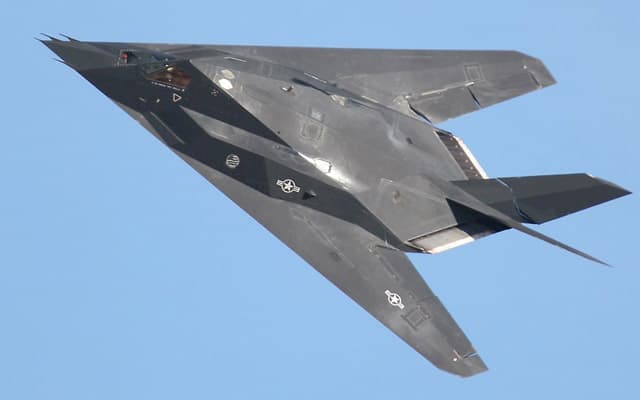


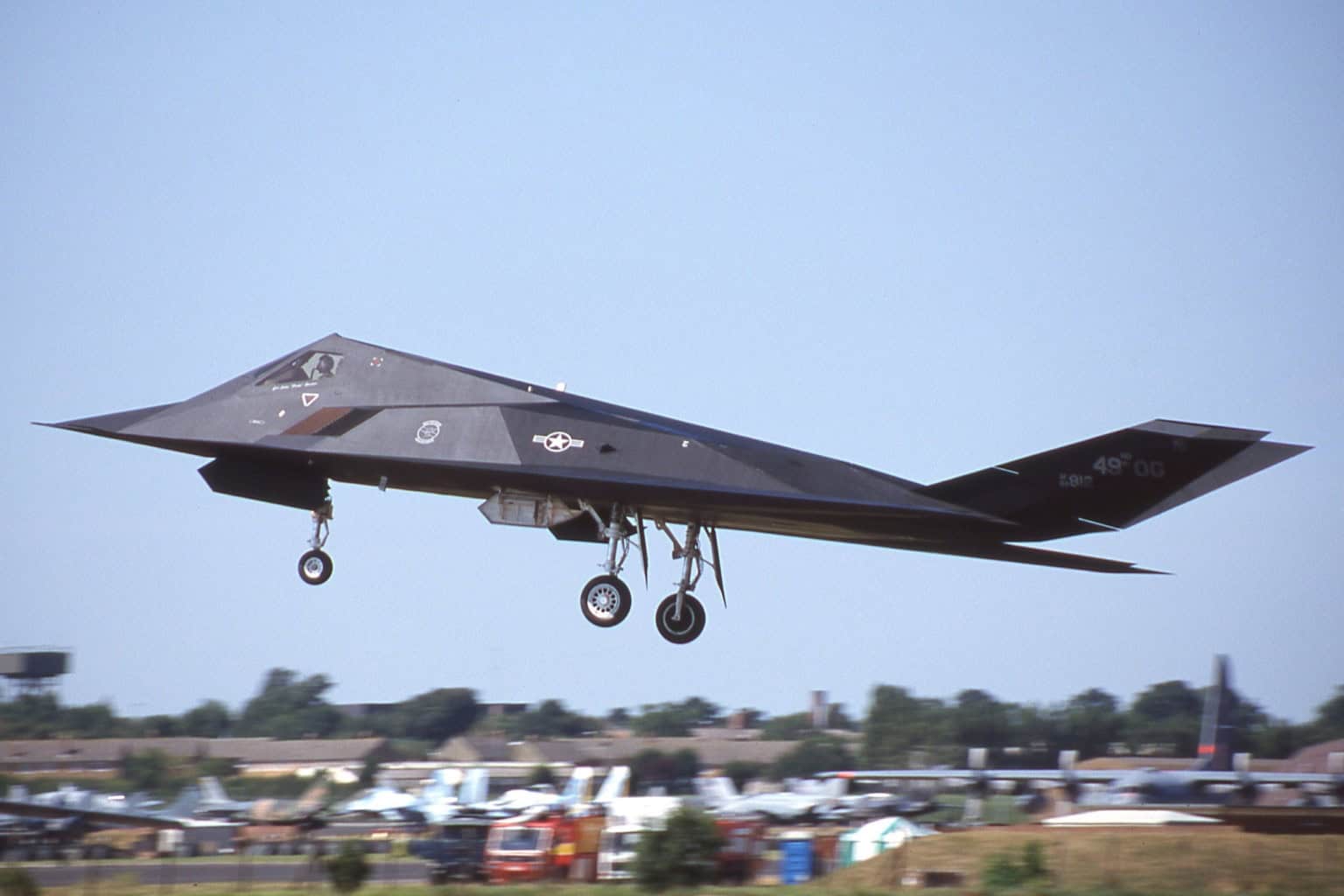

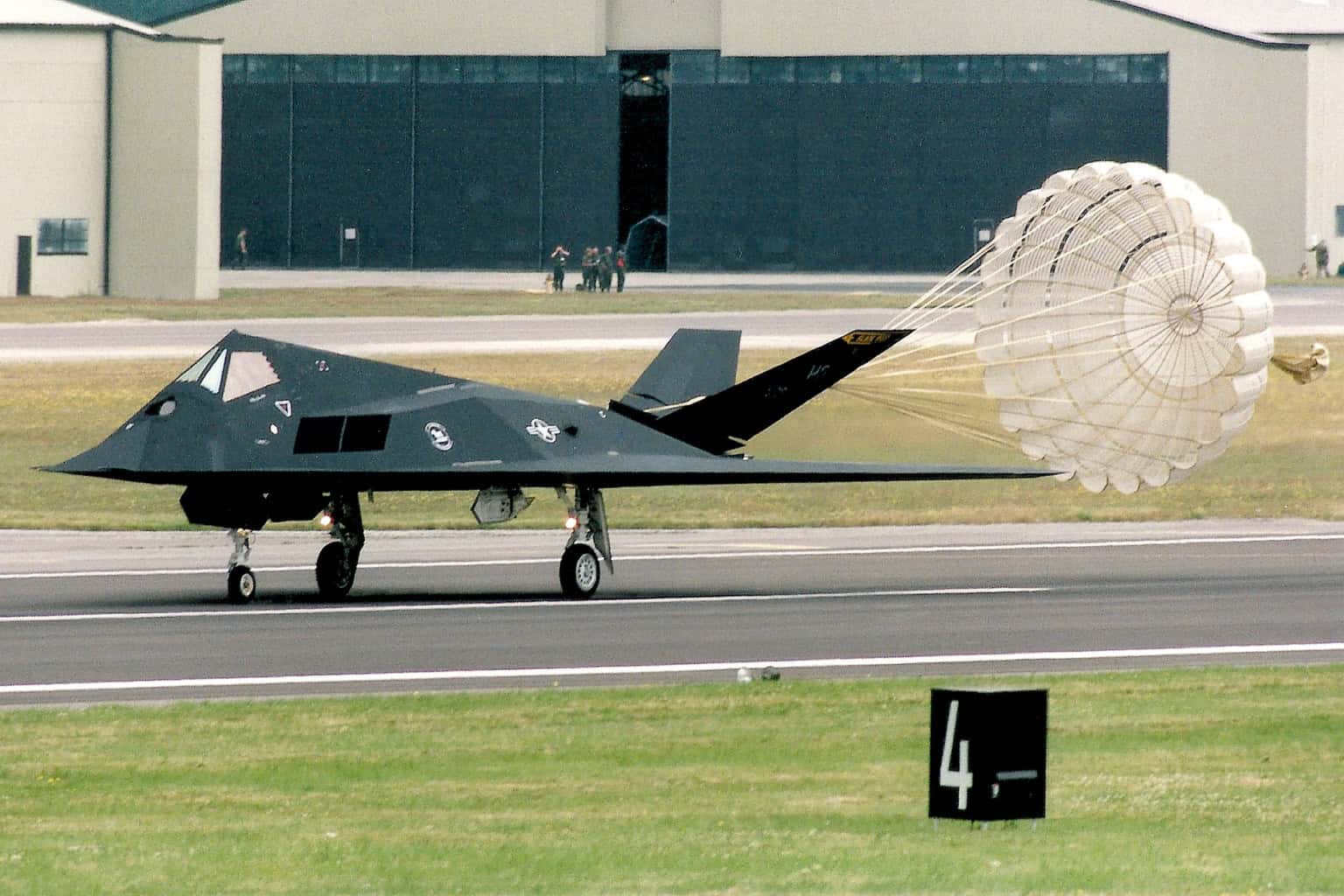


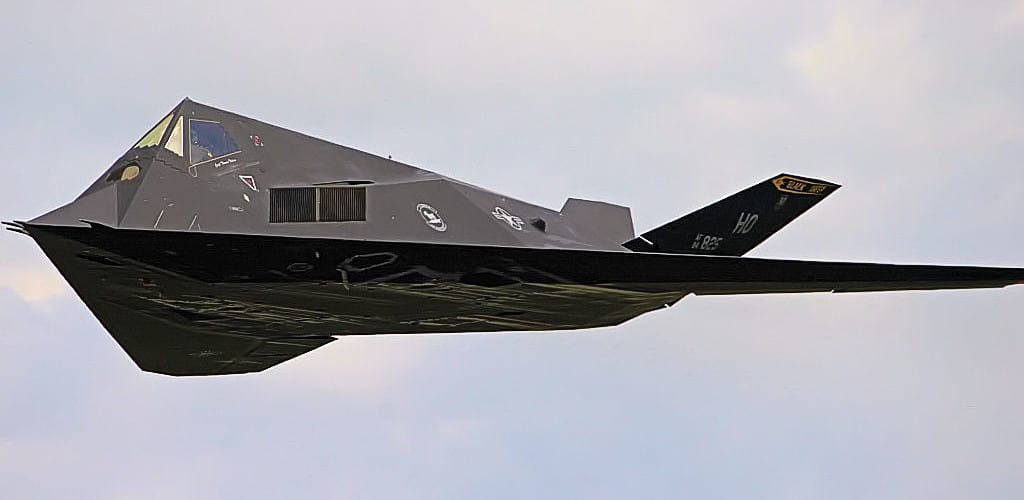
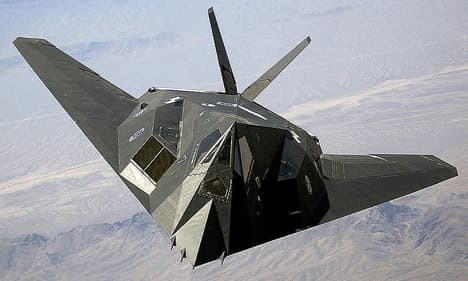
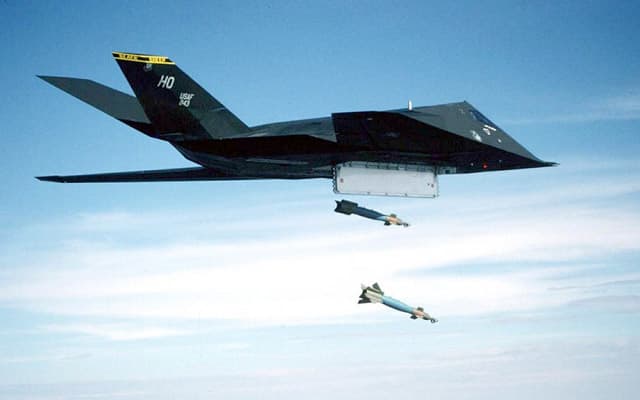
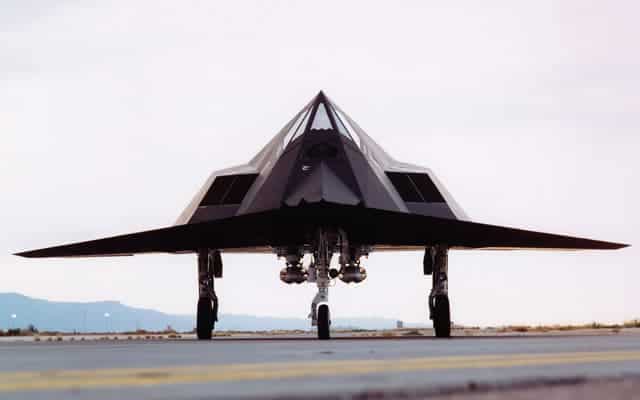
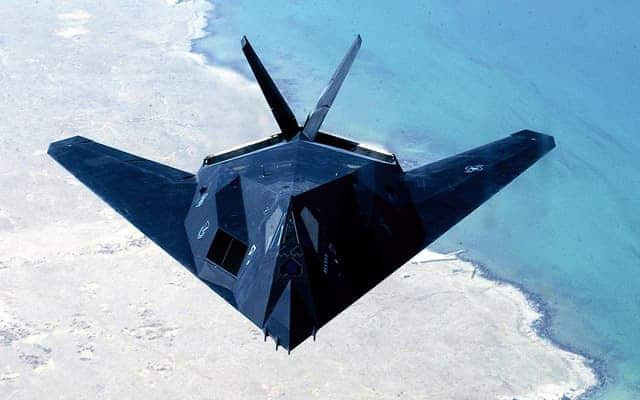
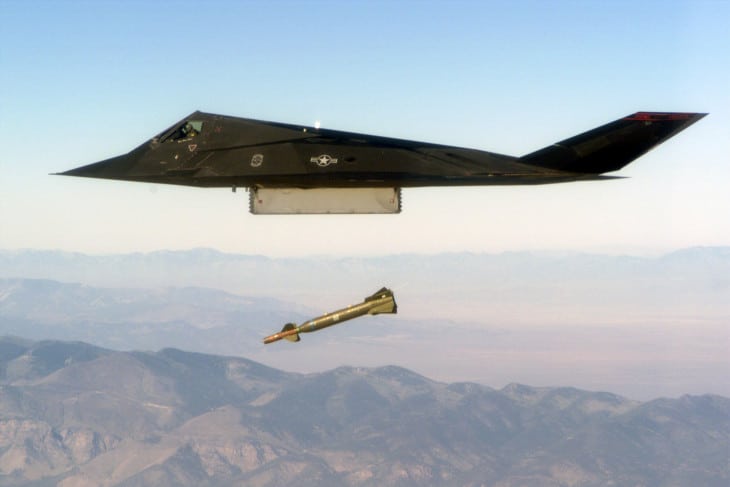
The F-117 Nighthawk belongs on this list despite its fighter designation. It was a stealth attack aircraft that carried about 5,000 pounds (2,300 kg) of ordnance in a split internal bay.
It first flew on June 18, 1981, and reached initial operating capability in October 1983. Lockheed built 64: five pre-production YF-117As and 59 production F-117As.
Its war record is a bombing record. It first went into combat over Panama in 1989, then flew roughly 1,300 sorties in the 1991 Gulf War and struck 1,600 high-value targets.
Its stealth was never absolute. A surface-to-air missile shot one down over Serbia on March 27, 1999.
The jet is 65 feet 11 inches (20.09 m) long with a 43-foot 4-inch (13.21 m) span and a maximum takeoff weight of 52,500 pounds (23,814 kg). Its top speed is about Mach 0.9.
It retired from combat on April 22, 2008, but never fully left. Several dozen remain at Tonopah Test Range in Nevada, some kept flyable, and the Air Force has contracted to maintain the type for test and training support through at least 2034.
It ranks third because its payload is a fraction of a true bomber’s and its combat career ended in 2008. Among the best stealth aircraft in the world, it still earns a place as the jet that took stealth into battle.
The bomber with a fighter's name
The F designation never matched the Nighthawk’s role, which was attack, not air-to-air combat. One explanation for the label is that it made the program more attractive to fighter pilots.
4. Xian H-20
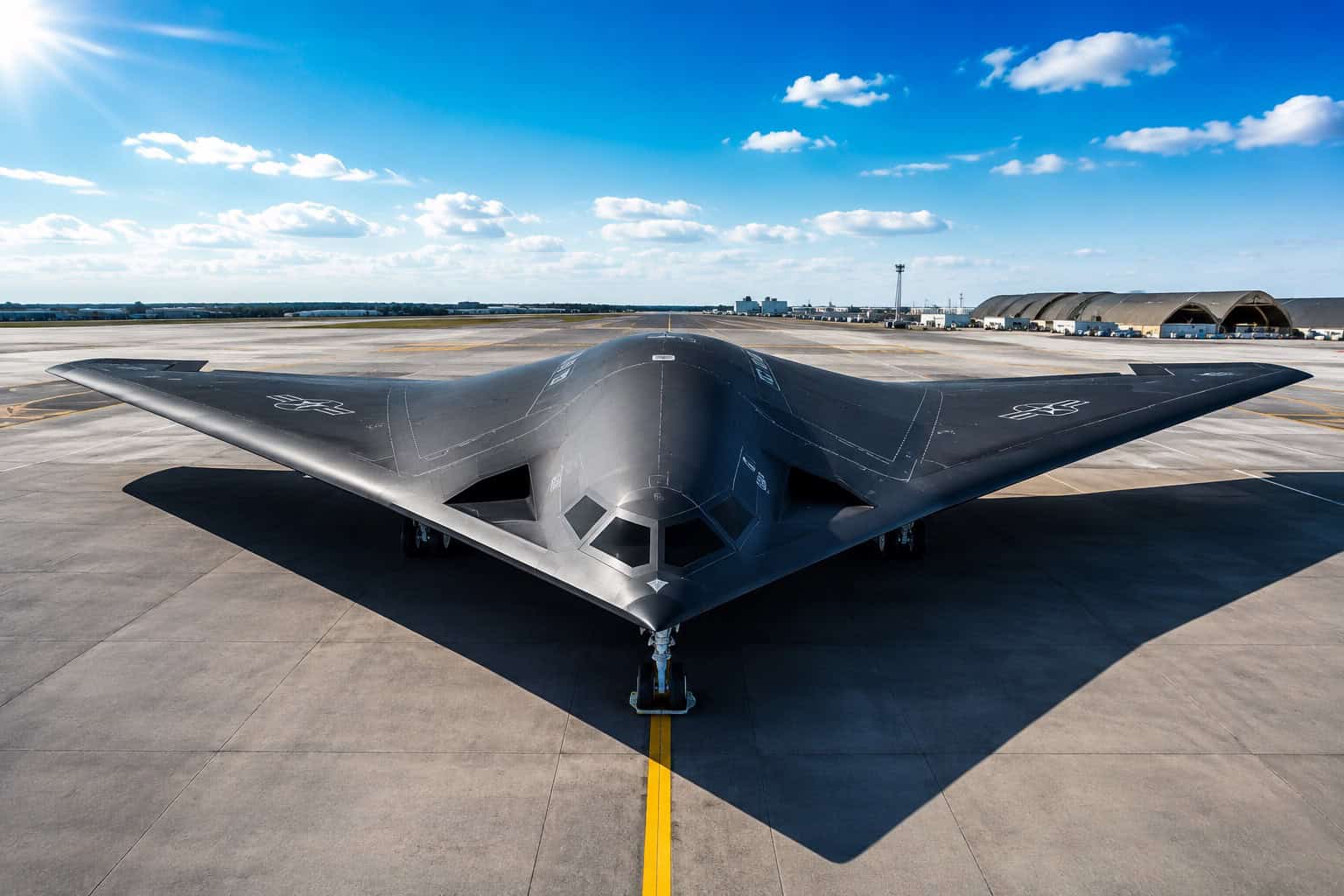

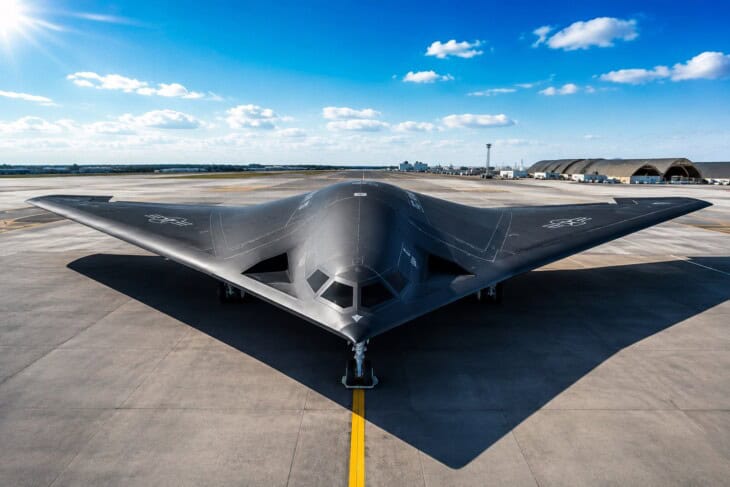
China’s Xian H-20 has been officially acknowledged for a decade and still has not been publicly shown. Air force general Ma Xiaotian revealed in September 2016 that China was developing a new long-range bomber.
The US Department of Defense expects a flying wing with a range of at least 5,280 miles (8,500 km) and a payload of at least 22,000 pounds (10 tonnes), conventional or nuclear. In March 2024, air force vice commander Wang Wei said it would be revealed very soon.
As of September 2026, China has not officially unveiled it or confirmed a flight. Unconfirmed images on Chinese social media in January 2025 hinted at test flights, and US intelligence assessed in December 2024 that it may not be fully operational until the 2030s.
It ranks fourth because nothing about it can be verified yet. It sits above Russia’s program because China keeps confirming it exists and the Pentagon publishes estimates of what it will do.
5. Tupolev PAK DA
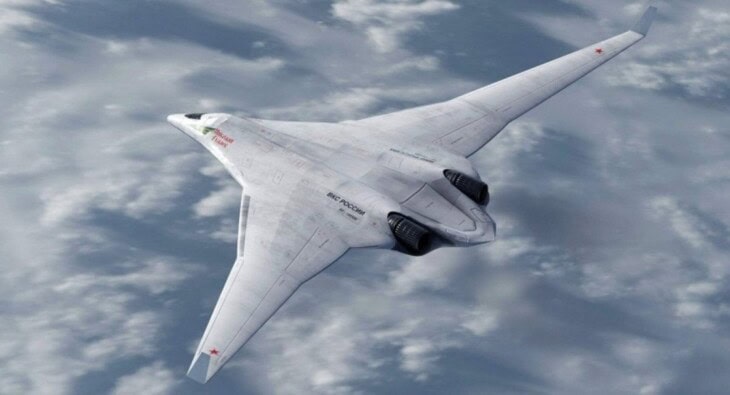
Russia’s PAK DA is a subsonic flying wing built around stealth, the design direction confirmed in March 2013. Tupolev received the formal requirements in December 2007, and funding began in 2008.
Reported figures include a range of about 7,500 miles (12,000 km), up to 30 hours of endurance, a crew of four, and a payload of about 66,000 pounds (30 tonnes). None of it has been demonstrated.
The schedule is the problem. A first flight once planned for late 2024 or early 2025 never happened, and as of June 2025 there were no reports that a prototype had even been completed.
It ranks fifth because the only evidence of it is official statements and slipping dates.
6. Horten Ho 229
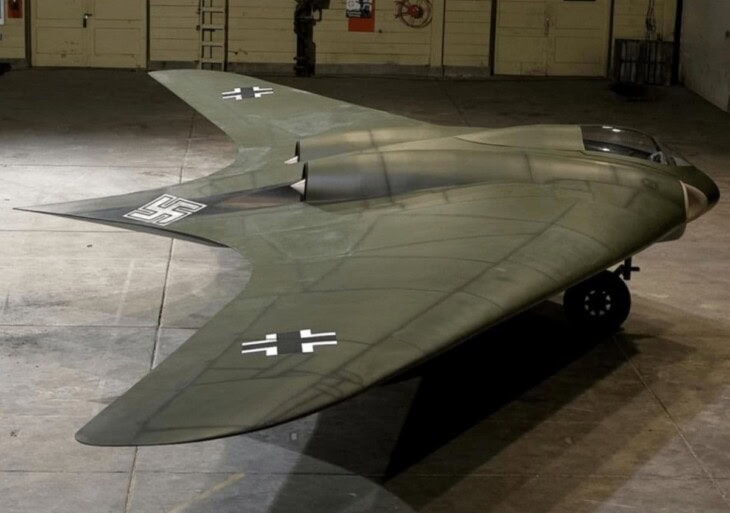
Search for a World War II stealth bomber and the Horten Ho 229 is the aircraft you will find. It was a flying-wing jet developed in Nazi Germany, with a 55-foot (16.8 m) span and two Junkers Jumo 004B turbojets.
The unpowered V1 glider first flew on March 1, 1944, and the jet-powered V2 on February 2, 1945. The V2 crashed on its third test flight, on February 18, 1945, and none of the roughly 100 production aircraft on order were completed.
The nearly complete V3 was captured by the US military and is now displayed at the Smithsonian’s Steven F. Udvar-Hazy Center. It never joined the German bombers of World War II that saw combat.
Was the Ho 229 really stealthy? Probably not
In 1983 Reimar Horten claimed he had intended to mix charcoal dust into the wood glue to absorb radar. The surviving V3 contains no charcoal, the Smithsonian found no evidence of carbon black, and a 2008 Northrop Grumman study of a full-size replica found it would have been visible to Chain Home radar at 80 percent of the distance of a Bf 109 fighter.
It ranks last because the one serious test of its stealth found very little, and it never flew in combat.
How many stealth bombers exist today?
As of September 2026 the United States is the only country flying a stealth bomber. It has 19 B-2s, all based at Whiteman Air Force Base in Missouri, plus two B-21 test aircraft at Edwards.
That is a very small force. The June 2025 Iran strike alone committed about a third of the B-2 fleet, and Congressional researchers cite it as one reason some experts argue the Air Force needs more B-21s.
Stealth bombers are the newest of the types of bomber planes, and the rarest. The next decade will decide whether that changes, depending on how fast B-21 production grows and whether China’s H-20 ever appears in public.
The aircraft people mistake for stealth bombers
Two aircraft turn up in searches for stealth bombers without belonging on the list above. One is real but not stealthy, and the other was stealthy on paper but never flew.
Rockwell B-1B Lancer
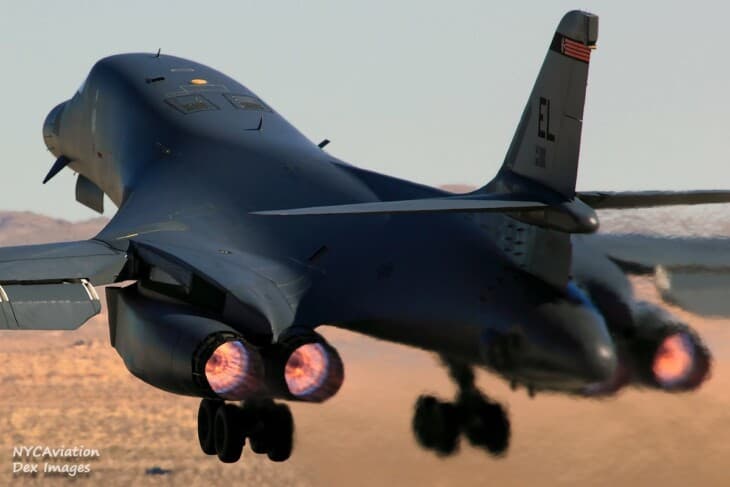
The B-1B Lancer is not technically a stealth aircraft, but it was shaped to be far harder to see than older bombers. Its structure, serpentine intakes, and radar-absorbent material cut its radar cross-section to about one-fiftieth of a B-52’s, roughly 26 square feet (2.4 m²), comparable to a small fighter.
That makes it stealthier than it looks, not stealthy. The Air Force had 45 in 2024, down from an original fleet of 100.
McDonnell Douglas A-12 Avenger II
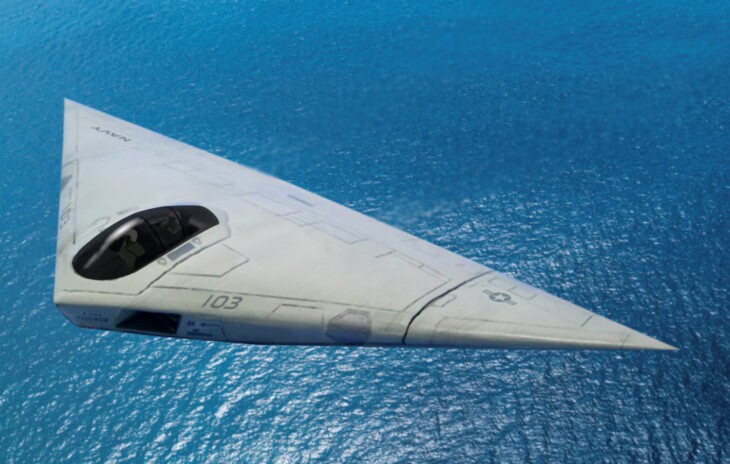
The A-12 was meant to be the Navy’s carrier-based stealth bomber, replacing the A-6 Intruder. General Dynamics and McDonnell Douglas won the contract in January 1988, and the Navy wanted 620 of the triangular jet nicknamed the Flying Dorito.
It never flew. Defense Secretary Dick Cheney cancelled it on January 7, 1991, after roughly $2 billion had been spent, and only a mockup was ever built.
FAQ
Sources and references used for research and fact-checking.
- U.S. Air Force, B-2 Spirit Fact Sheet
- U.S. Air Force, B-21 Raider Fact Sheet
- Congressional Research Service, U.S. Strategic Bombers (IF12945)
- Air & Space Forces Magazine, Air Force Will Retire, Not Repair, Damaged B-2
- Air & Space Forces Magazine, 15 Tons of Bombs and One Tiny Toilet: Around the World on the B-2
- Air & Space Forces Magazine, Air Force Accelerates Sending B-21s to Ellsworth
- The Aviationist, Operational and Developmental Test Pilots Fly Together on B-21 Raider
- Wikipedia, Northrop Grumman B-21 Raider
- Wikipedia, Northrop B-2 Spirit
- The Aviationist, Operation Midnight Hammer: How U.S. B-2 Bombers Struck Iran Undetected
- We Are The Mighty, Midnight Hammer was the second-longest bombing mission: The B-2 also flew the longest
- The Aviationist, B-2 Spirit Stealth Bombers Take Part in Night Strikes on Iran
- Army Recognition, U.S. B-2 Spirit and F-15E Strike Eagle Signal New Layer of Pacific Sea-Denial Strategy
- Wikipedia, Lockheed F-117 Nighthawk
- Air & Space Forces Magazine, F-117 Nighthawk
- Wikipedia, Xi'an H-20
- Wikipedia, Tupolev PAK DA
- Wikipedia, Horten H.IX
- Wikipedia, Northrop YB-49
- Wikipedia, McDonnell Douglas A-12 Avenger II
- Wikipedia, Rockwell B-1 Lancer
Get the Newsletter
The latest aviation news and stories sent to your inbox.
About the Author

Tim is the owner and lead editor of AeroCorner since 2019, overseeing aviation content covering aircraft, airlines, airports, and the broader aviation industry. Through years of researching, writing, editing, and publishing aviation-focused content, he has developed extensive practical knowledge of commercial aviation and air travel. Based in Asia and a frequent traveler himself, Tim also brings firsthand passenger experience to AeroCorner’s coverage. Outside of publishing, he has also explored aviation firsthand through hands-on flight training in New Zealand.