

Table of Contents
After the F-35 decision, Boeing went 23 years without winning a new fighter design. Then it won the two that matter most in 18 months.
On September 29, 2026, the US Navy picked Boeing over Northrop Grumman to build the F/A-XX, its sixth-generation carrier fighter. The full-scale development contract is worth about $20 billion.
It is Boeing’s second such win. The Air Force chose Boeing for the F-47 in March 2025, so the company now designs both of America’s crewed sixth-generation fighters.
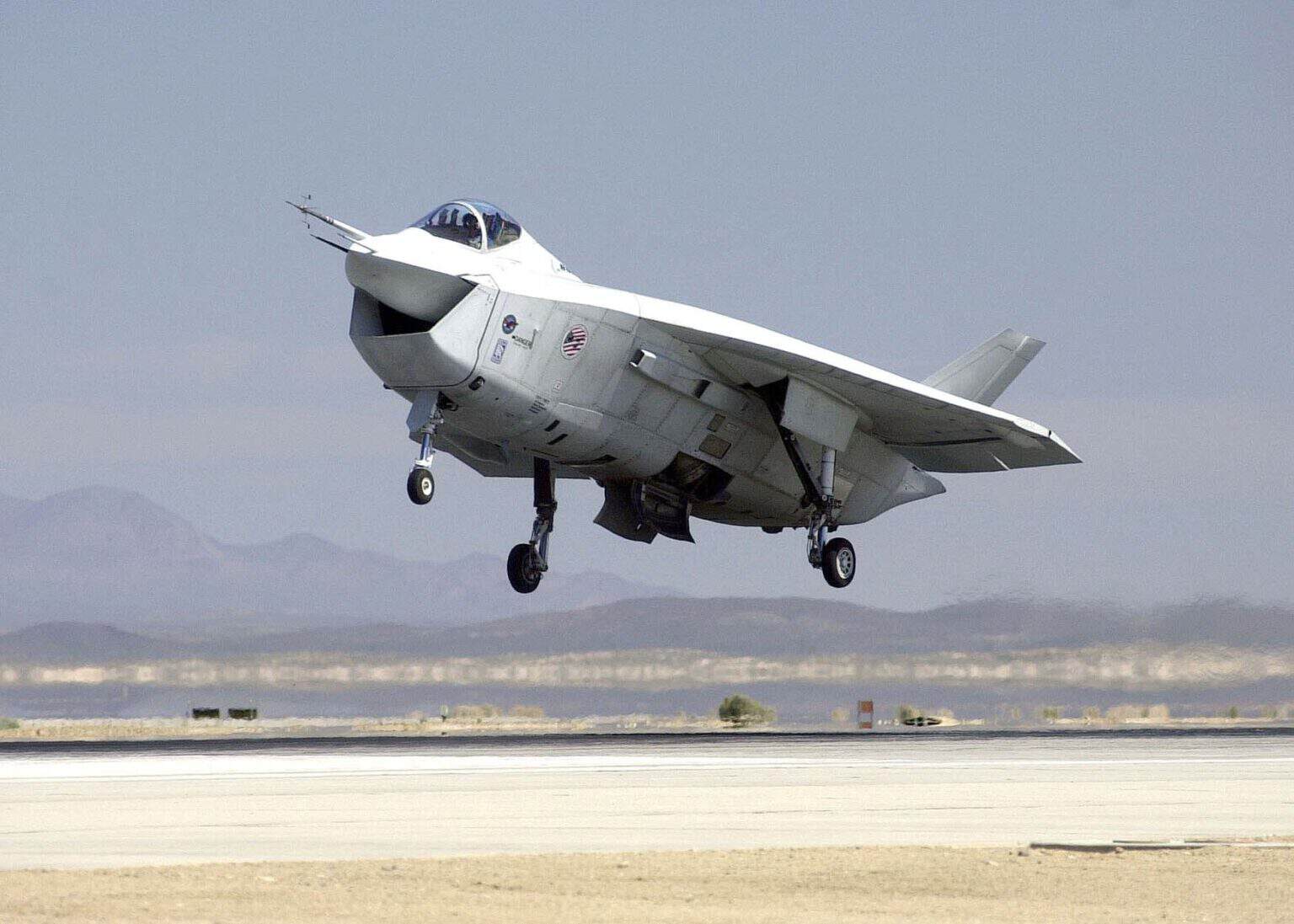
That is a long way from October 26, 2001, when the Pentagon picked Lockheed Martin’s X-35 over the Boeing X-32 in the Joint Strike Fighter competition. The X-35 became the F-35 Lightning II.
How the X-32 Lost, and How Boeing Kept a Fighter Factory Anyway
The X-32 lost on a demonstration Boeing could not match. The X-35 took off vertically, went supersonic and landed vertically in one configuration, while the X-32 needed changes on the ground between its hover and supersonic modes.
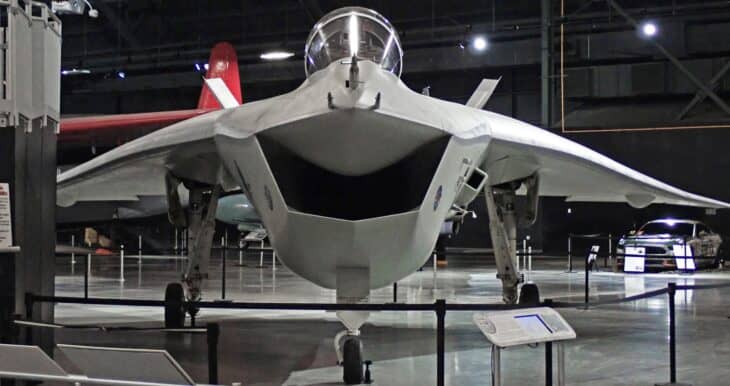
Its chief test pilot, retired Navy Commander Phillip “Rowdy” Yates, later said, as The War Zone reported, that the STOVL gap was the moment the team “kicked the dirt a little bit and said ‘damn.'” Holding up a model, he pointed at the jet’s gaping chin intake and said: “That’s the problem.”
The design itself had also drifted. Eight months into building the demonstrators, the maneuver and payload requirements were refined at the Navy’s request and Boeing’s delta wing fell short, so the production jet Boeing proposed no longer looked like the one it was flying.
What kept Boeing in the fighter business was a company it had bought. McDonnell Douglas merged into Boeing in August 1997, bringing the F-15, the F/A-18E/F Super Hornet and its St. Louis plant.
For the next two decades, St. Louis built updates of those two designs. The Air Force’s newest Boeing fighter before the F-47, the F-15EX Eagle II first ordered in July 2020, is derived from the McDonnell Douglas F-15E Strike Eagle.
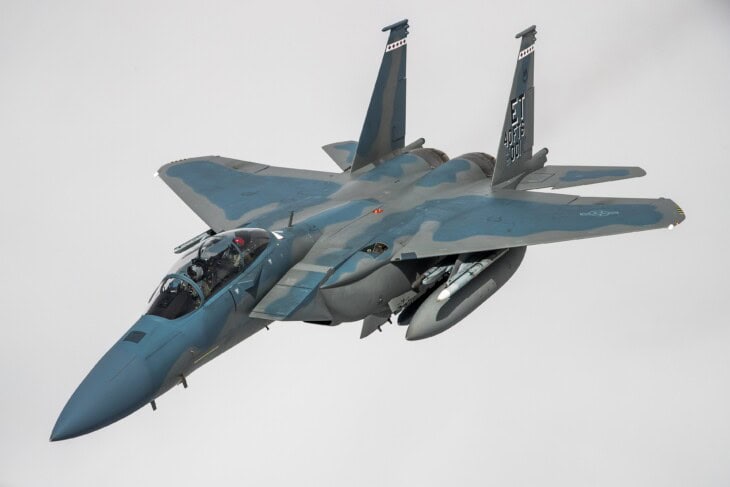
Then the field thinned. Northrop Grumman told the Air Force in July 2023 that it would not bid as prime for NGAD, the program that became the F-47, and Lockheed Martin was reported out of F/A-XX in March 2025 after its proposal failed the Navy’s requirements.
When President Trump announced the F-47 on March 21, 2025, he said “an experimental version of the plane has secretly been flying for almost five years.”
Two $20 Billion Contracts and 735 Navy Jets to Replace
The two awards are roughly the same size. The F-47’s engineering and manufacturing development contract is worth more than $20 billion, and the Air Force has said it intends to buy “185-plus” of them to replace the F-22 Raptor.
The F/A-XX contract is also about $20 billion, for the full-scale development phase. It buys multiple test aircraft for ground, airworthiness, systems and weapons integration testing, and the Navy has not said how many production jets it plans.
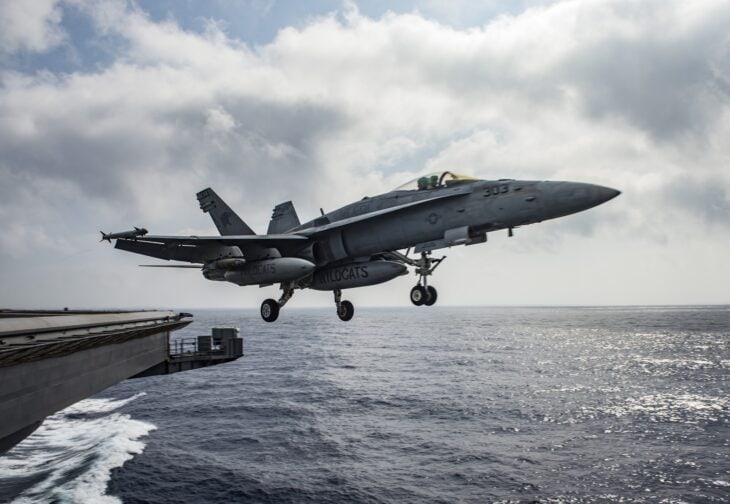
The fleet it will eventually replace is large. In April 2025 the Navy had 325 F/A-18Es, 250 F/A-18Fs and 160 EA-18G Growlers in inventory, 735 jets in all, and F/A-XX is meant to succeed both the Super Hornet and the Growler.
.jpg)
For scale, the X-32 program that Boeing lost in 2001 was a $750 million contract to build and fly two demonstrators. Lockheed got the same amount for its two X-35s.
The Navy jet nearly did not happen at all. Congress funded F/A-XX with $454 million in fiscal 2025, and in June 2025 the Pentagon asked for just $74 million for 2026 while requesting $3.5 billion for the F-47.
Congress overruled it. The final fiscal 2026 defense appropriations act, published on January 20, 2026, gave F/A-XX $972 million in research and development funding, about $897 million more than the Pentagon had asked for.
The Pentagon Feared Two Sixth-Gen Fighters at Once. Now One Company Has Both
The reason the Pentagon gave for slowing the Navy jet was industrial. Its 2026 budget request said F/A-XX was slowed “due to industrial base concerns of two sixth-generation programs occurring simultaneously,” DefenseScoop reported.
The answer the Navy chose puts both programs in the same company and the same city. The F-47 will be built in a new combat aircraft assembly building on Boeing’s St. Louis campus, part of a $1.8 billion expansion near Lambert International Airport.
Boeing says that was the plan all along. “Delivering two advanced fighters in parallel was always our plan, and we invested accordingly,” said Steve Parker, CEO of Boeing Defense, Space and Security, in the company’s announcement.
It also completes a reversal of the 1990s map. In April 1991, Boeing was on the winning YF-22 team that beat a Northrop and McDonnell Douglas design in the contest that produced the F-22.
Since then, Lockheed Martin has built the F-22 and the F-35, two jets that sit near the top of any ranking of the best fighter jets in the world. Northrop Grumman builds the B-21 bomber. For the next generation of crewed fighters, both are on the outside.
What Happens Next in St. Louis
The F-47 comes first. The Air Force said in July 2026 that the program is building its first test aircraft and that the first F-47 is on track to fly in 2028.
Boeing’s St. Louis plant is also finishing the last new Super Hornets, with final deliveries expected in 2027. F/A-XX is expected to reach the fleet in the 2030s, flying from carriers alongside the F-35C and uncrewed Collaborative Combat Aircraft.
Most technical details of both designs remain classified, and neither jet has been shown in public. The public picture of a sixth-generation fighter is still a handful of official renderings.
The X-32 is easier to see. One demonstrator sits at the National Museum of the United States Air Force near Dayton, Ohio, and the other at the Patuxent River Naval Air Museum in Maryland.
_1.jpg)
Boeing now has to develop two clean-sheet stealth fighters at once, the load the Pentagon itself doubted the industry could carry a year ago. If it can, the company that lost the F-35 will have built the jets that replace both the F-22 and the Super Hornet.
Sources and references used for research and fact-checking.
- Boeing, U.S. Navy Selects Boeing for F/A-XX Program
- The War Zone, Boeing Wins F/A-XX Next Generation Navy Stealth Fighter Contract
- Breaking Defense, Boeing wins Navy next-gen fighter F/A-XX competition
- Defense News, US Navy selects Boeing to build next-generation F/A-XX fighter
- Wikipedia, Boeing X-32
- The War Zone, Test Pilot Explains Why The X-32 Lost To What Became The F-35
- Wikipedia, McDonnell Douglas
- Wikipedia, Boeing F-15EX Eagle II
- Wikipedia, Boeing F-47
- CBS News, Trump announces 6th-generation fighter jet, the F-47
- Air & Space Forces Magazine, Northrop Won't Bid on Air Force's NGAD Fighter, But CCA, F/A-XX Programs Still in Play
- The Aviationist, Lockheed Martin No Longer Running for the U.S. Navy's F/A-XX Program
- DefenseScoop, Navy's F/A-XX fighter jet budget for 2026
- DefenseScoop, Navy F/A-XX fighter program in the FY26 funding bill
- The War Zone, Last New F/A-18 Aft Fuselages Built As Super Hornet Production End Approaches
- Wikipedia, Northrop YF-23
- Spectrum News, Boeing releases sneak peek of new St. Louis expansion
- Defense News, F-47 program producing test aircraft on schedule for 2028 flight
Get the Newsletter
The latest aviation news and stories sent to your inbox.
About the Author

Tim is the owner and lead editor of AeroCorner since 2019, overseeing aviation content covering aircraft, airlines, airports, and the broader aviation industry. Through years of researching, writing, editing, and publishing aviation-focused content, he has developed extensive practical knowledge of commercial aviation and air travel. Based in Asia and a frequent traveler himself, Tim also brings firsthand passenger experience to AeroCorner’s coverage. Outside of publishing, he has also explored aviation firsthand through hands-on flight training in New Zealand.