

Fighter Jets
Mitsubishi F-1
ICAO: F1
Japan's AESA-equipped F-16 derivative built for air-to-surface strike, nicknamed the Viper Zero.
Updated: by Tim de Vries
The latest aviation news and stories sent to your inbox.
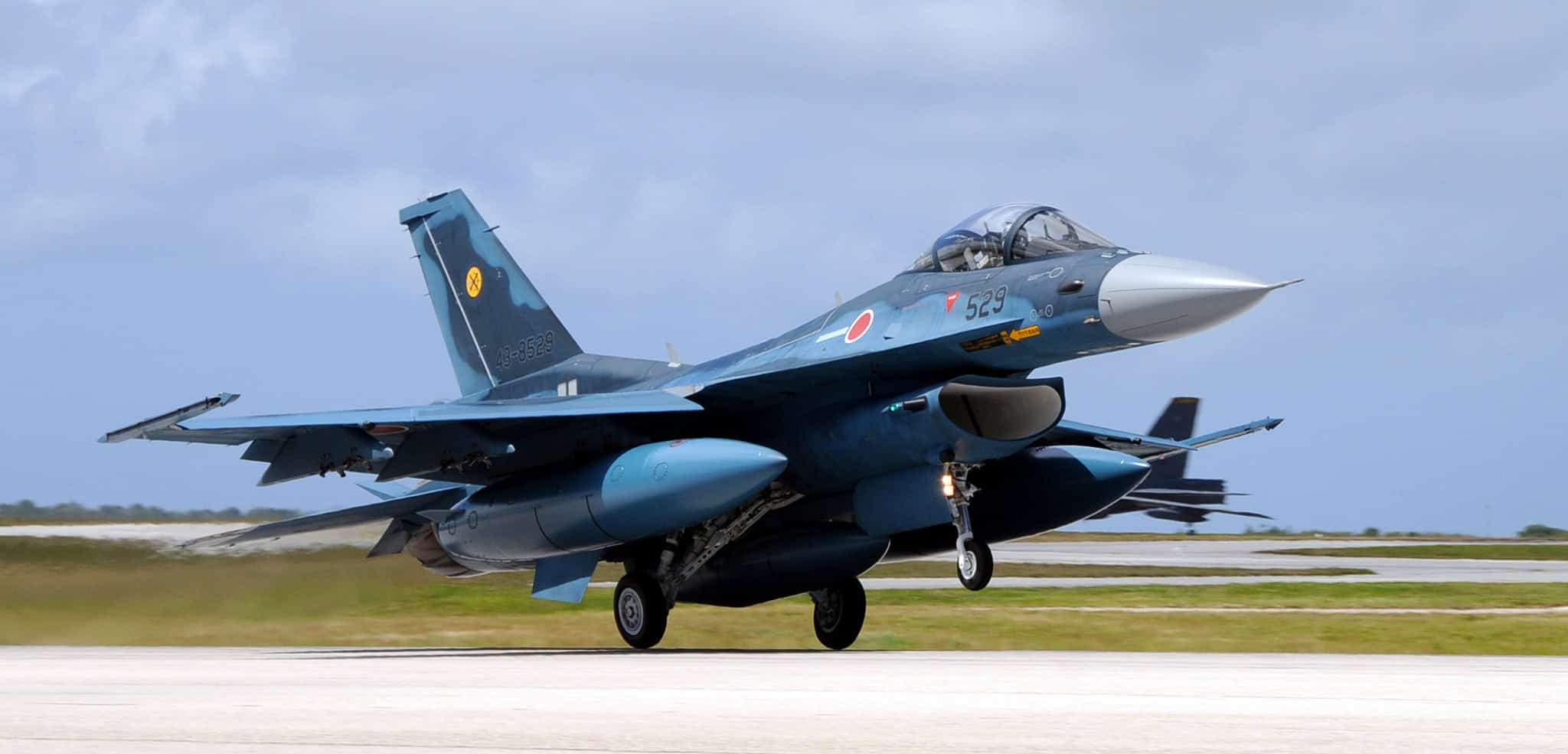
The Mitsubishi F-2 is Japan’s single-engine multirole fighter, a heavily redesigned F-16 built by Mitsubishi Heavy Industries with Lockheed Martin. It carries a larger composite wing and a Japanese AESA radar, and it is optimized for air-to-surface strike over the sea lanes around Japan. Nicknamed the Viper Zero, it has flown with the Japan Air Self-Defense Force since 2000.
Live Fleet Activity (F2)
Fetching live data…
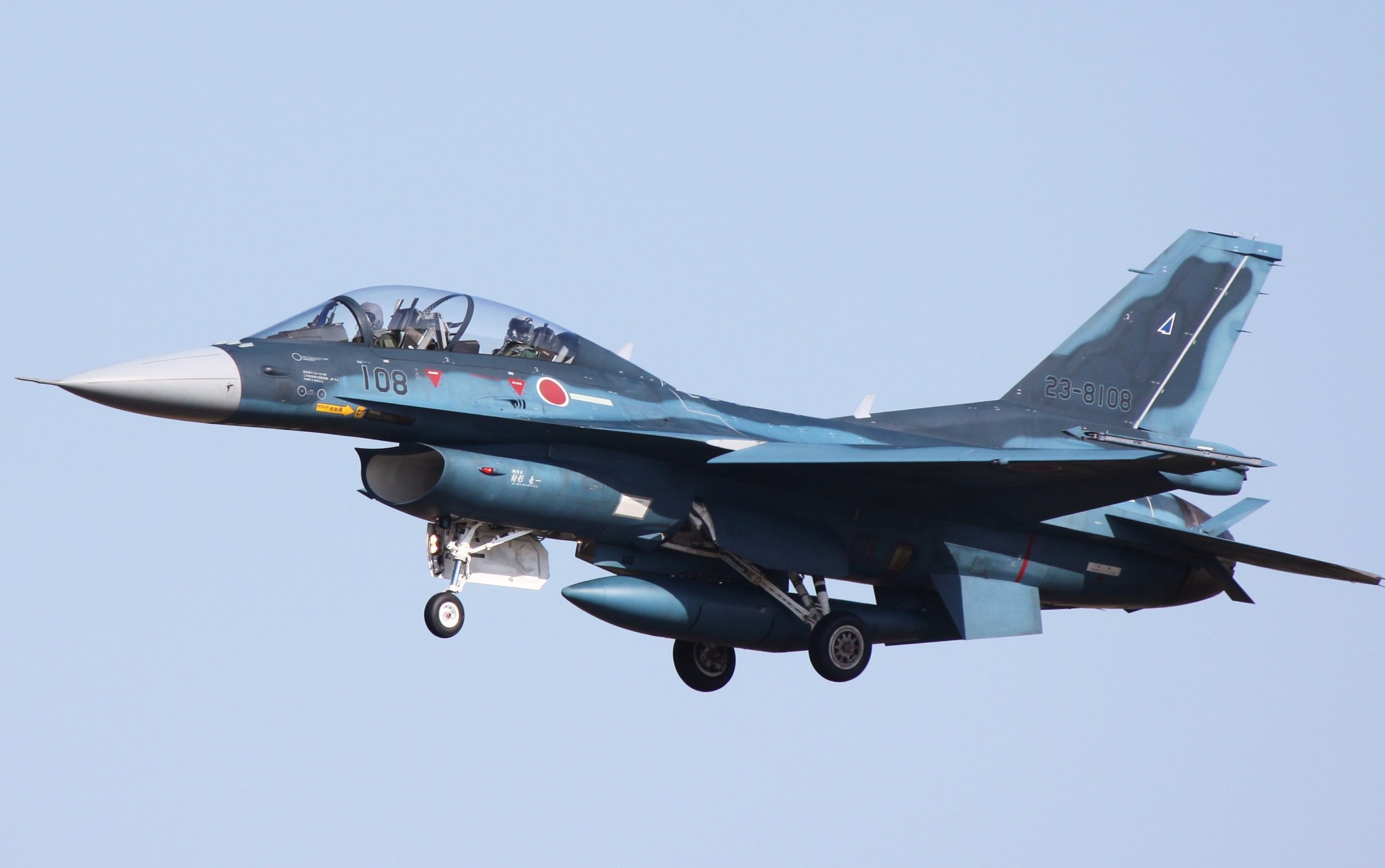

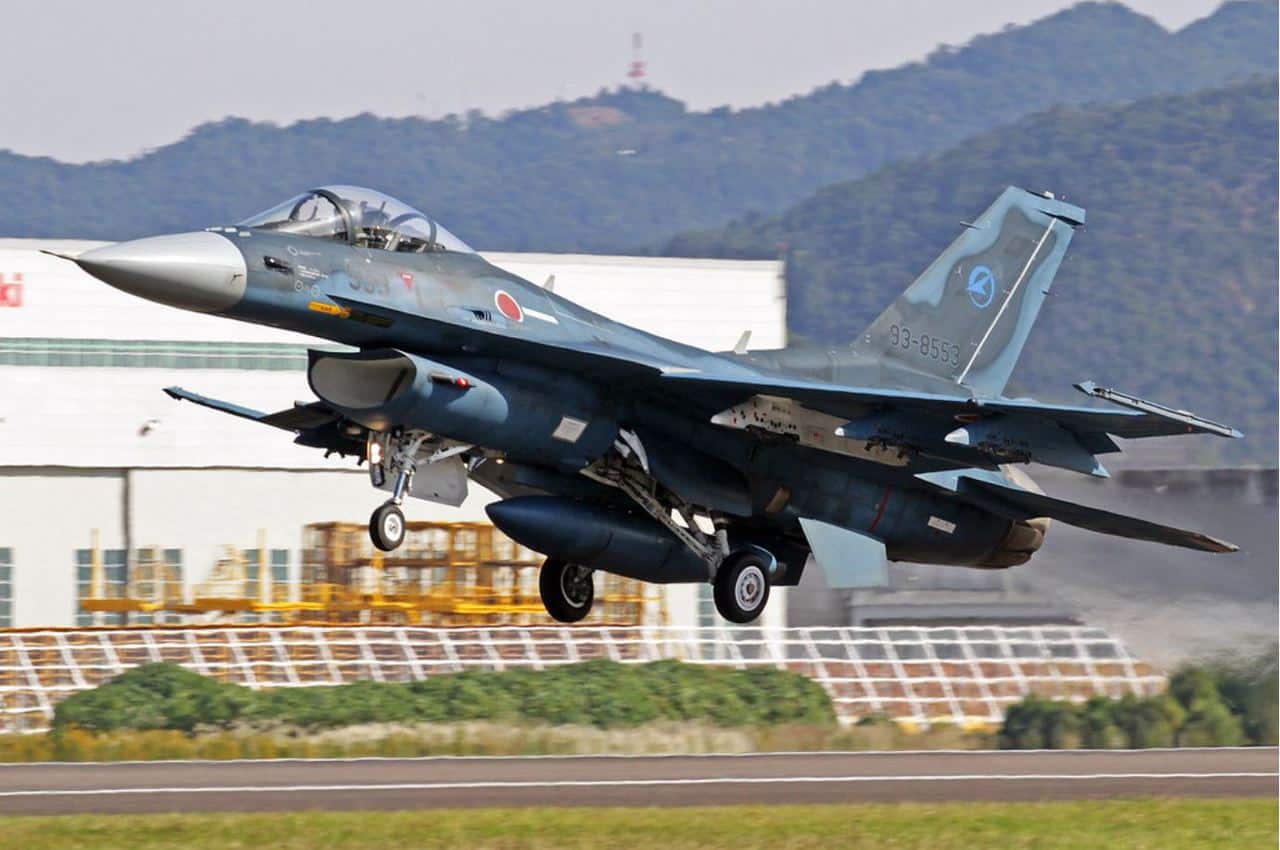


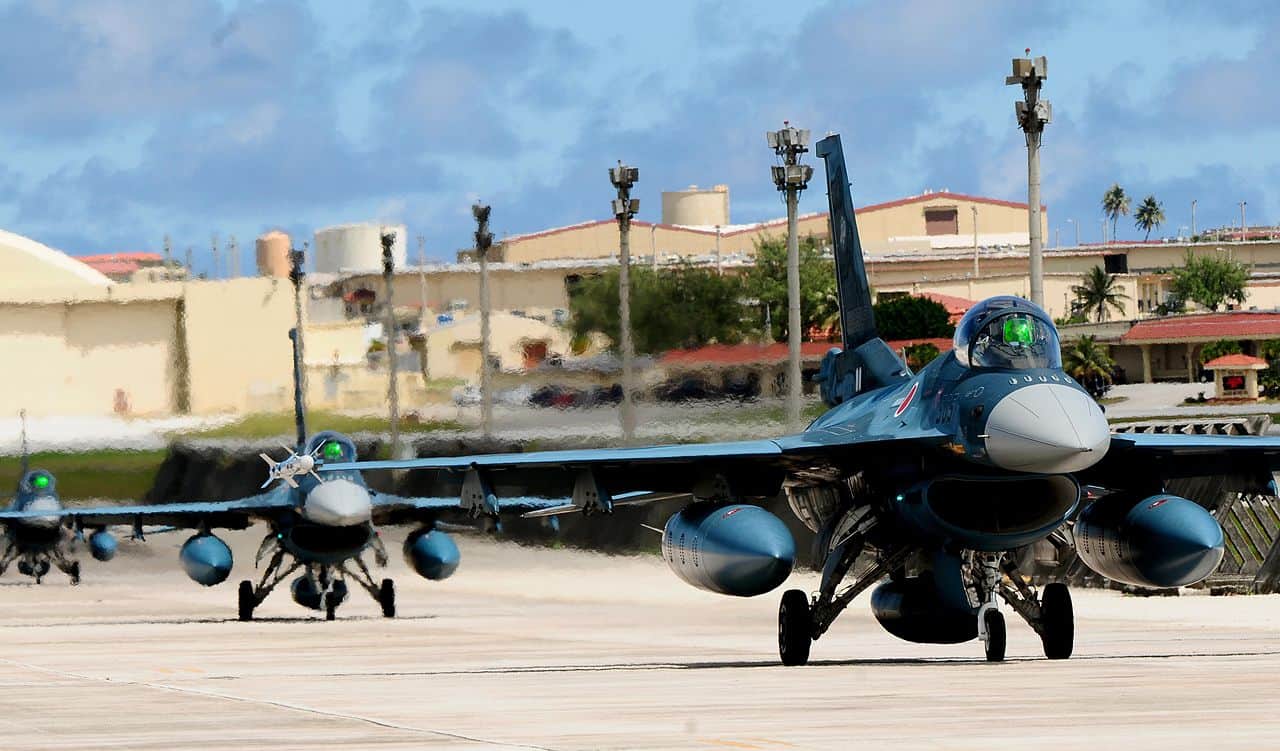


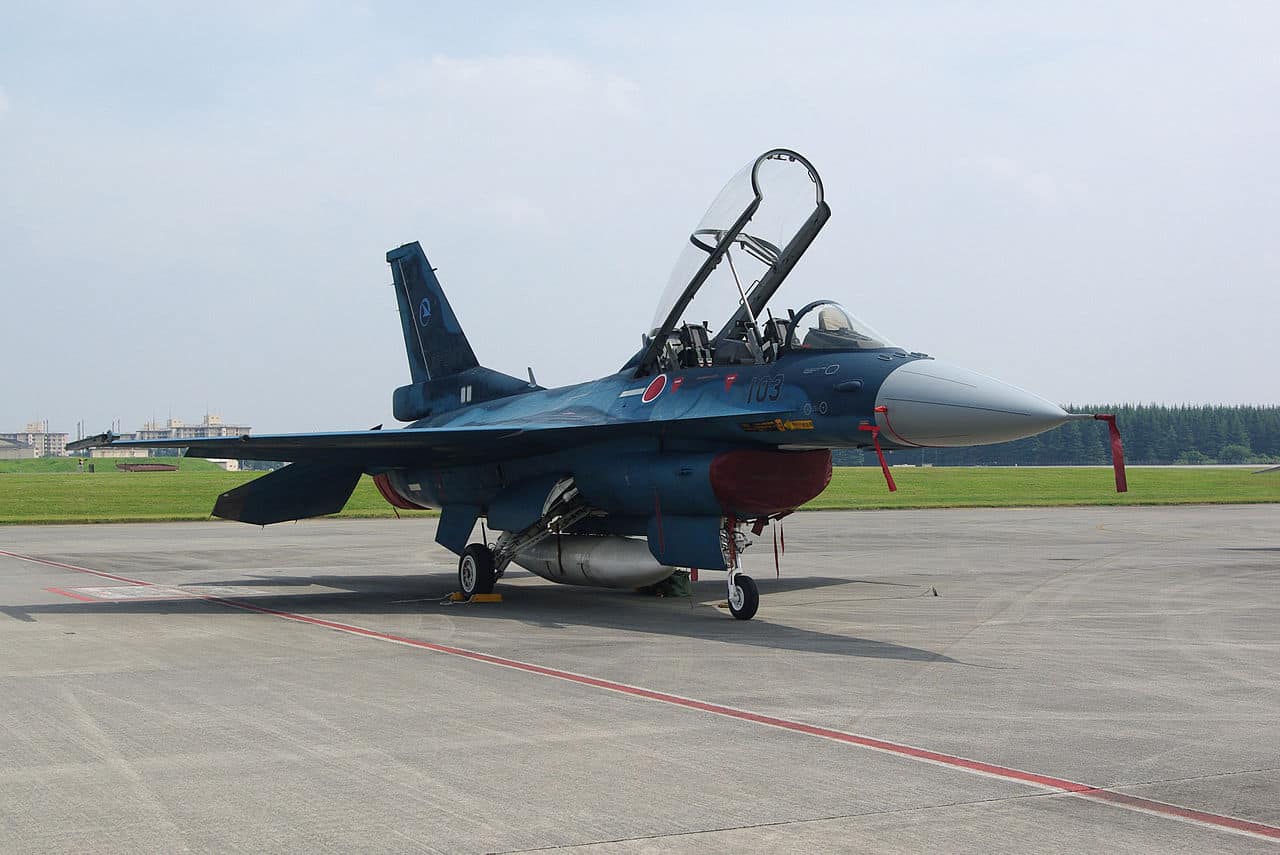

The Mitsubishi F-2 is a single-engine multirole fighter built for the Japan Air Self-Defense Force (JASDF). It grew out of the F-16, but Japan changed so much of the design that more than 95 percent of the F-16 engineering drawings had to be redone.
Mitsubishi Heavy Industries was the prime contractor. Lockheed Martin was the main U.S. partner, and the work was split roughly 60 percent Japanese and 40 percent American.
The nickname is “Viper Zero.” It combines the F-16’s “Viper” nickname with the Mitsubishi A6M Zero of World War II.
The full specification table for the aircraft is on this page. The sections below explain what the numbers mean and where the F-2 departs from the F-16.
No. The basis was the F-16C Block 40, but the F-2 is a different airframe. Japan wanted a bigger wing, a Japanese radar and its own flight control software.
The wing has about 25 percent more area than the F-16’s. The fuselage is about 17 inches (43 cm) longer, the horizontal tails are larger, and the nose is longer and wider to fit the radar.
The cockpit canopy is a three-piece design with a bow frame, which the F-16 does not have. A drag chute is standard on every F-2 and optional on the F-16.

Yes, in wing area, length and fuel. The larger wing holds more internal fuel and gives the F-2 two more weapon stations than the F-16.
It also carries launch rails on each wingtip for air-to-air missiles, so the wingtips hold weapons rather than winglets.
A bigger wing is heavier, and extra weight hurts climb, acceleration and range. Japan built the wing skin, spars and ribs from graphite-epoxy composite, cured together in an autoclave.
Wikipedia describes this as the first application of co-cured technology to a production tactical fighter. Code One Magazine reports the wings are about 55 percent composite by weight.
The technology had teething problems, and structural issues delayed service entry to 2000. It later went back to the United States as part of the workshare deal.

It was among the first. The F-2 carried the Mitsubishi Electric J/APG-1 active electronically scanned array radar, and later the J/APG-2.
Wikipedia describes it as the first operational military aircraft with an AESA radar, almost simultaneously with a single squadron of U.S. Air Force F-15C Eagles. Lockheed Martin calls it the first production fighter with AESA.
Japan also developed the fly-by-wire flight control system and the integrated electronic warfare suite. The flight control computer and software were essentially all Japanese.
The speed row shows the F-2’s top speed, which is Mach 2 at high altitude. At low altitude the limit is closer to Mach 1.1.
The range row is a combat range, not a ferry range. The F-2 is built to fly out over the sea, hit ships, and come home, and that is a shorter number than a drop-tank delivery flight.
The engine is listed as the General Electric F110-IHI-129, an afterburning turbofan. The thrust figure is the afterburner rating.
The unit price carries a caveat. Development costs were large, and the F-2 program was controversial because its per-aircraft cost with development included ran roughly four times that of an F-16 Block 50/52.
Lockheed Martin says the F-2 is optimized for air-to-surface missions, to protect Japan’s sea lanes. Its signature loadout is up to four Japanese ASM-1, ASM-2 or ASM-3 anti-ship missiles.
For air-to-air work it carries the AAM-3, AAM-4 and AAM-5, plus AIM-9L Sidewinder and AIM-7M Sparrow missiles. Guided bombs include JDAM and the GCS-1.
A single 20 mm JM61A2 rotary cannon is fitted. A targeting pod, the AN/AAQ-33 Sniper, was announced for the fleet in 2015.

Japan first considered a replacement for the Mitsubishi F-1 in 1981. The U.S. pushed for a joint F-16-based program, and a memorandum of understanding was signed in November 1988.
The deal drew heavy criticism in Washington over technology transfer. A revised agreement in April 1989 limited Japan’s access to the F-16’s flight control and weapons control software and gave U.S. firms at least 40 percent of production.
The first prototype flew on October 7, 1995, and the first production aircraft was delivered in September 2000. Planned orders of 141 were cut to 130 and then to 98, including four prototypes.
The last production aircraft was delivered on September 27, 2011. Mitsubishi confirmed no more would be built.
Only the JASDF. No export customer has ever operated it. Wikipedia’s operator table lists 91 F-2A and F-2B aircraft as of March 2025.
The 3rd Squadron flies it at Hyakuri, and the 6th and 8th Squadrons fly it at Tsuiki. The 21st Fighter Training Squadron at Matsushima uses the two-seat F-2B, and test work is done at Gifu.
For the wider picture, see our guide to the best fighter jets of Japan.
The March 2011 Tohoku earthquake and tsunami struck Matsushima Air Base and damaged or destroyed 18 F-2Bs of the 21st Squadron. Five were beyond repair and were scrapped.
The other 13 were repaired, at an estimated cost of 80 billion yen, and the squadron returned to Matsushima in 2016.
On August 7, 2025, an F-2A from Hyakuri Air Base crashed into the Pacific off Ibaraki Prefecture during a training flight. The pilot ejected and survived.
As of October 2026 the F-2 is still in front-line service. In September 2026, three F-2As from the 8th Wing at Tsuiki deployed to Jodhpur, India, for Exercise Veer Guardian 26.
That was reported as the first operational deployment of Japanese fighters to an Indian air base.
The successor is the Global Combat Air Programme (GCAP), developed with the United Kingdom and Italy. Japan confirmed in December 2025 that it plans to field the new fighter by 2035.
Japan’s sixth-generation fighter has been provisionally called the F-3, but no official name has been confirmed.
Yes. The F-2 has about 25 percent more wing area, a fuselage about 17 inches (43 cm) longer, larger tail surfaces and two more weapon stations than the F-16.
No. It started from the F-16C Block 40, but more than 95 percent of the F-16 engineering drawings were changed. Japan added a composite wing, a Japanese AESA radar, its own flight control software and an electronic warfare suite.
Not in service. F-3 is the provisional name for Japan’s sixth-generation fighter, which is being developed with the UK and Italy under GCAP to replace the F-2. Japan plans to field it by 2035, and no official name has been confirmed.
Yes. The Mitsubishi F-2 has served with the Japan Air Self-Defense Force since 2000, and about 98 were built including four prototypes.
No. The JASDF is the only operator, and production ended in 2011 with the last delivery, so there are no new airframes to sell.
A single afterburning turbofan listed as the General Electric F110-IHI-129.
Its top speed is Mach 2 at high altitude and about Mach 1.1 at low altitude.
Sources and references used for research and fact-checking.


.jpg)
_of_3_Sqn_taxis_at_Misawa_Air_Base_during_Keen_Sword_%2705,_-18_Nov._2004_a.jpg)
.jpg)