

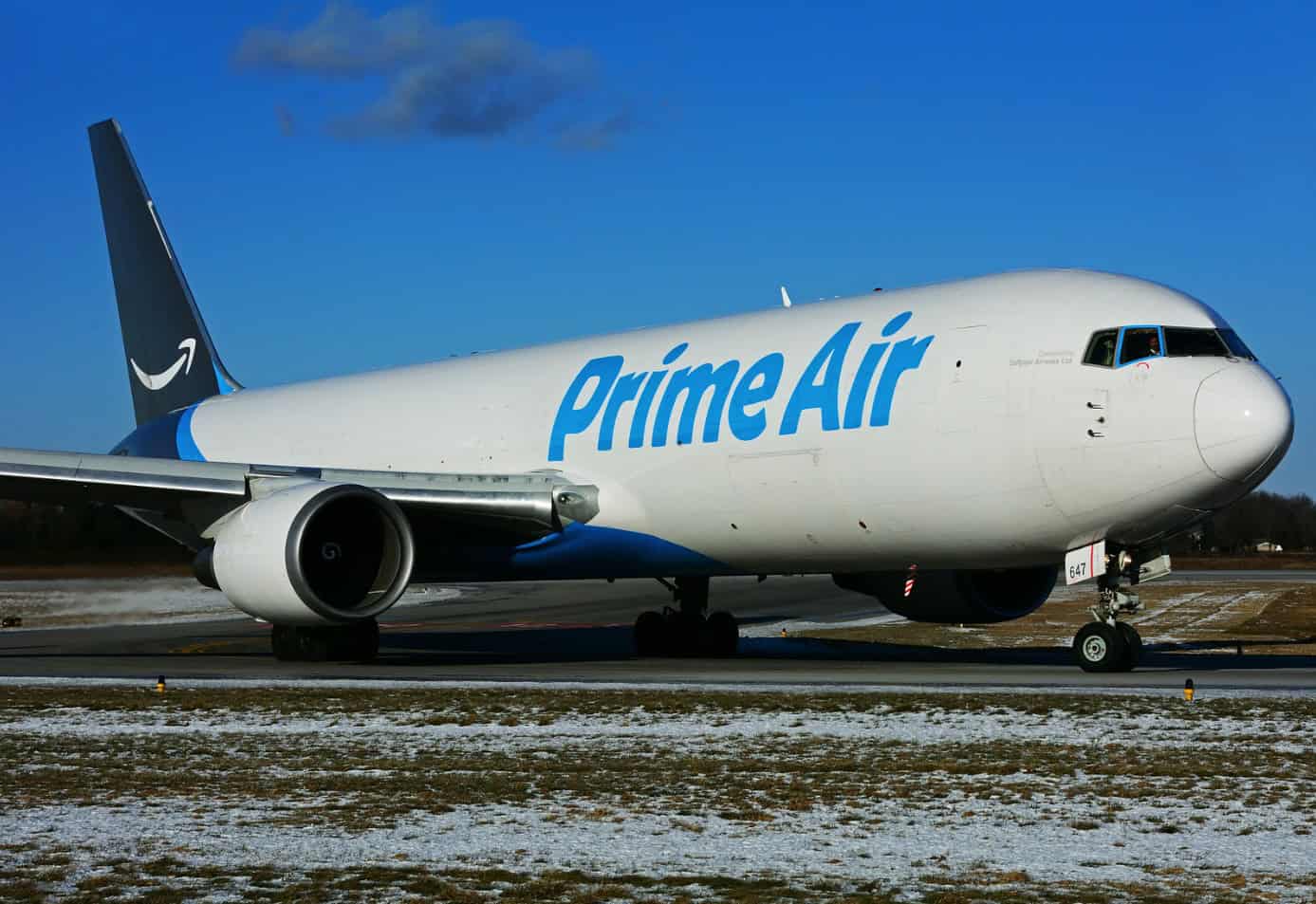
Amazon Air schedules roughly 100 jets and owns a large share of them outright. It does not hold an air carrier certificate for a single one.
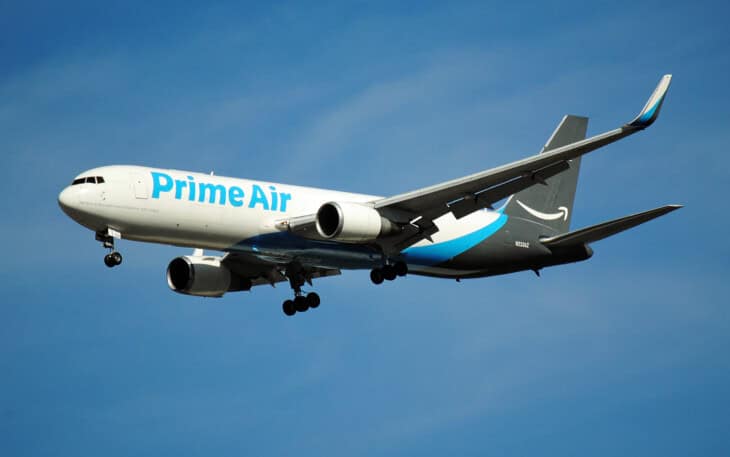
Every Amazon Prime Air flight is operated by a contracted airline. Amazon buys or leases the airframes, paints them, and fills them, and another company’s certificate, another company’s crews and another company’s maintenance program put them in the air.
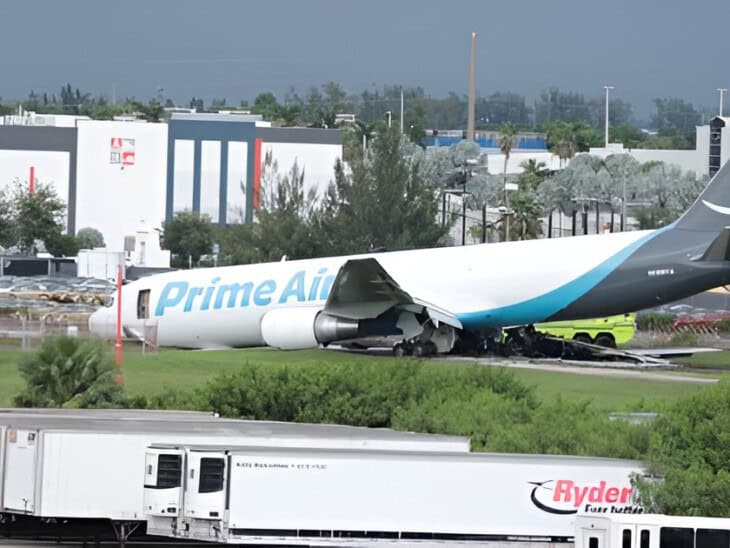
That structure is why the two fatal accidents in Amazon Air’s ten-year history belong, on paper, to two other airlines. Atlas Air Flight 3591 crashed near Houston in February 2019 with three people aboard. On September 6, 2026, a Boeing 767 freighter flown by 21 Air overran the runway at Miami and five people were killed.
Amazon built a fleet without building an airline
Amazon Air launched in 2016 on wet leases, the arrangement where a carrier supplies the aircraft and the crew together and the customer supplies only the cargo. Air Transport Services Group and Atlas Air did the flying from the start.
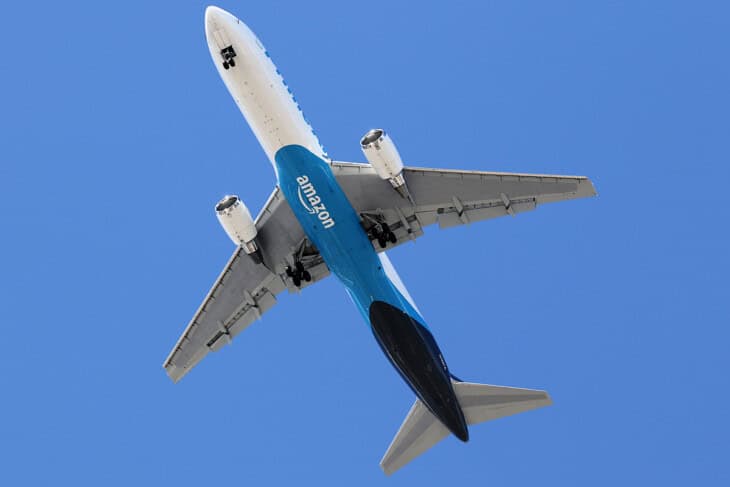
The ownership changed in January 2021, when Amazon bought 11 Boeing 767-300s from Delta Air Lines and WestJet. It was the first time the company held title to its own airliners.
What did not change was who flies them. Even on the aircraft it owns, Amazon contracts out crew, maintenance and insurance, the package the industry calls CMI, to a certificated operator.
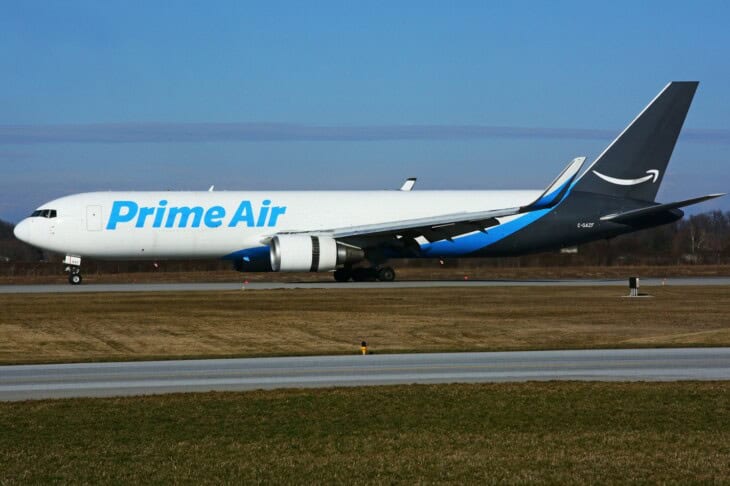
The reason is that an air carrier certificate is not a piece of paper. It is a permanent regulatory relationship with the FAA covering training programs, maintenance control, dispatch, flight-time limits and crew qualification, and it takes years and a dedicated organization to hold.
Contracting that out buys Amazon two things a certificate would not. It can add or shed capacity by rewriting a contract instead of hiring or furloughing pilots, and the operational and regulatory exposure sits with the carrier rather than the retailer.
The name on the tail is not the name on the certificate
21 Air, the operator of the aircraft involved at Miami, holds air carrier certificate 21GA896P. Amazon holds none. When the FAA oversees a Prime Air flight, the operator it is overseeing is the contractor.
One hundred aircraft, at least eight airlines
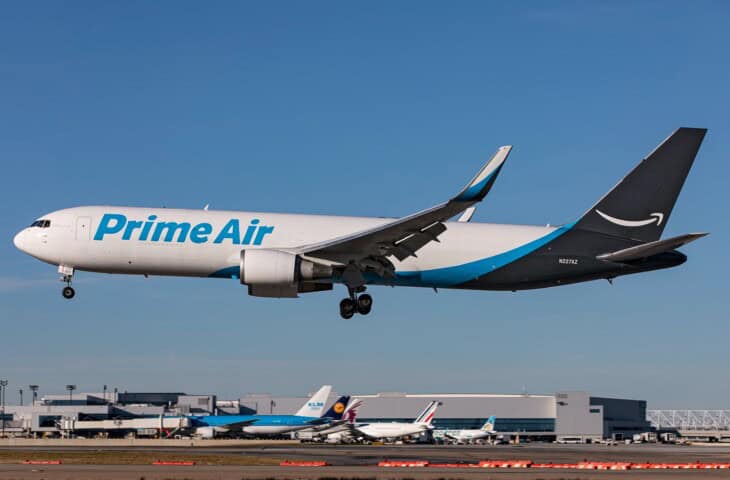
The DePaul University Chaddick Institute, which tracks the network more closely than anyone outside the company, counted about 100 Amazon Air aircraft in its April 2025 assessment, with roughly a dozen of them parked. The active fleet flew close to 200 flights a day worldwide.
Cincinnati/Northern Kentucky, Amazon’s main hub, accounted for about 56 of those daily departures on its own. A cluster of Southern California fields handled roughly 40 more.
Almost all of it is Boeing 767-300 and 737-800 airframes converted from passenger use, the workhorses of the parcel business rather than the purpose-built giants of the cargo world. Hawaiian Airlines flies a small number of Airbus A330-300 converted freighters at the top end.
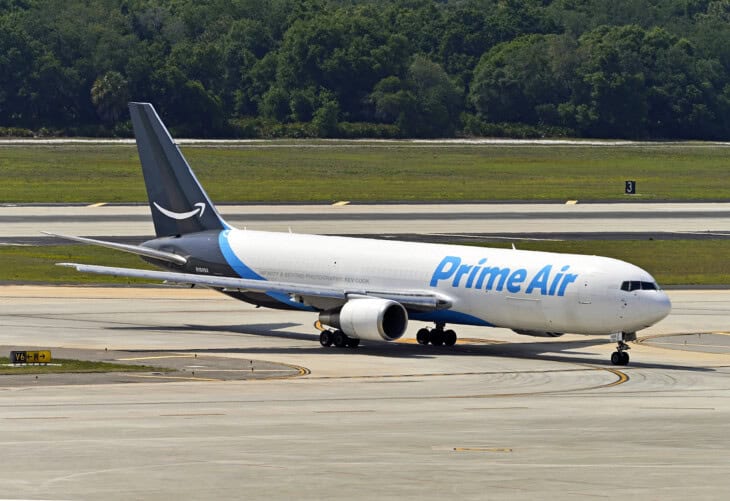
The carriers are Air Transport International, ABX Air, Sun Country Airlines, ASL Airlines Ireland, Hawaiian, Cargojet, QuikJet and 21 Air, with the mix shifting from year to year. That churn is the model working as designed.
Atlas Air is the clearest example. In May 2024 the two companies agreed to end Atlas’s CMI contracts on 25 converted freighters, 17 767-300s and eight 737-800s, by mid-2025 rather than at their scheduled March 2026 expiry.
The aircraft did not go anywhere. Atlas’s leasing arm, Titan Aviation, kept ownership of 16 of the 767s and extended Amazon’s leases on them for three more years, while the flying moved to other operators. Amazon changed airlines without changing airplanes.
21 Air picked up Amazon work in 2024. Founded in 2014 and based in Greensboro, North Carolina, it operates a fleet of about 22 Boeing 757s and 767s and also flies for DHL Aviation and LATAM Cargo Colombia.
The 2019 crash changed who gets hired, not who flies
Atlas Air Flight 3591 was an Amazon Prime Air run from Miami to Houston. The NTSB published its final report on August 6, 2020, and its probable cause named the first officer’s inappropriate response to an inadvertent go-around mode activation, which led to spatial disorientation and nose-down inputs the crew did not recover from.
The finding that reached beyond the cockpit was about hiring. The first officer had a long record of training failures at previous employers and had concealed it, and the board found Atlas’s practice of leaving background checks to designated agents inadequate to catch it.
The NTSB then pointed at the FAA. Congress had ordered a national Pilot Records Database in the Airline Safety Act of 2010, and the board concluded that had the database existed on schedule, it would have handed Atlas the first officer’s employment and training history before it made the hire.
That database is now real. The FAA fully implemented the Pilot Records Database on September 9, 2024, and every Part 121 operator must query it before hiring a pilot.
It is worth being precise about what the fix did and did not touch. It closed a gap in what an airline can see about a pilot it is about to hire. It did nothing to change the contracting structure that puts a different airline’s name on each Prime Air 767.
What the Miami investigation is actually investigating
The NTSB launched a go team to Miami International Airport under Chairwoman Jennifer Homendy and has held on-scene briefings since September 7. No cause has been established, and none should be inferred from anything published so far.
The board typically issues a preliminary factual report within about 30 days and a probable cause one to two years after an accident of this kind. The aircraft, registered N1997A, was built in 1994 as a passenger jet and converted to a freighter in 2015.
The organization that investigation examines is 21 Air. Its training records, its maintenance program, its dispatch and its crew scheduling are the operator documents in scope, because those are the documents a certificate holder is required to keep.
Amazon is the customer whose packages were aboard and whose brand was on the fuselage. It is not the certificate holder, and in the FAA’s regulatory architecture that distinction is the whole thing.
Amazon has spent the past two years pushing further into the business, selling surplus capacity on those aircraft to third-party shippers in direct competition with FedEx and UPS. The freighters carrying that cargo will keep flying under somebody else’s certificate, and the next time one of them makes news, the answer to who operated it will again be a company most readers have never heard of.
Sources and references used for research and fact-checking.
- National Transportation Safety Board, Rapid Descent and Crash into Water, Atlas Air Inc. Flight 3591 (AAR-20/02)
- National Transportation Safety Board, First Officer, Captain Actions, Aviation Industry Practices, Led to Fatal Atlas Air Crash
- Electronic Code of Federal Regulations, 14 CFR Part 111, Pilot Records Database
- FreightWaves, Amazon airline prioritizes bigger aircraft to handle third-party cargo
- FreightWaves, Atlas Air to end Amazon flights, focus on international customers
- Wikipedia, Amazon Air
- Wikipedia, 21 Air
- Flightradar24, 21 Air 767 overruns runway on landing in Miami
- Federal Aviation Administration, FAA Statements on Aviation Accidents and Incidents
- National Transportation Safety Board, NTSB Newsroom
Get the Newsletter
The latest aviation news and stories sent to your inbox.
About the Author

Tim is the owner and lead editor of AeroCorner since 2019, overseeing aviation content covering aircraft, airlines, airports, and the broader aviation industry. Through years of researching, writing, editing, and publishing aviation-focused content, he has developed extensive practical knowledge of commercial aviation and air travel. Based in Asia and a frequent traveler himself, Tim also brings firsthand passenger experience to AeroCorner’s coverage. Outside of publishing, he has also explored aviation firsthand through hands-on flight training in New Zealand.