

Table of Contents
Delta Air Lines is the best airline to fly in the US in 2026. It is the only American carrier that finishes near the top on operational reliability, cabin quality and network reach at the same time, and it has led North America for on-time arrivals five years running.
This ranking is built on measured performance, not on how an airline feels. The primary measure is operational reliability: what share of flights arrive within 15 minutes of schedule, and what share operate at all.
That matters more than usual this year. The carrier that won the last full-year scorecard, Southwest, has had a difficult 2026, and Spirit Airlines stopped flying altogether in May.
| Rank | Airline | On-time, July 2026 | 2025 DOT scorecard | Best for |
|---|---|---|---|---|
| 1 | Delta Air Lines | 75.0% | 3rd | All-round reliability and cabin |
| 2 | Alaska Airlines (with Hawaiian) | 76.2% | 4th | Best value for the quality |
| 3 | United Airlines | 75.4% | 6th | Global network reach |
| 4 | Southwest Airlines | 67.2% | 1st | Flexible tickets, economy comfort |
| 5 | American Airlines | 72.0% | 8th (tied) | Domestic coverage and loyalty |
| 6 | JetBlue Airways | 62.2% | 7th | The best seat in the cabin |
| 7 | Allegiant Air | Not reported | 2nd | Cheap non-stops from small cities |
| 8 | Frontier Airlines | Not reported | 8th (tied) | Lowest headline fare |
How this ranking works
Airlines are weighted first on operational reliability (on-time arrivals and completion factor from Cirium, plus the seven US Department of Transportation measures behind the Wall Street Journal’s annual scorecard), second on passenger satisfaction (the J.D. Power 2026 North America study), and third on network reach and what the fare actually includes. Scope is US mainline passenger airlines still flying scheduled service as of September 2026. Spirit Airlines is excluded because it ceased operations on 2 May 2026. Hawaiian is counted with Alaska, which now holds a single operating certificate. WestJet posted the best July 2026 on-time figure in North America at 83.9%, but it is Canadian and outside this list.
1. Delta Air Lines
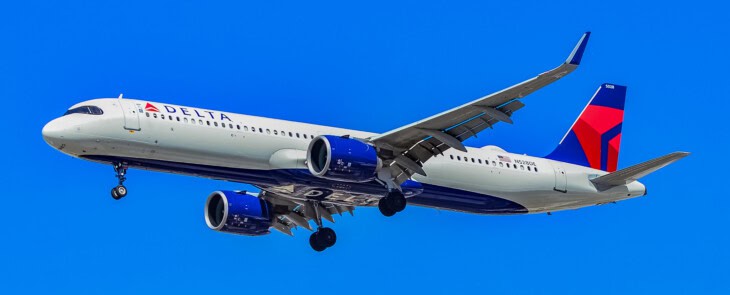

Delta flew 1.8 million flights in 2025 and landed 80.9% of them on time, taking Cirium’s North America crown for the fifth consecutive year. It beat its nearest competitor by 1.7 percentage points while operating more than four times the flight volume, which is the part that is genuinely hard.
It is also the only US carrier that appeared in Cirium’s global top 10 for on-time performance in 2025. The Wall Street Journal put Delta third overall for 2025 while noting it led the industry outright on on-time arrivals.
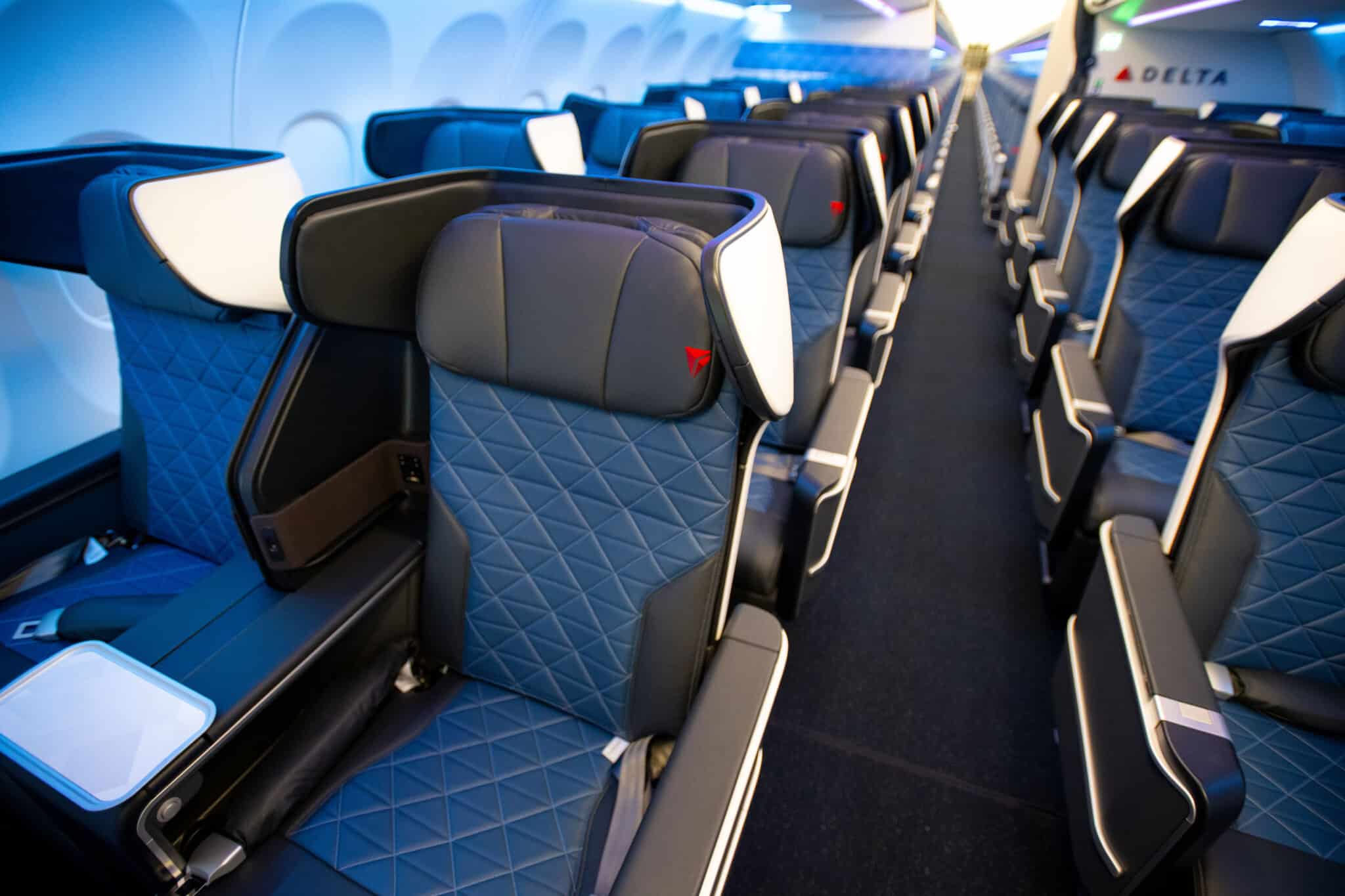
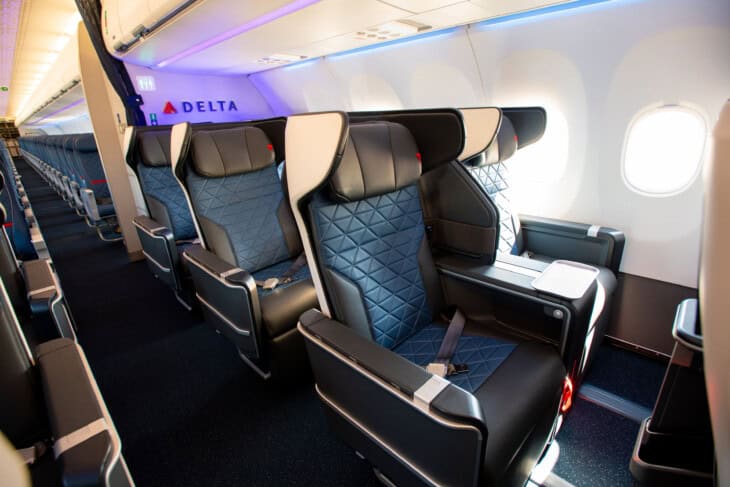
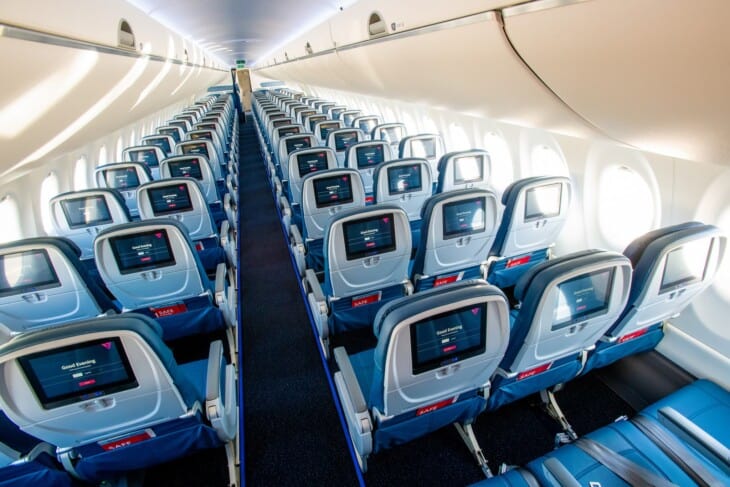
The cabin backs up the operation. J.D. Power’s 2026 study ranked Delta first in premium economy at 736 points, second in first and business class at 750, and second in economy at 667.
Delta is not flawless, and 2026 has exposed the weak spot. In July it cancelled 4,626 flights, more than any US carrier except American, and its completion factor of 97.2% was the worst among the big three.
You also pay for it. Delta consistently prices above the market on the same route, which is a real cost when the gap runs to a hundred dollars or more, and it is worth understanding how airlines set those fares before assuming the premium is arbitrary.
Delta cancelled 3.3 times more flights than Southwest in July 2026
Delta scheduled about 28% more flights than Southwest in July 2026 but cancelled roughly 3.3 times as many: 4,626 against 1,388. Southwest arrived on time far less often that month, yet it was much more likely to actually operate the flight you booked. On-time performance and completion factor are different questions, and travellers who cannot miss a connection should care about the second one.
2. Alaska Airlines (with Hawaiian)
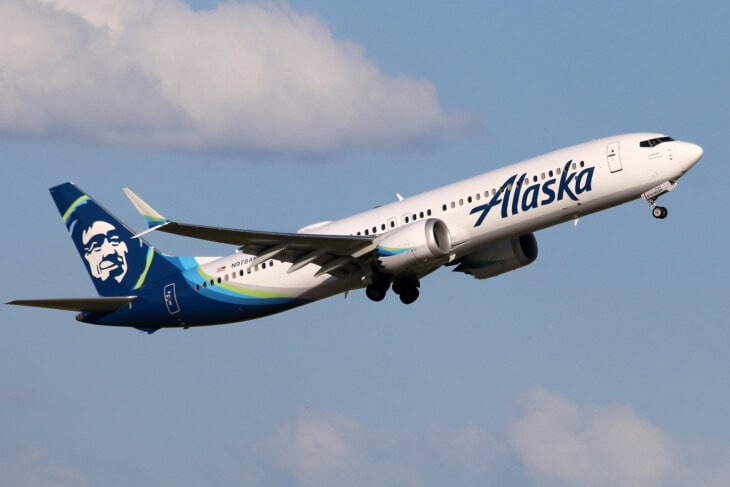
Alaska is the quiet winner of 2026. In July it posted 76.2% on-time arrivals with a 99.0% completion factor, the best combination of any US carrier that month, and it cancelled just 528 flights.
Put that next to Delta’s 4,626 cancellations and the case is obvious: Alaska is running a smaller operation, but it is running it cleanly. It finished fourth on the 2025 DOT scorecard.
The Hawaiian merger has also stopped being a risk and started being an advantage. Alaska received a single operating certificate from the FAA in 2025, moved to one passenger service system in April 2026, and unified the loyalty programs under Atmos Rewards.
Passengers get a genuinely wider map out of that: mainland West Coast, Hawaii and a growing long-haul network, sold as two brands on one reservation system. AirlineRatings also placed Alaska 15th on its 2026 list of the world’s 25 safest full-service airlines, the highest-placed US carrier.
The limitation is geography. If you are not flying from the West Coast, Alaska frequently is not an option, and its East Coast presence remains thin.
3. United Airlines
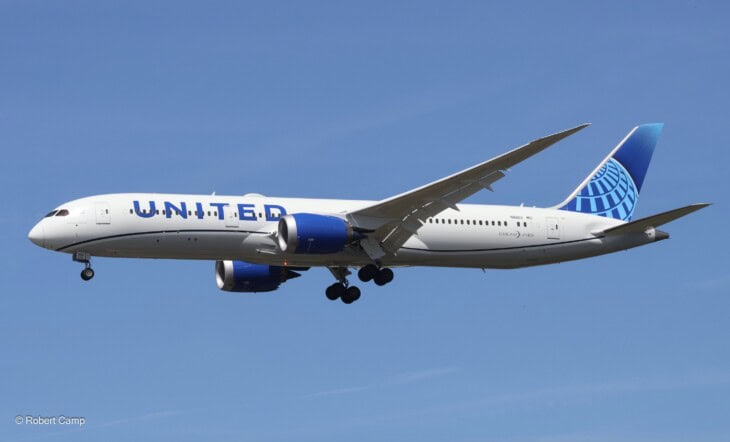
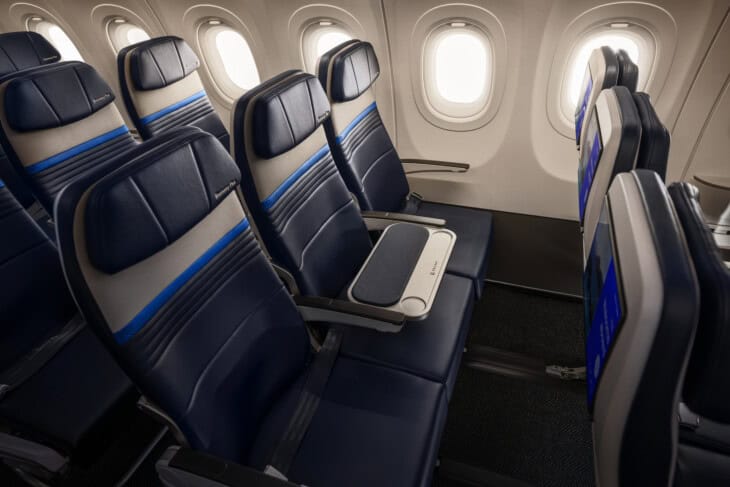
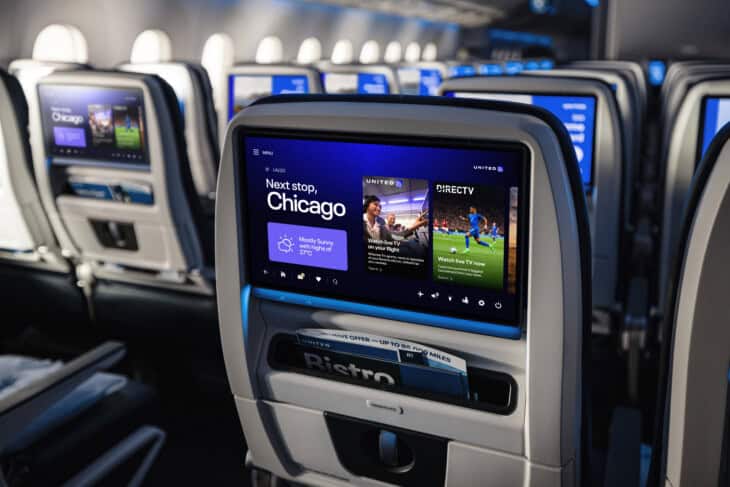
United had the second-best July 2026 among US carriers on on-time arrivals at 75.4%, with a 97.6% completion factor. That is a meaningful improvement on its sixth-place finish in the 2025 DOT scorecard.
Its real argument is reach. United flies the largest international network of any US airline, which matters if your domestic flight is the first leg of something longer.
The persistent flaw is baggage. United mishandled 7.07 bags per 1,000 in 2025, the worst rate of any carrier in the scorecard, and that single measure is what kept it out of the top three for the year.
The practical advice writes itself: fly United, but carry on if you can. If you want a sense of scale before choosing, our ranking of the largest airlines in the world shows how far United’s operation stretches.
4. Southwest Airlines
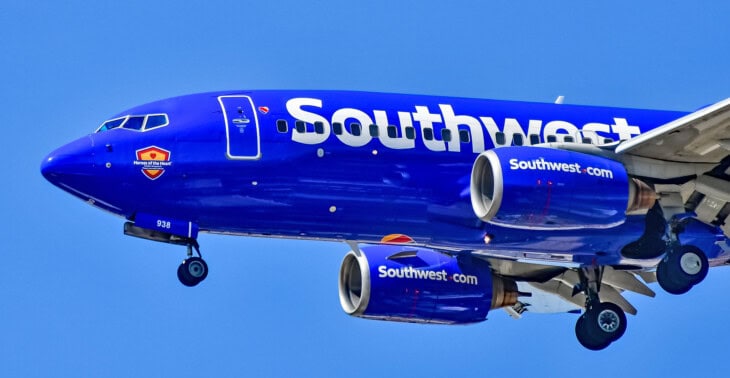
Southwest topped the Wall Street Journal’s 2025 scorecard, winning on the fewest passenger complaints and the fewest tarmac delays with a 0.84% cancellation rate. It has also ranked first in J.D. Power’s economy segment repeatedly, including the 2026 study at 670 points.
So why is it fourth? Because that scorecard describes 2025, and 2026 has been a different airline.
Southwest opened 2026 at 79.75% on-time in January and fell to 64.94% by June, the worst figure among major North American carriers. July recovered only to 67.2%.
The causes are structural. Southwest flies a point-to-point network without hub spare capacity, so a late aircraft in the morning multiplies into evening delays, and crew shortages have made that cascade worse. Our explainer on why one delay creates more covers exactly this mechanism.
The other change is what you get. Southwest ended “Bags Fly Free” in May 2025, charging $35 for the first checked bag and $45 for the second on most fares, and it retired open seating for assigned seats on flights from 27 January 2026.
Those were the two things that made Southwest structurally different. It still has the most forgiving change and cancellation policy of any US airline, and it still completes a very high share of its flights at 98.9% in July, but the reasons to choose it are now narrower than they were two years ago.
5. American Airlines
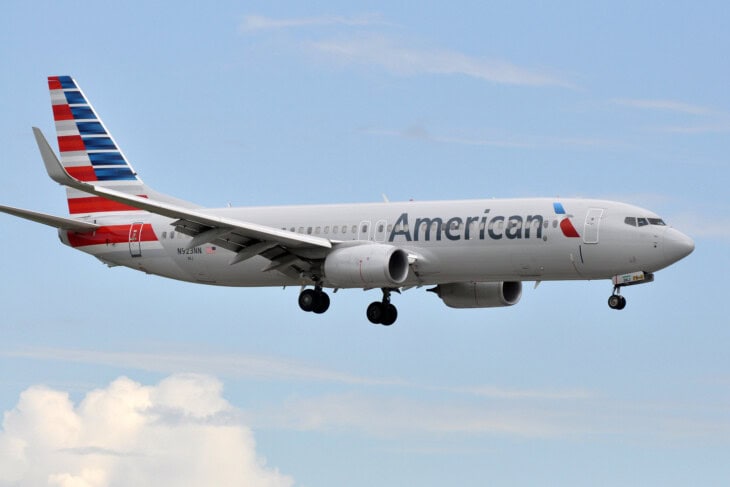
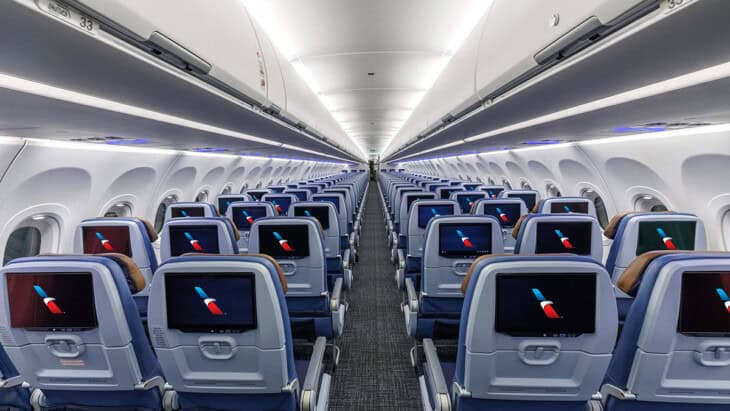
American is the largest US airline by fleet and destinations served, and it is the default choice across huge parts of the country simply because it is the airline that flies there.
Its record is middling rather than bad. American arrived on time 72.0% of the time in July 2026 with a 97.3% completion factor, and it tied with Frontier for last on the 2025 DOT scorecard, where its 2.2% cancellation rate was the industry’s highest.
The counterweight is AAdvantage, which The Points Guy rated the strongest loyalty program in its 2026 report, narrowly ahead of United’s. If you concentrate your flying with one airline, that is worth real money.
American also placed 24th on AirlineRatings’ 2026 list of the safest full-service airlines, so this is a question of service consistency, not safety.
6. JetBlue Airways
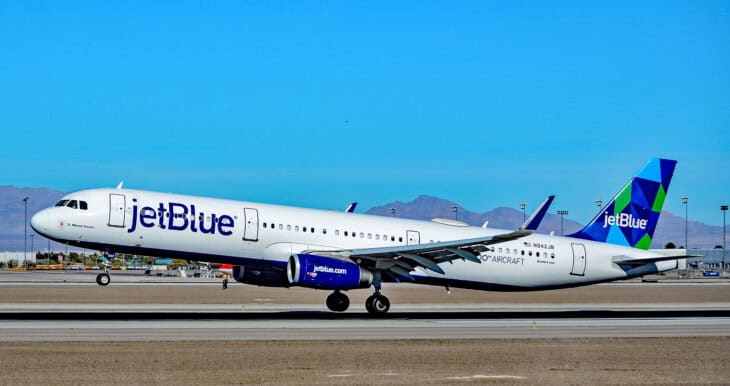
JetBlue has the best cabin product of any US airline and the worst 2026 operation, and there is no honest way to rank it that does not say both things. JetBlue is now also getting a first class cabin. On September 1, 2026, the airline unveiled BlueFirst, its first domestic first class cabin.
J.D. Power ranked JetBlue first in first and business class in its 2026 study at 759 points, ahead of Delta’s 750 and Alaska’s 720. Its Mint transcontinental cabin and its economy legroom are genuinely class-leading, which our guide to types of airplane seats puts in context.
Then look at July 2026. JetBlue arrived on time 62.2% of the time and completed only 91.7% of its schedule, meaning roughly one flight in twelve was cancelled outright in the busiest travel month of the year.
That is the worst completion factor of any carrier in this ranking by a wide margin. Book JetBlue for a leisure trip where a lost day is survivable, and think twice for anything with a fixed deadline at the other end.
JetBlue recently opened its second BlueHouse lounge in Boston and is giving every Mint and Mint Flex fare free access.
7. Allegiant Air
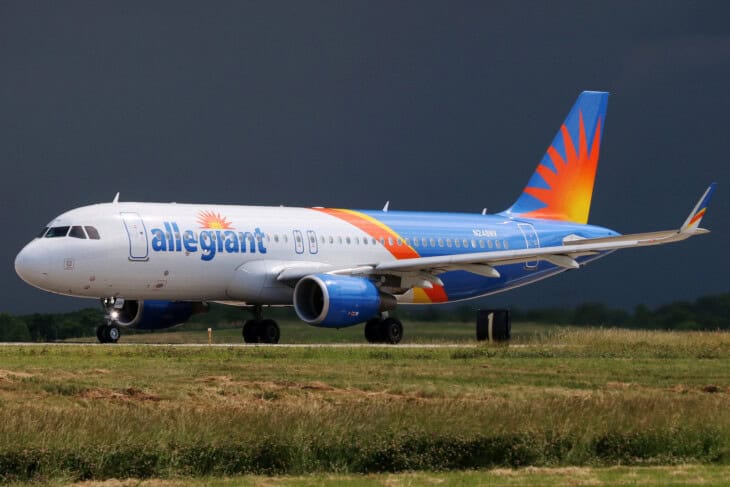
Allegiant finished second on the 2025 DOT scorecard, which surprises people who assume budget carriers are automatically worse. It posted a 0.55% cancellation rate and led the industry on both mishandled baggage and involuntary bumping.
Its model explains the result. Allegiant flies leisure routes from small cities to holiday destinations at low frequency, often two to four times a week, so it is not fighting the hub congestion that wrecks everyone else’s schedule.
That same model is the risk. Allegiant lagged the industry on long delays, and if your twice-weekly flight goes wrong there may be no second flight for two days and no partner airline to rebook you onto.
It ranks seventh here because “best airline to fly” implies you can generally get where you need to go. On the specific route Allegiant serves non-stop, it is often the right answer.
8. Frontier Airlines
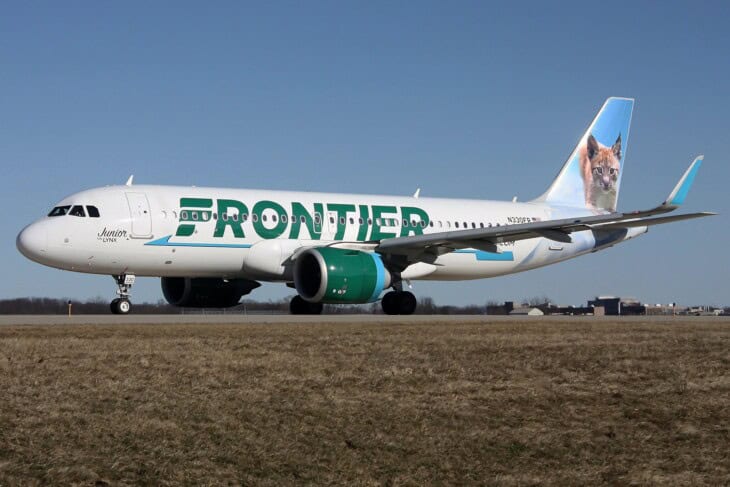
Frontier tied with American for last place on the 2025 DOT scorecard, and unlike American it has no network or loyalty advantage to offset that.
The headline fare is genuinely the lowest in the market, and after Spirit’s collapse Frontier is the main surviving ultra-low-cost option in the US. That is a real position to hold.
The catch is that the advertised price is rarely the price you pay. Carry-on bags, checked bags, seat selection and changes are all charged separately, and a fully loaded Frontier ticket regularly lands above a basic economy fare on a full-service carrier.
Price the whole trip, including the bags you will actually bring, before deciding. Frontier wins on a bare fare and loses on a real one.
What happened to Spirit Airlines
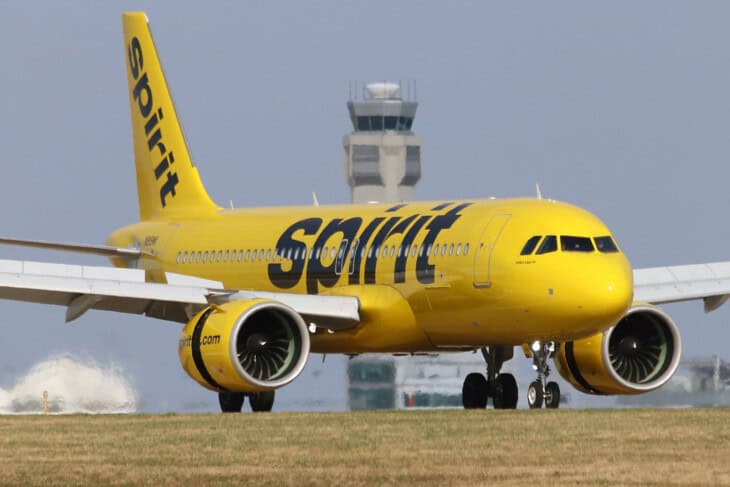
Spirit finished fifth on the 2025 DOT scorecard, ahead of United, JetBlue, American and Frontier. It is not on this list because it no longer exists.
Spirit began an immediate wind-down on 2 May 2026 after a second bankruptcy and a failed rescue, ceasing all operations and putting roughly 17,000 people out of work. It was the first shutdown of a significant US airline since Midway in 2001.
The effect on everyone else is still working through the system. Fares on former Spirit routes have firmed, and the remaining carriers absorbed demand into schedules that were already stretched, which is part of the backdrop to the weak summer 2026 numbers across the industry.
Why do these figures look worse than the rankings you remember?
Two things depressed US airline performance across late 2025 and 2026. A 43-day federal government shutdown in November 2025 forced the FAA to cut flights at 40 major airports by up to 6%, cancelling thousands of flights and pulling full-year on-time figures down for every carrier. Then summer 2026 brought staffing shortages and severe weather: the North America on-time average fell 3.9 points in July alone, to 71.6%. An airline that looks worse than its 2024 self is often just flying in a worse system.
Which airline should you actually book?
If you want the single safest default across the widest range of routes, book Delta. If you fly from the West Coast or to Hawaii, Alaska is currently the better-run airline and usually the cheaper ticket.
If your domestic flight connects to an international one, United’s network makes it the sensible choice, provided you can avoid checking a bag.
If your plans might change, Southwest still has the most forgiving ticket in the US market even after losing free bags. And if you are chasing the lowest number on a search results page, price the bags first, because a cheap fare that gets you bumped or nickel-and-dimed is not cheap.
One thing does not vary much: all of these airlines are extremely safe. The differences measured here are about whether your flight leaves on time, not whether it arrives.
FAQ
Sources and references used for research and fact-checking.
- Cirium, Cirium On-Time Performance Review 2025
- Cirium, Monthly On-Time Performance Reports
- J.D. Power, 2026 North America Airline Satisfaction Study
- US Department of Transportation, Air Travel Consumer Reports 2026
- AirlineRatings, World's Safest Airlines for 2026
- Southwest Airlines, Assigned Seating and Customer Enhancements
Get the Newsletter
The latest aviation news and stories sent to your inbox.
About the Author

Tim is the owner and lead editor of AeroCorner since 2019, overseeing aviation content covering aircraft, airlines, airports, and the broader aviation industry. Through years of researching, writing, editing, and publishing aviation-focused content, he has developed extensive practical knowledge of commercial aviation and air travel. Based in Asia and a frequent traveler himself, Tim also brings firsthand passenger experience to AeroCorner’s coverage. Outside of publishing, he has also explored aviation firsthand through hands-on flight training in New Zealand.