

Table of Contents
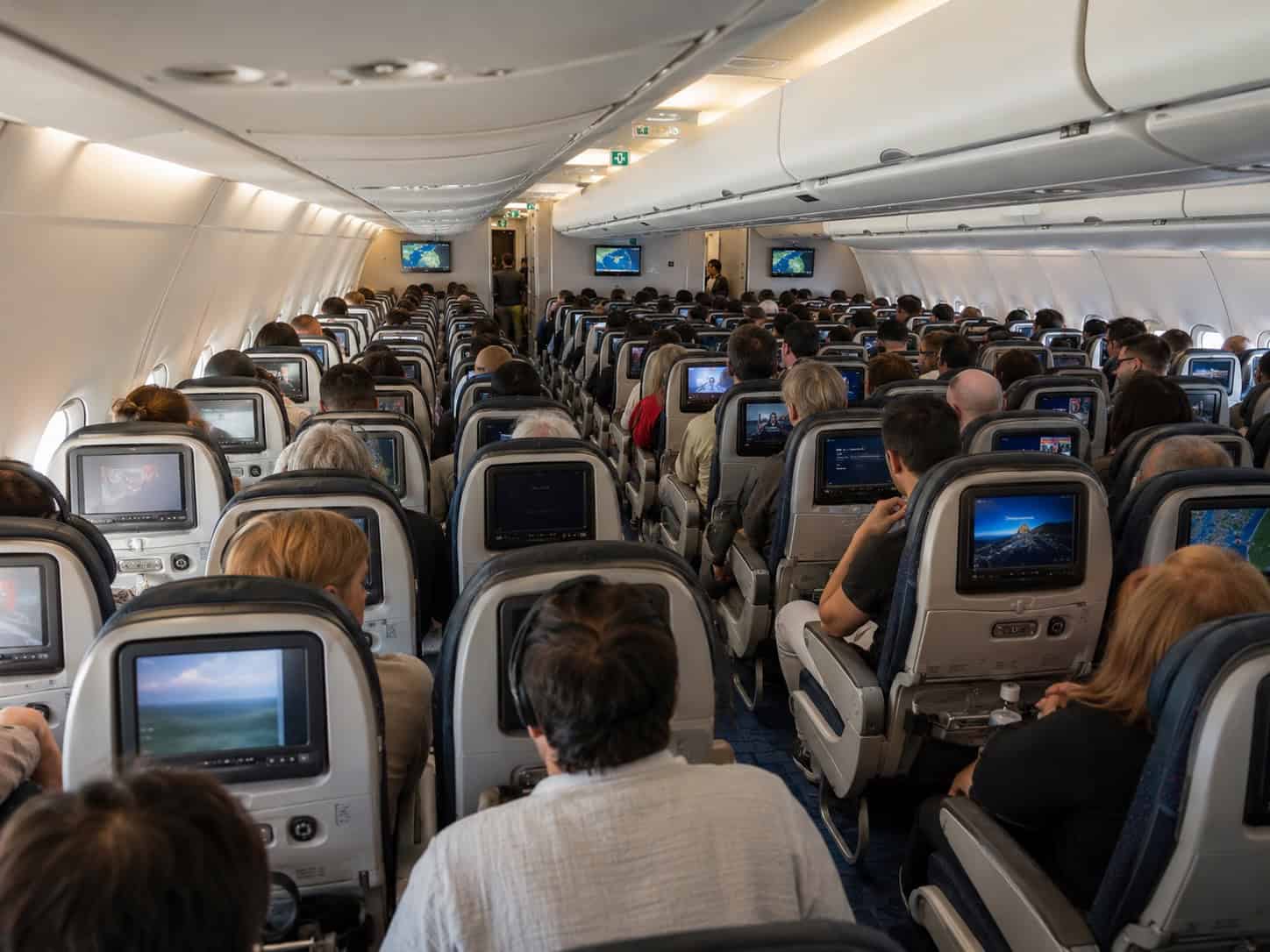
The gate agent picks up the microphone about twenty minutes before boarding closes. This flight is very full, she says, and the airline is looking for a few passengers willing to travel later today. A small ripple runs down the seating area as people start doing arithmetic.
That announcement is not a glitch and it is not a mistake by the reservations system. It is the visible edge of a bet the airline placed weeks earlier, when it deliberately sold more tickets than the aircraft has seats.
Airlines overbook on purpose, using no-show statistics that are right almost every time. Here is the math behind the bet, what the auction at the gate is actually doing, and what you are legally owed on the rare occasions the airline loses.
Why flights get oversold
On any given flight, a predictable slice of ticketed passengers simply does not turn up. They miss a connection, a meeting runs long, a flexible business fare gets abandoned at the last minute, or they rebook themselves onto something earlier.
Airlines know that rate with real precision, flight by flight. So they sell a calculated number of extra seats to cover it, and the aircraft usually pushes back completely full with nobody the wiser.
The short version
Airlines oversell flights because a measurable share of ticketed passengers never show up. When the forecast is right, the aircraft leaves full and no one notices. When it is wrong, US federal rules force the airline to buy its way out with volunteers before it is allowed to bump anybody.
An airline seat is a product with an expiry time
The industry’s own framing is the clearest one. A pair of unsold shoes goes back on the shelf, but the moment an aircraft rotates off the runway, every empty seat on it is worthless forever.
The trade body IATA calls this a perishable product, and it is the whole justification for overbooking. Revenue that walks away at the gate cannot be recovered on the next flight, because the next flight has its own seats to sell.
Airlines call an avoidably empty seat “spoilage”, and it lands directly on the metric they live by: load factor, the percentage of available seats actually filled. A carrier operating at 85 percent is leaving real money in the air on every sector.
IATA also argues the reverse case: ban overbooking and airlines would respond by tightening ticket rules, charging no-show fees, and pushing more fares into strictly non-refundable buckets. The flexibility you can buy today exists partly because the airline can resell the seat you abandon.
How many extra seats does an airline actually sell?
There is no single company-wide number. Overbooking authorization is calculated per flight by the same revenue management systems that set airline ticket prices, and it moves constantly.
The model weighs the historical no-show rate for that specific route, the day of the week, the season, and the mix of fare types already sold. A Tuesday morning shuttle full of flexible corporate tickets behaves nothing like a Saturday leisure flight sold entirely on non-refundable fares.
Industry rule of thumb puts the average no-show rate around 5 percent, which is why a 180-seat narrowbody might be authorized to sell somewhere near 185 to 190 tickets. On a route where the model has seen almost no no-shows, the authorization can be zero.
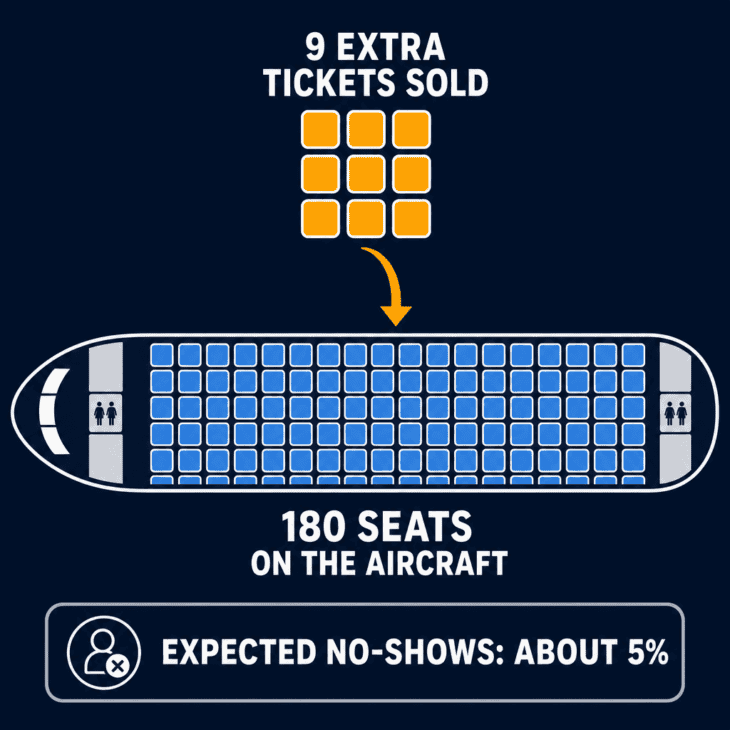
The forecast is usually right. When it is not, the mismatch shows up at the gate roughly half an hour before departure, and the airline has to solve it in the time it takes to board the aircraft.
The auction at the gate is a legal requirement, not a courtesy
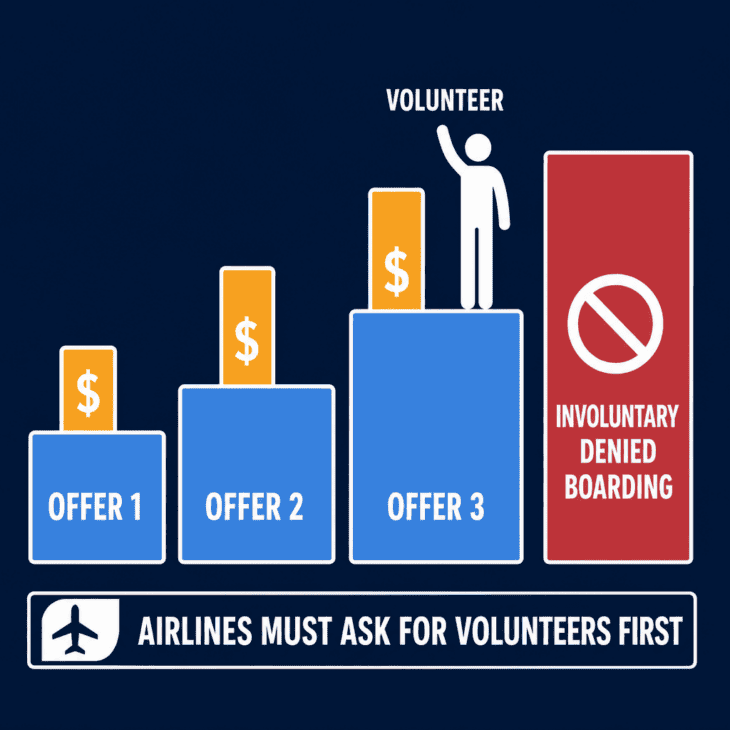
US rules are unusually specific here. Under 14 CFR Part 250, on an oversold flight a carrier must request volunteers before it applies any other boarding priority. Buying your way out is the first step, not the last resort.
The regulation also requires the airline to tell any passenger it is soliciting whether they are actually in danger of being bumped, and what the involuntary compensation would be. If it offers travel credit instead of cash, it has to disclose the blackout dates and fees attached.
That is why the offer climbs. The agent starts low, watches how many hands go up, and escalates until enough people say yes. After 2017 the ceilings rose dramatically: United authorized offers of up to $10,000, and Delta let supervisors go as high as $9,950.
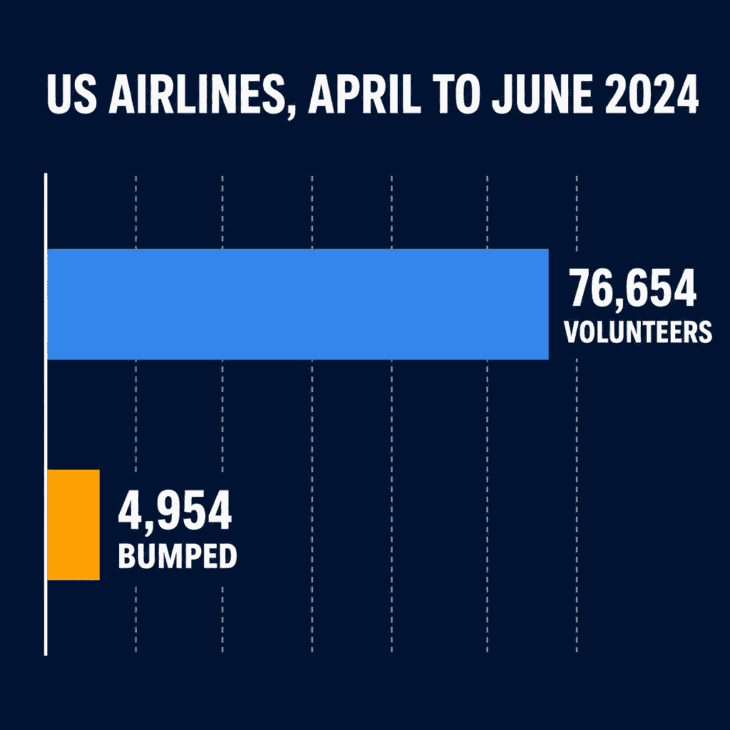
The auction works far better than its reputation suggests. In the second quarter of 2024, US carriers found 76,654 volunteers and involuntarily denied boarding to 4,954 passengers, roughly fifteen willing buyouts for every forced one.
One passenger in three months
Across April to June 2024, Delta’s reporting network bought out close to 31,000 volunteers and involuntarily bumped exactly one passenger. Paying enough at the gate makes forced denied boarding almost disappear.
Volunteering is only a good deal if you check the rebooking. A generous voucher paired with a seat on tomorrow’s first departure is a very different offer from the same voucher plus a confirmed seat three hours later, so ask what you are actually being put on before you accept.
What you are owed if nobody volunteers
If the airline still cannot close the gap, it applies its published boarding priority and denies boarding involuntarily. At that point the compensation stops being negotiable and becomes a federal minimum, calculated from how late the airline gets you to your destination.
| Situation | What the airline must pay |
|---|---|
| Rebooked to arrive within 1 hour of your original time | Nothing |
| Domestic, 1 to 2 hours late | 200% of your one-way fare, capped at $1,075 |
| Domestic, more than 2 hours late | 400% of your one-way fare, capped at $2,150 |
| International from a US airport, 1 to 4 hours late | 200% of your one-way fare, capped at $1,075 |
| International from a US airport, more than 4 hours late | 400% of your one-way fare, capped at $2,150 |
Three details in that rule are worth knowing, because airlines rarely volunteer them. The payment is due in cash or an immediately negotiable check on the day, at the airport, not as a voucher.
You may accept travel credit instead, but only after the airline has told you the cash figure you are giving up. And any optional fees you paid and did not use, seat selection or a checked bag on the flight you never took, must be refunded on top.
There are real exceptions. You get nothing if the airline rebooks you to arrive within an hour, if you missed the check-in deadline, or if the flight was downgraded to a smaller aircraft for operational or safety reasons, which is a swap rather than an oversale.
Being bumped is also not the same as a cancelled or delayed flight. Delay compensation in the US is a much weaker set of rules, and travelling on a standby ticket puts you outside Part 250 entirely, because you never held confirmed reserved space.
The most famous overbooking scandal was not an overbooking
Almost everyone’s mental image of overbooking is the same nine seconds of phone footage: a passenger dragged bleeding down the aisle of United Express Flight 3411 at Chicago O’Hare in April 2017.
The myth
Flight 3411 is remembered as proof that overbooking gets people thrown off aircraft. United stated at the time that the flight was sold out but not oversold. Four crew members needed to reach Louisville to work the next morning, and the airline chose to remove already-seated passengers to move them.
The distinction matters. The failure was not a revenue management model that guessed wrong, it was a crew positioning decision made after boarding had finished, then enforced by airport police.
Congress closed that specific gap in 2018. Federal rules now bar a covered carrier from removing a confirmed revenue passenger once they have checked in on time and had their boarding pass scanned and accepted at the gate.
Safety, security, health and unlawful behavior remain exceptions, and the pilot in command keeps full authority. But the specific thing that happened on 3411, walking down the aisle to eject a seated passenger for an operational convenience, is no longer permitted.
The practical effect of that year was not less overbooking. It was much larger checkbooks at the gate, and the collapse in involuntary bumping that followed is the clearest evidence that airlines would always rather pay than fight.
So the next time an agent asks for volunteers, you are watching a model being corrected in real time. The airline sold seats it expected to go empty, more people turned up than the forecast allowed for, and the rules now oblige it to bid for a way out.
Whether you raise your hand is a straightforward calculation: the size of the offer, the quality of the rebooking, and how much the next few hours of your day are worth. Just know that the first number the agent says is very rarely the last one.
Sources and references used for research and fact-checking.
- Electronic Code of Federal Regulations (eCFR), 14 CFR Part 250: Oversales
- Federal Register, US Department of Transportation, Periodic Revisions to Denied Boarding Compensation and Domestic Baggage Liability Limits
- International Air Transport Association, Overbooking (IATA position paper)
- Simple Flying, Denied Boarding: Which US Airlines Bump The Most Passengers?
- CNN Money, United says Flight 3411 wasn't overbooked. It just had no open seats left
- NPR, United Airlines Will Now Pay Voluntarily Bumped Passengers Up To $10,000
Get the Newsletter
The latest aviation news and stories sent to your inbox.
About the Author

Tim is the owner and lead editor of AeroCorner since 2019, overseeing aviation content covering aircraft, airlines, airports, and the broader aviation industry. Through years of researching, writing, editing, and publishing aviation-focused content, he has developed extensive practical knowledge of commercial aviation and air travel. Based in Asia and a frequent traveler himself, Tim also brings firsthand passenger experience to AeroCorner’s coverage. Outside of publishing, he has also explored aviation firsthand through hands-on flight training in New Zealand.