

Table of Contents
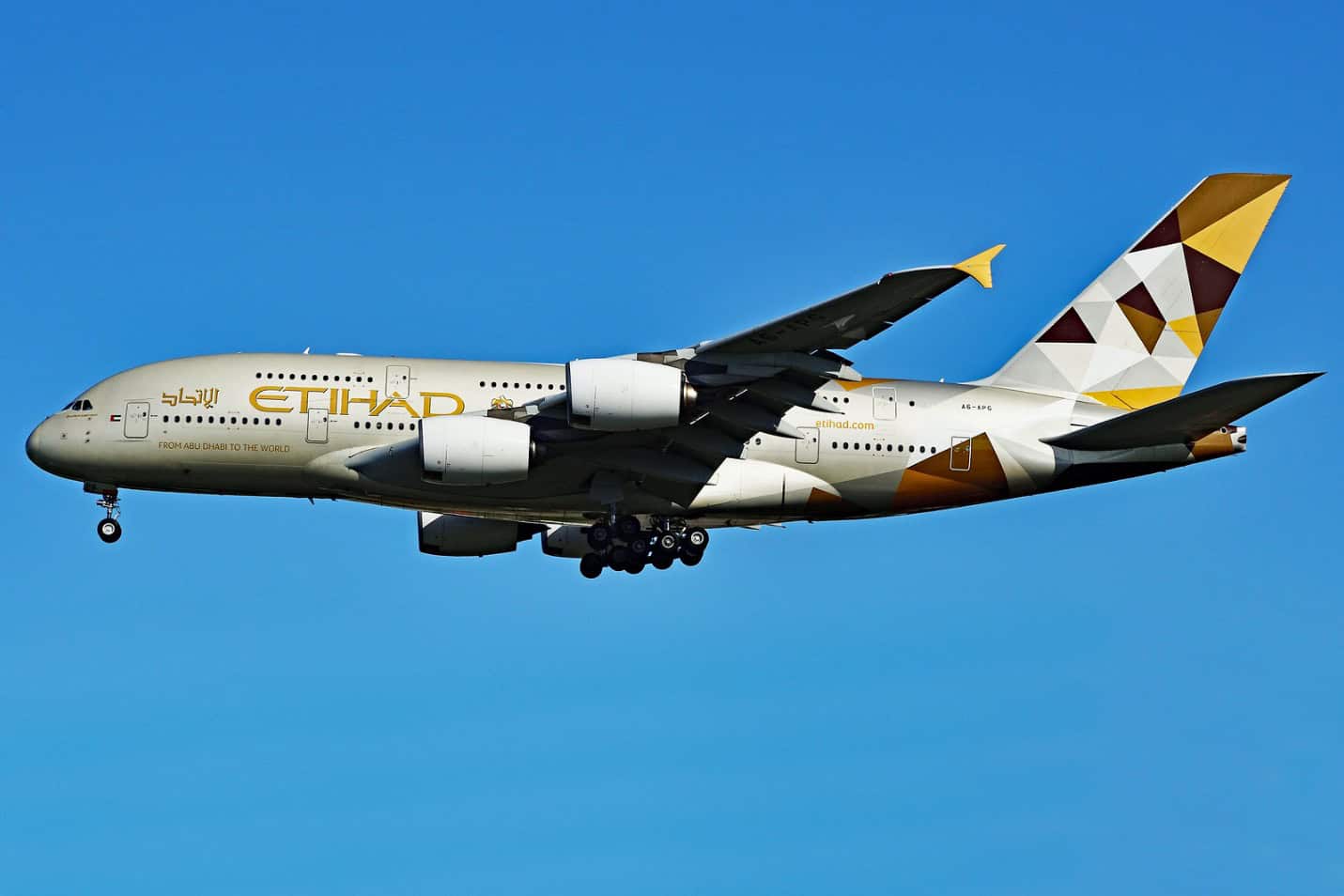
Etihad Airways is the safest airline in the world for 2026, according to the annual ranking from AirlineRatings.com, which monitors 320 airlines. It is the first time a Gulf carrier has taken the top spot, and Etihad has never had a fatal accident in passenger service since it started flying in November 2003.
Cathay Pacific, Qantas, Qatar Airways and Emirates complete the top five. Among budget carriers, Hong Kong’s HK Express ranks first, and Alaska Airlines is the best-placed US full-service airline, at 15th.
The honest caveat comes from AirlineRatings itself: positions one through 14 are separated by less than four points. So this page shows the full 2026 ranking, then adds what the list leaves out: each airline’s actual record of passenger deaths, and the two checks that matter far more than a rank.
| Rank | Airline | Based in | Most recent passenger deaths |
|---|---|---|---|
| 1 | Etihad Airways | Abu Dhabi, UAE | None since launch in 2003 |
| 2 | Cathay Pacific | Hong Kong | 1972 (Flight 700Z, a bombing) |
| 3 | Qantas | Australia | 1951 (none ever on a jet) |
| 4 | Qatar Airways | Doha, Qatar | None since launch in 1994 |
| 5 | Emirates | Dubai, UAE | None since launch in 1985 |
| 6 | Air New Zealand | New Zealand | 1979 (Flight 901, Mount Erebus) |
| 7 | Singapore Airlines | Singapore | 2024 (Flight 321, severe turbulence) |
| 8 | EVA Air | Taiwan | None since founding in 1989 |
| 9 | Virgin Australia | Australia | None since launch in 2000 |
| 10 | Korean Air | South Korea | 1997 (Flight 801, Guam) |
How this ranking works
The order is AirlineRatings.com’s 2026 ranking of full-service airlines. It scores incident rates adjusted for the number of flights, fleet age, serious incidents, pilot training and international safety audits, and for 2026 it put more weight on turbulence prevention. We added each airline’s record of passenger deaths from its own accident history. Regional airlines that fly under a big brand on their own operating certificate, such as Delta’s Endeavor Air and American’s PSA Airlines, are excluded from the parent airline’s entry.
1. Etihad Airways
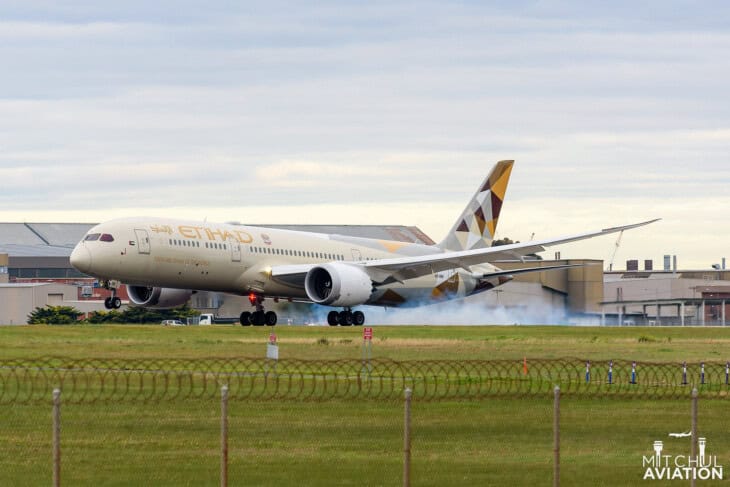
Etihad has carried passengers since November 2003 without a fatal accident. Its only write-off was an A340-600 destroyed during Airbus ground testing in Toulouse in 2007, before it was ever delivered, in an accident that injured nine people.
AirlineRatings gave it first place for four reasons: a young fleet, cockpit safety work around turbulence, a crash-free history, and the lowest incident rate per flight of any airline on the list. It also took part in the site’s independent onboard audit and scored well on how its cabin crew handle turbulence.
Is it clearly safer than Cathay Pacific at number two? No, and AirlineRatings says so: just 1.3 points separate the top six. Etihad wins on recent numbers, while Cathay and Qantas win on decades of history.
Fleet age is one of the scoring factors, and the aircraft types themselves have their own records, covered in our guide to the safest commercial aircraft.
Last year's winner fell to sixth
AirlineRatings named Air New Zealand the world’s safest airline for 2025, with Qantas second. For 2026 Air New Zealand dropped to sixth. The CEO of AirlineRatings warns that small numerical differences at the top should not be read as real gaps in safety, and that grouping airlines into tiers may now be more accurate than ranking them.
2. Cathay Pacific
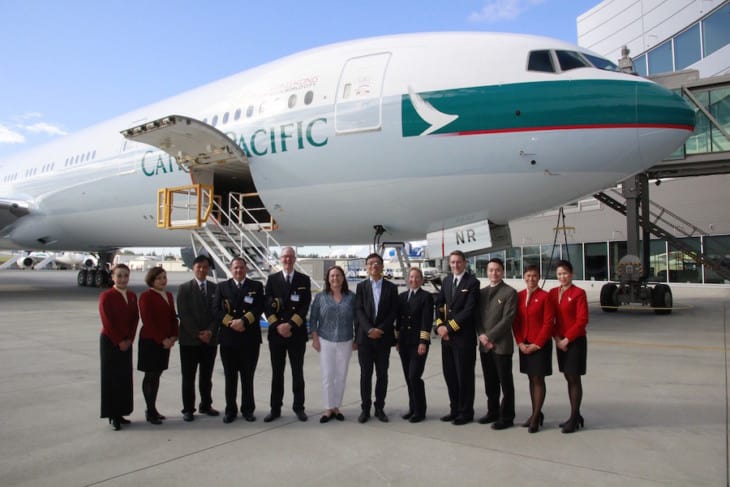
No Cathay Pacific accident has cost a life since 1972, when a bomb destroyed Flight 700Z at 29,000 feet over what was then South Vietnam, killing all 81 people on board. That is 54 years without a fatal accident.
Its earlier history was rougher: a fatal 1949 crash near Hong Kong, and a 1954 shoot-down by Chinese military aircraft near Hainan Island that killed 10 people. The modern airline moved from a three-way tie for third in 2025 to second outright in 2026.
3. Qantas
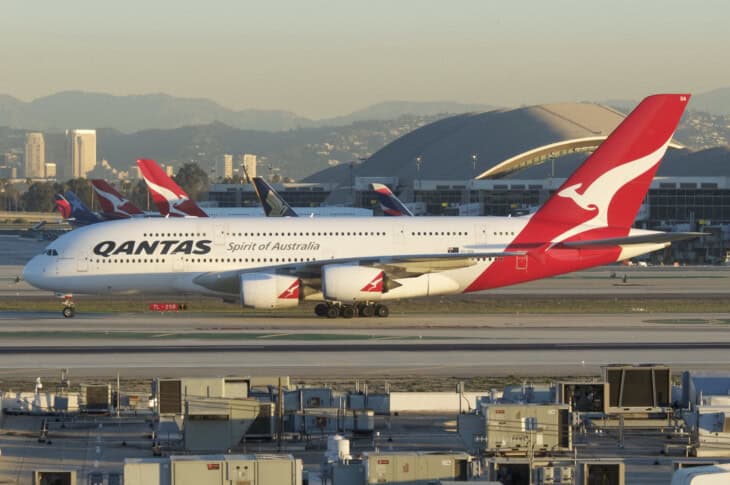
Qantas has never lost a jet airliner, and nobody has died on one of its jets. Its last fatal accidents came in 1951: three crashes in five months, all small piston aircraft flying in New Guinea.
On the measure of decades without a death on a jet, Qantas is hard to beat. It was named the world’s safest airline repeatedly between 2012 and 2023, finished second in 2025 and sits third for 2026.
The Rain Man line was only half true
The 1988 film Rain Man made Qantas famous as the airline that never crashed. It had crashed: eight fatal accidents and a wartime shoot-down between 1927 and 1945, then four more fatal losses after the war, the last in 1951. What Qantas has never done is lose a jet, or a passenger on one.
4. Qatar Airways

Qatar Airways has not had a fatal accident since it began flying in January 1994. Both of the aircraft it has lost were destroyed on the ground, by fires during maintenance in 2007 and 2017.
It shared third place in 2025 and ranks fourth for 2026, inside the 1.3-point band that separates the top six. Unlike Emirates, it has no ground fatalities on its record either.
5. Emirates
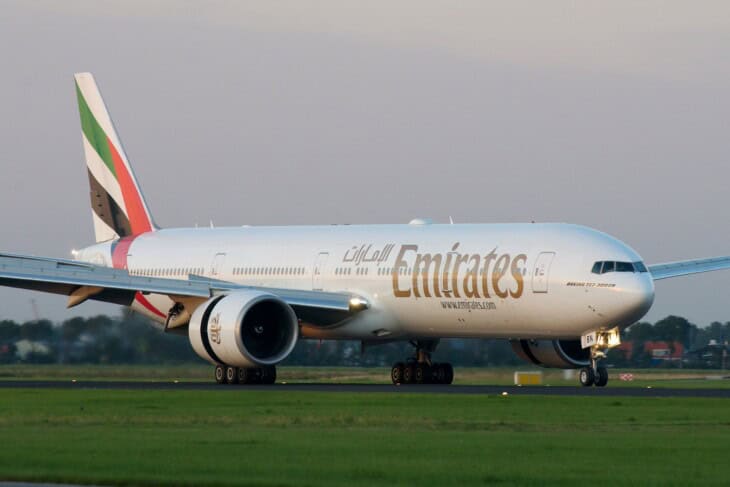
No passenger or crew member has died in an Emirates accident since the airline launched in 1985. Its first hull loss came in August 2016, when Flight 521, a Boeing 777-300, crash-landed and burned at Dubai; all 300 people aboard survived, but an airport firefighter was killed.
In October 2025 a freighter flying as Emirates SkyCargo Flight 9788 ran off the runway in Hong Kong and hit a ground vehicle, killing two airport security staff. That aircraft was operated for Emirates by Air ACT, and all four people on board survived.
6. Air New Zealand
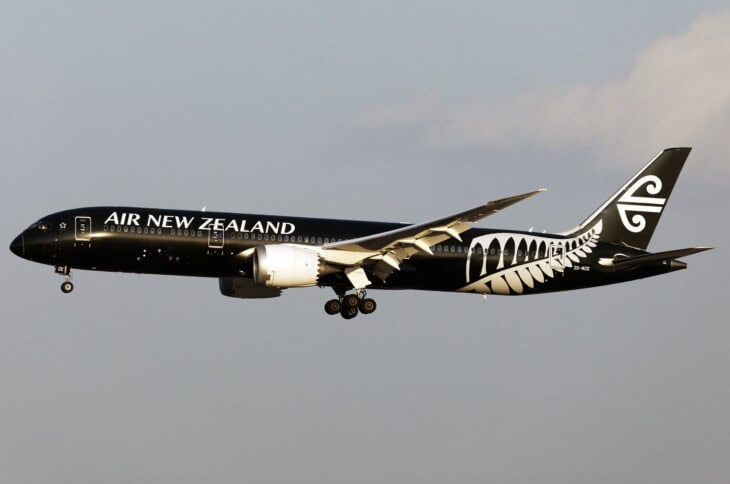
Air New Zealand was the world’s safest airline for 2025 and slips to sixth for 2026. Its only jet accident with passenger deaths is still Flight 901, a DC-10 sightseeing flight that flew into Mount Erebus in Antarctica in November 1979, killing all 257 people on board.
That crash was caused in part by the airline itself. Its navigation section changed the flight’s route coordinates the morning of the flight without telling the crew, and Antarctic weather did the rest.
The drop from first to sixth says more about how tight the top of this list is than about the airline itself.
7. Singapore Airlines
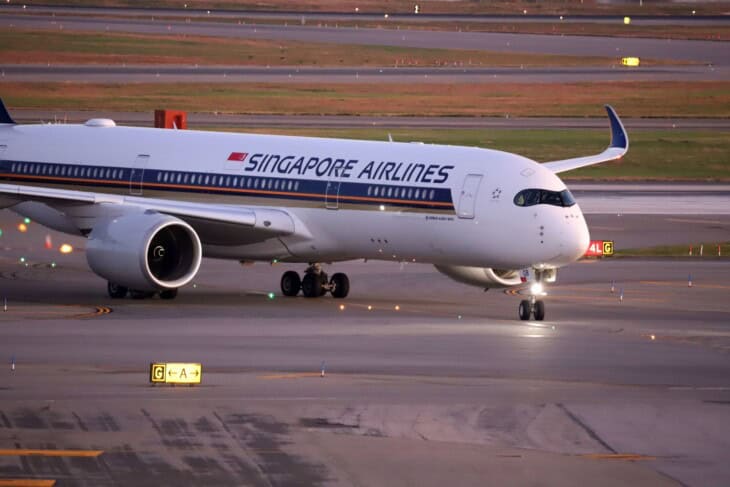
Singapore Airlines is back on the list after AirlineRatings left it out for 2025 because of Flight 321. In May 2024 that Boeing 777 hit severe turbulence over Myanmar on its way from London to Singapore; one passenger died and 79 people were injured.
AirlineRatings reinstated it after visiting the airline’s safety and training centre and holding long discussions with its operations team. Its only other accident with passenger deaths was Flight 006 in October 2000, when a 747 tried to take off from a closed runway in Taipei and hit construction equipment, killing 83 of the 179 people on board.
Turbulence is the leading cause of in-flight injuries, which is why it now carries more weight in the 2026 criteria. Our explainer on whether turbulence can crash a plane covers what it can and cannot do to an airliner.
8. EVA Air

EVA Air has never lost an aircraft or a passenger since the Evergreen shipping group founded it in 1989. It is one of two Taiwanese airlines in the top 11, alongside the newcomer STARLUX.
Its closest call was not its own doing. In December 2016 a Los Angeles controller mistakenly turned EVA Flight 015 left instead of right after takeoff, sending the 777 toward Mount Wilson, and the crew climbed away with less than 600 feet (180 m) to spare.
9. Virgin Australia
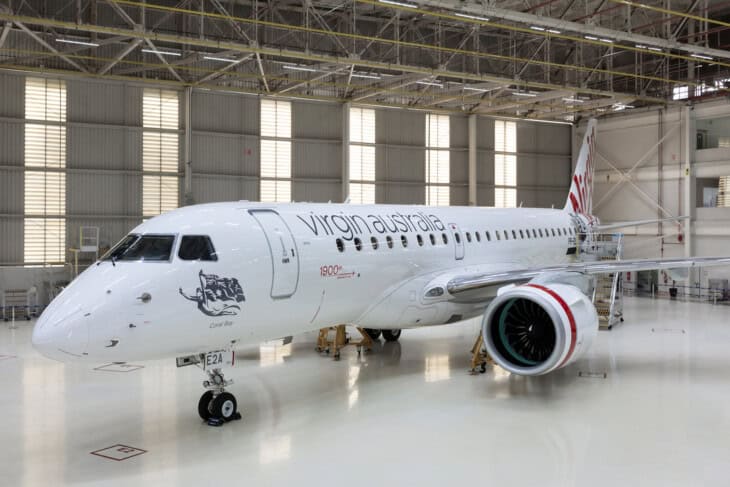
Virgin Australia has not had a fatal crash since it launched as Virgin Blue in August 2000, with two aircraft on a single route. AirlineRatings gives it the maximum seven-star safety rating and lists it as registered with IOSA, IATA’s operational safety audit.
Australia and the UAE are the only countries with two airlines in the top 10. The Virgin name has a clean record in general: Virgin Atlantic, 13th this year, has never had a hull loss or a passenger death since 1984.
10. Korean Air
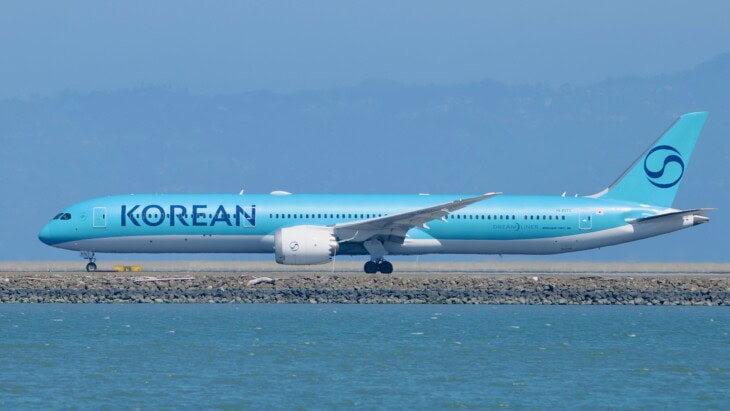
Korean Air is the biggest turnaround on the list. Since 1970, 17 of its aircraft have been written off with the loss of 700 lives, including Flight 007, shot down by the Soviet Union in 1983 with all 269 people aboard.
Its last fatal passenger accident was Flight 801 at Guam in 1997, which killed 229 of the 254 people on board, and its last crew deaths came in a 1999 cargo crash. It passed IATA’s safety audit in 2005, and its most recent write-off, a 2022 runway overrun at Cebu in the Philippines, killed no one.
Safest airlines ranked 11 to 25
The second half of the 2026 full-service list includes two debuts, STARLUX and Fiji Airways. AirlineRatings says it would normally not rank an airline as young as STARLUX, which flew its first flight in January 2020, but made an exception for its approach to safety and transparency.
| Rank | Airline | Country |
|---|---|---|
| 11 | STARLUX | Taiwan |
| 12 | Turkish Airlines | Turkey |
| 13 | Virgin Atlantic | United Kingdom |
| 14 | ANA | Japan |
| 15 | Alaska Airlines | United States |
| 16 | TAP Air Portugal | Portugal |
| 17 | SAS | Scandinavia |
| 18 | British Airways | United Kingdom |
| 19 | Vietnam Airlines | Vietnam |
| 20 | Iberia | Spain |
| 21 | Lufthansa | Germany |
| 22 | Air Canada | Canada |
| 23 | Delta Air Lines | United States |
| 24 | American Airlines | United States |
| 25 | Fiji Airways | Fiji |
Air Canada at 22nd is another reminder to check who actually operates a flight. In March 2026, after this list was published, Air Canada Express Flight 8646 hit an airport fire truck while landing at New York’s LaGuardia, killing both pilots; that CRJ900 was flown by Jazz Aviation, a separate airline flying under the Air Canada Express brand.
The safest low-cost airlines in 2026
HK Express is the world’s safest low-cost airline for the second year running. It has never had a fatality or a hull loss, and AirlineRatings points to a modern fleet, an exceptionally low incident rate and an almost flawless onboard audit, all under Hong Kong’s strict incident-reporting rules.
| Rank | Low-cost airline | Country |
|---|---|---|
| 1 | HK Express | Hong Kong |
| 2 | Jetstar Airways | Australia |
| 3 | Scoot | Singapore |
| 4 | flydubai | UAE |
| 5 | easyJet Group | United Kingdom |
| 6 | Southwest Airlines | United States |
| 7 | airBaltic | Latvia |
| 8 | VietJet Air | Vietnam |
| 9 | Wizz Air Group | Hungary |
| 10 | AirAsia Group | Malaysia |
Two of the top three budget airlines belong to top-10 full-service carriers: Jetstar is wholly owned by Qantas, and Scoot is a Singapore Airlines subsidiary. flydubai will move to the full-service list in future editions, since AirlineRatings now classes it as a full-service airline.
Places 11 to 25 go to TUI UK, Vueling, Norwegian, JetBlue, flynas, Cebu Pacific, Jet2, Ryanair (Ireland and UK), Spring Airlines, Transavia, Eurowings, Volaris, WestJet, GOL and SKY Airline. Spring Airlines is the first Chinese airline ever to appear on an AirlineRatings safety list.
Which US airlines are the safest?
Alaska Airlines is the highest-ranked US airline on the 2026 full-service list, at 15th, ahead of Delta at 23rd and American at 24th. On the low-cost list, Southwest ranks sixth and JetBlue 14th, while United, Frontier and Allegiant appear on neither.
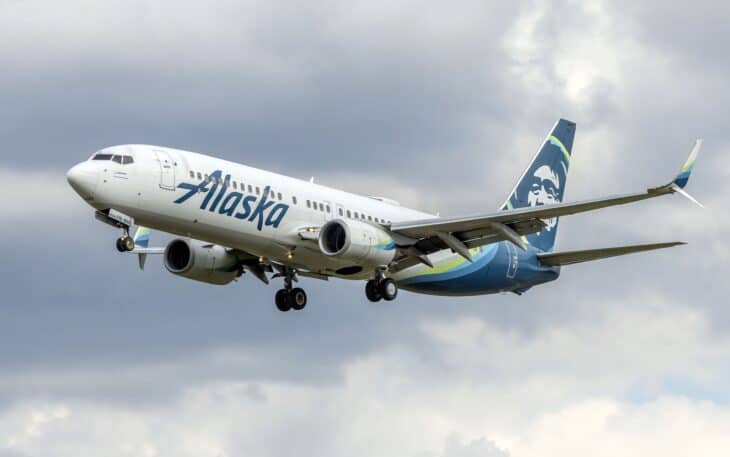

Alaska’s last fatal crash was Flight 261 in January 2000, an MD-83 that went into the Pacific off California and killed all 88 people aboard, a crash later traced to deferred maintenance. In January 2024 a door plug blew out of one of its 737 MAX 9s on Flight 1282 after takeoff from Portland, and no one died.
Southwest’s most recent passenger death came in April 2018, when an engine failed on Flight 1380 and debris broke a window. Safety is only one part of choosing a carrier, and our ranking of the best airlines to fly in the US weighs reliability, cabins and value.
North America’s overall accident rate rose in 2025, according to IATA, to 1.68 accidents per million flights from 1.49 a year earlier. Europe came in at 1.30 and Asia-Pacific at 0.91.
What about the Delta and American crashes of 2025?
Both airlines are on the 2026 list despite the two most serious crashes to carry their brands in 2025, because neither crash was flown by the airline on the ticket. American Eagle Flight 5342, which collided with an Army helicopter near Washington in January 2025 and killed all 64 people on the jet, was operated by PSA Airlines. Delta Connection Flight 4819, which flipped on landing in Toronto less than three weeks later with all 80 aboard surviving, was operated by Endeavor Air. AirlineRatings excludes both regional airlines from the Delta and American entries, so when you book a short domestic flight, check the operated by line.
Which airlines have the worst safety records?
Rather than hunting for a worst-airline ranking, use two public checks. The gap between first and 25th on AirlineRatings is a few points; the gap these checks reveal is far bigger.
The first is IOSA, IATA’s operational safety audit. Airlines on the IOSA registry had 0.98 accidents per million flights in 2025, while airlines outside it had 2.55, about 2.6 times the rate.
The second is the European Commission’s Air Safety List. Its June 9, 2026 update bans 154 airlines from EU airspace: 126 certified in 16 countries whose safety oversight the EU judges inadequate, 22 Russian airlines, and six individual carriers from Algeria, Zimbabwe, Venezuela, Iran and Iraq.

Two more, Iran Air and North Korea’s Air Koryo, may fly into the EU only with specific aircraft types. The same update removed every airline certified in Kyrgyzstan from the list.
Region matters too. Africa’s accident rate in 2025 was 7.86 per million flights, against 1.32 for the world as a whole.
How safe is flying in 2026?
IATA counted 51 accidents among 38.7 million flights in 2025, or one accident for every 759,646 flights. Eight of those accidents were fatal, with 394 people killed on board.
Two crashes accounted for more than 77% of those deaths: Air India Flight 171, a Boeing 787 that crashed after takeoff from Ahmedabad in June 2025, and the Washington midair collision. Neither Air India nor PSA Airlines appears on a 2026 safety list.
The long-term trend is still clearly downward. Over 2021 to 2025 there was one fatal accident for every 5.6 million flights, against one for every 3.5 million over 2012 to 2016, and our breakdown of how often planes actually crash puts those odds in everyday terms.
FAQ
Sources and references used for research and fact-checking.
- AirlineRatings.com, World's safest airline rankings for 2026
- AirlineRatings.com, The World's Safest Airlines for 2025
- AirlineRatings.com, Virgin Australia safety ratings
- IATA, IATA Releases 2025 Safety Report
- European Commission, Commission updates EU Air Safety List: all air carriers from Kyrgyzstan removed, Air Express Algeria added
- Airport Technology, Top 10 safest airlines in the world
- Wikipedia, Etihad Airways
- Wikipedia, Cathay Pacific
- Wikipedia, Qantas
- Wikipedia, Qatar Airways
- Wikipedia, Emirates (airline)
- Wikipedia, Air New Zealand
- Wikipedia, Singapore Airlines Flight 321
- Wikipedia, Singapore Airlines
- Wikipedia, EVA Air
- Wikipedia, Virgin Australia
- Wikipedia, Virgin Atlantic
- Wikipedia, Korean Air
- Wikipedia, Starlux Airlines
- Wikipedia, HK Express
- Wikipedia, Jetstar Airways
- Wikipedia, Scoot (airline)
- Wikipedia, Alaska Airlines
- Wikipedia, Southwest Airlines
- Wikipedia, 2025 Potomac River mid-air collision
- Wikipedia, Delta Connection Flight 4819
- Wikipedia, Air Canada Express Flight 8646
- Wikipedia, Air India Flight 171
Get the Newsletter
The latest aviation news and stories sent to your inbox.
About the Author

Tim is the owner and lead editor of AeroCorner since 2019, overseeing aviation content covering aircraft, airlines, airports, and the broader aviation industry. Through years of researching, writing, editing, and publishing aviation-focused content, he has developed extensive practical knowledge of commercial aviation and air travel. Based in Asia and a frequent traveler himself, Tim also brings firsthand passenger experience to AeroCorner’s coverage. Outside of publishing, he has also explored aviation firsthand through hands-on flight training in New Zealand.