

Table of Contents
Free Wi-Fi has become the norm on America’s big airlines, but five of the six are trading it for a loyalty account, and on two of them it also depends on which plane you get.
American, Delta, United, Southwest, JetBlue and Alaska, counted here with its sister airline Hawaiian, all offer free in-flight Wi-Fi as of Nov. 2, 2026. JetBlue is the only one of the six where you can connect as a guest, with no account.
The other five want a free membership first. United and Alaska limit the free service to their Starlink planes, which on United meant about half of its flights in October.
Why Free Wi-Fi Now Comes With a Sign-Up Page
JetBlue got here first by a decade. It launched Fly-Fi in 2013 and calls itself the first major US airline to offer free Wi-Fi on every flight.
The membership model arrived with Delta. It introduced free Wi-Fi for SkyMiles members at CES in 2023, and says T-Mobile provides it to those members at no charge.
At least four of the five now pair it with a wireless sponsor. Southwest signed T-Mobile and went free for Rapid Rewards members on Oct. 24, 2025. American started its AT&T-sponsored version for AAdvantage members in January 2026.
Alaska and Hawaiian, also with T-Mobile, added the requirement this summer. Their June 25, 2026 announcement said guests would need an Atmos Rewards membership to get online, on select flights from June and on all Starlink flights by mid-July.
The trade is plain enough. One Mile at a Time argued in February 2025 that JetBlue should limit free Wi-Fi to TrueBlue members because it would lift enrollment and revenue, and called logging in a “mildly annoying extra step.”
JetBlue has not done it. Its September 2025 release promised to keep customers connected “always for free,” and the price of its open door is a short ad from a partner before you connect.
Every Big Airline’s Free Wi-Fi, Ranked
The measure here is access, not speed. Airlines rank first by what you must do before connecting, then by how much of the operation the free service reaches, using each airline’s own latest figure.
| Rank | Airline | What you need | Where it is free | With no account |
|---|---|---|---|---|
| 1 | JetBlue | Nothing: guest login and a short ad | Every aircraft | Free |
| 2 | Southwest | Rapid Rewards | All flights on Wi-Fi-enabled aircraft | $8 on select aircraft |
| 3 | Delta | SkyMiles | Nearly every flight; nearly 1,300 aircraft have Wi-Fi, over 95% of the fleet | Paid access where offered |
| 4 | American | AAdvantage | All narrowbody and dual-class regional fleets, plus new 787s | Not stated in its release |
| 5 | United | MileagePlus | Starlink only: 640-plus aircraft, about half of flights | No Starlink; $10 on older planes |
| 6 | Alaska and Hawaiian | Atmos Rewards | Starlink only: about 150 aircraft in June, in a fleet of 422 in September | No Starlink; $8 on older Alaska planes |
The middle of that table is a judgment, because the airlines publish different units. Southwest’s 2025 release said “all Southwest flights,” though its current fine print limits that to “WiFi-enabled designated aircraft,” while Delta says “nearly every flight” and still charges on some regional jets and 717s.
American’s January release says the service would reach “nearly every” flight by early spring. Among widebodies it names only new 787-9s and 787-8s, and View from the Wing reported in April 2025 that older Panasonic-equipped widebodies would not be free at launch.
Hawaiian is no longer the exception
Some Wi-Fi guides still list Hawaiian’s Starlink as free for everyone. Since mid-July 2026, by Alaska and Hawaiian’s own timetable, it takes an Atmos Rewards login. Guests under 18 enter reservation details instead, and neighbor-island flights have no Wi-Fi at all.
United produced a similar myth in April. Passengers reported free Wi-Fi on older planes on April 17, 2026, and United told Live and Let’s Fly, “We haven’t made any changes to our current Wi-Fi policy.” That free access was gone by the end of the day.
One narrow way around the login exists at Alaska. Its Wi-Fi page says eligible T-Mobile customers get free service on its older Standard and Basic systems, where everyone else pays $8.
The rest of US aviation is further behind. Allegiant says “wifi is not available,” Frontier’s help page says it does not offer Wi-Fi, and Breeze includes it only with certain bundles or its Visa card. Spirit stopped flying on May 2, 2026, which takes it off the list.
Last Place Has the Fastest Connection
This ranking flips if speed is the measure. United and Alaska sit at the bottom because they tied free access to Starlink, a low-orbit system that replaces the older satellite links behind how most airplanes get Wi-Fi.
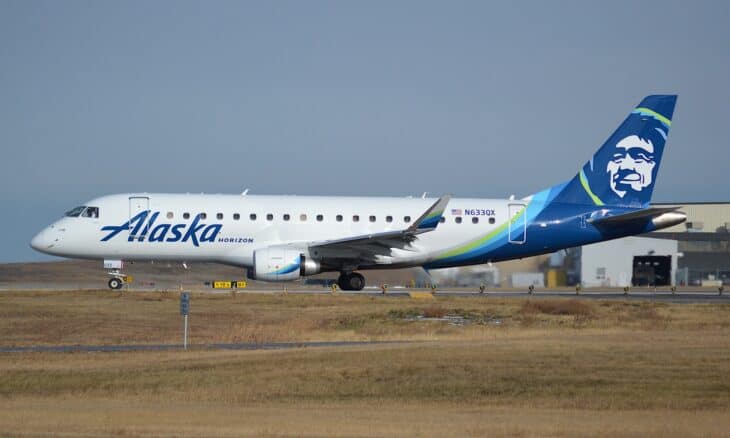
Alaska says Starlink is at least seven times faster than its legacy systems. By June 2026 it had reached the whole Embraer 175 regional fleet and the first 50 mainline jets.

United reported more than 5.4 million customers on Starlink in September 2026, with service scores on those planes nearly double those on its other Wi-Fi aircraft. Those are United’s own numbers, not an independent test.
Southwest shows how far “free” can stretch across two systems. Its members get the free service on its older system too, and its chief operating officer said on Oct. 15, 2026 that just 47 aircraft had Starlink, out of a fleet of more than 800, per CAPA.
So the same word covers very different experiences. JetBlue’s own help text warns that some flights outside the continental US, apart from Europe and the UK, may have no service, and Delta says speeds vary by plane, route and demand.
The Order Should Change by the End of 2027
United told investors on Oct. 20, 2026 that it expects Starlink on 61% of flights by the end of 2026 and 87% by next June 1, with the whole fleet done by the end of 2027. Alaska gives the same end-2027 date.
Southwest expects to finish in fall 2027, on 737-700s and 737-800s alike, though CAPA reports its year-end 2026 target has slipped from more than 300 aircraft to more than 200.
American has committed more than 1,030 mainline jets to Starlink, with installs from early 2027, but its Oct. 8 release does not say whether that service will be free. Delta expects full-fleet Wi-Fi by early 2027, then Amazon Leo on an initial 500 aircraft from 2028.
Frontier plans its first Starlink aircraft in early 2027, and its July release does not say what it will charge. JetBlue plans Amazon’s system on part of its fleet in 2027.
If those schedules hold, by 2028 the plane you get should matter far less, leaving the login as the real difference. JetBlue’s promise of “always for free” says nothing about staying account-free, and it is the one airline of the six that has not yet asked.
Sources and references used for research and fact-checking.
- JetBlue, Fly-Fi: Fast, Free Wi-Fi
- JetBlue, Main cabin
- JetBlue, Fly-Fi Moves Forward: JetBlue Becomes First Airline for Amazon's Project Kuiper
- JetBlue, JetBlue Celebrates a Trailblazing 10 Years of Fast, Free and Unlimited Fly-Fi
- FlyFi.app, How to Connect to JetBlue Wi-Fi
- Delta Air Lines, Onboard Wi-Fi
- Delta Air Lines, Delta expands Wi-Fi across Asia-Pacific routes, completing global connectivity map
- Delta Air Lines, Delta Sync Wi-Fi and Seatback
- Delta Air Lines, Delta, Amazon Leo sign agreement
- American Airlines, American Airlines launches FREE high-speed Wi-Fi, sponsored by AT&T
- American Airlines, American Airlines will bring Starlink to every mainline jet
- View from the Wing, Free Wi-Fi Starts At American Airlines in 2026
- United Airlines / SEC, United Q3 2026 earnings release (Form 8-K, Exhibit 99.1)
- Yahoo Finance, United Airlines adds Starlink Wi-Fi
- TheStreet via Yahoo Finance, United Airlines quietly cuts free perk
- Southwest Airlines, Free WiFi in the Sky
- Southwest Airlines, Rapid Rewards Program Updates for 2027
- Southwest Airlines, More to love from Rapid Rewards
- CAPA, Southwest Airlines to complete Starlink WiFi installation by autumn 2027
- Alaska Airlines, Atmos Rewards members now unlock free inflight Wi-Fi
- Alaska Airlines, Inflight Wi-Fi
- Alaska Airlines, 2026 IR Day Media and Investor Fact Sheet
- One Mile at a Time, Why Doesn't JetBlue Better Monetize Free Wi-Fi?
- Frontier Airlines, Frontier Airlines to Offer Starlink
- Frontier Airlines, In-Flight
- Allegiant Air, Travel info
- Your Mileage May Vary, Airline Wi-Fi Is Changing Fast
Get the Newsletter
The latest aviation news and stories sent to your inbox.
About the Author

Tim is the owner and lead editor of AeroCorner since 2019, overseeing aviation content covering aircraft, airlines, airports, and the broader aviation industry. Through years of researching, writing, editing, and publishing aviation-focused content, he has developed extensive practical knowledge of commercial aviation and air travel. Based in Asia and a frequent traveler himself, Tim also brings firsthand passenger experience to AeroCorner’s coverage. Outside of publishing, he has also explored aviation firsthand through hands-on flight training in New Zealand.