Jumbo Passenger Jets
Boeing 777-9
ICAO: B779
The Boeing 747-8 is the last and largest member of the 747 family, a stretched, re-winged and re-engined development of the 747-400 that entered service as a freighter in 2011 and as a passenger jet in 2012.
Updated: by Tim de Vries

The latest aviation news and stories sent to your inbox.
The Boeing 747-8 is the last and largest member of the 747 family, stretched 18.3 feet beyond the 747-400 and fitted with a new wing, raked wingtips and GEnx-2B67 engines developed for the 787. Boeing built 155 of them between 2008 and 2023, 107 freighters and 48 passenger jets, making the freighter the commercial success and the Intercontinental the last passenger jumbo ever delivered. At 250 feet 2 inches it is the longest airliner ever to enter airline service.
Live Fleet Activity (B748)
Fetching live data…

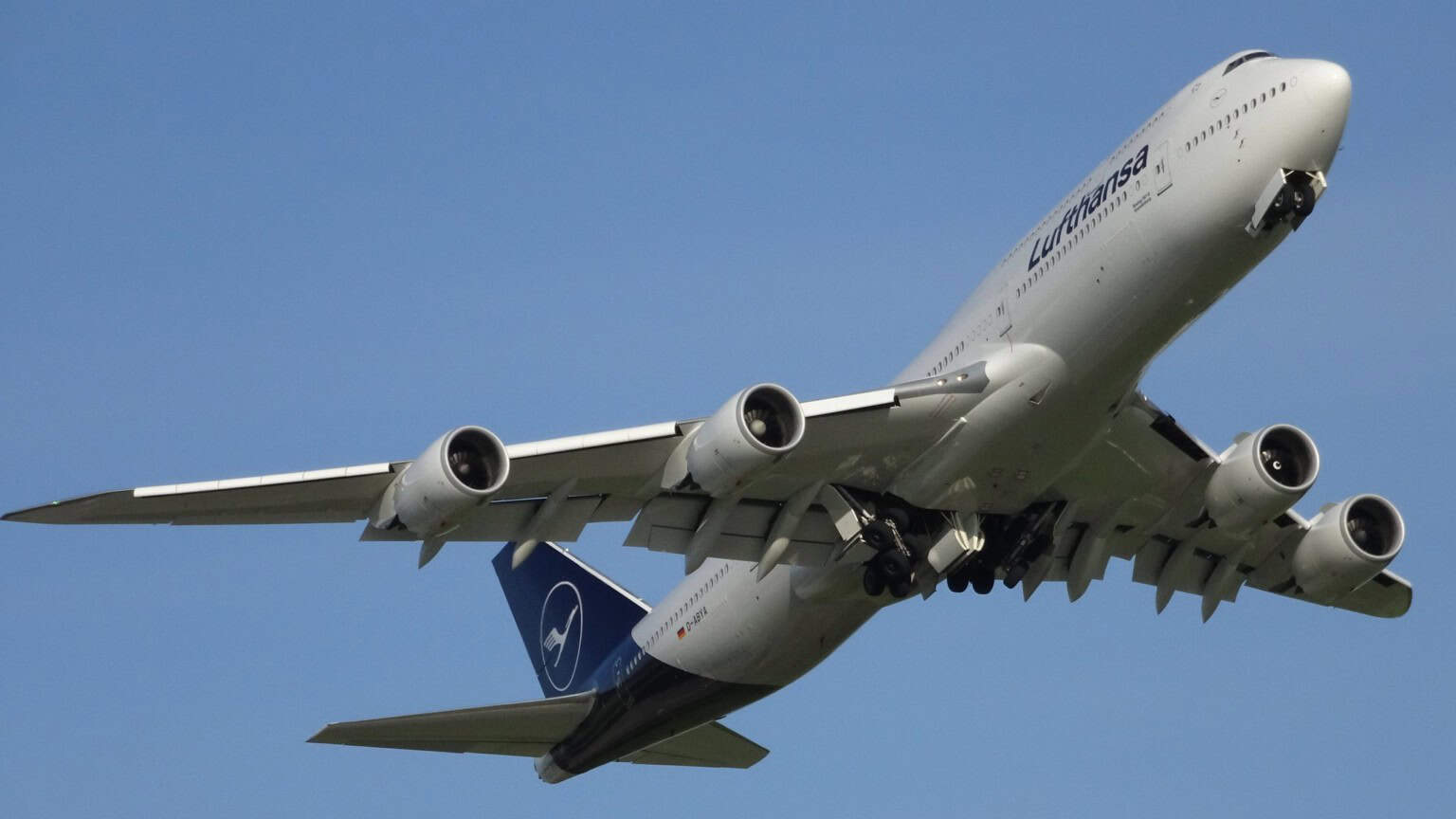

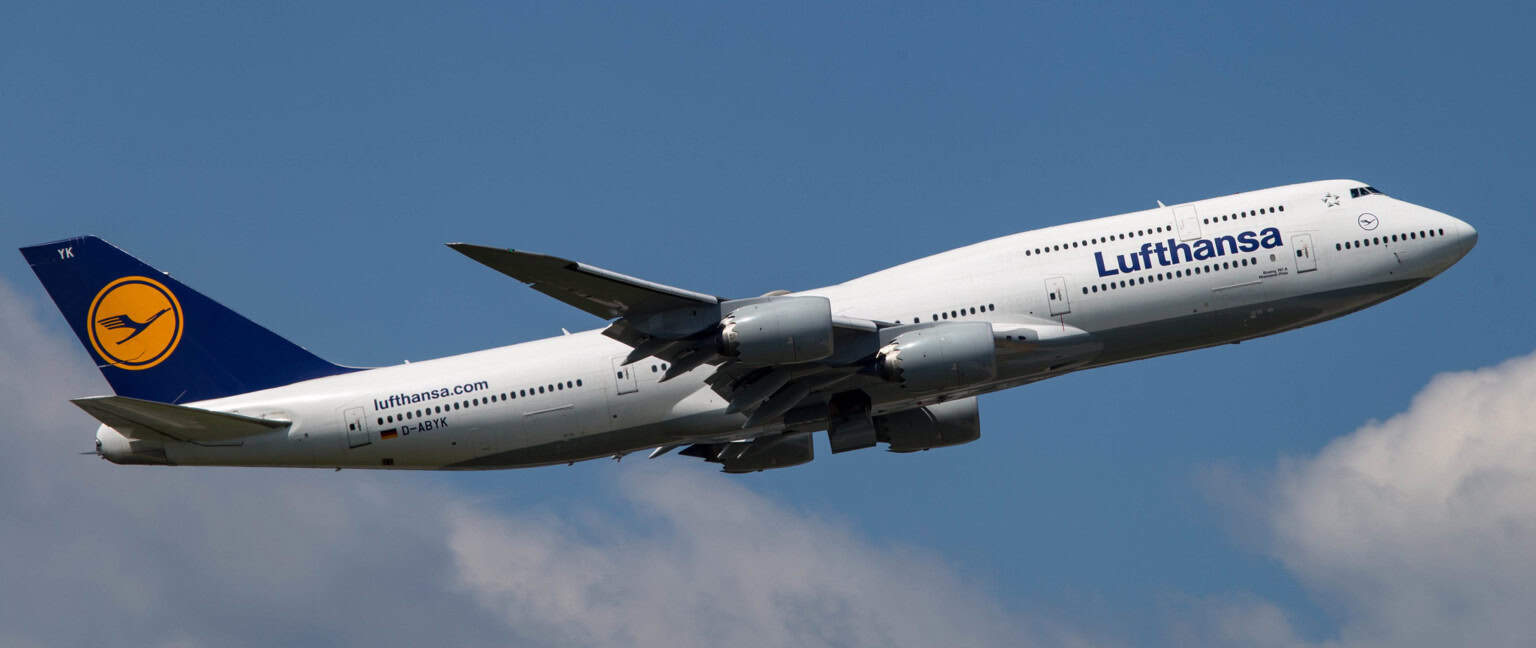
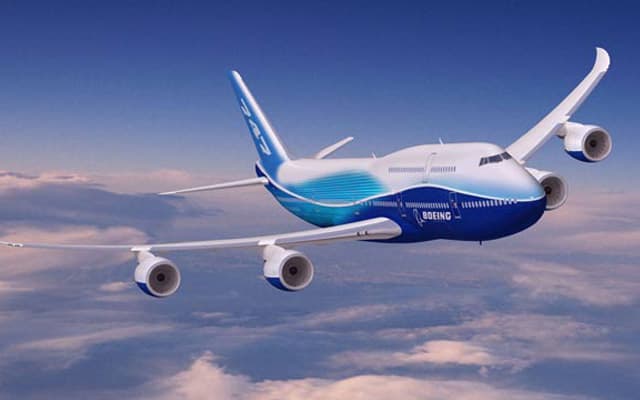
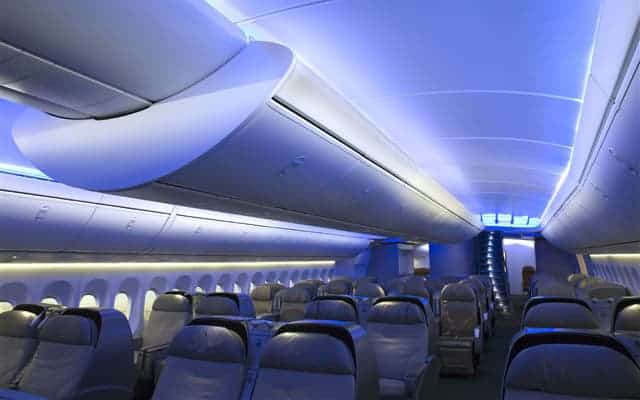
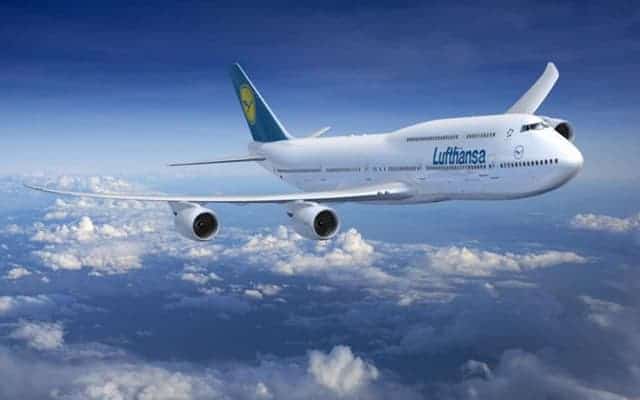
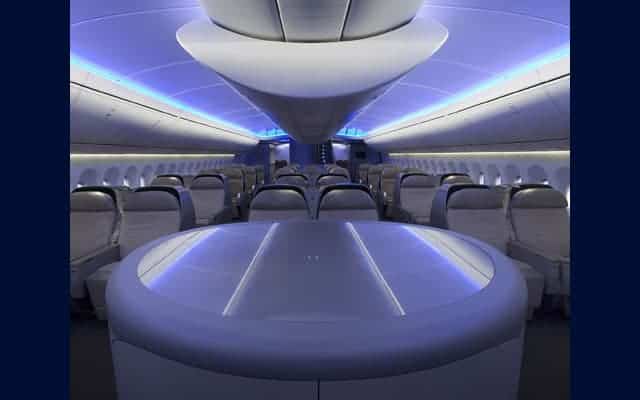

The Boeing 747-8 is the last member of the 747 family, and the largest. Boeing launched it in November 2005 as a stretched, re-winged and re-engined development of the 747-400, using technology borrowed from the 787 program.
Two versions were built. The 747-8 Freighter flew first, on February 8, 2010, and entered service with Cargolux in October 2011. The passenger version, marketed as the 747-8 Intercontinental, flew on March 20, 2011 and entered service with Lufthansa on June 1, 2012.
At 250 feet 2 inches (76.25 m), the 747-8 is the longest airliner ever to enter airline service. Boeing’s own 777-9 is slightly longer at 251 feet 9 inches (76.72 m), but it has not been delivered to a customer yet, with first delivery targeted for 2027.
Production ran from 2008 to 2023. The final 747 left the Everett factory in December 2022 and was delivered to Atlas Air, as a freighter, on January 31, 2023, closing a production line that had been open for more than half a century.
The 747-8 looks like a longer 747-400, and from a distance that is a fair description. The fuselage was stretched by 18.3 feet (5.6 m), making it the longest 747 ever built.
The bigger change is the wing. Boeing designed a new wing with new airfoils and replaced the 747-400’s upright winglets with raked wingtips, the same solution used on the 777 and 787.
The engines are GEnx-2B67 turbofans, a version of the quiet, efficient GEnx developed for the 787 and modified to supply the bleed air a 747 needs. Boeing credits the wing, the raked wingtips and those engines together for the 747-8’s higher cruise speed compared with the 747-400.

Boeing kept one thing deliberately unchanged. The flight deck was improved while preserving operational commonality with the 747-400, which lowered the cost of adding the type to an existing 747 fleet and mattered to the freight operators who bought most of them.
Boeing’s reference layout for the 747-8 Intercontinental seats 467 passengers in three classes. The main deck carries 24 first, 37 business and 356 economy seats, and the upper deck holds another 50 business class seats.
The main deck cross-section is the same 21 feet 4 inches (6.50 m) that every 747 has used since 1969, with a cabin ceiling 7 feet 11 inches (2.41 m) above the floor. Boeing’s own cabin drawings show premium seating on the main deck at seven or eight abreast, with economy packed tighter behind it.
The upper deck is the 747’s signature, and on the passenger 747-8 it is longer than the 747-400’s. It seats four abreast in business class and works as a semi-private cabin with its own stairs and galley.
The published maximum in an exit-limited, all-economy layout is 605 passengers. No airline ordered one in that configuration, and real airline layouts sit well below even Boeing’s 467-seat reference.
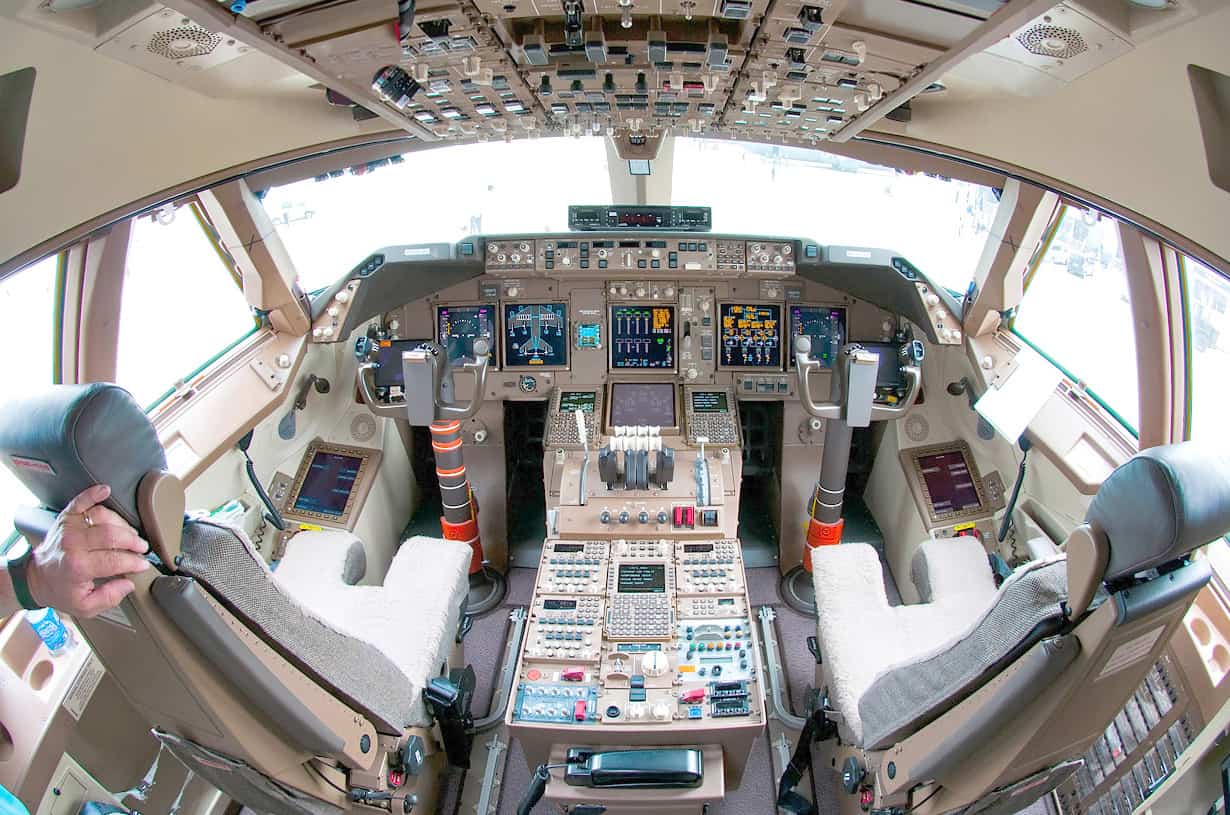
Boeing selected Rockwell Collins in February 2007 to supply the entire 747-8 avionics suite: displays, autopilot, communications, navigation, surveillance and data management.
The result is a two-pilot flight deck built around large-format LCD displays, with features carried over from the 777 including an electronic checklist, a cursor control panel and a vertical situation display.

The layout, switch positions and procedures still follow the 747-400. It is a 1980s cockpit philosophy executed with 2010s screens, and that was the point.
The full specification table for the 747-8 is on this page. A few of those figures get quoted against each other, so they are worth untangling.
Range is the most argued-over number. Boeing’s early marketing quoted 8,000 nautical miles, and the figure that stuck in later Boeing and reference material is 7,730 nm with a full three-class load, which is the value used here. Boeing’s own payload/range chart shows the aircraft reaching roughly 9,000 nm only at very light payloads.

The two speed rows are measuring different things. The 490-knot cruise figure is Mach 0.855, faster than the freighter’s Mach 0.845 and faster than the 747-400, while the 517-knot maximum comes from the aircraft’s maximum operating Mach number of 0.90 at normal cruise altitudes.
Weights are quoted at different points in a flight. The 987,000 lb (447,500 kg) maximum takeoff weight sits below a 990,000 lb (449,056 kg) maximum taxi weight, because the aircraft burns fuel while taxiing, and landing weight is capped far lower at 688,000 lb (312,000 kg).
Payload has its own ceiling, separate from takeoff weight. The maximum structural payload is 167,500 lb (76,000 kg) and Boeing gives a 651,000 lb maximum zero-fuel weight, and between them they are why a full load and full tanks cannot be carried on the same flight.
Boeing built 155 aircraft in total: 107 freighters and 48 passenger jets, and eight of those 48 were VIP aircraft rather than airline orders. Only three airlines ever put the passenger version into scheduled service, Lufthansa, Korean Air and Air China.
The reason is arithmetic rather than sentiment. By the time the 747-8 arrived, twin-engine widebodies like the 777 could fly the same long-haul routes with half the engines to buy, fuel and maintain.
Four engines only pay for themselves if an airline can reliably fill a very large cabin, and after 2008 few routes justified that. The same pressure sank the Airbus A380, which Airbus also stopped building.
The freighter is a different story. Nose-loading capability for outsized cargo is something no twin-aisle twinjet offers, and the 747-8F outsold the passenger model more than two to one.
Three airlines still operate the 747-8 Intercontinental in scheduled passenger service: Lufthansa, Korean Air and Air China. Lufthansa is the largest passenger operator by a wide margin, with a fleet several times the size of either of the other two.

The freighter fleet is larger and busier. UPS Airlines is the biggest 747-8F operator, alongside Cargolux, Cathay Pacific Cargo, Nippon Cargo Airlines, Silk Way West and Polar Air Cargo.
The split matters for the type’s future. Freight demand keeps the 747-8 Freighter flying for years to come, while the passenger fleet is small enough that each individual sale changes the picture.
A decade after airlines stopped buying it, the US government became the 747-8’s most active second-hand customer. Three separate programs are competing for used airframes.
Sierra Nevada Corporation bought five 747-8s from Korean Air in May 2024 to convert into the E-4C Survivable Airborne Operations Center, the replacement for the Air Force’s E-4B “Nightwatch” command posts. Flight testing of the first aircraft began in August 2025, and the full fleet is not expected before the mid-2030s.
A second program replaces Air Force One. The two purpose-built VC-25B aircraft are being converted from 747-8s that Transaero ordered in 2011 and never took, and the modification deal signed in February 2018 has slipped repeatedly, with recent estimates for the first delivery running from mid-2028 to 2029.
In the meantime a 747-8 BBJ donated by Qatar, originally delivered to the Qatar Amiri Flight in 2012, was modified by L3Harris as an interim presidential aircraft and entered service in 2026. The Air Force also bought two Lufthansa 747-8s in December 2025, for about $400 million, to serve as training aircraft and a spare-parts source for the VC-25B fleet.
It depends on which dimension you mean, and each aircraft wins a different one. The 747-8 is longer, with an overall length of 250 feet 2 inches (76.25 m) against the A380’s 238 feet 7 inches (72.72 m).
The A380 wins everything else. Its wingspan is 261 feet 8 inches (79.75 m) to the 747-8’s 224 feet 5 inches (68.40 m), its maximum takeoff weight is about 1,234,000 lb (560,000 kg) against 987,000 lb (447,500 kg), and Airbus quoted a typical three-class layout of 525 seats against Boeing’s 467.
It is also a true full-length double-decker, where the 747-8 is a single-deck aircraft with a partial upper deck. Both lost the same argument to twin-engine widebodies: Airbus delivered its last A380 in December 2021, Boeing its last 747 in January 2023.
Yes. Lufthansa, Korean Air and Air China still fly the passenger 747-8 Intercontinental on long-haul routes, and a much larger fleet of 747-8 Freighters flies for UPS, Cargolux, Cathay Pacific Cargo, Nippon Cargo Airlines, Silk Way West and others. The type is out of production but nowhere near retirement.
The passenger version failed commercially rather than technically. Only 48 were built against 107 freighters, because twin-engine widebodies such as the 777 could fly the same routes with two engines instead of four, and few routes could reliably fill a 467-seat cabin after 2008. The freighter, which has no twinjet equivalent for nose-loaded outsized cargo, sold well.
No, except in length. The 747-8 has the greater overall length, 250 feet 2 inches (76.25 m) versus 238 feet 7 inches (72.72 m), but the A380 is far heavier, spans 261 feet 8 inches (79.75 m) and carries roughly 525 passengers in three classes against the 747-8’s 467.
The 747-8 has an unusually clean record. No 747-8 or 747-8F appears in the record of 747 hull-loss accidents, and the type has had no fatal accident since entering service in 2011. That record covers a small fleet of 155 aircraft, so it is a strong result rather than a statistically decisive one.
Boeing’s reference three-class layout seats 467 passengers, split between 24 first, 37 business and 356 economy seats on the main deck plus 50 business class seats on the upper deck. The exit-limited certified maximum is 605, but no airline configured one that way.
Boeing’s last published list price, from 2019, was about $418.4 million for the 747-8 Intercontinental. Airlines never paid list price, and with production over, the relevant figure today is the second-hand market, where the US Air Force paid roughly $400 million for two used Lufthansa aircraft in December 2025.
About 7,730 nautical miles (8,900 miles, 14,320 km) with a full three-class passenger load. Boeing’s early marketing quoted 8,000 nautical miles, and the payload/range chart shows around 9,000 nautical miles is reachable only with very little payload aboard.
Nothing, in engineering terms. “747-8I” and “747-8 Intercontinental” are the marketing names for the passenger version, while the cargo version is the 747-8F. Boeing’s own documents simply call the passenger aircraft the Model 747-8.
Sources and references used for research and fact-checking.