Cargo Airplanes
Boeing 777 Freighter
ICAO: B77L
The last jumbo freighter, with the nose door that lets a 747 swallow outsized cargo.
Updated: by Tim de Vries
The latest aviation news and stories sent to your inbox.
The Boeing 747-8 Freighter is the last and largest 747 cargo jet, stretched beyond the 747-400F and fitted with a new wing, raked wingtips and GEnx-2B67 engines. It flew first, on February 8, 2010, and entered service with Cargolux in October 2011. Boeing built 107 of them before the final one, delivered to Atlas Air on January 31, 2023, closed more than 50 years of 747 production.
Live Fleet Activity (B748)
Fetching live data…
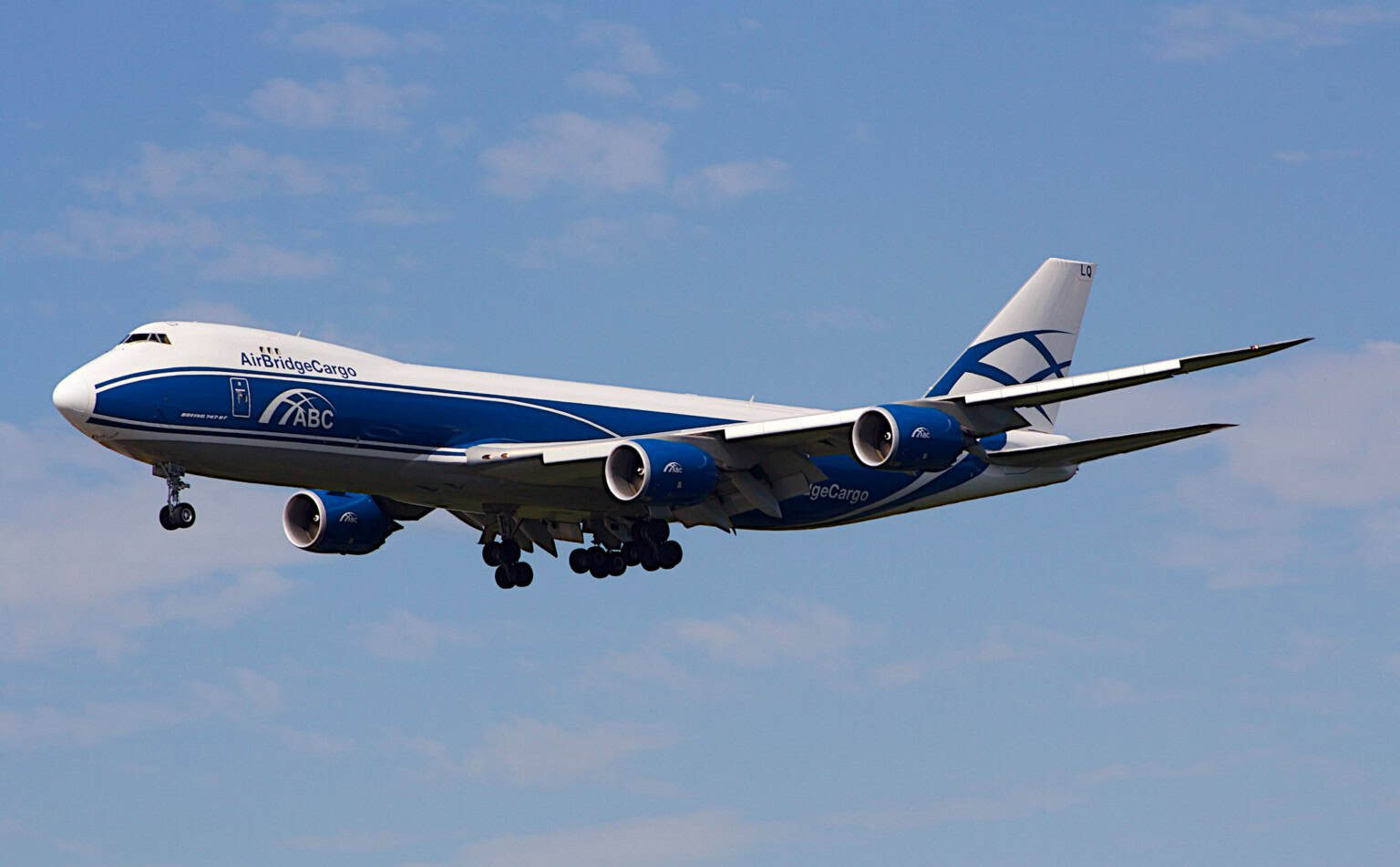


The Boeing 747-8 Freighter is the final cargo version of the 747, and the largest. Boeing launched it on November 14, 2005, as a stretched, re-winged and re-engined development of the 747-400 freighter.
It was also the first 747-8 to fly. The freighter took off from Paine Field in Washington on February 8, 2010, more than a year before the passenger version.
It entered service with Cargolux on October 12, 2011. Boeing built 107 of them, and the last, delivered to Atlas Air on January 31, 2023, ended a production line that had run for more than 50 years.
The same airframe also exists as a passenger jet. For the airliner story, see our Boeing 747-8 Intercontinental page.
The 747-8F is the 747-400F stretched by 220 inches (5.6 m), in two sections, one ahead of the wing and one behind it. Boeing’s own figures put that stretch at 16 percent more volume than the 747-400F.
The extra length buys four more main-deck pallet positions and three more lower-hold positions. It makes the 747-8F the longest 747 ever built, at 250 ft 2 in (76.24 m).
The wing is new. Boeing kept the sweep and basic structure but gave it a thicker, deeper airfoil and replaced the 747-400’s upright winglets with raked wingtips, the shape used on the 777 and 787.

The engines are General Electric GEnx-2B67 turbofans, a version of the quiet, efficient engine developed for the 787. Boeing credits the new wing, the raked tips and the GEnx for the 747-8’s higher cruise speed than the 747-400.
One thing did not change. The 747-8F keeps the 747-400F nose cargo door, which swings up so that long or tall freight can be loaded straight down the fuselage.
The full specification table for the aircraft is on this page. A few figures in it need context, because the 747-8F is quoted in several different ways.
Range is the first. The table gives 4,390 nm · 5,050 mi · 8,130 km, the figure in common reference use, but range on a freighter depends on how much cargo is aboard. Wikipedia’s summary of the freighter gives 4,120 nautical miles with a full 308,000 lb (140 t) payload.
Boeing’s early releases were more generous. In October 2006 the company quoted 4,475 nmi, and in March 2008 it said more than 4,420 nmi, both before the design was frozen at its final weights.
Weight is the second. The table lists a maximum takeoff weight of 987,000 lb · 447,500 kg, which is the higher of the two weight options Boeing lists. The original design weight was 975,000 lb (442,252 kg), and a test aircraft proved the margin on August 21, 2010 by taking off from Victorville, California at 1,005,000 lb (455,860 kg).
The maximum landing weight is much lower, at 763,000 lb · 346,000 kg. The maximum structural payload is 292,500 lb · 132,500 kg.
Fuel is the third. The freighter carries 59,700 gal · 226,100 L · 180,900 kg (Jet A), a little less than the passenger version’s 63,034 US gallons. Boeing notes that the 747-8F is not designed with fuel tanks in the tail.
Speed is the fourth. Boeing quotes a cruise of Mach 0.845 for the freighter, against Mach 0.855 for the passenger jet, while the airframe is limited to a maximum operating speed of Mach 0.90.
Boeing lists the main deck with room for 24,462 cu ft (693 m³) of container cargo, the lower deck for 5,850 cu ft (166 m³) of containers, and a further 520 cu ft (14.7 m³) of bulk space. The totals in the table include all three.
Freight goes in through three routes. The nose door takes outsized pieces, the side door on the main deck takes pallets, and the lower hold is loaded through two side doors and a separate bulk door.
Cargolux and Nippon Cargo Airlines were the first customers, both ordering the freighter in November 2005. Production of the first aircraft began in Everett in August 2008.
Boeing announced delays in November 2008 and again in October 2009, and took a $1 billion charge against earnings for the slip. The first aircraft flew in February 2010, and five freighters took part in the flight-test effort.
The FAA and the European Aviation Safety Agency certified the 747-8F on August 19, 2011. Boeing handed the first aircraft to Cargolux on October 12, 2011, months before the passenger version entered service in June 2012.
The freighter kept improving after delivery. Boeing’s Project Ozark trimmed engine fuel burn by 2 percent, and aircraft built from 2014 weighed 9,000 lb (4.1 t) less and burned 3.5 percent less fuel than the first ones off the line.
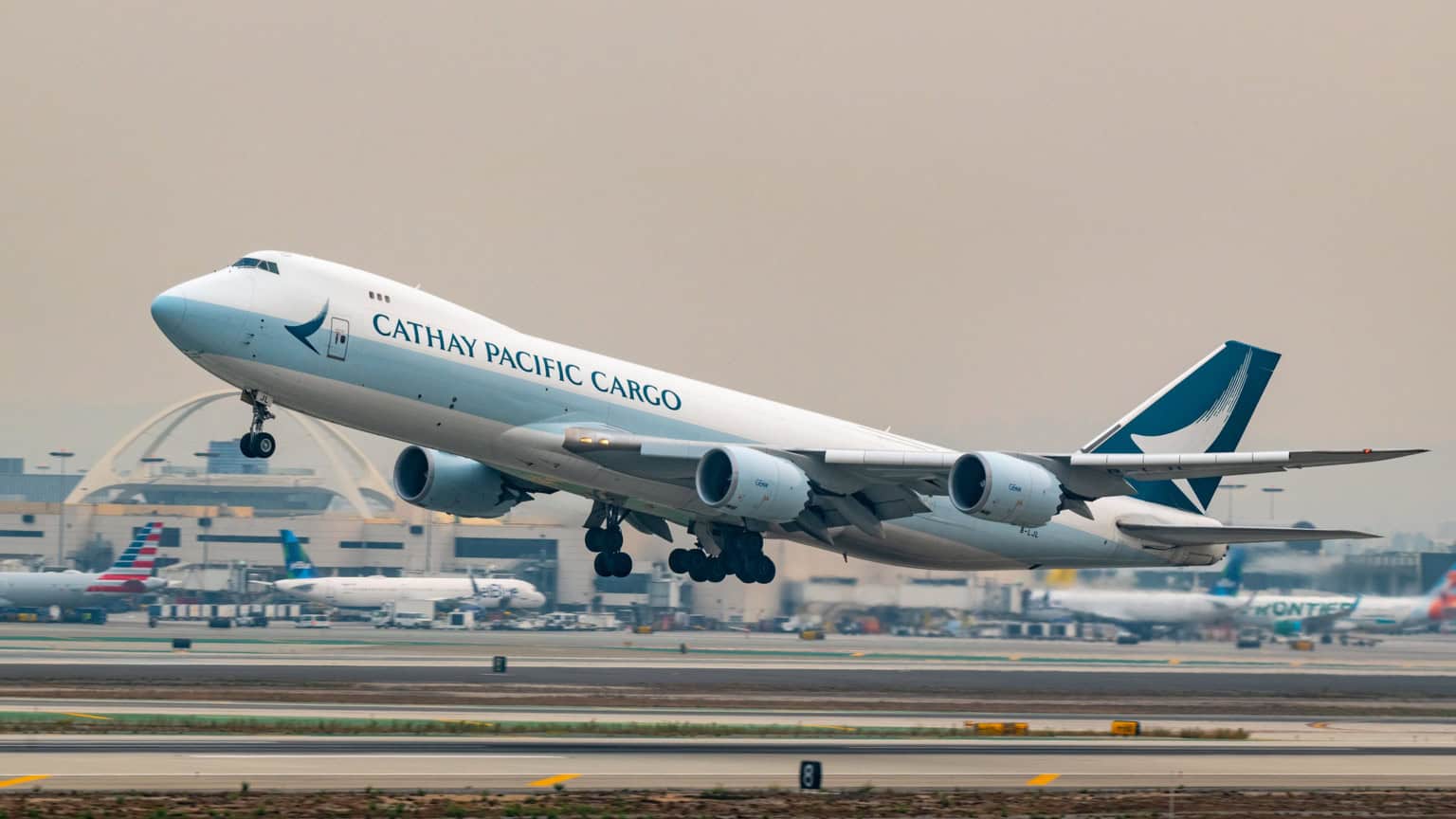
As of July 2018, the freighter operators on Wikipedia’s list included Cargolux, Cathay Pacific Cargo, AirBridgeCargo, UPS Airlines, Polar Air Cargo, Air China, Silk Way West, Atlas Air, Nippon Cargo Airlines and Korean Air.
UPS Airlines is listed as the primary user. It announced an order for 14 aircraft with 14 options in October 2016, and converted the options to firm orders in February 2018.

The last four aircraft off the line were ordered by Atlas Air in January 2021. They were the final four 747-8s Boeing built.
In 2005 Boeing forecast a market for 300 747-8s, split evenly between freighters and passenger jets. In the end it built 155 in total, 107 freighters and 48 passenger aircraft.
Demand fell below projections almost from the start. Boeing cut production from 2 to 1.75 aircraft a month in April 2013, then to 1.5 that October, and to 0.5 a month from September 2016.
The freighter did better than the airliner because it had no direct rival. Airbus’s competing A380 freighter version was cancelled during development.
The aircraft people most often set against it are heavy airlifters such as the Antonov An-124 and the C-5 Galaxy. Our 747 freighter vs C-5 Galaxy comparison sets the commercial and military heavyweights side by side, and our largest cargo planes ranking places both in the wider field.
Boeing’s own size comparison puts the 747-8F beside the twin-engine 777 Freighter. The 777F is 209 ft 1 in (63.7 m) long, against 250 ft 2 in (76.24 m) for the 747-8F.
No 747-8F appears in Wikipedia’s list of accidents and incidents involving the Boeing 747. That is a strong record rather than a proven one, since the fleet is only 107 aircraft.
No. The last Boeing 747 built was a 747-8F for Atlas Air. It rolled out of the Everett factory on December 6, 2022, and was delivered on January 31, 2023.
No. The 747-8 line closed with that delivery after 155 aircraft, 107 freighters and 48 passenger jets.
Demand ran well below Boeing’s 2005 forecast of 300 aircraft. Twin-engine jets with similar range and greater fuel efficiency gave airlines more flexibility, and the passenger version sold only 48 aircraft. The freighter fared better because it had no direct competitor.
No source we checked publishes a current count. Boeing built 107 747-8 freighters, and the type remains in service. Older 747 freighters such as the 747-400F are counted separately, so check a fleet tracker for a live total.
The maximum structural payload is 292,500 lb · 132,500 kg. Whether an aircraft reaches that limit depends on the cargo’s density. Boeing publishes a separate volume-limited payload chart for light, bulky freight, which fills the hold before the weight limit is reached.
The upward-opening nose lets long or tall items slide straight in along the fuselage. The 747-8F kept the door from the 747-400F, so it can still take freight too long or tall for a side door.
Four General Electric GEnx-2B67 turbofans, each rated at 66,500 lbf · 296 kN. They are derived from the GEnx engines developed for the 787.
Sources and references used for research and fact-checking.