Military Aircraft
The airborne laser aircraft built to test missile defense concepts.
The latest aviation news and stories sent to your inbox.
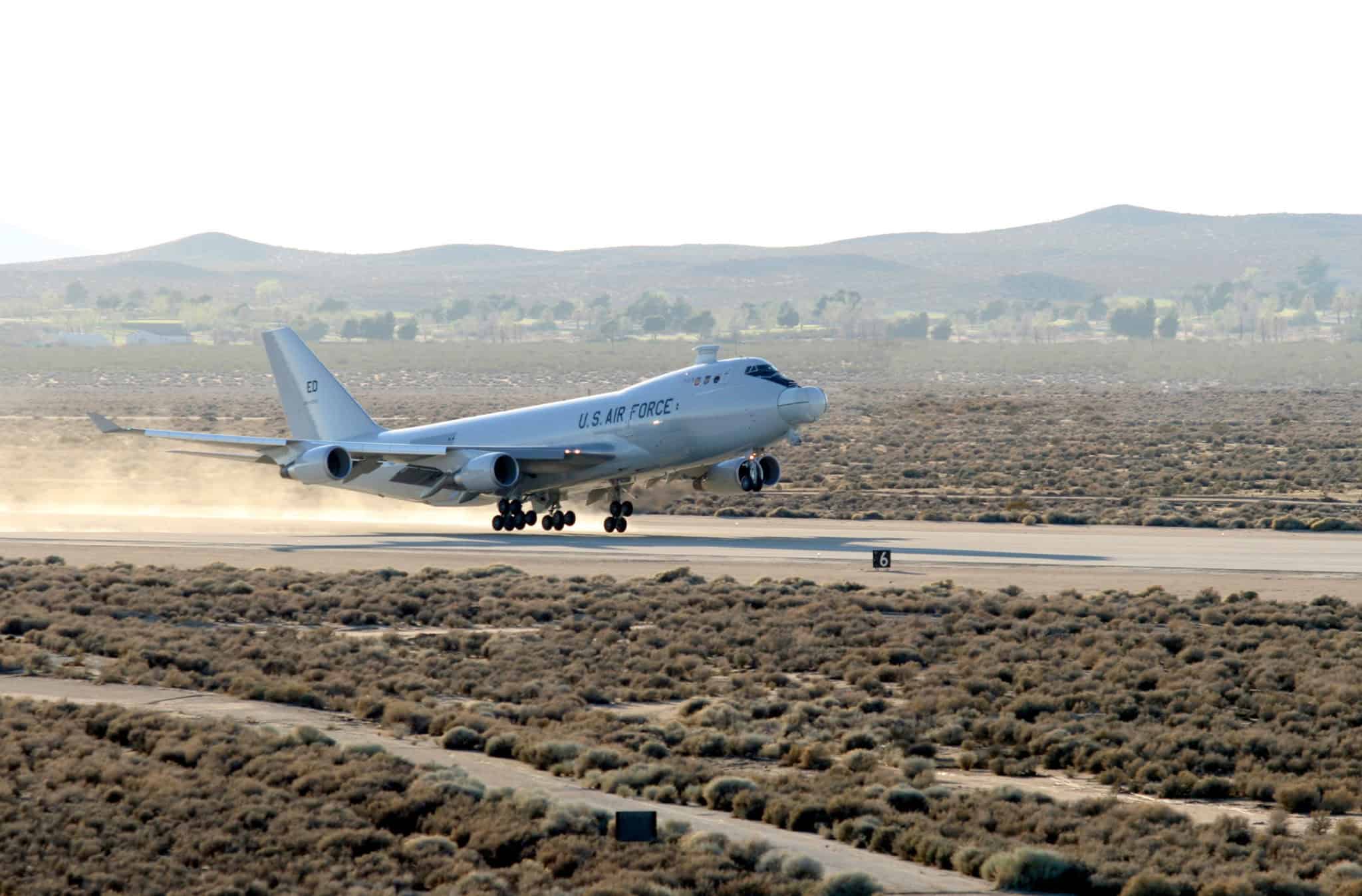
The Boeing YAL-1 was a modified 747 developed to test airborne laser missile defense technology. Designed as a proof-of-concept platform, it carried a high-energy chemical laser. The aircraft demonstrated directed energy capabilities before program cancellation.
Live Fleet Activity (YAL1)
Fetching live data…
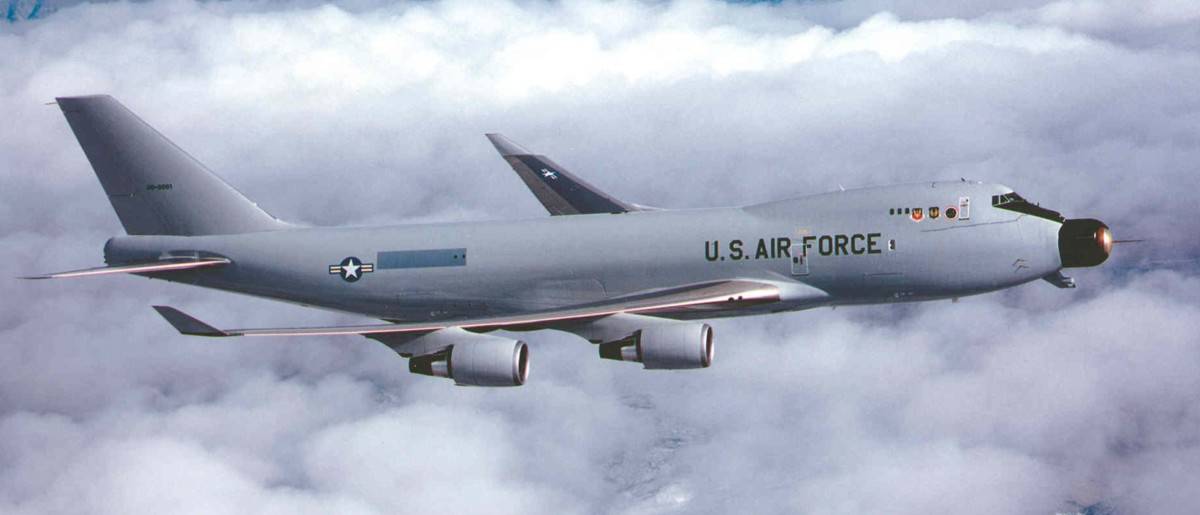


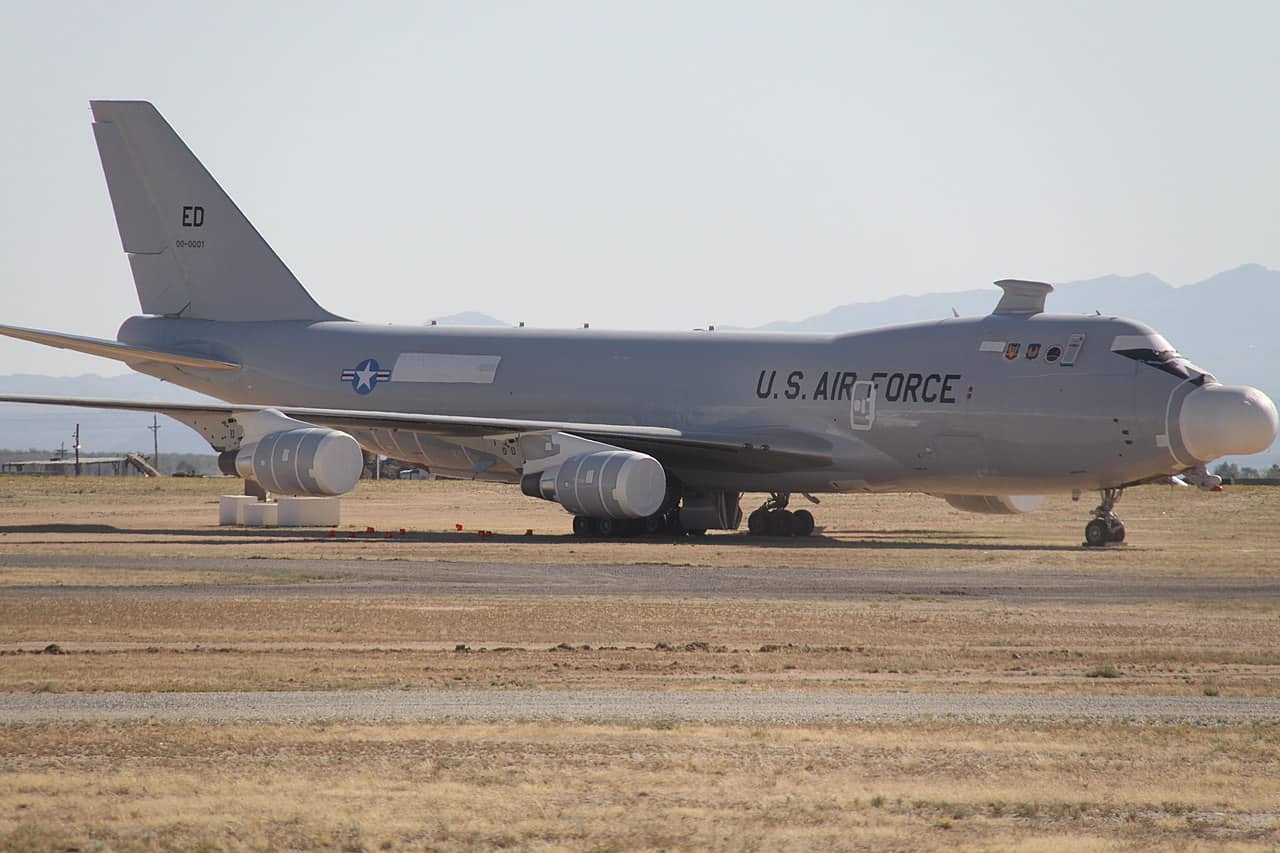
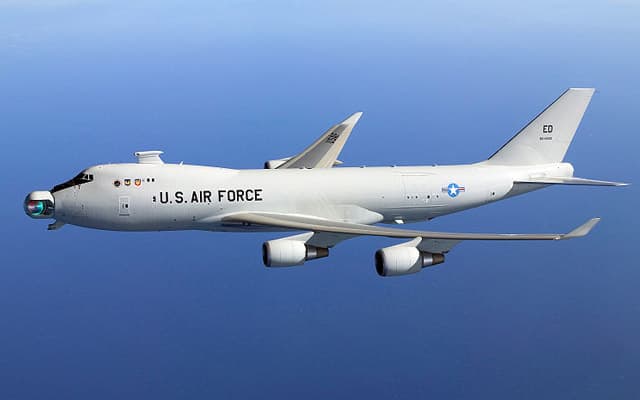

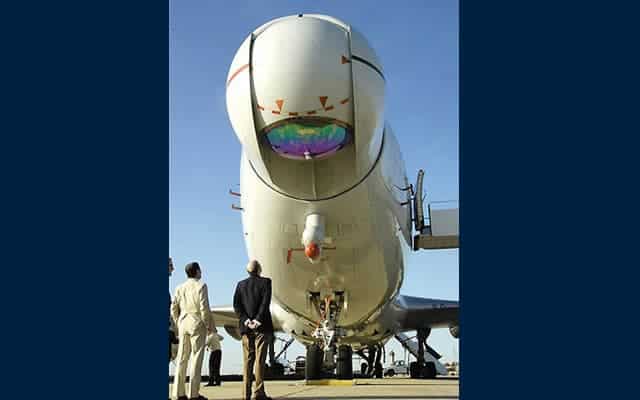
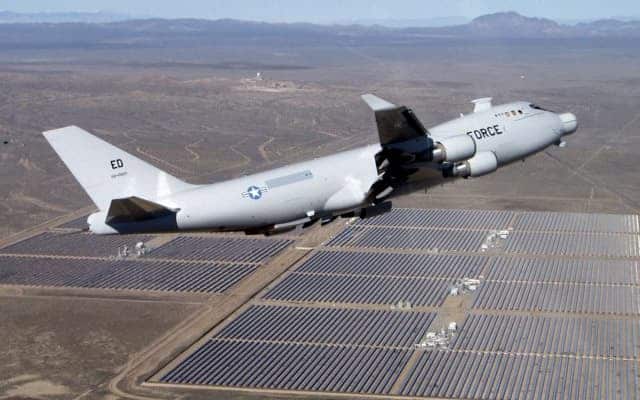
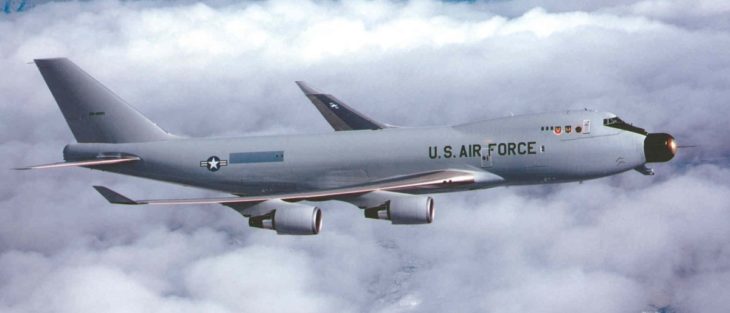
The YAL-1 was developed in the early 2000s using a Boeing 747-400F airframe. The aircraft carried a large laser system mounted in the nose and chemical laser equipment within the fuselage. Its mission was to intercept ballistic missiles during their boost phase.
Powered by four high-bypass turbofan engines producing approximately 63,000 pounds of thrust (280 kN) each, the YAL-1 retained standard 747 cruise performance near 490 knots (905 km/h). Maximum takeoff weight was similar to other 747-400 variants. The aircraft’s specialized equipment significantly altered internal layout.
The YAL-1 successfully conducted test engagements but faced technical and budget challenges. The program was terminated in 2011. The aircraft remains an example of experimental airborne directed energy research.
Sources and references used for research and fact-checking.