Twin Turboprops
Cessna 411
ICAO: C411
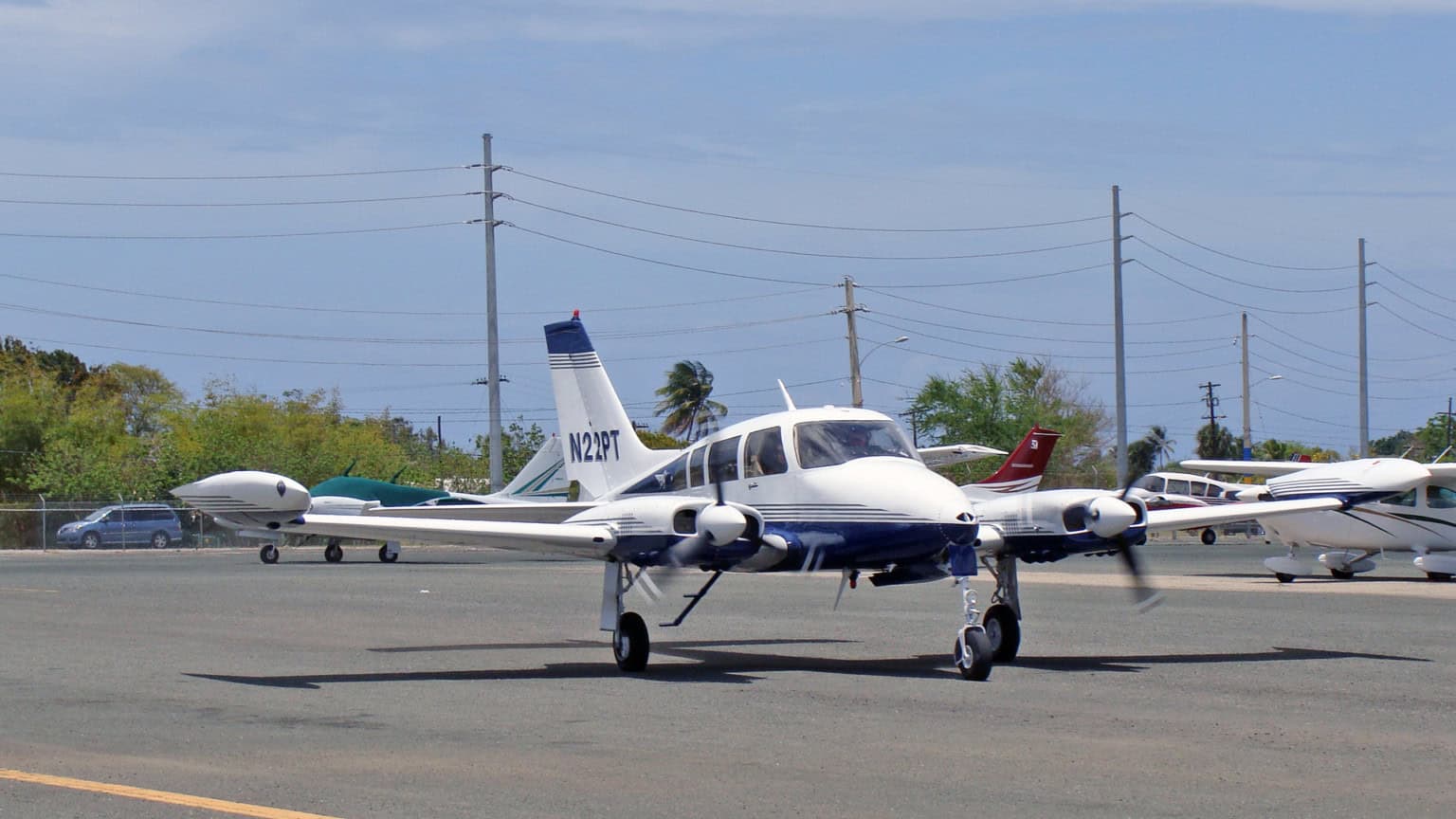
The Cessna 320 Skyknight was introduced in the early 1960s as a pressurized piston twin. Designed for business and personal travel, it offered cabin comfort and higher cruise altitudes. The aircraft became a refined evolution of the Cessna 310 series.
The latest aviation news and stories sent to your inbox.
Cessna 320 Skyknight — pressurized twin-engine piston aircraftThe 320 first flew in 1961 and entered service shortly thereafter. It retained the distinctive tip tanks and low-wing configuration of earlier Cessna twins while adding pressurization. Structural reinforcements supported its higher operating ceiling.Two Continental piston engines, each producing approximately 285 horsepower, powered the Skyknight. Cruise speed approached 240 knots (444 km/h). Maximum takeoff weight exceeded 6,000 pounds (2,722 kg), supporting executive travel configurations.The 320 provided improved comfort compared with non-pressurized piston twins. Production ended in the late 1960s, but many aircraft remain active. It represents Cessna’s peak development of pressurized piston twin designs.
Live Fleet Activity (C320)
Fetching live data…


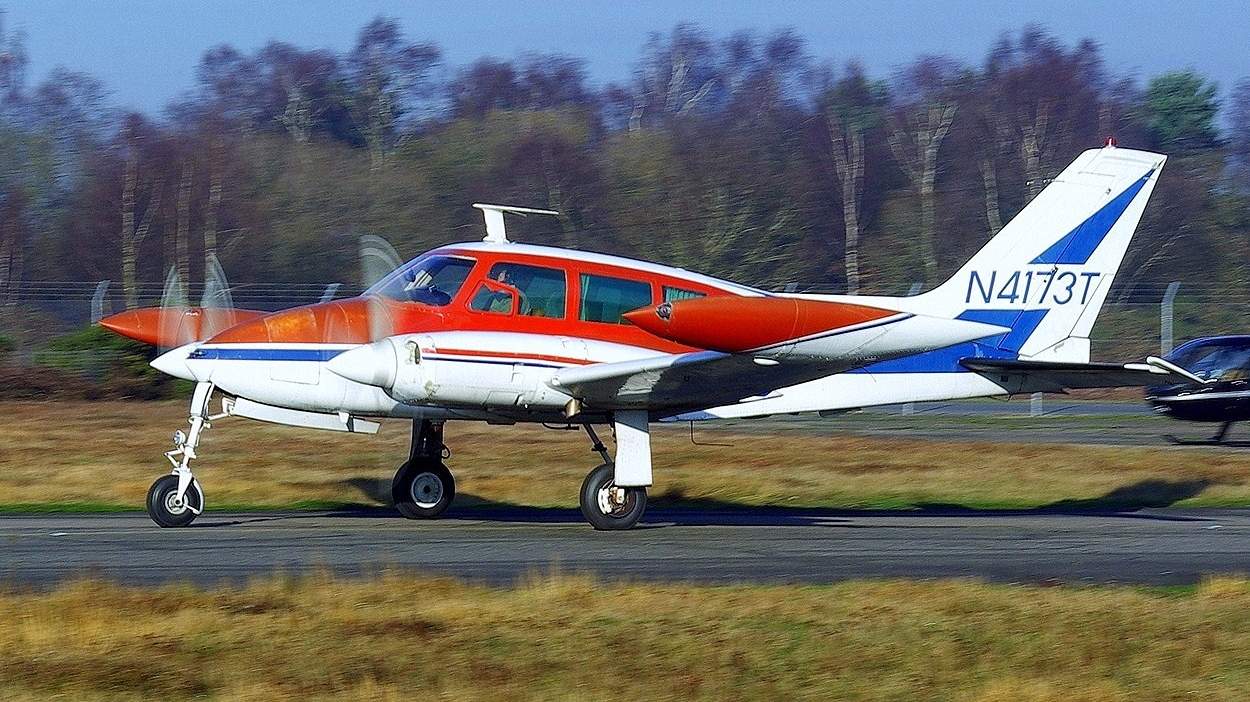

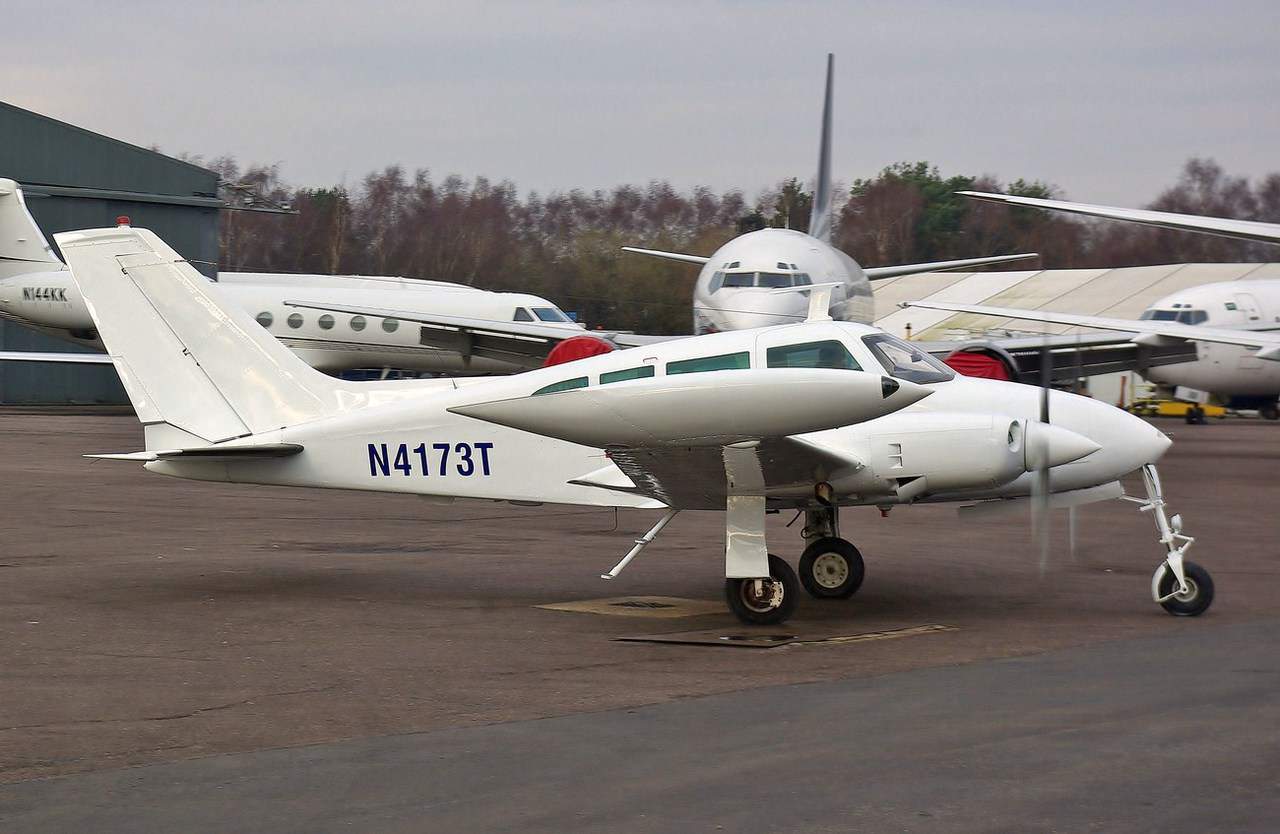


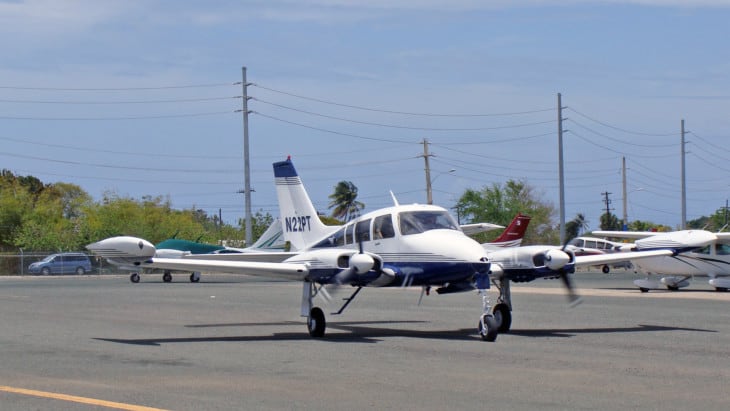
The 320 Skynight was developed out of efforts of Cessna to produce a heavier variant of the 310 model. The initial Skynight features supercharged engines for better performance. In 1963, the canted wingtip tanks were incorporated. In 1966, engine power was increased from 260 to 285 horsepower.
The later models had extended engine nacelles for added baggage capacity, a roomier cabin with a larger glass area, and other modifications. Despite these added features, the aircraft’s gross weight is just 100 pounds heavier compared to the Cessna 310. Also, it features a cruise speed approximately 17% greater due to its capability to fly at higher altitudes with good performance.
From 1963 to 1968, the Skynight introduced several variants starting with the 320A with canted fuel tanks, 47 of this type were built. The 320B has nacelle baggage lockers; 62 aircraft were built. The 320C features a longer cabin and an optional seventh seat; 73 of this type were built.
The 320D Executive is equipped with reshaped rear windows and TSIO-520-B engines; 130 were built. The 320E Executive has a pointed nose, single-piece windshield, improved landing gear, and an increase in take-off weight; 110 were built. The 320F Executive is the last version that features solid-state voltage regulators, double-pane windows, and a soundproofed configuration; 45 were built.
The Skynight has a maximum cruising speed of 240 knots and a range of 740 nautical miles. It can fly up to 28,100 feet and has a climb rate of 1,820 feet per minute. It has a takeoff and landing distance of 414 meters and 521 meters respectively.
The maximum take-off weight is 2263 kg while the maximum landing weight is 1,446 kg. It has a maximum payload of 816 kg and a fuel capacity of 133 US gal.
The aircraft could carry a maximum of six persons on board. It has an exterior length of 8.9 meters, a height of 2.18 meters, and a fuselage diameter of 1.3 meters. The wheelbase is 3.15 meters and the wingspan is 11.18 meters. It has a cabin length of 2.6 meters, width, and height of 1.2 meters.
Sources and references used for research and fact-checking.