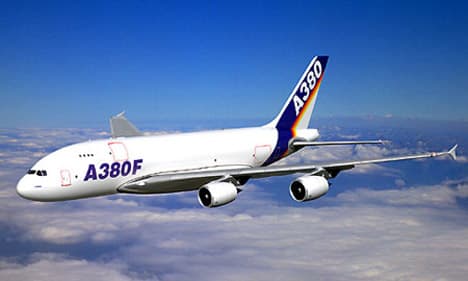
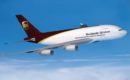
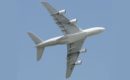
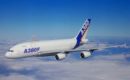
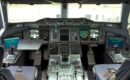
When Airbus launched the A380 program, the world expected not only a passenger giant but a cargo titan as well. The Airbus A380 Cargo (A380F) was envisioned as the largest freighter ever built — a superjumbo designed to transform global logistics. But despite firm orders, it never made it past the planning stage.
Airbus A380 Cargo — The Unbuilt Freighter Version of the Superjumbo
The Airbus A380 Cargo, officially designated the A380F, was a proposed dedicated freighter variant of the A380 family. Announced alongside the passenger A380-800 in the early 2000s, the A380F promised unprecedented payload capacity, aiming to compete directly with the Boeing 747-400F and the later 747-8F.
The design called for a reinforced fuselage, strengthened floor beams, and a large side cargo door on the main deck. The aircraft would have offered a payload of roughly 150 metric tons, exceeding the lifting capability of any existing commercial freighter at the time. Airbus projected a maximum range of over 10,000 km (6,200 miles) with that load, depending on configuration.
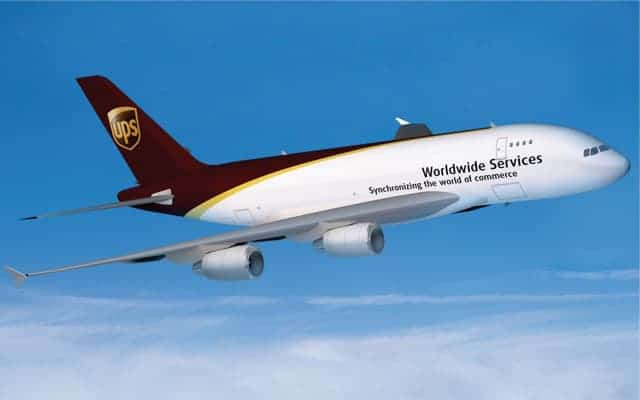
Major logistics companies, including FedEx and UPS, placed early orders. FedEx alone signed for ten aircraft, anticipating a leap in long-haul freight efficiency. However, development delays, shifting priorities, and production bottlenecks in the passenger A380 program forced Airbus to pause — and eventually halt — work on the freighter variant.
By 2007, both FedEx and UPS had canceled their orders, switching to more flexible, twin-engine fleets like the Boeing 777F. With no remaining customers, Airbus officially suspended the A380F program, and the aircraft never entered production.
Although the A380 Cargo never materialized, its concept remains a striking “what-if” in aviation history — a superjumbo freighter that could have rewritten global logistics but was ultimately grounded by market realities and the complexities of producing the world’s largest passenger jet.
Want More of This?
We'll send you our latest and best content straight to your inbox