Private Single Engine
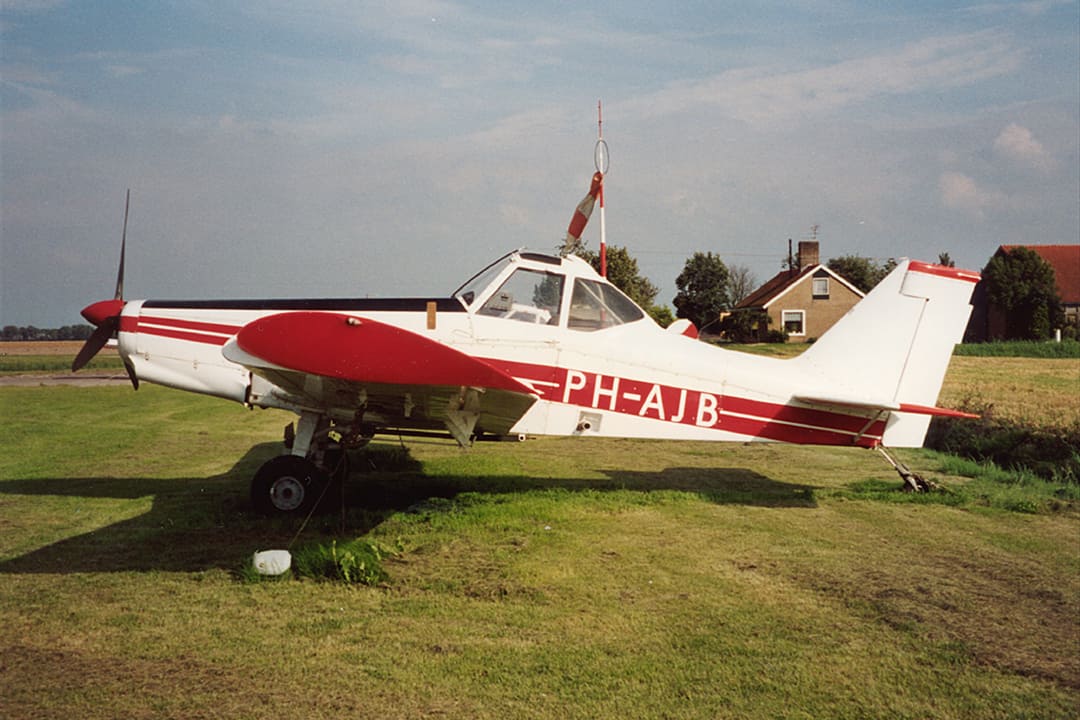
The Piper PA-36 Pawnee Brave was developed as a purpose-built agricultural aircraft. Introduced in the 1970s, it supported crop dusting and aerial application work. The design emphasized payload and durability.
The latest aviation news and stories sent to your inbox.
Piper PA-36 Pawnee Brave — agricultural utility aircraftThe Pawnee Brave entered service in 1973 as an evolution of earlier agricultural models. It featured a reinforced airframe and large hopper for chemical payload. The aircraft was optimized for low-level operations.Piston engines producing approximately 300 horsepower powered early variants. Cruise speed was around 120 knots (222 km/h). Maximum takeoff weight exceeded 4,000 pounds (1,814 kg) depending on configuration.The PA-36 became widely used in agricultural aviation. Its rugged design supported demanding field operations. Production concluded in the 1980s.
Live Fleet Activity (PA36)
Fetching live data…


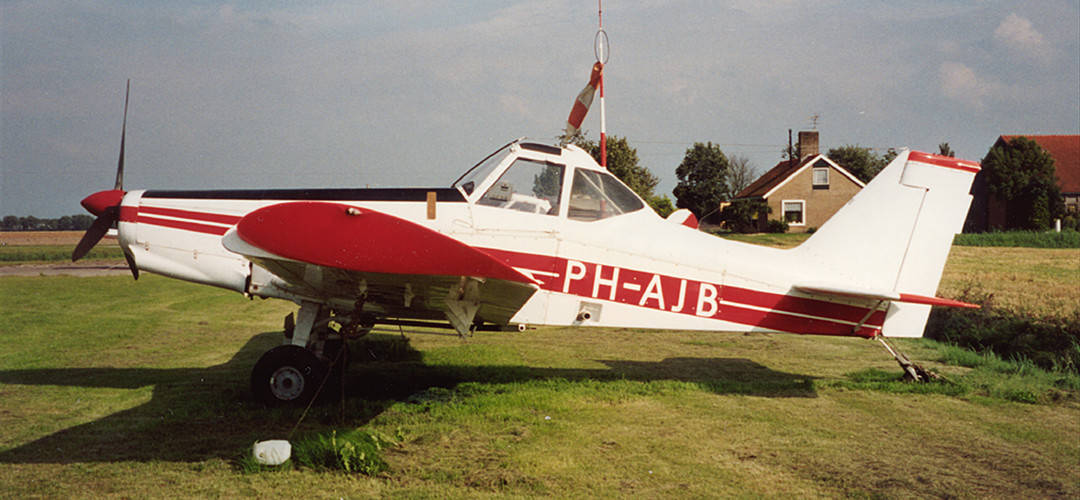


On December 5, 1969, the prototype designated as PA-36 Pawnee II took to the air for the first time. It was powered by a 260 horsepower Lycoming engine. In 1972, the Piper PA-36 was initially introduced as an improved version of the PA-25 Pawnee fitted with an uprated Continental Tiara 6-285 horizontally-opposed engine of 285 horsepower.
It featured a new wing with detachable leading edges, enhanced ventilation system and heating system, as well as Safoam anti-sloshing compounds, and a 0.85 cubic meter enlarged standard hopper.
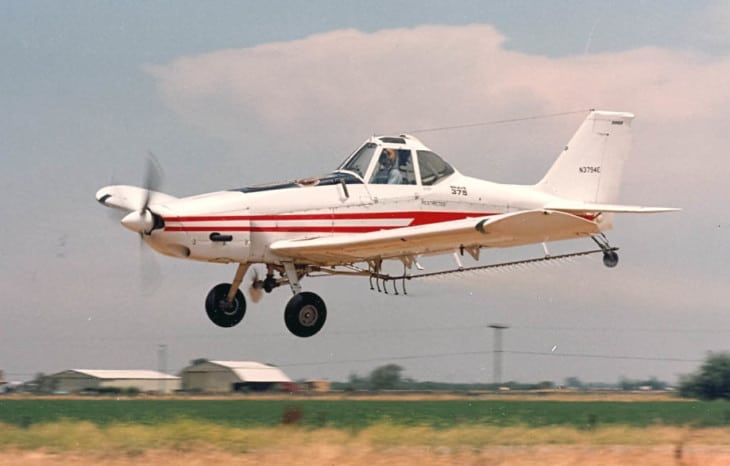
In 1973, the PA-36 entered into service. The initial version of the aircraft was designated as the PA-36 Pawnee Brave 285. In 1977, a newer variant designated as PA-36 Pawnee Brave 300 was built. It was powered by a normally-aspirated Lycoming IO-540-K1G5 engine rated at 300 horsepower. In 1978, the PA-36 Brave 375 was built.
It was powered by a Lycoming IO-720-D1CD horizontally-opposed eight-cylinder piston engine rated at 375 horsepower. In 1982, two versions were built designated as the New Brave 375 and New Brave 400. These were WTA-built versions powered by 375 horsepower and 400 horsepower engines, respectively. In 1987, a total of 150 New Braves were built.
The Piper PA-36 Pawnee Brave is a single-seat agricultural aircraft with an external length of 8.38 meters, an external height of 1.85 meters, and a fuselage diameter of 1.1 meters. It featured a low wing with a wingspan of 11.82 meters and a wing area of 20.96 square meters. It has a tail height of 2.29 meters and a wheelbase of 5.9 meters. The aircraft has an empty weight of 1,118 kg, a maximum takeoff weight of 2,177 kg, and a maximum payload of 1,000 kg. The usable fuel capacity is 86 US gal.
The aircraft has a maximum speed of 123 knots and a cruise speed of 118 knots. The travel range is 393 nautical miles. It can fly up to 15,000 feet and can climb at a rate of 920 feet per minute. The takeoff and landing distances are 460 meters and 440 meters, respectively.
Sources and references used for research and fact-checking.