Private Single Engine
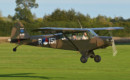
The Piper PA-12 Super Cruiser was introduced shortly after World War II as a larger derivative of earlier Piper taildraggers. Designed for family and utility flying, it added a third seat and improved performance. The aircraft became popular among bush operators.

The latest aviation news and stories sent to your inbox.
Piper PA-12 Super Cruiser — three-seat tailwheel aircraftThe PA-12 first flew in 1946 and entered service the same year. It retained the high-wing, fabric-covered configuration typical of Piper’s postwar designs. Structural improvements and increased power distinguished it from earlier two-seat models.Most PA-12 aircraft were powered by a Lycoming piston engine producing approximately 115 horsepower. Cruise speed typically approached 105 knots (194 km/h). Maximum takeoff weight exceeded 1,750 pounds (794 kg), supporting modest utility loads.The Super Cruiser became widely used in remote regions where short-field capability was essential. Its durability and simplicity made it attractive for bush flying. Many aircraft remain in operation decades after production ended.
Live Fleet Activity (PA12)
Fetching live data…
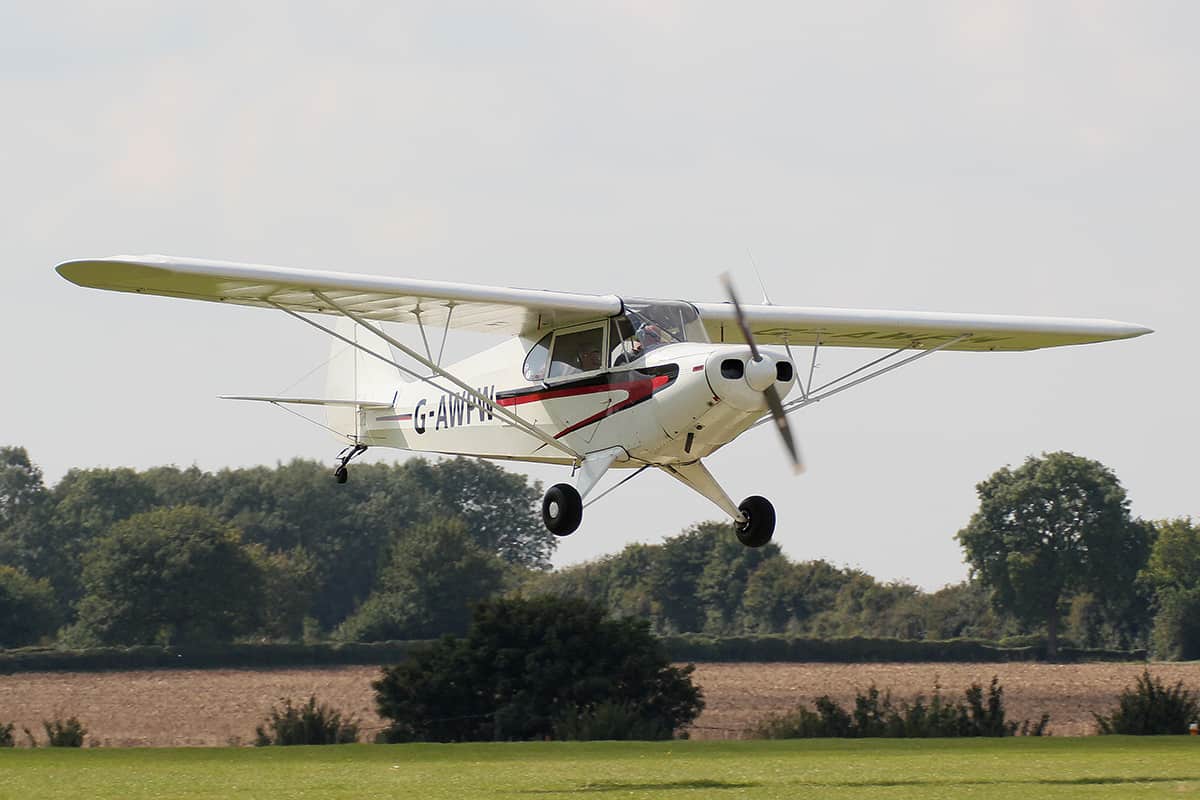


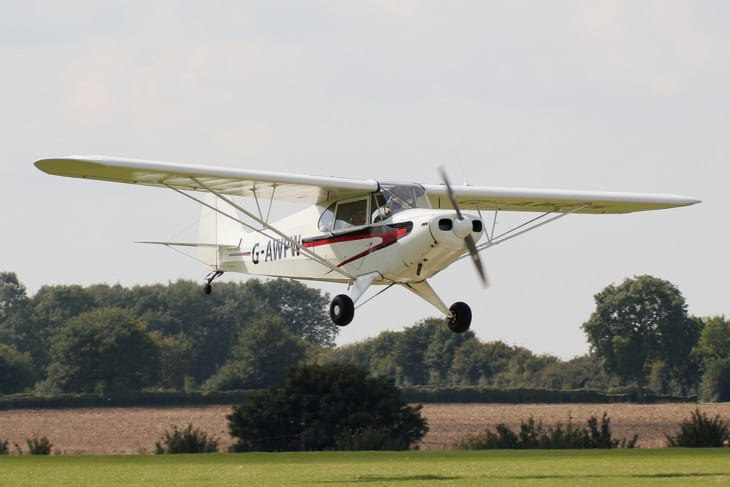
The Piper PA-12 Super Cruiser was derived from the J-5C Cub Cruiser after the manufacturing company abolished the J-designation system and replaced it with a newer PA-system. On October 29, 1945, the PA-12 prototype designated as NX41561 took to the air for the first time from Lock Haven, Pennsylvania.
It was a J-5C conversion. On February 22, 1946, the first production aircraft took its maiden flight and production of PA-12 carried on until March 18, 1948. The PA-12 can be fitted with wheels, as well as skis and floats to operate from snow, ice, and water. It can also be used as an agricultural aircraft.
In 1947, two Super Cruisers labeled as City of Washington and City of Angels roamed throughout the globe. The most unfavorable mechanical failure that the PA-12s experienced was a broken tailwheel. The Piper PA-12s were used by different operators in several countries in Europe as well as in Canada, and few aircraft are still operated by private owners in North America. A total of 3,760 Pa-12s were produced.
The Piper PA-12 Super Cruiser has an external length of 6.96 meters, an external height of 2.08 meters, and a fuselage diameter of 0.9 meters. It can accommodate up to two passengers on board. The high wing has a wingspan of 10.81 meters. It has an empty weight of 432 kg and a maximum payload of 259 kg. The maximum takeoff and landing weights are both 795 kg and the fuel capacity is 38 gallons.
The aircraft is powered by a single Lycoming O-235-C engine. It is a 4-cylinder air-cooled horizontally-opposed piston engine that produces a maximum thrust of 108 horsepower. The PA-12 has a cruise speed of 91 knots and a stall speed of 42 knots. It has a travel range of 521 nautical miles and can climb up to 12,600 feet. The rate of climb is 600 feet per minute. It has a minimum take-off run of 220 meters and a minimum landing roll of 143 meters.
Sources and references used for research and fact-checking.