Private Single Engine
The Piper PA-28 Warrior is the 160-horsepower Cherokee that became one of the most common flight-school trainers in the world, and it is no longer in production.
Updated: by Tim de Vries

The latest aviation news and stories sent to your inbox.
The Piper PA-28 Warrior is a four-seat, low-wing, fixed-gear trainer that grew out of the Cherokee family. The first Warrior arrived in 1974, and the Warrior II followed in 1977. The Warrior III, the last version, was built until the series quietly ended in the 2010s.
Live Fleet Activity (P28A)
Fetching live data…

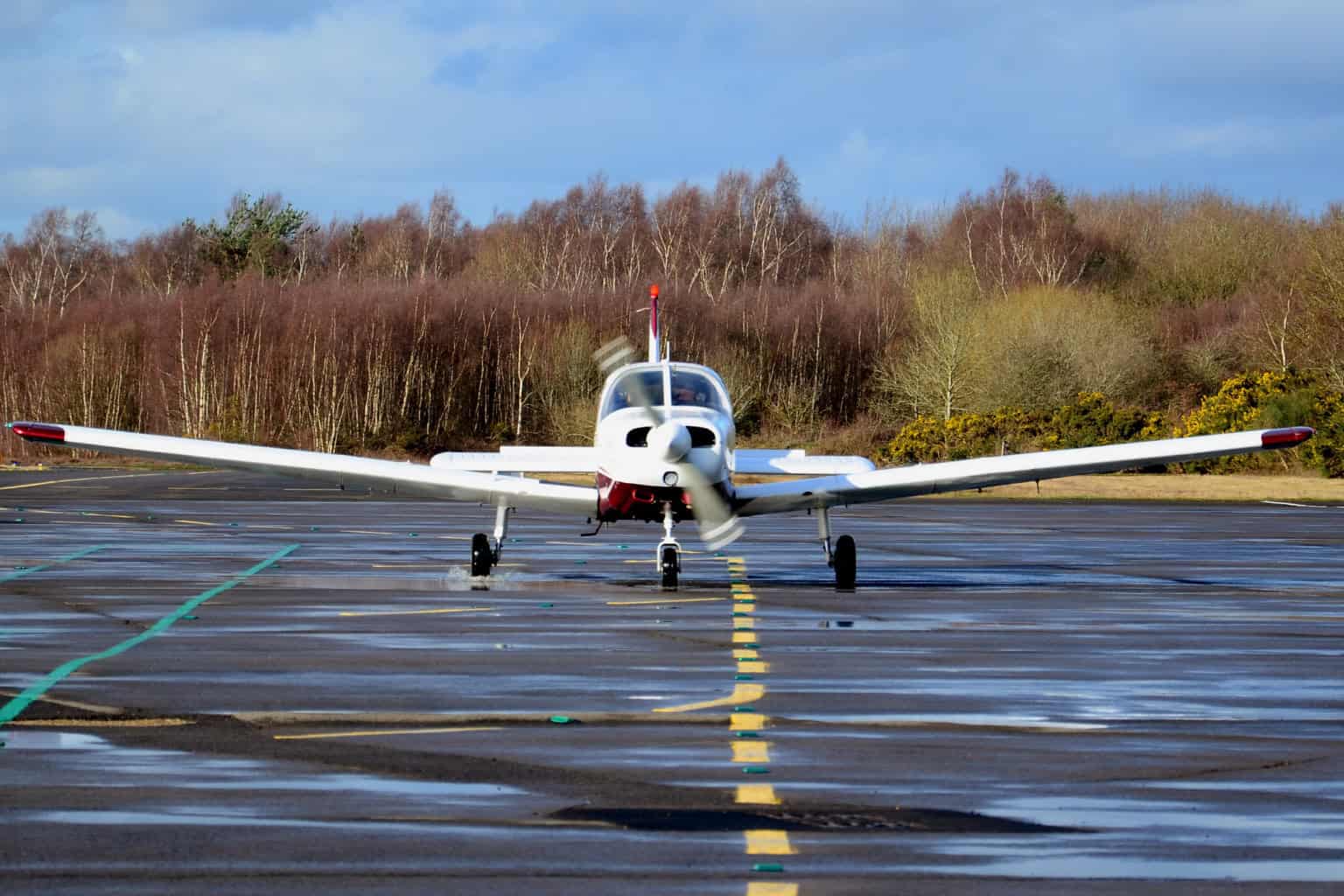


The Piper PA-28 Warrior is a four-seat, single-engine, low-wing airplane with fixed tricycle landing gear. It is the Cherokee family’s answer to the Cessna 172, and it was built mainly for flight schools and private owners who wanted something forgiving and cheap to run.
The full specification table for the aircraft is on this page. The sections below explain where the airplane came from and what the numbers mean in practice.
Piper introduced the first Warrior in 1974, with a new semi-tapered wing that is two feet wider in span than earlier Cherokees. That wing, with its washout, keeps the ailerons effective close to the stall, which is a big part of the Warrior’s gentle reputation.
The pitch control is an all-moving stabilator, which AOPA says Piper chose mainly because it was cheaper to build.
The original Warrior used a 150 hp Lycoming. In 1977 Piper moved to the PA-28-161 with 10 more horsepower, and from the 1979 model year the “Cherokee” name was dropped and the airplane was sold as the Warrior II.
The Warrior II uses the 160 hp Lycoming O-320 with improved wheel fairings, which is where its speed gain came from. The bigger engine also wants 100-octane avgas, where the original Warrior ran on 80.
The first PA-28-161 was certificated at a gross weight of 2,325 lb (1,055 kg). Piper raised it on July 1, 1982, and again certificated the improved Warrior III at the higher weight on July 1, 1994.
The Warrior III is the last version. Its structural cruise and never-exceed speeds are a few knots higher than the Warrior II’s, and AOPA lists a heavier standard empty weight than its predecessors.
The airplane is still listed as PA-28-161 in the ICAO type database, which files it under the shared designator P28A with the other Cherokee-series types.
Wikipedia counts 2,932 Warrior IIs from 1977 to the 1987 model year, with 680 in 1978 alone. AOPA puts Warrior II sales higher, at 3,374, and 1,898 for the original Warrior through 1977.
Wikipedia’s total includes kits for licensees in Colombia, Chile and Argentina. Treat every count as approximate.

No. Piper’s current trainer lineup lists the Archer and Seminole, not the Warrior, and VREF says the Warrior series is no longer in production.
The end date is not firmly documented. VREF gives the Warrior III a 1995 to 2017 run, while a 2013 Aviation Consumer guide still described it as in production, so the type appears to have left the price list quietly rather than with an announcement. The panel above shows the span as 1974 to 2017.
The panel carries two speeds. The higher is the advertised 75 percent power cruise, which some owners say a loaded airplane does not reach. The lower is the 65 percent power cruise, which also stretches the range.
Published service ceilings vary from one model year and source to the next, so treat the ceiling in the panel as a planning figure rather than a performance guarantee.
Fuel is carried in two wing tanks, and the panel shows the total. Plane & Pilot lists a slightly lower usable quantity for a 1981 airplane, so the operating handbook for the specific airplane is the figure to plan with.

The Warrior is certificated in the normal and utility categories. Aerobatics, including spins, are prohibited in the normal category.
AOPA credits the wing washout and the predictable handling for the type’s forgiving character, which is what a flight school wants. It is not fast, and AOPA describes the 150 hp original as slow to climb.

From 1988 Piper sold a stripped-down Warrior II called the Cadet, introduced to replace the PA-38 Tomahawk as a trainer. The bigger-engined Archer shares the same basic airframe, and our Piper Archer DX page covers the current version.
For the wider rivalry between the two companies, see Cessna vs Piper.
The Archer is the bigger-engined sibling of the Warrior in the same PA-28 family, using the same basic airframe with more power. The Warrior is the 160 hp airplane; the Archer is the model Piper kept building after the Warrior left the lineup.
The 1964 PA-28-140 had a 150 hp Lycoming O-320-E2A and a gross weight of 2,150 lb, according to Wikipedia. The Warrior is a later, heavier development with a wider wing.
The service ceiling shown in the panel on this page is 14,000 ft · 4,300 m. AOPA lists lower figures for some model years, so the answer depends on the version and the day.
No. Piper no longer lists it, and the Warrior III, the last version, is generally dated to the late 1990s through about 2017.
The 160 hp versions use the four-cylinder, carbureted Lycoming O-320 with a fixed-pitch propeller. The original Warrior used a lower-rated version of the same engine family.
Sources and references used for research and fact-checking.