


Table of Contents
A bush plane is a small, rugged airplane built to reach places with no real runway: gravel bars, lakes, snowfields and short dirt strips. The most famous is the de Havilland Canada DHC-2 Beaver, a 1947 Canadian design that is still in commercial service today.
Bush planes come in five main types: light taildraggers, four-to-six-seat utility haulers, the big Canadian radial-engine classics, kit-built STOL airplanes, and turboprop utility aircraft. What unites them is short takeoff and landing performance, a high wing, and landing gear that can swap wheels for tundra tires, floats or skis.
Below are 14 bush planes grouped by type, with the specs that matter in the backcountry, as of September 2026. For the wider family they belong to, see our guide to the different types of airplanes.
| Aircraft | Type | Capacity | Engine | Still built? |
|---|---|---|---|---|
| Piper PA-18 Super Cub | Light taildragger | Pilot + 1 | 95 to 150 hp piston | No (1949 to 1994) |
| CubCrafters Carbon Cub FX-3 | Light taildragger | Pilot + 1 | 186 hp piston | Yes |
| Aviat Husky | Light taildragger | Pilot + 1 | 180 to 200 hp piston | Yes |
| Cessna 180 / 185 Skywagon | Utility hauler | Pilot + 3 to 5 | 225 to 300 hp piston | No (1953 to 1985) |
| Maule M-7 | Utility hauler | Pilot + 4 | 235 hp piston (M-7-235) | Yes |
| Helio Courier | Utility hauler | Pilot + 5 | 295 hp piston | Original run ended 1974 |
| de Havilland Canada DHC-2 Beaver | Canadian classic | Pilot + 6 | 450 hp radial | No (1947 to 1967) |
| de Havilland Canada DHC-3 Otter | Canadian classic | Pilot + 10 to 11 | 600 hp radial | No (1951 to 1967) |
| Zenith STOL CH 701 / CH 750 | Kit-built STOL | Pilot + 1 | 64 to 100 hp piston (CH 701) | Yes, as kits |
| Barrows Bearhawk | Kit-built STOL | Pilot + 3 | 150 to 260 hp piston | Yes, as kits |
| Pilatus PC-6 Turbo Porter | Turboprop utility | Pilot + up to 10 | 550 hp turboprop | No (1959 to 2022) |
| Daher Kodiak 100 | Turboprop utility | Pilot + 9 | 750 shp turboprop | Yes |
| Cessna 208 Caravan | Turboprop utility | Pilot + 9 (typical) | Up to 867 shp turboprop | Yes |
| de Havilland Canada DHC-6 Twin Otter | Turboprop utility | 18 to 20 passengers | 2 x PT6A turboprops | Yes |
How this list works
There is no single best bush plane, because the job decides. A two-seat Cub suits a gravel bar, a Beaver suits a fishing lodge on a lake, and a Caravan suits a scheduled run to a remote village. So this list groups the aircraft by type and gives each one the specs that matter off-airport: capacity, power, short-field numbers and whether you can still buy one new.
What Is a Bush Plane?
A bush plane is a general aviation aircraft that flies passengers and freight to remote, undeveloped areas where roads do not reach. “The bush” was originally a Canadian and Alaskan term for that roadless country, and the flying that serves it is still called bush flying.
Bush flying began in Canada in 1919. The Laurentide paper company hired Stuart Graham, a former Royal Naval Air Service pilot, to fly forest-fire patrols over Quebec’s St. Maurice River valley in two war-surplus Curtiss HS-2L flying boats.
By 1924 Ontario had set up its Provincial Air Service, devoted almost entirely to forestry work. The Noorduyn Norseman became the first Canadian-designed bush plane, and de Havilland Canada’s Beaver and Otter followed after the Second World War.
What makes a plane a bush plane
No rulebook defines one, but the same features keep showing up because the terrain demands them:
- A high wing. It keeps the wing clear of stumps, rocks and docks, makes loading easier and gives the pilot a clear view of the ground.
- Tailwheel landing gear. A taildragger is lighter than a tricycle-gear design and puts less stress on the airframe over rough ground.
- Short takeoff and landing (STOL) performance. Big flaps, high-lift wings and low stall speeds let the airplane use strips a few hundred feet long.
- Tundra tires. Oversized, low-pressure tires roll over gravel, sand and tussocks that would stop a normal wheel.
- Floats and skis. Most bush types can swap wheels for floats or skis, and wheel skis let one airplane use both snow and a hard runway.
Floats turn a bush plane into a floatplane, which is not quite the same thing as a flying boat. We explain that split in seaplanes vs floatplanes.
Type 1: Light Taildraggers
These are the two-seat, fabric-and-tube airplanes most people picture when they hear “bush plane.” They carry little, but they land slower and shorter than almost anything else with wings.
1. Piper PA-18 Super Cub

The Piper PA-18 Super Cub is the reference light bush plane. Piper built it from 1949 to 1983 and again from 1988 to 1994, and more than 10,000 left the factory in roughly 40 years.
The common PA-18-150 has a 150 hp Lycoming O-320, seats two in tandem and stalls at 43 mph (69 km/h) with flaps down. Piper quoted a takeoff distance of 500 feet to clear a 50-foot obstacle.
In Alaska, Super Cubs often wear bush wheels, the big balloon tires that let them land on unprepared ground. The Cub and Cessna’s Skywagons have been rivals for decades, a story we tell in Cessna vs Piper.
2. CubCrafters Carbon Cub
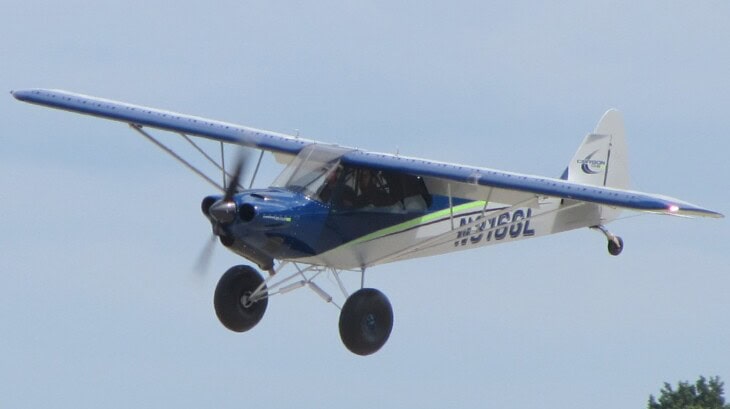
The Carbon Cub is the Super Cub idea rebuilt with modern materials. CubCrafters developed it from its Sport Cub, which drew on the classic Piper Cub, and used carbon fiber parts to save weight.
The current FX-3 has a 186 hp CubCrafters CC363i engine, a 2,000 lb (907 kg) gross weight and a 977 lb (443 kg) useful load. It stalls at 37 mph (60 km/h) and cruises at 135 mph (217 km/h) at 75% power.
It is not a normal factory airplane. FX buyers spend five days building it with CubCrafters technicians, then two more days on final assembly, so it registers as experimental amateur-built. A kit version, the EX-3, and a light-sport Carbon Cub SS exist too.
A 90-foot takeoff
CubCrafters quotes a demonstrated takeoff distance of 90 feet for the Carbon Cub FX-3, and a 155-foot landing. That is less than a third of the length of a football field.
3. Aviat Husky

The Aviat Husky is a clean-sheet 1980s design that is still in production in Afton, Wyoming. It first flew in 1986, entered service in 1987, and more than 650 have been built.
Like the Cub, it seats two in tandem, but it uses a 180 hp Lycoming O-360 or an optional 200 hp IO-360. It cruises at about 140 mph (230 km/h) and stalls at 53 mph (85 km/h) with flaps down and power off.
Type 2: Four-to-Six-Seat Utility Haulers
Step up from two seats and you get the airplanes that do most of the real work: hauling hunters, fishermen, freight and mail into short strips and onto lakes.
4. Cessna 180 and 185 Skywagon

The Cessna 180 first flew on May 26, 1952, and Cessna built 6,193 of them between 1953 and 1981. It seats four to six and uses a 225 or 230 hp Continental O-470.
The Cessna 185 Skywagon followed in 1960 with a 300 hp Continental IO-520-D and a 3,350 lb (1,520 kg) maximum takeoff weight. More than 4,400 were built before production ended in 1985.
The 185 is a high-wing taildragger, and it is widely used for bush flying to remote strips, lakes and snowfields, mainly in Canada and Alaska. Military versions, the U-17A and U-17B, went to many countries through the U.S. Military Assistance Program.
5. Maule M-7
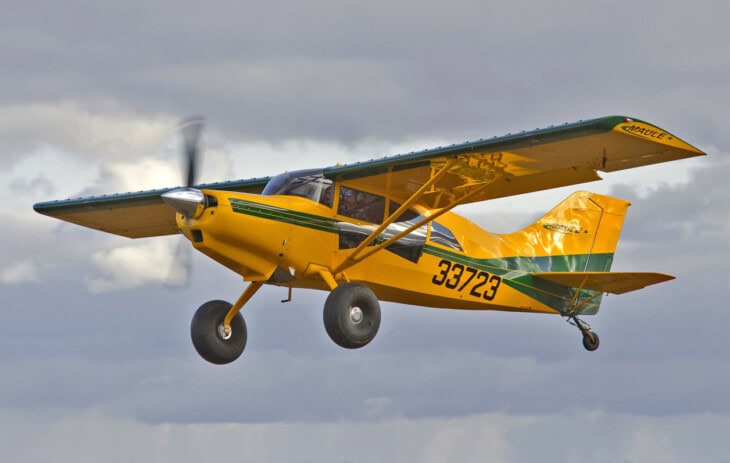
Maule is a family company in Moultrie, Georgia, founded by B.D. and June Maule in 1941, and it still sells new airplanes. The M-7 first flew in 1984 and can be ordered with a tailwheel or tricycle gear.
The M-7-235 uses a 235 hp Lycoming O-540 and seats a pilot and four passengers, with two seats up front and a bench behind. It grosses 2,500 lb (1,134 kg), cruises at 147 mph (237 km/h) and stalls at 49 mph (79 km/h) with flaps down.
6. Helio Courier
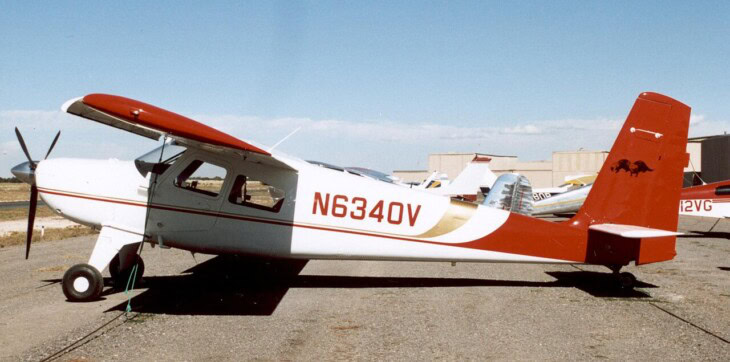
The Helio Courier is the slow-flight specialist of the group. Its wing carries four leading-edge slats that deploy automatically at around 55 to 60 mph (89 to 97 km/h), plus flaps along 74% of the span.
The result is a minimum controllable speed of just 27 to 28 mph (43 to 45 km/h) on the U-10D Super Courier, which seats a pilot and five passengers behind a 295 hp Lycoming GO-480. About 500 were built in Pittsburg, Kansas, between 1954 and 1974.
The U.S. Air Force and Army flew more than 120 as the U-10, and the CIA’s Air America used them in Southeast Asia. Today the main civil users are missionaries flying into rough jungle strips, and a company called Helio Alaska, formed in 2019, has set out to build new ones.
Type 3: The Canadian Classics
De Havilland Canada designed two airplanes after the Second World War specifically for bush work, and both are still flying more than half a century after the last one was built.
7. de Havilland Canada DHC-2 Beaver
The DHC-2 Beaver is the bush plane. Russell Bannock flew it for the first time on August 16, 1947, at Downsview, Ontario, and de Havilland Canada built 1,657 of them before production ended in 1967.

It seats a pilot and six passengers behind a 450 hp Pratt & Whitney R-985 Wasp Jr. radial engine and has a 2,100 lb (953 kg) useful load. It cruises at 143 mph (230 km/h) and has a 48-foot (14.6 m) wingspan.
The Beaver has been named one of the top ten Canadian engineering achievements. A 680 hp PT6A-powered Turbo Beaver was also built, and the type certificate now sits with the new De Havilland Canada.
8. de Havilland Canada DHC-3 Otter
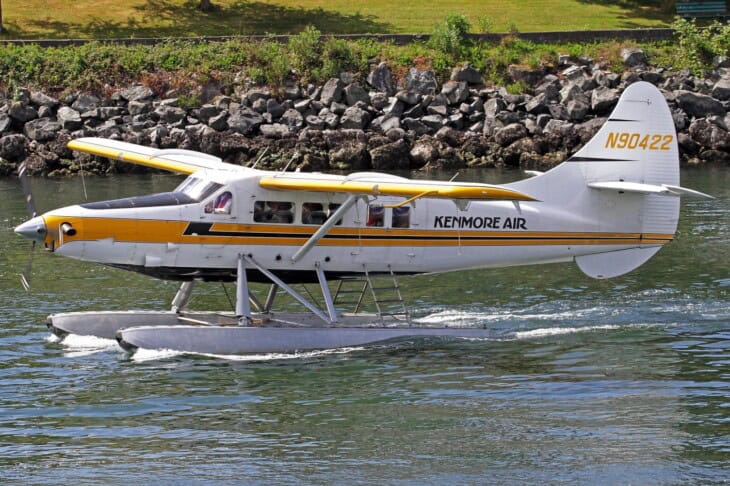
The Otter is the Beaver’s bigger sibling. It first flew on December 12, 1951, and 466 were built by 1967, each with a 600 hp Pratt & Whitney R-1340 radial and room for 10 or 11 passengers.
It weighs up to 8,000 lb (3,629 kg) at takeoff, cruises at 138 mph (222 km/h) and needs about 1,310 feet to take off. Many Otters have since been converted to turbine power with a PT6A, Walter 601 or Honeywell TPE331 engine.
Type 4: Kit-Built STOL Planes
Several of the best-known modern bush designs are sold as kits for owners to build at home. If the idea is new to you, start with what a kit aircraft is and how it is certified.
9. Zenith STOL CH 701 and CH 750
Canadian engineer Chris Heintz designed the two-seat CH 701, which first flew in 1986 and is still in production. By December 2011 about 870 CH 701s had been built, along with 45 of the roomier CH 750 that followed in 2008.

With an 80 hp Rotax 912, the CH 701 weighs 580 lb (263 kg) empty, grosses 1,100 lb (499 kg) and stalls at 30 mph (48 km/h). It is no speed machine, cruising at about 80 mph (129 km/h), but India’s Air Force still ordered 85 of them.
10. Barrows Bearhawk
Bob Barrows designed the Bearhawk in Oklahoma in the early 1990s as a four-seat bush plane for home builders. It comes as a kit or as plans, and the supplied kit takes about 1,200 hours to build.

Builders fit engines from 150 to 260 hp. The four-seater grosses 2,700 lb (1,225 kg), cruises at 155 mph (249 km/h) and stalls at 40 mph (64 km/h), and there are two-seat Patrol and Companion versions too.
Type 5: Turboprop Utility Bush Planes
The turboprops are the heavy end of bush aviation. They carry ten or more passengers, or more than a ton of payload, into the same kind of short, rough strips.
11. Pilatus PC-6 Porter

The Swiss-built Porter first flew on May 4, 1959, and the turboprop PC-6 Turbo Porter followed in 1961. Pilatus built 604 before production ended.
It carries up to ten passengers or a 2,200 lb (998 kg) payload on a PT6A-27 derated to 550 hp. With 2,646 lb (1,200 kg) aboard it needs just 640 feet to take off and 427 feet to land.
The highest landing on record
A PC-6 holds the world record for the highest landing by a fixed-wing aircraft: 18,865 feet (5,750 m), on the Dhaulagiri glacier in Nepal.
12. Daher Kodiak
Quest Aircraft designed the Kodiak for mission groups such as Mission Aviation Fellowship, which fly into remote strips in the developing world. It first flew on October 16, 2004, and was certified in May 2007. Daher bought Quest in 2019.

The Kodiak 100 carries ten people on a 750 hp PT6A-34, weighs up to 7,255 lb (3,291 kg) and takes off in 934 feet. A stretched Kodiak 900 with a 900 shp PT6A-140A now sits alongside it.
Daher delivered 25 Kodiaks in 2025 from Sandpoint, Idaho, which brought the total to 390 by December 31, 2025.
13. Cessna 208 Caravan
The Cessna 208 Caravan first flew on December 9, 1982, and Cessna had delivered 3,000 by 2022. It usually seats nine passengers, and up to 14 with a waiver.
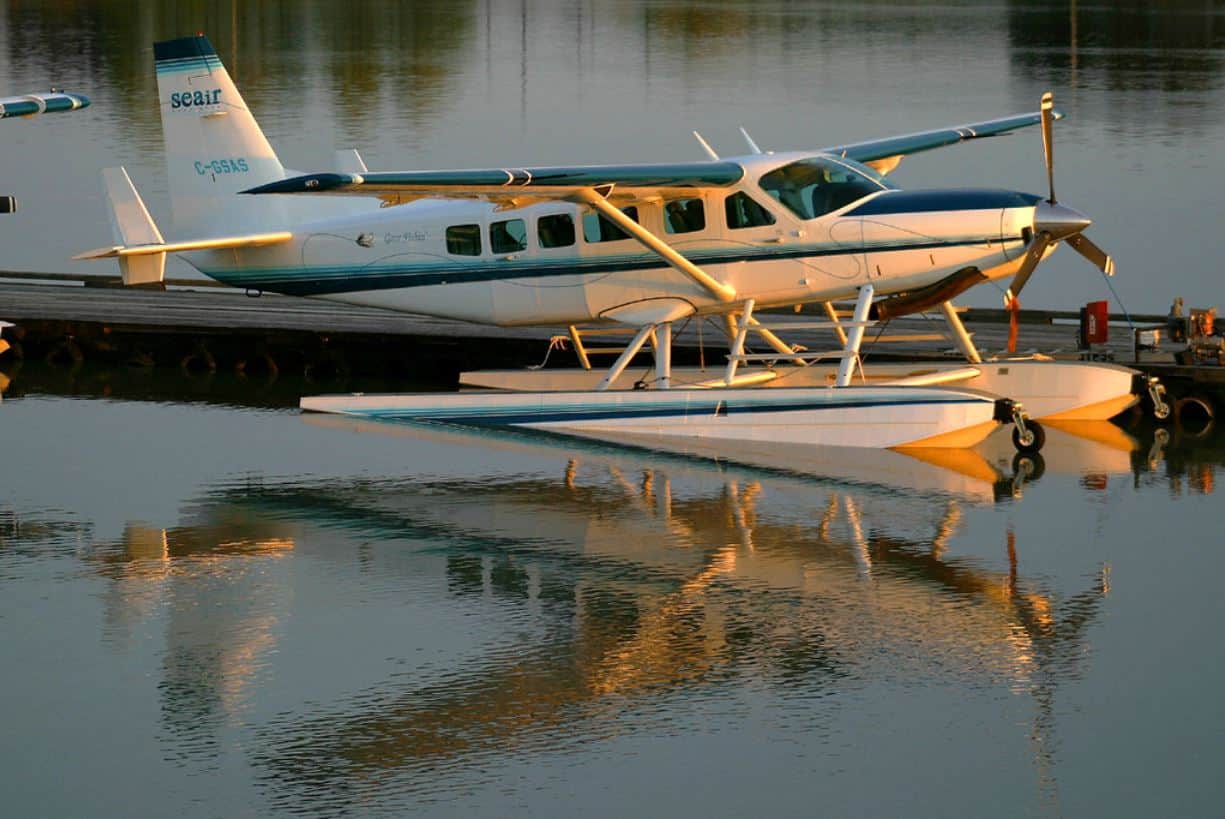
The latest Grand Caravan EX uses an 867 hp PT6A-140. The Caravan Amphibian rides on Wipaire floats with retractable wheels, and FedEx alone operates 239 Caravans.
14. de Havilland Canada DHC-6 Twin Otter
The Twin Otter is the biggest airplane on this list, a twin turboprop with a 65-foot (19.8 m) wingspan that seats 18 to 20 passengers. It first flew on May 20, 1965, and can take off in about 1,200 feet.

De Havilland Canada built 844 between 1965 and 1988, and Viking restarted production in 2008. By March 2026 more than 1,000 had been delivered, and the new De Havilland Canada now builds a Classic 300-G version.
Its best-known rescue came in April 2001, when a Twin Otter made the first winter flight to the Amundsen-Scott South Pole Station.
Are Bush Planes Easy to Fly?
In the air, mostly yes. Low stall speeds and big tires make bush planes forgiving at low speed, which is exactly what they are built for.
On the ground, the tailwheel is the catch. Under 14 CFR 61.31(i), you need logged training and an instructor’s logbook endorsement before you can act as pilot in command of a tailwheel airplane.
That training must cover normal and crosswind takeoffs and landings, wheel landings and go-arounds. Anyone who wants to make a living at it should read our guide on how to become a bush pilot.
Forgiving airplane, unforgiving place
A bush plane being easy to handle at low speed does not make bush flying easy. The hard part is the setting: short, sloping or soft strips, no weather reporting, no services and no one nearby if something goes wrong.
Is Bush Flying Legal?
Yes, in the United States, with conditions. The FAA lets pilots operate from off-airport sites as long as they meet 14 CFR 91.13, the careless or reckless operation rule, and 14 CFR 91.119, the minimum safe altitudes rule.
Section 91.119 opens with the exception that makes it work: its altitude limits apply “except when necessary for takeoff or landing.” The FAA is not the only authority, though.
You need the landowner’s consent, and states set their own rules: Montana allows off-airport landings under conditions, while Florida restricts them heavily. Landing on National Park Service, U.S. Fish and Wildlife Service or U.S. Forest Service land is prohibited without authorization.
How Much Does a Bush Plane Cost?
The range is enormous. In September 2026, used Super Cubs listed on AeroGurus asked between $52,005 and $235,000, with a median of $132,000 across 48 listings.
Kits spread the cost over years of building, and the engine and avionics are bought separately. At the top end, GlobalAir gave a list price of $3.3 million for a new Kodiak 100 Series III as of the second quarter of 2024.
If you want the cheapest way into the air rather than a backcountry machine, compare these with the most affordable airplanes you can buy.
FAQ
Sources and references used for research and fact-checking.
- Wikipedia, Bush plane
- The Canadian Encyclopedia, Bush Flying
- Wikipedia, Piper PA-18 Super Cub
- CubCrafters, Carbon Cub FX
- Wikipedia, CubCrafters Carbon Cub EX
- Wikipedia, CubCrafters CC11-160 Carbon Cub SS
- Wikipedia, Aviat Husky
- Wikipedia, Cessna 180 Skywagon
- Wikipedia, Cessna 185 Skywagon
- Wikipedia, Maule M-7
- Maule Air, Maule Air Inc.
- Wikipedia, Helio Courier
- Wikipedia, de Havilland Canada DHC-2 Beaver
- Wikipedia, de Havilland Canada DHC-3 Otter
- Wikipedia, Zenith STOL CH 701
- Zenith Aircraft Company, STOL CH 750 Super Duty kit
- Wikipedia, Barrows Bearhawk
- Wikipedia, Pilatus PC-6 Porter
- Wikipedia, Quest Kodiak
- Daher, Daher's TBM and Kodiak aircraft continued their market expansion with deliveries in 2025
- GlobalAir, Kodiak 100 Series III specifications
- Wikipedia, Cessna 208 Caravan
- Wikipedia, de Havilland Canada DHC-6 Twin Otter
- AeroGurus, Used Piper Super Cub for sale
- Midwest Flyer, You Want to Fly Off-Airport, But Is It Legal?
- Legal Information Institute, Cornell Law School, 14 CFR 91.119 Minimum safe altitudes: General
- Legal Information Institute, Cornell Law School, 14 CFR 61.31 Type rating requirements, additional training, and authorization requirements
Get the Newsletter
The latest aviation news and stories sent to your inbox.
About the Author

Tim is the owner and lead editor of AeroCorner since 2019, overseeing aviation content covering aircraft, airlines, airports, and the broader aviation industry. Through years of researching, writing, editing, and publishing aviation-focused content, he has developed extensive practical knowledge of commercial aviation and air travel. Based in Asia and a frequent traveler himself, Tim also brings firsthand passenger experience to AeroCorner’s coverage. Outside of publishing, he has also explored aviation firsthand through hands-on flight training in New Zealand.