Private Single Engine
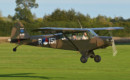
The Piper PA-14 Family Cruiser was introduced shortly after World War II. Designed as a larger derivative of earlier Piper taildraggers, it accommodated four occupants. The aircraft supported recreational and utility flying.
The latest aviation news and stories sent to your inbox.
Piper PA-14 Family Cruiser — four-seat tailwheel aircraftThe PA-14 first flew in 1947 and entered service the same year. It featured a high-wing configuration and conventional landing gear. The aircraft was intended to expand Piper’s offerings beyond two-seat designs.A Lycoming piston engine producing approximately 115 horsepower powered the PA-14. Cruise speed was near 100 knots (185 km/h). Maximum takeoff weight exceeded 1,900 pounds (862 kg).The Family Cruiser saw limited production before being replaced by newer designs. Surviving examples are now valued by vintage aircraft enthusiasts. The model reflects Piper’s postwar expansion efforts.
Live Fleet Activity (PA14)
Fetching live data…


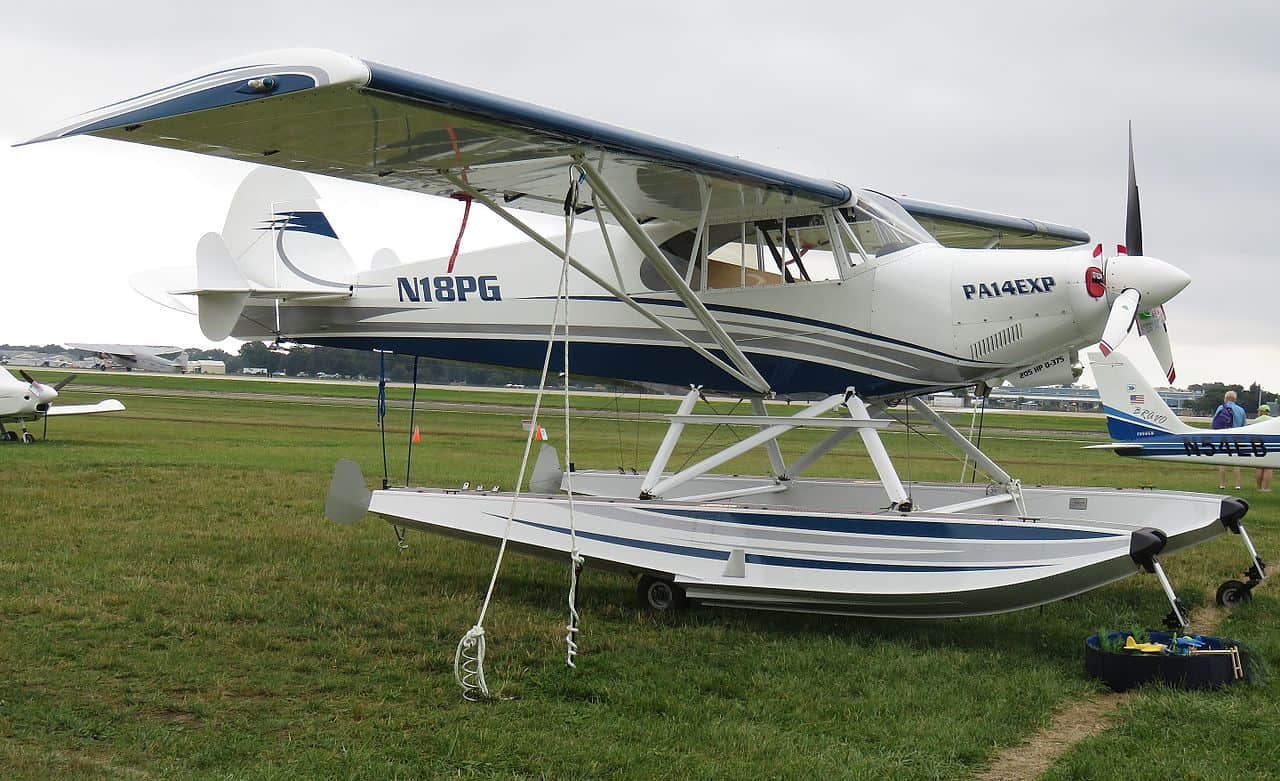
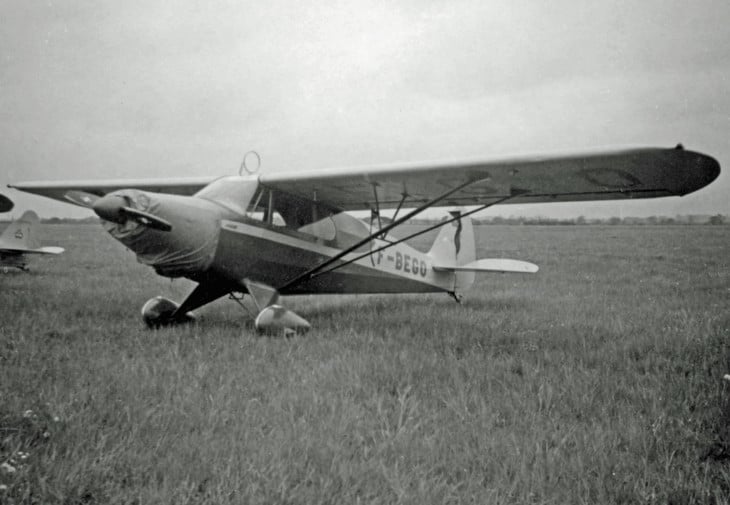
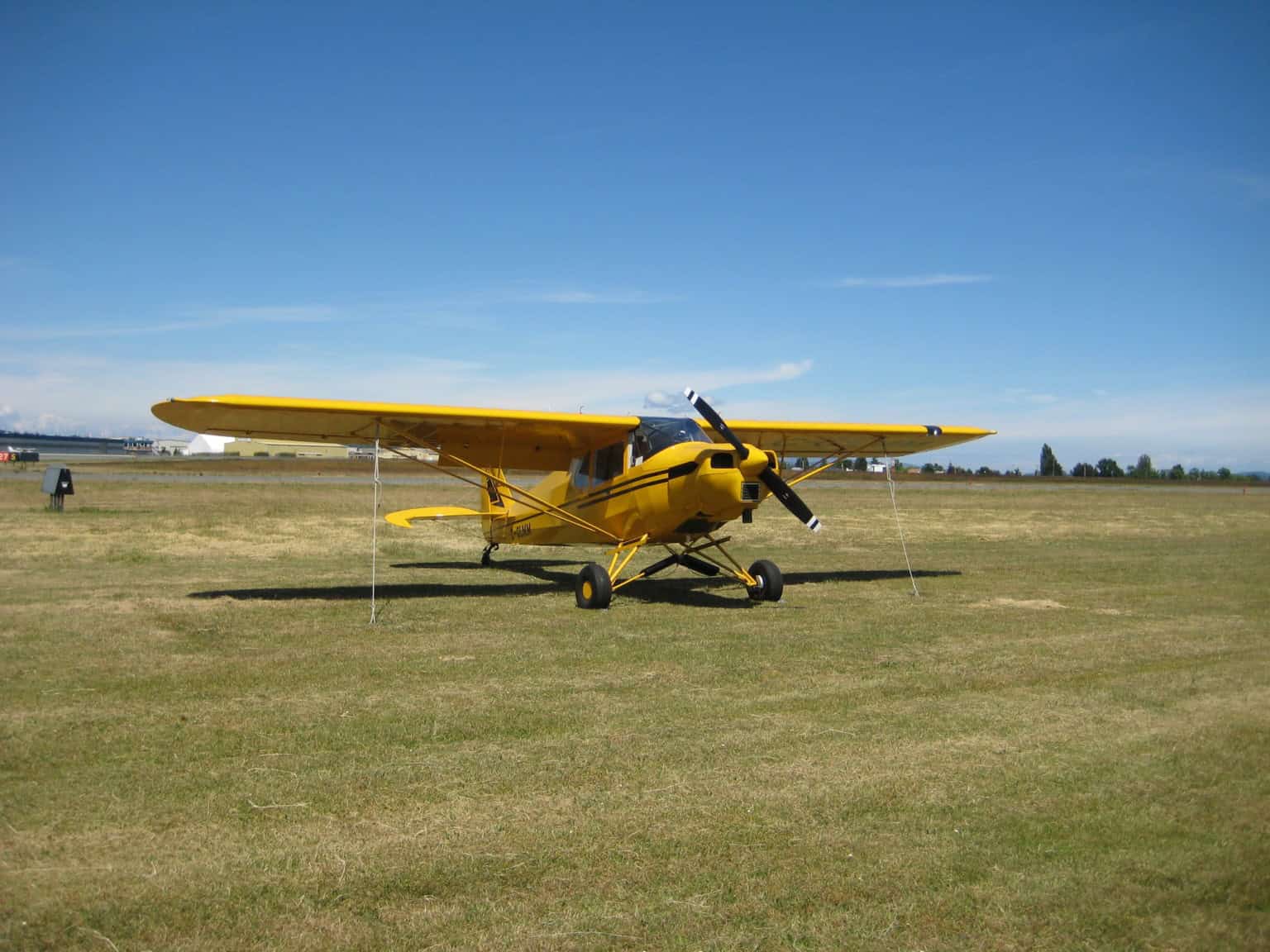
In 1947, the three-seat PA-12 Super Cruiser was evolved into a four-seat aircraft with a widened cabin and incorporating slotted flaps. The high-wing was retained, as well as the fixed conventional landing gear. The new aircraft was designated as the PA-14 Family Cruiser.
On March 21, 1947, the PA-14 prototype took to the air for the first time at the company’s factory in Lock Haven, Pennsylvania. On February 6, 1948, the second PA-14 was completed, and later that year, aircraft deliveries started. A total of 238 aircraft were built, and most of these were acquired by United States private owner pilots. As of April 2011, 126 aircraft were still registered in the United States. The PA-14 was also purchased overseas.
The four-seat PA-14 has a room for a single pilot and three passengers. It has an external length of 7.06 meters, an external height of 1.96 meters, and a fuselage diameter of 1.1 meters. It has a high wing with a wingspan of 10.82 meters and a wing area of 16.66 square meters. The tail height is 2.3 meters and the wheelbase is 5.2 meters. The aircraft has an empty weight of 463 kg and a maximum takeoff weight of 839 kg. It has a maximum payload of 376 kg and a fuel tank capacity of 38 US gal.
The PA-14 Family Cruiser is powered by a single Lycoming O-235-C1 engine. It is a four-cylinder, air-cooled, carburetor-equipped, horizontally-opposed piston engine with provision for dual pump drives, tractor, and pusher installation. The engine produces a maximum power of 115 hp and drives a two-bladed fixed-pitch propeller. The PA-14 has a maximum speed of 107 knots, a cruise speed of 96 knots, and a stall speed of 38 knots with flaps down. The standard range is 434 nautical miles. It can fly up to 12,500 feet and can climb at a rate of 575 feet per minute.
Sources and references used for research and fact-checking.