Military Trainers
NAA T-2 Buckeye
ICAO: T2
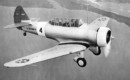
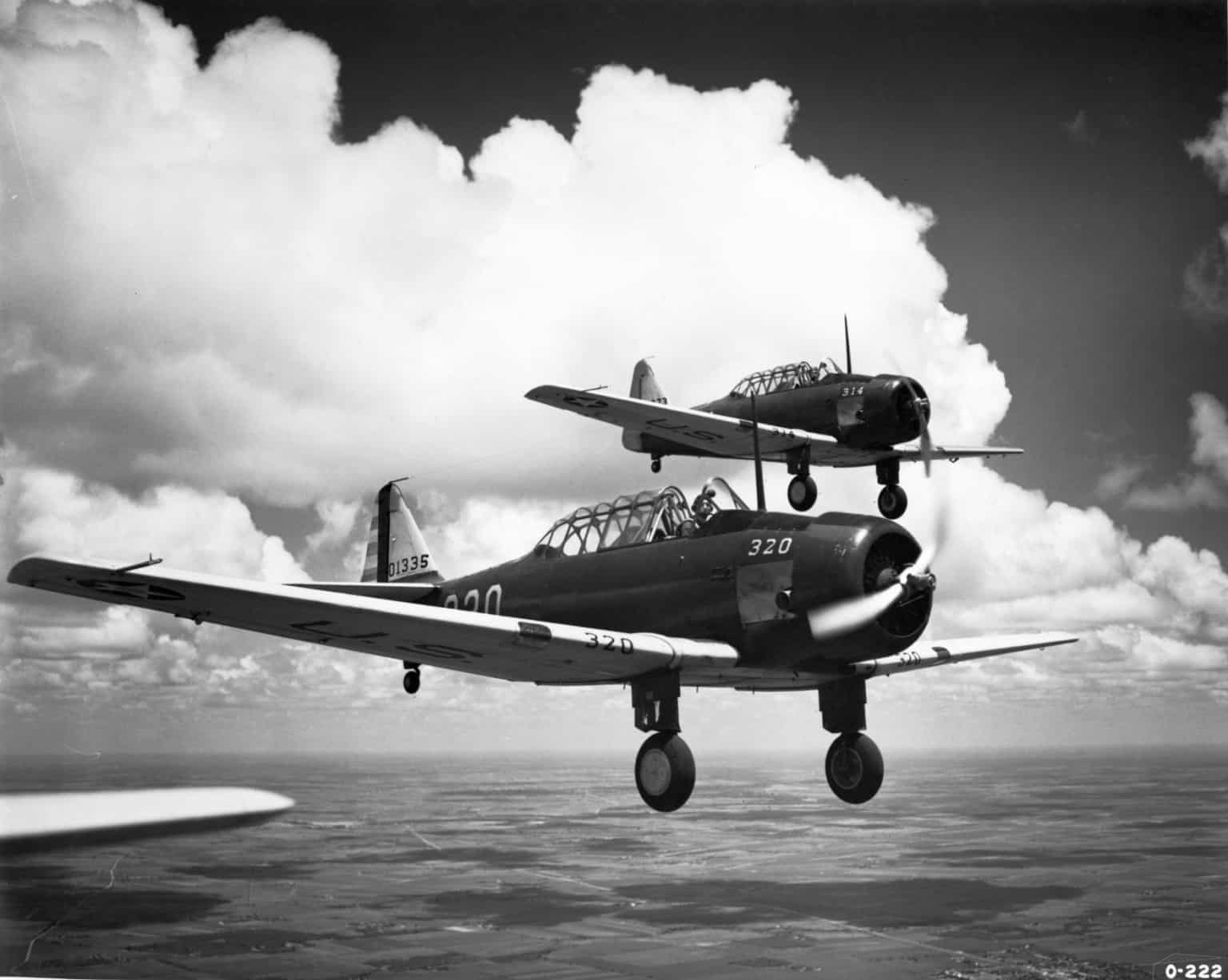
The North American BT-14 was developed in the late 1930s as a primary trainer for the U.S. Army Air Corps. Designed to bridge the gap between elementary trainers and more advanced types, it featured improved performance. The aircraft served in the years leading up to World War II.
The latest aviation news and stories sent to your inbox.
North American BT-14 — basic military trainerThe BT-14 first flew in 1935 and entered service shortly thereafter. It featured a low-wing configuration with retractable landing gear, a step forward for training aircraft of the era. The design prepared student pilots for more complex military types.A radial piston engine producing approximately 400 horsepower powered the BT-14. Cruise speed exceeded 150 knots (278 km/h). Maximum takeoff weight was around 4,500 pounds (2,041 kg), consistent with its two-seat layout and training mission.The BT-14 formed an important link in the U.S. pilot training pipeline before the outbreak of World War II. Although later overshadowed by newer trainers, it played a key developmental role in military aviation training programs.
Live Fleet Activity (BT14)
Fetching live data…
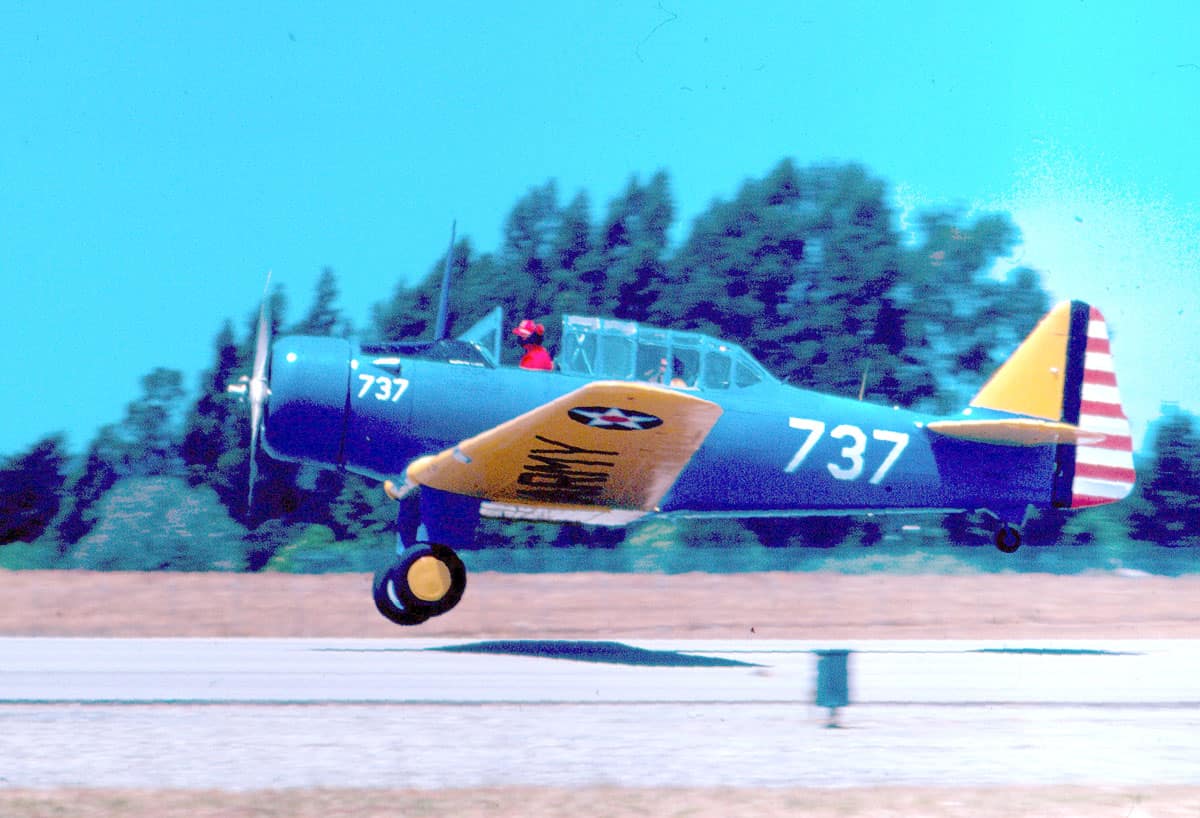
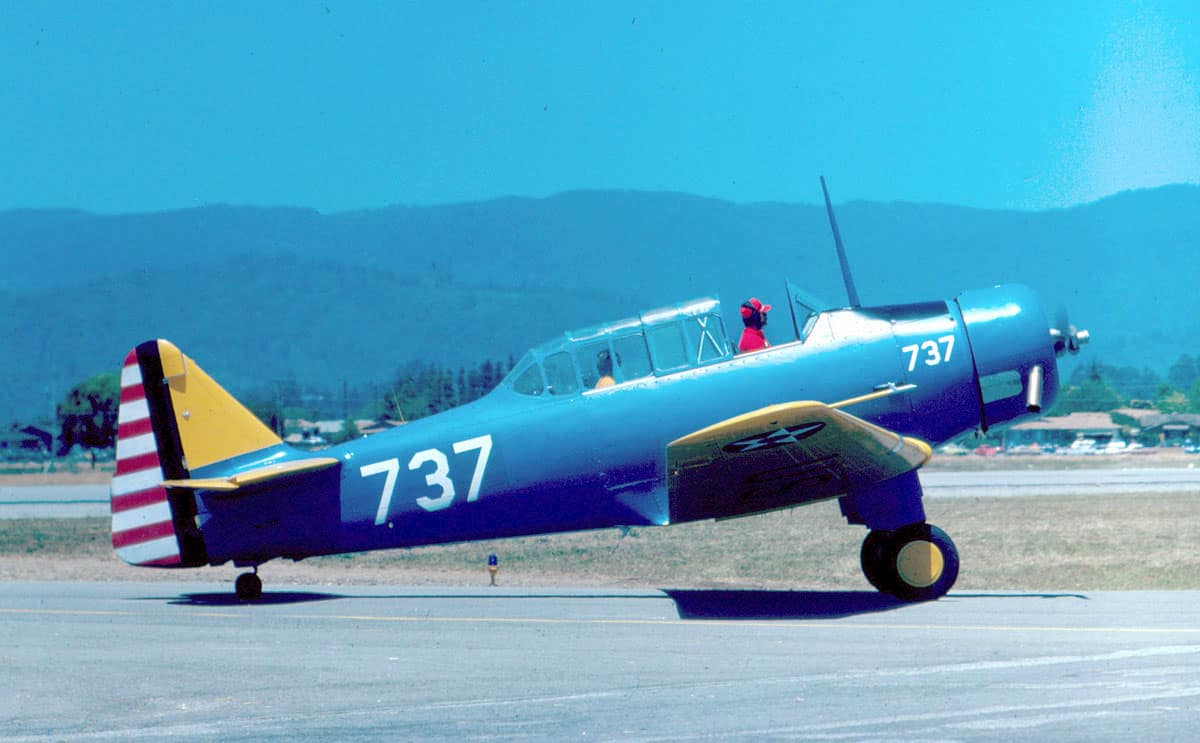


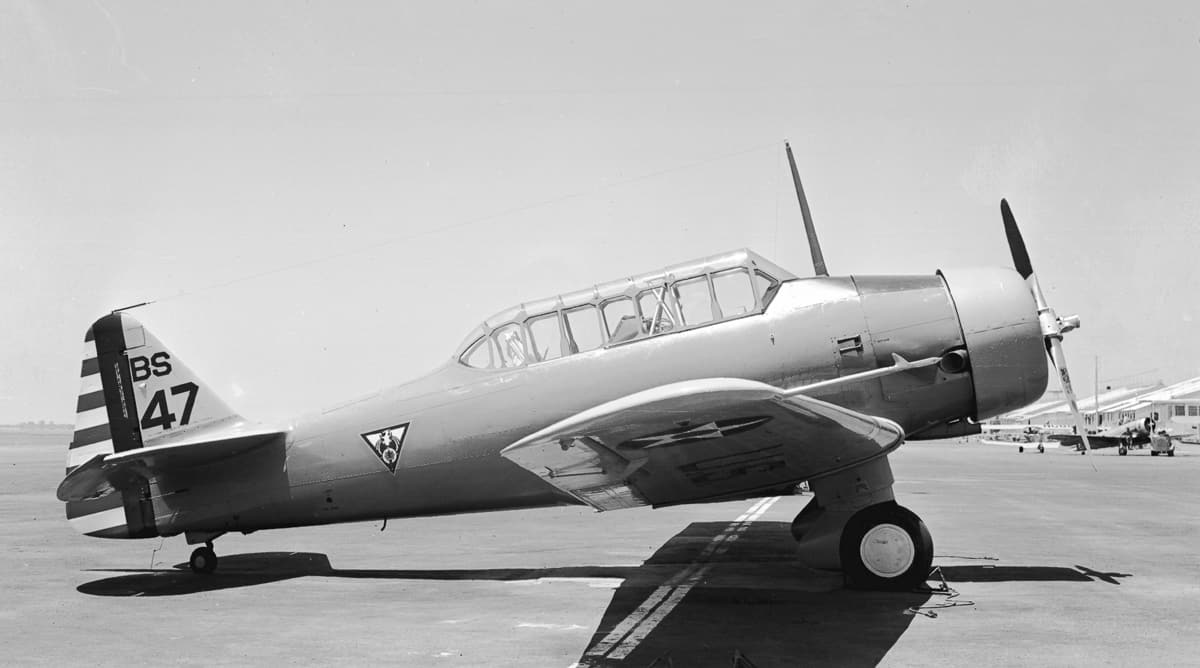
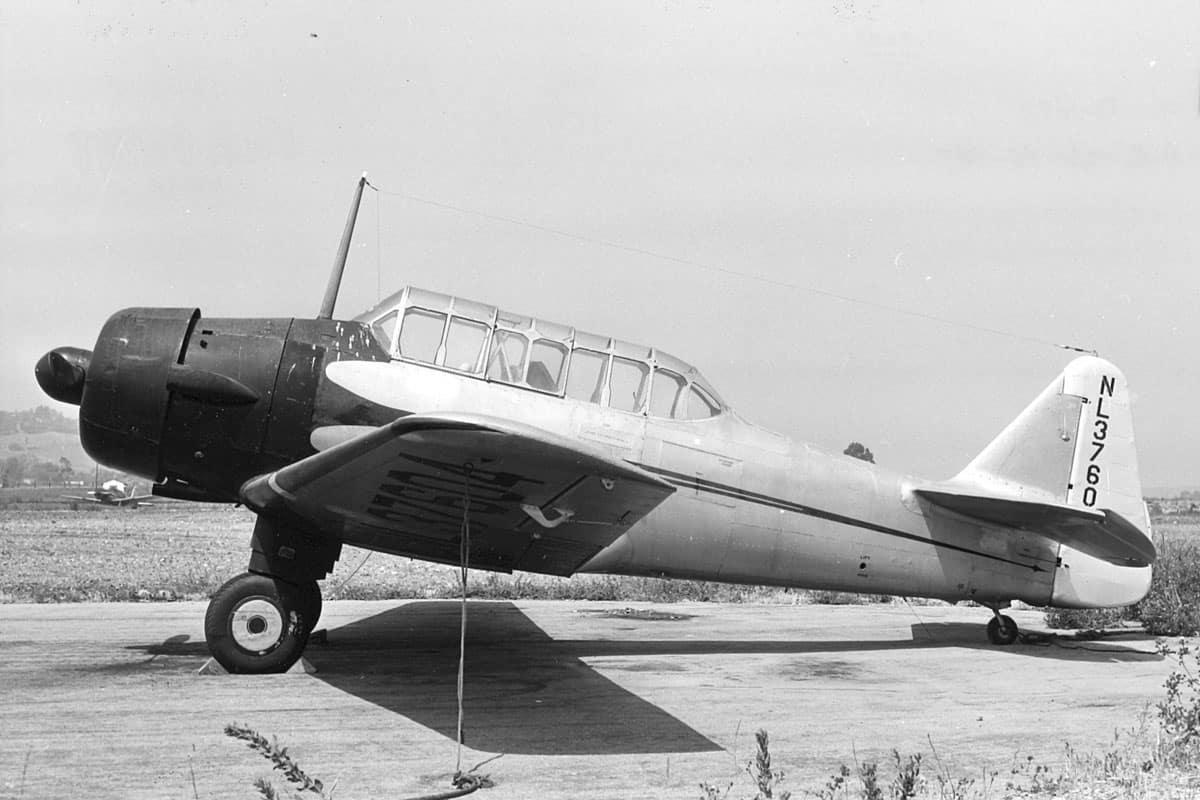

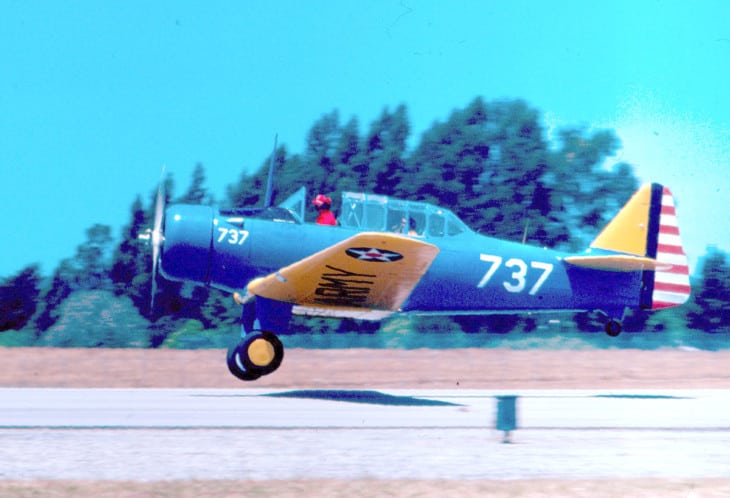
The North American BT-14 is a two-seat primary training monoplane with a lengthened fuselage of welded chrome-molybdenum steel-tube framework. The fuselage is fabric-covered and has an external length of 8.7 meters, an external height of 2.7 meters, and a fuselage diameter of 1.1 meters.
The cantilever tail and fin were made of metal and covered in sheets and the rudder and elevators were of light-alloy frames covered in fabric. The tail height is 4.1 meters. It has a low wing with a wingspan of 13.1 meters and a wing area of 23 square meters.
The wing has five sections such as a center-section of parallel cord and thickness, two outer sections with back-swept leading edge and straight trailing edge, and wingtips.
It has a single-spar structure that carries most of the forces with spaced ribs and was covered with stressed aluminum-alloy skin. The ailerons have aluminum-alloy frames and were fabric-covered. The aircraft has divided undercarriage with two cantilever oleo struts, hydraulically-operated, wheel brakes, and an oleo-sprung steerable tail wheel. It has a wheelbase of 5.9 meters.
The BT-14 is powered by a single Wright R-975-E3 Whirlwind engine on welded chrome-molybdenum steel-tube mounting. It is a nine-cylinder supercharges air-cooled piston engine with two valves per cylinder pushrod-actuated, gear-driven supercharger, and direct drive reduction gear.
The engine produces a maximum thrust of 420 horsepower at 14,000 feet. The aircraft has two welded aluminum-alloy fuel tanks with a normal fuel capacity of 104 US gal, while the oil tank in the engine compartment can carry 9.5 US gal. The aircraft has a maximum speed of 150 knots at 1,500 feet and a cruise speed of 130 knots. The landing speed is 57 knots. It has a travel range of 762 nautical miles and a service ceiling of 21,650 feet. The aircraft can climb at a rate of 1,100 feet per minute.
The aircraft has a maximum takeoff and landing weights od 2,065 kg and 2,030 kg, respectively.
Sources and references used for research and fact-checking.