Fighter Jets
NAA F-86 Sabre
ICAO: F86
Unsuccessful prototype fighter-bomber in the 1950s
The latest aviation news and stories sent to your inbox.
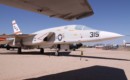
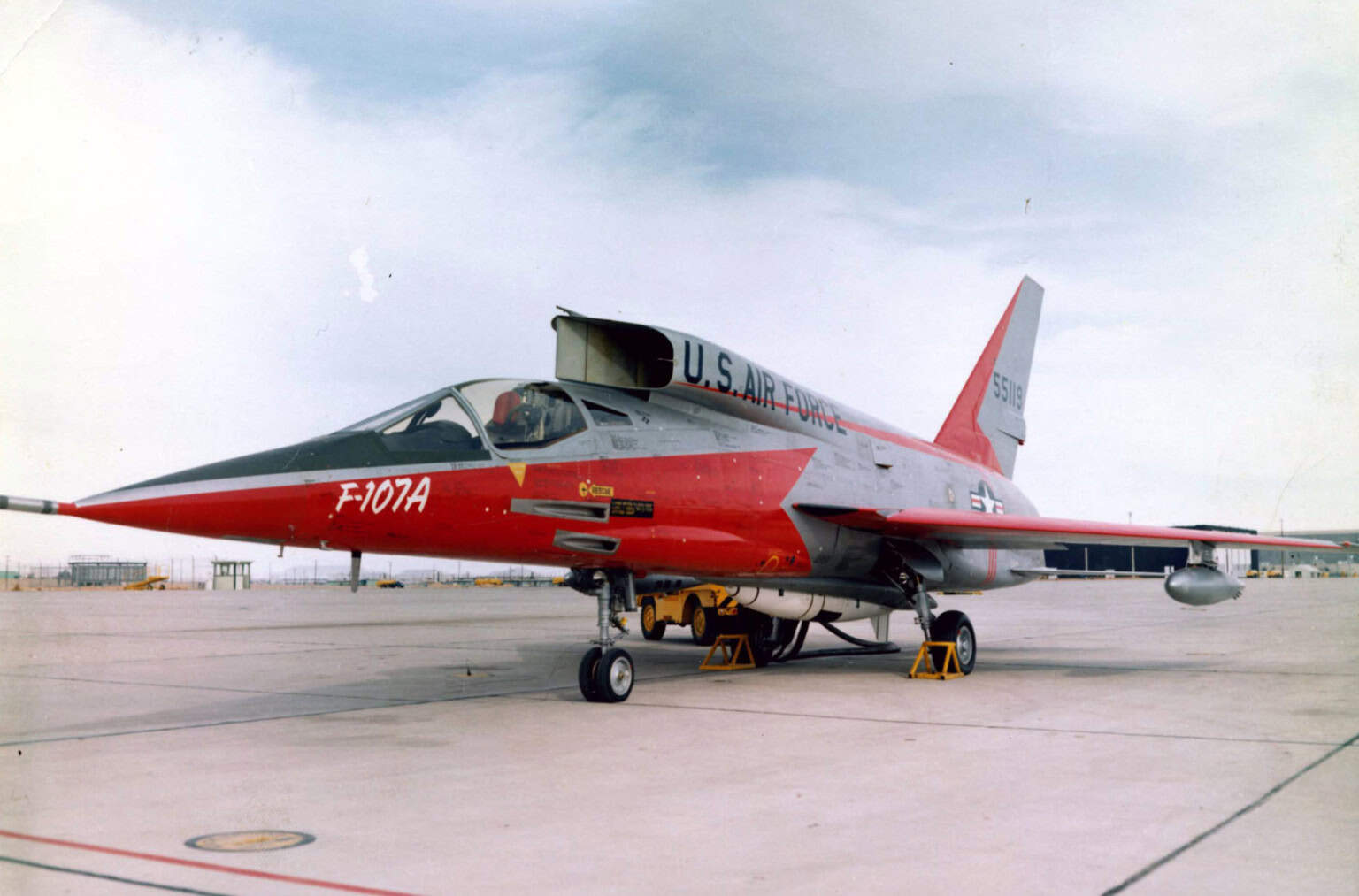
The North American F-107 was designed by North American Aviation as an entry in a design competition for a tactical fighter bomber by the United States Air Force in the 1950s. The aircraft was derived from the F-100 Super Sabre supersonic jet fighter and incorporated several upgraded design features, in particular the air intakes over the fuselage. Only 3 were built.
Live Fleet Activity (F107)
Fetching live data…


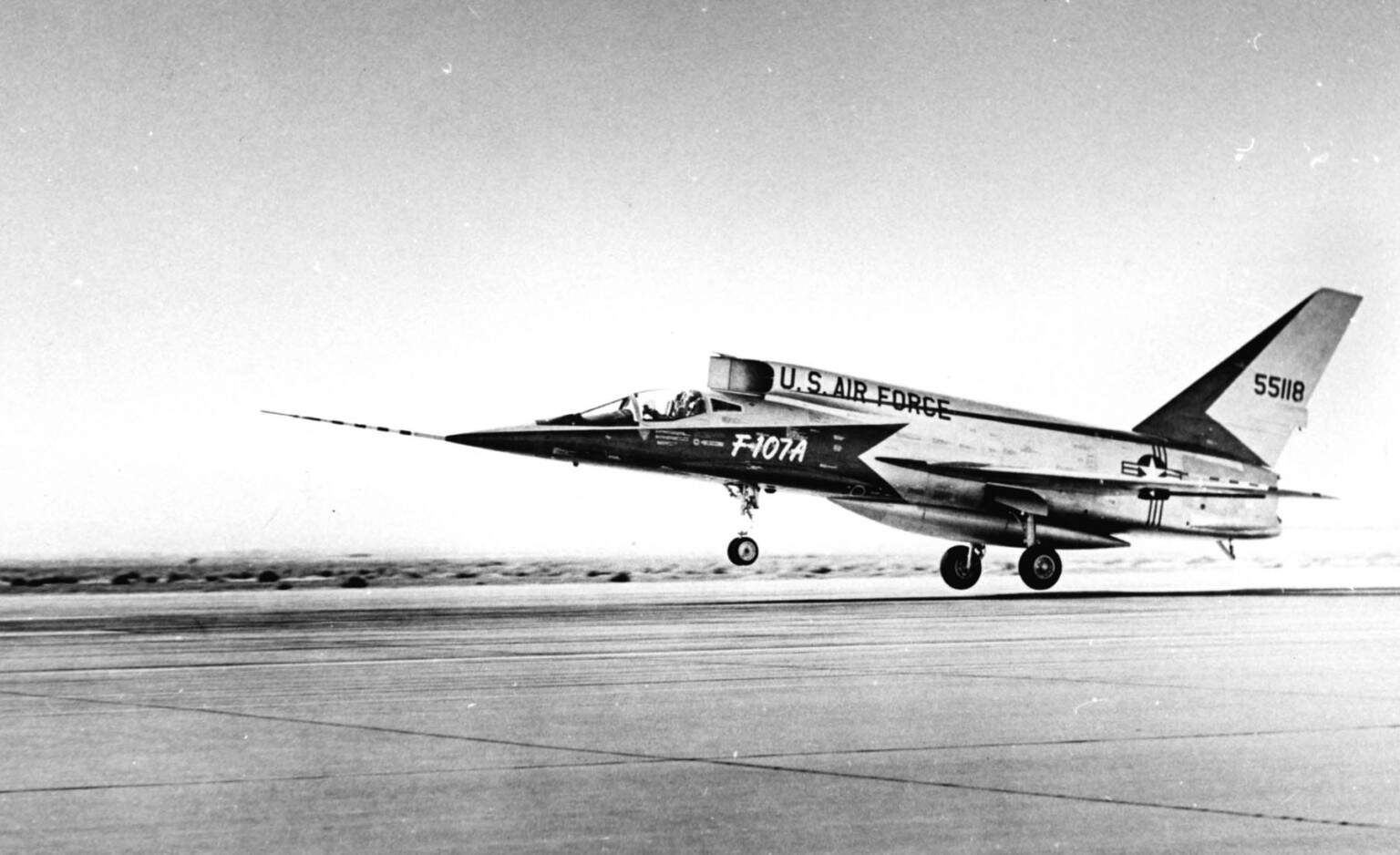


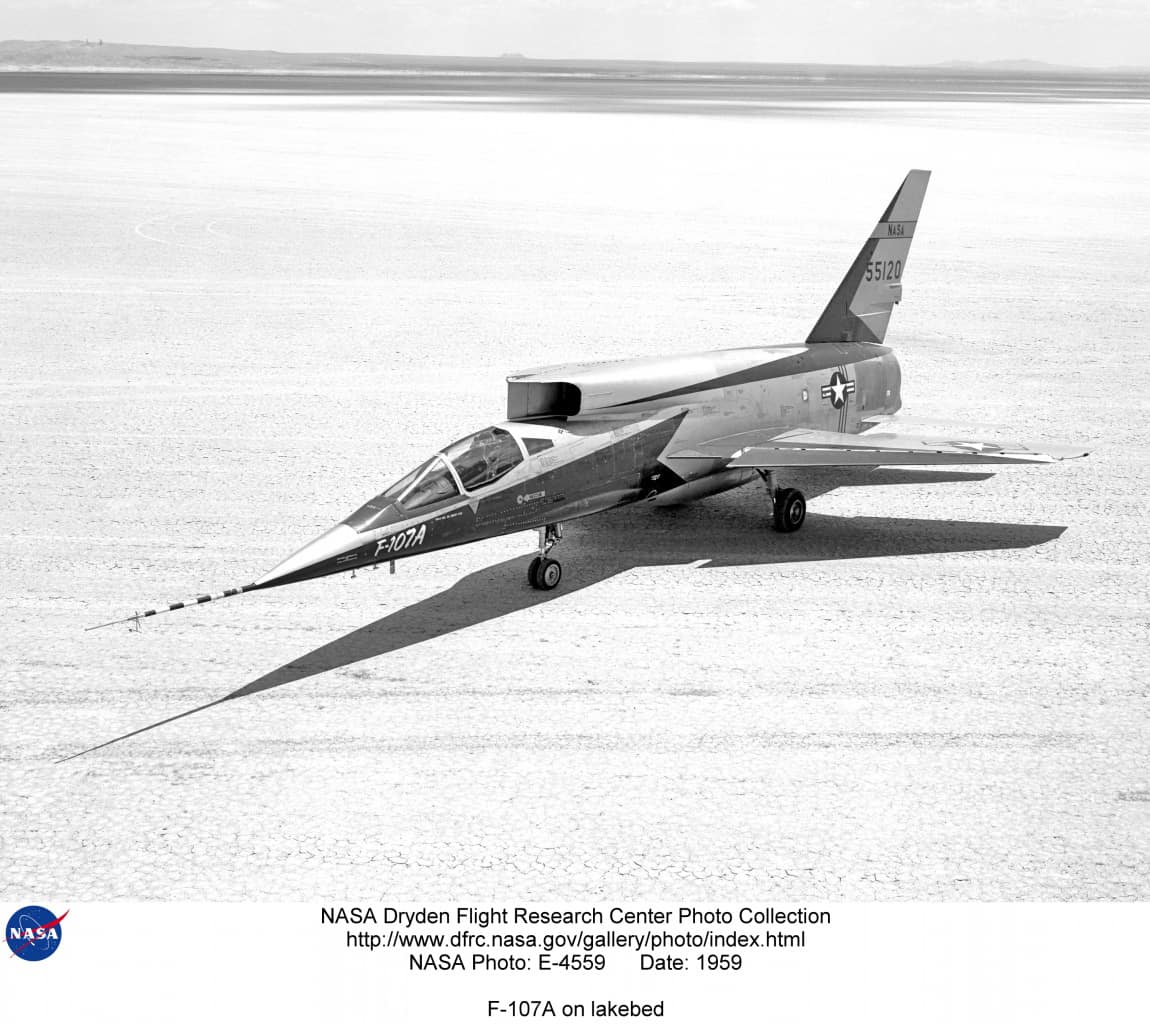
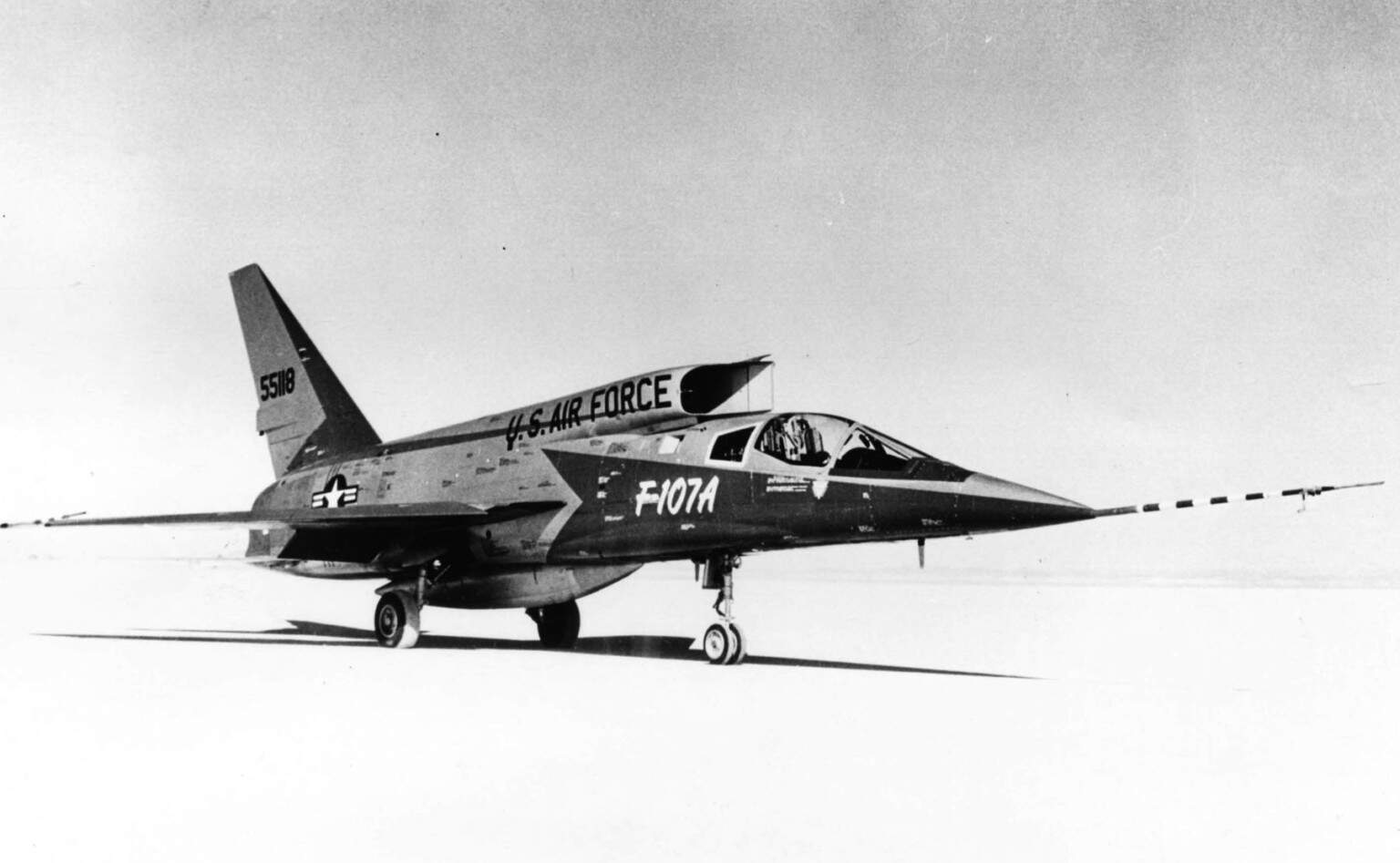

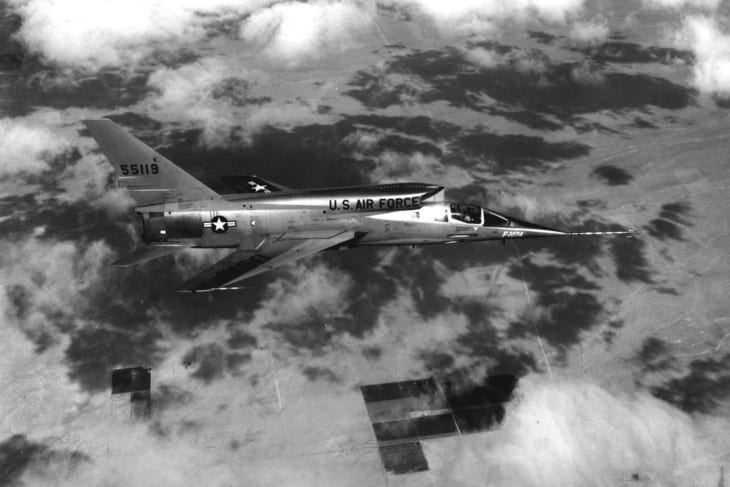
On September 10, 1956, the first F-107A with serial number 55-5118 operated by the chief test pilot Bob Baker performed its maiden flight, reaching Mach 1.03. On November 3, 1956, the aircraft first obtained its Mach 2.0 speed during flight testing. On November 28, 1956, the aircraft with serial number 55-5119 took its first flight. A total of three F-107s were built.
The single-seat F-107 has an exterior length of 18.85 meters, an exterior height of 3 meters, and a fuselage diameter of 1.6 meters. The wingspan is 11.15 meters and the wing area is 35 square meters. It has a tail height of 5.89 meters and a wheelbase of 5.3 meters. The aircraft has an empty weight of 10,295 kg and a gross weight of 18,033 kg. The maximum takeoff weight is 18,841 kg and the maximum payload is 4,800 kg. It has a fuel tank capacity of 1,260 US gal.
The aircraft is fitted with a single Pratt and Whitney YJ75-P-9 turbojet engine. It has a two-spool eight-stage LP and seven-stage HP axial compressor, cannular combustors with eight burner cans in an annular combustion chamber, two-spool one-stage HP and two-stage LP axial turbine, and a return pressure spray system. The engine is rated at 24,500 lbf thrust. The F-107 has a maximum speed of 1,125 knots or Mach 2. It has a travel range of 2,109 nautical miles. The aircraft was designed to fly up to 53,200 feet and to climb at a rate of 39,900 feet per minute.
The F-107 fighter-bomber was armed with four 20 mm Pontiac M39 single-barreled revolver cannon or a single 20 mm six-barrel M61 Vulcan autocannon. It was also loaded with 4,500 kg of bombs on five hardpoints; two under each wing, and one semi-recessed ordnance station under the fuselage centerline, and a wide variety of ordnance such as tactical nuclear weapons.
Sources and references used for research and fact-checking.