

Fighter Jets
NAA F-86 Sabre
ICAO: F86
The North American A-5 Vigilante was the U.S. Navy's Mach 2 carrier bomber, the first bomber with a digital computer, and later the Navy's long-range reconnaissance aircraft over Vietnam.
Updated: by Tim de Vries

The latest aviation news and stories sent to your inbox.
The North American A-5 Vigilante was a twin-engine, Mach 2 carrier aircraft built for the U.S. Navy. It was designed to deliver a nuclear weapon from its internal bay at supersonic speed, then spent most of its career as the RA-5C reconnaissance aircraft over Vietnam. It was one of the largest and most complex aircraft ever to operate from a carrier deck.
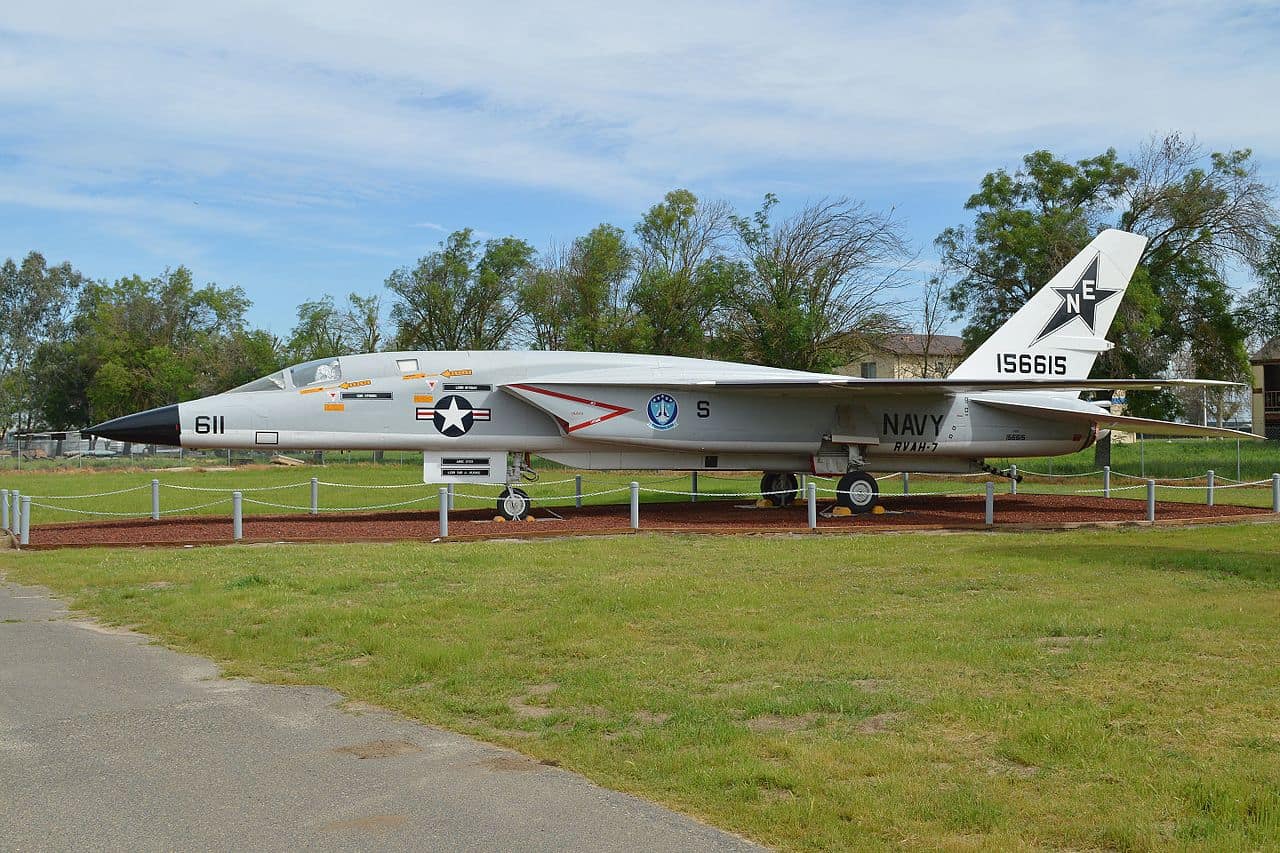

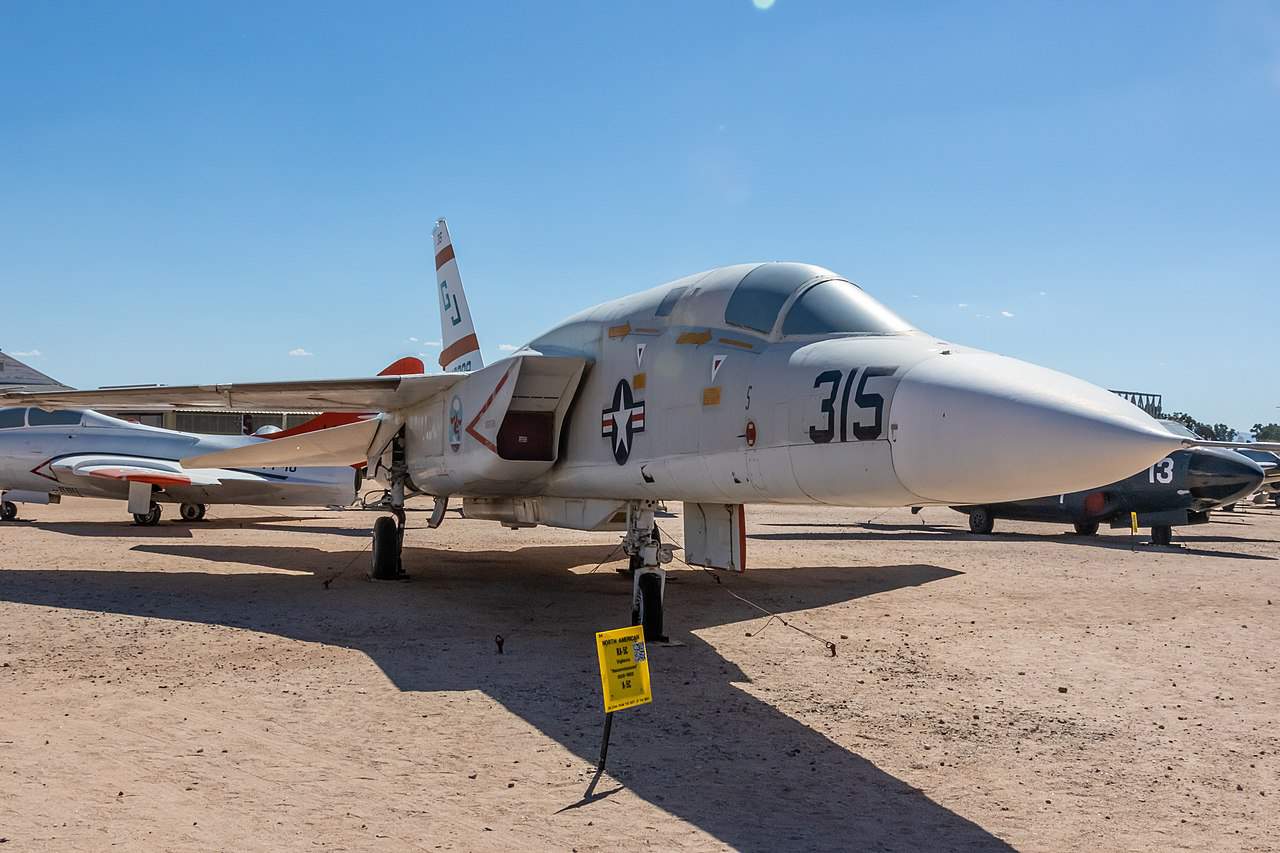

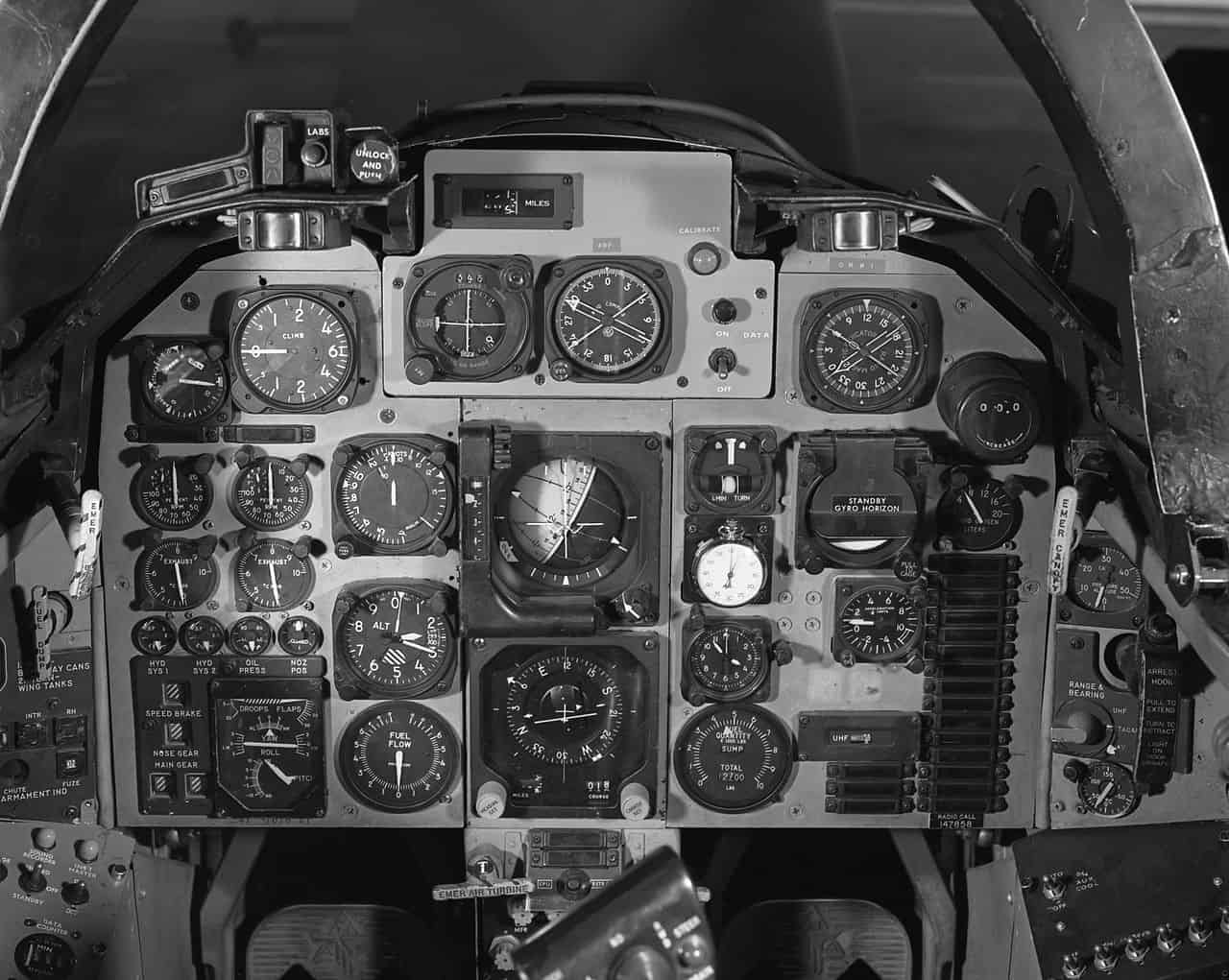


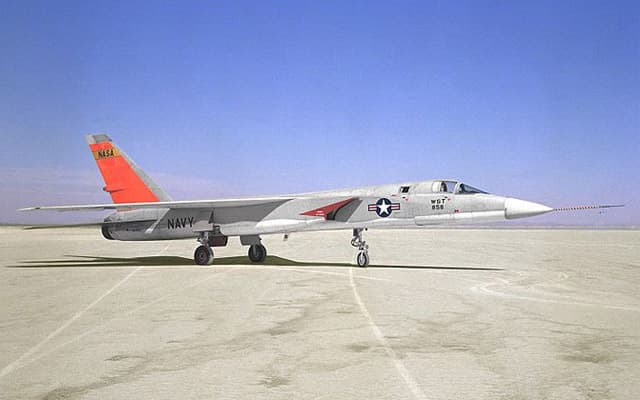
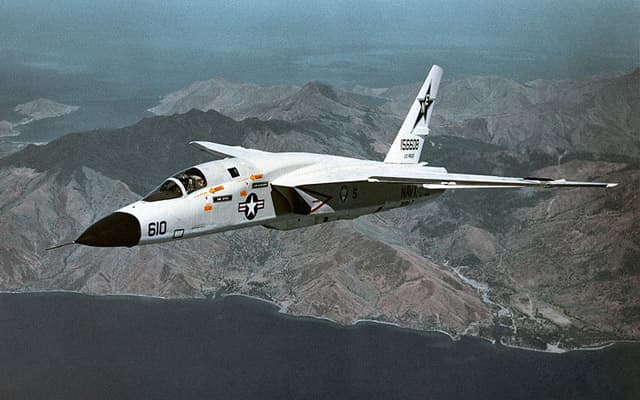
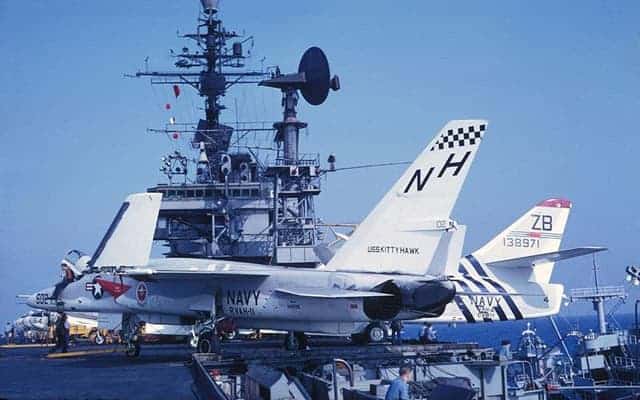
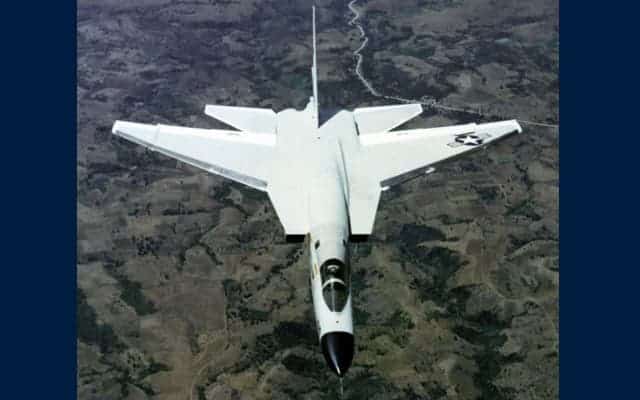
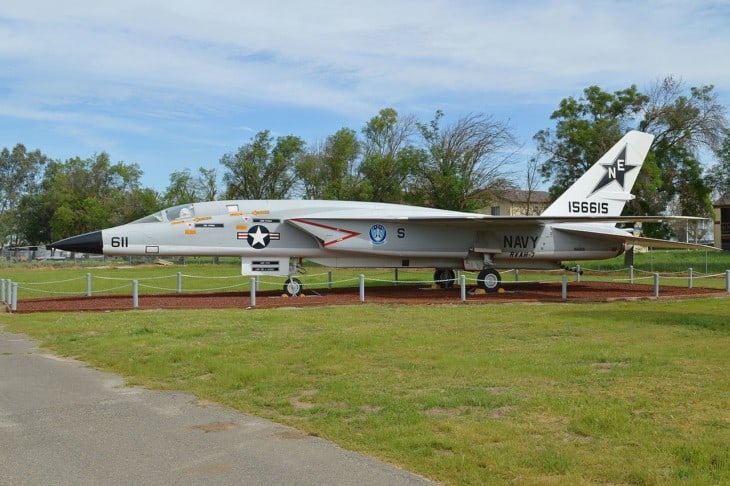
The North American A-5 Vigilante was a twin-engine supersonic aircraft built for the U.S. Navy. It was designed in the mid-1950s to carry a nuclear weapon at up to Mach 2 and still land on an aircraft carrier.
It flew for the first time on 31 August 1958 and entered service in June 1961. Before the 1962 unification of Navy and Air Force designations it was known as the A3J.
The Vigilante never had a long career as a bomber. It became famous instead as the RA-5C, the fast reconnaissance aircraft that photographed targets over North Vietnam.
The full specification table for the aircraft is on this page. The sections below explain what the numbers mean and how the aircraft came to look and fly the way it did.
North American Aviation began a private study in early 1954 for a carrier-based, long-range, all-weather strike bomber that could fly supersonic with a heavy payload. It was meant to follow the abandoned XA2J Super Savage.
The Navy’s demands were hard to reconcile. It wanted Mach 2 speed, but it also wanted the aircraft to take off from a carrier at maximum weight with no wind over the deck.
North American’s design team met both. The Navy issued a design contract with a mockup in July 1955, then ordered two prototypes in September 1956.
By the time the first prototype flew, the Navy had changed what it wanted. Officials had first seen a low-level conventional attack aircraft, but they now wanted a successor to the Douglas A-3 Skywarrior for strategic nuclear strike. You can read about that earlier carrier bomber on the Douglas A-3 Skywarrior page.
That shift explains the most unusual feature of the design, the bomb bay.

The Vigilante was one of the largest aircraft to operate from a carrier when it entered service, and by far the most complex. It had a high-mounted swept wing with blown flaps for low-speed lift.
It had no ailerons. Roll control came from spoilers working with differential movement of the all-moving tail surfaces, which were paired with a large all-moving single fin.
The wings, vertical fin and nose radome all folded for stowage on the carrier. The structure used aluminum-lithium alloy for wing skins and titanium in critical areas, which was unusual for the time. Gold coating reflected heat in places such as the bomb bay.
Two widely spaced General Electric J79 turbojets powered it through variable intake ramps. The slanted intake design appeared first on the Vigilante and later became standard on aircraft such as the F-14 Tomcat and F-15 Eagle.
The electronics were just as ambitious. The Vigilante had one of the first fly-by-wire systems on an operational aircraft, with a mechanical and hydraulic backup. Its AN/ASB-12 navigation and attack system included an early head-up display, and an Autonetics digital computer made it the first bomber to carry one.
A pilot and a bombardier-navigator sat in tandem. The A-5A could carry a free-fall nuclear bomb in the internal bay and two bombs on external hardpoints.
Instead of an ordinary bomb bay, the Vigilante carried its weapon in a tube between the engines. A single nuclear bomb, commonly the Mk 28, was attached to two disposable fuel tanks in an assembly called the stores train.
The idea was to empty the tanks on the way to the target, then fire the whole train out of the back. A drogue gun pushed it rearward at about 50 feet per second, so the weapon could be released at supersonic speed.
In practice the system was unreliable, and no live weapons were ever carried in the linear bay. On the reconnaissance version the bay held sensors and fuel instead.

The first production version was the A3J-1, redesignated A-5A in 1962. Fifty-eight were built, and 42 of them were later converted to the reconnaissance configuration.
The A3J-2 (A-5B) added a pronounced dorsal hump with internal tanks holding an additional 460 US gallons (1,700 L) of fuel. It also had four wing hardpoints, stronger landing gear and blown flaps on the leading edge. With four drop tanks it roughly doubled the bomber’s range.
Development stopped after only six A-5Bs because the Navy was moving its strategic mission to submarine-launched missiles. Procurement of the bomber ended in 1963.
The RA-5C was the version that mattered. It had a slightly larger wing and a long canoe-shaped fairing under the fuselage for the reconnaissance pack. That pack carried a side-looking airborne radar, an infrared line scanner and cameras.
It kept the bombing system but never carried weapons in service. Later RA-5Cs received J79-10 engines with 17,900 lbf (80 kN) of afterburning thrust.
Wikipedia counts 167 Vigilantes built, of which 137 were built as or converted to RA-5Cs.
Eight of the ten RA-5C squadrons deployed during the Vietnam War, starting in August 1964. They flew medium-level reconnaissance after strikes, which was dangerous work.
Eighteen RA-5Cs were lost in combat. Fourteen fell to anti-aircraft fire, three to surface-to-air missiles and one to a MiG-21 during Operation Linebacker II. Nine more were lost in operational accidents with Task Force 77.
To replace those losses, 36 more RA-5Cs were built from 1968 to 1970. That is why production appears in two separate blocks, 1961 to 1963 and 1968 to 1970.

On 13 December 1960, Commander Leroy Heath and Lieutenant Larry Monroe set a world altitude record of 91,450.8 feet (27,874.2 m) in an A3J Vigilante with a 2,200-pound (1,000 kg) payload. The record stood for more than 13 years.
They reached Mach 2.1, then pulled up into a ballistic climb beyond the height at which the wings could keep flying. The engines flamed out in the thin air and the aircraft rolled onto its back.
The crew had seen this on earlier flights. The pilot released the controls and the aircraft recovered by itself as it fell into thicker air.
The Vigilante was expensive and complicated to maintain. It also took up a lot of flight-deck and hangar space at a time when carrier air wings were averaging about 90 aircraft, many larger than before.
The early years had also been rough. Its advanced systems were immature and unreliable, and the aircraft stayed maintenance-intensive throughout its career.
Squadron disestablishments began in 1974 as the Vietnam War ended. The last squadron, RVAH-7, finished its final Western Pacific deployment aboard USS Ranger in late 1979. The final RA-5C flight took place on 20 November 1979.
Light photo squadrons flying the RF-8G and the Marine Corps’ RF-4B took over detachments in the late 1970s. The recon mission then moved to the Navy’s fighter squadrons and the Grumman F-14 Tomcat carrying the TARPS pod.
The specification table on this page uses the Naval Air Systems Command figures for the A-5A, the original bomber. An RA-5C weighed almost five tons more than the strike version with almost the same thrust, so it accelerated and climbed more slowly.
The range figure is combat range, meaning out to a target and back. The ferry range with no combat load is longer, at 1,571 nmi (1,808 mi, 2,909 km).
The speed figure is the A-5A’s top speed at 40,000 feet. Mach 2 is the speed the Vigilante was designed for, which the stored figure in knots does not show.
Several RA-5Cs survive on display. The National Naval Aviation Museum in Pensacola shows one in the markings of RVAH-6, and the Pima Air & Space Museum in Tucson has one in RVAH-3 colors.
The USS Midway Museum in San Diego displays an RA-5C carrying both RVAH-12 and RVAH-7 markings. The oldest on display is an A-5A at Naval Air Station Patuxent River, Maryland, and it is the only one left in its original nuclear bomber configuration.
For other aircraft from the same period, see the Convair B-58 Hustler, the Air Force’s own Mach 2 bomber, and the McDonnell Douglas F-4 Phantom II, which shares the J79 engine family.
The A-5A was designed for Mach 2. The Naval Air Systems Command figure is 1,149 kn (1,322 mph, 2,128 km/h) at 40,000 ft.
It was designed to, and in its early years it was the Navy’s primary nuclear strike aircraft. But the linear bomb bay system was unreliable, and no live weapons were ever carried in it.
It was expensive and complex to operate and took up valuable space on carrier decks. The Navy also moved its strategic mission to submarine-launched missiles, and the post-Vietnam cutbacks ended the type’s career. The last flight was on 20 November 1979.
Wikipedia gives 167 built, of which 137 were built as or converted to the RA-5C reconnaissance version. That includes 36 attrition replacements built from 1968 to 1970.
Two. A pilot and a bombardier-navigator sat in tandem.
The A-5 was a nuclear strike bomber. The RA-5C had a slightly larger wing, a canoe-shaped fairing under the fuselage for a multi-sensor reconnaissance pack, and better electronic countermeasures. It never carried weapons in service.
Examples are on display at the National Naval Aviation Museum in Pensacola, the Pima Air & Space Museum, the USS Midway Museum, the Castle Air Museum and several naval air stations.
Sources and references used for research and fact-checking.
.jpg)
