Military Trainers
NAA T-2 Buckeye
ICAO: T2
Navy jet trainer introduced in 1959
The latest aviation news and stories sent to your inbox.
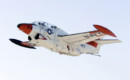
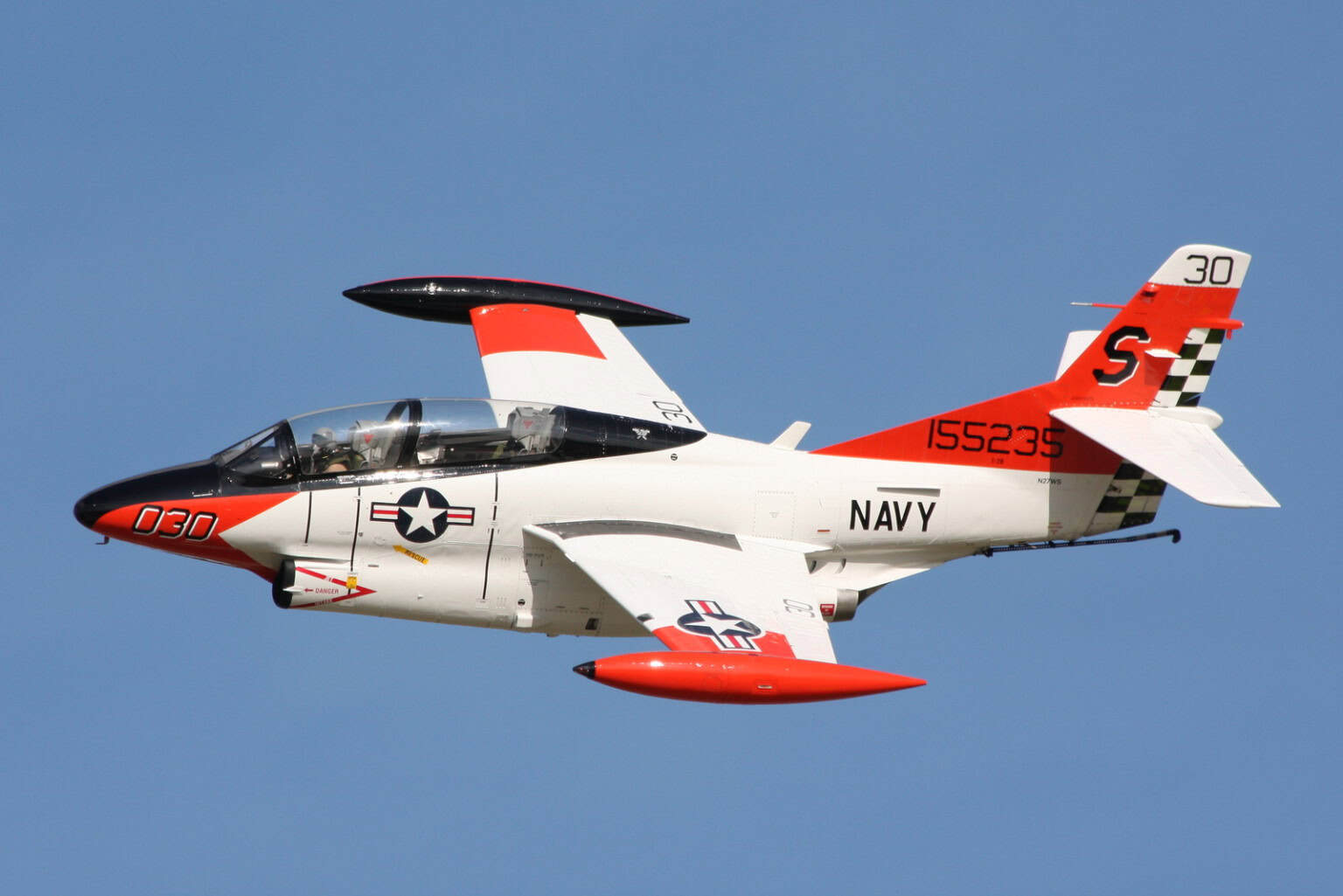
The North American T-2 Buckeye was introduced in November 1959 as the intermediate training aircraft of the United States Navy. Its purpose was to introduce student naval aviators and naval flight officers of the USN and United States Marine Corps to jet aircraft. In 1959, the T-2 Buckeye entered into service and was retired in 2008 with the Navy.
Live Fleet Activity (T2)
Fetching live data…

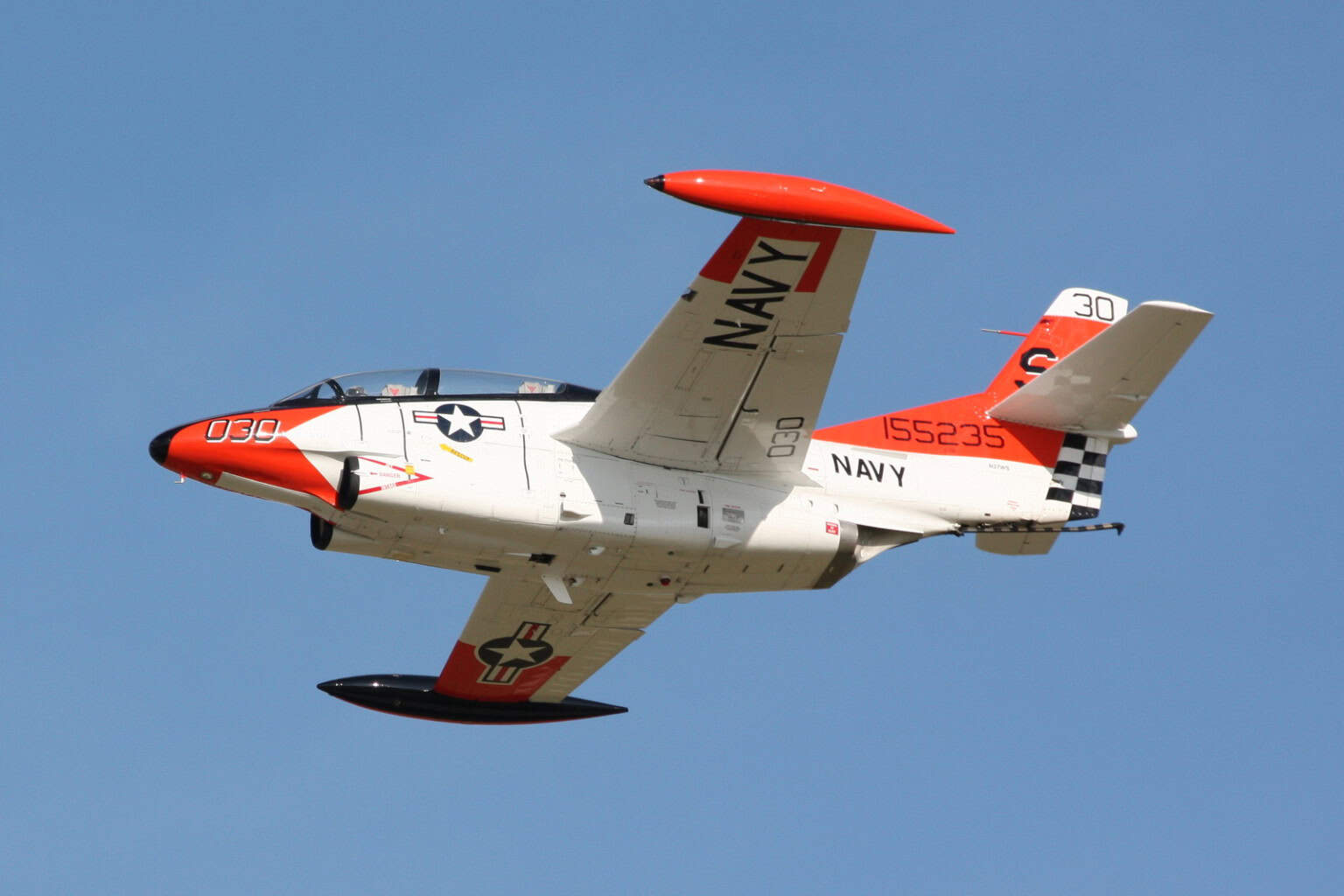
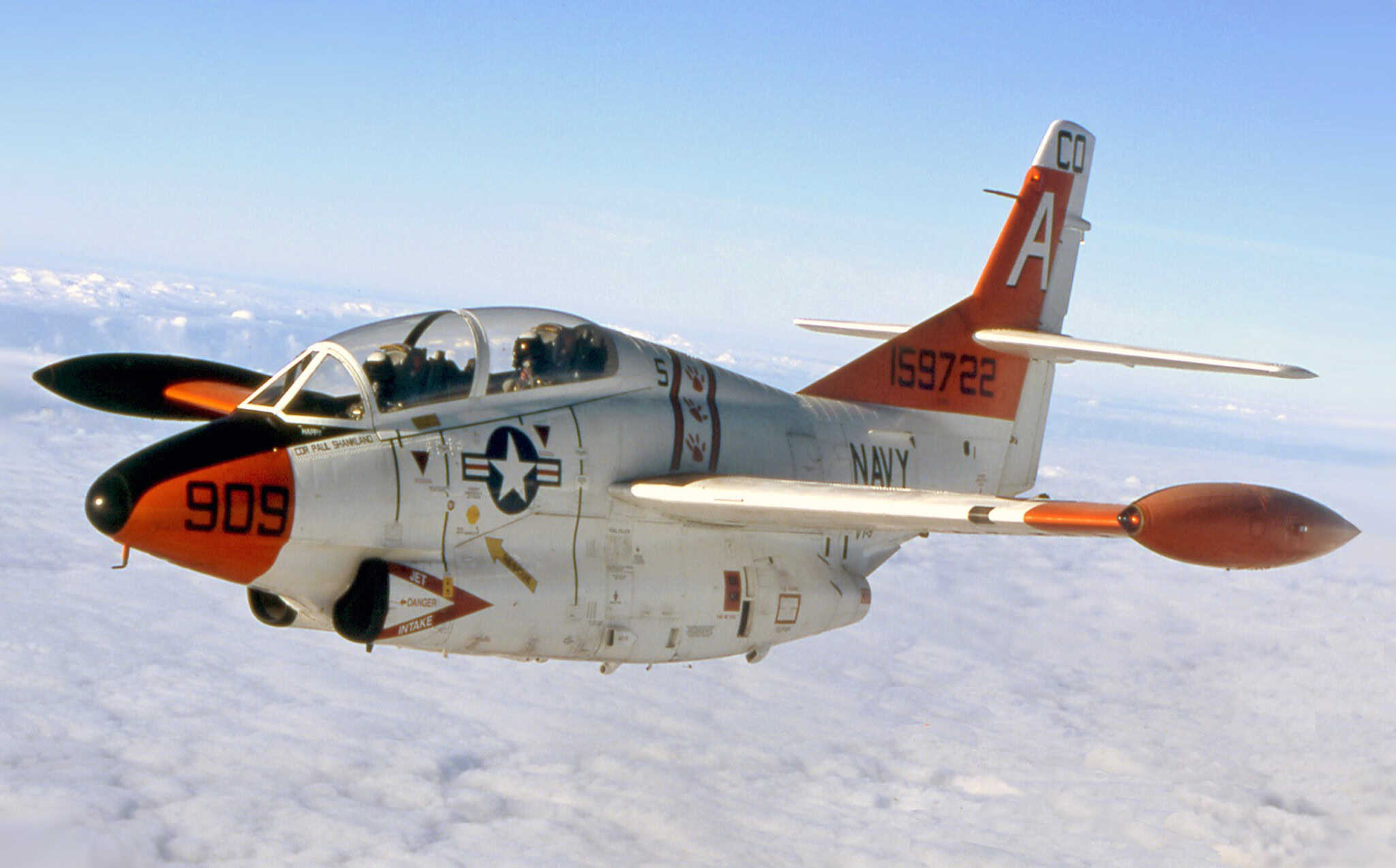


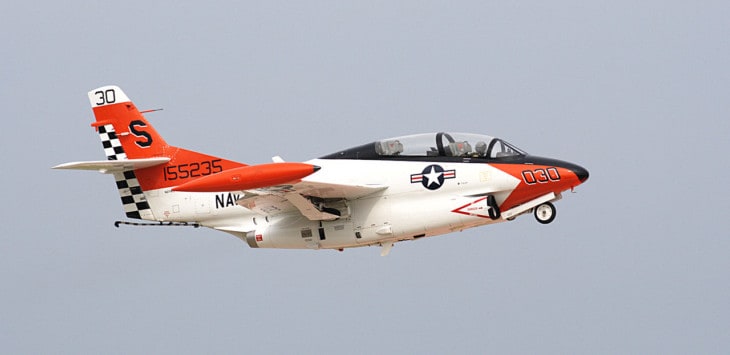
On January 31, 1958, the first T2J-1 took to the air for the first time. After a year, in 1959, the T2J-1 entered into service and was later redesignated in 1962 as the T-2A. The aircraft was eventually modified and the single-engine was replaced with twin engines.
The T-2B was an enhanced variant with two Pratt and Whitney J60-P6 engines. The aircraft has been in service with the United States Navy, Hellenic Air Force, and Venezuelan Air Force.
It was retired in 2008 with the United States Navy and currently active in service with the Hellenic Air Force. The aircraft was produced from 1958 to 1970 with a total of 609 T-2 Buckeyes built while on the production run. All of the aircraft were built at the Air Force Plant 85 near Columbus in Franklin County, Ohio.
The T-2C Buckeye is the last production variant for the United States Navy. A total of 231 T-2C were built. The two-seat trainer aircraft has an external length of 11.67 meters, an external height of 2.5 meters, and a fuselage width of 1.2 meters. It has a tail height of 4.5 meters and a wheelbase of 4.1 meters.
The wingspan is 11.62 meters over tip tanks and the wing area is 23.7 square meters. The T-2C has an empty weight of 3,681 kg and a maximum takeoff weight of 5,978 kg. It has a maximum payload of 300 kg and a maximum fuel capacity of 691 US gal.
The T-2C is powered by two General Electric J85-GE-4 turbojet engines. It is a small single-shaft turbojet with an eight-stage axial compressor, annular combustors, and two-stage turbine. Each engine produces a maximum thrust power of 2,950 lbf. The aircraft has a maximum speed of 453 knots at 25,000 feet and a stall speed of 86.6 knots. The travel range is 909 nautical miles. It can fly up to 40,400 feet and can climb at a rate of 6,200 feet per minute.
Sources and references used for research and fact-checking.