Military Trainers
NAA T-2 Buckeye
ICAO: T2
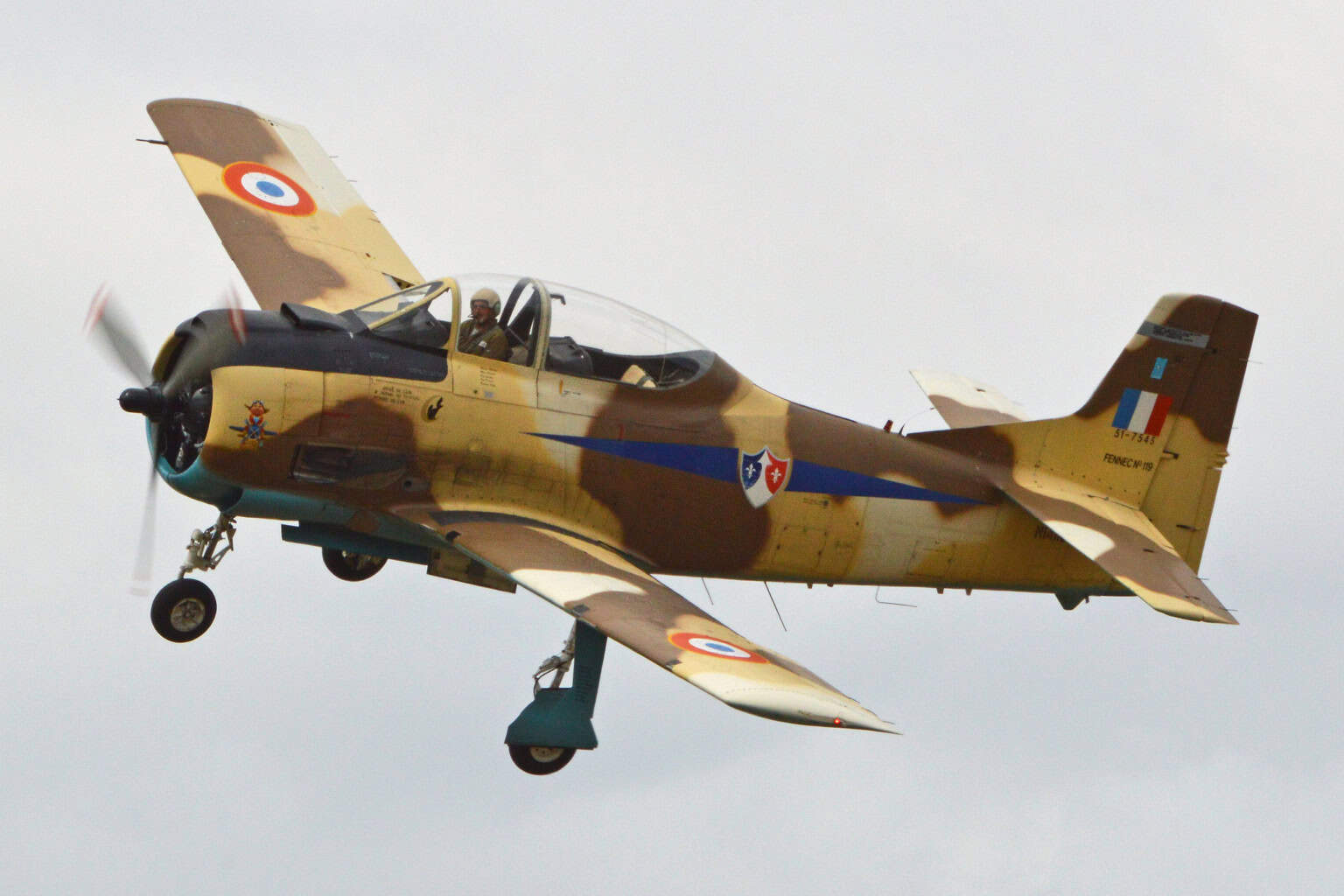
The North American T-28 Trojan entered service in the 1950s as an advanced trainer for U.S. forces. Designed to replace earlier piston trainers, it provided higher performance and improved handling. The aircraft was later adapted for light attack roles.
The latest aviation news and stories sent to your inbox.
North American T-28 Trojan — advanced military trainerThe T-28 first flew in 1949 and entered service in 1950. It featured a low-wing layout and tandem seating for instructor and student. The design emphasized stability while introducing pilots to higher speeds.Powered by a Wright radial engine producing approximately 1,425 horsepower in later variants, the Trojan cruised near 230 knots (426 km/h). Maximum takeoff weight exceeded 8,500 pounds (3,856 kg). Armament was added in certain counterinsurgency versions.The T-28 trained thousands of military aviators. Some variants served in combat during the Vietnam War. The aircraft remains active in civilian warbird and aerobatic communities.
Live Fleet Activity (T28)
Fetching live data…


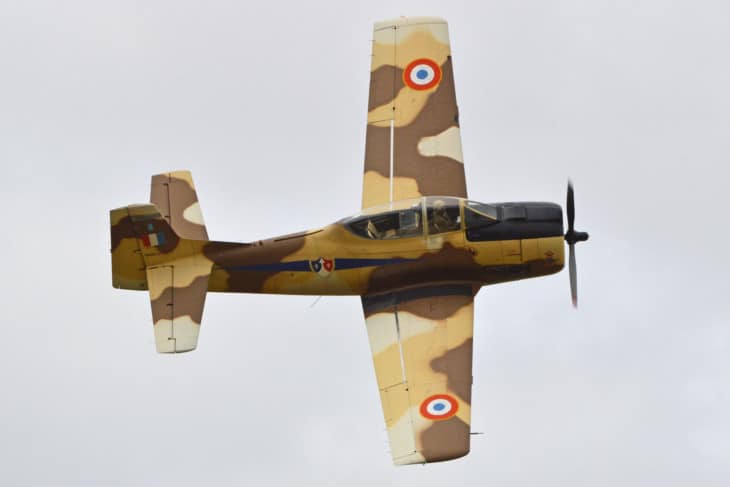
On September 24, 1949, the prototype XT-28 took its maiden flight. It was built as a replacement on the T-6 Texan single-engined trainer. In mid-June 1950, the United States Air Force version T-28A went to the Air Proving Ground at Eglin Air Force Base, Florida to perform suitability tests.
The aircraft was produced from 1950 to 1957 with a total number of 1,948 built. In 1962, the T-28Bs were modified for the United States Air Force for roles such as counter-insurgency, forward air controller, reconnaissance, and search and rescue in Vietnam. The converted aircraft were designated as T-28Ds.
The T-28D has a crew member of two. It has an external length of 10.06 meters, an external height of 3 meters, and a fuselage width of 1.6 meters. The tail height is 3.86 meters and the wheelbase is 2.8 meters. The aircraft has a wingspan of 12.22 meters and a wing area of 24.90 square meters. It has an empty weight of 2,914 kg and a maximum payload of 600 kg. The maximum takeoff and landing weights are 3,856 kg and 3,542 kg, respectively.
The T-28D version is powered by a single Wright R-1820 Cyclone engine. It is a nine-cylinder, single-row, supercharged, air-cooled radial engine rated at 1,425 horsepower thrust. It has two overhead valves per cylinder with a sodium-filled exhaust valve, a single-speed centrifugal supercharger, a Stromberg downdraft carburetor with an automatic mixture control fuel system, a dry sump with one pressure and one scavenging pump, and an air cooling system. The Th-28D has a maximum speed of 298 knots at 10,000 feet and a ferry range of 920 nautical miles. It can fly up to 35,500 feet and can climb at a rate of 3,540 feet per minute. The aircraft could also be loaded with six hardpoints with a total capacity of 540 kg.
Sources and references used for research and fact-checking.