

Table of Contents
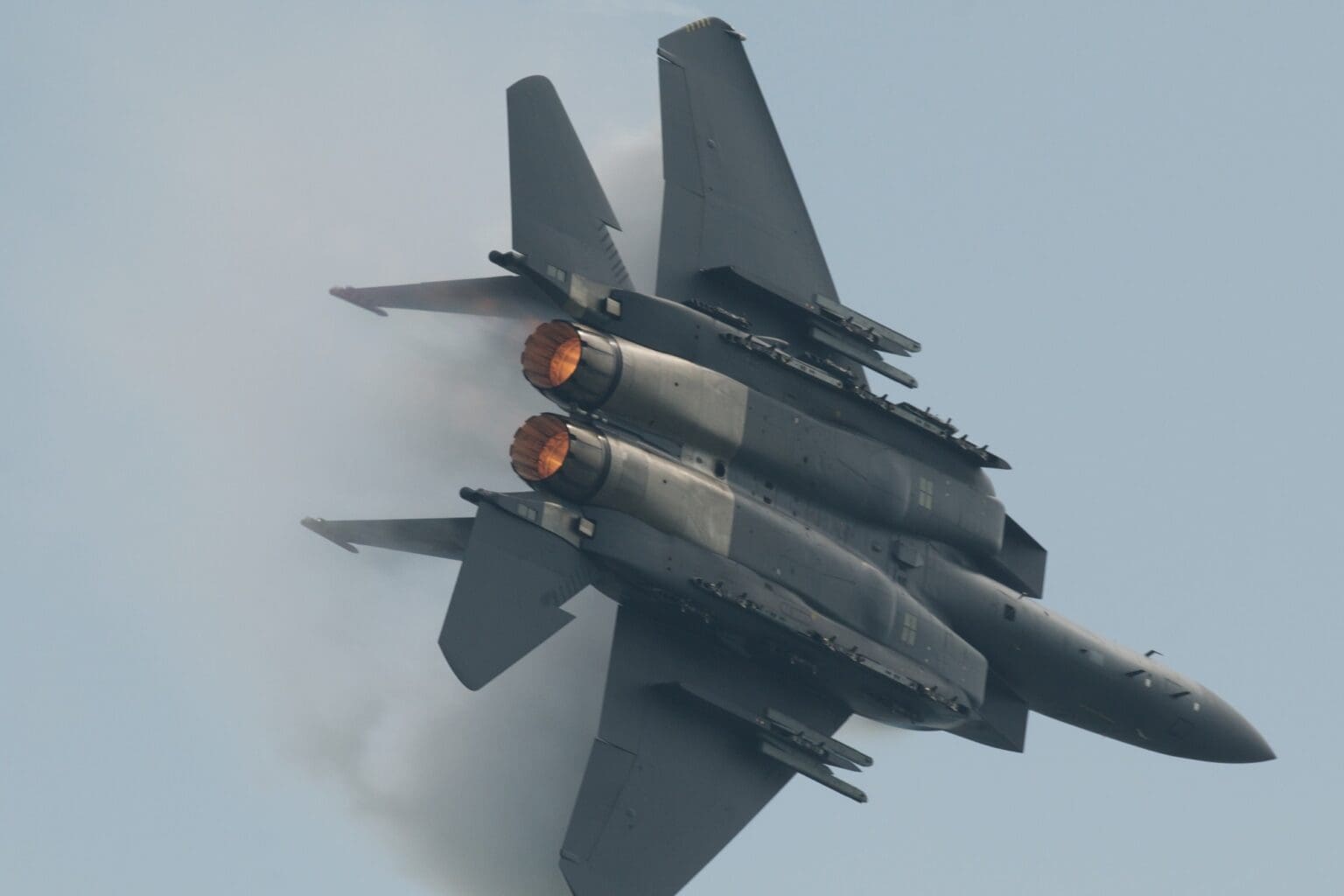
The most powerful jet in the Republic of Singapore Air Force (RSAF) is the Boeing F-15SG, and Singapore flies 40 of them. That is 16 more than it ever announced buying.
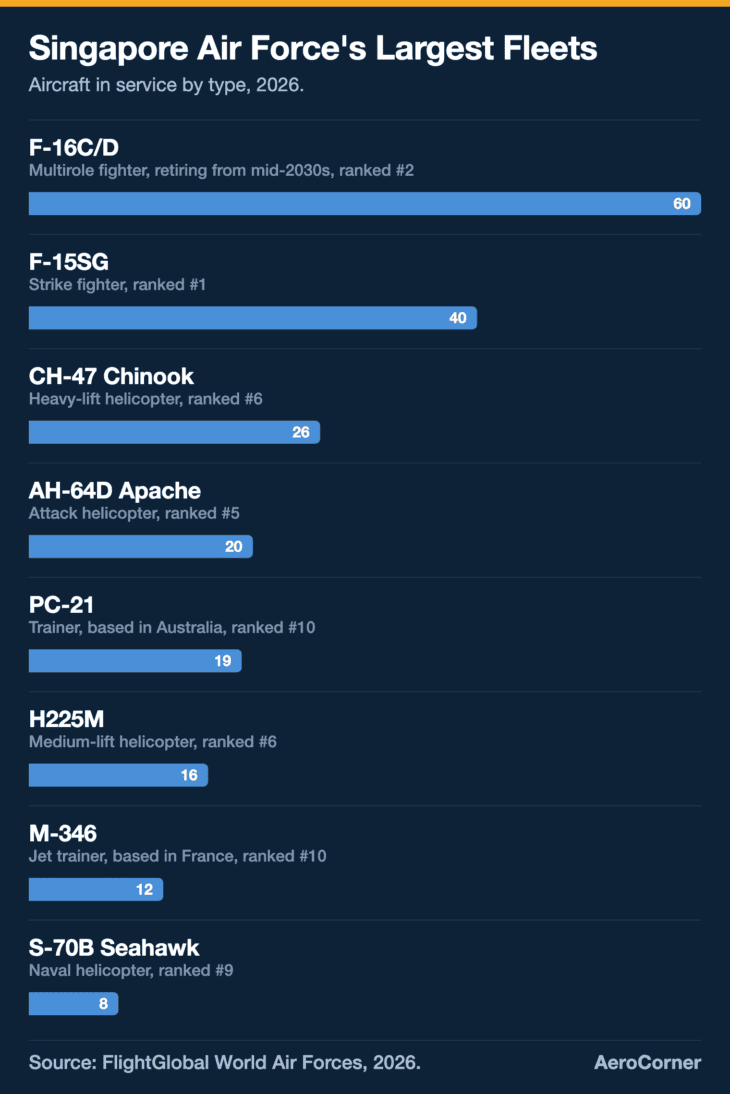
FlightGlobal’s World Air Forces 2026 directory, built on Cirium data from October 2025, counts 100 fighters in RSAF service: 40 F-15SGs and 60 F-16C/Ds. Behind them sit radar planes, tankers, attack helicopters and a training fleet spread across three other countries.
This guide ranks every type the RSAF flies by its weight in Singapore’s air power as of November 2026. It also covers the 20 F-35s on order, which have not been delivered yet, and why 12 of them are due to stay in the United States for good.
| Rank | Aircraft | Role | Fleet | On order |
|---|---|---|---|---|
| 1 | F-15SG Strike Eagle | Strike fighter | 40 | None |
| 2 | F-16C/D Fighting Falcon | Multirole fighter | 60 | Replaced by 20 F-35s |
| 3 | G550 AEW | Airborne early warning | 4 | None |
| 4 | A330 MRTT | Tanker and transport | 6 | None |
| 5 | AH-64D Apache | Attack helicopter | 20 | None |
| 6 | CH-47SD/F Chinook and H225M | Transport helicopters | 26 and 16 | None |
| 7 | Fokker 50 MPA | Maritime patrol | 5 | 4 P-8A Poseidon |
| 8 | C-130H and KC-130B/H | Airlift and tanker | 5 and 5 | Used C-130Hs, from 2025 |
| 9 | S-70B Seahawk | Naval helicopter | 8 | None |
| 10 | M-346, PC-21 and H120 | Trainers | 12, 19 and 5 | None |
How this ranking works
Each type is ranked by its weight in Singapore’s air power in November 2026: fighters first, then the radar planes and tankers that make them work, then helicopters, maritime patrol, airlift and training. Counts come from FlightGlobal’s World Air Forces 2026 directory, which lists aircraft in use as of October 2025, because Singapore’s Ministry of Defence does not publish fleet numbers. The F-35s are covered separately because none has been delivered. Drones are left out.
1. F-15SG Strike Eagle: The Heavy Hitter
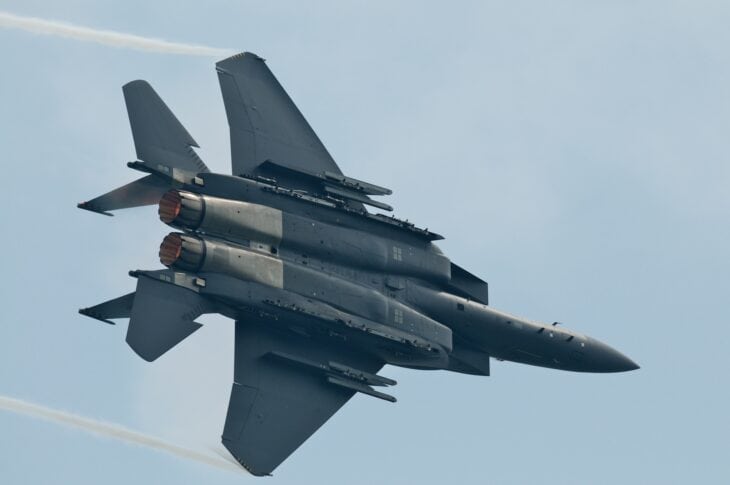

The F-15SG is Singapore’s version of the F-15E Strike Eagle, a two-seat jet built for long-range strike as well as air combat. Singapore signed a $1.6 billion contract with Boeing for 12 in December 2005, to fill the gap left by its retired A-4SU Super Skyhawks.
In October 2007, the Ministry of Defence ordered four more and exercised an option for eight, which took the public total to 24. Each jet has two General Electric F110-GE-129 engines and an APG-63(V)3 radar, an active electronically scanned array (AESA) that sweeps electronically rather than by moving the antenna.
The 16 jets Singapore never announced
Singapore’s public F-15SG orders add up to 24. In 2014, analysts at IHS Jane’s found from Boeing financial statements, aircraft registration filings and US congressional reports that the fleet had quietly grown to 40. Singapore never announced the extra 16, and its defence ministry still publishes no fleet counts.
The first jet was delivered in May 2009, and the final batch of eight arrived between early 2016 and July 2017. In Singapore, the F-15SGs fly with 142 and 149 Squadrons at Paya Lebar Air Base.
A second group lives in Idaho. The Peace Carvin V detachment, inaugurated at Mountain Home Air Force Base in November 2009, trains RSAF crews with the US Air Force’s 428th Fighter Squadron, the “Buccaneers,” before they join 149 Squadron at home.
The F-15SG ranks first because it carries the most weapons the farthest, with the best radar in the force. It is also the jet Singapore plans to keep: after the F-16s go, the fighter force will be F-15SGs and F-35s.
2. F-16C/D Fighting Falcon: The Biggest Fleet, Now on Notice
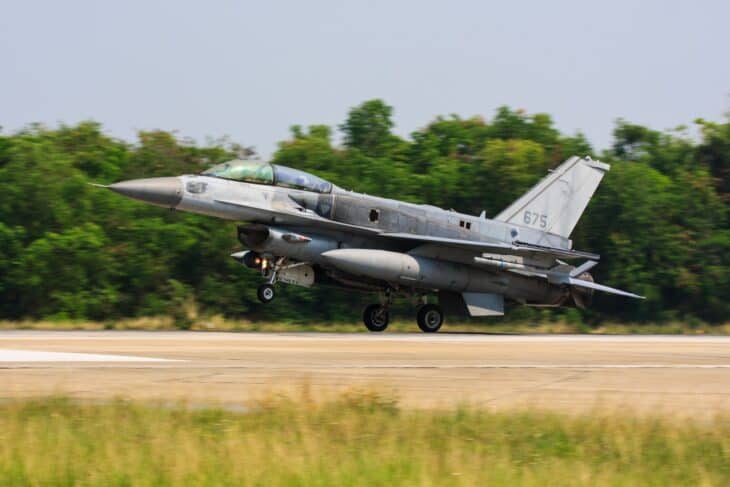

The F-16 is the RSAF’s most numerous aircraft, with 60 F-16C/Ds counted by FlightGlobal. Most are Block 52 and 52+ jets, and roughly two-thirds are two-seat D models, according to Asian Military Review.
In 2015, Lockheed Martin won a $914 million US government contract for most of a mid-life upgrade, with ST Engineering doing the work at Paya Lebar. Defense News describes the upgrade as bringing the jets to the F-16V configuration, and Singapore’s Pioneer magazine reported upgraded jets flying in a US exercise in September 2023.
The F-16 squadrons fly from Tengah Air Base in the west of the island. Another group trains in Arizona, at Luke Air Force Base, under the Peace Carvin II program with the US Air Force’s 425th Fighter Squadron.
It ranks second, despite outnumbering the F-15SG three to two, because it is the fleet being retired. Defence Minister Ng Eng Hen told Parliament on February 28, 2024, that the F-16s will be phased out progressively from the mid-2030s, replaced by the F-35. Our F-35 vs F-16 comparison sets the two side by side.
3. G550 AEW: The Eyes of a Very Small Country
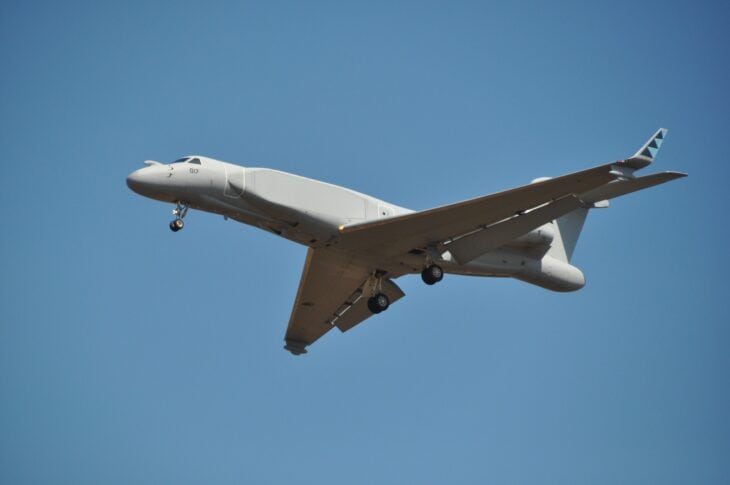

Singapore flies four Gulfstream G550 business jets converted by Israel’s IAI and Elta into airborne early warning (AEW) aircraft. Instead of a rotating dish, they carry fixed EL/W-2085 radar arrays along the fuselage.
They fly with 111 Squadron at Tengah. For a country this small, a radar that sees from high altitude is the difference between minutes of warning and seconds, which is why four business jets rank above the whole helicopter force.
4. A330 MRTT: The Tankers That Give the Fighters Reach
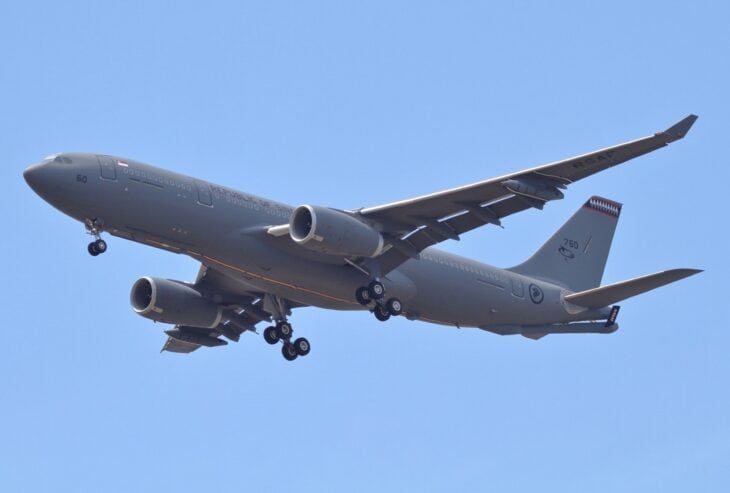

Six Airbus A330 MRTT tankers fly with 112 Squadron at Changi Air Base (East). They refuel the F-15SGs and F-16s in the air, and they double as long-range transports for troops, cargo and medical evacuation.
Singapore’s training areas sit abroad and its own airspace is tiny, so a jet that cannot refuel cannot go far. The MRTTs are what let the fighters reach those training grounds and exercises far from home.
5. AH-64D Apache: The Attack Helicopters
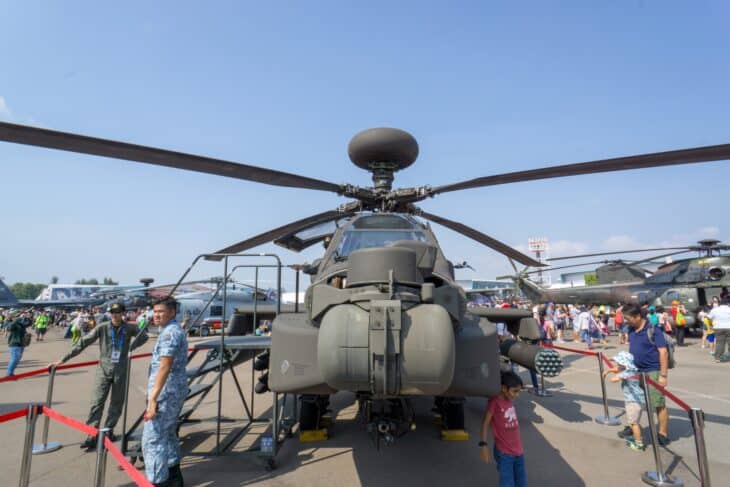

FlightGlobal counts 20 AH-64D Apache Longbows, the version with the mast-mounted radar dome. In Singapore they fly with 120 Squadron at Sembawang Air Base, the RSAF’s helicopter base in the north.
Part of the fleet trains in Arizona under the Peace Vanguard program. The Apaches rank fifth because they are the RSAF’s main tool for supporting the Army on the ground.
6. CH-47 Chinook and H225M: The Lift Helicopters
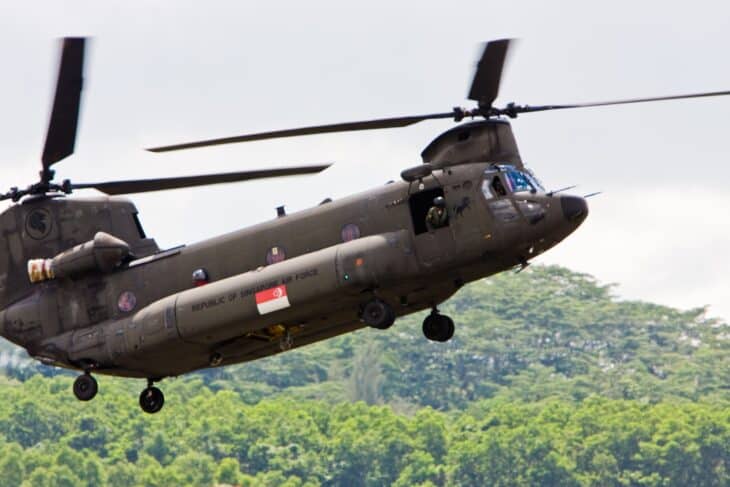

Singapore ordered both new types in 2016, and the first of each arrived in 2021. On April 11, 2024, the CH-47F Chinook and the H225M, formerly called the EC725 Caracal, were declared fully operational at Sembawang.
The H225Ms replaced AS332M Super Pumas flown since 1985, and they fly with 125 Squadron. The CH-47Fs replaced older Chinooks flown since 1994, and FlightGlobal counts 16 H225Ms and 26 Chinooks of both generations.
According to Singapore’s Pioneer magazine, the H225M has about 20% more range than the Super Puma and can carry up to 10,470 lb (4,750 kg) slung underneath. Both types fly search and rescue, medical evacuation, disaster relief and troop lift.
7. Fokker 50 MPA: The Sea Patrol, With P-8s Coming
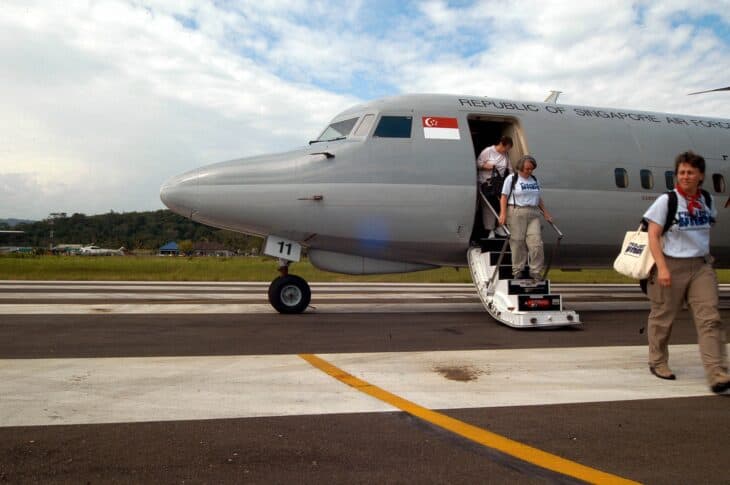

Five Fokker 50 maritime patrol aircraft (MPA) watch the Singapore Strait, one of the busiest shipping lanes in the world. They have flown since 1993, and they have no real anti-submarine capability.
That is changing. On September 10, 2025, Defence Minister Chan Chun Sing announced an order for four Boeing P-8A Poseidons, the maritime patrol version of the 737-800 that can hunt submarines with torpedoes and sonobuoys.
The US approved the sale in January 2026 as part of a package worth about $2.3 billion that also covers torpedoes and air defense systems. No delivery date has been published.
8. C-130H and KC-130: The Hercules Fleet, Renewed Secondhand
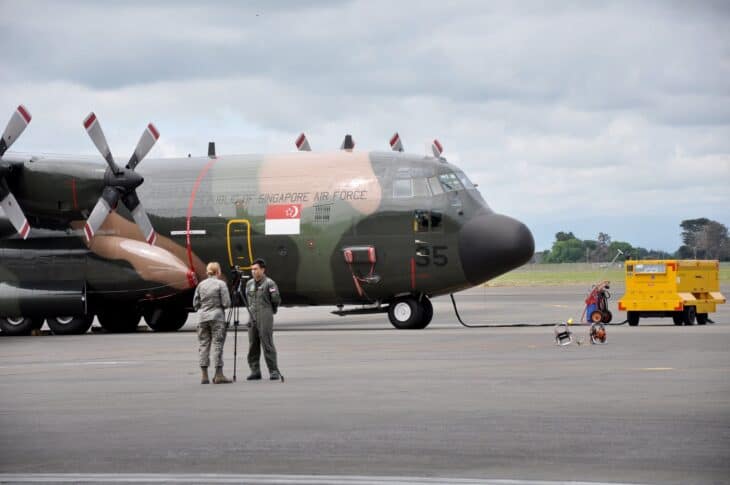
The RSAF flies 10 legacy Hercules with 122 Squadron at Paya Lebar: four C-130Bs and six C-130Hs, some of them fitted as KC-130 tankers. Singapore bought its first B models from 1977, and four of them were secondhand, which makes those airframes more than 60 years old.
Instead of a new airlifter, the RSAF is buying used C-130Hs to replace the Bs. Breaking Defense tracked three ex-Spanish aircraft arriving between mid-December 2025 and January 30, 2026, including a KC-130H tanker and Singapore’s first stretched C-130H-30.
Chief of Air Force Major-General Kelvin Fan said in February 2026 that the C-130 remains the best platform for the next 15 to 20 years.
9. S-70B Seahawk: The Air Force Helicopters That Fly From Navy Ships
Eight S-70B Seahawks belong to the RSAF but fly from the Republic of Singapore Navy’s frigates, hunting submarines and surface ships. They are assigned to 123 Squadron at Sembawang.
10. M-346, PC-21 and H120: The Trainers That Live Abroad
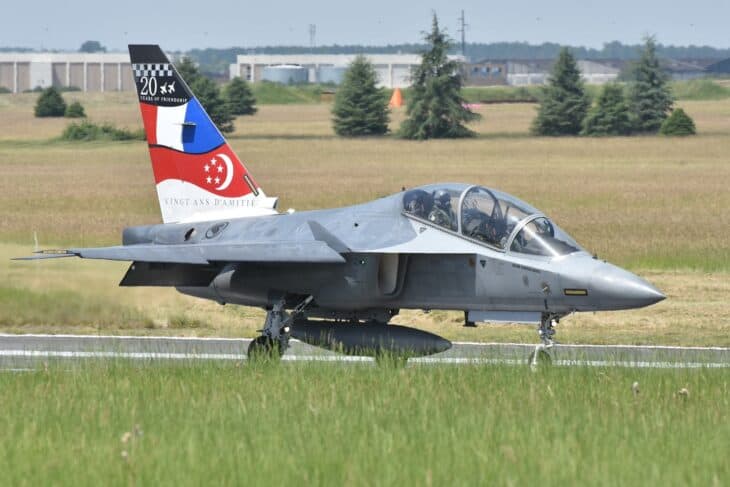
The RSAF’s main training fleets are based abroad. Nineteen Pilatus PC-21 turboprops fly with 130 Squadron at RAAF Base Pearce near Perth, home ground of the Royal Australian Air Force.
Twelve Leonardo M-346 Masters, the jet trainers that prepare pilots for the fighters, fly with 150 Squadron at Cazaux Air Base in southwest France. Five H120 helicopters, formerly the EC120, train helicopter pilots.
What Comes Next: 20 F-35s, Split Across Two Continents
Singapore first ordered four F-35B short-takeoff, vertical-landing jets in 2019, with an option for eight more that it exercised in 2023. On February 28, 2024, it added eight conventional F-35As, for a total of 20.
MINDEF’s plan is four F-35Bs in 2026, the other eight in 2028, and the F-35As around 2030. The Straits Times reported in September 2026 that the whole buy, with support equipment, costs $4.06 billion.
The same report changed the picture of where they will live. A US Department of War report made public on August 3, 2026, places all 12 F-35Bs permanently at Ebbing Air National Guard Base in Fort Smith, Arkansas, where RSAF F-35 training happens, and the eight F-35As at Tengah.
The F-35A main operating base at Tengah is due to be running between July and September 2029. Until then, Singapore’s stealth fighters will be an American-based force.
Does Singapore have the F-35 yet?
Not as of mid-November 2026. FlightGlobal reported on November 12, 2026, that RSAF pilots were training in F-35 simulators with US and South Korean pilots while Singapore waits for its first jets, due at Ebbing in Arkansas by the end of the year. Many reports say the F-35s will move to Tengah from 2029, but the US Department of War report keeps all 12 F-35Bs in Arkansas, so only the eight F-35As are planned for Singapore.
Why So Much of the RSAF Is Overseas
Singapore is a city-state whose airspace is crowded with Changi Airport traffic. Fighters cannot train at full speed over it, so the RSAF rents room abroad: Idaho and Arizona for fighters, Arizona for Apaches, Western Australia and France for trainees, and soon Arkansas for F-35s.
The bases at home are moving too. MINDEF plans to close Paya Lebar Air Base, home of the F-15SGs and the Hercules, around 2030 or later, once Tengah and Changi Air Base (East) are expanded to take its aircraft. In November 2024 the minister said the move is on track but a firm date would be premature.
The RSAF began on September 1, 1968, as the Singapore Air Defence Command, raised from scratch as Britain announced its withdrawal, and took its current name on April 1, 1975. How it stacks up against its neighbors, from the Indonesian Air Force to the Philippine Air Force, is covered in our rankings of the largest air forces in the world and the best air forces in the world.
FAQ
Sources and references used for research and fact-checking.
- FlightGlobal, World Air Forces 2026
- Airforce Technology, F-15SG Multi-Role Fighter Aircraft
- Global Business Press, Singapore quietly expanding F-15 fleet
- MINDEF Pioneer, Five facts about Peace Carvin V
- MINDEF Pioneer, MINDEF to acquire 8 F-35A fighter jets; platform upgrades on track
- Asian Military Review, Better than ever
- AIN, Upgrade of Singapore's F-16 fleet goes ahead
- MINDEF Pioneer, Upgraded F-16s, tanker jets debut at US exercise
- Aviation Week, Singapore Sends Upgraded F-16s To U.S.-Based Detachment
- Defense News, Singapore is in line to get its first F-35 fighters later this year
- The Straits Times via Asia News Network, Eight of Singapore's 20 F-35 jets will be based at Tengah, the rest in the US: Dept of War report
- FlightGlobal, Singapore pilots in advanced F-35 simulator exercise
- The Defense Post, Singapore to acquire four P-8A Poseidon aircraft
- Al Jazeera, US approves $2.3bn sale of torpedoes, air defences, aircraft to Singapore
- Breaking Defense, Singapore acquires used C-130Hs to replace even older C-130s
- MINDEF Pioneer, RSAF's latest helicopters turn fully operational
- MINDEF, MINDEF Signs Contracts to Acquire New Medium- and Heavy-Lift Helicopters
- MINDEF, Reply to parliamentary question on the relocation of Paya Lebar Air Base
- MINDEF, Fact Sheet: 2019 Protocol of Amendment to the 1990 Memorandum of Understanding
- Republic of Singapore Air Force, Birth of the Singapore Air Defence Command
- Wikipedia, Republic of Singapore Air Force
Get the Newsletter
The latest aviation news and stories sent to your inbox.
About the Author

Tim is the owner and lead editor of AeroCorner since 2019, overseeing aviation content covering aircraft, airlines, airports, and the broader aviation industry. Through years of researching, writing, editing, and publishing aviation-focused content, he has developed extensive practical knowledge of commercial aviation and air travel. Based in Asia and a frequent traveler himself, Tim also brings firsthand passenger experience to AeroCorner’s coverage. Outside of publishing, he has also explored aviation firsthand through hands-on flight training in New Zealand.