

Table of Contents
The Italian Air Force is built around two fighters. FlightGlobal’s World Air Forces 2026 directory counts 88 Eurofighter Typhoons and 31 F-35s in day-to-day use, and Italy has 24 more Typhoons and dozens more F-35s on order.
Its Italian name is the Aeronautica Militare. It flies both the conventional F-35A and the short-takeoff F-35B, and it builds its own F-35s at a final assembly plant in Cameri, near Milan.
This guide ranks every aircraft type it flies by its weight in Italian air power as of October 2026. It then covers the nuclear mission, the 2026 deployments to the Gulf and the Baltic, the next fighter Italy is building with Britain and Japan, and the US Air Force base it hosts at Aviano.
| Rank | Aircraft | Role | Fleet | Status |
|---|---|---|---|---|
| 1 | Eurofighter Typhoon (F-2000) | Air defense, multirole | 88 | 24 Tranche 4+ jets on order from 2029 |
| 2 | F-35A and F-35B Lightning II | Stealth multirole, strike | 31 | 95 planned for the Air Force |
| 3 | Panavia Tornado ECR and IDS | Radar suppression, strike | 12 ECR, last IDS | IDS stood down July 2025, ECR has no end date |
| 4 | KC-767A and KC-130J | Aerial refueling | 4 and 4 | 6 A330 MRTTs ordered April 2026 |
| 5 | Gulfstream E-550A and G550 EW | Early warning, electronic warfare | 2 and 4 | Third E-550A in testing, 2 EA-37Bs on order |
| 6 | MQ-9A Reaper | Armed surveillance drone | About 5 | 2 more due by the end of 2027 |
| 7 | C-130J and C-130J-30 | Tactical and long-range airlift | 9 | In service since 2000 |
| 8 | C-27J Spartan and EC-27J | Light airlift, electronic warfare | 12 airframes | MC-27J gunship kits by 2030 |
| 9 | P-72A | Maritime patrol | 4 | Replacement program of 6 aircraft planned |
| 10 | M-346 (T-346A) | Advanced jet trainer | 27 | 20 more ordered, 15 for the Frecce Tricolori |
| 11 | M-345 and MB-339 | Basic jet trainer, display team | 9 and 25 | M-345 in service June 2025 |
| 12 | SF-260 and P.180 | Primary and multi-engine training | 29 and 10 | In service |
| 13 | HH-101A, HH-139, TH-500B | Combat rescue, search and rescue, training | 12, 30, 37 | 30 AW169 trainers planned |
| 14 | A319CJ, G650ER, Falcon 900 | Government transport | 3, 4, 3 | G650ERs delivered 2025 |
How this ranking works
Aircraft are ranked by their weight in Italian air power in October 2026: combat jets first, then the tankers, radar planes and drones that let them fight, then airlifters, patrol aircraft, trainers, helicopters and the government fleet. Counts come from FlightGlobal’s World Air Forces 2026 directory, which lists only aircraft in day-to-day use and excludes stored jets. The Italian Navy’s own F-35Bs and AV-8B Harriers are not counted here.
1. Eurofighter Typhoon: 88 Jets Holding the Line
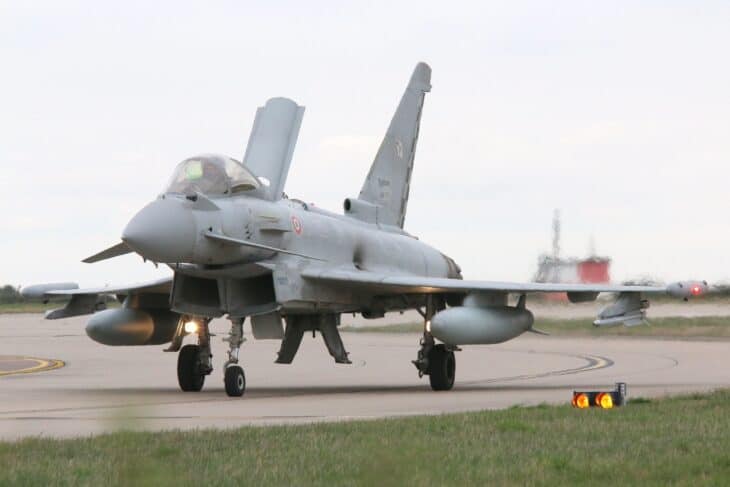
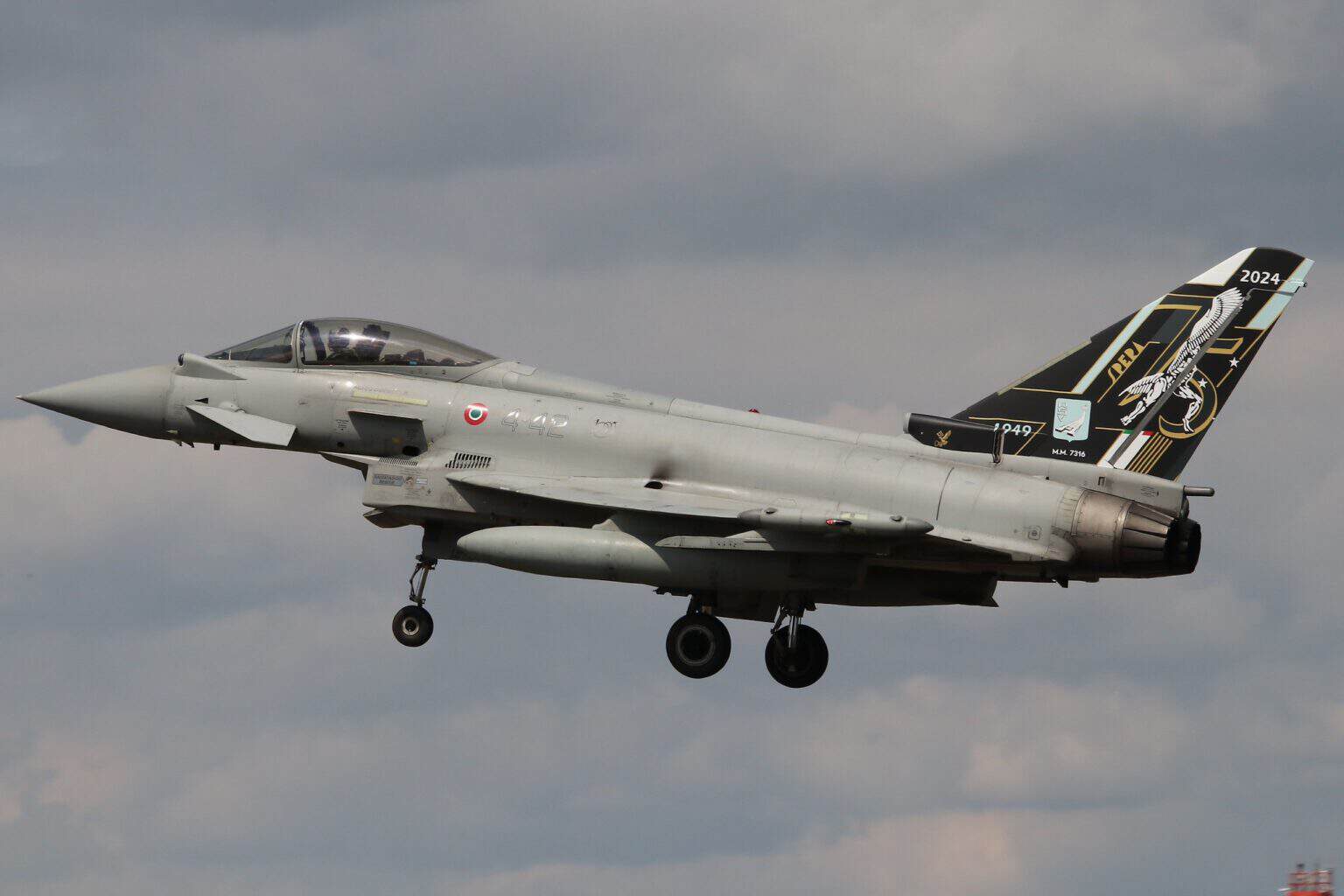
The Eurofighter Typhoon, designated F-2000 in Italian service, is the backbone of the force. The first one landed at Grosseto on March 16, 2004, and the type now equips six squadrons at four bases: Grosseto, Gioia del Colle, Trapani and Istrana.
FlightGlobal counted 88 in day-to-day use in its 2026 directory. Italy took the last of its original batch in October 2020, and sources give the total delivered as 95 or 96.
On December 23, 2024, Italy ordered up to 24 new Typhoons to replace its oldest Tranche 1 jets. Janes reported 22 single-seat and two two-seat aircraft, with the first due in 2029, replacing 26 Tranche 1 fighters that retire by then. Leonardo says the new jets will serve “well beyond 2060.”
The Typhoons fly Italy’s quick reaction alert and most of its NATO air policing. Four of them took over the Baltic mission at Šiauliai, Lithuania, on July 31, 2026, Italy’s 11th rotation in the Baltic states.
Two drone kills in 30 days
On August 14, 2026, an Italian F-2000A scrambled from Šiauliai shot down a drone over Latvia, which The Aviationist reported as apparently the first time an Italian Typhoon had opened fire during an interception. On September 15, Italian Typhoons downed a second drone over Lithuania, one that reportedly crossed from Belarus.
2. F-35A and F-35B: The Stealth Fleet Italy Builds Itself
.jpg)
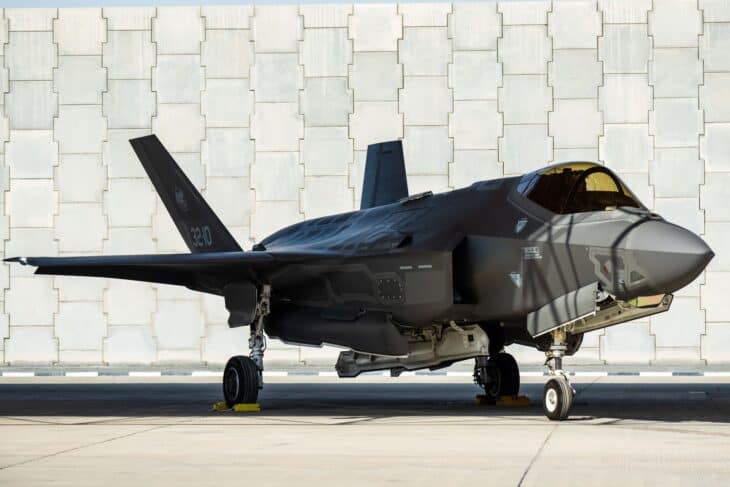
Italy’s planned F-35 Lightning II fleet is 115 jets: 75 F-35As and 40 F-35Bs. The Air Force gets all 75 As and 20 of the Bs, 95 in total, and the Navy gets the other 20 Bs. The order grew from 90 in 2024, and Lockheed Martin lists the extra 25 as added in 2025.
FlightGlobal counted 28 Air Force F-35s in front-line use plus three in training as of October 2025. Across both services, 40 had been delivered by January 2026, according to a Court of Auditors report covered by L’Indipendente, which put Italy’s spending on the program at €11.84 billion from 1998 to 2025.
The F-35As fly with the 32nd Wing at Amendola and the 6th Wing at Ghedi, where they replace the Tornado. The Air Force’s F-35Bs, built to operate from short runways, went to the reactivated 101st Squadron at Amendola on July 1, 2025.
Every Italian F-35 is assembled at Cameri, a plant owned by the Italian defense ministry and run by Leonardo with Lockheed Martin. It is one of only two F-35 final assembly lines outside the US, alongside Nagoya in Japan, and the only one outside the US that builds F-35Bs. It also builds jets for the Netherlands and Poland.
The first F-35 to cross the Atlantic was Italian
In February 2016, the Cameri-built F-35A known as AL-1 flew from Italy to Naval Air Station Patuxent River in Maryland, the first transatlantic crossing by any F-35. An Italian Air Force KC-767 tanker refueled it seven times on the way.
3. Panavia Tornado: The Last of the Swing-Wings
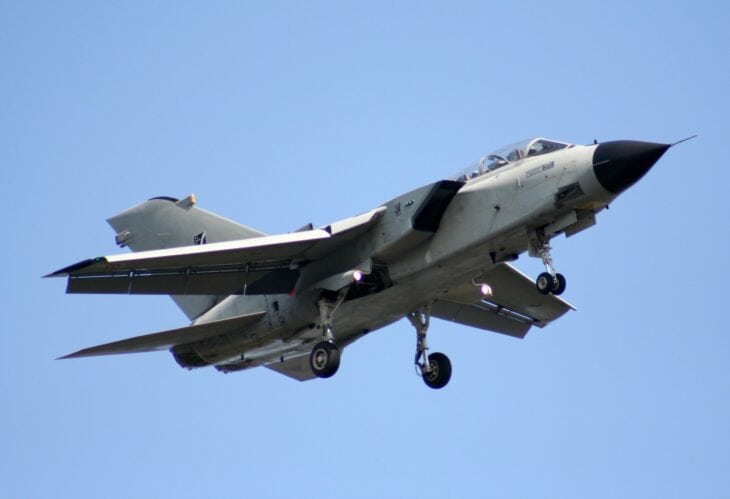
The Panavia Tornado flew Italy’s strike missions for more than 40 years. The 6th Wing at Ghedi held a ceremony in July 2025 to decommission the IDS strike version and its IDS-T trainers, and said a few jets with flying hours left could pass to the last Tornado squadron.
What survives is the Tornado ECR, built to find and destroy enemy air defense radars. FlightGlobal counted 12 ECRs in its 2026 directory, which also still listed 19 IDS jets from data drawn just after the ceremony.
The 155th Squadron at Ghedi is now the last Italian unit flying the type. There is no announced retirement date: estimates in the trade press run from about 2027 to 2030.
Italy’s other old attack jet is already gone. The AMX Ghibli light attack jet was retired at Istrana on April 5, 2024, after 35 years in service.
4. KC-767A and KC-130J: A Small Tanker Fleet About to Double
.jpg)
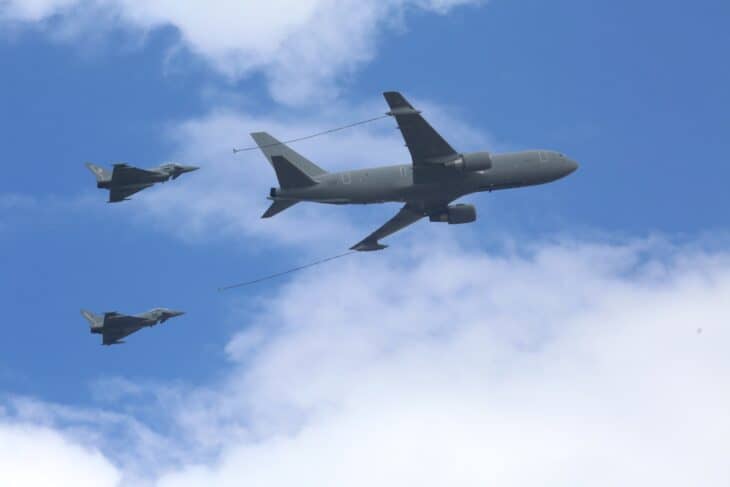
Italy’s long-range tankers are four Boeing KC-767As with the 14th Wing at Pratica di Mare, near Rome. The fleet passed 50,000 flight hours on July 20, 2026.
Four is not many for a force flying fighters over Kuwait, Saudi Arabia and the Baltic. Italy planned to buy Boeing KC-46s in 2022, then halted the purchase in the summer of 2024, citing “changed and unforeseen needs.”
It went to Airbus instead. A contract for six new tankers, worth €1.393 billion before tax, was signed on April 16, 2026, and published on May 19. Every outlet identifies the type as the A330 MRTT, and no delivery dates have been released.
The Air Force also has four KC-130Js, Hercules transports fitted for aerial refueling.
5. E-550A and G550: The Business Jets That Watch and Listen
.jpg)
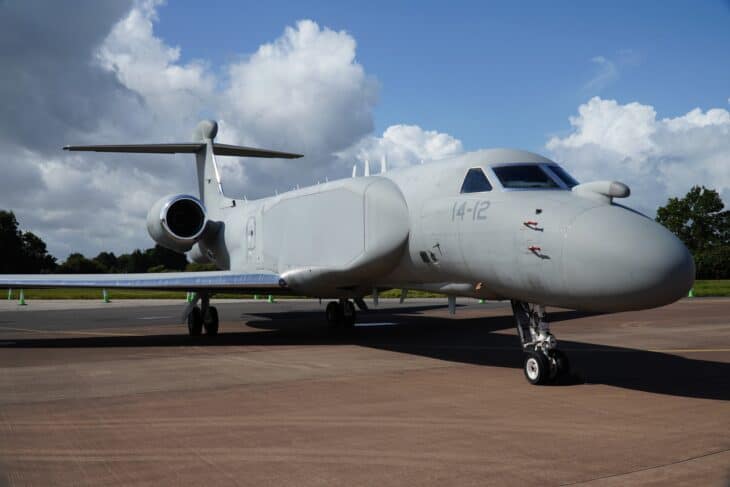
Italy’s airborne early warning aircraft are two E-550As, Gulfstream G550 business jets fitted with an Israeli radar by IAI’s ELTA division. A third was flight testing in Savannah, Georgia, in May 2026, and contracts signed in 2022 and 2023 point to five in total.
FlightGlobal also lists four G550s in an electronic warfare role and one King Air 350 for reconnaissance. The bigger plan is a family of up to 11 G550s for surveillance and signals intelligence. Its latest phase, running from 2024 to 2034, is worth €1.63 billion, according to ARES Difesa.
The most powerful of them will be the EA-37B Compass Call, a G550 that jams enemy communications and radar. L3Harris announced a $300 million contract for two in July 2025, the first sale of the type outside the US.
6. MQ-9A Reaper: The Drone Fleet Hit in Kuwait
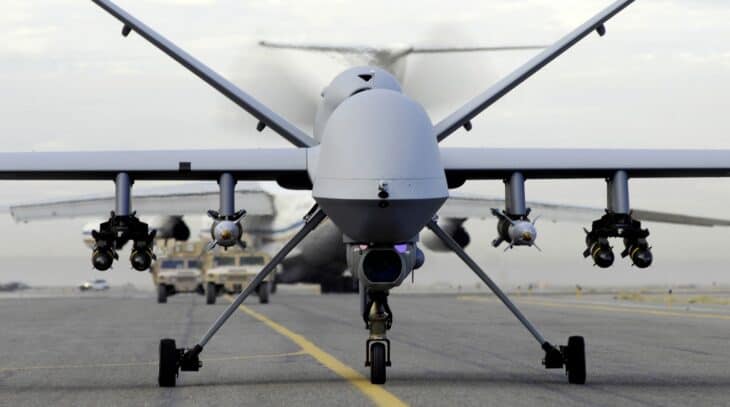

Italy’s MQ-9A Reapers, which it calls the Predator B, fly with the 32nd Wing from Amendola and, in their newer Block 5 form, from Sigonella in Sicily, where the upgraded version was formally phased in on April 16, 2025.
On March 15, 2026, an Iranian drone strike on Ali Al Salem Air Base in Kuwait destroyed one inside its shelter. The Aviationist described it as one of the six Predator Bs belonging to the 32nd Wing, which leaves about five.
On September 8, 2026, General Atomics announced an Italian order for two more Block 5 Reapers, due at the end of 2027. The older MQ-1 Predator retired on December 19, 2022, after more than 30,000 flight hours. Our comparison of the Reaper and the Predator explains what changed between them.
7. C-130J Hercules: The Airlift Workhorse
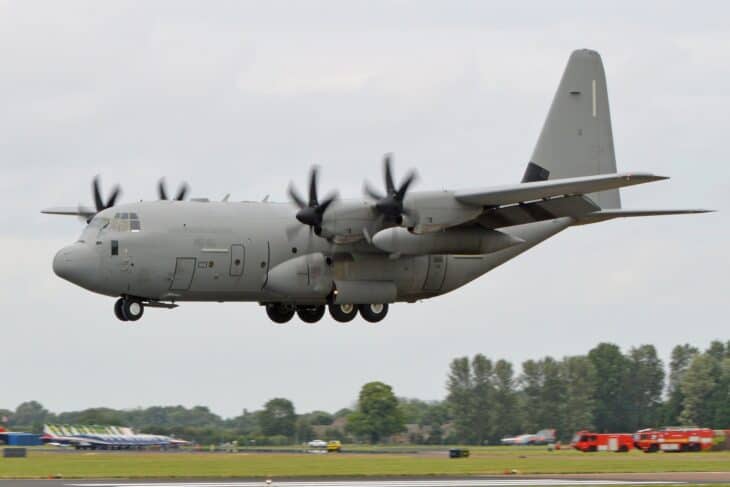
The 46th Air Brigade at Pisa flies Italy’s C-130J Super Hercules fleet, in both the standard length and the stretched C-130J-30. The type has served with the brigade since 2000.
Not all of them fly. The defense ministry described “about 20” in service in 2022, while FlightGlobal counts nine transports in day-to-day use plus the four KC-130J tankers.
Italy has not ordered a replacement, and the C-130J remains the largest airlifter in its fleet.
8. C-27J Spartan: The Home-Built Airlifter
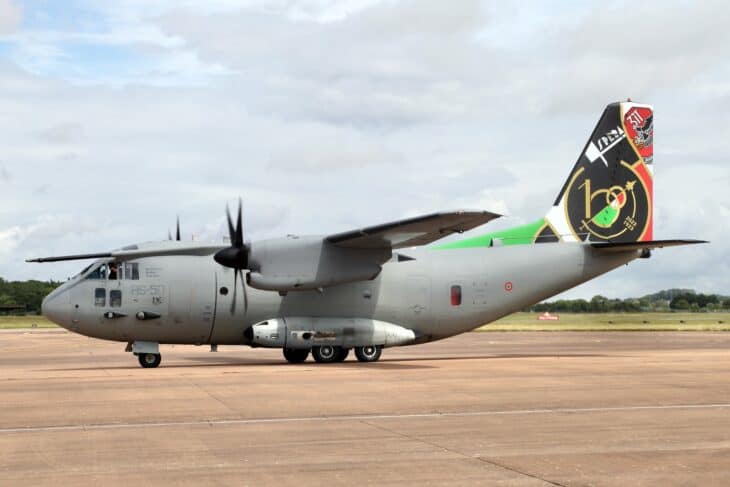
The C-27J Spartan is Leonardo’s own twin-turboprop transport, and the Air Force flies 12 of them from Pisa and Pratica di Mare. Leonardo won a support contract for the fleet in December 2025.
Three are EC-27J electronic warfare aircraft, and FlightGlobal counts seven as transports. The Air Force also plans to field at least four MC-27J Praetorian gunship kits by 2030: mission systems rolled on and off existing airframes, with no extra C-27Js bought for the role.
9. P-72A: Hunting Submarines From Sicily
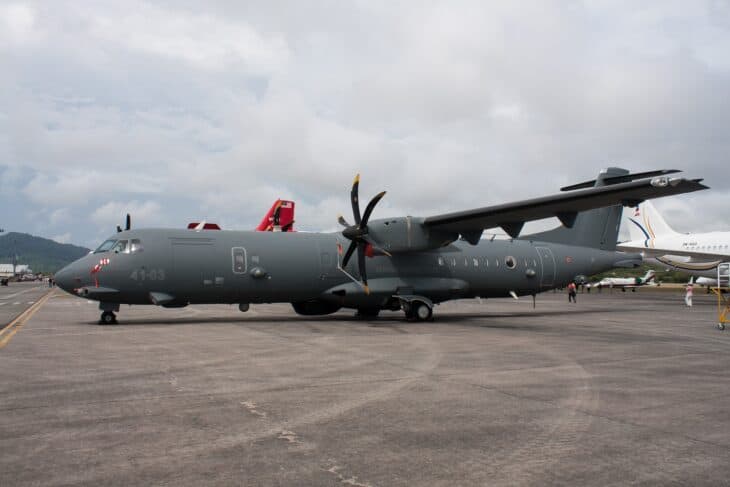

Four P-72As, maritime patrol versions of the ATR 72 turboprop airliner, fly from Sigonella in Sicily with the 41st Wing, which was renamed the 41st Wing and Antisubmarine Aviation on January 21, 2026.
The P-72A is a stopgap. Italy’s 2025 to 2027 defense plan lists a new program for six multirole maritime patrol aircraft, worth more than €500 million, with no type chosen yet.
10. M-346: The Trainer the World Comes to Fly
.jpg)
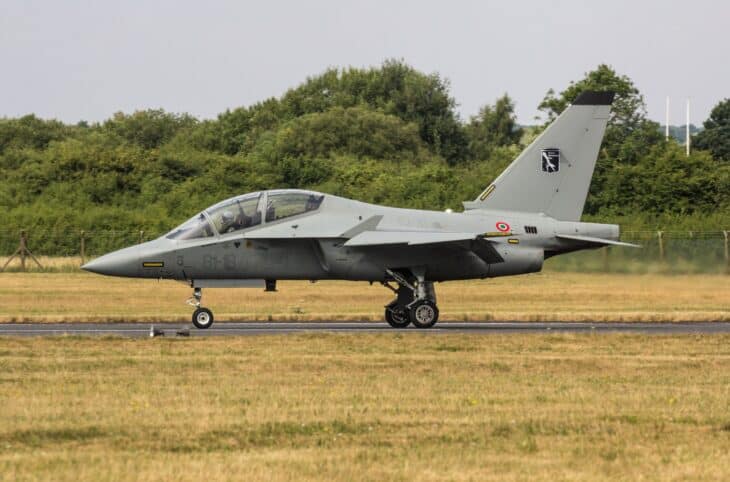
The Leonardo M-346, called the T-346A in Italian service, is the last jet a pilot flies before a front-line fighter. Italy bought 18 of its own, and FlightGlobal counts 27 at the International Flight Training School, which the Air Force runs with Leonardo.
The school began courses at Lecce-Galatina in June 2021 and moved its advanced phase to Decimomannu, Sardinia, in July 2022, where it has 22 M-346s. Leonardo says 15 countries have chosen it, and on September 8, 2025, it began training its first class of 10 US Air Force cadets.
Twenty more are coming. A defense ministry decision signed September 19, 2025, buys 20 T-346As: 15 for the Frecce Tricolori display team and five more for the flight school.
11. M-345 and MB-339: The Jet Trainers and the Frecce Tricolori


The Leonardo M-345, or T-345A, entered service with the 61st Wing at Galatina on June 12, 2025. Italy has ordered 18 against a requirement for up to 45, and FlightGlobal counted nine in use with eight still to come.
It replaces the Aermacchi MB-339, which entered service in 1979. European Security and Defence counted about 48 MB-339s still in service in June 2025, while FlightGlobal lists 25 in day-to-day training use.
The most famous MB-339s trail red, white and green smoke. The Frecce Tricolori, founded on March 1, 1961, at Rivolto, fly the MB-339PAN in a nine-ship formation plus a soloist, and 2027 is expected to be their last full season on it. The M-346 takes over from about 2028.
The Frecce over Washington
On August 21, 2024, the Frecce Tricolori flew a single east-to-west pass just south of the National Mall in Washington, DC. It was the first time their colored smoke had been seen over the capital since their previous North American tour in 1992.
12. SF-260 and P.180: Where Pilots Start
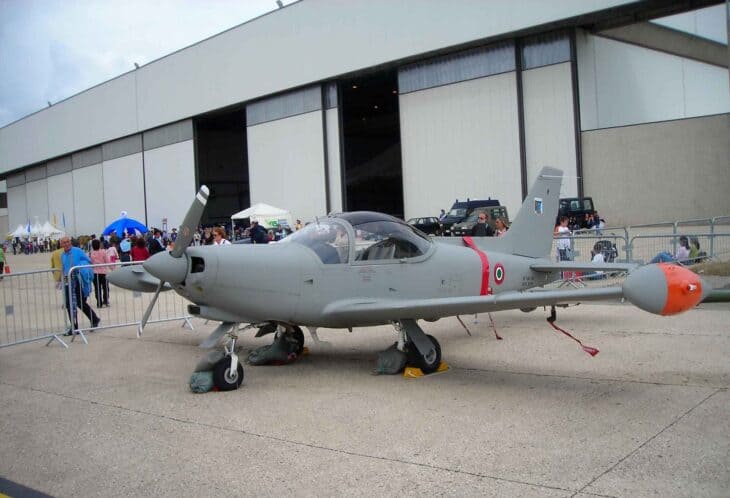

Italian military pilots begin on the SF-260, a fast piston trainer designated T-260B, with the 70th Wing at Latina. FlightGlobal counts 29.
The fleet suffered a fatal crash on October 1, 2025, that killed the 70th Wing’s commander, Colonel Simone Mettini, and a student pilot. Italy has not announced a replacement for the SF-260.
FlightGlobal lists 10 Piaggio P.180 Avanti twin turboprops in the training fleet and six more as light transports, with seven newer Evo versions on order. The defense ministry says four are equipped to calibrate navigation aids.
13. HH-101A, HH-139 and TH-500: The Helicopters
.jpg)
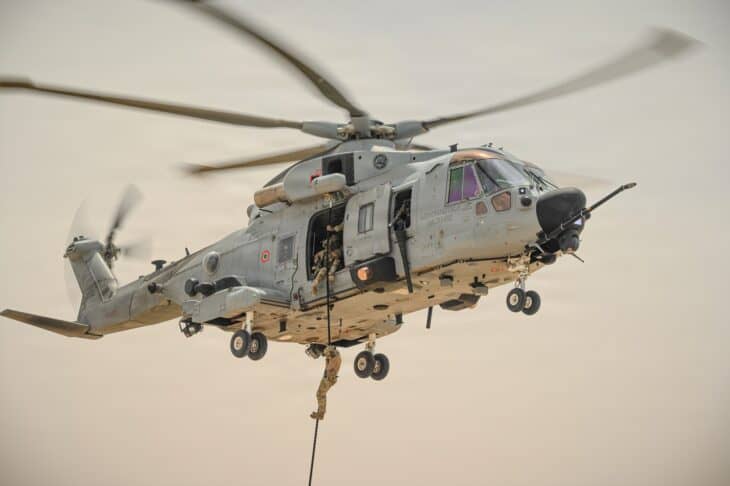
The 12 HH-101A Caesars, an Italian version of the AW101 Merlin, fly combat search and rescue and support special operations. At Grazzanise, home of the 21st Squadron, they replaced the old HH-212, which made its last flight on February 22, 2024.
About 30 HH-139s, based on the AW139, fly search and rescue for the 15th Wing from Cervia and other bases, covering civilian emergencies as well as military ones.
Helicopter pilots learn on 37 TH-500Bs, the Italian-built version of the MD 500. Their school, the 72nd Wing, moved from Frosinone to Viterbo on January 15, 2026, and plans to replace the TH-500s with 30 AW169s.
14. A319CJ, G650ER and Falcons: The Government Fleet
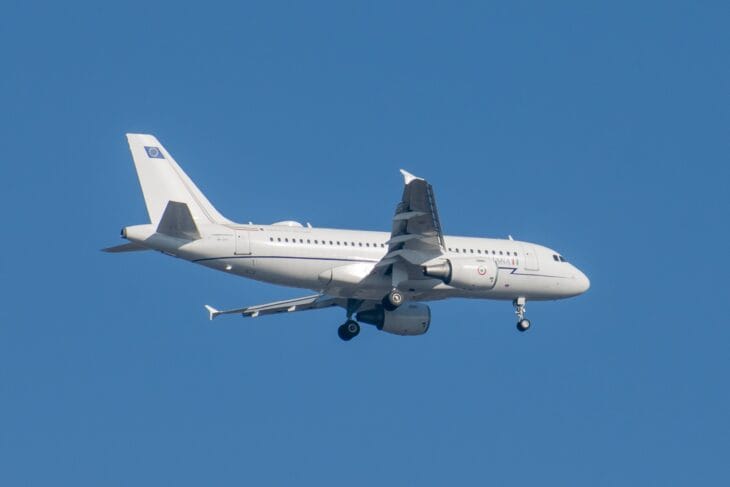

The 31st Wing at Ciampino, Rome’s second airport, flies government leaders and urgent medical flights. Its largest jets are three Airbus A319CJs.
Its newest are four Gulfstream G650ERs, bought under a €330 million contract finalized in December 2024. The first two arrived on April 12, 2025, and they are replacing three Dassault Falcon 900s and the last Falcon 50s one for one.
What about the Canadairs and the Navy's F-35Bs?
Neither belongs to the Air Force. Italy’s 18 Canadair firefighting planes are owned by the state, assigned to the national fire corps and operated by a contractor. The Italian Navy flies its own jets, and FlightGlobal counts seven Navy F-35Bs and 11 AV-8B Harriers.
The Nuclear Mission: Ghedi and Aviano
Italy is one of five NATO countries thought to host American B61 nuclear bombs. The Federation of American Scientists estimates about 100 are deployed at six European bases, two of them in Italy: Aviano and Ghedi.
Neither government confirms it. Under NATO’s nuclear sharing arrangement, Italian aircraft at Ghedi would carry those bombs in war, a mission flown for decades by the Tornado and now passing to the F-35A, with security upgrades under way at the base.
The 2026 Deployments: Kuwait, Saudi Arabia and the Baltic
Italy sent four Typhoons to Ali Al Salem Air Base in Kuwait during the 2026 Iran war. The Iranian drone strike there on March 15 destroyed an Italian Reaper and damaged one Typhoon, and three of the jets returned to Italy days later.
From the second half of March, a new detachment of four F-2000As, Task Force Air Arabia, operated from Taif in Saudi Arabia with an E-550A radar plane, a counter-drone system and about 400 Air Force personnel. The Aviationist reported no Italian air-to-air kills in the Gulf.
On the night of September 17 to 18, 2026, an attack on Taif hit an Italian F-2000 parked in an outlying area of the base. Defense Minister Guido Crosetto said no Italian personnel were involved, and the extent of the damage was not disclosed.
At the same time, Italian Typhoons were policing NATO’s eastern edge, where they shot down the two drones over Latvia and Lithuania. The wider picture of losses in the conflict is in our report on US aircraft lost or damaged in the Iran war.
The Next Fighter: GCAP With Britain and Japan
Italy’s Typhoon replacement is the Global Combat Air Programme, a sixth-generation fighter it is building with the UK and Japan. The design company, Edgewing, is owned in equal thirds by BAE Systems, Leonardo and Japan’s JAIEC.
Edgewing signed its first full contract, worth £4.6 billion and running 18 months, on July 3, 2026. The partners aim to fly a demonstrator in 2027 and put the fighter in service from 2035.
That puts Italy on the opposite side of Europe’s fighter split from France, which is building its next jet on its own, as our guide to the French Air Force explains.
From the First Air Raid to the Aeronautica Militare
Italy dropped the first bombs from an airplane in war. On November 1, 1911, during the Italo-Turkish War, Lieutenant Giulio Gavotti threw small grenades by hand from a Taube monoplane onto a Turkish camp at Ain Zara, in Libya.
The air arm became an independent service, the Regia Aeronautica, on March 28, 1923. It fought the Second World War with the aircraft in our guides to Italian fighter planes of WW2 and Italian bombers of WW2, and was renamed the Aeronautica Militare in 1946, when Italy became a republic.
The Frecce Tricolori are also remembered for the Ramstein air show in West Germany on August 28, 1988, when three of the team’s jets collided. The crash killed 70 people, 67 spectators and the three pilots.
Aviano: The US Air Force Base in Italy
Aviano Air Base, in Italy’s northeast, is the US Air Force’s main base in the country, but it is an Italian Air Force base under Italian command. The Italians call it Pagliano e Gori and keep their own commander there.
Its American tenant is the 31st Fighter Wing, which flies the F-16 Fighting Falcon with the 510th and 555th Fighter Squadrons. The wing calls itself the only US fighter wing south of the Alps. Naval Air Station Sigonella in Sicily is a US Navy base.
How Strong Is the Italian Air Force?
It ranks 13th in the world in the World Directory of Modern Military Aircraft’s 2026 ranking, with 411 aircraft and a score of 51.9. That puts it behind France, Britain and South Korea, and well ahead of Germany’s Luftwaffe in 19th.
Its strength is quality. It flies both F-35 versions, assembles its own, trains other nations’ fighter pilots and is building a fleet of G550 surveillance and jamming jets. Italy also reached NATO’s 2% spending target in 2025, according to preliminary NATO estimates, up from 1.52% in 2024.
Its weakness is support. Four long-range tankers and a small airlift fleet limit how far and how long it can fight, which is why the MRTT order matters. Our ranking of the best air forces in the world shows where that leaves Italy.
FAQ
Sources and references used for research and fact-checking.
- FlightGlobal, World Air Forces 2026 directory
- World Directory of Modern Military Aircraft, World Air Power Rankings 2026
- Leonardo, Italy places order for up to 24 Eurofighter Typhoon jets
- Janes, Update: Italy signs for follow-on Eurofighters
- The Aviationist, The Italian Air Force celebrates 20 years of Eurofighter operations
- Aviacionline, Italia recibió su último Eurofighter Typhoon
- LRT, Italian troops take over NATO Baltic air policing mission
- The Aviationist, Italian Typhoon shoots down drone over Latvia
- Breaking Defense, Italian fighter jets shoot down unidentified drone over Lithuania
- The Defense Post, Italy to buy more F-35s
- Lockheed Martin, F-35 in Italy
- L'Indipendente, L'Italia ha speso 11,8 miliardi per comprare gli F-35 americani
- The Aviationist, 101° Gruppo reactivated with the F-35B
- QRA Aviation, Transizione del 154° Gruppo di Ghedi sull'F-35
- The Aviationist, First Polish F-35 built at Cameri's FACO has flown
- The Aviationist, First Dutch F-35A assembled in Italy makes maiden flight
- Defense Daily, F-35A completes first transatlantic ocean crossing
- Militär Aktuell, End of an era: Italy's Tornados begin phasing out
- Master194, Panavia Tornado : plus de 40 ans de service dans l'Aeronautica Militare
- The Aviationist, The Italian Air Force bids farewell to the AMX Ghibli
- Aviation News EU, Italian Air Force KC-767A tanker fleet surpasses 50,000 flight hours
- ARES Difesa, L'Italia acquista sei Airbus A330 MRTT per 1,4 miliardi di euro
- Breaking Defense, Italy buying six Airbus-made A330 MRTT tankers
- ItaMilRadar, Third Italian G550 CAEW continues flight testing in the US
- Analisi Difesa, L'Aeronautica potenzia la componente CAEW
- ARES Difesa, Aeronautica, avanza il programma MMMS che sale a 11 piattaforme G550
- European Security & Defence, L3Harris building Italy's EA-37B
- ARES Difesa, Phase-in dell'MQ-9A Block 5 dell'Aeronautica Militare
- The Aviationist, Italian MQ-9A destroyed in Kuwait
- General Atomics Aeronautical, Italy orders two more MQ-9A Block 5 Reapers
- The Aviationist, The Italian Air Force has retired its MQ-1C Predator A+
- Ministero della Difesa, C-130J scheda
- Leonardo, Leonardo multi-year contract providing the Italian Air Force with logistics support for C-27J aircraft
- Janes, Italian Air Force to deploy MC-27J Praetorian by 2030
- Aeronautica Militare, Sigonella, una nuova fase per il 41° Stormo e Aviazione Antisommergibile
- ARES Difesa, DPP 2025-2027: 25 programmi, 25 miliardi
- EDR Magazine, Italian Air Force and Leonardo International Flight Training School
- Leonardo, IFTS: ten US pilots training at Decimomannu
- Ministero della Difesa, Decreto di approvazione del contratto, programma T-346A
- European Security & Defence, M-345 enters AM service
- EDR Magazine, Italy brings innovation to pilot training: the M-345 enters service
- European Airshows, Frecce Tricolori founded
- European Airshows, Frecce Tricolori return to Romania after 14 years
- Aviacionline, Frecce Tricolori renews its fleet with the Leonardo M-346
- FOX 5 DC, Italian Air Force's Frecce Tricolori fly over DC
- The Aviationist, Italian Air Force T-260B crash
- Ministero della Difesa, P.180 scheda
- The Aviationist, AB-212 last flight
- The Aviationist, Italy establishes new national helicopter training hub
- The Aviationist, First two Gulfstream G650ERs delivered to Italian Air Force
- Italiavola, Il G650ER dell'Aeronautica Militare atterra a Trento
- Wikipedia (Italian), Aeronautica Militare
- Panorama, Canadair antincendio, il contratto Avincis
- Federation of American Scientists, United States nuclear weapons, 2025
- The Aviationist, Task Force Air Arabia
- AGI, Arabia Saudita, attacco a base: colpito Eurofighter italiano
- The Aviationist, GCAP awards first contract to Edgewing
- Il Sole 24 Ore, Leonardo JV Edgewing: £4.6 billion contract for GCAP fighter jet
- History.com, First aerial bomb dropped from an airplane
- Guinness World Records, First aerial bombardment by aeroplane
- Wikipedia, Regia Aeronautica
- Wikipedia, Ramstein air show disaster
- Aeronautica Militare, Aviano Air Base
- Aviano Air Base, 31st Fighter Wing fact sheet
- ANSA, NATO estimates that Italy will spend 2.01% of its GDP on defence
Get the Newsletter
The latest aviation news and stories sent to your inbox.
About the Author

Tim is the owner and lead editor of AeroCorner since 2019, overseeing aviation content covering aircraft, airlines, airports, and the broader aviation industry. Through years of researching, writing, editing, and publishing aviation-focused content, he has developed extensive practical knowledge of commercial aviation and air travel. Based in Asia and a frequent traveler himself, Tim also brings firsthand passenger experience to AeroCorner’s coverage. Outside of publishing, he has also explored aviation firsthand through hands-on flight training in New Zealand.