Military Transport Planes
Fairchild C-82 Packet
ICAO: C82
Short-range assault transport
Updated: by Tim de Vries
The latest aviation news and stories sent to your inbox.
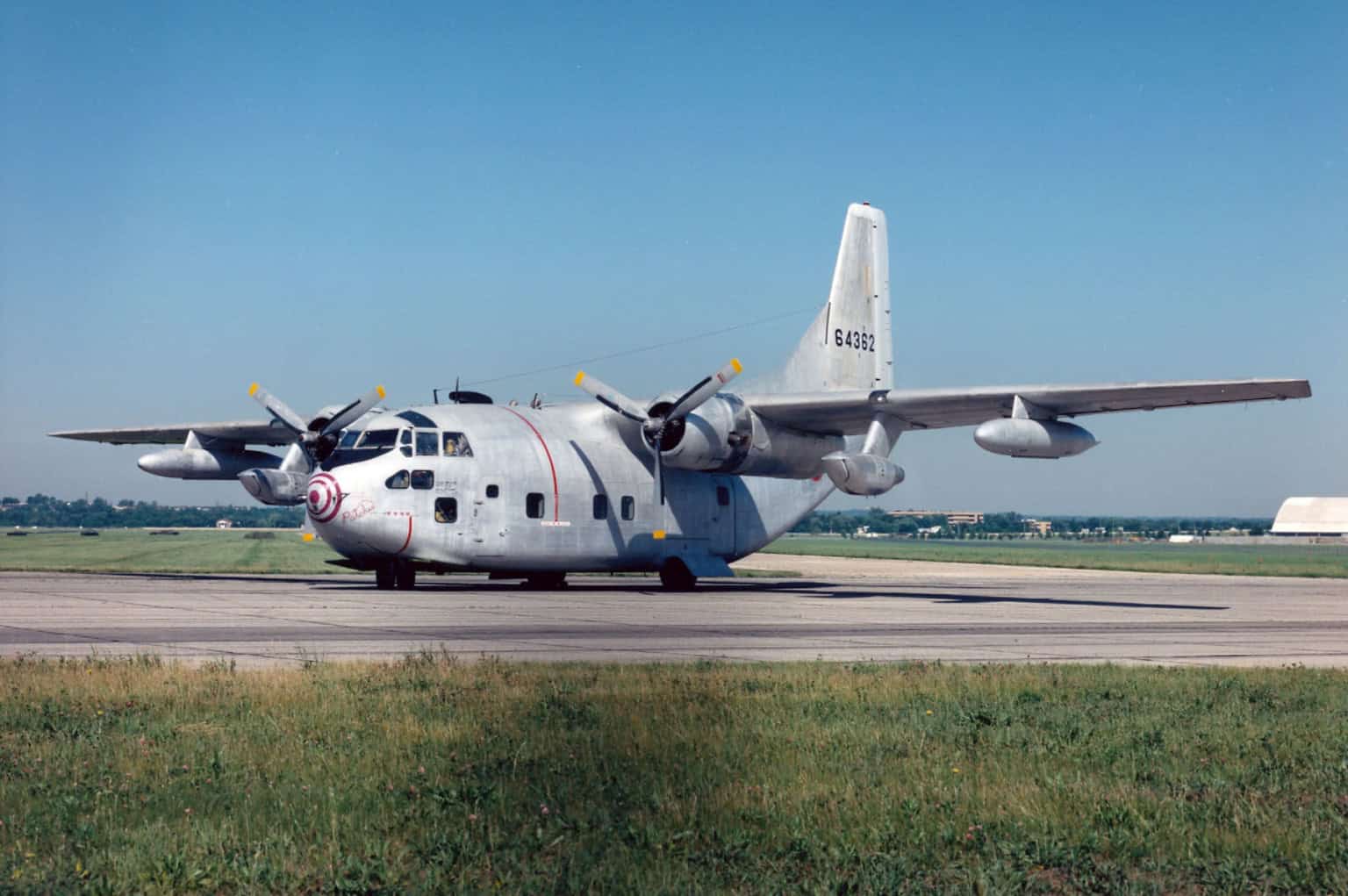
The Fairchild C-123 Provider is an American short-range assault transport designed by Chase Aircraft and built by Fairchild for the U.S. Air Force. It began as the engineless XCG-20 assault glider, and engines were added afterward. The definitive C-123K carried two Pratt & Whitney R-2800 radials plus a General Electric J85 turbojet under each wing, a combination that let it put 60 troops or 24,000 pounds onto a short dirt strip. It served the USAF, the U.S. Coast Guard and air forces across Southeast Asia, and it is the aircraft that sprayed Agent Orange under Operation Ranch Hand.
Live Fleet Activity (C123)
Fetching live data…





The Fairchild C-123 Provider started life with no engines at all. It was drawn up as the Chase XCG-20 assault glider, meant to be towed into a battlefield and cut loose.
Engines were bolted on afterward, and they never stopped changing. Over its career the airframe flew behind piston radials, pure turbojets, piston-plus-jet combinations and finally turboprops.
That range is the Provider’s oddest distinction, and it is often cited as the only aircraft type to have operated as a glider and under piston, jet and turboprop power during its service life.
What came out the other end was a short, high-winged, rear-ramp hauler that could put 60 troops onto a dirt strip and get out again. It became one of the defining aircraft of the war in Southeast Asia, and the subject of a federal regulation written four decades after the last one left the theater.
Chase Aircraft designed the XCG-20 for the U.S. Air Force in the late 1940s. Two powered conversions followed: the XC-123, whose first flight on 14 October 1949 is the date normally given as the type’s maiden flight, and the XC-123A.
The difference between them was the engines. The XC-123 used two Pratt & Whitney R-2800-23 air-cooled radials. The XC-123A was fitted with four General Electric J47-GE-11 turbojets in two pods, which made it the first jet-powered military transport the USAF ever flew.
The jet version lost. It could not use short or rough strips, the wing and fuselage gave it no practical speed advantage, and its range fell sharply. Only one was built.
The piston aircraft won on the qualities that actually mattered for the mission: ruggedness, reliability, and the ability to work off unimproved ground.
Chase could not build the aircraft in the numbers the Air Force wanted, so it looked for a production partner. By 1953 Henry J. Kaiser had bought a majority share in Chase, expecting to take over the C-123 contract on the strength of having built C-119s for Fairchild.
Two airframes were finished at Kaiser’s Willow Run plant in Ypsilanti, Michigan. Then a pricing scandal ended the arrangement, Kaiser was told no further contracts would be honored, and both completed aircraft were scrapped.
The contract went back out to bid and was won by Fairchild Engine and Airplane, which put the refined C-123B into production. Fairchild built roughly 300 of them, out of 307 airframes of all C-123 types produced between 1949 and 1970.

The USAF nearly skipped the C-123 for Vietnam. What changed its mind was a turf fight: the U.S. Army was operating the CV-2 Caribou and had ordered the C-8 Buffalo, and the Air Force wanted an aircraft of its own that could do the same short-field work.
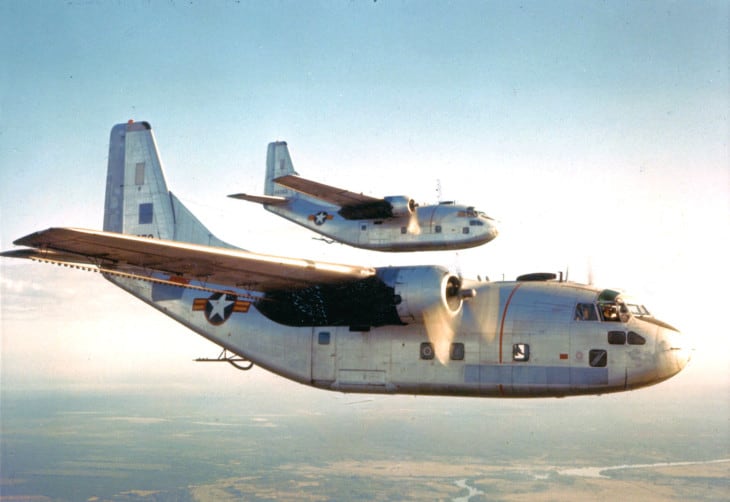
The answer was the C-123K. Fairchild hung a General Electric J85-GE-17 turbojet in a pod under each wing, added anti-skid brakes, and left the two R-2800 radials in place.
The National Museum of the United States Air Force records that the jets raised the aircraft’s payload by a third, shortened its takeoff run, improved its climb, and gave the crew a far better margin if a piston engine quit. That last point mattered most on a strip with trees at the end.
Source counts for the conversion program differ slightly. The USAF museum says 184 C-123Bs were converted between 1966 and 1969; other references give 180 or 183.

The basic airframe took modification unusually well, and the Air Force exploited that. The C-123J carried retractable skis for compacted snow runways in Greenland and Alaska.
The HC-123B went to the U.S. Coast Guard with a large nose radar for long-range search and rescue over water. The Coast Guard received its first in 1958 and seven more in 1961, crewing them with two pilots plus an enlisted flight mechanic, navigator and loadmaster, and retired the last in 1972.
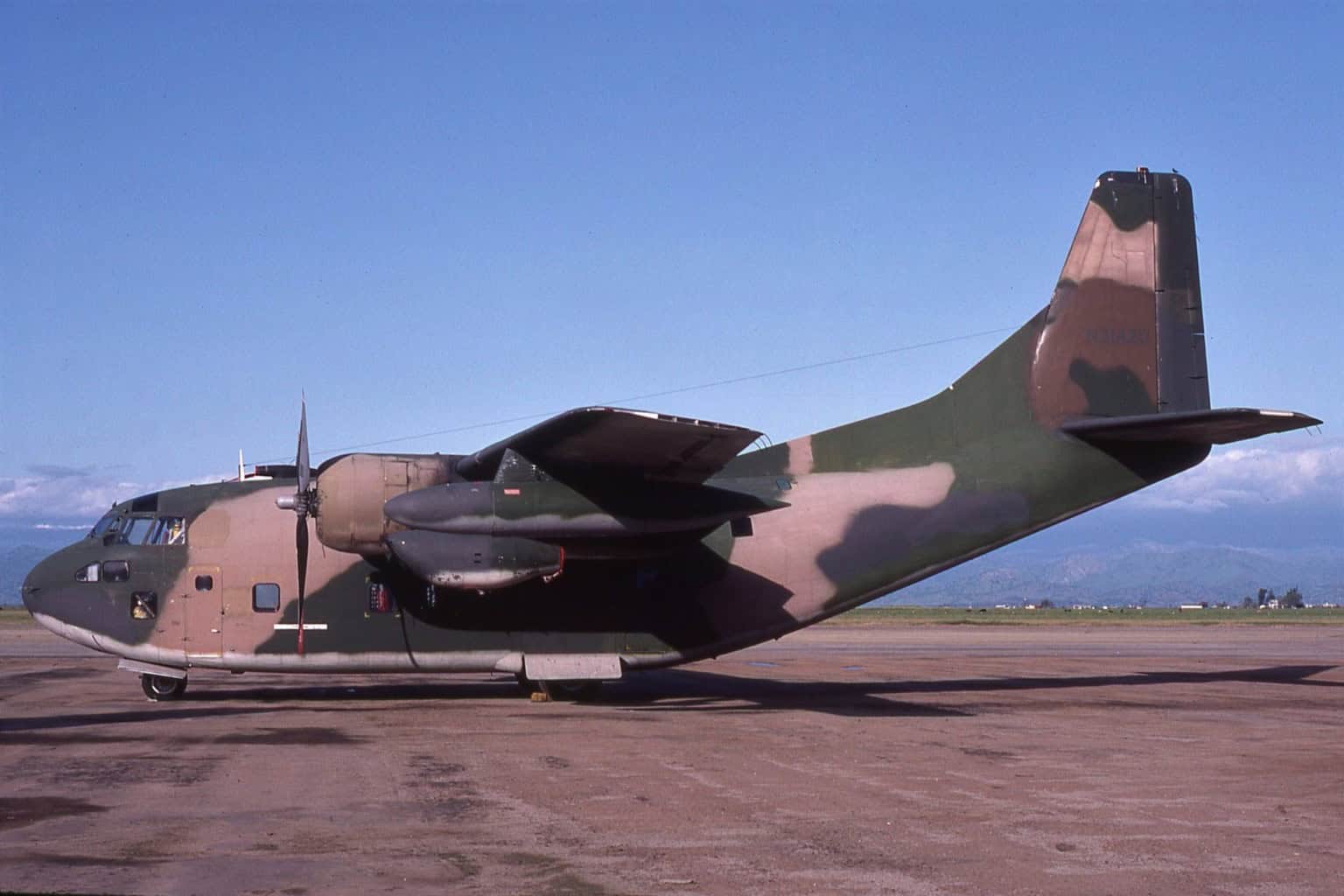
The UC-123B and UC-123K carried spray gear. Aircraft in that configuration outlasted every other version in military hands, finishing their careers not as weapons but as public-health aircraft controlling insect-borne disease.
Two aircraft went furthest of all. Modified under Project Black Spot with low-light television, forward-looking infrared, a laser rangefinder and cluster-bomb dispensers, they needed more than 50 inches of extra nose to hold the equipment.
Designated NC-123K in 1968 and AC-123K in 1969, they flew night attack missions from South Korea, then South Vietnam, then Thailand, working the Ho Chi Minh Trail from the last of those.
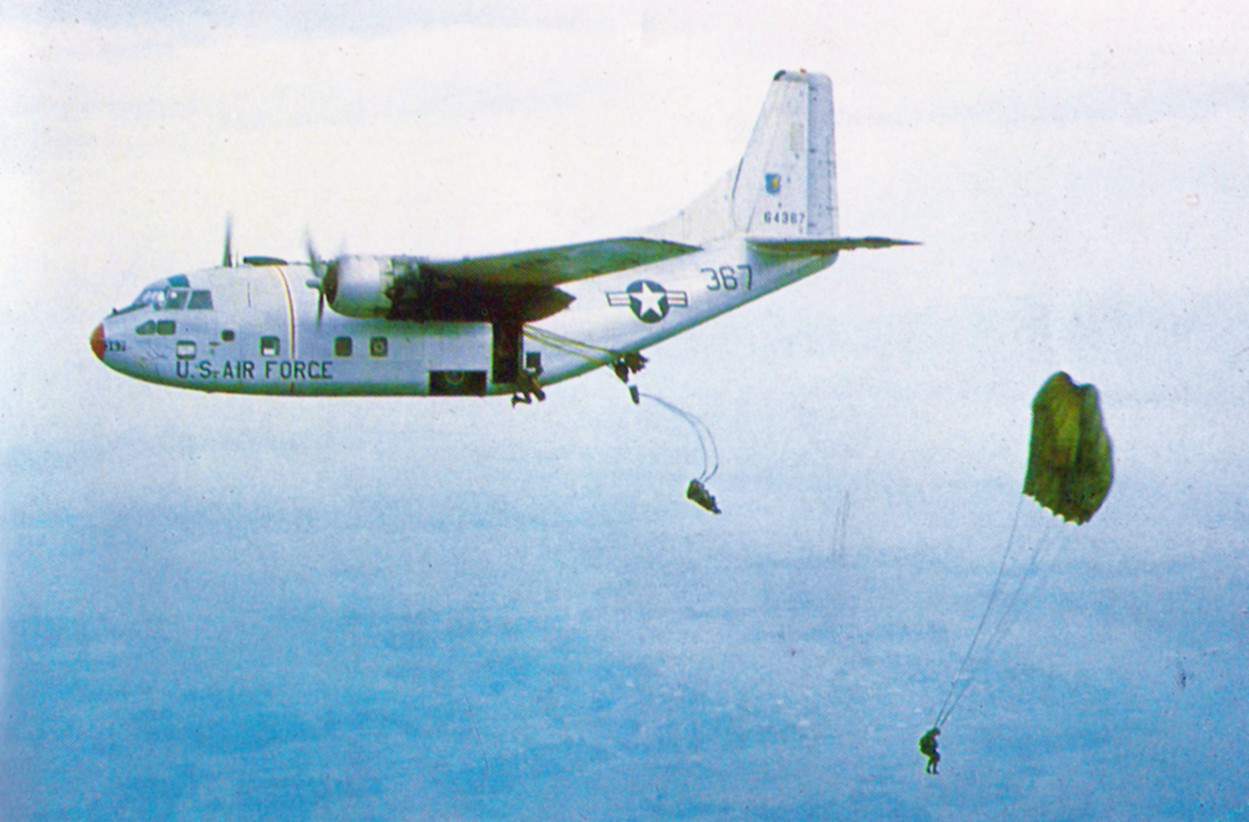
The first Providers reached South Vietnam in January 1962 to begin the Ranch Hand defoliation program. A squadron of standard C-123Bs followed to give the South Vietnamese Army mobility, and by the fall of 1964 four USAF C-123B squadrons were flying airlift and airdrop missions in-country.
The aircraft’s value was geographic. South Vietnam was held together by small, isolated bases on short dirt strips, and the Provider had the cargo hold and the field performance to keep them supplied when nothing larger could get in.
In 1968 C-123s helped resupply Khe Sanh through a three-month siege. The CIA’s Air America operated about 35 of them in Laos, and Taiwan’s 34th “Black Bat” Squadron flew heavily modified C-123Bs on covert night airdrops into North Vietnam.

The best-known single C-123 mission was a rescue. The Special Forces camp at Kham Duc had been overrun, eight aircraft had already been destroyed by enemy fire, and one wrecked aircraft still sitting on the runway had cut its usable length to about 2,200 feet.
Lieutenant Colonel Joe M. Jackson of the 311th Air Commando Squadron went in anyway for a three-man Air Force combat control team that had been left behind. He came down in a steep diving approach rather than the standard glide the enemy gunners would expect.
A rocket landed in front of the aircraft’s nose and failed to explode. Jackson got Major John Gallagher, Technical Sergeant Morton Freedman and Staff Sergeant James Lundie aboard and flew out. President Lyndon Johnson presented him the Medal of Honor on 16 January 1969.
The Provider’s spraying work gave it an afterlife that no other transport has had. Ranch Hand aircraft were returned to the United States and passed to Air Force Reserve units, which flew them on ordinary cargo and aeromedical missions from 1972 to 1982.
The aircraft were still contaminated. In 2010 the Air Force shredded the remaining surplus C-123K and UC-123K airframes and melted the scrap into ingots rather than risk them being sold on.
In 2014 the VA commissioned the Institute of Medicine to study the question. Its 2015 report found it plausible that the aircraft contributed to adverse health effects among the reservists who crewed and maintained them, and that some of those exposures exceeded guideline levels.
The VA acted on it. An interim final rule effective 19 June 2015 added paragraph (a)(6)(v) to 38 CFR 3.307, presuming herbicide exposure for Air Force and Air Force Reserve personnel who regularly and repeatedly operated, maintained or served aboard C-123s known to have been used for spraying.
The rule covers roughly 1,500 to 2,100 personnel, who had worked with about 30 affected aircraft. It also presumes that an affected reservist who later develops a listed condition became disabled during that service, which is the step that establishes veteran status and unlocks VA compensation, medical care and survivor benefits.
The full specification table for the aircraft is on this page. A few of its figures are quoted inconsistently elsewhere, so they are worth unpicking.
Range. The panel carries 899 nm (1,030 mi, 1,660 km), which is Jane’s published range with maximum payload. That qualifier is the whole story.
The USAF museum quotes 1,825 miles and GlobalSecurity 1,470 miles for lighter loads, and with two 500-gallon Benson auxiliary tanks the ferry range reaches 3,280 miles, or about 2,850 nautical miles. A Provider’s range depends almost entirely on what is in the back.
Fuel. The 1,460 US gallons (5,500 L) shown is internal fuel. Two 450-gallon underwing drop tanks can add to it, but those are removable stores rather than aircraft tankage.
Speed. The 198-knot maximum is Jane’s figure of 228 mph at 10,000 feet. USAF museum literature quotes 240 mph and GlobalSecurity 245 mph; the differences come from weight and altitude assumptions that none of the sources fully state.
Climb rate. The panel leaves this blank on purpose. The 1,220 ft/min figure repeated across the internet is Jane’s sea-level climb rate with one engine inoperative, and no authoritative all-engine figure is published. Quoting a single-engine number as the aircraft’s climb rate would understate it and mislabel it, so the row is empty rather than wrong.
Ceiling. The 28,000 feet shown is the USAF museum’s official figure, corroborated by the ICAO Doc 8643 entry. Wikipedia’s 21,100 feet is, again, a single-engine number.

As the war wound down, surviving Providers went to the South Vietnamese Air Force and the Royal Thai Air Force, and the remaining USAF aircraft passed to the Air Force Reserve and Air National Guard. The last U.S. military examples were retired in the early to mid-1980s.
Some went to the FAA and the Department of Agriculture for test and utility work and were retired by the end of the 1990s. The Royal Thai Air Force flew the type longest, retiring its last in 1995.
One aircraft still flies. Air Heritage Aviation Museum at Beaver County Airport in Pennsylvania operates a C-123K named Thunder Pig, recovered from the Arizona boneyard in the early 1990s and returned to airworthiness, and it was still working the airshow circuit over Labor Day weekend 2026. It is widely described as the last airworthy Provider anywhere.
The most historically significant survivor does not fly. Patches, the C-123K on display at the National Museum of the United States Air Force, took almost 600 hits in combat during its spraying career and is named for the repairs that covered it. Seven of its crew members received the Purple Heart.
The C-123 sits between the Fairchild C-119 Flying Boxcar that preceded it and the Lockheed C-130 Hercules that replaced it, and the comparison with the C-130 is the one people actually make.
The Hercules is the larger, longer-legged, four-engined turboprop, and it won: it is still in production today while the last Provider left U.S. service in the 1980s. The C-123 was smaller and simpler, and it was bought for a narrower job, putting a useful load into strips too short and too rough for anything bigger.
Its real limitation was reach. A tactical airlifter with 899 nm (1,030 mi, 1,660 km) of range on a full load is an in-theater aircraft, which is exactly how it was used. For a wider view of the category, see our guides to the largest cargo planes and the types of cargo planes.
One. Air Heritage Aviation Museum in Pennsylvania keeps a C-123K named Thunder Pig in flying condition, and it was still appearing at airshows in 2026. It is generally described as the only airworthy Provider left in the world. Others survive as static museum exhibits, and in 2010 the Air Force deliberately shredded the remaining surplus airframes because of dioxin contamination.
The Fairchild C-123 Provider is an American short-range military assault transport designed by Chase Aircraft and built by Fairchild for the U.S. Air Force. It carried 60 troops, 50 litter patients or 24,000 pounds of cargo onto short, unprepared airstrips.
It is best known for its service in Southeast Asia, as both an in-theater airlifter and the aircraft that sprayed Agent Orange under Operation Ranch Hand.
The C-130 Hercules is bigger, has four turboprops, carries far more over much longer distances, and is still in production. The C-123 was a twin-engine assault transport roughly half its weight, built for very short and rough strips rather than range. The C-130 replaced it in U.S. service in the 1970s and 1980s.
The C-123K added a General Electric J85 turbojet under each wing to the two Pratt & Whitney R-2800 radials. According to the USAF museum, the jets increased payload by a third, shortened the takeoff run, improved climb, and gave crews a much better safety margin if a piston engine failed on a short strip.
Very rarely, and the supply is gone. Surplus C-123Ks and UC-123Ks were not sold off in the normal way: in 2010 the Air Force shredded the remaining surplus airframes and melted the scrap into ingots because of Agent Orange dioxin contamination. The aircraft that survive are mostly museum exhibits or long-held private collection pieces rather than aircraft on the market.
Ranch Hand aircraft flew with Air Force Reserve units from 1972 to 1982 while still contaminated. After a 2015 Institute of Medicine report, the VA issued a rule effective 19 June 2015 presuming herbicide exposure for the roughly 1,500 to 2,100 personnel who regularly operated, maintained or crewed those aircraft.
The rule also presumes that an affected reservist who later developed a listed condition became disabled in service, which is what qualifies them for VA compensation, medical care and survivor benefits.
Ranch Hand was the U.S. Air Force defoliation campaign in Southeast Asia. Spray-equipped C-123s, designated UC-123B and later UC-123K, were the primary aircraft. The first arrived in South Vietnam in January 1962, and spraying continued until 1971.
Yes. The design began as the Chase XCG-20 assault glider, and engines were added afterward to create the XC-123, which flew on 14 October 1949, and the XC-123A.
Between the glider, the piston versions, the jet-augmented C-123K and the single turboprop C-123T conversion, it is frequently cited as the only aircraft type to have operated as a glider and under piston, jet and turboprop power.
Sources and references used for research and fact-checking.