

Table of Contents
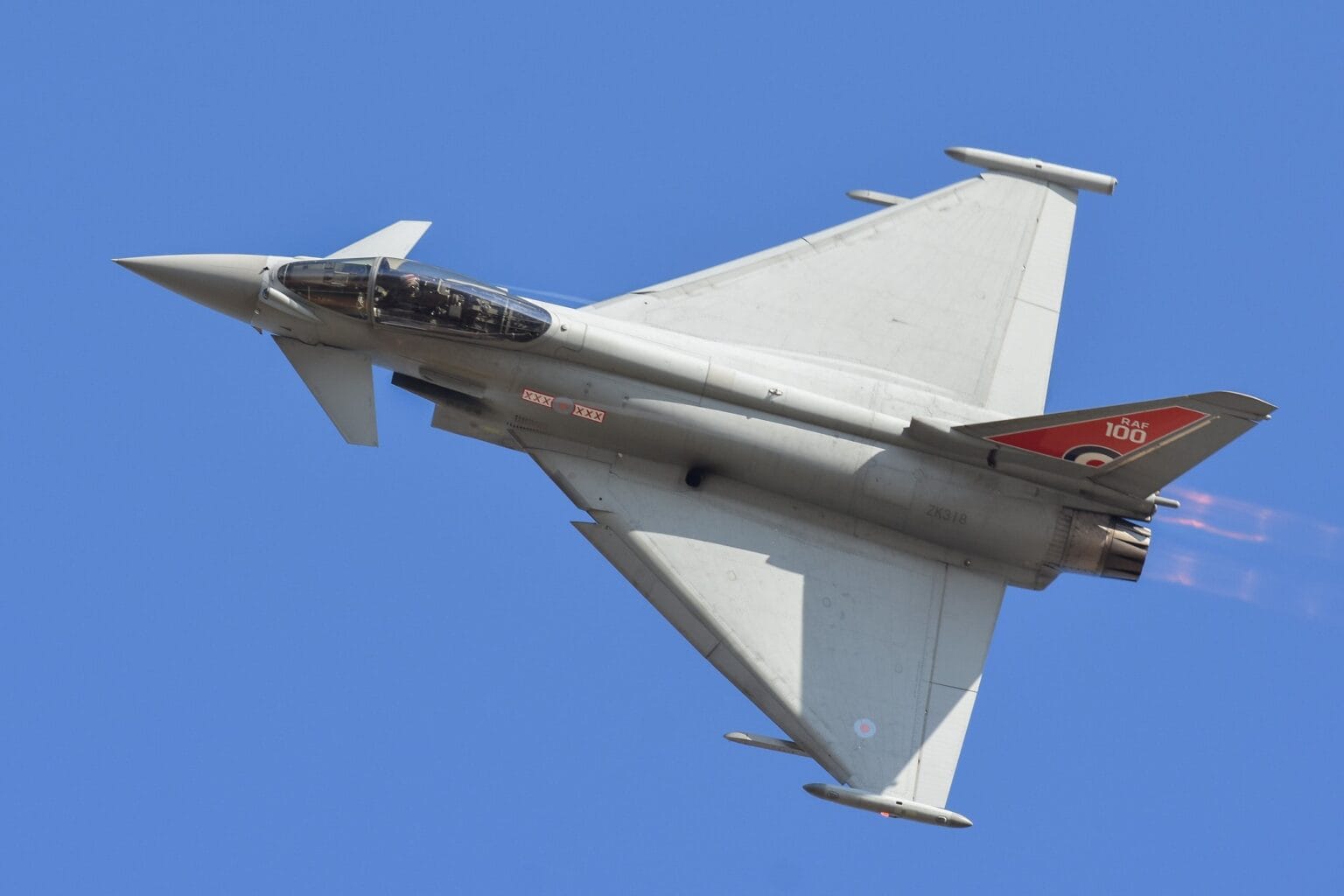
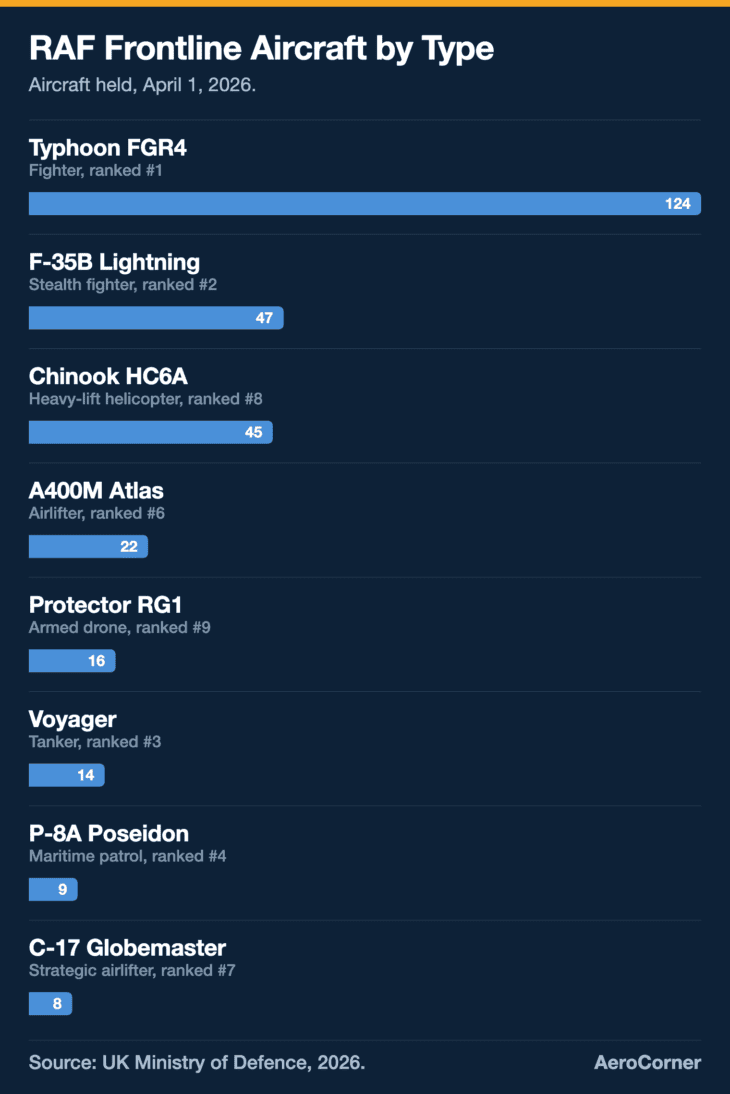
The Royal Air Force (RAF) held 124 Eurofighter Typhoons on April 1, 2026, and they remain the most valuable aircraft it flies. Next come 47 F-35B Lightnings, a stealth fleet the RAF shares with the Royal Navy, which scored its first kills over Jordan in March 2026.
Every count here comes from the Ministry of Defence’s official statistics, UK Armed Forces Equipment and Formations 2026, published on August 20, 2026. Changes since then, from the first E-7 Wedgetail to a Hawk crash on Anglesey, are added from later reporting.
This list ranks every type the RAF flies by one measure: the fighting value it adds as of November 2026, weighing what the aircraft does against how many Britain has. The aircraft on order, the bases and a short history follow the ranking.
| Rank | Aircraft | Role | Held (in service) | Main base |
|---|---|---|---|---|
| 1 | Typhoon FGR4 | Multirole fighter | 124 (111) | Coningsby, Lossiemouth |
| 2 | F-35B Lightning | Stealth fighter, shared with the Royal Navy | 47 (47) | Marham |
| 3 | Voyager KC2 and KC3 | Tanker and transport | 14 (14) | Brize Norton |
| 4 | P-8A Poseidon MRA1 | Maritime patrol and sub hunting | 9 (9) | Lossiemouth |
| 5 | RC-135W Airseeker | Signals intelligence | 3 (3) | Waddington |
| 6 | A400M Atlas C1 | Tactical and strategic airlifter | 22 (22) | Brize Norton |
| 7 | C-17A Globemaster III | Strategic airlifter | 8 (8) | Brize Norton |
| 8 | Chinook HC6A | Heavy-lift helicopter | 45 (36) | Odiham, Benson |
| 9 | Protector RG1 | Armed surveillance drone | 16 (9) | Waddington |
| 10 | Shadow R1 | Surveillance, retiring early | 8 (5) | Waddington |
| 11 | Envoy IV CC1 | VIP and command transport | 2 (2) | Northolt |
| 12 | Hawk T2 and Hawk T1 | Fast-jet trainer and the Red Arrows | 28 (28) and 24 (18) | Valley, Waddington |
| 13 | Texan, Prefect, Phenom, Juno and Jupiter | Contractor-run pilot training | 78 in total | Valley, Cranwell, Shawbury |
How this ranking works
Each type is ranked by the fighting value it adds in November 2026: what it can do in a war, how hard it would be to replace, and how many the RAF flies. Counts are the Ministry of Defence’s figures for April 1, 2026, the latest official snapshot; the in-service figure counts aircraft in active fleet management, which can include jets in storage. Cadet gliders and the 91 Tutor trainers shared by all three services are covered under training, not ranked. Aircraft that are not yet in RAF service, including the E-7 Wedgetail and the F-35A, are covered separately after the ranking.
1. Typhoon FGR4: 124 Jets at the Core of the Air Force
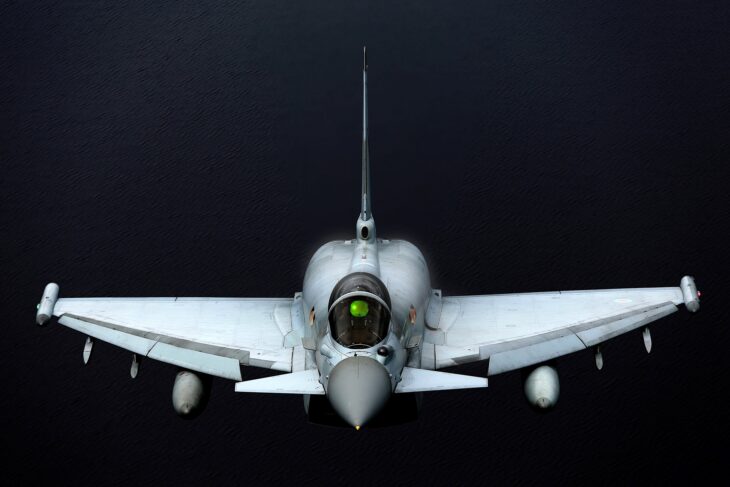

The Eurofighter Typhoon is the RAF’s main fighter, used for air defense, air superiority and ground attack. The Ministry of Defence counted 124 on April 1, 2026, with 111 in service, making it the most numerous fixed-wing aircraft in the UK armed forces.
They fly from RAF Coningsby in Lincolnshire and RAF Lossiemouth in Scotland. Our database lists a top speed of 1,550 mph (2,495 km/h).
The fleet is shrinking as the oldest jets go. A minister told Parliament in September 2025 that 26 of the 30 Tranche 1 Typhoons had been scrapped, leaving 4 Tranche 1, 67 Tranche 2 and 40 Tranche 3 aircraft, with the last Tranche 1s due out in 2027.
It ranks first because nothing else in the RAF exists in these numbers. The 2026 Defence Investment Plan adds £1.1 billion to upgrade and sustain the Typhoon into the 2040s, and the plan says Typhoons were rapidly fitted with APKWS rockets in 2026 to defeat drones at a fraction of the price of missiles. For how it compares with the jets before it, see our guide to British fighter jets.
2. F-35B Lightning: 47 Stealth Jets, and Their First Kills
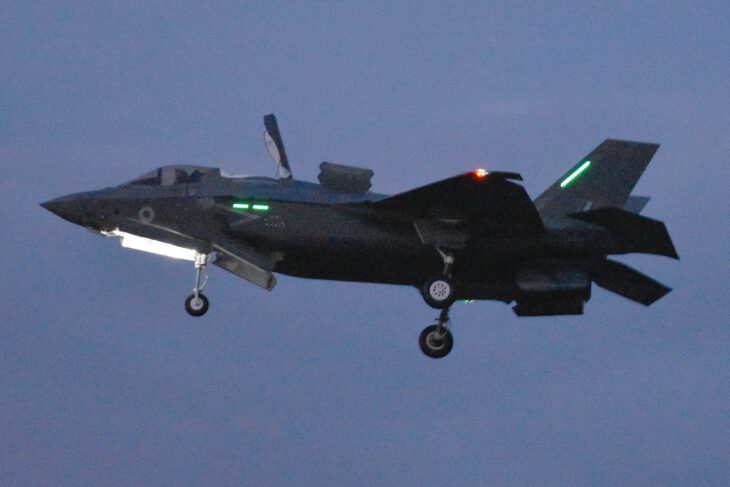
The F-35B Lightning is Britain’s only stealth fighter and the jet that flies from its two aircraft carriers. The UK took delivery of all 48 jets in its first order, and one was lost off HMS Queen Elizabeth in November 2021, leaving 47.
The fleet is based at RAF Marham in Norfolk and is shared with the Royal Navy’s Fleet Air Arm. In February 2026, 617 Squadron, the Dambusters, sent six F-35Bs to RAF Akrotiri in Cyprus alongside 10 Typhoons, and the US and Israel struck Iran on February 28.
On March 3, 2026, the Ministry of Defence said a British F-35B had destroyed a hostile drone over Jordan, the first time a UK F-35 had destroyed a target on operations. Typhoons and a Voyager tanker supported the sortie.
It ranks second, not first, because of availability. Navy Lookout estimated in May 2026 that only about 10 or 11 of the 47 can fly on a typical day, and the jets still wait for the TR-3 software that the Meteor and SPEAR 3 missiles depend on.
Iran's drones reached an RAF base
On March 1, 2026, a Shahed-type drone hit a hangar at RAF Akrotiri in Cyprus and forced a partial evacuation, Navy Lookout reported, during Operation LUMINOUS, Britain’s defense against Iran’s retaliation. Two days later a British F-35B scored its first kill, against a drone over Jordan, and the Akrotiri jets returned to Marham in mid-May.
3. Voyager KC2 and KC3: 14 Tankers That Make the Rest Possible
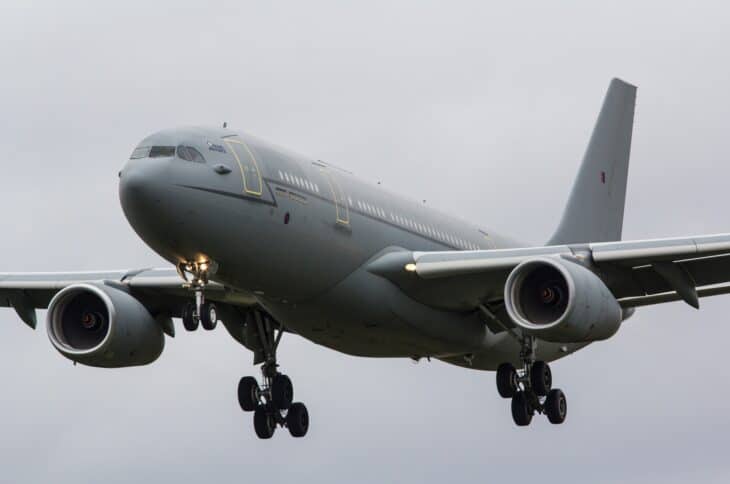

The Voyager is the RAF’s version of the Airbus A330 MRTT, used as both an air-to-air refueling tanker and a troop and cargo transport. All 14 are in service, flown by 10 and 101 Squadrons from RAF Brize Norton in Oxfordshire, with one stationed in the Falkland Islands.
Britain does not own them outright. They are leased from the AirTanker consortium under a private finance deal signed in 2008, and five of the 14 were meant as a surge fleet that can be released to civil work when the RAF does not need them.
It ranks third because every long fighter mission depends on it: Voyagers supported air defense sorties of up to nine hours over the Middle East in April 2026. One Voyager, nicknamed Vespina, was refitted with 58 VIP seats for government travel and repainted in Union Flag colors in 2020.
More on how it compares with other tankers is in our ranking of tanker aircraft.
4. P-8A Poseidon MRA1: Nine Sub Hunters
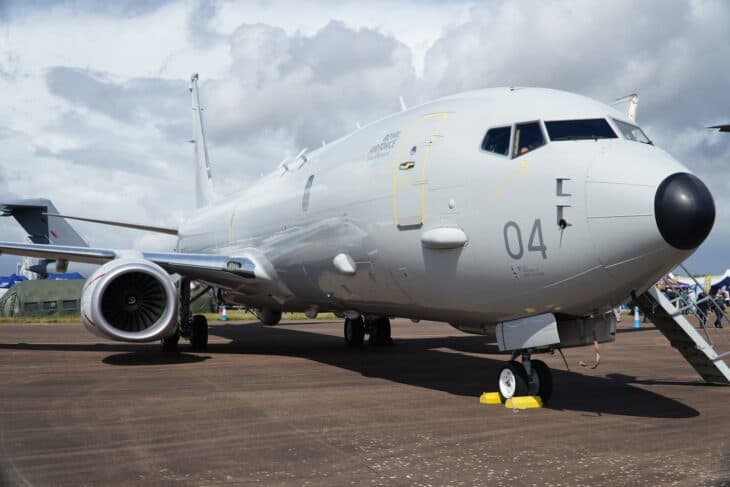
The P-8A Poseidon is a Boeing 737 turned into a submarine hunter and maritime patrol aircraft. The RAF has nine, all in service with 120 and 201 Squadrons at RAF Lossiemouth.
The Defence Investment Plan puts £260 million into upgrading the P-8s and arming them with the British-built Stingray torpedo.
Nine is a small fleet for an island nation’s sea approaches. That scarcity is why the Poseidon ranks above the larger airlift fleets below it.
5. RC-135W Airseeker: Three Electronic Spies
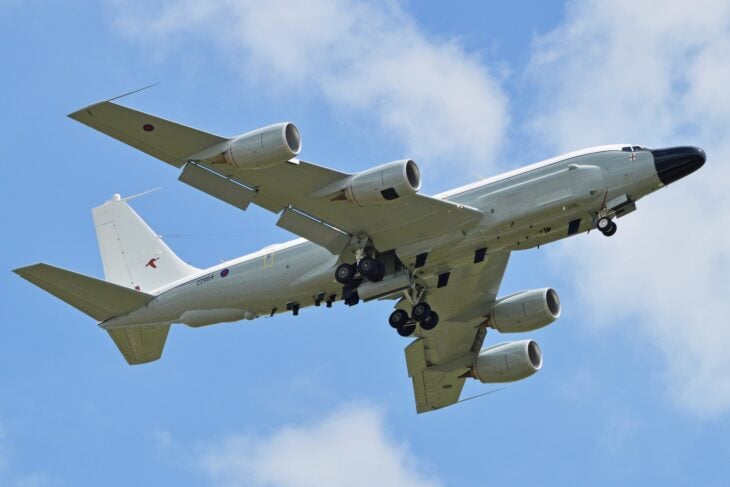

The RC-135W Rivet Joint, called Airseeker in British service, is a signals intelligence aircraft that listens to enemy radars and radios. The RAF has three, all in service with 51 Squadron at RAF Waddington in Lincolnshire.
Three aircraft is the smallest fleet on this list, which is why each one ranks so high. The Defence Investment Plan sets aside £400 million for the Airseeker fleet over four years, a sign that it is staying.
6. A400M Atlas C1: 22 Airlifters for Rough Strips
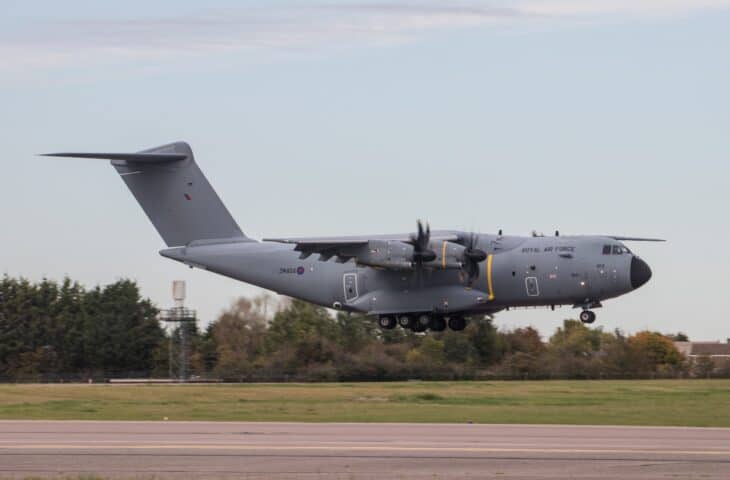
The A400M Atlas is a four-engine turboprop airlifter that can carry heavy loads into short and unpaved airstrips. All 22 are in service at RAF Brize Norton, and our database lists a maximum payload of 81,500 pounds (37,000 kg).
Since the last C-130J Hercules left in 2023, the Atlas has been the RAF’s only tactical airlifter. The Defence Investment Plan puts £1.9 billion into the fleet over four years.
7. C-17A Globemaster III: Eight Heavy Lifters
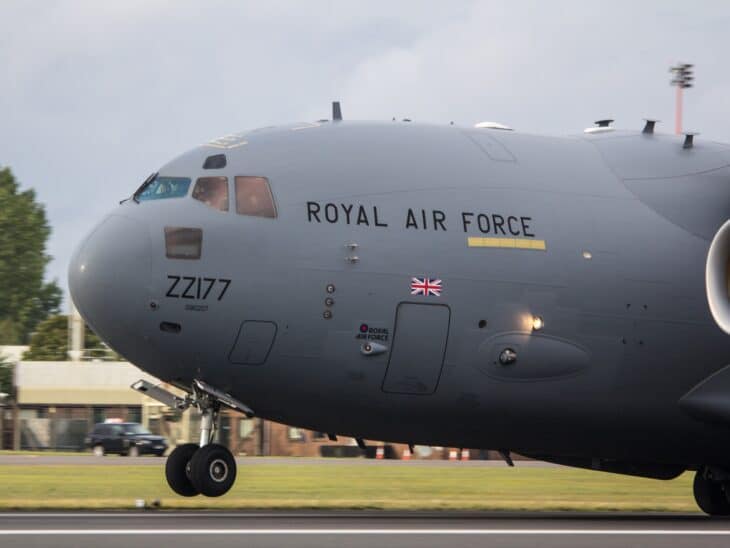
The C-17A Globemaster III is the RAF’s heaviest airlifter, with a maximum payload of 171,000 pounds (77,500 kg) in our database. All eight are in service at RAF Brize Norton.
It can lift more than twice the Atlas’s maximum payload. It ranks below the Atlas only because there are eight of them against 22, and the Atlas is the one built for short, rough strips.
8. Chinook HC6A: 45 Heavy-Lift Helicopters
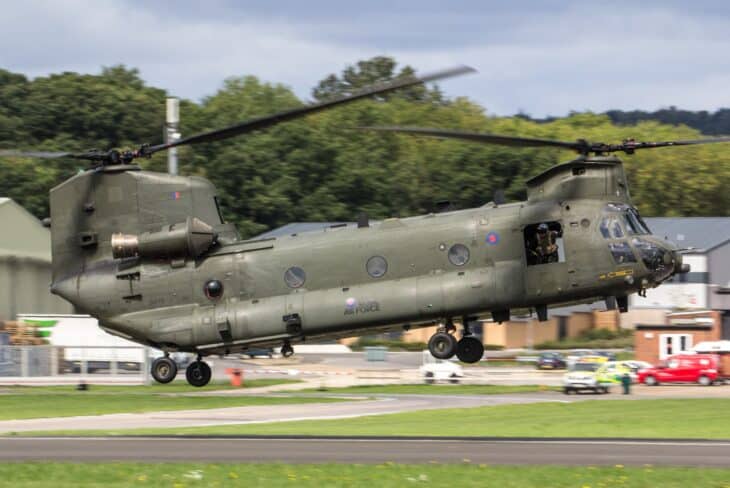
The Chinook is the RAF’s heavy-lift helicopter, flying troops and equipment for the British Army from RAF Odiham in Hampshire and RAF Benson in Oxfordshire. The Ministry of Defence counted 45, with 36 in the forward fleet, making it the most numerous rotary-wing type in the UK armed forces.
Since the last Puma HC2s were retired in March 2025, the Chinook has carried almost all of the RAF’s battlefield lift. Fourteen new CH-47F extended-range models, known as the H-47(ER) in British service, were bought in 2024 and are due from 2027, while the oldest Mk6A airframes retire.
9. Protector RG1: The Drone That Replaced the Reaper
The Protector RG1 is a General Atomics armed drone that can stay airborne for more than 30 hours. It entered service on June 16, 2025, with 31 Squadron at RAF Waddington, armed with Paveway IV bombs and Brimstone 3 missiles.
The Ministry of Defence counted 16 on April 1, 2026, with 9 in service. The MQ-9A Reaper it replaced left service in October 2025.
The RAF says it is the first drone of its type able to fly in all classes of UK airspace, so it can patrol at home as well as abroad.
10. Shadow R1: The Spy Plane Being Retired Early
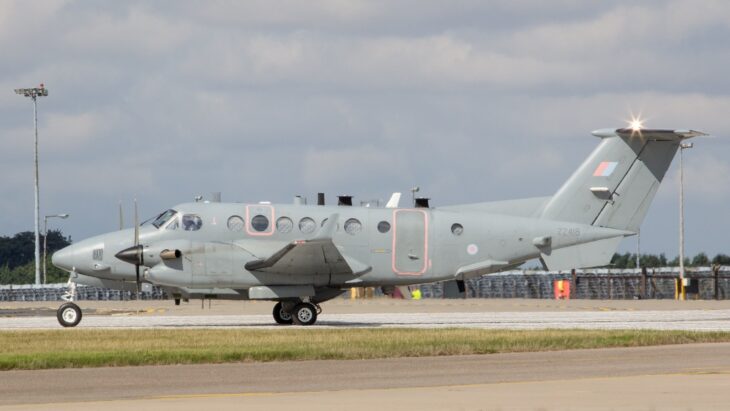
The Shadow R1 is a Beechcraft surveillance and reconnaissance aircraft, flown by 14 Squadron at RAF Waddington. The Ministry of Defence counted eight, with five in service.
Its days are numbered. The 2026 Defence Investment Plan names the early retirement of the Shadow R1 as one of the “hard but necessary decisions” taken to pay for the rest of the plan.
11. Envoy IV CC1: Two Jets for Ministers and Commanders
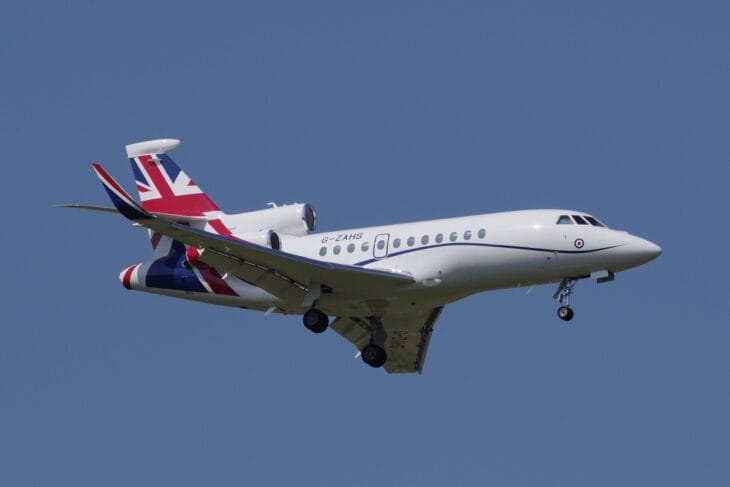

The Envoy IV CC1 is a Dassault business jet, flown by 32 (The Royal) Squadron from RAF Northolt in west London. The RAF has two, both in service as command and VIP transports.
They add little fighting value, which is why they rank near the bottom. The Defence Investment Plan still lists the Envoy, with the C-17 and the Atlas, as part of the air mobility force it will sustain into the 2030s.
12. Hawk T2 and Hawk T1: The Trainers and the Red Arrows
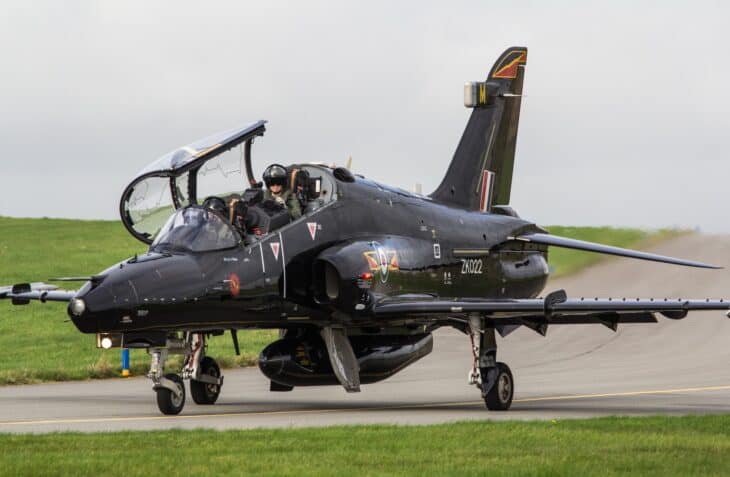

The BAE Hawk is the RAF’s advanced fast-jet trainer, the last step before pilots move to frontline combat aircraft. The Ministry of Defence counted 28 Hawk T2s at RAF Valley on Anglesey, flown by IV and XXV Squadrons, plus 24 older Hawk T1s, 18 of them in service, including jets flown by the Royal Navy.
The T1 is best known as the jet of the Red Arrows, who fly it from RAF Waddington, and it is due to leave service in March 2030. On September 23, 2026, a Hawk T2 crashed near Pencarnisiog on Anglesey after taking off from RAF Valley; both pilots ejected, and the RAF paused all Hawk flying as a precaution, as AeroCorner reported in its story on the Hawk T2 crash at RAF Valley.
Both versions are being replaced. The Defence Investment Plan funds a new Jet Training System, £360 million over four years, with new jets for the Red Arrows, and £860 million to keep the T1 and T2 flying until it arrives.
13. The Training Fleet: 78 Contractor-Run Aircraft
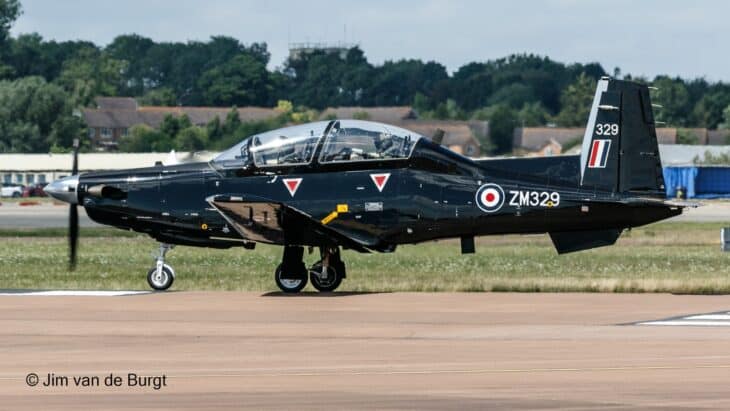

Most RAF pilot training runs on aircraft operated under availability contracts, so the Ministry of Defence publishes how many exist but not how many are in service. On April 1, 2026, there were 23 Grob Prefect T1 and 5 Embraer Phenom T1 at RAF Cranwell, and 14 Beechcraft Texan T1 at RAF Valley.
Helicopter pilots for all three services learn on 29 Airbus Juno HT1s at RAF Shawbury and 7 Jupiter HT1s at RAF Valley. Separately, 91 Grob Tutor trainers are shared by the RAF, Army and Navy, including for air experience flights, and the Air Cadets hold 81 Viking gliders.
On Order: The E-7 Wedgetail, F-35A, AW149 and GCAP
The biggest arrival of 2026 is the Boeing E-7 Wedgetail, a radar plane built on a Boeing 737. The first, WT001, landed at RAF Lossiemouth on May 21, 2026, to begin testing with 8 Squadron, ending a five-year gap since the E-3D Sentry retired in 2021.
Britain ordered five in 2019 and cut the order to three in 2021. The second, WT002, made its first flight from Birmingham Airport on July 15, 2026, as AeroCorner reported in its story on the second E-7’s first flight.
The next batch of F-35s is 27 jets: 15 more F-35Bs and 12 F-35As, the conventional-takeoff version. The government said in June 2025 the F-35As would let the RAF rejoin NATO’s nuclear mission, and the Defence Investment Plan says they will enter service in the early 2030s.
Air Vice-Marshal Jim Beck muddied that in July 2026, saying the RAF bought the F-35As for 207 Squadron, its F-35 training unit, not for their nuclear capability. The RAF still plans to rejoin the nuclear role, so both statements stand.
For helicopters, the Ministry of Defence ordered 23 Leonardo AW149s in March 2026 for about £1 billion, built in Yeovil, to fill the gap the Puma left. Deliveries are due from 2030.
Further out is the Global Combat Air Programme (GCAP), the sixth-generation stealth fighter Britain is developing with Italy and Japan. Its industrial team, Edgewing, won a £4.6 billion contract on July 3, 2026, and the Defence Investment Plan commits £8.6 billion to GCAP over four years.
The RAF is growing again
The Defence Investment Plan says regular RAF intake has exceeded outflow since October 2025, the first growth in years. On April 1, 2026, the RAF had 31,080 regular personnel, up 2.1% on a year earlier.
What the RAF Has Retired Since 2021
Four types have gone in five years. The E-3D Sentry radar plane retired in 2021 and the C-130J Hercules in 2023, the Puma HC2 helicopters were retired with farewell flypasts on March 26 and 27, 2025, and the MQ-9A Reaper drone left in October 2025.
Most of the oldest Typhoons have gone too: only four Tranche 1 jets were left by mid-2025. The Shadow R1 is next, and the Hawk T1 is due to follow by 2030.
Where the RAF Is Based
The RAF’s combat jets fly from three stations. Typhoons are at RAF Coningsby in Lincolnshire and RAF Lossiemouth in Scotland, and the F-35Bs are at RAF Marham in Norfolk.
RAF Brize Norton in Oxfordshire is home to the whole transport and tanker fleet: the Voyager, the A400M and the C-17. RAF Waddington in Lincolnshire hosts the intelligence fleet, the Airseeker, the Shadow and the Protector, plus the Red Arrows.
Lossiemouth also hosts the P-8s and the new E-7, Odiham and Benson host the Chinooks, and Valley, Cranwell and Shawbury do the training. The Ministry of Defence counted 104 RAF squadrons on April 1, 2026, not all of them flying units.
A Short History of the RAF
The RAF was formed on April 1, 1918, by merging the Army’s Royal Flying Corps with the Royal Naval Air Service. By the end of World War I it was the largest air force in the world.
In 1940 it won the Battle of Britain, which helped force Hitler to postpone his planned invasion indefinitely. In the Cold War its V-bombers carried Britain’s nuclear deterrent until the Royal Navy’s submarines took it over on June 30, 1969.
The RAF kept a tactical nuclear role with the WE.177 bomb, carried last by the Tornado, until 1998. The F-35A purchase is meant to return the RAF to a nuclear role through NATO.
Is the RAF the world's oldest air force?
Not quite. The RAF is often called the world’s oldest independent air force, but the Finnish Air Force was established on March 6, 1918, almost four weeks before the RAF on April 1. What the RAF can claim is size: it was the largest air force in the world when World War I ended.
FAQ
Sources and references used for research and fact-checking.
- Ministry of Defence, UK armed forces equipment and formations 2026
- Ministry of Defence, UK armed forces equipment and formations 2026: supplementary tables
- Ministry of Defence, The Defence Investment Plan 2026
- UK Defence Journal, MOD sets out retirement and fleet numbers for Typhoon
- Navy Lookout, UK F-35 fleet stretched by combat operations and upgrade delays
- UK Defence Journal, British F-35B downs drone in first operational kill
- The War Zone, UK did not buy F-35A for nuclear role: RAF
- The Defense Post, UK receives first E-7 Wedgetail surveillance aircraft
- Army Recognition, UK's first Boeing E-7 Wedgetail aircraft lands at RAF Lossiemouth
- AeroCorner, The RAF's second E-7 Wedgetail makes its first flight
- The Aviationist, UK government confirms Leonardo AW149 order
- Defence Industry Europe, UK plans second CH-47 Chinook purchase
- European Security and Defence, Protector enters RAF service
- Aerospace Global News, RAF grounds Hawk T1 and T2 fleets after trainer crash in Wales
- The Aviationist, GCAP fighter project advances with 4.6 billion pound contract award to Edgewing
- Wikipedia, Airbus Voyager
- Wikipedia, Royal Air Force
- Wikipedia, List of active United Kingdom military aircraft
- Wikipedia, List of Royal Air Force stations
- AeroCorner, Eurofighter Typhoon
- AeroCorner, Airbus A400M
- AeroCorner, C-17 Globemaster III
Get the Newsletter
The latest aviation news and stories sent to your inbox.
About the Author

Tim is the owner and lead editor of AeroCorner since 2019, overseeing aviation content covering aircraft, airlines, airports, and the broader aviation industry. Through years of researching, writing, editing, and publishing aviation-focused content, he has developed extensive practical knowledge of commercial aviation and air travel. Based in Asia and a frequent traveler himself, Tim also brings firsthand passenger experience to AeroCorner’s coverage. Outside of publishing, he has also explored aviation firsthand through hands-on flight training in New Zealand.