

Table of Contents
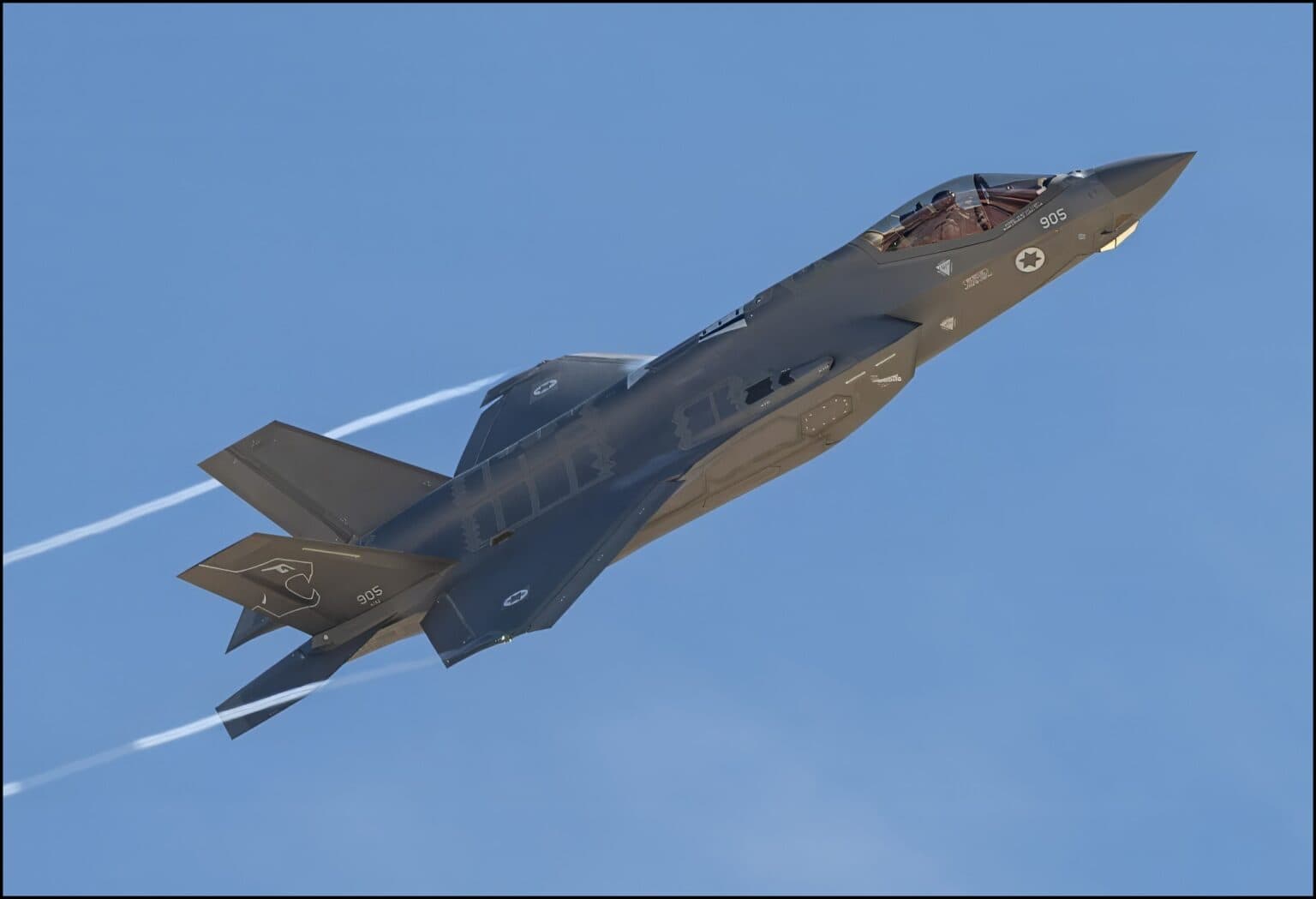
Israel has 284 fighter jets in front-line service. That is the count in FlightGlobal’s World Air Forces 2026 directory, whose fleet data was drawn on October 1, 2025.
Every one of them is an F-15, an F-16 or an F-35. Israel flies no fighter of its own design and none from Europe or Russia, and the F-16 alone makes up six in ten of the force.
How Many Fighter Jets Does Israel Have?
284, as of October 2025: 173 F-16s, 66 F-15s and 45 F-35I Adirs, all flown by the Israeli Air Force. Three more F-35Is landed at Nevatim Air Base on January 18, 2026, which takes the front-line total to about 287.
Add the 70 two-seat F-15s and F-16s that FlightGlobal files under training and the count rises to 354. Helicopters, tankers, transports, drones and special mission aircraft are not counted.
The count at a glance
284 front-line fighter jets (FlightGlobal World Air Forces 2026, data drawn October 1, 2025): 173 F-16C/I, 66 F-15A/C/I and 45 F-35I. About 287 after three F-35Is arrived in January 2026. 354 with the two-seat F-15B/D and F-16D trainers. On order: 25 F-15IAs and the rest of a 75-jet F-35I buy.
Israel’s fighter fleet, type by type
FlightGlobal lists Israel’s front-line jets and its two-seat training jets in separate sections. Adding them up by type gives the table below.
| Type | Versions | Front-line | Training | Total |
|---|---|---|---|---|
| F-16 | F-16C Block 40, F-16I Sufa; F-16D trainers | 173 | 49 | 222 |
| F-15 | F-15A/C, F-15I Ra’am; F-15B/D trainers | 66 | 21 | 87 |
| F-35 | F-35I Adir | 45 | 0 | 45 |
| Total | 284 | 70 | 354 |
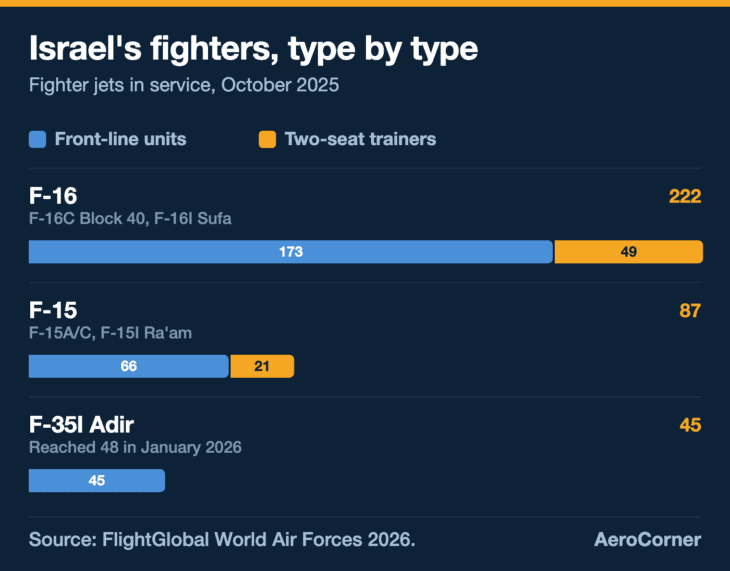
The F-16 carries the numbers. Israel flies the F-16C Block 40 and the F-16I Sufa, a Block 52+ version with Israeli systems, and counts 222 F-16s once the two-seaters are included.


The F-15 fleet mixes older A and C model Eagles with the F-15I Ra’am, Israel’s version of the F-15E Strike Eagle. The F-35I Adir is the newest: the first pair arrived in December 2016.


The two-seaters are a bigger slice than the word “trainer” suggests. The 49 F-16Ds and 21 F-15Bs and F-15Ds are one jet in five across the whole fleet, which is why some counts fold them in and others leave them out.
How each type earns its place, and what Israel changed inside it, is in our guide to Israeli fighter jets.
Why the numbers differ
Search this question and you will see answers from about 240 to about 600. They are mostly counting different things.
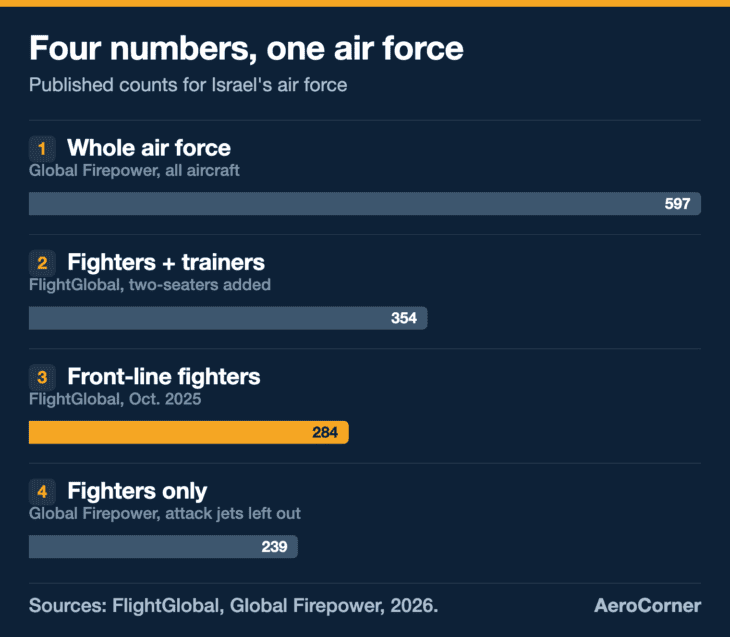
About 600 is the whole air force. Global Firepower’s 2026 profile gives 597 aircraft and Wikipedia gives 594, with helicopters, transports, tankers and trainers all inside.
354 is FlightGlobal’s fighter count with the two-seat F-15B/D and F-16D jets added. Wikipedia lists those 70 as conversion trainers.
284 is the front-line figure, and two separate sources land on it. FlightGlobal counts 284 combat aircraft, and Global Firepower’s 2026 profile gives 239 fighters plus 45 attack aircraft, which also makes 284.
239 is Global Firepower’s fighters-only line. It is the same fleet with 45 jets moved into a different column.
Israel does not have 75 F-35s
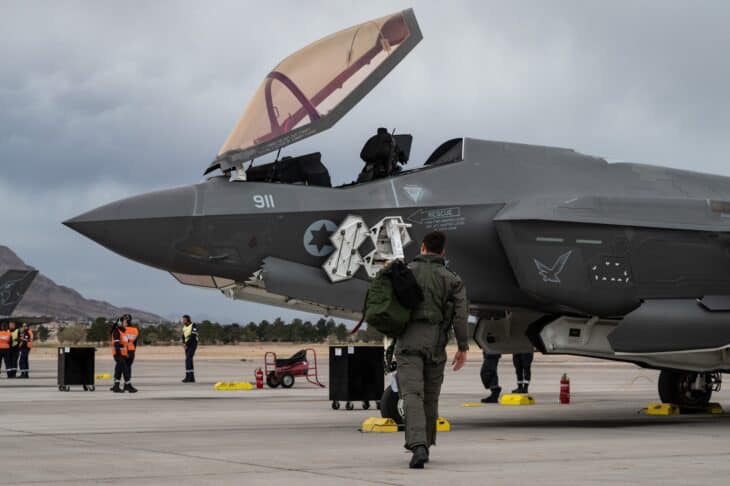
75 is the number Israel has bought, not the number it flies. The F-35I fleet reached 48 in January 2026, with two more from the first 50 due later in the year. The 25 jets of the third squadron, ordered in 2024, are expected from 2027.
F-35 counts drift the most, because the fleet is still being delivered. FlightGlobal’s October 2025 snapshot has 45, the Israeli Air Force reached 48 in January 2026, and our count of how many F-35s have been built shows where Israel sits in the global program.

How the number got here, and where it is going
Israel’s fighter count is set to grow for the first time in years, and almost all of the growth is on order rather than on the ramp.
December 2016
The first F-35s arrive. Israel receives its first pair of F-35I Adirs.
June 2024
A third F-35 squadron. A $3 billion deal adds 25 jets, taking Israel’s F-35I order to 75.
November 2024
25 F-15IAs ordered. A $5.2 billion Boeing deal for a new Eagle based on the USAF’s F-15EX, with an option for 25 more.
October 2025
284 front-line fighters. FlightGlobal’s count: 173 F-16s, 66 F-15s and 45 F-35Is.
January 2026
48 F-35Is. Three more jets land at Nevatim; two from the first 50 remain due later in 2026.
May 2026
Two more squadrons approved. Israel approves a fourth F-35I squadron and a second F-15IA squadron, 25 jets each, still to be contracted.
2031
F-15IA deliveries begin. Four to six jets a year under the 2024 contract.
If every approved jet arrives, the F-35I fleet reaches about 100 and the F-15IA fleet 50. That is roughly 100 new fighters still to land, most of them in the 2030s.
How Israel’s fighter count compares
Israel has the 10th-largest combat aircraft fleet in the world in FlightGlobal’s 2026 ranking, with 284 of the world’s 14,074. Egypt is ninth with 332 and Saudi Arabia seventh with 364.
The same directory gives the US about 2,900 fighter jets, as our count of how many fighter jets the US has breaks down by service. China’s listed fighters total 1,485, against a Pentagon estimate of about 2,200, a gap our count of how many fighter jets China has explains.
Iran, Israel’s opponent in the war that began on February 28, 2026, was listed with 209 combat aircraft in the same October 2025 data, led by 65 F-4 Phantoms and 41 F-14 Tomcats. That count predates the war, and no reliable count has been published since.
Size is only one measure. How Israel’s air force stacks up on training, equipment and combat record is in our ranking of the best air forces in the world.
FAQ
Sources and references used for research and fact-checking.
- FlightGlobal, World Air Forces 2026
- Global Firepower, Israel military strength 2026
- Wikipedia, Israeli Air Force
- The Jerusalem Post, Three new F-35 jets arrive in Israel, air force fleet grows to 48 aircraft
- FlightGlobal, Israel to add 25 more F-35s under latest $3bn deal
- Ynet News, Israel signs $5.2 billion deal for next-generation F-15 fighter jets
- Breaking Defense, Israel buying more F-35s, F-15IAs fighter jets, Netanyahu announces
Get the Newsletter
The latest aviation news and stories sent to your inbox.
About the Author

Tim is the owner and lead editor of AeroCorner since 2019, overseeing aviation content covering aircraft, airlines, airports, and the broader aviation industry. Through years of researching, writing, editing, and publishing aviation-focused content, he has developed extensive practical knowledge of commercial aviation and air travel. Based in Asia and a frequent traveler himself, Tim also brings firsthand passenger experience to AeroCorner’s coverage. Outside of publishing, he has also explored aviation firsthand through hands-on flight training in New Zealand.