

Table of Contents
The Qatar Emiri Air Force flies more than 100 modern fighters split across three types: the American F-15QA, the French Rafale and the European Typhoon. Few air forces anywhere run three advanced fighter fleets side by side, and Qatar does it with roughly 2,000 air force personnel, by the IISS’s count.
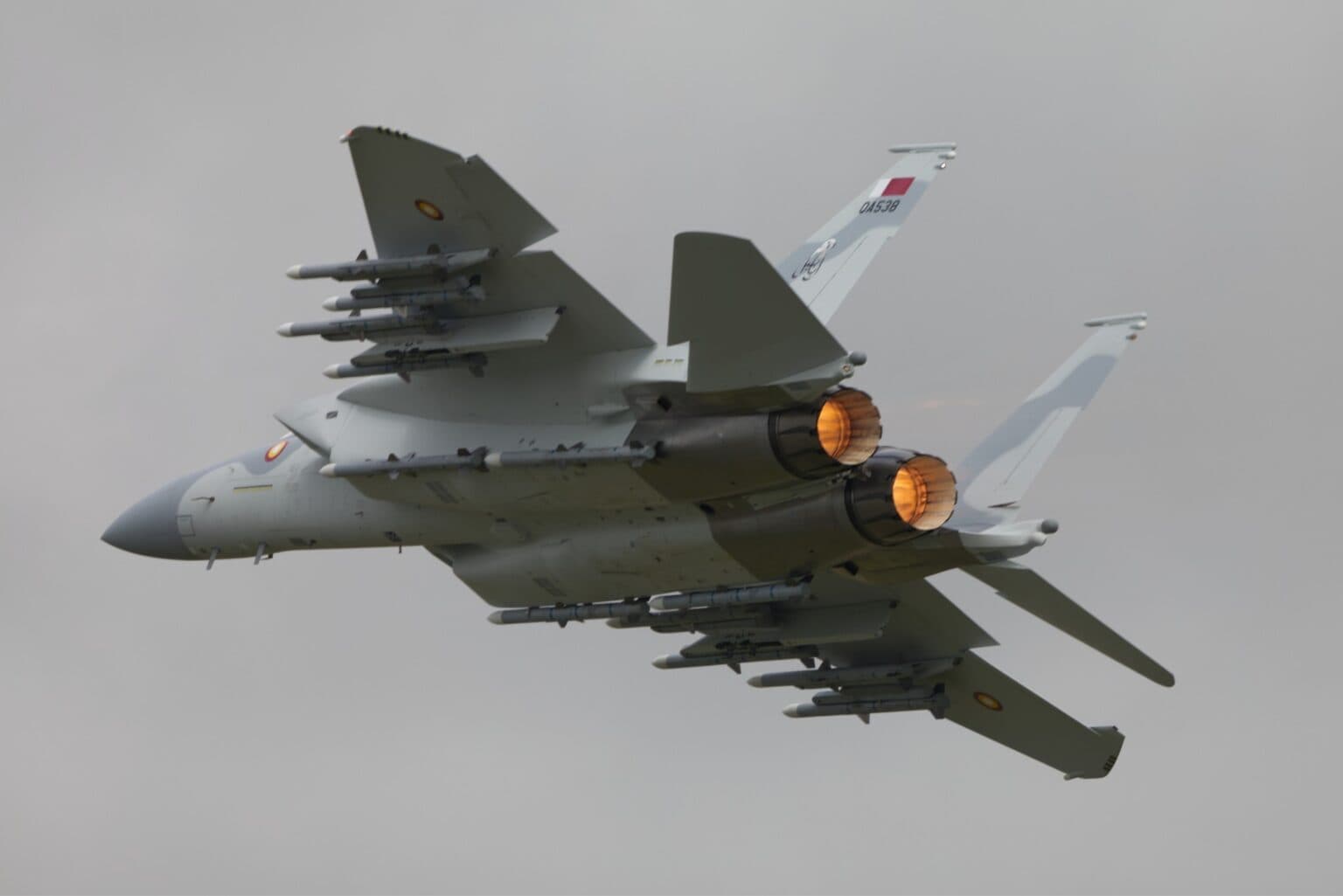
On March 2, 2026, that investment paid off for the first time. A Qatari F-15QA shot down two Iranian Su-24 bombers flying at about 80 feet toward Al Udeid Air Base and the Ras Laffan gas complex, the first air-to-air kills in the air force’s history.
This guide ranks every type Qatar’s air force flies by how much it matters to the country’s defense as of October 2026, then covers what is on order, where the jets are based and why half the Typhoon fleet may soon leave for Türkiye.
| Rank | Aircraft | Role | Fleet | Status |
|---|---|---|---|---|
| 1 | Boeing F-15QA Ababil | Multirole fighter | 48 delivered (46 listed active) | In service |
| 2 | Dassault Rafale DQ/EQ | Multirole fighter | 36 | In service, option on 36 more |
| 3 | Eurofighter Typhoon | Multirole fighter | 24 | 12 being sold to Türkiye |
| 4 | Boeing AH-64E Apache | Attack helicopter | 24 | In service |
| 5 | Boeing C-17A Globemaster III | Strategic airlifter | 8 | In service |
| 6 | Lockheed Martin C-130J-30 | Tactical airlifter | 4 | In service |
| 7 | NHIndustries NH90 TTH/NFH | Transport and naval helicopter | 28 | Deliveries completed late 2025 |
| 8 | Pilatus PC-21 | Advanced turboprop trainer | 24 | In service |
| 9 | BAE Hawk Mk 167 | Advanced jet trainer | 9 | Based in the UK |
| 10 | PAC Super Mushshak | Basic trainer | 8 | In service |
How this ranking works
Aircraft are ranked by their weight in Qatar’s defense in October 2026: fighters first, then the attack helicopter, then the airlifters, helicopters and trainers behind them. Fleet counts come from FlightGlobal’s World Air Forces 2026 directory unless a newer manufacturer release shows a change, such as the final NH90 delivery. Smaller helicopter types and aircraft on order are covered after the top ten. Air defense missiles belong to a separate command and are not listed.
1. Boeing F-15QA Ababil: The Jet That Scored the First Kills
.jpg)
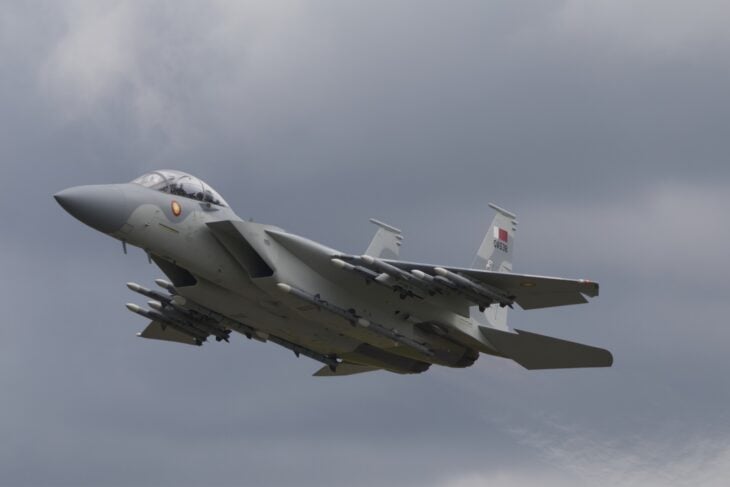
The F-15QA is the backbone of the air force and its largest fighter fleet. Qatar signed a $12 billion deal for 36 of the jets in June 2017, and Boeing’s $6.2 billion production contract for them followed that December.
The QA is one of the most advanced versions of the F-15 Eagle, with digital fly-by-wire controls. It first flew in St. Louis on April 14, 2020, and the first four jets left for Qatar on October 27, 2021.
Boeing delivered the last of the first 36 in August 2023. Qatar later added 12 more, and FlightGlobal reports that the 48-strong fleet was completed in April 2025, although its own fleet table lists 46 jets as active.
On March 2, 2026, two Iranian Su-24s dropped to about 80 feet to slip under radar, carrying bombs and guided munitions, according to CNN’s sources. They were reportedly two minutes from Al Udeid and Ras Laffan when a Qatari F-15QA shot both down.
“Qatari fighters for the first time have shot down two Iranian bombers,” said Joint Chiefs chairman Gen. Dan Caine. It was also the first air-to-air victory for the F-15QA variant, against the jet our guide to Iran’s air force describes as its only dedicated bomber.
Qatar's F-15s are getting a home in Idaho
On October 10, 2025, the Pentagon announced a Qatari Emiri Air Force facility at Mountain Home Air Force Base in Idaho, where Singapore has trained its F-15SGs since 2009. A 2022 environmental assessment describes a 10-year arrangement for 12 F-15QAs and about 300 personnel, paid for by Qatar and under US command. Idaho officials said days later that the formal agreement had not yet been signed, and we found no construction news in 2026.
2. Dassault Rafale: 36 Jets and an Option on 36 More
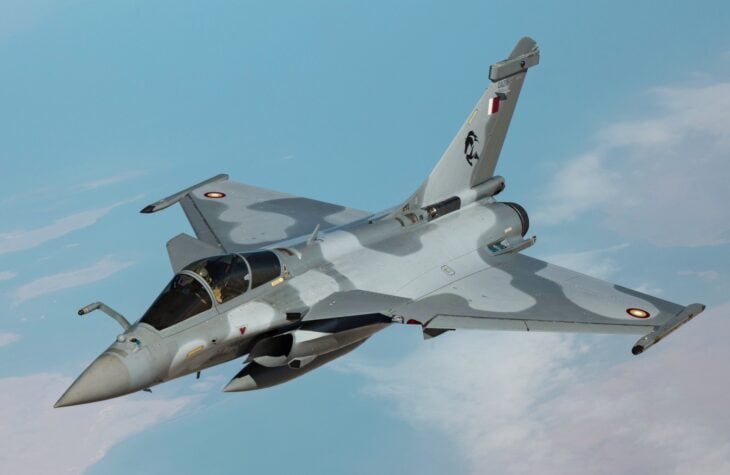

Qatar ordered 24 of the Dassault Rafale on May 4, 2015, in a deal reported at 6.3 billion euros. It exercised an option for 12 more on December 7, 2017, bringing the fleet to 36.
Dassault handed over the first jet at Mérignac, France, on February 6, 2019. The first five reached Qatar on June 5, 2019, landing at the newly built Dukhan Air Base, also called Tamim Air Base, where they fly with the Al Adiyat squadron.
All 36 were delivered between 2019 and 2022. FlightGlobal still records an option or letter of intent for 36 more, and French press reports in 2023 described talks on an F4 upgrade and a second batch, but we found no new Rafale order through October 2026.
The Rafale gives Qatar a second, non-American fighter supplier. Our ranking of the best fighter jets in the world shows where it sits against the F-15 family.
3. Eurofighter Typhoon: Half the Fleet May Go to Türkiye
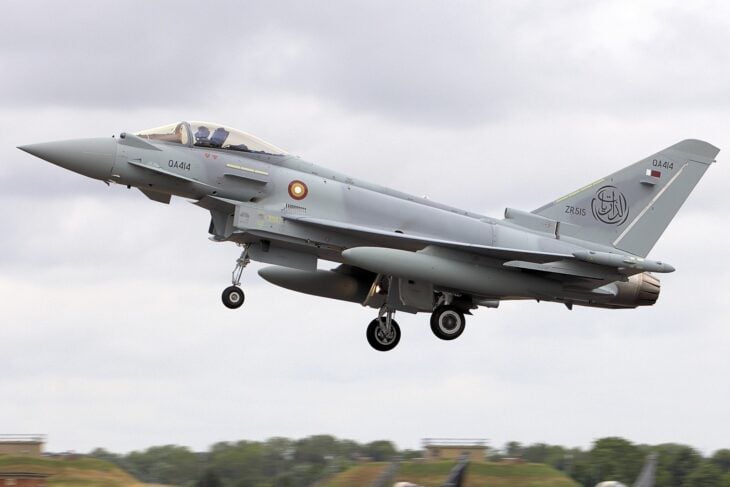

Qatar ordered 24 Eurofighter Typhoons and nine Hawk trainers from BAE Systems in December 2017, a contract valued at about 5 billion pounds by UK Defence Journal and 6 billion pounds by other outlets. The first three left Warton, England, on August 25, 2022, bound for Tamim Air Base.
The Typhoon is the fleet most tied to another air force. Qatari and Royal Air Force crews formed a joint unit, No. 12 Squadron, at RAF Coningsby, and four of its RAF Typhoons deployed to Qatar in January 2026 at the Qatari government’s request.
One of those RAF jets shot down an Iranian drone heading for Qatar on March 1, 2026. The UK did not say whether the pilot was British or Qatari.
The fleet’s future is now uncertain. Qatar announced 12 more Typhoons in December 2024, but no contract has been published, and in late 2025 Türkiye agreed to buy 12 of Qatar’s 24, alongside 20 new jets it ordered from Britain. The first ex-Qatari jet was expected by late February 2026, and we found no report of a handover as of October.
Is Qatar giving all its Typhoons to Türkiye?
Not as far as anyone has confirmed. The deal Turkish officials described in November 2025 covers 12 aircraft. A March 2026 report in the Turkish press claimed Qatar would hand over all 24, but no government on either side has said so, and no transfer has been reported.
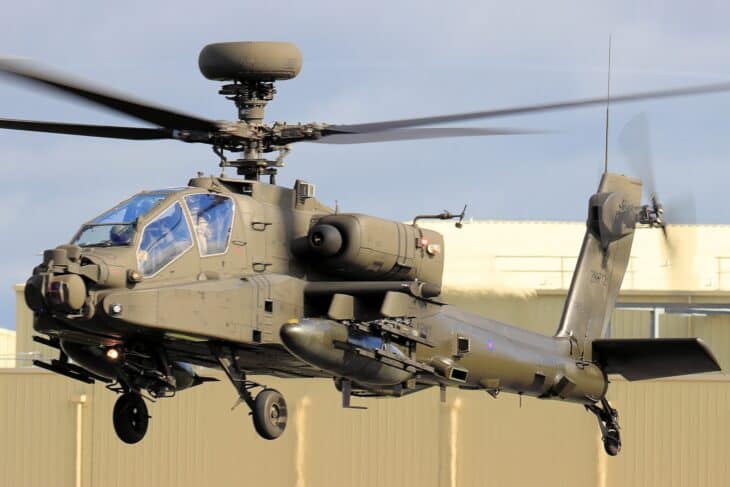
4. Boeing AH-64E Apache Guardian: 24 Attack Helicopters
.jpg)
Qatar’s air force, not its army, flies the country’s attack helicopters. It received its first AH-64E Apache at Boeing’s plant in Mesa, Arizona, on March 14, 2019, part of a 24-helicopter purchase signed in 2014 alongside Patriot missiles.
Deliveries were due to finish by May 2020. The US cleared a further 24 Apaches for Qatar in May 2019 at an estimated $3 billion, but FlightGlobal still lists that batch as an option rather than a firm order.
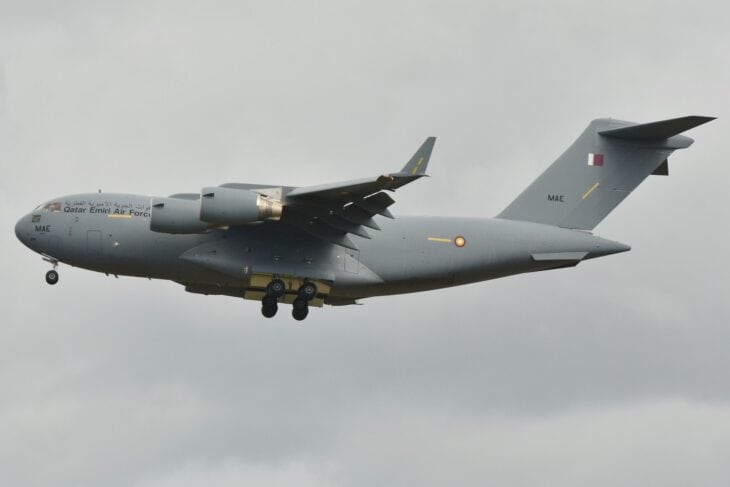
5. Boeing C-17A Globemaster III: The Region’s First C-17 Order
.jpg)
Qatar became the first Middle East nation to order the C-17 Globemaster III when it signed for two on July 21, 2008. Boeing delivered the first at Long Beach, California, on August 11, 2009.
At the 2015 Paris Air Show, Qatar bought four of the last C-17s Boeing built, doubling its fleet to eight.
6. Lockheed Martin C-130J-30 Super Hercules: Four Stretched Airlifters

Lockheed Martin delivered four C-130J Super Hercules to Qatar on September 28, 2011, all of the longer C-130J-30 version. They were Qatar’s first C-130s of any kind.
That delivery also made Qatar the first C-130J operator in the Middle East. The four handle tactical airlift that does not need a C-17.
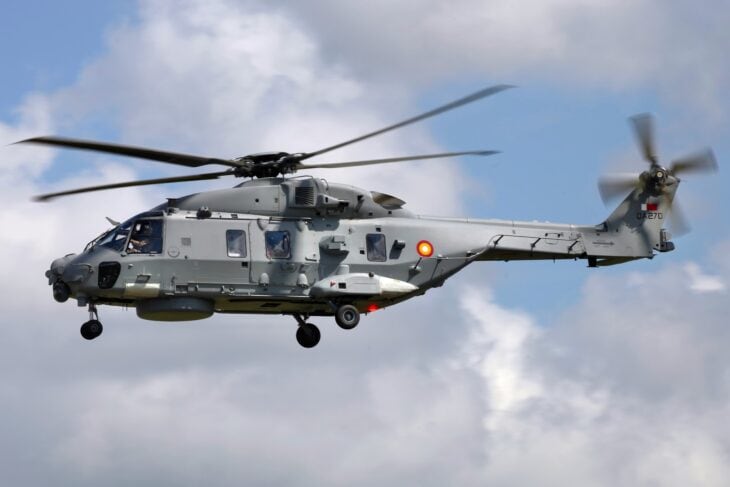
7. NHIndustries NH90: 28 Helicopters, Delivered in Full
.jpg)
Qatar flies both versions of the NH90: the TTH troop transport and the NFH naval helicopter. Both belong to the air force rather than the navy.
Leonardo delivered the last of 28 in late 2025, and the partners marked the milestone at the DIMDEX show in January 2026. By then the fleet had flown 7,400 hours with average serviceability above 80%, according to Leonardo.
8. Pilatus PC-21: Where Fighter Pilots Learn the Basics
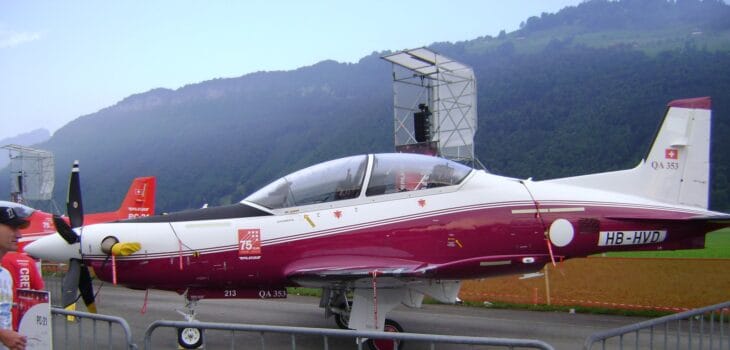

Qatar ordered 24 Pilatus PC-21 turboprop trainers in 2012. The first reached the air force’s academy in mid-2014, and training started in mid-2015.
The PC-21 is the middle step of the pipeline. Students arrive from the Super Mushshak and leave for jet training on the Hawk or overseas.
9. BAE Hawk Mk 167: A Qatari Squadron in England
.jpg)
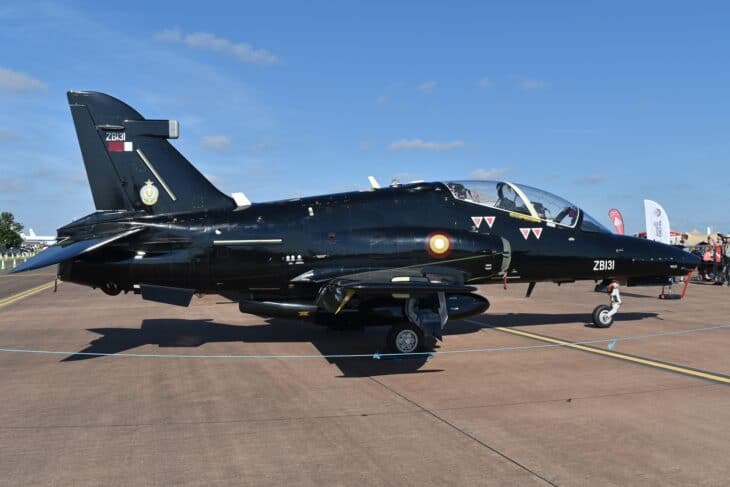
Qatar’s nine BAE Hawk Mk 167 jet trainers came with the Typhoon order and do not live in Qatar. Since September 2021 they have flown with a joint British-Qatari training unit, No. 11 Squadron, at RAF Leeming in North Yorkshire.
Qatar also bought six Leonardo M-346 jet trainers, confirmed in January 2022 and linked to the international flight training school in Italy. FlightGlobal does not count them in Qatar’s fleet, so they sit outside this ranking.
10. PAC Super Mushshak: First Flights for Every Cadet
.jpg)
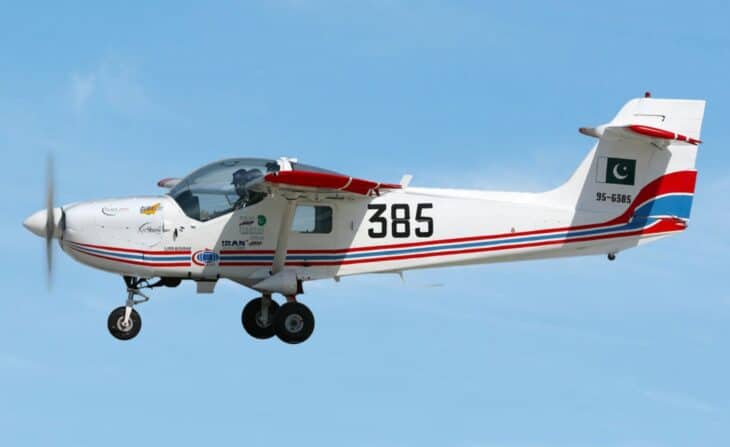
Qatari cadets start on eight Super Mushshak piston trainers, built by the Pakistan Aeronautical Complex and listed by FlightGlobal as the MFI-395. Qatar ordered them in June 2016, and the first batch arrived on July 19, 2017.
From the Super Mushshak, trainees move to the PC-21. The pipeline from a Pakistani-built trainer to a Swiss turboprop to an American, French or European fighter says a lot about how widely Qatar shops.
The Rest of the Fleet
FlightGlobal lists 19 AgustaWestland AW139 helicopters and two smaller AW109s for utility and search-and-rescue work. Thirteen SA342 Gazelles, in service since 1983, are being replaced in the training role by Airbus H125s ordered in 2018.
A single Pilatus PC-24 business jet serves as a multi-engine trainer. Royal VIP flying is not an air force job: it belongs to the separate Qatar Amiri Flight, which is where the Boeing 747-8 that Qatar gave the United States as an Air Force One came from.
On Order: Tankers and Drones
Qatar owns no aerial refueling tanker, so its 100-plus fighters rely on partner nations for fuel in the air. A 2014 plan for two Airbus A330 MRTT tankers never produced an aircraft in Qatari service.
That may change. On August 20, 2026, the US State Department approved a possible $4.5 billion sale of up to four KC-46A Pegasus tankers to Qatar. The figure is a ceiling, and Qatar has not yet signed a contract.
Qatar also signed for eight MQ-9B drones in a deal worth nearly $2 billion, announced during President Trump’s visit to Doha on May 14, 2025. It was the first sale of the MQ-9B to the Middle East, and no deliveries have been reported.
The biggest gap is airborne early warning. Qatar dropped a plan for three Boeing E-7 Wedgetails in 2018, and in July 2026 Saab sold two GlobalEye radar planes to an unnamed Middle East customer, which has not been identified.
The War That Tested Qatar’s Air Force
The United States and Israel struck Iran on February 28, 2026, and Iran fired back at the Gulf states hosting US forces. On the first day, Qatar’s defense ministry said it detected 65 ballistic missiles and 12 drones, two of which reached Al Udeid without loss of life.
The Su-24 shootdown came two days later, on the same day Qatar intercepted seven ballistic missiles and five drones. On March 4, Qatari jets downed two drones and two cruise missiles out of a salvo of 10 drones and two cruise missiles.
Not everything was stopped. Iranian missiles damaged Ras Laffan on March 18, prompting Qatar to expel Iran’s military attachés, and a US early-warning radar at Al Udeid was hit. The last attack on Qatar we found came on April 8, the day a ceasefire was agreed.
No Qatari combat aircraft loss was reported. On March 22, an armed forces helicopter crashed at sea after what officials called a technical malfunction, killing six people, including a Qatari pilot and a Turkish officer.
What about the Mirage 2000-5s and Alpha Jets?
Some fleet lists still show them. FlightGlobal’s 2026 directory counts nine Mirage 2000-5EDA fighters, three two-seat 2000-5DDAs and six Alpha Jets, but Qatar agreed to sell 12 Mirages to Indonesia in January 2023 before Jakarta cancelled the deal in February 2024 for lack of money. We found no recent reporting of either type flying operationally, and the Hawks were bought to replace the Alpha Jet, so treat both as legacy fleets of uncertain status.
Where Qatar’s Air Force Flies From
Al Udeid Air Base, built by Qatar in 1996 for more than $1 billion, is the largest US military base in the Middle East and typically houses about 10,000 US service members. It is also home to Qatari transport and F-15QA units.
The Rafales fly from Tamim Air Base near Dukhan, on the west coast, which opened in 2019, and the first Typhoons were delivered there too. Iran’s June 23, 2025, missile attack on Al Udeid, which Qatar says its air defenses mostly intercepted, showed why spreading the fleet out matters.
Qatar’s jets also train abroad. Besides the UK squadrons and the planned Idaho facility, a 2021 agreement that took effect in 2022 lets Qatar station up to 36 military aircraft and 250 personnel in Türkiye on temporary deployments.
How Strong Is the Qatar Air Force?
For its size, very. Global Firepower’s 2026 index counts 115 fighters for Qatar, 19th in the world, and every one of its front-line fighters has been delivered since 2019.
The weakness is the system around the fighters. Qatar has no tanker, no airborne radar plane and three separate fighter supply chains, which analyst Caleb Larson called “a significant logistical challenge” when the war began.
Qatar’s real insurance is its partners. A US executive order signed on September 29, 2025, after Israel struck Hamas officials in Doha, pledges American action, military if necessary, against any armed attack on Qatar. Its neighbor’s much larger fleet is covered in our guide to Saudi Arabia’s air force.
FAQ
Sources and references used for research and fact-checking.
- FlightGlobal, World Air Forces 2026 directory
- The Aviationist, Qatari F-15QAs Confirmed Behind Shootdown of Iranian Su-24s
- Al Jazeera, Qatar says it downed two Iranian fighter jets as conflict widens
- CNN, Qatar downs Iranian bombers headed for US base
- Semafor, Qatar makes first aerial combat kill
- The Peninsula, Qatar defense ministry says 65 ballistic missiles, 12 drones detected
- The Peninsula, Qatar intercepts 10 drones, 2 cruise missiles from Iran
- Al Jazeera, Qatar says Iran missile attack sparks fire, causes damage at gas facility
- The Aviationist, Early warning radar at Al Udeid damaged
- Qatar Tribune, Qatar intercepts 7 ballistic missiles, several drones launched from Iran
- Wikipedia, 2026 Iran war ceasefire
- Marhaba, Six dead, one missing after helicopter crash in Qatar waters
- Janes, Iran conflict 2026: RAF Typhoon operating out of Qatar shoots down Iranian drone
- 19FortyFive, F-15s, Eurofighter Typhoons and Dassault Rafale fighters: Qatar's air force is now fighting Iran
- Statista, Qatar signs $12 billion F-15 deal
- Military & Aerospace Electronics, Boeing to build 36 new F-15QA combat aircraft with digital fly-by-wire in $6.2 billion deal
- Defence Industry Europe, Boeing delivers final batch of F-15QA Ababil fighters to Qatar
- The Aviationist, QEAF F-15QA delivery
- Idaho News (AP), Things to know about the Qatar training facility planned for an Idaho Air Force base
- NBC24, Mountain Home Air Force Base to host Qatari air force facility for F-15 training
- KIVI-TV, Air Force documents show Qatari training base at Mountain Home has been years in the making
- BoiseDev, Will Qatari facility be built at Mountain Home? Officials say deal is not done yet
- Dassault Aviation (GlobeNewswire), Qatar acquires an additional 12 Rafale
- Hürriyet Daily News (AFP), France and Qatar seal $7 bln Rafale fighter jet deal
- Forecast International, Qatar formally receives first Dassault Rafale
- Janes, First Rafales arrive in Qatar
- Aviacionline, Qatar plans to upgrade and expand its Rafale fighter fleet
- Shephard, Four more Rafales join Qatar Emiri Air Force
- UK Defence Journal, Qatar agrees contract for Typhoon aircraft
- Defence Industry Europe, Qatar confirms purchase of 12 additional Eurofighter Typhoon jets
- Militarnyi, Qatar to buy 12 additional Typhoon fighters
- The Aviationist, First batch of Eurofighter Typhoon aircraft delivered to Qatar
- The Aviationist, RAF Typhoons deployed to Qatar
- The Aviationist, Türkiye to receive first Typhoons from Qatar in February
- Aerospace Global News, Türkiye eyes 2027 Eurofighter Typhoon readiness with used Gulf jets
- Daily Sabah, Türkiye edges closer to getting first Eurofighter after Doha talks
- FW-MAG, From Turkey, claims that the Eurofighter Typhoon build-up will be faster and larger
- Tempo, Indonesian defense ministry drops plan to buy Mirage fighter jets from Qatar
- ABS-CBN (Reuters), Qatar makes formal request for F-35 jets
- The Defense Post, Qatar receives AH-64E Apache helicopters; US approves $3 billion more
- Boeing, Boeing delivers Qatar's first C-17 Globemaster III
- Air & Space Forces Magazine, Qatar buys four of the last C-17s
- Lockheed Martin, Lockheed Martin delivers four C-130J Super Hercules airlifters to Qatar
- EDR Magazine, Leonardo and Qatar Emiri Air Force celebrate the completion of deliveries for Qatar's NH90 fleet
- Skies Magazine (Pilatus), Qatar orders 24 PC-21 trainers
- Quwa, PAC delivers first batch of Super Mushshak trainers to Qatar
- BAE Systems, BAE Systems to provide support to newly formed UK-Qatar joint Hawk training squadron at RAF Leeming
- The War Zone, Qatar surprises with a second advanced jet trainer
- Janes, Qatar receives first H125 training helicopters
- AeroCorner, The US clears a $4.5 billion sale of Boeing tankers to Qatar
- US Department of State, Qatar: KC-46A aerial refueling aircraft
- DefenceTalk, Qatar selects Airbus A330 MRTT
- Breaking Defense, US greenlights potential $1.96 billion MQ-9B drones for Qatar
- The White House, Fact sheet: President Donald J. Trump secures historic $1.2 trillion economic commitment in Qatar
- Defence24, Qatar abandons purchase of E-7 airborne early warning aircraft
- AIN, $1 billion GlobalEye deal for Middle Eastern operator
- Militär Aktuell, First Rafale from Dassault arrives in Qatar
- Overt Defense, Agreement allowing Qatari military aircraft to be stationed in Turkey goes into effect
- Al Jazeera, The 12-day war ended with an attack on Qatar. Why didn't it escalate?
- CBS News, Qatar explosions after Iran strikes US air base
- US Government Publishing Office, Assuring the Security of the State of Qatar (Executive Order 14353)
- Al-Monitor (AFP), What we know about Israel's attack on Hamas in Qatar
- Global Firepower, Qatar military strength 2026
- Store norske leksikon, Qatars forsvar
- The Peninsula, Commander of Amiri Guard visits Qatar Armed Forces
- Wikipedia, 11 Squadron (Qatar)
- Wikipedia, Qatar Emiri Air Force
Get the Newsletter
The latest aviation news and stories sent to your inbox.
About the Author

Tim is the owner and lead editor of AeroCorner since 2019, overseeing aviation content covering aircraft, airlines, airports, and the broader aviation industry. Through years of researching, writing, editing, and publishing aviation-focused content, he has developed extensive practical knowledge of commercial aviation and air travel. Based in Asia and a frequent traveler himself, Tim also brings firsthand passenger experience to AeroCorner’s coverage. Outside of publishing, he has also explored aviation firsthand through hands-on flight training in New Zealand.