

Table of Contents
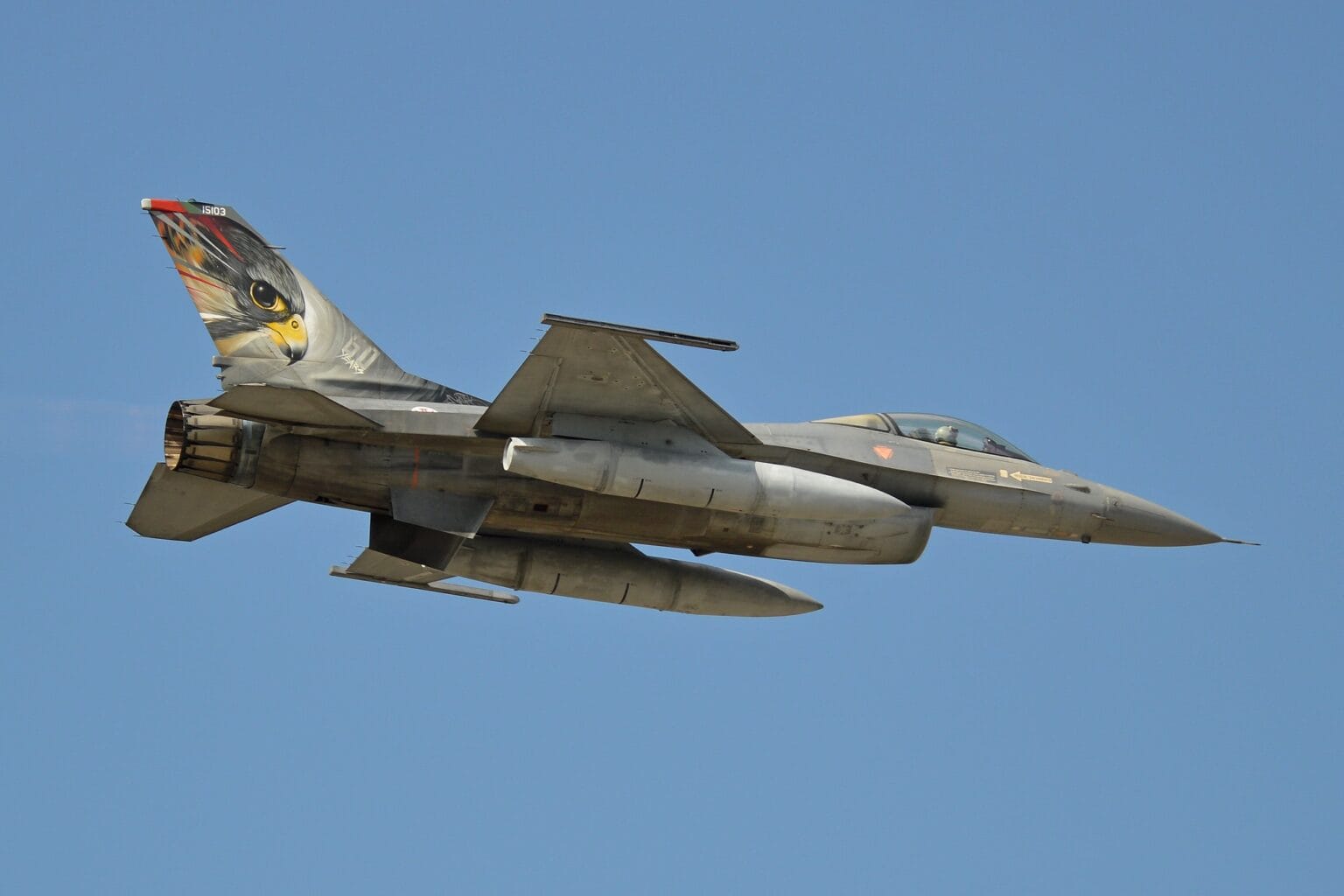
Portugal’s air defense rests on the F-16. An October 2026 inventory reported by The War Zone counts 25 operational jets, 21 single-seat F-16AMs and four two-seat F-16BMs, all flying from Monte Real.
That is fewer than the 28 usually quoted, and the jet that replaces them is still undecided. The F-35A, Rafale, Gripen E and Eurofighter Typhoon were all in the frame by October 2026, but no competition had formally opened.
This guide ranks every type the Portuguese Air Force flies by its weight in Portuguese defense as of November 2026. It also covers the new KC-390 and A-29N fleets, the bases, and the US presence in the Azores.
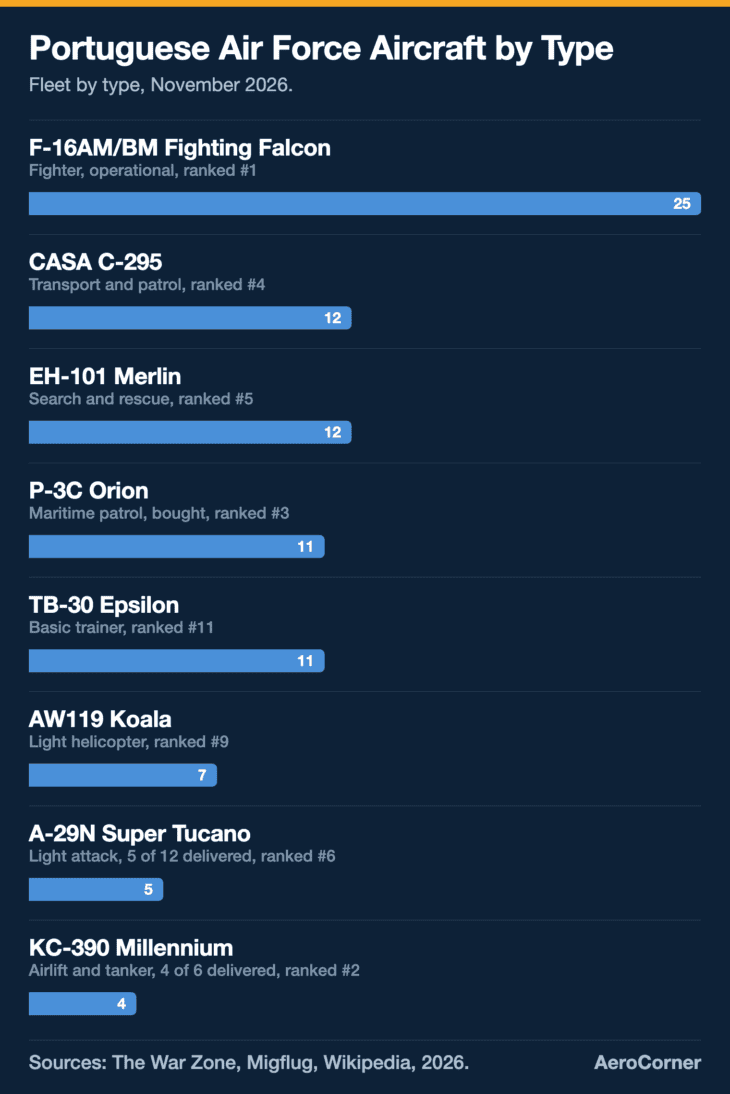
| Rank | Aircraft | Role | Fleet | Status |
|---|---|---|---|---|
| 1 | F-16AM/BM Fighting Falcon | Multirole fighter, two-seat trainer | 25 operational (21 AM, 4 BM) | In service; replacement undecided |
| 2 | Embraer KC-390 Millennium | Airlift, air-to-air refueling | 4 of 6 delivered | In service at Beja; replacing the C-130H |
| 3 | P-3C Orion | Maritime patrol, anti-submarine | 11 bought (5 ex-Dutch, 6 ex-German) | In service at Beja; ex-German jets being upgraded |
| 4 | CASA C-295M and C-295 MPA | Transport, maritime patrol | 12 (7 transport, 5 patrol) | In service |
| 5 | EH-101 Merlin | Search and rescue, combat rescue | 12 | In service at Montijo and Lajes |
| 6 | A-29N Super Tucano | Light attack, advanced training | 5 of 12 delivered | In service at Beja since December 2025 |
| 7 | C-130H/H-30 Hercules | Tactical airlift | 4 | Being replaced by the KC-390 |
| 8 | UH-60 Black Hawk | Firefighting, medical evacuation | 6 by February 2026; 13 planned | In service at Ovar |
| 9 | AW119 Koala and AS350 B3 | Light helicopter, training | 7 AW119, 3 AS350 | In service |
| 10 | Falcon 50 and Falcon 900 | Government transport, medical evacuation | 3 Falcon 50, 1 Falcon 900 | In service from Lisbon |
| 11 | TB-30 Epsilon and Chipmunk | Basic trainer | 11 Epsilon, 7 Chipmunk | 7 Tecnam P-Mentor on order |
How this ranking works
Aircraft are ranked by their weight in Portuguese defense in November 2026: fighters first, then the airlift, maritime patrol and rescue fleets that cover one of the largest sea areas in Europe, then light attack, helicopters, VIP jets and trainers. The air force does not publish fleet numbers, so counts come from the press and open inventories, and where sources disagree we say so. Drones and the firefighting aircraft still on order are left out.
1. F-16AM/BM Fighting Falcon: Portugal’s Only Fighter
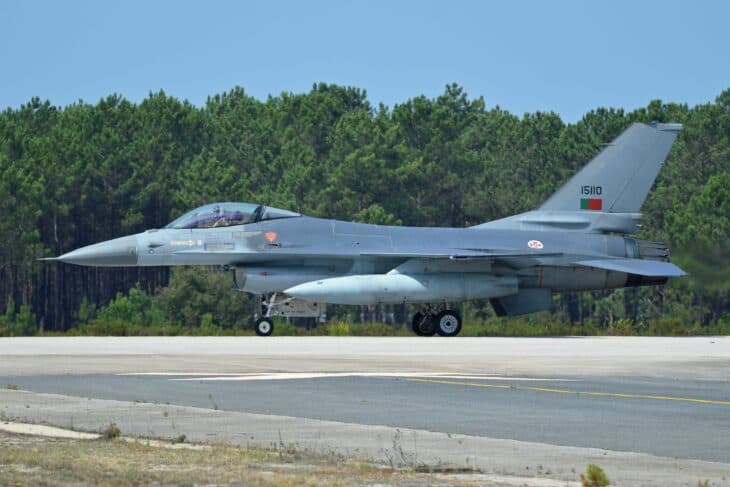
Every Portuguese quick-reaction launch is an F-16. The jets fly with two squadrons at Air Base No. 5, Monte Real: 201 Squadron “Falcões” and 301 Squadron “Jaguares.”
Portugal bought 45 F-16A/Bs in two batches under the Peace Atlantis I and II programs. The first deliveries began on February 18, 1994, and a second batch of surplus US airframes followed in 1998.
The fleet was upgraded to the AM/BM standard under the Mid-Life Update, and Portugal then sold some of it. Romania signed for 12 Portuguese F-16s on September 30, 2013, and agreed to five more in 2019.
The jets have flown in combat and on NATO duty. Three F-16As flew 281 sorties from Aviano over Kosovo in 1999 without firing a weapon, and Portugal has rotated jets to the Baltic air policing mission since 2007, most recently to Ämari, Estonia, from March 2026.
A record gust inside a fighter base
Storm Kristin hit Monte Real on January 28, 2026, with a gust of 178 km/h (110 mph), and debris from a damaged hangar fell on parked F-16s. The air force never said how many jets were hit; Portuguese media reported at least two, later at least four.
2. Embraer KC-390 Millennium: The New Workhorse
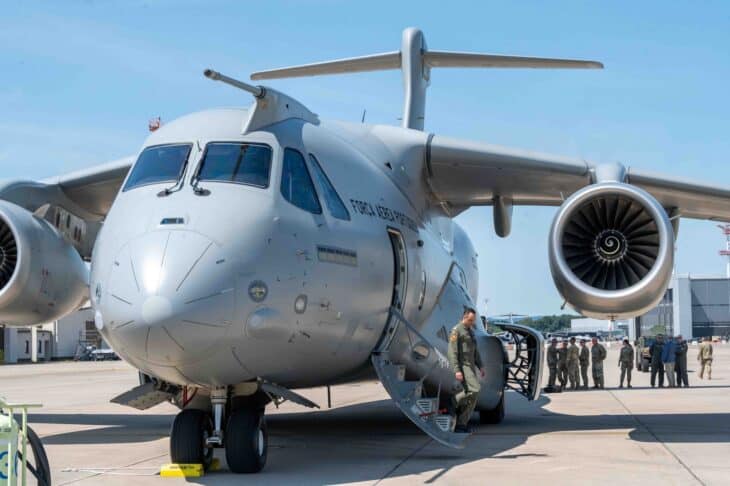

The KC-390 is replacing the C-130 as Portugal’s main airlifter. Portugal ordered five in 2019 and added a sixth in 2025, with ten purchase options that other NATO countries can use to buy the aircraft through Portugal.
The first arrived at Beja in October 2023, and the fourth landed there on January 24, 2026. It brought an in-flight refueling kit, giving the air force the ability to refuel other aircraft for the first time, and the kit can be fitted to any KC-390 in the fleet.
The jets fly with 506 Squadron “Rinocerontes,” created at Beja in May 2023. Portugal’s aircraft are partly assembled by OGMA in Alverca.
3. P-3C Orion: Hunting Submarines in the Atlantic
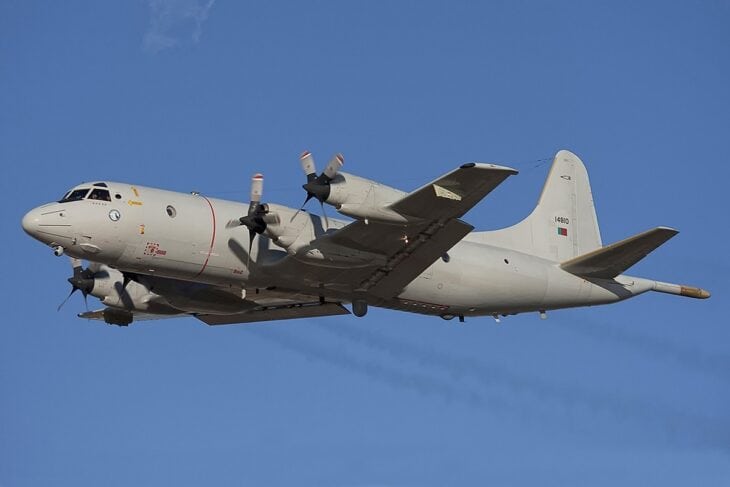

Portugal’s sea area stretches from the mainland to the Azores and Madeira, and the P-3C Orion patrols it. Five ex-Dutch P-3C CUP+ aircraft have flown with 601 Squadron “Lobos” at Beja since 2006.
Portugal doubled down on the type in 2023. It bought six ex-German Navy P-3Cs on September 25, 2023, the first arriving at Beja on February 9, 2024, and five are being upgraded in Canada to the CUP+ Block II standard.
4. CASA C-295: Transport and Maritime Patrol
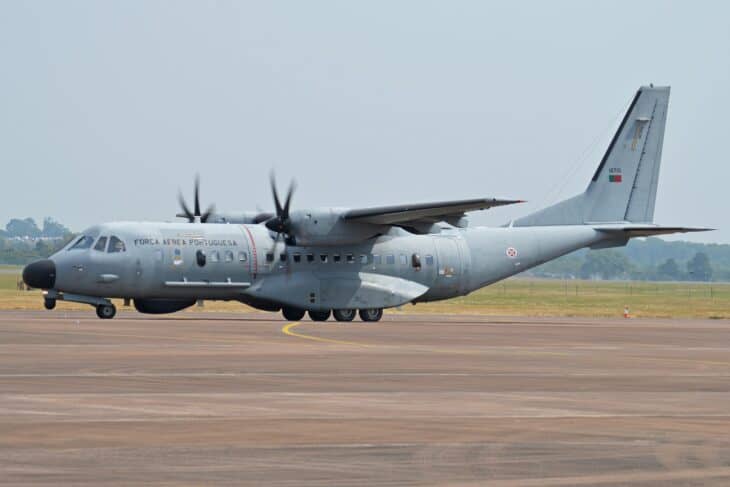

Twelve C-295s fly with 502 Squadron “Elefantes” at Montijo: seven C-295M transports and five C-295 MPA Persuader maritime patrol aircraft.
Detachments sit at Lajes in the Azores and Porto Santo in Madeira. That puts a patrol or transport aircraft within reach of every part of Portuguese territory.
5. EH-101 Merlin: Search and Rescue Over the Ocean
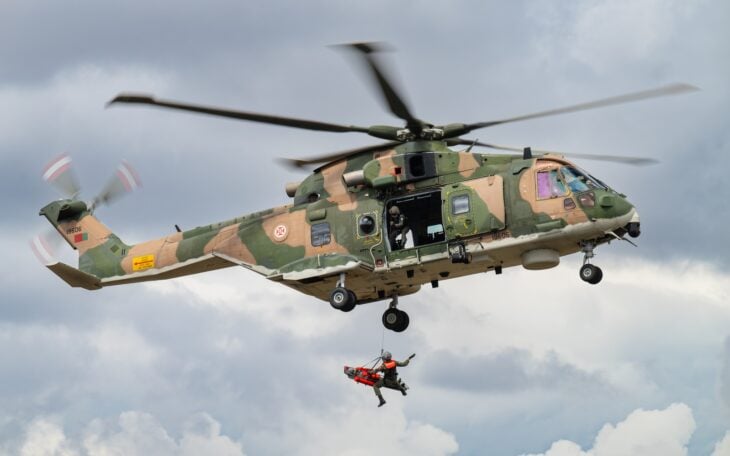

Twelve EH-101 Merlins have flown Portugal’s long-range rescues since 2005. Six are search and rescue aircraft, four are fitted for combat search and rescue, and two fly fisheries protection.
They fly with 751 Squadron “Pumas” at Montijo and 752 Squadron “Fénix” at Lajes, reactivated on May 16, 2023, with a detachment on Porto Santo.
6. A-29N Super Tucano: Light Attack Returns
Portugal signed for 12 A-29N Super Tucanos in December 2024 for €200 million ($210 million). It is the launch customer for the A-29N, the version Embraer built to NATO standards.
The first five were handed over at OGMA in Alverca on December 17, 2025, and flew to Beja for 101 Squadron “Roncos.” They train pilots and fly light attack and reconnaissance.
Seven more are still to come, and no delivery date for them had been published by November 2026.
7. C-130H Hercules: The Airlifter on Its Way Out
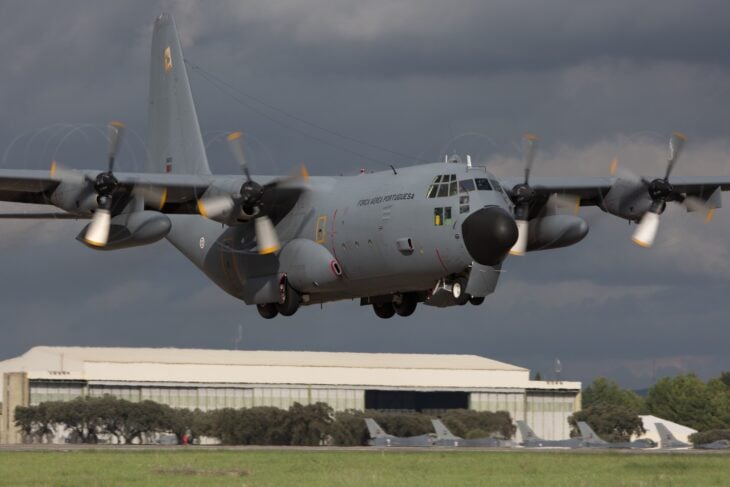

Portugal has flown the C-130H since 1977. About four remain with 501 Squadron “Bisontes” at Montijo, modernized with new cockpits and avionics since 2019, though counts in open sources vary between three and four.
The KC-390 is taking over their work. Two Hercules are due to be fitted with modular firefighting kits, which would give them a second career dropping retardant.
8. UH-60 Black Hawk: Fighting Wildfires
Portugal’s Black Hawks fight forest fires. The sixth reached Air Base No. 8 at Ovar on February 21, 2026, and fly with 551 Squadron “Panteras.”
In March 2026 the air force bought four more UH-60Ls from Ace Aeronautics for under €32 million, for medical evacuation, with delivery due by August 31, 2026. Once all are in, the fleet reaches 13.
9. AW119 Koala and AS350: The Light Helicopters
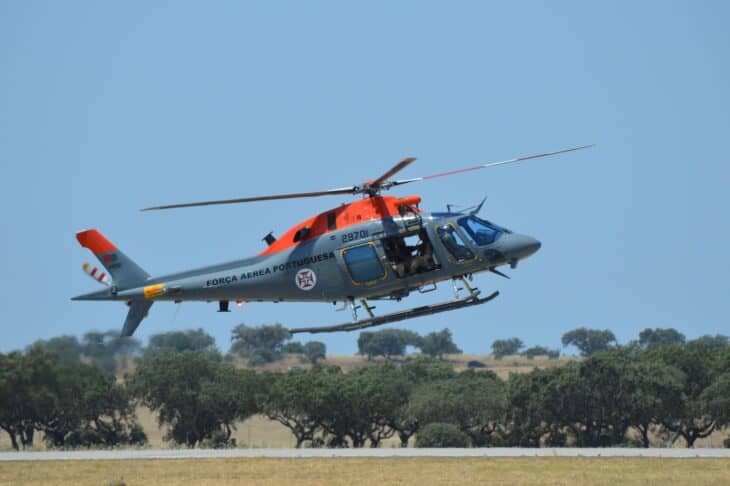

Seven AW119 Koalas fly with 552 Squadron “Zangões” at Beja, five delivered from 2019 and two more in 2023. They train helicopter pilots and fly transport and rescue.
Three AS350 B3 Écureuils, transferred to the air force in 2018, round out the light fleet. Before them came the Alouette III, which Portugal flew from 1963 to 2020.
10. Falcon 50 and Falcon 900: Ministers and Patients
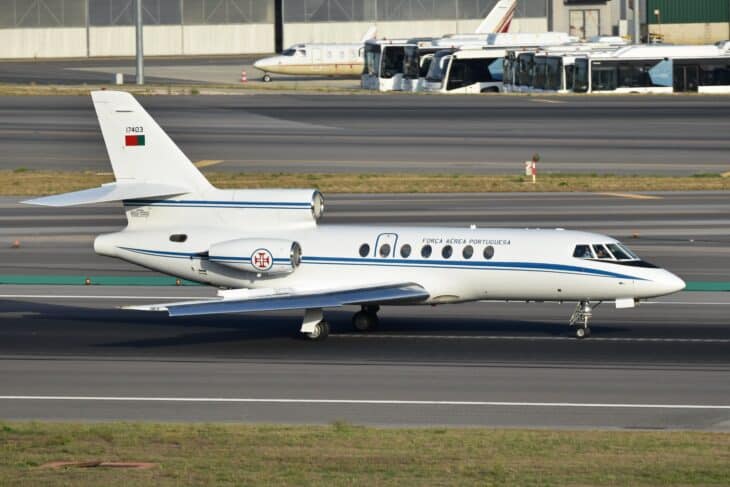
504 Squadron “Linces” flies three Dassault Falcon 50s, in service since 1990, and one Falcon 900 from Figo Maduro in Lisbon. They carry the government and fly medical evacuations.
The Falcon 900 has an unusual history. It was seized by Portuguese authorities and passed to the air force in 2023.
11. TB-30 Epsilon and Chipmunk: Where Portuguese Pilots Start
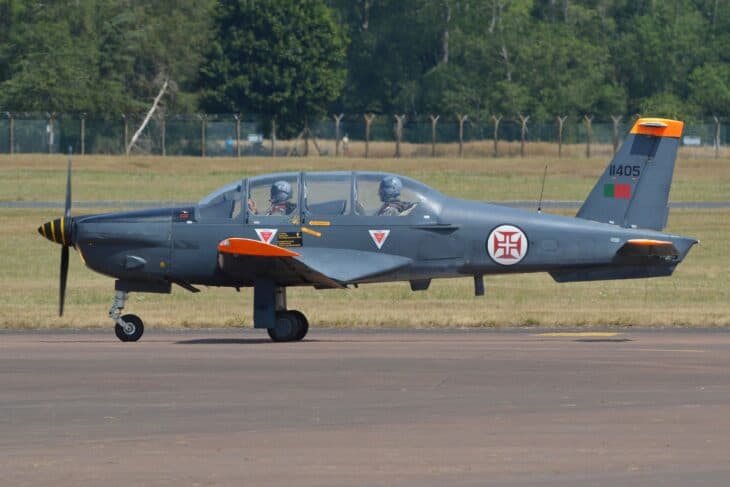

Pilot selection starts at Sintra, where 802 Squadron “Águias” flies seven re-engined DHC-1 Chipmunks and ASK 21 gliders. Basic training moves to the TB-30 Epsilon at Beja, of which 11 remain from 18 bought from 1989.
Both are due to give way to seven Tecnam P-Mentor trainers from early 2027. The A-29N now covers the armed, more advanced stage of training.
Which Jet Will Replace Portugal’s F-16s?
Nobody knows yet. Reports through October 2026 put the requirement at 14 to 28 jets, with the F-35A, Rafale, Gripen E and Eurofighter Typhoon in contention.
The US is pushing hard. On October 8, 2026, Secretary of State Marco Rubio promised a “very competitive” offer, and Foreign Minister Paulo Rangel said “we are seriously considering the F-35 proposal, just as we are considering others.”
Europe is pushing back. Airbus signed a cooperation memorandum with Portugal’s aerospace cluster in October 2025 to prepare a Eurofighter bid, and Dassault signed an industrial cooperation document in September 2026.
There is no hurry built into the airframes. The F-16s could structurally fly into the mid-2040s, but staying relevant would mean paying for new radar, sensors and self-protection, which is the real question Portugal has to answer.
Didn't Portugal already pick the F-35?
No. In April 2024 a plan was announced to replace the F-16 with 28 F-35As by 2030, but the ministry then said there were no current plans to buy the jet. In March 2025 Defense Minister Nuno Melo called a purchase unlikely, citing doubts about relying on US equipment. By October 2026 the F-35 was back under consideration, but no formal competition had opened.
Where the Portuguese Air Force Is Based
Monte Real hosts every combat jet. Beja, in the Alentejo, is the busiest base, home to the KC-390s, P-3Cs, Super Tucanos, Epsilons and Koalas.
Montijo, across the Tagus from Lisbon, flies the Hercules, C-295s and Merlins, and Ovar is home to the Black Hawks. Sintra hosts the Air Force Academy and the headquarters is in Alfragide.
Air Base No. 4 at Lajes, on Terceira in the Azores, is run by the Portuguese Air Force but is also home to the US Air Force’s 65th Air Base Group. The US cut its contingent there to no more than 170 active-duty personnel from 2014.
A Short History of the Portuguese Air Force
The Portuguese Air Force was founded on July 1, 1952, by merging the army’s Military Aeronautics and the navy’s aviation service. It had about 6,224 personnel in 2025.
Its biggest war was in Africa. During the colonial wars from 1961 to 1974 it flew F-86F Sabres, G.91s and about 140 Alouette IIIs, and by 1974 it had about 850 aircraft, a fleet that fell by two-thirds within two years of the revolution.
It flew the A-7P Corsair II from 1981 to 1999, and the Alpha Jet from 1993 to 2018. General Sérgio da Costa Pereira, a helicopter pilot, became chief of staff in March 2026, succeeding General João Cartaxo Alves, who moved up to lead the armed forces.
With 25 operational fighters, Portugal sits well down the list of the largest air forces in the world, and how its next jet changes that is a question for our ranking of the best air forces in the world. Its neighbor is covered in our guide to the Spanish Air Force.
FAQ
Sources and references used for research and fact-checking.
- The War Zone, U.S. Makes F-35 Push As Portugal Weighs F-16 Replacement
- Migflug, Portuguese Air Force
- Wikipedia, Portuguese Air Force
- Wikipedia, List of aircraft of the Portuguese Armed Forces
- Aviacionline, Portugal Deepens Its Commitment to the Embraer KC-390
- The Aviationist, Portuguese Air Force Receives First Five NATO-Compliant A-29N Super Tucanos
- ECO, Força Aérea fecha com Ace Aeronautics compra de quatro Black Hawk
- AeroTime, Portugal's Air Force F-16 jets damaged as Storm Kristin hits Monte Real Air Base
- Shephard, Airbus to position Eurofighter Typhoon for Portugal's F-16 replacement requirement
- SAPO 24, Força Aérea recebe quarto KC-390 com capacidade de reabastecimento em voo
- Wikipedia, Lajes Field
Get the Newsletter
The latest aviation news and stories sent to your inbox.
About the Author

Tim is the owner and lead editor of AeroCorner since 2019, overseeing aviation content covering aircraft, airlines, airports, and the broader aviation industry. Through years of researching, writing, editing, and publishing aviation-focused content, he has developed extensive practical knowledge of commercial aviation and air travel. Based in Asia and a frequent traveler himself, Tim also brings firsthand passenger experience to AeroCorner’s coverage. Outside of publishing, he has also explored aviation firsthand through hands-on flight training in New Zealand.