

Table of Contents
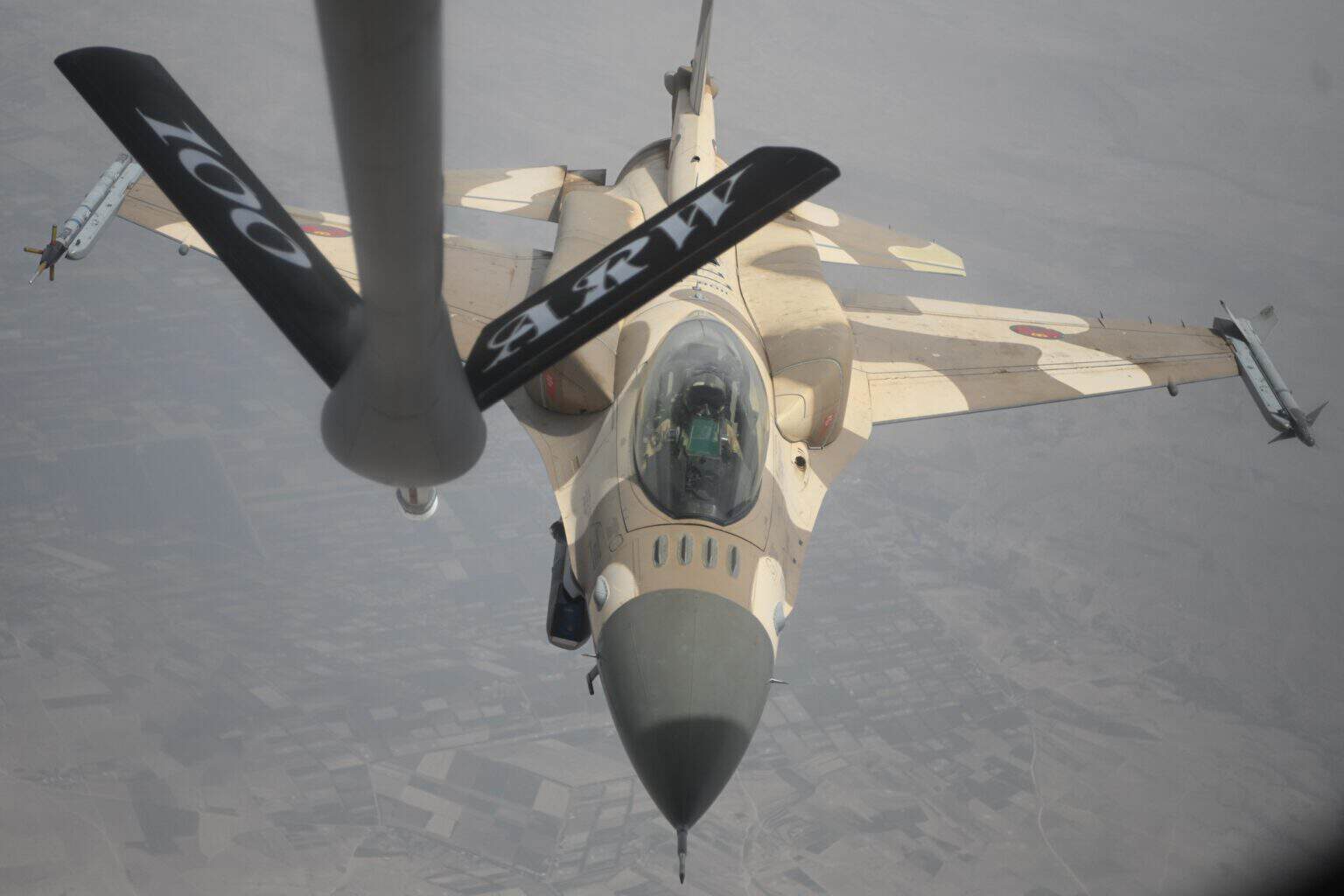
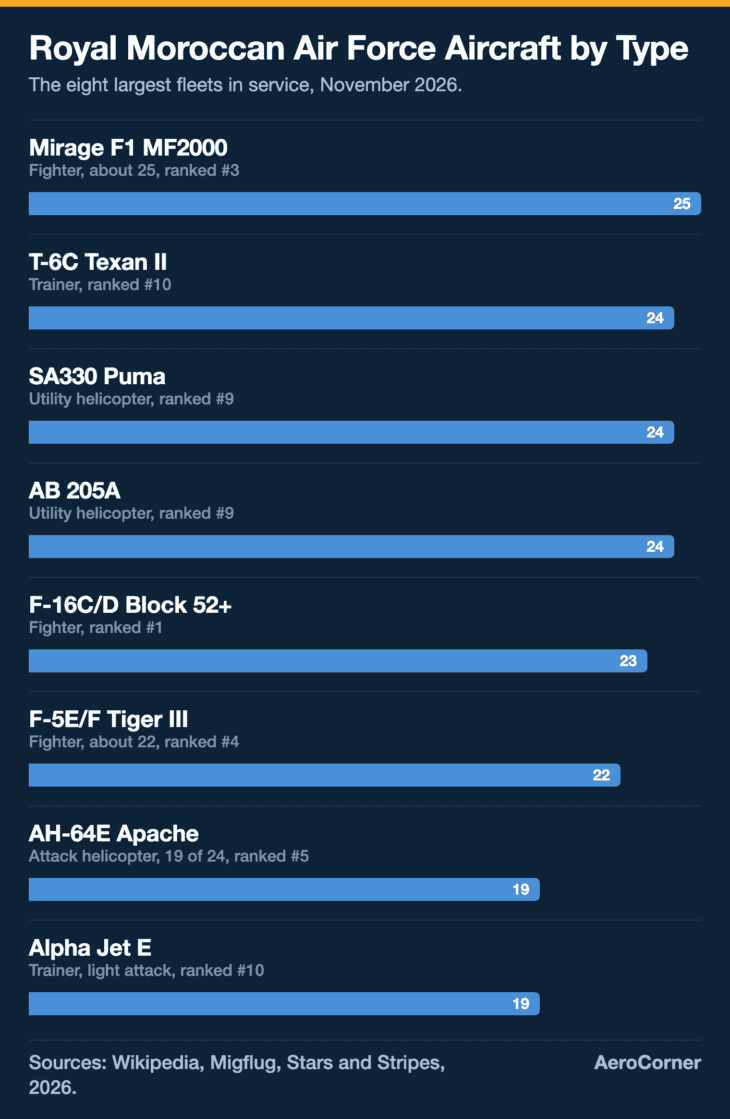
The Royal Moroccan Air Force’s front line in 2026 is 23 F-16C/D Block 52+ fighters, delivered in 2011 and 2012. Around them fly about 25 upgraded Mirage F1s and about 22 F-5E/F Tigers, jets Morocco first received in the late 1970s and early 1980s.
The jet meant to change that has only just flown. Morocco’s first new F-16 Block 72, one of 25 on order, made its first flight in South Carolina in October 2026, and delivery is not expected before late 2027.
This guide ranks every type the Forces Royales Air flies by its weight in Moroccan defense as of November 2026. It also covers the Apache deliveries, the drones over Western Sahara, the bases, and the F-35 deal that has not happened.
| Rank | Aircraft | Role | Fleet | Status |
|---|---|---|---|---|
| 1 | F-16C/D Block 52+ | Multirole fighter | 23 | In service since 2011 |
| 2 | F-16C/D Block 72 | Multirole fighter | 25 ordered | First jet flew October 2026; none delivered |
| 3 | Mirage F1 MF2000 | Multirole fighter | About 25 | In service since 1978, upgraded from 2005 |
| 4 | F-5E/F Tiger III | Fighter | About 22 | In service since 1981, upgraded 2001 to 2004 |
| 5 | AH-64E Apache Guardian | Attack helicopter | 19 of 24 delivered | Deliveries since March 2025 |
| 6 | Bayraktar TB2 and Akinci | Armed drones | 13 to 20+ TB2; Akinci unpublished | TB2 in service since 2021 |
| 7 | C-130H and KC-130H Hercules | Transport, tanker | About 16, incl. 2 tankers | In service since the 1970s |
| 8 | C-27J, CN-235 and C295W | Tactical transport | 4 C-27J, 5 CN-235, 2 C295W ordered | In service; C295W arriving |
| 9 | Puma, AB 205, Chinook and Gazelle | Helicopters | 24 Puma, 24 AB 205A, 10 CH-47D, about 19 Gazelle | In service |
| 10 | T-6C Texan II and Alpha Jet E | Trainers, light attack | 24 T-6C, 19 Alpha Jet | In service |
How this ranking works
Aircraft are ranked by their weight in Moroccan defense in November 2026: fighters first, then attack helicopters and armed drones, the transport fleet, utility helicopters and trainers. Morocco does not publish its fleet or its order of battle, so counts come from open inventories, and where sources disagree we give the range. VIP jets, the royal flight and aircraft flown by the navy and gendarmerie are left out.
1. F-16C/D Block 52+: Morocco’s Main Fighter
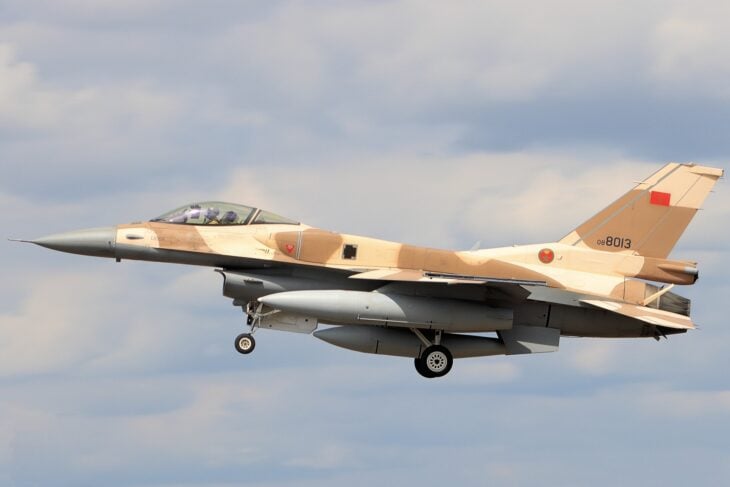

Morocco placed a $2.4 billion order for 24 F-16C/D Block 52+ fighters in 2008, with F100-PW-229 engines, APG-68(V)9 radars and conformal fuel tanks. They were delivered between July 2011 and August 2012.
Twenty-three remain, eight of them two-seat F-16Ds. One went missing over Yemen in May 2015 while flying for the Saudi-led coalition, and its pilot was killed; the Houthis claimed a shootdown, while other accounts blamed a technical failure.
The jets carry AIM-120C7 AMRAAMs, AIM-9X Sidewinders, Harpoon anti-ship missiles and Sniper targeting pods. They first saw combat in late 2014, flying against ISIL from the United Arab Emirates.
In March 2019 the US approved a $985.2 million upgrade of all 23 to the F-16V standard. In October 2026, EDR Magazine reported Moroccan sources saying the full upgrade had been dropped in favor of safety fixes such as Auto-GCAS, a report neither government has confirmed.
2. F-16 Block 72: 25 Vipers, Still in South Carolina
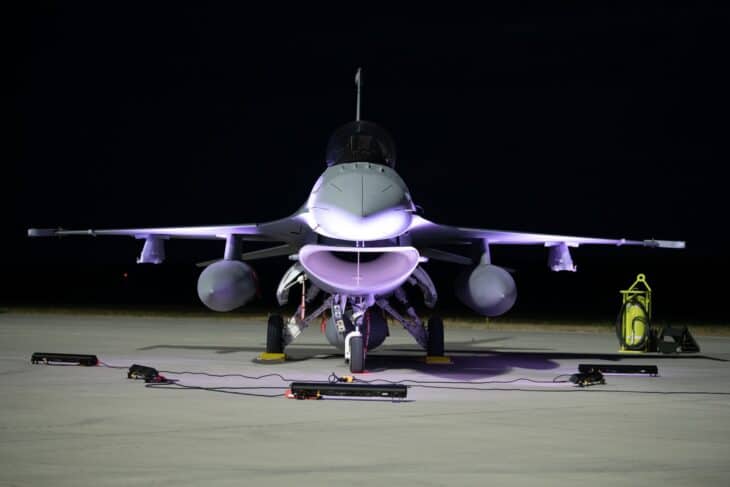

In March 2019 the US approved the sale of 25 new F-16C/D Block 72 jets to Morocco, in a package estimated at $3.787 billion. The Block 72 is the F100-powered version of the newest F-16, with an AESA radar and a new cockpit.
Lockheed Martin announced on October 6, 2026, that the first Moroccan jet, a two-seat F-16D, had completed its maiden flight at Greenville, South Carolina. It still has to finish flight testing, and sources at the Marrakech Air Show in October put the first delivery between late 2027 and early 2028.
A 2021 press report had expected deliveries in 2024. In August 2026 CAE won a contract for two Block 72 simulators at Sidi Slimane, the base being readied for the new jets.
3. Mirage F1 MF2000: The Jets From the Western Sahara War
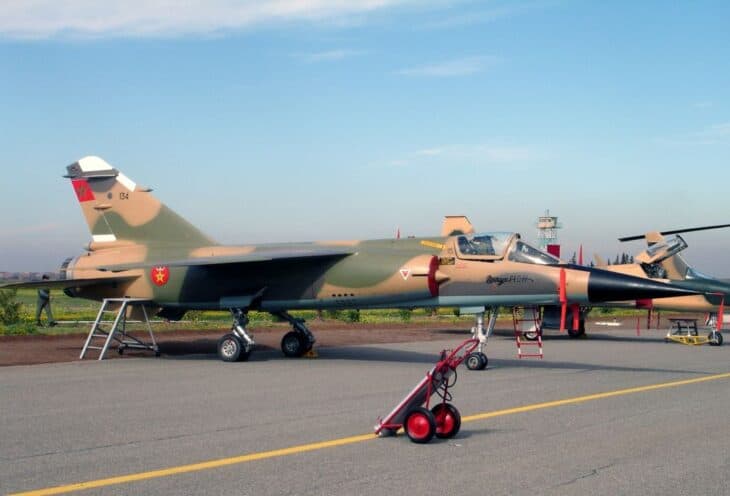

Morocco ordered Mirage F1s from France in December 1975, as Spain was leaving Western Sahara. Thirty F1CH interceptors arrived between December 1977 and December 1979, followed by 20 F1EHs between 1979 and 1982.
Built as interceptors, they were flown almost entirely as bombers against the Polisario Front. From 2005 a 350 million euro program rebuilt 27 of them to the MF2000 standard, with an RDY-3 radar from the Mirage 2000-5, a new glass cockpit, MICA missiles and Damocles targeting pods.
About 25 are still in service, close to 50 years after the first one landed. Losses continue: one was lost to a bird strike in August 2015 and another crashed near Taounate in January 2019.
Moroccan fighters in the Yom Kippur War
In October 1973 a squadron of Moroccan F-5A fighters deployed to Egypt and joined the Egyptian 69 Squadron at Tanta, on October 19. They stayed into 1974, when they intercepted Israeli Mirage IIICJs. Morocco sent jets to the Arab-Israeli war long before it sent F-16s to Syria, Iraq and Yemen.
4. F-5E/F Tiger III: Old Airframes, Newer Radar
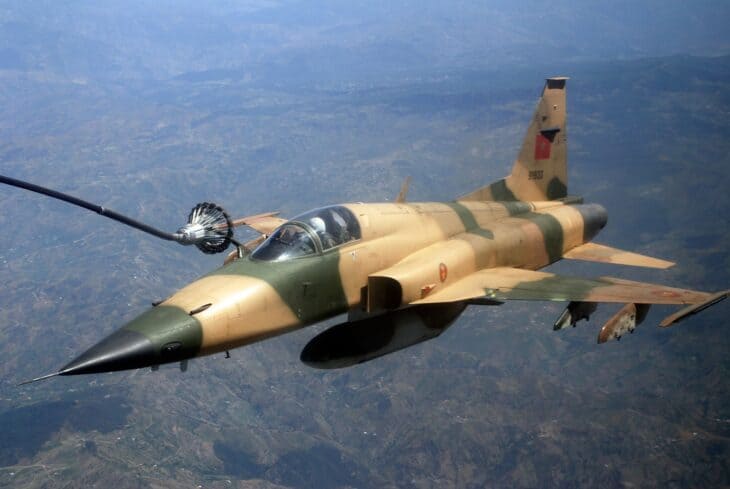

Morocco took 16 F-5E fighters and four two-seat F-5Fs between 1981 and 1983, then 12 more F-5Es from 1990. About 22 remain, three of them F-5F trainers.
Between 2001 and 2004 the French company SOGERMA rebuilt them to a standard Morocco calls Tiger III. They got an Italian Grifo F/X Plus radar, a head-up display, multifunction screens and Litening targeting pods, which lets them fire beyond-visual-range missiles and guided bombs.
5. AH-64E Apache Guardian: 19 of 24 Delivered
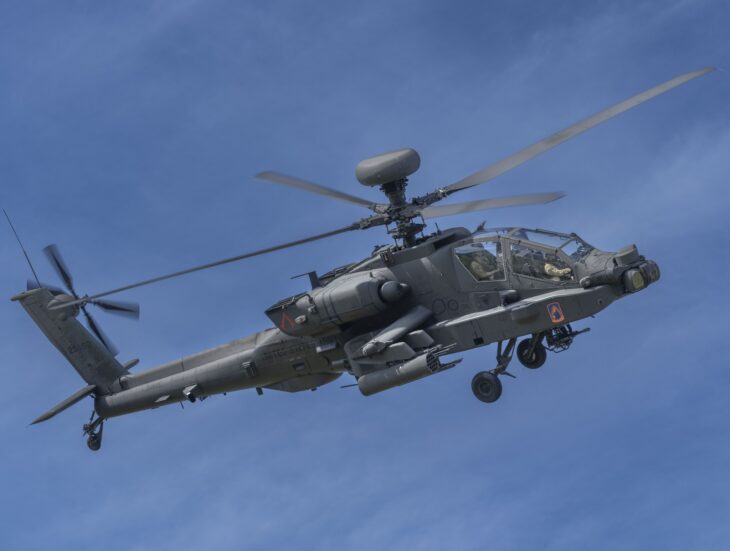

Morocco ordered 24 AH-64E Apaches in 2020, with an option on 12 more. The first six arrived at the 1st Air Base at Salé, near Rabat, on March 5, 2025, and a second batch followed in spring 2026.
Six more arrived on October 26, 2026, bringing the fleet to 19 of 24 under a sale worth nearly $1.3 billion, Stars and Stripes reported. That delivery came weeks after the US Army grounded about 400 of its own AH-64Es over transmission concerns.
They are the current AH-64E version, a generation on from the AH-64D Apache Longbow. Morocco has not said which squadrons or bases will fly the full fleet.
6. Bayraktar TB2 and Akinci: The Drones Over Western Sahara
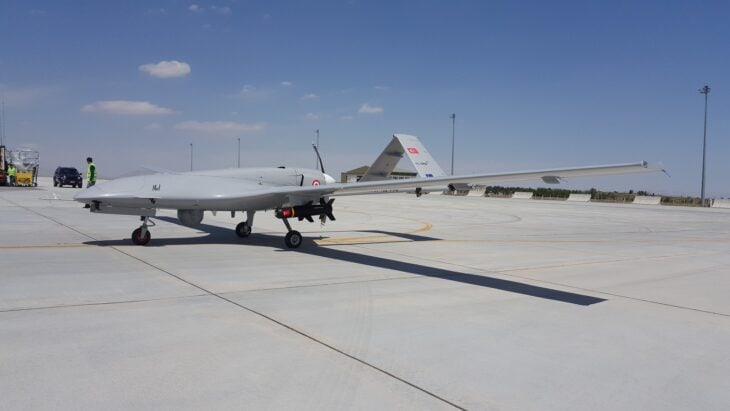

Morocco’s first Bayraktar TB2 entered service at Ben Guerir in September 2021, and counts now run from 13 to more than 20. The heavier Bayraktar Akinci was reported delivered in early 2025, in numbers Morocco has not published.
Moroccan media report drone strikes east of the berm, the sand wall that splits Western Sahara, since the ceasefire collapsed in November 2020. The Royal Armed Forces do not confirm them. Both drones are covered in our guide to Turkish drones.
The older drone fleet includes three IAI Herons bought in 2014 and three EADS Harfangs transferred from France in 2020. Wikipedia’s inventory also lists four MQ-9B SeaGuardians.
7. C-130H and KC-130H Hercules: The Airlift and the Tankers
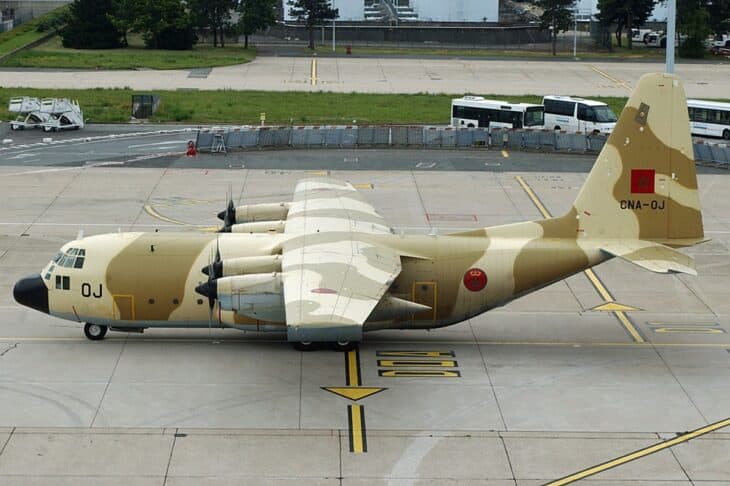

About 16 C-130H Hercules make up the backbone of the transport fleet. Two are KC-130H tankers that refuel the fighters, and one flies electronic intelligence.
In the Western Sahara war, two C-130s carried side-looking radars to find Polisario units. On July 26, 2011, a C-130H flying from Dakhla to Kenitra crashed near Guelmim and killed 78 people, the air force’s worst accident.
8. C-27J, CN-235 and C295W: The Tactical Transports
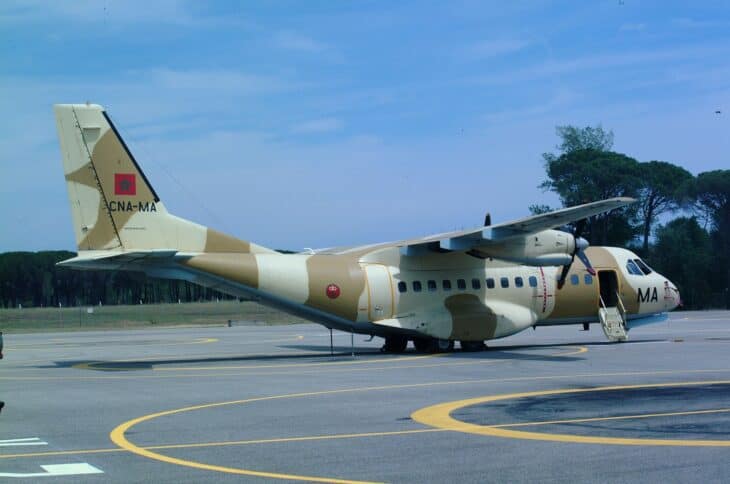

Morocco bought four C-27J Spartans from Alenia in 2008 for 130 million euros, and flies five CASA CN-235s. Both carry troops and cargo into short strips the Hercules cannot use as easily.
Two Airbus C295Ws were on order in 2026, Wikipedia’s inventory lists, citing a May 2026 Medias24 report on the fleet. Eight Bombardier CL-415 water bombers at Kenitra fly firefighting missions; the first six were bought in 2011.
9. Puma, AB 205, Chinook and Gazelle: The Helicopter Fleet
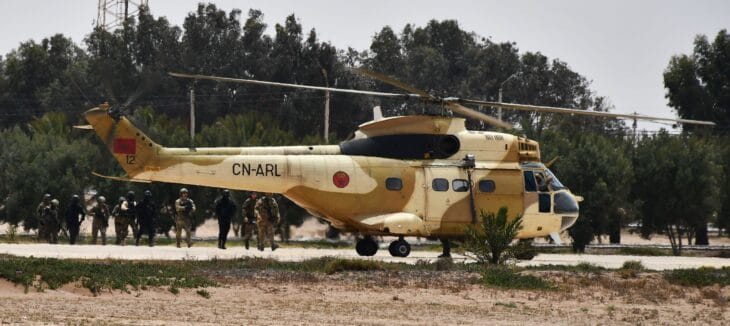

Twenty-four SA330 Pumas and 24 Agusta-Bell AB 205As do most of the troop and cargo flying, with three AB 212s. Ten CH-47D Chinooks carry the heavy loads: three refurbished US Army CH-47Ds arrived in 2015 to join CH-47Cs delivered in 1979 and 1982.
About 19 SA342 Gazelles remain from the Western Sahara war, when they fired HOT missiles at Polisario vehicles from outside the range of their guns. Six H135M light helicopters are the newest type in the fleet.
10. T-6C Texan II and Alpha Jet E: Where Moroccan Pilots Train
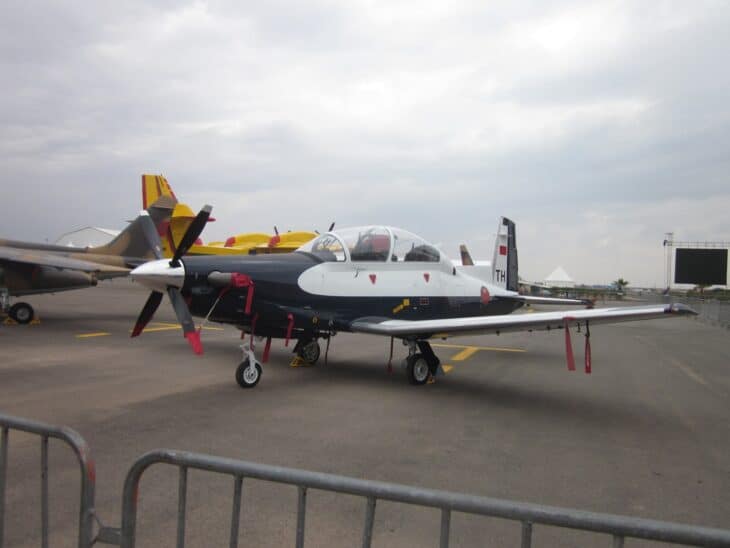

Morocco bought 24 T-6C Texan II turboprops in 2009, and all were in service by January 2012. They replaced the T-34 and T-37 at the start of the pilot syllabus.
About 19 Alpha Jet E jets, delivered from 1979 and upgraded to an E+ standard, fly advanced training and light attack. Officer pilots are trained at the Royal Air School in Marrakech.
Marrakech is also home to the Marche Verte, the air force aerobatic team created in 1984 and named after the 1975 Green March. It flies CAP 232 propeller aircraft and is known for taking off with its planes tied together by cords.
Isn't Morocco buying the F-35?
Not yet, and maybe not at all. Reports since 2020 have described talks with Washington, and Moroccan and Spanish outlets have repeated claims of a deal for up to 32 jets. No sale has been notified or signed, and in August 2026 the IISS said there had been little concrete progress and called the purchase hypothetical. The new fighters actually on order are the 25 F-16 Block 72s.
Where the Royal Moroccan Air Force Is Based
Morocco does not publish which squadron flies what, or from where. Ben Guerir, north of Marrakech and once a US Strategic Air Command base, was rebuilt to take the F-16s, and press reports place the drones there too.
Sidi Slimane, another former US base, is being prepared for the F-16 Block 72. Kenitra, the 3rd Air Base, hosts the water bombers, Salé the Apaches, and Marrakech the Royal Air School; Migflug counts 11 active air bases in all, including Laayoune in Western Sahara.
A Short History of the Royal Moroccan Air Force
The air force was founded in 1956, weeks after independence, as the Sherifian Royal Aviation. Its first aircraft were 16 Morane-Saulnier Alcyon trainers, five Broussard transports and two helicopters, and it took the name Royal Air Force in 1964.
In 1961 the Soviet Union supplied 12 MiG-17s and a few Il-28 bombers, used against Algeria in the 1963 Sand War. A rift with Moscow then sent Morocco to the United States, which supplied the first F-5As from 1966.
The Western Sahara war against the Polisario Front, from 1975 to the 1991 ceasefire, shaped the air force for a generation. Twelve Mirage F1s were shot down, according to the Helion history by Cooper, Grandolini and Fontanellaz.
Today the air force has about 13,000 personnel, according to the IISS, and is led by Major General Mohammed Gadih as Inspector of the Royal Air Force. Its neighbor and rival is covered in our guide to the Algerian Air Force, and the wider picture in the largest air forces in the world.
FAQ
Sources and references used for research and fact-checking.
- Wikipedia, Royal Moroccan Air Force
- Migflug, Royal Moroccan Air Force
- The War Zone, First F-16 Block 72 Has Flown
- Silicon Valley Maroc, Morocco recalibrates its F-16 fighter jet program
- EurAsian Times, Morocco's 1st F-16 Block 72 Fighter Jet Completes Maiden Flight. F-35 Bid Reaches Nowhere
- Stars and Stripes, Morocco adds 6 Apache gunships amid US Army grounding of aircraft
Get the Newsletter
The latest aviation news and stories sent to your inbox.
About the Author

Tim is the owner and lead editor of AeroCorner since 2019, overseeing aviation content covering aircraft, airlines, airports, and the broader aviation industry. Through years of researching, writing, editing, and publishing aviation-focused content, he has developed extensive practical knowledge of commercial aviation and air travel. Based in Asia and a frequent traveler himself, Tim also brings firsthand passenger experience to AeroCorner’s coverage. Outside of publishing, he has also explored aviation firsthand through hands-on flight training in New Zealand.