

Table of Contents
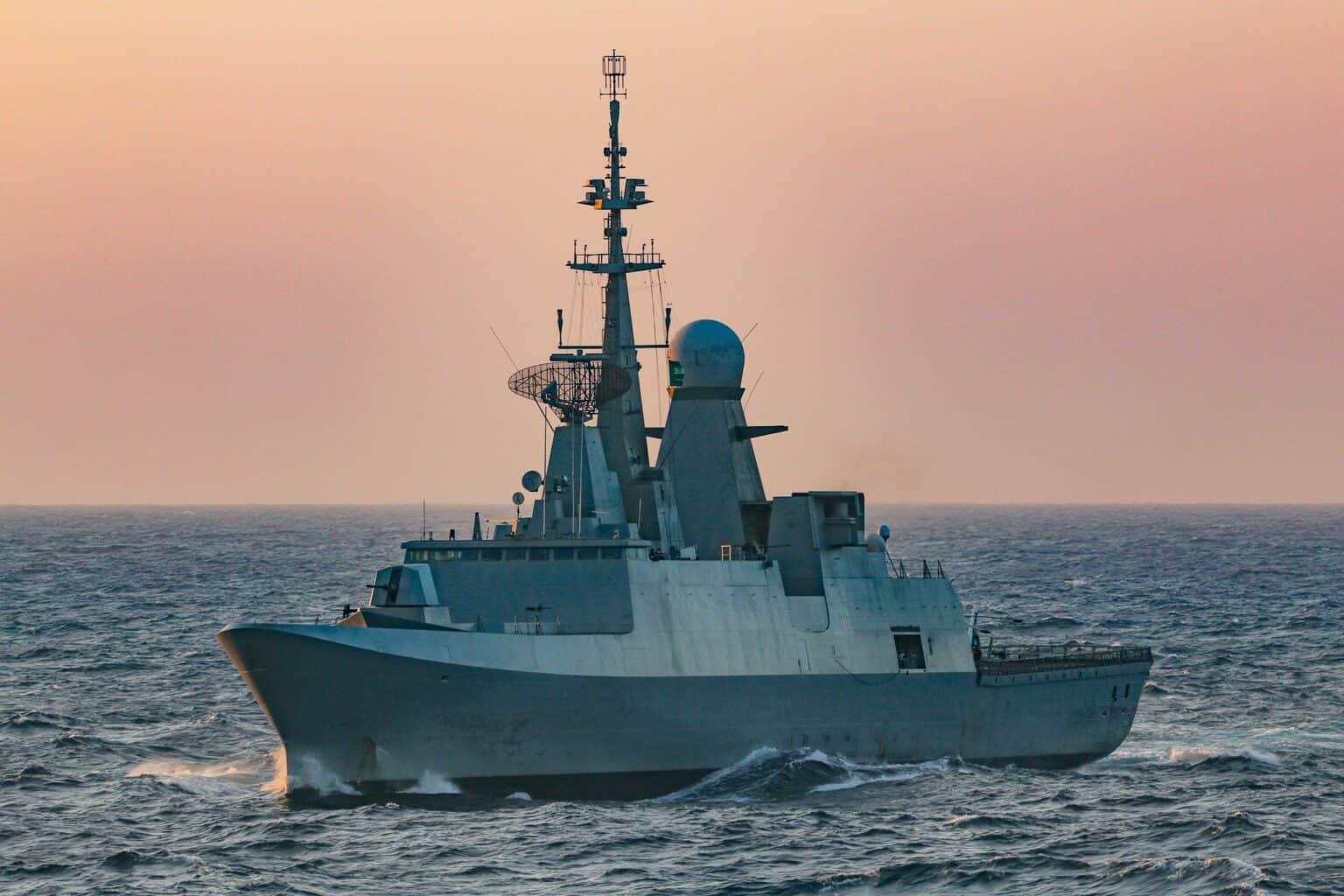
The Royal Saudi Navy is led by three Al Riyadh-class frigates, French-built ships of about 4,700 tons that carry Aster air defense missiles and Exocet anti-ship missiles. They are the largest warships in the fleet.
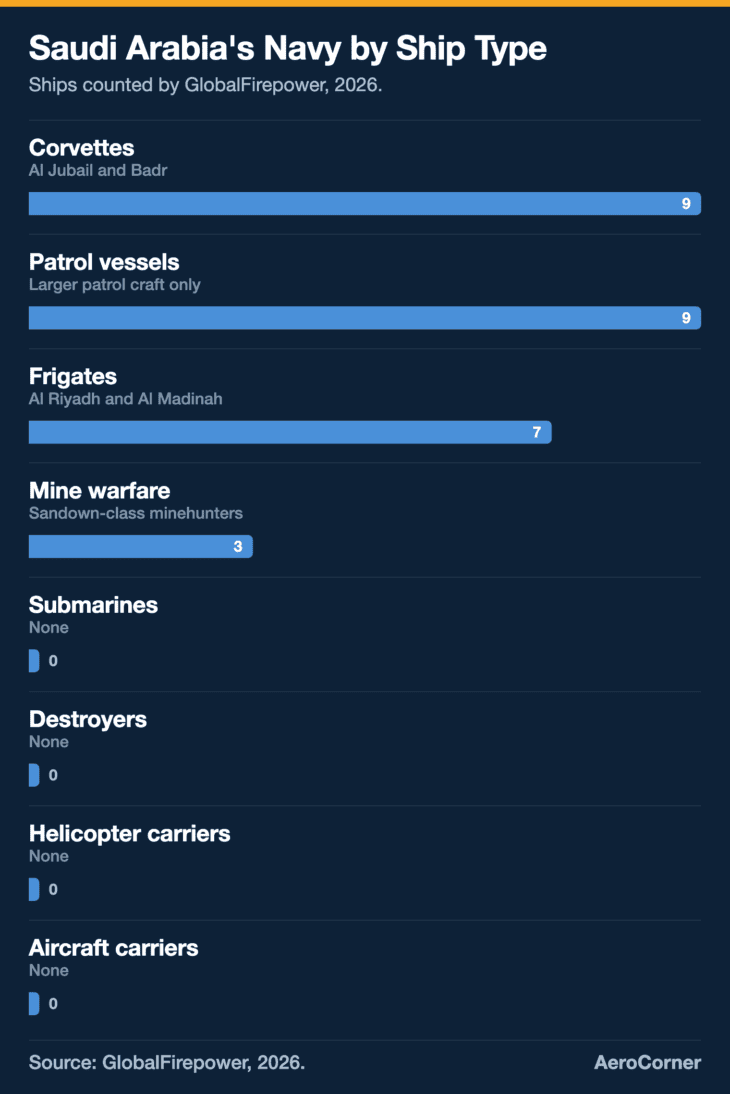
GlobalFirepower’s 2026 index counts 32 naval assets for Saudi Arabia: seven frigates, nine corvettes, nine patrol vessels and three mine warfare ships. It lists zero submarines, zero destroyers and zero carriers of any kind.
This guide ranks every class the navy sails by fighting value as of November 2026, with hull counts, the year each joined, the helicopters that fly with the fleet, and the eight new warships under construction in Spain and Wisconsin.
| Rank | Class | Type | Hulls | Origin |
|---|---|---|---|---|
| 1 | Al Riyadh | Frigate | 3 | France |
| 2 | Al Jubail (Avante 2200) | Corvette | 5, three more building | Spain |
| 3 | Al Madinah | Frigate | 4 | France |
| 4 | Badr | Corvette | 4 | United States |
| 5 | Al Siddiq | Missile boat | 9 | United States |
| 6 | Al Jawf (Sandown) | Minehunter | 3 | United Kingdom |
| 7 | HSI32 | Fast interceptor | 39 | France, 18 built in Saudi Arabia |
| Coming | King Saud (MMSC) | Frigate | 4 building | United States |
How this ranking works
Classes are ranked by fighting value in November 2026: how modern each one is, what it carries, and how much it changes what the fleet can do. One Al Riyadh frigate ranks above a dozen fast boats. Hull counts come from Wikipedia’s fleet inventory, checked against GlobalFirepower’s 2026 index and shipbuilder reports. GlobalFirepower counts only 9 patrol vessels and leaves out most of the small interceptor craft, which is why its total of 32 is lower than the hull count below. Oilers and royal yachts are covered at the end but not ranked.
1. Al Riyadh Class: The French Air Defense Frigates
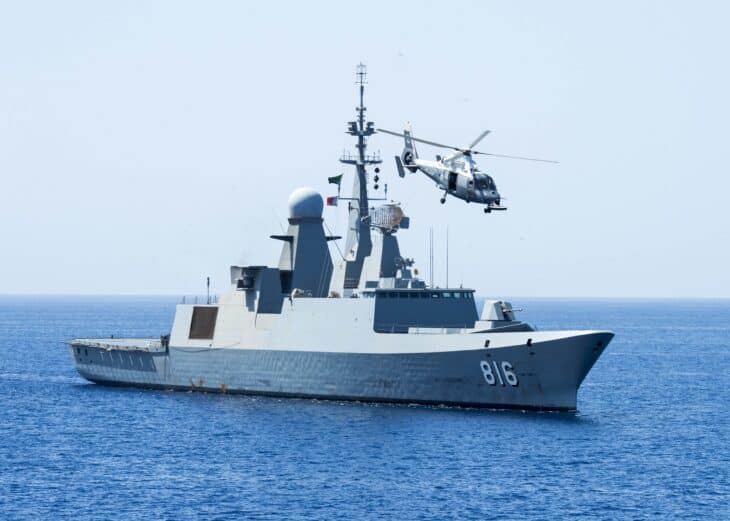

Al Riyadh, Makkah and Al Dammam are Saudi versions of France’s La Fayette-class frigate, built by DCN in Lorient. Each is 436 feet (133 m) long and displaces about 4,700 tons, far larger than the French original.
The extra size buys firepower. Each ship carries 16 Aster air defense missiles in vertical launchers, eight Exocet anti-ship missiles, F17 heavyweight torpedoes and a helicopter, with a range of 7,000 nautical miles.
Al Riyadh was launched on August 1, 2000, and commissioned on July 26, 2002, followed by Makkah and Al Dammam in 2004. Al Riyadh’s home port is King Faisal Naval Base in Jeddah, on the Red Sea.
2. Al Jubail Class: The Spanish-Built Avante 2200 Corvettes
The newest ships in service are five Avante 2200 corvettes from Spain’s Navantia: Al Jubail, Al Diriyah, Hail, Jazan and Unayzah. Saudi Arabia signed for them in July 2018 in a deal worth approximately 2 billion euros.
Each displaces about 2,500 tons. Al Jubail’s armament includes a 76 mm gun, a 35 mm Millennium close-in gun, a 16-cell vertical launcher for air defense missiles, eight Harpoon Block II anti-ship missiles and torpedo tubes.
Al Jubail was delivered on August 25, 2022, and the five ships were built between 2019 and 2024. The last two were finished in Saudi Arabia, where SAMI Navantia, a Saudi joint venture, installed and tested their combat systems.
Riyadh liked them enough to order three more in December 2024, covered in the “What Saudi Arabia Is Building” section below.
3. Al Madinah Class: The 1980s Frigates
Saudi Arabia ordered four frigates from France in October 1980 under the Sawari program: Al Madinah, Hofouf, Abha and Taif. They were completed between January 1985 and August 1986.
Each is 377 feet (115 m) long, displaces 2,610 tons at full load and reaches 30 knots. They carry eight Otomat Mk 2 anti-ship missiles, a Crotale air defense launcher with 24 missiles, a 100 mm gun, torpedoes and a Dauphin helicopter.
France’s ODAS signed a contract in August 2013 to upgrade the class. On January 30, 2017, Al Madinah was attacked off Yemen’s Red Sea coast, and two Saudi sailors were killed and three injured.
4. Badr Class: The American Corvettes
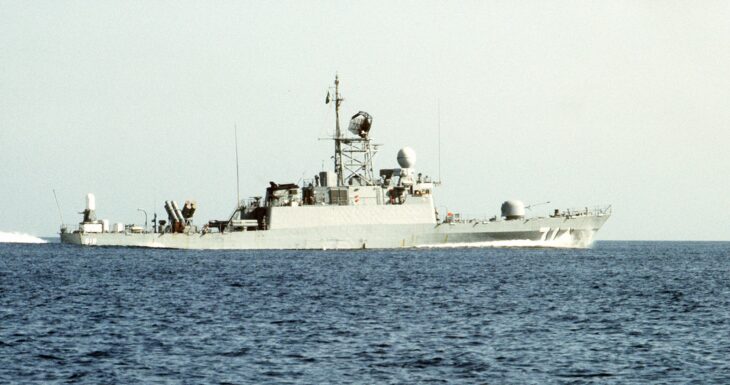

Badr, Al Yarmook, Hitteen and Tabuk were built by Tacoma Boatbuilding in Washington state after a 1977 order, and commissioned between September 1981 and January 1983.
Each is 245 feet (74.7 m) long and displaces 1,038 long tons at full load. They carry eight Harpoon anti-ship missiles, a 76 mm gun, a Phalanx close-in weapon and anti-submarine torpedoes, and reach 30 knots on a gas turbine.
More than 40 years old, they have been moved to a coastal defense role.
5. Al Siddiq Class: The Missile Boats
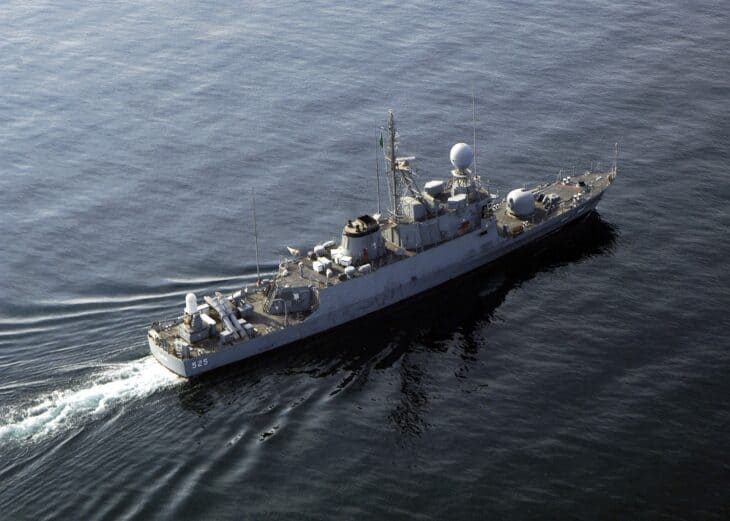

Nine US-built Al Siddiq-class fast attack craft, pennants 511 to 527, give the navy a fleet of small missile boats of about 495 tons each.
Their job is coastal strike and patrol in the narrow waters of the Gulf, where a small, fast boat carrying anti-ship missiles can reach a target quickly.
6. Al Jawf Class: The British Minehunters
Al Jawf, Shaqra and Al Kharj are Sandown-class minehunters, three of the 15 the class built, from Vosper Thornycroft in Britain. The table on Wikipedia’s Sandown page dates all three to 1993, and all are listed as in active service.
Each displaces about 480 tons. Mines are a real threat in the Gulf and the Red Sea, and GlobalFirepower ranks Saudi Arabia 16th of 145 countries for mine warfare ships.
7. HSI32: The Fast Interceptors
The largest group by hull count is 39 HSI32 interceptor craft from France’s CMN, about 132 tons each. Eighteen were built locally by Zamil at Dammam.
GlobalFirepower’s count of nine patrol vessels leaves most of them out, which is the main reason open-source counts of the Saudi fleet vary so much.
Coming: The King Saud Class Frigates Built in Wisconsin
Four Multi-Mission Surface Combatants, the King Saud class, are being built at Fincantieri Marinette Marine in Wisconsin under Project Tuwaiq. They are a version of the US Navy’s Freedom-class littoral combat ship.
Each is about 389 feet (118.6 m) long and displaces about 3,600 tons at full load. They carry Mk 41 vertical launchers for ESSM air defense missiles, Harpoon Block II anti-ship missiles, SeaRAM, a 57 mm gun and torpedoes.
The US approved the sale in October 2015 at an estimated $11.25 billion overall, and a December 2019 contract worth nearly $2 billion covered design and construction of all four. The ships are named King Saud, King Fahd, King Abdullah and King Salman.
The frigate that was due in 2023
HMS Saud, the first of the four, was originally scheduled for delivery in 2023. It was moved to the ship lift at Marinette on December 16, 2025, and launched that month. In August 2026, Defense Mirror reported new technical discrepancies on the ships and said the current contract runs to 2031, with no firm delivery date for any of the four.
Until they arrive, the seven frigates GlobalFirepower counts are the four Al Madinah ships from the 1980s and the three Al Riyadh ships.
What Saudi Arabia Is Building in Spain
The three follow-on Avante 2200 corvettes are the second phase of what Saudi Arabia calls the Sarawat program. Navantia launched the first, HMS Al-Madinah, at San Fernando in June 2026.
The second, Neom, was launched in the Bay of Cádiz on October 25, 2026, and the third, AlUla, is under construction. Neom and AlUla will be finished in Saudi Arabia, and the last ship is due in 2029, a year later than the 2028 date given when the contract was announced.
The new ships will carry Hazm, a combat management system developed by SAMI in Saudi Arabia. Building and fitting out warships at home is the point of the program as much as the ships themselves.
The Helicopters That Fly for the Navy
Saudi Arabia’s navy runs its own aircraft, with naval aviation units in each fleet. Its most capable type is the Sikorsky MH-60R Seahawk, with 10 in service for submarine and surface hunting, armed with Hellfire missiles.
Beside them fly 20 AS332 Super Pumas for anti-submarine work and 26 AS565 helicopters of the Dauphin family for search and rescue, according to the World Air Forces 2026 count. Fighters and patrol aircraft belong to the Royal Saudi Air Force.
Two Fleets, Two Seas
Saudi Arabia has coastlines on two seas, so the navy is split in two. The Western Fleet sails the Red Sea from King Faisal Naval Base in Jeddah, and the Eastern Fleet sails the Persian Gulf from King Abdulaziz Naval Base in Jubail.
Each fleet has its own aviation, marines and security units. The marines form two brigades of about 1,500 each, one per fleet. Across the Gulf, the rival navy facing the Eastern Fleet is covered in our guide to the Iranian Navy.
Support Ships and Royal Yachts
Two French-built Boraida-class replenishment oilers, Boraida and Yunbou, of about 10,500 tons each, let the fleet refuel and resupply at sea. The navy also keeps two royal yachts, based at the Ras Al-Ghar port in Dammam.
How Big Is the Royal Saudi Navy?
Personnel figures vary. GlobalFirepower estimates 13,500 navy personnel in 2026, while Wikipedia gives about 18,000 including 4,500 marines.
No, it does not have 60,000 sailors
A figure of more than 60,000 officers and men, including marines, still circulates online for the Royal Saudi Navy. No current count supports it: GlobalFirepower’s 2026 estimate is 13,500 navy personnel, and Wikipedia’s is about 18,000 including marines. The navy is small in people and hulls. Its strength is a handful of modern European ships, not numbers.
By hulls, GlobalFirepower ranks the navy 58th of 145 countries, but 12th for frigates and 8th for corvettes. Saudi Arabia ranks 25th of 145 for overall military strength, and its navy is small next to the fleets in our ranking of the largest navies in the world.
From 1960 to Today: A Short History
The navy was formally founded in 1960 and began expanding with United States help in 1972. The US-built Badr corvettes and Al Siddiq missile boats came from that partnership.
After the 1979 Iranian Revolution, Riyadh turned to France under the Sawari program, which produced the Al Madinah frigates. France later supplied the Al Riyadh class too. Britain supplied the minehunters, and Spain and the US now build the next generation.
Does Saudi Arabia have submarines?
No. GlobalFirepower lists zero submarines for Saudi Arabia in 2026, and none appear in its fleet inventory. Riyadh has looked at them before: in 2013 it wanted to buy five German submarines for about 2.5 billion euros, but no boats were delivered. No submarine contract had been announced as of November 2026.
FAQ
Sources and references used for research and fact-checking.
- GlobalFirepower, Saudi Arabia Military Strength 2026
- Wikipedia, Royal Saudi Naval Forces
- Wikipedia, Saudi frigate Al Riyadh
- Wikipedia, La Fayette-class frigate
- Wikipedia, Avante 2200
- Wikipedia, Saudi corvette Al Jubail
- Wikipedia, Al Madinah-class frigate
- Wikipedia, Badr-class corvette
- Wikipedia, Sandown-class minehunter
- Wikipedia, Freedom-class littoral combat ship
- Army Recognition, US-built first Saudi MMSC frigate HMS Saud launched at Fincantieri's shipyard
- The Maritime Executive, Saudi Arabia's first LCS-based frigate launches
- Defense Mirror, Technical discrepancies delay delivery of multi-mission warships to Saudi Arabia
- Arab News, Saudi Navy floats first Sarawat Phase II warship at Spanish shipyard
- Baird Maritime, Spanish yard floats out future Saudi corvette
- Baird Maritime, Spanish yard launches new corvette for Royal Saudi Naval Forces
- The Maritime Executive, Navantia's corvettes for Saudi Arabia are arriving on time, on budget
Get the Newsletter
The latest aviation news and stories sent to your inbox.
About the Author

Tim is the owner and lead editor of AeroCorner since 2019, overseeing aviation content covering aircraft, airlines, airports, and the broader aviation industry. Through years of researching, writing, editing, and publishing aviation-focused content, he has developed extensive practical knowledge of commercial aviation and air travel. Based in Asia and a frequent traveler himself, Tim also brings firsthand passenger experience to AeroCorner’s coverage. Outside of publishing, he has also explored aviation firsthand through hands-on flight training in New Zealand.